
Boba Tea Guide: Drinks, Flavors, Toppings and Ordering
Boba tea is a flexible drink category rather than one fixed recipe. A cup may be creamy or clear, tea-forward or fruit-driven, lightly sweet or dessert-like, and it may include tapioca pearls, jelly, foam or no topping at all. This guide explains how the category works, what the main drink families look like, how sweetness and ice change the result, and how to order a cup that actually fits your taste.
If you only need the short version: most good first orders start with a drink family, a tea base, a sweetness level, an ice level and one topping. The best choice is usually not the most famous drink on the menu. It is the drink whose base, flavor and texture make sense together.
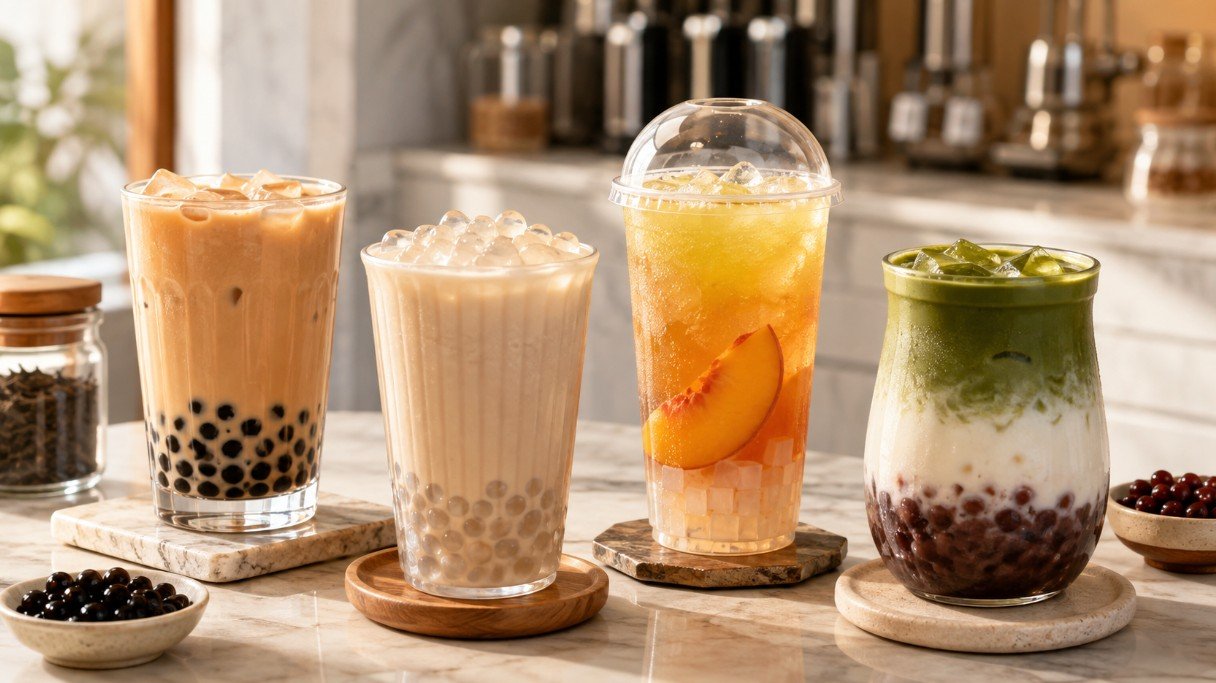
Most Boba Tea Orders Are Built From Five Decisions
A stylish menu may look complicated, but most drinks become easier to read once you break them into a clear sequence. The exact ingredients vary from shop to shop, yet the same practical logic appears again and again.
Drink family
Milk tea, fruit tea, fresh milk, specialty tea or blended drink.
Base
Black, green, jasmine, oolong, matcha, coffee or another liquid base.
Flavor
Roasted, floral, fruity, earthy, creamy or dessert-like.
Customization
Sweetness, ice, temperature and sometimes milk choice.
Texture
Tapioca pearls, crystal boba, jelly, popping boba, foam or no topping.
What Is Boba Tea?
Boba tea is a customizable drink category associated with Taiwan and now served globally in tea shops, cafés, food halls and delivery menus. In the United States, people often use boba tea, bubble tea and simply boba as near-interchangeable terms. A shop may serve classic milk tea with tapioca pearls, fruit tea with jelly, brown sugar fresh milk, cheese foam tea, taro drinks, matcha drinks, sparkling fruit tea or blended slushes under the same broad umbrella.
That is why a good guide should not define boba tea too narrowly. Tapioca pearls are iconic, but they are not mandatory. Tea is common, but not every drink contains a strong brewed tea base. Milk is common, but fruit teas may contain no milk at all. What makes the category recognizable is the combination of customizable flavor, flexible structure and attention to texture.
A practical definition works best for real menus: boba tea is a drink category built around a base, a flavor direction, a sweetness level, a temperature choice and an optional texture component such as pearls or jelly. Once you understand that structure, even a very long menu becomes easier to decode.
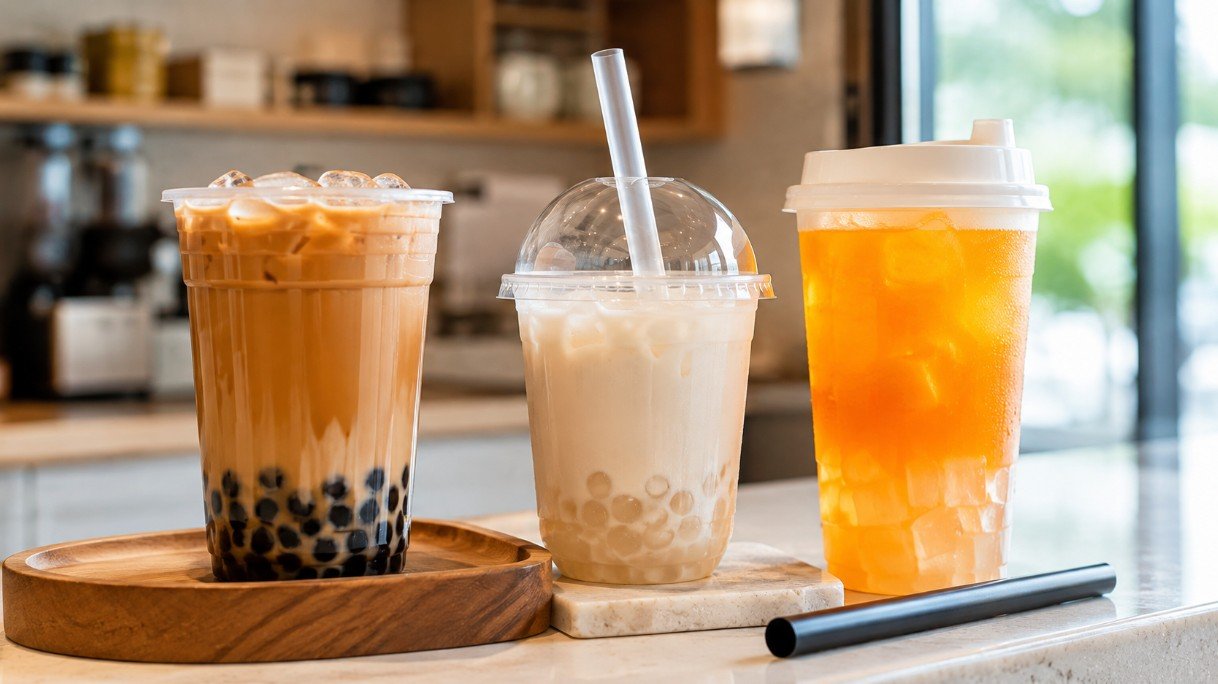
Is Boba Tea the Same as Bubble Tea?
The quick answer is yes in everyday use, but there are small differences in nuance that help when you read menus, reviews or recipe articles.
| Term | How people usually use it | Best practical interpretation |
|---|---|---|
| Boba tea | Common U.S. phrase for the overall drink category. | Use it as a broad term unless the menu clearly means pearls only. |
| Bubble tea | International umbrella term for the same category. | Often the clearest general label for guides, menu categories and shop descriptions. |
| Boba | Either the whole drink or specifically tapioca pearls. | Read the sentence: “I want a boba” may mean a drink; “add boba” usually means pearls. |
| Pearl milk tea | A more specific drink, often tea + milk + pearls. | Do not assume every boba drink is this exact format. |
Practical takeaway: when you build a guide for real readers, explain both the broad category and the specific drink styles. People search for the headline term, but they often need help distinguishing the classic pearl milk tea idea from the much wider menu reality.
What Is in a Boba Tea Drink?
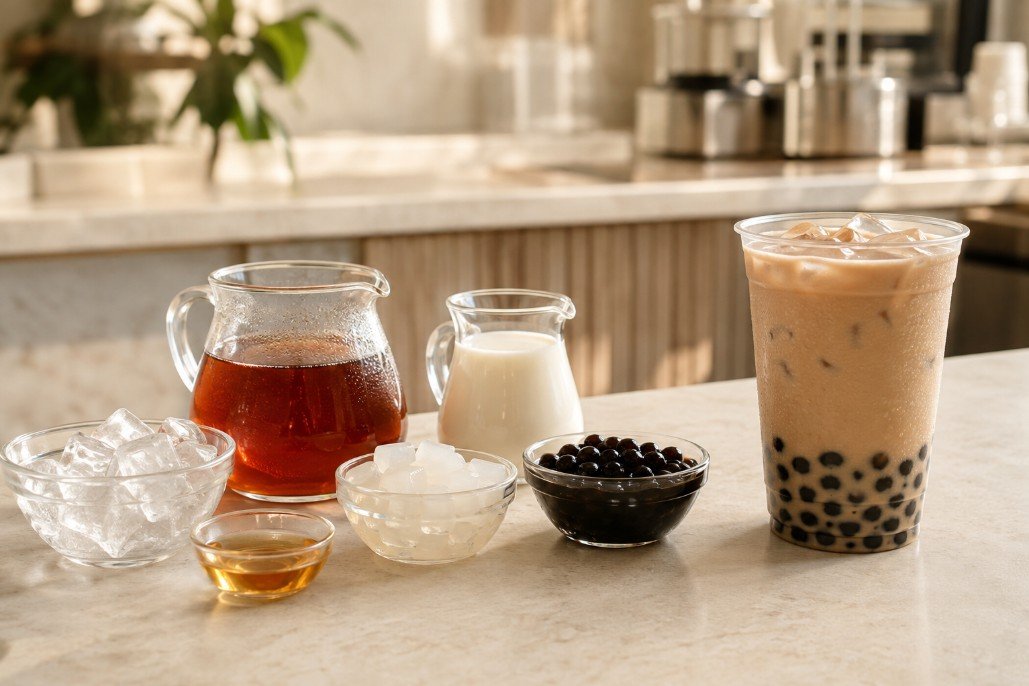
Not every cup contains every component, but most menus can be understood through the same ingredient framework. This is one of the most useful sections for beginners because it reveals which parts of a drink are essential and which are variable.
Important nuance
These percentages are visual orientation tools, not mandatory industry standards. A fruit tea, a brown sugar fresh milk and a taro slush can all fall under the broader category while using very different actual ratios.
What beginners often miss
Sweetness may already be built into powders, fruit jams, syrups or cooked pearls. That is why a “50% sugar” cup does not mean half the grams of sugar found in every other recipe.
The Main Boba Tea Drink Families
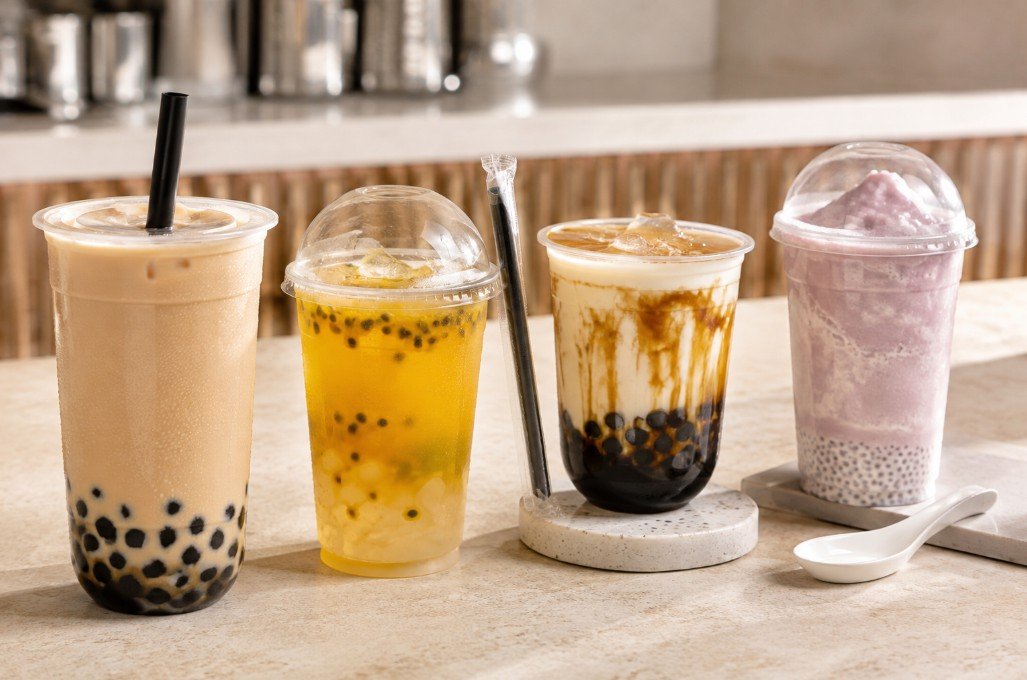
The fastest way to understand a menu is to identify the family first. This is more useful than starting with toppings because the family determines body, sweetness direction, temperature expectations and how visible the tea itself will be.
Milk tea
Tea is combined with milk, creamer or a plant-based alternative. This is the best-known family and the one many first-time drinkers picture when they hear the word “boba.” Milk tea can be light and floral or rich and roasted depending on the base tea and dairy choice.
Fruit tea
Tea or another light liquid base is combined with fruit flavor, juice, syrup, purée or jam. These drinks usually feel brighter, clearer and more refreshing than milk tea, and they are often paired with aloe, jelly, popping boba or crystal boba rather than classic tapioca.
Fresh milk drinks
These drinks focus more on milk, syrup and toppings than on a dominant brewed tea profile. Brown sugar fresh milk is the most recognizable example. Some fresh milk drinks include tea; some barely emphasize it at all. That is why they should not automatically be treated as standard milk tea.
Blended and frozen drinks
Smoothies and slushes combine ice with fruit, milk, powder, tea or other flavoring elements. They are colder, thicker and more dessert-like than most shaken teas. They can be excellent, but they are not the best first choice if someone specifically wants to understand tea character.
Also common on broader menus
Coffee drinks, sparkling fruit teas, yogurt-style drinks, straight tea, milk foam tea and other specialty beverages often appear beside the four core families. They matter, but they should not crowd the beginner map.
Milk Tea, Fresh Milk, Tea Latte and Brown Sugar Fresh Milk Are Not the Same Drink
These labels often appear next to one another, but they describe different balances of tea, dairy and sweetness. Understanding the distinction prevents one of the most common first-order disappointments: expecting a tea-forward drink and receiving a milk-led dessert cup, or expecting something creamy and getting a lighter brewed tea.
| Menu term | What it usually means | Is brewed tea required? | Typical experience |
|---|---|---|---|
| Milk tea | Tea combined with milk, creamer or a plant-based alternative. | Usually yes. | Creamy, but the tea can remain clearly recognizable. |
| Fresh milk drink | A milk-led drink built around fresh milk, syrup, matcha, taro or another flavor. | Not always. | Softer, rounder and more milk-forward than standard milk tea. |
| Tea latte | Brewed tea paired specifically with fresh milk rather than a generic creamer. | Usually yes. | Cleaner dairy flavor and a more transparent tea-to-milk relationship. |
| Brown sugar fresh milk | Fresh milk, brown sugar syrup and often warm tapioca pearls. | Often no. | Sweet, rich, caramel-like and visually layered. |
Choose milk tea when
You want the brewed tea to remain part of the flavor rather than acting only as background.
Choose fresh milk when
You want a softer, creamier cup where milk, syrup or a specialty ingredient leads the experience.
Tea Bases Change the Final Drink More Than Beginners Expect
Black, green, jasmine and oolong tea all come from the same tea plant, but they are processed differently and therefore deliver different aroma, bitterness, body and finish. That is why “boba tea” is too broad a phrase to predict flavor on its own.
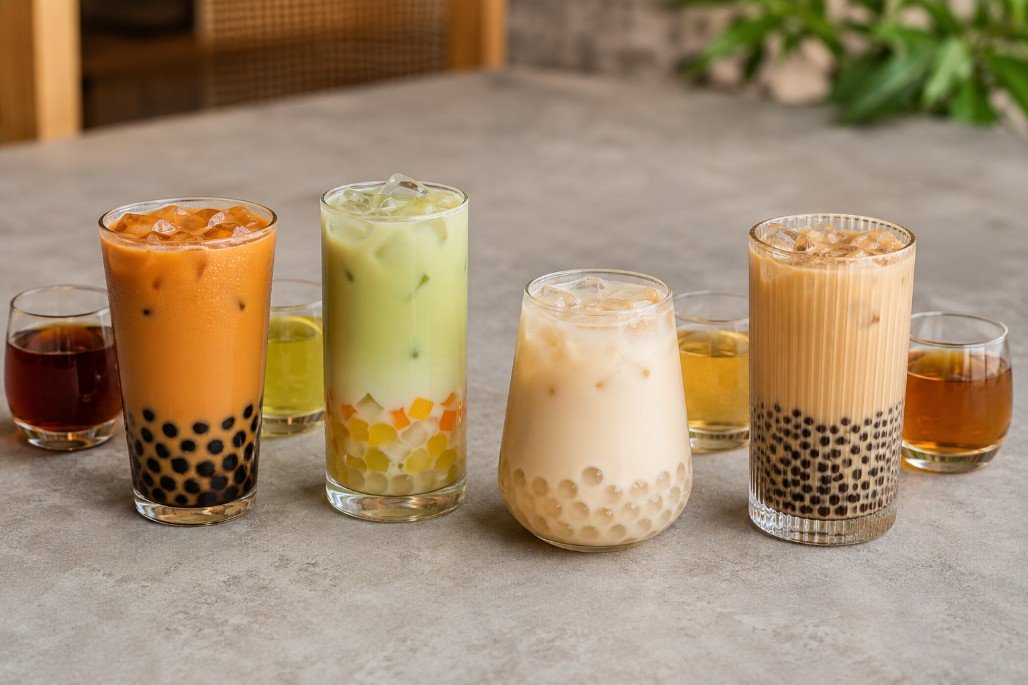
Green tea
Light, clean, refreshing
Fruit tea and lighter floral drinksJasmine tea
Floral, fragrant, soft finish
Milk tea, fruit tea and crystal bobaOolong tea
Smooth, rounded, sometimes roasted
Less-sweet milk tea and balanced cupsBlack tea
Fuller, brisker, strongest through milk
Classic milk tea and tapioca pearls| Tea base | Typical character | Works especially well in | Useful first-order pairing |
|---|---|---|---|
| Black tea | Fuller, brisker, often more noticeable through milk. | Classic milk tea and stronger flavored fruit tea. | Black milk tea with tapioca pearls. |
| Green tea | Lighter, greener, cleaner and more refreshing. | Fruit tea and lighter floral teas. | Passion fruit or mango green tea with aloe. |
| Jasmine tea | Floral, fragrant and softer in finish. | Milk tea, fruit tea and crystal-boba drinks. | Jasmine milk tea with crystal boba. |
| Oolong tea | Rounder, smoother and sometimes gently roasted. | Roasted milk tea, less-sweet drinks and brown sugar-adjacent profiles. | Roasted oolong milk tea with pearls. |
| Matcha and specialty bases | Distinctive, more ingredient-forward, sometimes earthy or savory. | Fresh milk, dessert-like drinks and specialty menus. | Matcha fresh milk with red bean. |
How Can You Tell Whether a Boba Tea Is Actually Well Made?
A good-looking cup is not automatically a balanced one. Quality is easier to judge when you separate the tea, sweetness, dilution and topping texture instead of focusing only on color or presentation.
The base remains identifiable
Black tea should not disappear completely behind milk, jasmine should retain fragrance, and fruit tea should taste like more than syrup and ice. A specialty drink can be bold, but it should still have a coherent base.
Sweetness supports rather than erases
Sugar should connect the ingredients, not flatten every cup into the same candy-like profile. Even a dessert drink should have contrast between sweetness, aroma and body.
Ice does not destroy the balance immediately
A drink should survive the first several minutes without becoming thin and flavorless. Excess ice, weak brewing or too much dilution can make the second half of a cup feel unrelated to the first.
The topping texture fits the drink
Tapioca pearls should be pleasantly chewy rather than hard or mushy. Jelly should remain distinct. Foam should feel intentional. The topping should add contrast without turning the straw into an obstacle course.
The finish is clean enough to invite another sip
Strong tea can be brisk and matcha can be earthy, but stale bitterness, powdery residue or a heavy artificial finish often signal an unbalanced recipe or poor preparation.
What Ice Level Really Changes
Ice changes dilution, aroma, sweetness perception and topping firmness. Less ice usually slows dilution and makes a tea base feel stronger. No ice may make some drinks warmer, sweeter or less integrated, and it does not guarantee that a shop will fill the cup with extra tea. Slushes and smoothies are built around ice, so removing it is not a meaningful customization.
Flavor Families and Toppings Work Best When You Match Them Intentionally
Good boba tea is not only about what sounds exciting in isolation. The most satisfying cup usually comes from matching flavor direction and texture. A delicate jasmine tea may benefit from crystal boba, while a heavy brown sugar drink is more at home with classic pearls.
Five flavor directions that cover most menus
Black tea, oolong, roasted milk tea, less-sweet milk tea and many house signatures built around brewed tea.
Classic milk tea, taro milk tea, fresh milk drinks and many dessert-leaning cups that soften the sharper edges of tea.
Mango, peach, passion fruit, lychee, citrus and berry drinks that put freshness ahead of richness.
Matcha, hojicha, sesame, red bean and other flavors that remain noticeable even when milk or sweetener is present.
Jasmine, osmanthus and some lighter fruit teas where aroma and finish matter more than weight.
If you are choosing a first drink, follow the flavor you already enjoy in coffee, tea, dessert or juice. That is more reliable than chasing a signature cup with three toppings and an unfamiliar syrup.
Texture matrix for toppings
| Texture | Common toppings | Pairs well with | Useful caution |
|---|---|---|---|
| Chewy | Tapioca pearls | Milk tea, brown sugar fresh milk, stronger tea bases | Can dominate delicate tea if the drink itself is subtle. |
| Lightly chewy | Crystal boba | Floral tea, fruit tea, lighter milk tea | Usually softer and less filling than tapioca. |
| Bursting | Popping boba | Fruit tea, slushes, sweeter specialty drinks | Can feel out of place in a subtle roasted milk tea. |
| Jelly-like | Coconut jelly, grass jelly, aloe | Fruit tea and lighter milk tea | Jelly shifts the drink toward a softer bite rather than chew. |
| Soft & substantial | Pudding, red bean | Taro, matcha, milk tea and dessert-like profiles | These can make an already rich drink feel even heavier. |
| Creamy top layer | Milk foam, cheese foam | Straight tea, fruit tea and some specialty signatures | Best when the shop intends the drink to be sipped through the top, not mixed immediately. |
Boba Tea by the Numbers: Prices, Sizes, Sweetness, Calories and Caffeine
Many boba tea guides stop at aesthetics, but real users also want practical decision-making tools. These ranges help readers understand what to expect without pretending every shop follows one recipe.
Price and size reality
| What you are buying | Typical range | What changes the price |
|---|---|---|
| Plain tea or simple tea drinks | About $5.00–$5.50 | Shop positioning, city and size |
| Standard milk tea or fruit tea | About $5.95–$6.50 | Tea base, milk, topping add-ons |
| Specialty or signature drinks | About $6.50–$8.00+ | Premium ingredients, bundled toppings, layering and seasonal builds |
| Typical cup size | 16–24 oz | Small, medium and large structures vary by chain and region |
Delivery can move the final total meaningfully higher through service fees, platform fees and separate topping upcharges. For readers comparing shops, it helps to state this explicitly instead of pretending one posted menu price tells the full story.
Sweetness, calories and caffeine
May still contain sugar from premade ingredients
Good for strongly flavored or already sweet drinks
Practical starting point for many first milk tea orders
For drinkers who still want balance but not a low-sugar profile
House standard when a recipe is built to showcase sweetness
- Calories vary dramatically. A lightly sweetened tea may be modest, while a creamy taro or brown sugar drink can be many times heavier.
- Toppings matter. Traditional pearls usually contribute far more energy than aloe or crystal boba.
- Caffeine depends on the base. Black tea, green tea, oolong, matcha and coffee all behave differently, and fruit tea may still be caffeinated if tea sits underneath the fruit profile.
- Color is not a nutrition guide. A pale drink can still be extremely sweet, while a dark tea can remain relatively light.
What numbers are most useful for readers?
Price range, size range, sweetness scale, safe storage time and a caffeine warning are usually more helpful than a giant list of calories copied line by line from one chain. Readers need orientation, not a spreadsheet without context.
What is worth explaining clearly?
That “50% sugar” is not a universal scientific standard, that toppings can change both price and energy load, and that specialty drinks often behave differently from the basic tea-and-milk model.
How to Order Boba Tea Without Guessing
Ordering becomes much easier once you treat the process like a short decision route rather than a random list of options. The goal is not to make the most complex custom drink. The goal is to say exactly enough for the shop to build the cup you actually want.
- 1
Choose the drink family
Start with milk tea, fruit tea, fresh milk or a blended drink. This determines body and overall direction.
- 2
Find the base
Black, green, jasmine, oolong, matcha, coffee or another base tells you a lot about flavor and caffeine.
- 3
Check what is fixed
Some house signatures allow fewer changes than a classic menu drink. Know whether sweetness, ice or milk can actually be changed.
- 4
Choose one texture first
One topping is usually enough for a first order. This keeps the cup coherent and helps you learn what you actually like.
- 5
Confirm dietary details
Plant milk does not solve every dairy question if powders, foams or toppings contain milk ingredients.
- 6
Repeat the full order clearly
Drink, size, sweetness, ice, milk choice and topping in one sentence is usually the cleanest spoken format.
“Medium roasted oolong milk tea, 50% sweetness, less ice, oat milk if available, and tapioca pearls.”
That sentence communicates the category, the tea base, sweetness, ice, milk choice and topping. A shop may ask the questions in a different order, but the structure remains useful.
Good first orders for different preferences
- If you like classic tea: black or oolong milk tea with pearls.
- If you like light fruity drinks: jasmine or green tea with peach, mango or passion fruit, plus aloe or jelly.
- If you like dessert-like drinks: brown sugar fresh milk or taro milk tea, preferably not at maximum sweetness.
- If you dislike chew: fruit tea with aloe, jelly or no topping at all.
- If you want tea to stay visible: less-sweet oolong or black milk tea with only one texture element.
Three mistakes worth avoiding
- Choosing by photo only. A beautiful layered cup may be far sweeter or milkier than you expect.
- Adding multiple toppings on the first try. It becomes hard to tell what you actually enjoy.
- Assuming one shop’s 50% sweetness equals another’s. Treat percentages as in-house guides, not standardized grams.
Six Boba Tea Orders for Six Different Preferences
These are not universal “best drinks.” They are practical templates that help readers convert a preference into a complete order they can adapt to a real menu.
Black milk tea
50% sweetness, less ice and tapioca pearls. Familiar, balanced and easy to compare across shops.
Peach jasmine tea
25–50% sweetness, regular or less ice and aloe or crystal boba.
Roasted oolong milk tea
30–50% sweetness, less ice and either no topping or one portion of pearls.
Brown sugar fresh milk
Choose the standard build first; reduce extra syrup or add-ons rather than layering more sweetness.
Passion fruit green tea
25–50% sweetness with aloe, coconut jelly or no topping.
Jasmine fruit tea
Ask about syrup, topping and cross-contact details; choose jelly or aloe if appropriate.
Storage, Safety and Quality: What Readers Actually Need to Know
Boba tea is usually best fresh, but many readers also want clear advice on safe handling. This is one of the most overlooked pieces of useful information in beverage guides.
Best texture
Pearls are softer and more pleasant soon after preparation. Foam, layering and ice structure are also at their best.
Refrigerate perishable drinks
Milk-, creamer- and fresh-fruit-based drinks should not sit out longer than two hours at room temperature.
Heat shortens the window
High ambient temperature reduces the safe room-temperature window to one hour.
Best practical recommendation
Even when refrigerated safely, a prepared shop drink usually loses texture quality fast. Pearls harden and ice-based balance changes.
Dietary and allergen reality
Fruit tea is often the easiest dairy-free starting point, but plant milk does not automatically make every recipe dairy-free. Creamers, foams, toppings and flavored powders can introduce milk or other allergens. Shops may also warn about cross-contact during in-store preparation.
Do not over-promise storage
A broad leftover rule exists, but a freshly prepared boba drink is not a standard bottled beverage. Good guidance should prioritize safety first and texture honesty second. Readers deserve a realistic answer: chilled same-day consumption is the best expectation.
Use the Right Shop, Not Just the Right Flavor
Two shops can list “classic milk tea” and still serve very different drinks. Good menu organization, freshness of toppings and clear customization options matter almost as much as the recipe itself.
Read the category labels
Organized menus make it easier to spot milk tea, fruit tea, fresh milk, foam tea and blended drinks without guessing from photos.
Check the customization structure
A strong shop usually makes it easy to see sweetness, ice, topping and size choices instead of burying them.
Ask about freshness when needed
If pearls or specialty toppings are central to your order, it is reasonable to ask whether they are currently available and actively prepared.
Built From Practical Boba Experience and a Worldwide Community
Boba Guide is created by a team of boba drink enthusiasts and informed by a growing community of people who experience the category from different angles: customers, home recipe testers, baristas, servers, shop workers and readers connected to tea, ingredients, preparation, service and packaging in different parts of the world.
Why this guide exists
Our team has tasted and compared a wide range of milk teas, fruit teas, fresh milk drinks, tea lattes, toppings, regional menu styles and home-prepared recipes. Just as importantly, our readers regularly share practical observations from cafés, kitchens and local boba communities. Those contributions help us notice differences that generic summaries often miss: how the same menu term changes by country, why pearl texture varies through the day, how seasonal flavors emerge, which customizations work in practice and where packaging or delivery changes the final drink.
We built this guide to make that accumulated experience accessible. The goal is not only to define a drink. It is to document the culture around boba, explain how menus work, preserve useful traditions, explore recipes and follow new directions in tea, flavor, texture, service and product development.
Boba Guide Editorial Team
A collaborative editorial team supported by an international community of boba enthusiasts and contributors with practical experience across tasting, preparation, café service, ingredients, recipes, packaging and evolving drink trends.
How the numbers in this guide should be read
Prices, serving sizes, sweetness controls, caffeine references and nutrition examples vary by shop, country and recipe. We use practical ranges and clearly labeled examples rather than presenting one chain’s formula as a universal industry standard. Where safety matters, authoritative public guidance takes priority over anecdotal experience.
If You Want to Explore Boba Beyond the Shop
Some readers want to compare straws, reusable cups, tea, pearls and starter supplies after learning how the category works. Keep that content separate from the main guide so the article stays useful first and commercial second.
Boba Tea Questions Answered Clearly
These answers condense the most important information from the guide into short, direct responses.
What is boba tea?
Boba tea is a customizable drink category that may include tea or another liquid base, milk or fruit flavoring, sweetener, ice and toppings such as tapioca pearls, jelly or foam.
Is boba tea the same as bubble tea?
In everyday use, yes. People often use the terms interchangeably, while the word “boba” may also refer specifically to tapioca pearls depending on context.
Does boba tea always contain milk?
No. Fruit tea often contains no milk at all, and some specialty drinks use fresh milk while others rely on brewed tea, creamer or blended bases.
Do all boba drinks contain tea?
No. Many do, but some fresh milk drinks, smoothies, slushes and other specialties may emphasize milk, fruit, powder or coffee more than brewed tea.
What is the best first boba tea order?
A black or oolong milk tea with 50% sweetness, less ice and one topping such as tapioca pearls is a practical first choice for many people. A fruit tea with aloe or jelly is another good entry point if you prefer lighter drinks.
What is the difference between tapioca pearls and popping boba?
Tapioca pearls are chewy and dense, while popping boba burst with flavored liquid. Pearls suit milk tea especially well; popping boba are usually better in fruit-driven drinks.
What sweetness level should a first-time drinker choose?
About 50% is a practical starting point for many milk tea orders, but fruit drinks or already sweet specialty drinks may work better around 25% to 50% depending on the shop.
How much does boba tea usually cost?
Current sampled U.S. shop menus often place simple tea drinks around $5.00 to $5.50, standard milk tea or fruit tea around $5.95 to $6.50, and more premium or included-topping drinks around $6.50 to $8.00 or more.
How much caffeine is in boba tea?
It depends on the base. A black- or green-tea drink can land broadly in the range associated with standard tea, while matcha and coffee-based drinks may differ, and some fruit drinks still contain tea under the flavoring.
Can boba tea be dairy-free?
Sometimes, yes. Fruit tea or drinks made with a suitable plant milk can be dairy-free, but readers should still check foams, powders, creamers and toppings because they may contain milk or involve cross-contact.
How long can boba tea sit out?
Treat milk-, creamer- and fresh-fruit-based boba drinks as perishable. Refrigerate within two hours at room temperature, or within one hour if the environment is above 90°F / 32°C.
How long does boba tea stay good in the fridge?
For quality, a freshly prepared shop drink is best the same day even when refrigerated. The safest useful answer combines food-safety guidance with texture honesty: chilled same-day consumption is the best expectation.
Who writes Boba Guide articles?
Boba Guide articles are created by the Boba Guide Editorial Team and informed by practical tasting, menu research, official source review and observations shared by a worldwide community that includes enthusiasts, baristas, servers, shop workers and other contributors connected to boba preparation and culture.
How does Boba Guide verify practical recommendations?
The team compares hands-on experience with current menus, nutrition information, ingredient disclosures and authoritative safety guidance. Community observations help identify real-world differences, while factual or safety-sensitive claims are checked against reliable published sources.
Start With Structure, Then Build Your Taste
The strongest boba tea guide does not push every reader toward the same signature drink. It teaches how the category works: family first, base second, sweetness and ice third, texture last. Once that structure becomes intuitive, you can move far more confidently through milk tea, fruit tea, fresh milk, specialty tea and seasonal releases without getting lost in the menu.
Boba tea becomes much more enjoyable when the drink matches your real preference instead of a trend photo. If you remember only one rule, make it this one: choose the drink for its balance of flavor and texture, not for the number of add-ons it can hold.