
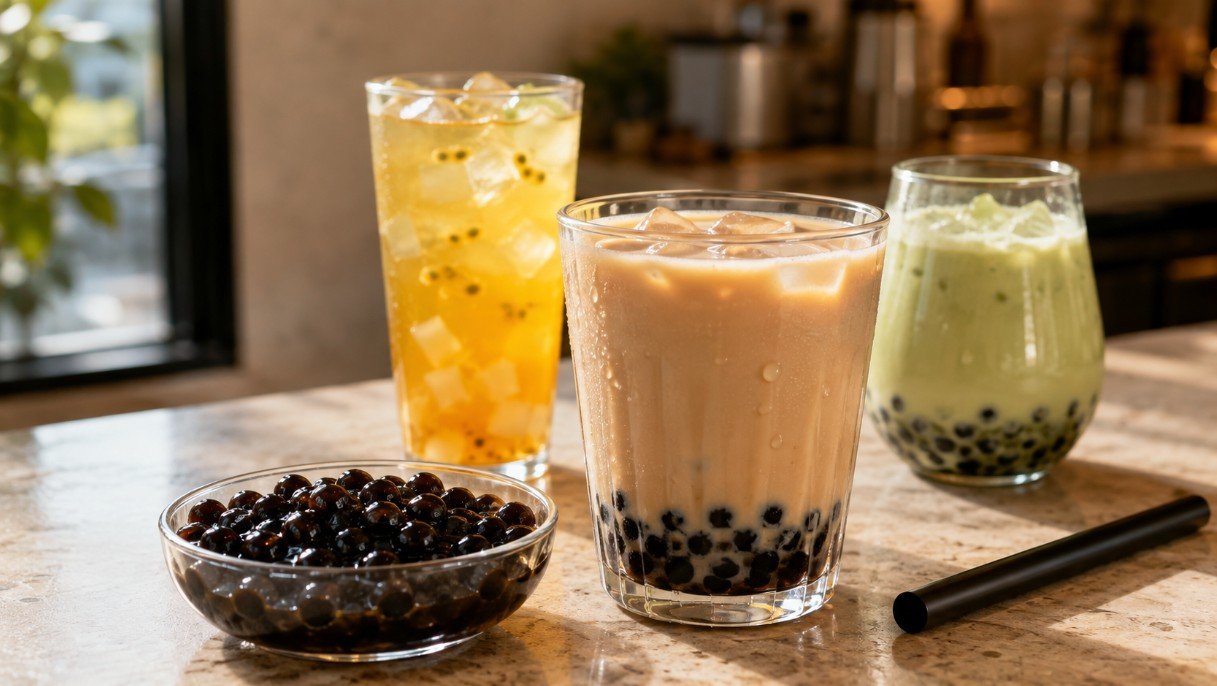
What Is Bubble Tea? A Guide to the Drink, Pearls and Taiwanese Tea-Shop Culture
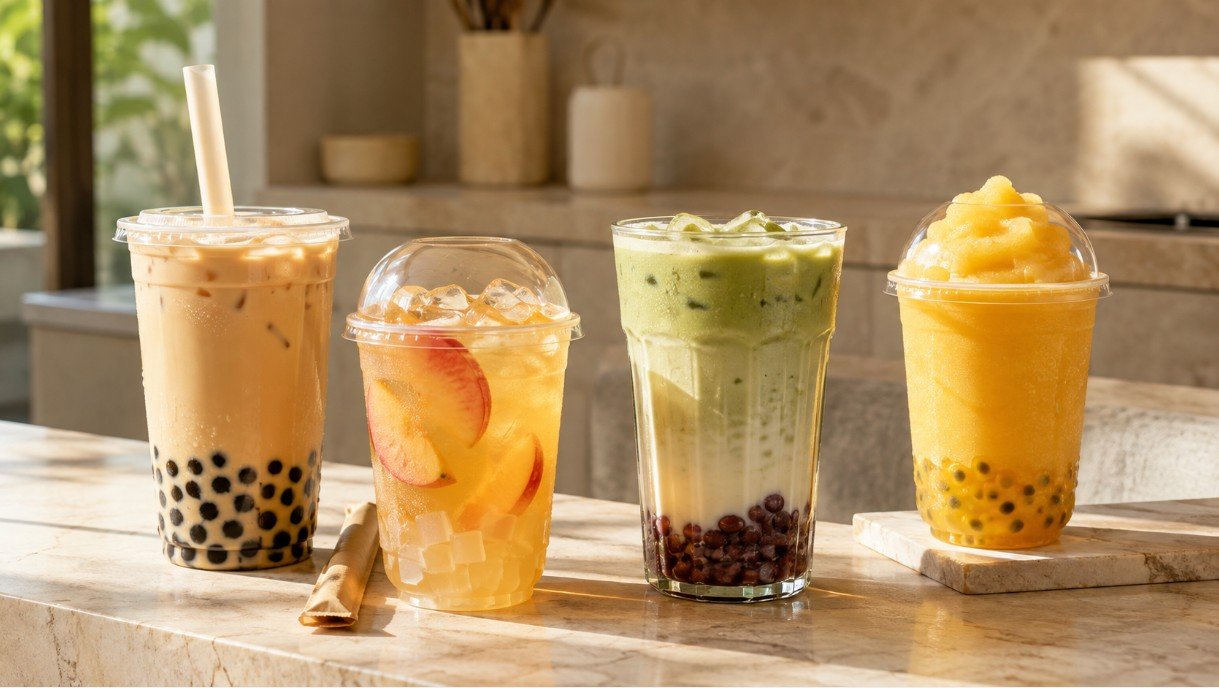
Bubble tea is a Taiwanese drink category that grew out of shaken tea and pearl milk tea culture. A classic cup combines tea, milk, sweetness and chewy tapioca pearls, but modern bubble tea can also be fruit tea, fresh-milk tea, plain brewed tea, coffee, a smoothie or a slush—with pearls, jelly, pudding, foam, other toppings, or no topping at all.
The easiest way to understand the category is not to memorize flavors. Learn how the cup is built: choose a liquid base, decide how creamy or fruity it should be, set sweetness and temperature, then decide whether you want texture. That same logic helps explain a traditional pearl milk tea in Taiwan and a highly customized fruit tea in an American boba shop.
It is a category of customizable drinks, not one fixed recipe
Milk tea with tapioca pearls is the iconic reference point, but it is only one member of the family. Bubble tea can be tea-forward or milk-forward, clear or creamy, hot or iced, still or blended, lightly sweet or dessert-like. Pearls are famous, not mandatory.
If the word boba itself is confusing, the separate guide to what boba means explains why it can refer to the pearls, the drink, or both depending on context.
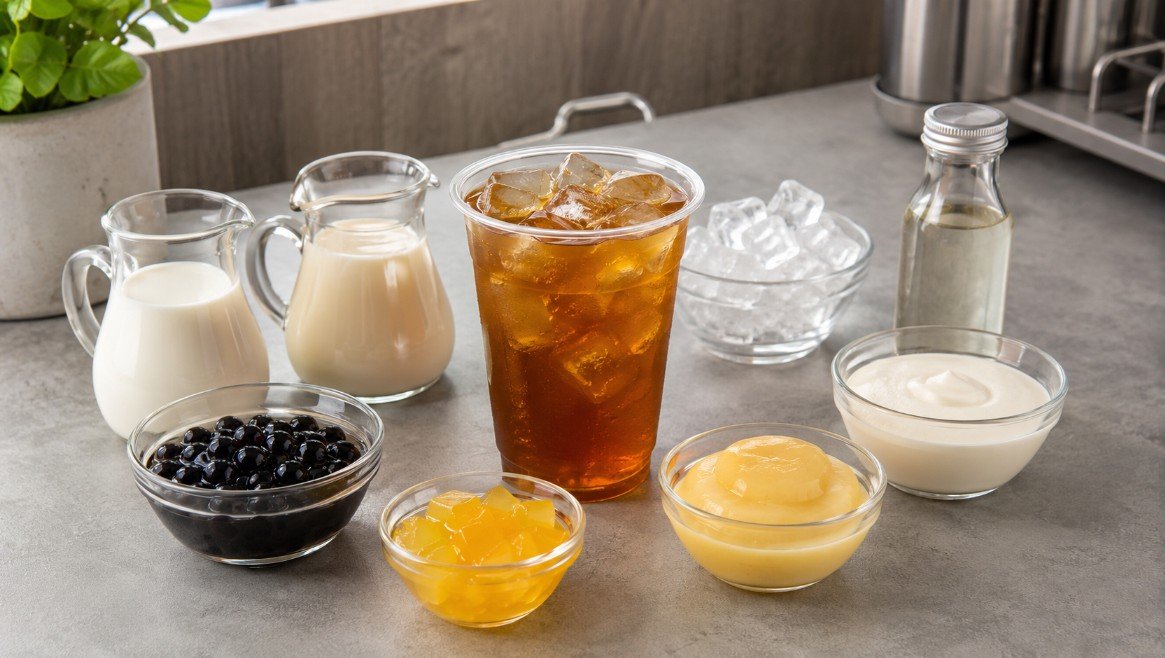
Base
Tea, milk, fruit, coffee or blended ice.Body
Fresh milk, creamer, foam—or none.Sweetness
Syrup, fruit, brown sugar or an already-sweetened ingredient.Temperature
Ice level, cold service, hot service or blending.Texture
Tapioca, jelly, pudding, aloe, foam—or nothing added.This is why the broader boba tea guide covers many finished drink styles, while this page stays focused on what the category actually is and how to read it.
One more distinction helps: customizable does not mean infinitely customizable. Some signature drinks have fixed sweetness, fixed toppings or a preparation that only works at certain ice levels. Brown-sugar drinks may already contain sweetened pearls; fruit bases can arrive pre-sweetened; foam drinks depend on a specific top layer. A good menu therefore tells you both what can change and what should stay fixed. That is part of learning the category rather than assuming every percentage or add-on behaves identically everywhere.
Modern bubble tea grew from Taiwan’s culture of cold, shaken tea
Taiwan did not suddenly invent tea, milk, tapioca or cold desserts in one moment. The breakthrough was a tea-shop culture that mixed familiar elements into a new kind of made-to-order drink: chilled tea, shaking, sweetness, milk and eventually chewy starch pearls in the same cup.
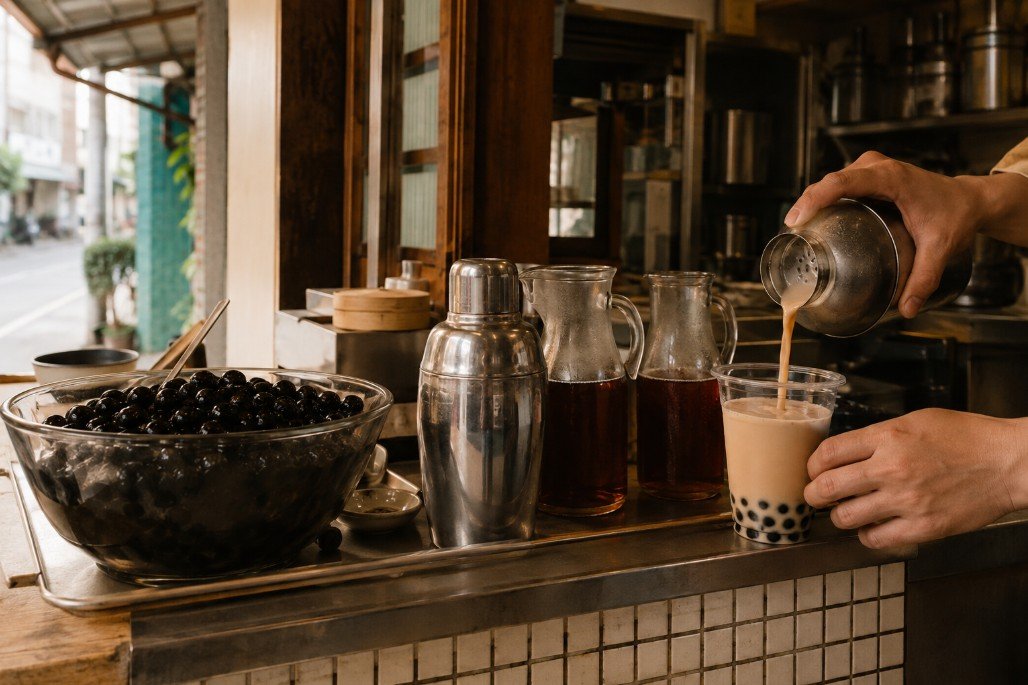
The shaker matters to the history: Taiwan’s hand-shaken drink culture predates the global shorthand of “boba = pearls.”
Tea and starch desserts already existed
Taiwan already had a deep tea culture, sweet cold drinks, shaved-ice toppings and chewy starch-based desserts.
Foam became part of the experience
Tea shaken with ice and sweetener produced a cold, aerated drink. This helps explain why the word “bubble” does not simply mean tapioca balls.
Pearls joined milk tea
Modern pearl milk tea emerged in Taiwan in the 1980s. Chun Shui Tang in Taichung and Hanlin Tea Room in Tainan are both associated with competing origin stories.
One drink became a flexible category
Taiwanese and broader Asian food culture carried the format abroad, where menus expanded into different teas, fruits, milks, textures and regional styles.
The exact “first inventor” remains disputed, so it is more accurate to describe bubble tea as a Taiwanese innovation of the 1980s than to present one invention story as settled fact. For the deeper history, see where boba originated and the broader bubble tea culture guide.
A few Taiwanese menu terms explain more than another list of flavors
English compresses several ideas into the words boba and bubble tea. Taiwanese menus often preserve distinctions that tell you more about the drink’s texture, milk style and tea base.
The classic combination of milk tea and chewy pearls. It is a specific drink, not the entire modern category.
A traditional general term for round starch-based pearls or balls. It should not be translated as if it always means one standardized pearl size.
In Taiwanese usage, this can refer to larger fěnyuán. Size language still varies by shop, so a menu’s own naming matters.
A shaken tea tradition that helps explain the “bubble” part of bubble tea before pearls became the global visual icon.
Often signals brewed tea with fresh milk rather than a creamer-based milk tea. This distinction can change both flavor and ingredients.
A creamy top layer used over tea or flavored drinks. It changes texture and salt-fat balance without making the whole drink a milk tea.
This language is also why boba and bubble tea are not always identical terms. Context decides whether “boba” means the whole drink, the topping or a menu category.
Bubble tea, boba tea and pearl milk tea overlap—but they are not perfect synonyms
In everyday U.S. speech, boba and bubble tea often point to the same shop category. In a Taiwanese context, however, pearl milk tea is much narrower: it describes a milk-tea drink with pearls. A shop can sell dozens of hand-shaken teas that contain no milk and no pearls at all. That distinction matters because otherwise a reader can walk into a mature Taiwanese menu expecting every drink to resemble the brown milk tea shown in international advertising.
The safest mental model is to treat bubble tea as the broad modern category, pearl milk tea as one iconic drink inside it, and boba as a context-dependent English term that may refer either to the category or to the pearls. That model is deliberately flexible because real menus are flexible. If you need the exact wording differences side by side, the boba vs. bubble tea comparison handles that narrower question.
This also explains why a clear oolong with aloe, a strawberry slush with popping boba and a brown-sugar fresh-milk drink can all sit inside a boba shop without sharing one mandatory ingredient. The category is held together by its tea-shop lineage, customization culture and use of layered flavor and texture—not by a rule that every cup must contain milk, tea and black tapioca at the same time.
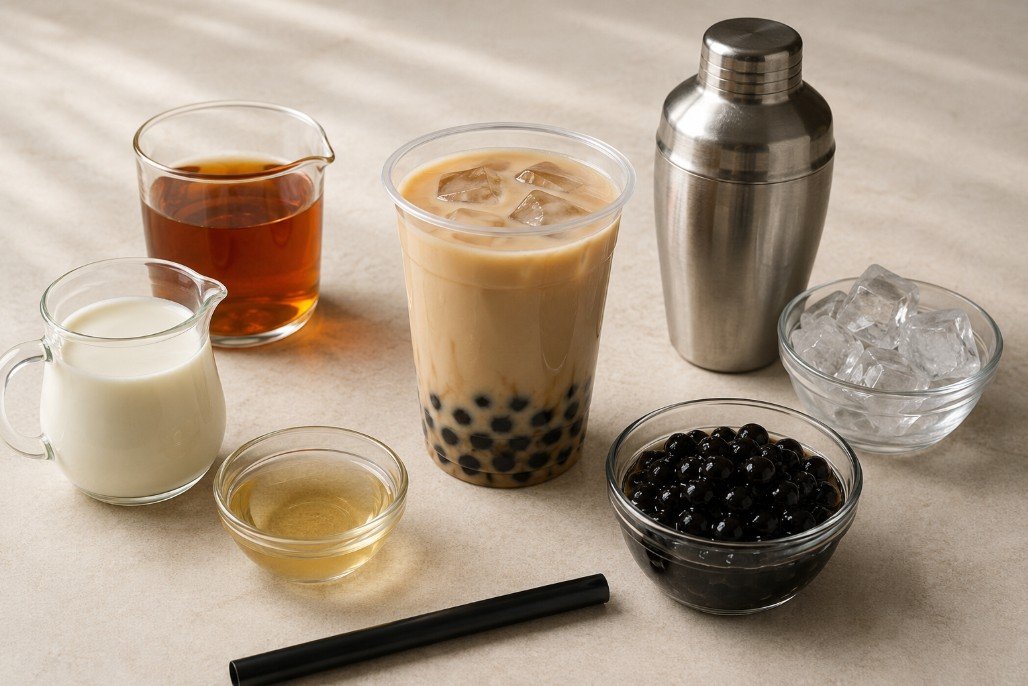
What bubble tea is made of depends on which parts the shop combines
There is no universal ingredient list. A clear fruit tea and a brown sugar fresh-milk drink can both be sold in the same bubble tea shop while sharing almost none of the same liquid ingredients.
The base decides the drink’s backbone
Black tea, jasmine green tea, oolong, roasted tea, fresh milk, fruit, coffee and blended bases all behave differently. A strong Assam-style milk tea is not simply the same drink with a different flavor name as a jasmine fruit tea.
Milk changes body, but it is optional
Milk tea may use fresh dairy milk, plant milk, milk powder or non-dairy creamer depending on the shop. Fruit tea and plain tea can be completely milk-free. A Taiwanese “fresh milk” line often exists precisely because fresh-milk tea and creamer-based milk tea are different builds.
Sweetness may already exist before the syrup setting
Brown-sugar pearls, flavored powders, fruit concentrates, pudding, sauces and sweetened creamers can all contribute sugar. That is why a counter setting of “0%” or “no added sugar” does not automatically mean the finished drink contains zero sugar.
Texture functions like an ingredient category
Tapioca pearls are iconic, but jellies, aloe, pudding, red bean, sago, taro balls and foam create completely different eating experiences. Ingredient questions such as gelatin, dairy or starch belong in the deeper guide to what boba is made of.
Most bubble tea menus become easier once you recognize six drink families
Flavor names can be distracting. Start by identifying the format first; then the name “mango,” “taro,” “brown sugar” or “matcha” becomes much easier to interpret.
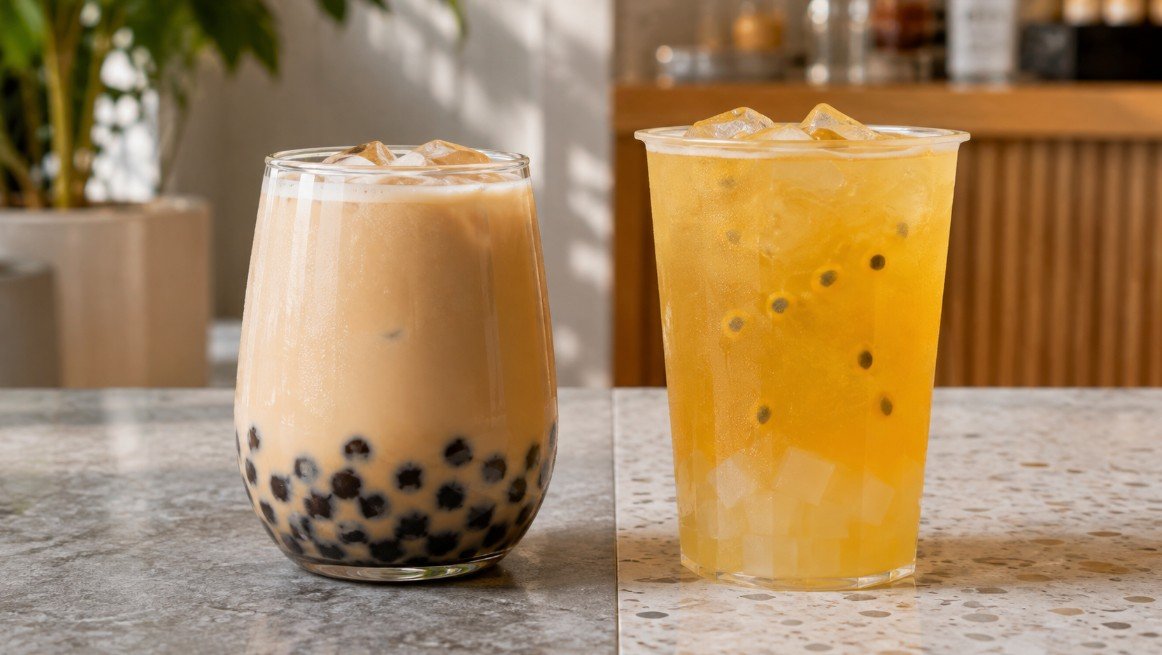
Milk tea
Brewed tea combined with milk, creamer or another creamy component. Black tea, jasmine and oolong are common, but the tea can range from malty and brisk to floral or roasted.
Fruit tea
Tea or another liquid base combined with fruit syrup, juice, purée or fresh fruit. Citrus, passion fruit, lychee, peach and mango can taste radically different depending on the underlying tea.
Fresh-milk drinks
Milk is visually and structurally central. Brown sugar fresh milk, taro fresh milk and some matcha drinks may contain little brewed tea—or none at all.
Plain and flavored brewed tea
Black, green, jasmine, oolong, Four Seasons and roasted teas may be served without milk, then customized with sweetness, fruit or toppings.
Smoothies and slushes
Blended ice changes the drink’s body and dilution. Some versions use fruit, some powder, some milk, and some brewed tea.
Foam, coffee and layered builds
Cheese foam, milk cap, coffee, pudding, layered fruit and other signatures sit across several categories instead of behaving like one universal recipe.
For a larger taxonomy of these formats, continue to the boba drinks guide. If your question is specifically about flavor names, use the separate boba flavors guide.
Texture is what made bubble tea unlike an ordinary iced drink
Many bubble tea orders are designed to be eaten as well as drunk. Tapioca pearls are the best-known example, but the category now includes bursting, jelly-like, creamy and soft-chewy textures that change how the entire cup feels.
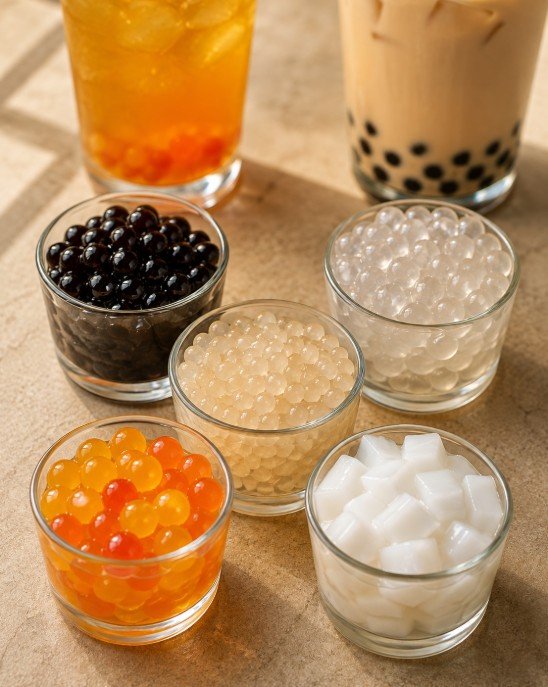
Tapioca
Dense, chewy and springy when fresh. Much of the sweetness usually comes from the syrup used after cooking.
Popping boba
A thin membrane bursts and releases flavored liquid. The sensation is completely different from chewing starch pearls.
Crystal boba & jelly
Usually lighter, softer or more slippery than classic tapioca, with texture varying by ingredient and brand.
Pudding & foam
Soft custard or a creamy top layer changes richness more than chew. These toppings can transform a tea into a dessert-style order.
Fresh tapioca is a moving target, not a shelf-stable texture
Tapioca texture changes after cooking. Heat, syrup, holding time and the temperature of the final drink all affect whether the pearl feels springy, soft, hard-centered or mushy.
Starch gelatinizes
Enough water and heat are needed to cook the interior rather than leaving a chalky or hard center.
Syrup seasons the pearl
Freshly cooked pearls are often held in sugar or brown-sugar syrup, which affects both surface flavor and moisture.
Time matters
Shops typically work with finite holding windows because tapioca does not keep its ideal chew indefinitely. Exact practice varies by shop.
Cold changes texture
Long contact with a very cold drink can make pearls feel firmer, while excessive holding can create a softer or less distinct bite.
For deeper comparisons among tapioca, popping boba, crystal boba, jelly and other add-ins, use the boba toppings guide and the separate boba texture guide.
Bubble tea has no single flavor—and that is the point
The word boba tells you almost nothing about flavor by itself. Tea choice, milk, fruit, syrup, toppings and temperature can move a cup from floral and refreshing to roasted, creamy or dessert-like.
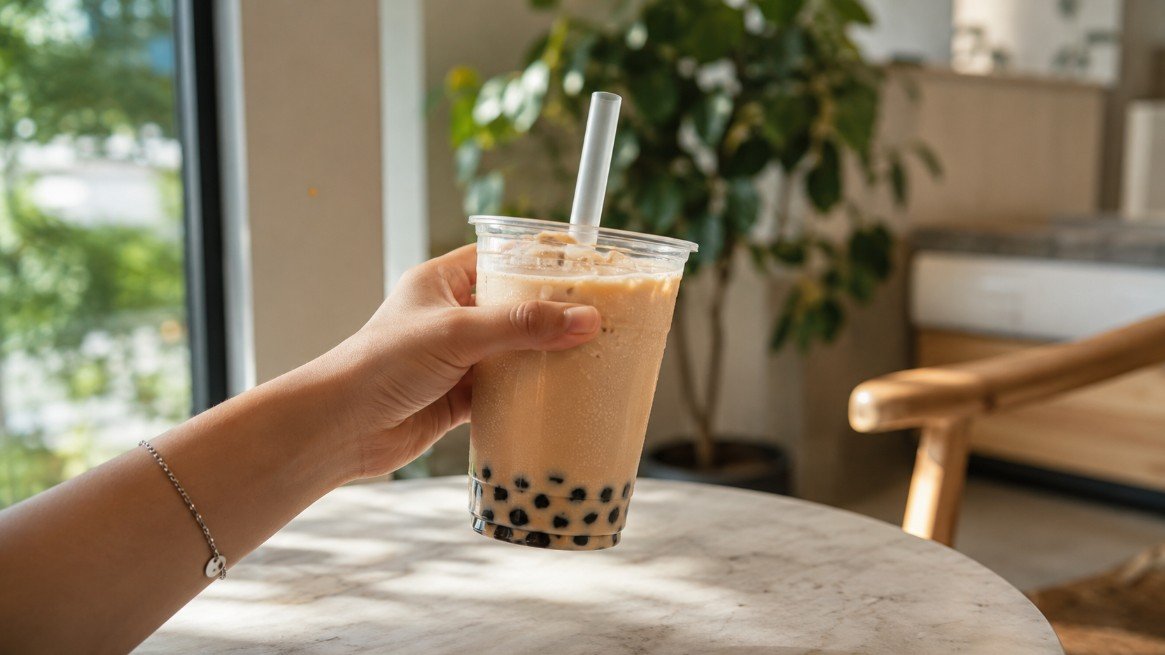
Tea-first cups
Black tea can be malty or brisk; jasmine can be floral; oolong ranges from fresh and aromatic to roasted and nutty; matcha is concentrated and vegetal. A good tea-based drink should still let you identify something about the tea after milk, ice and sweetness are added.
Milk-first cups
Fresh milk or creamer makes the drink rounder and softer. That can make tea more approachable, but too much body can flatten delicate aroma.
Fruit-first cups
Acidity and aroma matter more than creaminess. Passion fruit, citrus, peach, lychee and mango can pair with tea or become the primary flavor.
Dessert-first cups
Brown sugar, taro-style drinks, pudding, foam and blended formats are intentionally rich. They answer a different craving than a tea-forward cup.
For a sensory breakdown focused specifically on flavor and mouthfeel, see what boba tastes like.
Bubble tea is assembled from components that are often prepared separately
A good shop is managing several clocks at once: tea brewing, cooling, pearl cooking, topping holding, fruit preparation and made-to-order mixing. That is one reason two cups with the same name can differ so much between shops.
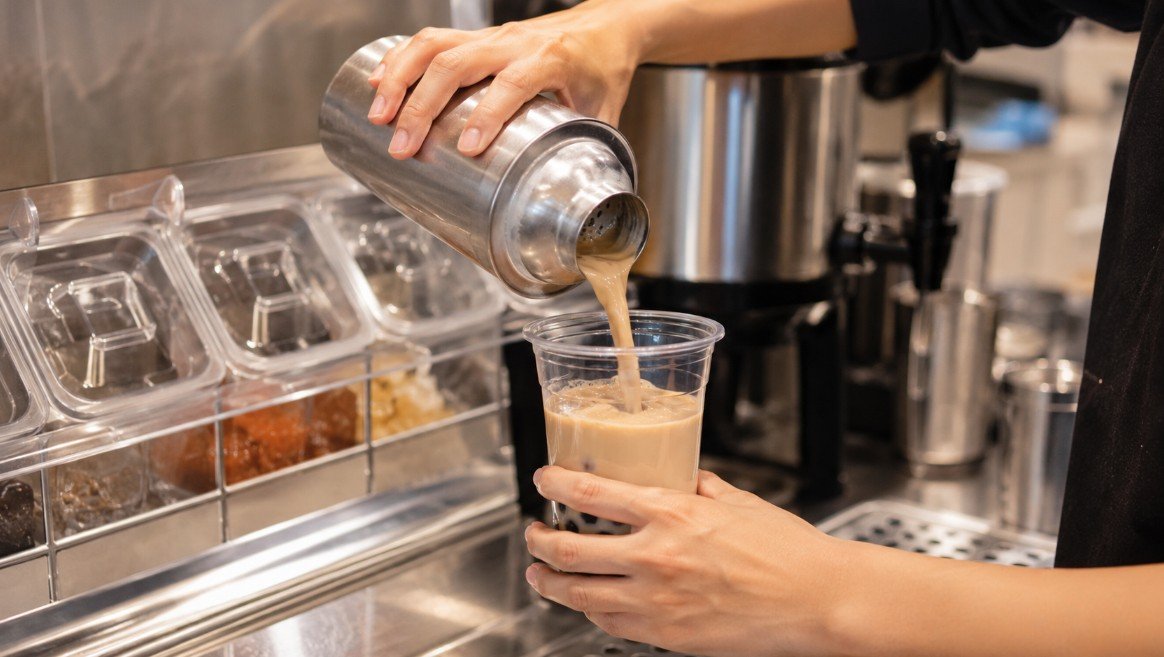
Brew or build the base
Tea may be brewed in advance or to order; fruit, milk, coffee or blended bases use different workflows.
Add sweetness and flavor
Syrup, fruit, powder, honey or another ingredient shapes the final balance.
Set ice and temperature
Cold drinks may be shaken with ice, poured over ice or blended. Hot drinks follow a different texture logic.
Shake, stir or blend
Shaking can cool and aerate tea; blending creates a frozen texture; layered drinks may be assembled more gently.
Add toppings and serve
Pearls, jelly, pudding or foam complete the order. The drink begins changing as soon as ice melts and toppings sit.
Home preparation follows the same basic logic but gives you more control. Start with how to make boba at home, or go directly to brewing tea for boba if the tea base is your main problem.
Current Taiwanese menus show why “bubble tea” is much bigger than pearl milk tea
Looking at current Taiwan shop menus is more useful than treating an American flavor list as the definition of the category. Mature menus reveal how tea base, milk style, fruit, foam and toppings are separate decisions.
Read the menu in this order: identify the drink family, identify the base, then look at milk, sweetness, ice and toppings. This is more reliable than assuming a familiar flavor name tells you the whole recipe.
For the full ordering process, use how to order boba. If the menu itself is the confusing part, continue to how to read a boba menu.
Sweetness and ice are part of the recipe, not decorative settings
On Taiwanese hand-shaken drink menus, sugar and ice are often treated as fundamental preparation choices. You may encounter verbal sweetness terms such as 無糖 (no added sugar), 微糖 (very light sugar), 半糖 (half sugar), 少糖 (less sugar) and 正常糖 (regular sugar), alongside ice terms such as 去冰 (no ice), 微冰 (very light ice), 少冰 (less ice) and 正常冰 (regular ice). Exact definitions still belong to the shop; these are ordering terms, not laboratory standards.
That last point prevents two common mistakes. First, a “50%” or “half sugar” setting does not mean the finished drink contains half the grams of sugar of every other shop’s full-sugar recipe. Powders, fruit concentrates, milk, brown-sugar pearls and other ingredients may already contribute sweetness. Second, “less ice” does not universally mean a larger liquid volume. One shop may top up the cup, another may keep the drink recipe fixed, and a third may adjust tea strength to preserve balance.
These variables also change flavor perception. A very cold drink can initially taste less sweet and less aromatic; as ice melts, the same cup may become more diluted but seem easier to smell. A milk tea brewed strong enough for regular ice may taste too aggressive if served hot, while a delicate fruit tea can become watery if the tea base was not built to survive melting ice. That is why sweetness and ice deserve their own guides rather than being treated as buttons at the end of an order. See boba sweetness levels for the sugar-setting logic.
A flavor word does not tell you how the cup is built
This is one of the easiest ways to misread a boba menu. The same flavor can appear as tea, milk, fresh milk, slush or dessert-style drink, with completely different caffeine, dairy and texture.
Mango
Usually bright, diluted with tea and ice, often paired with jelly or popping boba.
Frozen and blended; body and sweetness are shaped by ice and the fruit base.
Creamier and heavier, with dairy or another milk component changing acidity and flavor.
Taro
Can be smooth, sweet and very consistent, sometimes with little actual taro texture.
May taste earthier and more starchy, with real taro contributing body and visible texture.
Adds a tea base, so caffeine and aroma depend on the shop’s recipe.
Brown sugar
The syrup may primarily season the tapioca rather than the entire liquid.
Milk-forward and sometimes tea-free, often recognizable by caramelized syrup along the cup.
Includes a brewed tea component and can taste more tannic or aromatic than fresh milk alone.
Bubble tea changes as it travels, but its Taiwanese logic remains visible
There is no single global menu template. Chains and independent shops adapt tea choices, sweetness language, milk, fruit and toppings to local preferences. What survives is the idea that the customer is often choosing a build rather than merely selecting a bottled flavor.
Taiwan
Tea names often stay close to the surface: Ceylon black tea, jasmine, Four Seasons, oolong, Pouchong and roasted teas can be visible menu identities. Verbal sweetness and ice terms are common.
Japan
Bubble tea can sit inside a broader tea-café identity, with matcha, hojicha and straight-tea culture influencing how the drinks are presented.
South Korea
Major chains often present customization as a clear combinatorial system: drink family, sweetness, ice and toppings are shown as explicit choices.
Singapore
Taiwanese tea chains coexist with regional sweeteners, tropical fruit and highly competitive specialty menus, making the category broader than classic pearl milk tea.
Malaysia
Tea, coffee, smoothies, brown-sugar drinks and highly flavored specialty beverages frequently share the same modern boba-shop ecosystem.
The practical lesson is not to search for the “most authentic flavor.” Look for a menu that tells you what the base is and lets the drink’s ingredients make sense together.
Why the category traveled so well
Bubble tea adapts without losing its identity because the format is modular. A shop can preserve Taiwanese tea technique while changing fruit, dairy, sweetness, portion size or topping selection for a local market. The customer still recognizes the familiar ritual of choosing a drink, adjusting it and deciding whether to add texture. That flexibility helps explain why bubble tea can feel culturally specific and globally adaptable at the same time.
The social side matters too. A sealed cup travels well, toppings make the drink interactive, and customization gives groups something to compare even when everyone orders differently. A tea drinker can choose unsweetened oolong, a coffee drinker can order coffee boba, and someone looking for dessert can choose a brown-sugar or taro-style drink without leaving the same shop. Modern boba shops therefore function as more than places selling one recipe: they are menu systems capable of serving several beverage preferences at once.
That adaptability should not erase the origin story. Calling every sweet drink with pearls “traditional Taiwanese bubble tea” would flatten real differences in tea culture and preparation. A better approach is to recognize the Taiwanese roots while being precise about which parts of a modern menu are newer, regional or shop-specific.
Tea is not just brown liquid underneath milk and syrup
The more you understand tea, the easier it becomes to predict a boba drink before ordering it. Strong black tea can support milk and tapioca. Jasmine can keep a fruit drink aromatic. Oolong may bring floral, mineral or roasted notes. Matcha behaves differently again because powdered tea remains suspended in the drink.
Tea-focused shops often reveal more of this structure on the menu. A shop listing Assam, Ceylon, jasmine, Four Seasons, Pouchong or roasted oolong is giving you more information than a menu that labels everything simply “milk tea.” That does not automatically make one shop better, but it helps you predict flavor.
For the broader tea branch, start with the tea guide or the more specific guide to how tea works as a boba base. If you are choosing a base for a home recipe, compare the best teas for boba.
You do not need the entire menu to understand bubble tea
A first order is easier when one part is familiar. Keep the drink family simple, choose one texture, and use the next cup to learn what you would change.
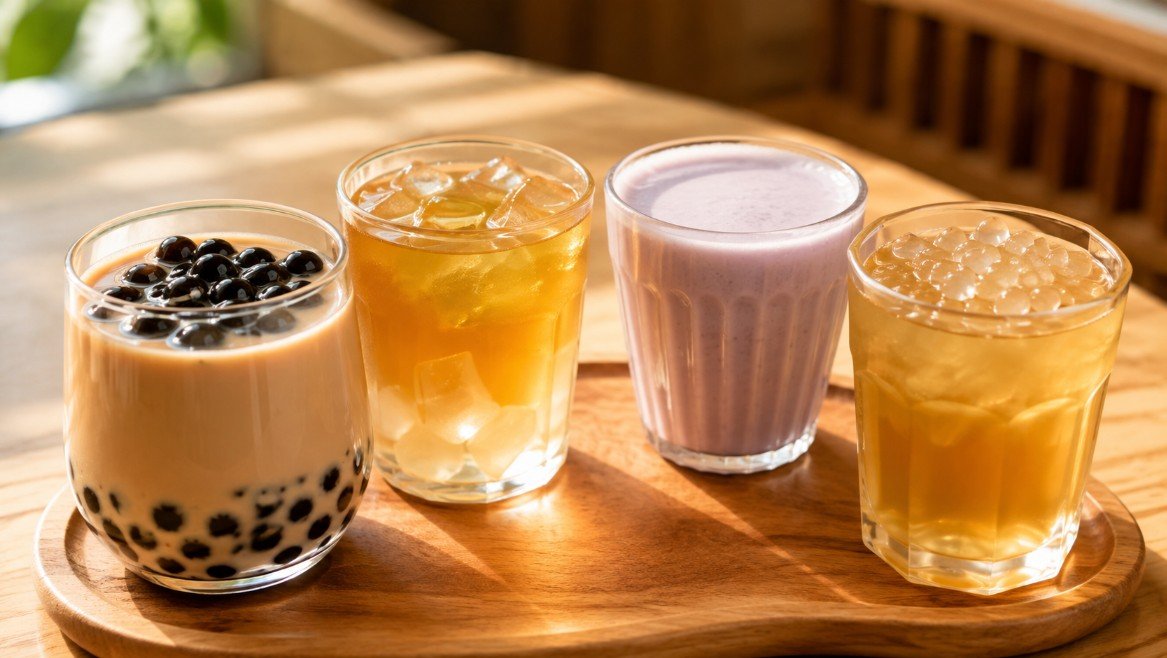
If you like creamy drinks
Start with a black or jasmine milk tea. Moderate sweetness and one topping make the tea easier to read.
If you like lemonade or iced tea
Choose a peach, passion fruit, citrus or lychee tea with jelly, crystal boba or no topping.
If chewing through a straw sounds unpleasant
Skip tapioca entirely. Toppings are optional; a good tea or fruit drink should still taste complete.
For a full decision guide rather than another definition section, use best boba for beginners or Choose Your Boba.
The words “bubble tea” are not enough to predict sugar, calories or caffeine
A lightly sweetened brewed tea and a large milk drink with brown sugar, pearls, pudding and foam can sit on the same menu. Nutrition follows the actual recipe, not the category name.
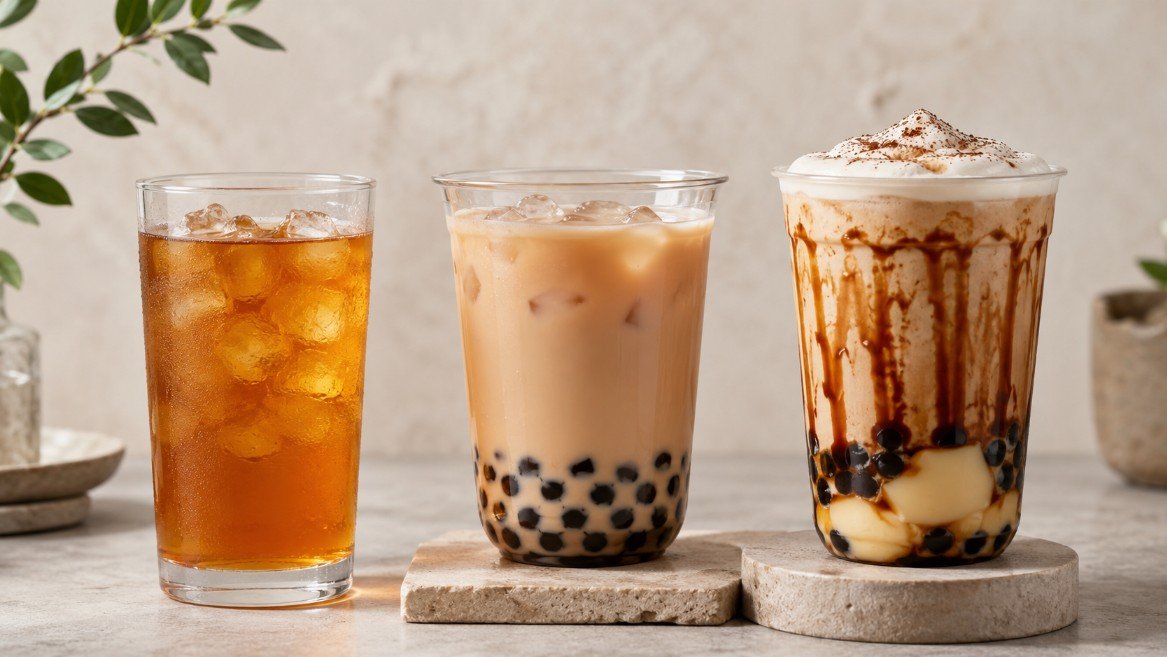
Sweetness setting is not total sugar
Powders, fruit concentrates, milk, brown-sugar pearls and pudding may already contain sugar before the customizable syrup setting is applied.
Caffeine follows the base
Black, green, jasmine, oolong, matcha and coffee drinks normally contain caffeine; a tea-free fresh-milk drink may not. Fruit flavor alone tells you nothing.
Allergens follow ingredients
Dairy, soy, egg, nuts, wheat, sesame and cross-contact depend on the actual milk, creamer, powder, foam, pudding and topping used.
Use the dedicated boba nutrition guide for calories, sugar and caffeine, and the boba dietary guide for dairy, vegan, gluten and allergen questions.
Ice, pearl temperature and holding time can transform the same recipe
A boba drink is not static. The first five minutes and the last five minutes can taste and feel different, especially when tapioca, foam or a blended base is involved.
Ice changes concentration
Melting ice can soften sweetness and tea intensity, but less ice does not universally mean the shop gives you more liquid. Fill practices vary. The separate boba ice levels guide explains the tradeoff.
Tapioca has the shortest texture window
Pearls can firm as they cool and lose springiness as they sit. Delivery therefore affects a pearl drink more than it affects plain bottled tea.
Foam and layers settle
Milk cap can thin, layered fresh-milk drinks merge, and blended ice melts. Some drinks are designed to be mixed immediately; others are intentionally layered for a short time.
Hot bubble tea is genuinely different
Warm milk tea can emphasize aroma and reduce ice dilution, but the topping texture changes and some toppings simply make more sense cold.
A bubble tea recipe can change at nearly every step
“Recipes vary by shop” is not a useful explanation unless we name what actually varies. Two cups called jasmine milk tea can differ because the shops made different choices before you ever touched the sweetness button.
The tea may be different
One shop may use jasmine green tea with a clear floral aroma; another may use a stronger blended tea base designed mainly to carry milk and syrup. Leaf dose, extraction and holding temperature matter too.
The milk system may be different
Fresh dairy milk, plant milk, milk powder and non-dairy creamer do not create the same body or flavor. A menu that separates milk tea from fresh-milk tea is telling you something important about recipe structure.
The flavor may be fresh, concentrated or powdered
Mango purée, flavored syrup and powdered mango base can produce three different drinks even when the menu uses the same word. Taro varies even more because it may come from powder, paste, cooked root or combinations of them.
The pearls may have a different size and holding history
Pearl diameter, cooking method, syrup, batch age and drink temperature all affect chew. A shop with fresh pearls can feel dramatically different from one serving pearls that have been sitting for hours.
The cup itself changes the experience
Size, ice fraction and topping volume alter how much tea or milk you actually drink. A large cup with multiple toppings is not simply a scaled-up regular cup.
Good bubble tea should still make sense after the first burst of sweetness
A pretty gradient or a pile of toppings does not prove the drink is good. Quality shows up in whether the base remains identifiable, the pearls have a deliberate chew and the drink stays balanced as ice begins to melt.
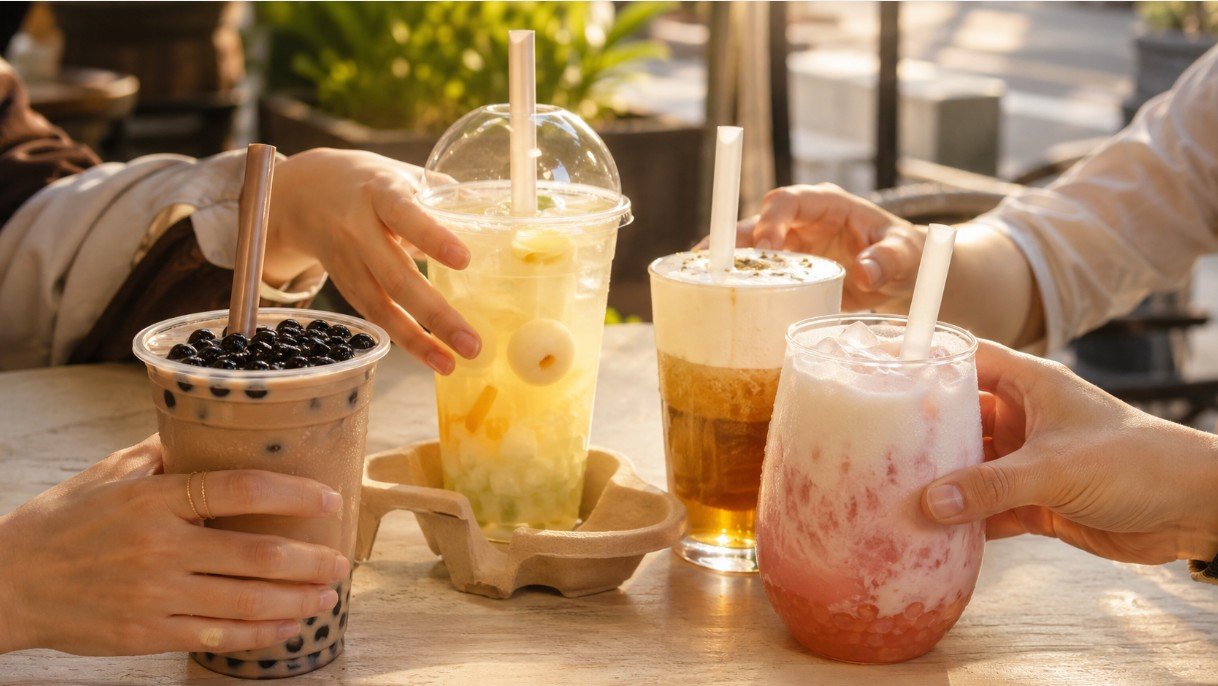
Tea remains recognizable
In a tea-based drink, milk and syrup should not erase every trace of the base. A tea-forward menu should let you distinguish at least broad differences between black, jasmine, oolong or roasted tea.
Pearls have a clear chew
Fresh tapioca should feel springy and fully cooked rather than hard-centered, chalky, gummy or dissolving.
Sweetness supports the recipe
Sugar should round the drink rather than become the only flavor you can identify.
The texture mix feels intentional
More toppings are not automatically better. A crowded cup can become overly sweet, difficult to sip and impossible to understand.
For deeper evaluation, use boba quality and how to tell if boba is fresh.
Seven shortcuts that create bad expectations
“Every bubble tea is milk tea.”
Fruit tea, plain tea, fresh-milk drinks, coffee and slushes are also part of the modern category.
“Every cup needs tapioca.”
Pearls are iconic, but optional. Jelly, pudding, foam, aloe or no topping can all be valid orders.
“Fruit tea is caffeine-free.”
Peach green tea, passion fruit black tea and lychee jasmine tea still use caffeinated tea bases.
“0% sweetness means zero sugar.”
Only the adjustable syrup may be reduced. Other ingredients can still contribute sugar.
“Less ice always means more drink.”
Some shops adjust the fill; others keep the recipe fixed. The result depends on preparation.
“Purple taro means fresh taro.”
Color and flavor may come from powder, extract, fresh taro, paste or a combination.
“Boba shop size equals quality.”
A huge menu can be fun, but good tea, fresh toppings and clear ingredient logic matter more than the number of flavors.
Once you know what to look for, finding a good cup becomes much easier
You now know enough to read a menu, recognize the main drink families and ask what the tea base or topping actually is. The next step is local discovery: compare nearby shops, look at current menus and choose a place whose drinks match the style you want.
Find Boba Near MeWhy this guide starts with Taiwan
Origin, terminology and tea-shop structure are easiest to understand from Taiwanese sources rather than by treating a current U.S. chain menu as the definition of bubble tea.
Taiwan origin
Taiwan Tourism and Taiwan’s Ministry of Foreign Affairs describe pearl milk tea and hand-shaken drinks as major Taiwanese food culture, with the modern drink emerging from Taiwan’s tea-shop scene. Taiwan Tourism Administration
Competing invention stories
Government-backed cultural material acknowledges competing Chun Shui Tang and Hanlin accounts rather than settling on one undisputed inventor. Taiwan Immigration Agency
Tea and tapioca context
Taiwan agricultural material documents milk-tea tea bases and the cassava/tapioca starch background of pearls. Taiwan Ministry of Agriculture
Nutrition examples
Taiwan FDA’s food database includes prepared pearl milk tea records at different sweetness levels, useful for showing why sweetness settings are recipe variables rather than universal nutrition units. Taiwan FDA Food Nutrition Database
What does bubble tea look like where you live?
Menus change from city to city and country to country. If your local shop uses an unusual tea base, a Taiwanese term we should explain better, a topping that rarely appears in U.S. guides, or a regional way of ordering sweetness and ice, send the details to the Boba Guide Editorial Team. Real menu observations help us make the guide more useful without pretending one market represents the whole boba world.
Bubble tea is Taiwan’s customizable drink culture taken global
The iconic version is pearl milk tea, but the lasting idea is broader: a drink base, a chosen balance of milk or fruit, adjustable sweetness and temperature, and a texture if you want one. Once you understand those moving parts, the menu stops looking like a wall of random flavors.
Bubble tea FAQ
Short answers to the follow-up questions that usually appear after someone understands the basic category.
What is bubble tea?
Bubble tea is a Taiwanese drink category that grew from shaken tea and pearl milk tea culture. Modern bubble tea can include milk tea, fruit tea, fresh-milk drinks, brewed tea, coffee, smoothies and slushes, with or without tapioca pearls or other toppings.
Is bubble tea always milk tea?
No. Milk tea is one important bubble tea family, but fruit tea, plain brewed tea, fresh-milk drinks, coffee and blended drinks can also appear on bubble tea menus.
Does bubble tea have to contain tapioca pearls?
No. Tapioca pearls are iconic but optional. A drink can use jelly, pudding, aloe, crystal boba, popping boba, foam or no topping at all.
Why is it called bubble tea?
The word bubble is commonly linked to the foam produced when tea is shaken with ice and sweetener. The pearls later became such a strong visual symbol that many people now associate the name with the round toppings as well.
Where was bubble tea invented?
Modern bubble tea developed in Taiwan in the 1980s. Chun Shui Tang in Taichung and Hanlin Tea Room in Tainan are both associated with origin stories, so naming one universally accepted inventor would overstate the evidence.
What are bubble tea pearls made from?
Classic chewy pearls are made mainly from tapioca or cassava starch and are commonly cooked, then sweetened or held in syrup. Exact recipes, size and color vary by shop and product.
Does bubble tea contain caffeine?
Many bubble tea drinks do because black, green, jasmine, oolong, matcha and coffee bases contain caffeine. Tea-free fresh-milk or some fruit and blended drinks may not. The base matters more than the flavor name.
Does 0% sweetness mean zero sugar?
Not necessarily. The setting may only reduce the syrup added during preparation. Fruit concentrates, milk, powders, brown-sugar pearls, pudding and other ingredients can already contain sugar.
What is the difference between boba, pearls and fenyuan?
In English, boba may mean the drink or the tapioca pearls. Fenyuan is a traditional Chinese term for round starch-based pearls or balls. Taiwanese usage can also use boba for larger fenyuan, but size terminology varies by shop.
What should a beginner order first?
Choose a familiar flavor direction and only one unfamiliar texture. A black or jasmine milk tea with moderate sweetness and one topping is a simple start; fruit tea with jelly or no topping works well if you prefer lighter drinks.