
Is Boba the Same as Bubble Tea? Usually Yes — With One Important Difference
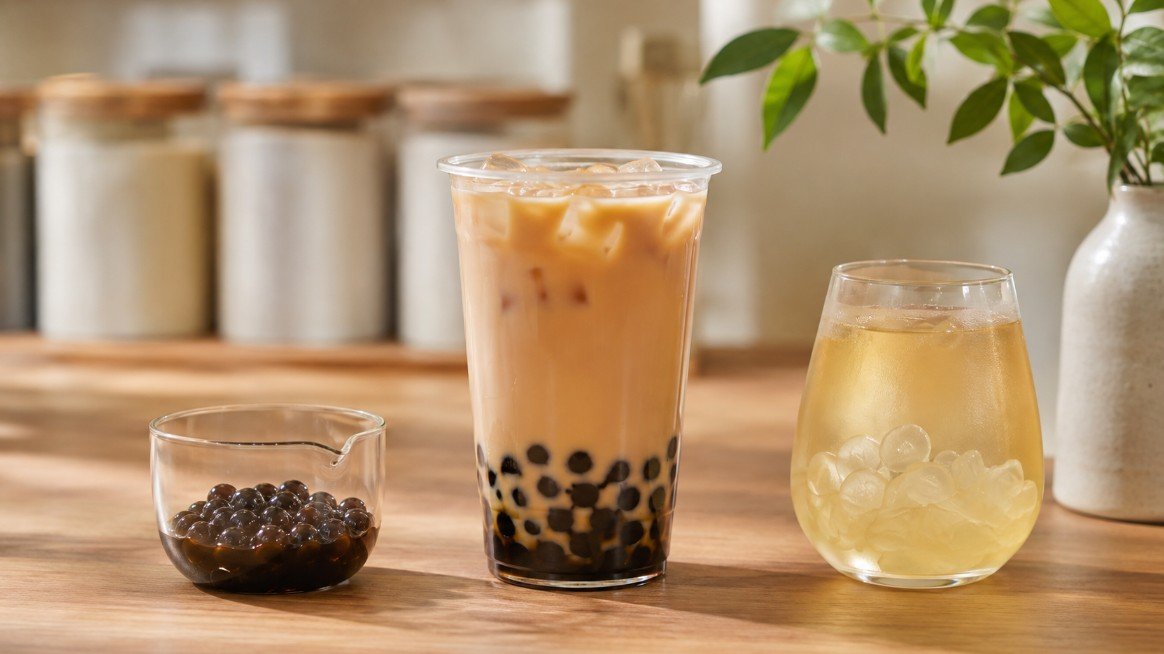
Yes — in everyday English, boba and bubble tea usually mean the same type of drink. Someone asking, “Do you want to get boba?” is normally suggesting bubble tea, not asking whether you want a cup of loose tapioca pearls.
There is one important complication: boba can also mean the pearls themselves. That means the word changes slightly depending on context. “Let’s get boba” usually refers to the drink category. “Add boba to mine” usually means add chewy tapioca pearls as a topping.
So the simplest rule is this: bubble tea and boba are usually interchangeable when talking about the drink, but boba has an extra topping meaning that bubble tea does not.
Boba and bubble tea usually describe the same drink category
English dictionaries now reflect the way people commonly use these terms. “Bubble tea” can also be called “boba,” and “boba tea” is commonly treated as another name for bubble tea.
That does not mean every boba drink follows one recipe. The category can include milk teas, fruit teas, fresh-milk drinks and other customized beverages with different toppings, sweetness levels and temperatures.
Usually interchangeable in everyday conversation.
The word can also identify the chewy topping itself.
If you need the broader definition of the word before comparing terminology, see our guide to what boba means.
“Let’s get boba” and “add boba” do not mean exactly the same thing
The easiest way to understand the terminology is to listen to what the word is doing in the sentence.
“Do you want to get boba?”
You are probably being invited to a bubble tea shop or asked whether you want a bubble tea drink.
“Add boba to my milk tea.”
Here, boba usually means the chewy pearls being added to the drink.
“Can I get that with no boba?”
The customer can still receive the tea or milk drink; they are usually asking to leave out the topping.
“This place has really good boba.”
The speaker may mean the shop’s bubble tea generally or specifically praise the quality of its pearls.
That last example is why conversations about boba occasionally become confusing. The same word can move between category and ingredient without anyone consciously changing definitions.
The “bubble” in bubble tea does not give us a perfect definition of the modern category
Modern bubble tea developed in Taiwan during the 1980s alongside a broader culture of shaken cold tea drinks and pearl milk tea. Several origin stories exist, which is why it is better to describe the category as Taiwanese rather than declare one disputed invention story completely settled.
Today the English term bubble tea is used for a much broader drink family than one historical formula. A contemporary shop may serve milk tea with tapioca, jasmine fruit tea with jelly, fresh milk with brown sugar pearls or another customized drink under the same general category.
The naming history deserves more space than this clarification page needs. Our guide to why it is called boba is the better place to explore the terminology itself.
Bubble tea does not always need traditional tapioca pearls
This is where the naming becomes especially useful to understand. If boba can mean both the drink category and the pearls, it is tempting to assume that a boba drink must always contain boba pearls.
It does not. Modern bubble tea can be ordered with traditional tapioca, another topping or sometimes no solid topping at all.
Tapioca pearls
Classic soft and chewy starch pearls.
Jelly or aloe
A lighter, slippery or juicy texture.
Popping boba
Thin spheres that burst instead of producing a long chew.
No topping
The drink base can still be ordered and enjoyed on its own.
If the topping meaning of the word is what is confusing you, read what boba pearls actually are. For the wider topping landscape, our separate toppings guide covers the alternatives.
Pearl milk tea is a type of bubble tea, not necessarily a synonym for every bubble tea
Pearl milk tea is a more specific description. It normally points toward milk tea served with chewy pearls. Bubble tea or boba, by contrast, can now describe a much wider modern drink category.
This distinction matters because the global category has evolved far beyond a single combination of tea, milk and black tapioca pearls. The wider range of formats is covered in our guide to boba drinks.
Not every round topping is traditional boba
Another source of confusion is that shops may use several pearl-shaped toppings. They can look related through a transparent cup, but their ingredients and textures are not necessarily similar.
The classic starch-based topping commonly meant when someone simply asks to add boba.
A different product with a liquid center and a very different eating experience.
A separate topping family whose formulation can vary between products and shops.
If you want to compare these additions as toppings rather than terminology, use the full boba toppings guide.
You can usually say either “boba” or “bubble tea”
For normal conversation, there is little reason to worry about choosing the one universally correct English term. Both are widely understood as names for the drink category.
Use whatever terminology the menu uses. If the menu separates “drink” and “topping,” that context will usually make the meaning clear.
“Let’s get boba” is completely natural. The surrounding conversation normally makes it obvious that you mean drinks.
“Bubble tea, also called boba” is clear. You can then explain separately that boba also refers to the pearls.
Be specific when necessary. Saying “tapioca pearls,” “popping boba” or “crystal boba” avoids ambiguity.
For a fuller explanation of what counts as bubble tea today, continue to what bubble tea is.
Boba = bubble tea when the conversation is about the overall drink.
Boba = pearls when the conversation is about a topping.
Bubble tea does not require tapioca pearls because the modern drink category includes many topping choices and drink styles.
Questions about boba vs bubble tea terminology
Is boba just another word for bubble tea?
Usually, yes. In everyday English, boba is commonly used as another name for bubble tea. The complication is that boba can also refer specifically to the pearls used as a topping.
Is boba the drink or the pearls?
It can mean either. “Let’s get boba” normally means the drink, while “add boba” usually means add pearls. Context determines which meaning is intended.
Can bubble tea have no boba pearls?
Yes. A modern bubble tea can use jelly, aloe, pudding, popping boba or another topping, and many drinks can also be ordered without a solid topping.
Is pearl milk tea the same as bubble tea?
Pearl milk tea is better understood as a specific style within the wider bubble tea category. It combines milk tea with pearls, while bubble tea today includes many other drink bases and topping combinations.
Is boba tea different from bubble tea?
Generally, no. “Boba tea” and “bubble tea” are commonly used for the same drink category. Individual shops may favor one term over the other.
Is popping boba the same as normal boba?
No. Traditional tapioca boba is a chewy starch-based pearl. Popping boba has a thin outer structure and a liquid center that bursts in the mouth.
Does all boba contain tea?
No. Although tea is foundational to the history and many classic styles of the category, modern boba shops also offer fresh-milk, smoothie, slush and other drinks that may not use brewed tea as their base.
Which term is more correct: boba or bubble tea?
Neither needs to be treated as universally more correct in ordinary English. Both are established names for the drink category. Use whichever is clearest in your region or whichever term the shop itself uses.
SO, ARE THEY THE SAME?
Usually, yes. Boba and bubble tea commonly name the same drink category. Just remember that boba has a second life as the name of the pearls themselves.