
Understand boba, choose your drink, and find your next favorite cup.
Boba.guide is a practical map of bubble tea: what boba means, how drinks are built, which tea bases and flavors taste different, how toppings change texture, how to order with confidence, and how to make boba at home.
You do not need to know the menu language before you begin. Start with the part that matters most to you—learning the basics, choosing a flavor, comparing toppings, finding a shop, or preparing a complete drink in your own kitchen.
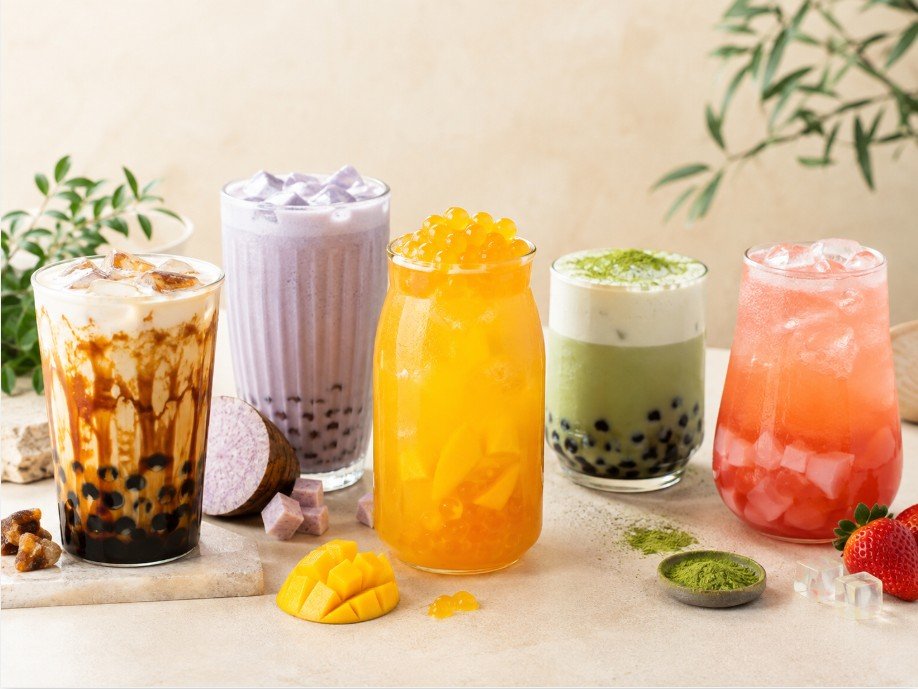
Where do you want to begin?
Boba is easier to understand when you separate it into four practical paths: learn, choose, make, and find.
Understand the basics
Learn what boba is, why the word can mean both a drink and a topping, and how bubble tea developed into a global category.
Start with What Is Boba?Find your flavor and texture
Compare creamy, fruity, floral, earthy and tea-forward drinks, then choose a topping that fits the texture you want.
Explore Boba FlavorsPrepare boba at home
Learn how to brew a strong base, cook pearls correctly, balance sweetness and assemble a fresh drink without commercial equipment.
Learn How to Make BobaDiscover a good shop nearby
Use local guides to compare shops, read menus more intelligently and identify signs of fresh pearls, clear tea flavor and useful customization.
Find Boba Near MeWhat do boba, boba tea and bubble tea actually mean?
These terms overlap, but each one has a slightly different job in the wider boba vocabulary.
What Is Boba?
Boba can describe the entire drink category or the chewy tapioca pearls added to a cup. Context usually tells you which meaning is intended.
Read the complete definitionBoba Tea
Boba tea covers milk tea, fruit tea, fresh milk drinks, tea-based lattes, smoothies and slushes that may be customized with toppings.
Explore boba teaWhat Is Bubble Tea?
Bubble tea is the broad name used for customizable Taiwanese-style drinks built from tea, milk, fruit, sweetener, ice and optional textures.
Understand bubble teaSeparate the drink from the topping. First choose the liquid base and flavor. Then decide whether you want tapioca pearls, popping boba, jelly, pudding, aloe, foam or no topping at all.
Boba, bubble tea and tapioca pearls are related, but they are not always the same thing.
The clearest distinction is between the complete drink, the category and the topping inside the cup.
| Term | What it usually means | Role or texture |
|---|---|---|
| Boba | The drink category or tapioca pearls, depending on context | Broad everyday term |
| Bubble tea | The broad category of customizable tea, milk, fruit and blended drinks | Complete drink category |
| Tapioca pearls | Chewy pearls generally made from tapioca starch | Dense, chewy topping |
| Popping boba | Thin spheres filled with flavored liquid | Juicy topping that bursts |
| Crystal boba | Translucent pearls with a lighter, firmer chew | Bouncy topping |
A drink can be called boba or bubble tea even when it contains jelly, pudding, aloe or popping boba instead of traditional tapioca pearls.
Tea is the structure behind many of the best boba drinks.
Milk, fruit, syrup and toppings may be the first things you notice, but the tea base controls aroma, bitterness, freshness and balance. A strong recipe lets the tea remain recognizable after dilution.
The complete tea world
Explore tea types, brewing styles, flavor families and how tea changes when served with milk, fruit, sweetness or ice.
Explore the Tea HubBoba tea bases
Compare black tea, jasmine, green tea, oolong, matcha and tea-free bases specifically in the context of boba drinks.
Compare boba tea basesBoba tea as a category
Learn how tea, milk, fruit and toppings work together across the broader boba tea menu.
Read the Boba Tea guideBlack Tea Boba
Malty, strong and classic.
Explore black teaJasmine Tea Boba
Light, floral and versatile.
Explore jasmine teaGreen Tea Boba
Fresh, grassy and fruit-friendly.
Explore green teaOolong Boba
Floral, roasted or gently nutty.
Explore oolongMatcha Boba
Earthy, creamy and slightly bitter.
Explore matchaWhat are the main types of boba drinks?
The base creates the main personality of the cup. Start with milk tea, fruit tea, fresh milk or a blended drink before choosing a flavor or topping.
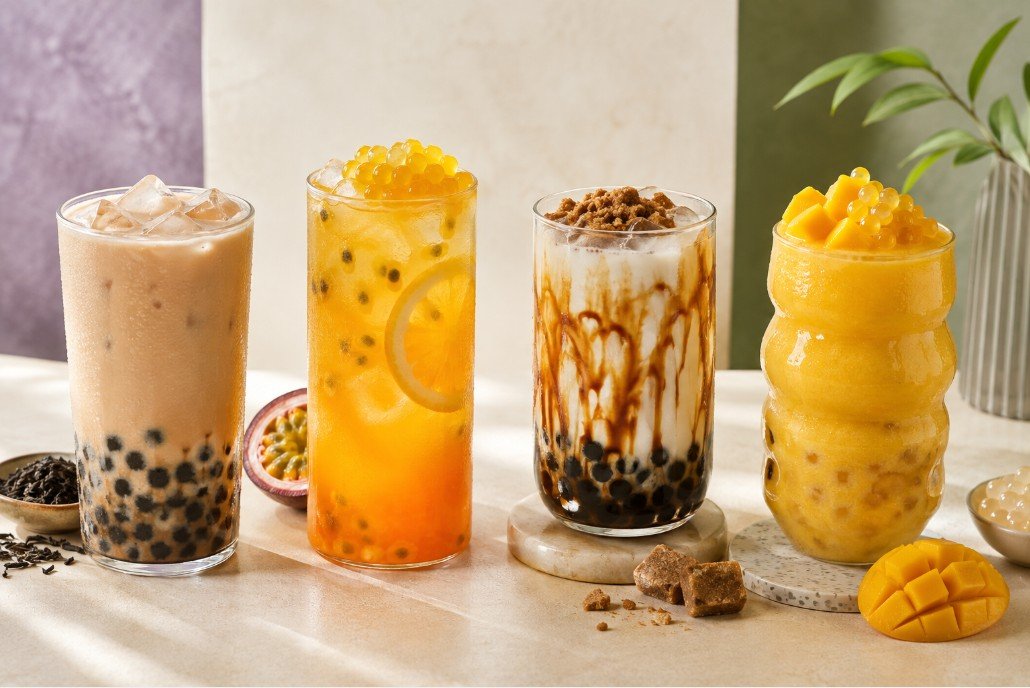
Boba Drinks
Use the complete drink hub to compare tea-based, milk-based, fruit-based and frozen boba styles in one place.
Explore all boba drinksMilk Tea
Tea softened by milk, creamer or a plant-based alternative. It may taste tea-forward, floral, roasted or dessert-like.
Explore milk teaFruit Tea
Tea combined with juice, puree, syrup or fruit. It usually pairs well with jelly, aloe and popping boba.
Explore fruit teaFresh Milk Boba
Milk layered with brown sugar, fruit, matcha or toppings. Some versions contain no brewed tea.
Explore fresh milk bobaSmoothies and Slushes
Frozen drinks built with fruit, milk, flavored powder or ice for a thicker, colder texture.
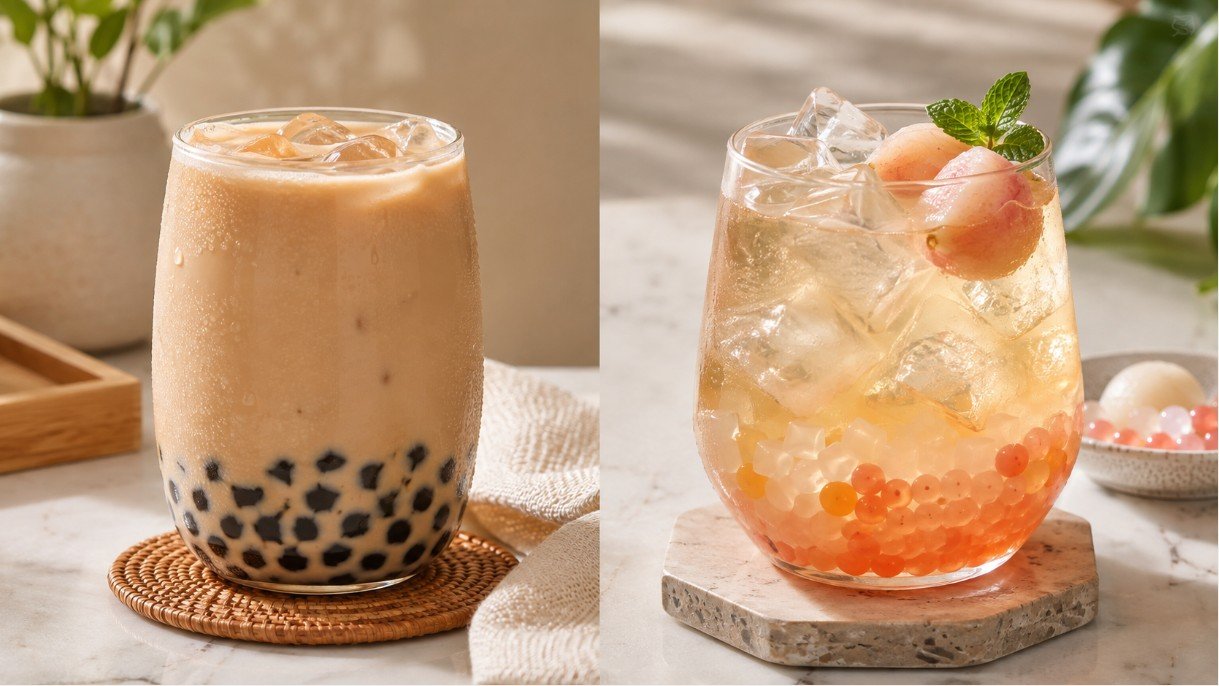
Explore blended bobaMilk tea, fruit tea, fresh milk and blended boba each create a different kind of cup.
These original homepage photographs remain part of the guide because they show how dramatically the same boba format can change through the base, color, topping and serving style.
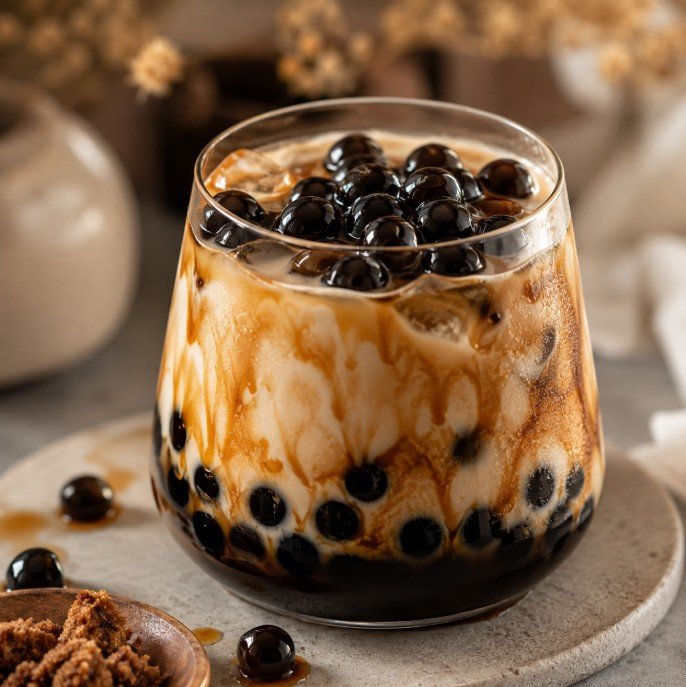
Milk Tea
Brewed tea softened with milk or creamer, from classic black milk tea to jasmine, oolong and roasted varieties.
Explore milk tea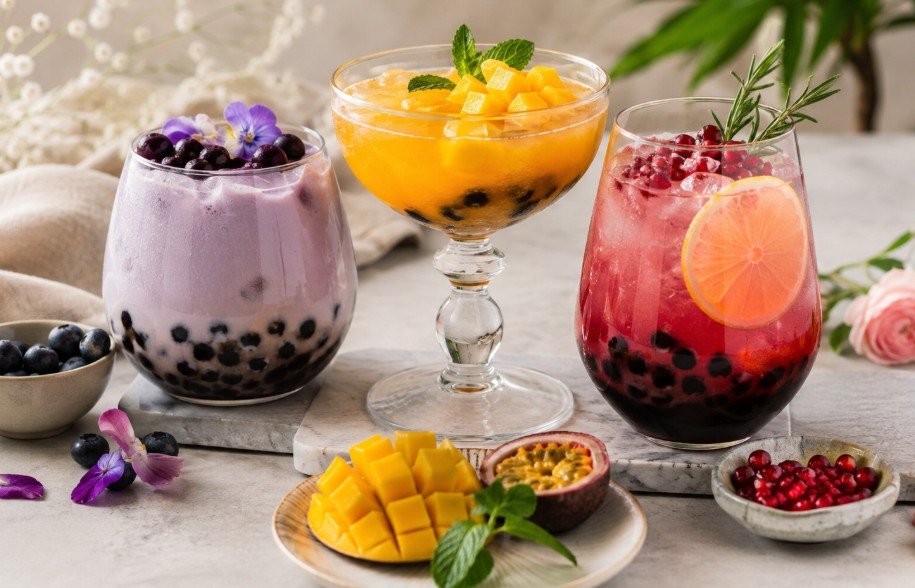
Fruit Tea
Bright drinks that combine tea with juice, puree or syrup and pair naturally with aloe, jelly and popping boba.
Explore fruit tea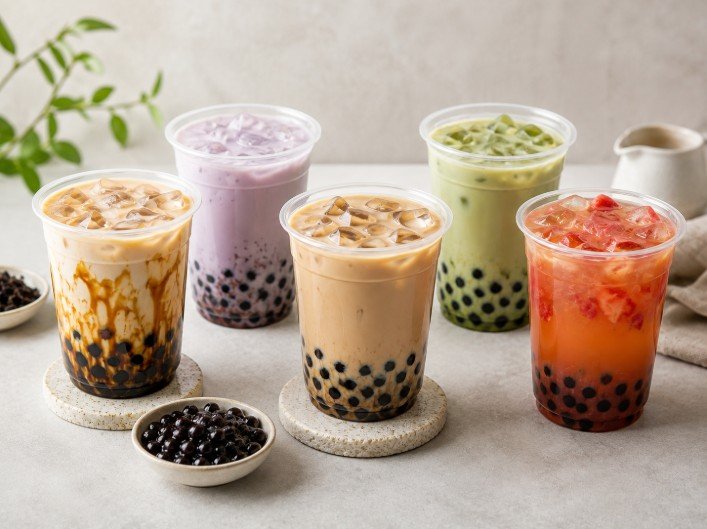
Fresh Milk Boba
Milk layered with brown sugar, matcha, fruit or toppings, sometimes without brewed tea.
Explore fresh milk boba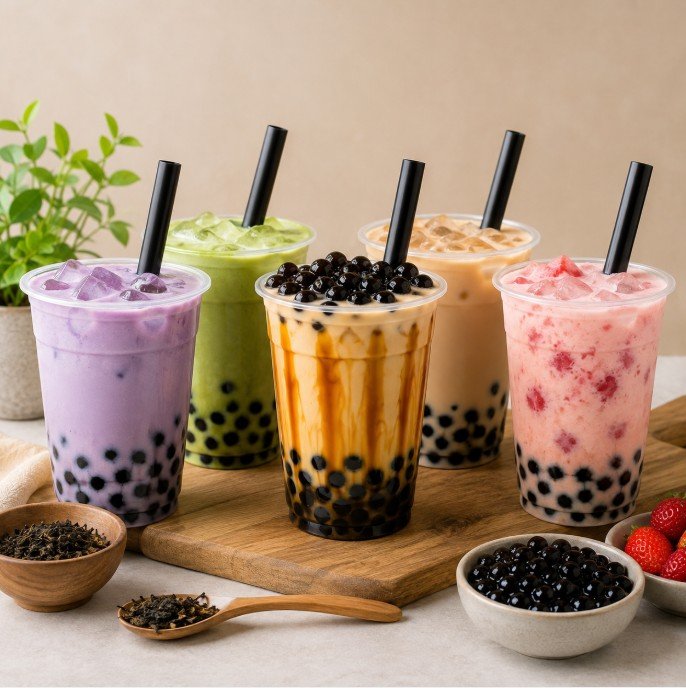
Smoothies and Slushes
Frozen fruit, milk or flavored drinks for a colder, thicker and more dessert-like experience.
Explore blended bobaWhich boba flavor fits what you already like?
A flavor name is only the beginning. Tea, milk, fruit, syrup and sweetness decide whether the finished drink tastes refreshing, creamy, floral, earthy or deeply caramel-like.
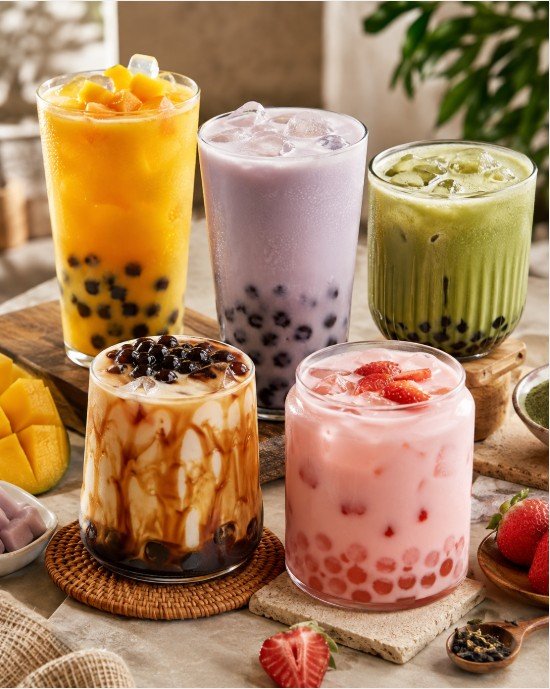
Mango Boba
Bright, tropical and easy to pair with green tea, popping boba, aloe or jelly.
Explore mango bobaBrown Sugar Boba
Rich, caramel-like and commonly paired with fresh milk and warm tapioca pearls.
Explore brown sugar bobaTaro Milk Tea
Mellow, nutty and sometimes vanilla-like, depending on whether real taro, paste or powder is used.
Explore taro milk teaMatcha Boba
Earthy and gently bitter before milk and sweetness soften the flavor.
Explore matcha boba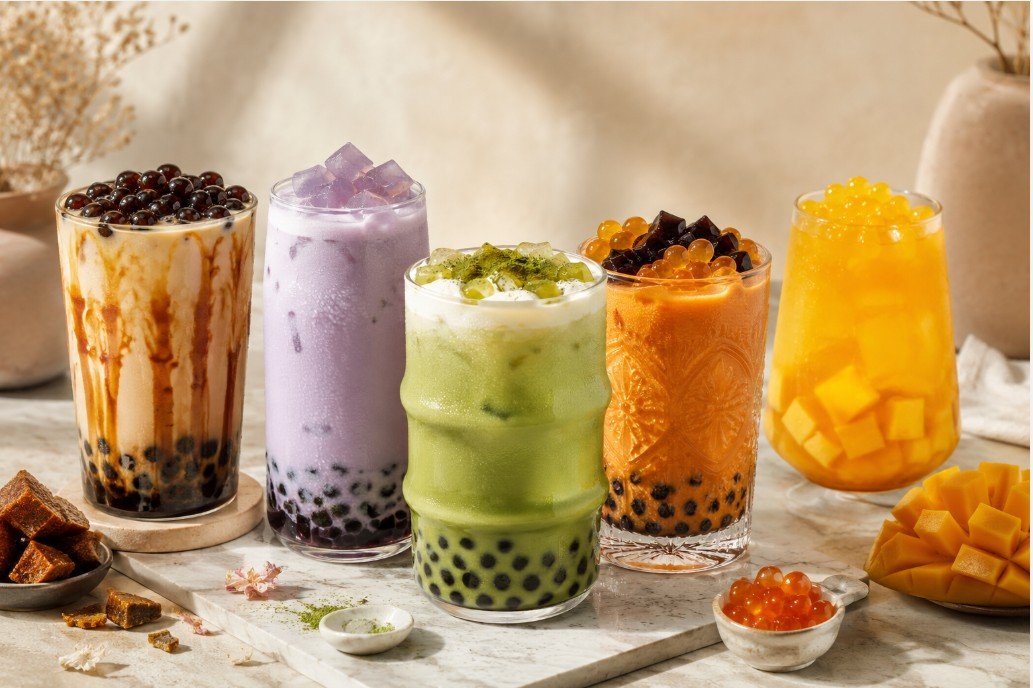
Boba toppings change the way a drink feels, not just the way it looks.
Choose toppings by texture and pairing. One topping can make a drink chewy, juicy, bouncy, creamy or soft. Several toppings at once can make a first order harder to understand.
Tapioca Pearls
Dense, soft and elastic when cooked properly. They work especially well with milk tea and brown sugar drinks.
Explore tapioca pearlsPopping Boba
Thin spheres filled with flavored liquid. They burst when bitten and pair naturally with fruit tea and slushes.
Explore popping bobaCrystal Boba and Jelly
Firmer, lighter textures that work well in delicate tea and fruit-based drinks.
Explore crystal bobaPudding and Foam
Creamy toppings that suit matcha, milk tea and dessert-style drinks.
Explore boba pudding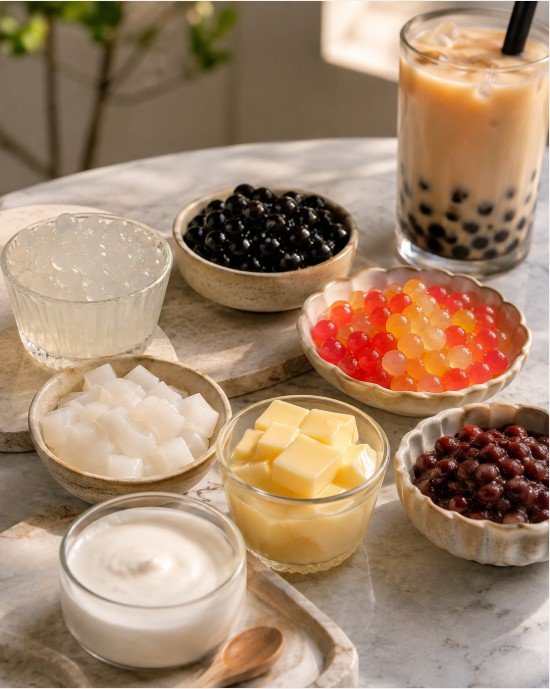
How do you order boba without feeling overwhelmed?
Build the order in five decisions: base, flavor, sweetness, ice and topping.
Choose the base
Start with milk tea, fruit tea, fresh milk or a blended drink. This decision has the biggest effect on the cup.
Choose the flavor
Pick a profile you already understand: fruity, floral, earthy, caramel-like, creamy or strongly tea-forward.
Choose sweetness
Fifty percent is often an easier first choice than full sweetness. Zero percent may still taste sweet when powders, puree, syrup or toppings are present.
Choose ice
Regular ice keeps the drink cold longer; light ice reduces dilution but may let the drink warm sooner.
Choose one topping
One topping makes it easier to judge the drink and texture separately. Add more only after you know what you enjoy.
Jasmine milk tea, 50% sugar, light ice, tapioca pearls
A familiar creamy base with floral tea and one classic chewy topping.
Read the complete ordering guideMango green tea, 50% sugar, regular ice, aloe or jelly
A bright fruit profile with a lighter texture and no heavy dairy component.
See the beginner guideFive decisions turn a complicated menu into a simple order.
Choose the base first, then the flavor, sweetness, ice and one topping. This sequence keeps each decision understandable and makes it easier to learn what you would change next time.
Choose the base
Start with milk tea, fruit tea, fresh milk or a blended drink. This is the most important choice because it determines the overall weight and character of the cup.
Choose the flavor
Use familiar preferences: fruity, floral, earthy, creamy, roasted or caramel-like.
Adjust sweetness
Fifty percent is often a safer first choice than full sweetness, especially when the recipe already contains fruit puree, powder or syrup.
Choose the ice level
Regular ice keeps the drink cold longer; light ice limits dilution but lets the drink warm sooner.
Add one texture
One topping makes it easier to judge the base and texture separately. Add more only after you know what you enjoy.
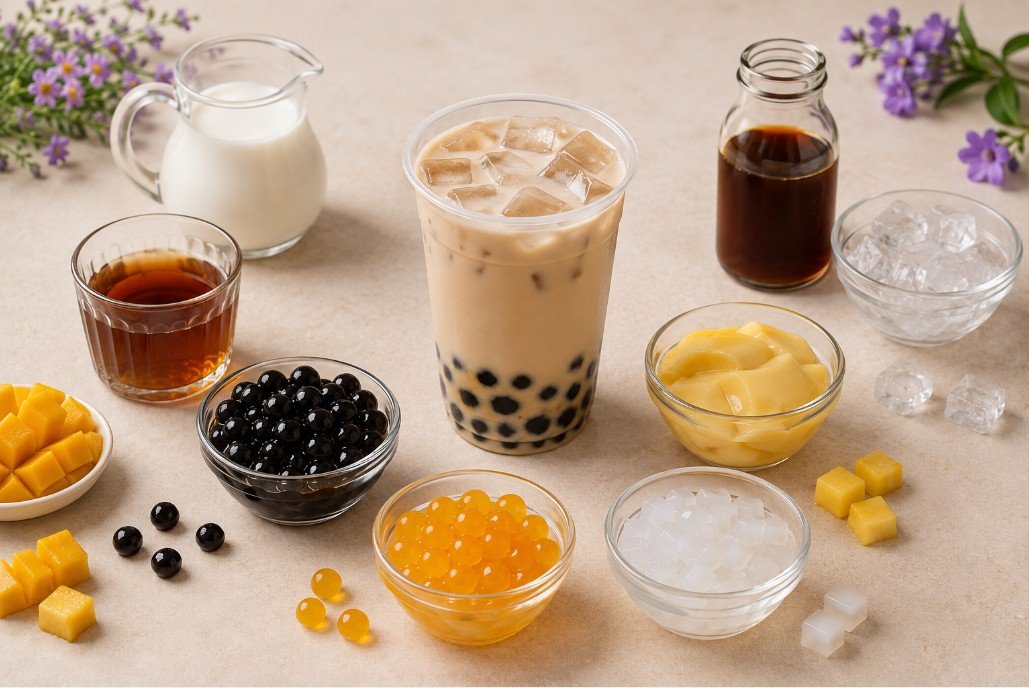
A balanced first order
Jasmine milk tea, 50% sugar, light ice, with tapioca pearls.
A lighter first order
Mango green tea, 50% sugar, regular ice, with aloe or fruit jelly.
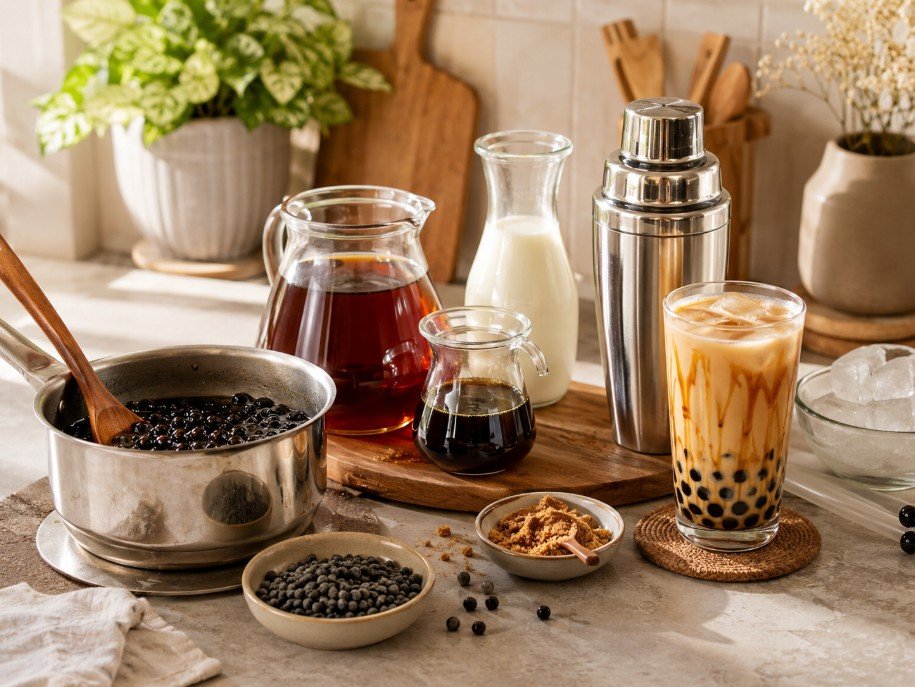
Make boba at home without turning your kitchen into a shop.
A practical home setup has three parts: prepare the base, prepare the topping and assemble the drink while every component is at the right temperature.
Brew tea stronger than you would drink it plain because milk and ice dilute it. Sweeten while warm when the recipe requires it. Cook tapioca pearls according to their specific instructions because quick-cooking and traditional pearls behave differently.
How to Make Boba
Learn the complete process from brewing and cooking to chilling and assembly.
Open the complete guideBoba Recipes
Browse milk tea, fruit tea, brown sugar, matcha, taro and topping recipes.
Browse boba recipesHow to Make Bubble Tea
Focus on tea strength, milk balance, sweetness and ice.
Make bubble teaHow to Cook Tapioca Pearls
Understand water ratio, timing, resting, sweetening and serving windows.
Cook tapioca pearlsPrepare the drink base, prepare the topping, then assemble at the right temperature.
For milk tea, brew tea stronger than you would drink it plain because milk and ice will dilute it. Sweeten while the tea is warm, then cool it before adding ice. Cook tapioca pearls according to the exact product or recipe because traditional and quick-cooking pearls use different timing.
Cooked pearls are highly time-sensitive. Prepare only what you expect to serve and avoid assuming that refrigeration will preserve their original texture. A small fresh batch usually produces a better result than a large batch held for hours.
Complete process
How to make bobaTea balance
How to make bubble teaPearl texture
How to cook tapioca pearls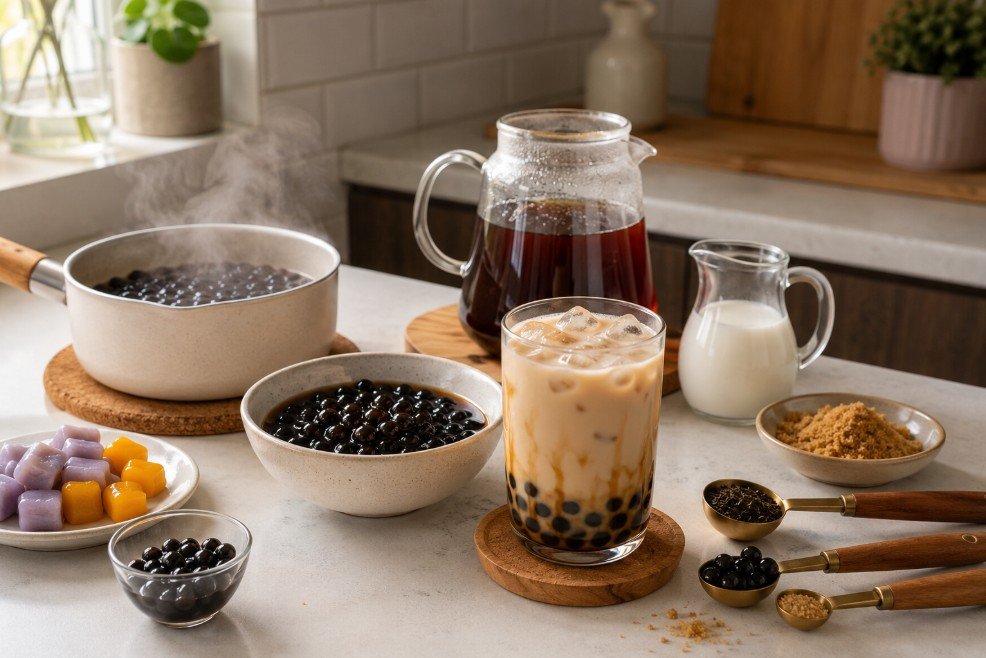
There is no single nutrition profile for boba.
A small unsweetened tea and a large brown sugar milk drink with pearls, pudding and foam are completely different beverages.
The largest changes usually come from cup size, added sugar, milk or creamer, powders, syrups and toppings. Tea, coffee and matcha can add caffeine. Fresh milk and creamers affect fat, protein and allergens. Pearls and jellies add portion size and carbohydrates.
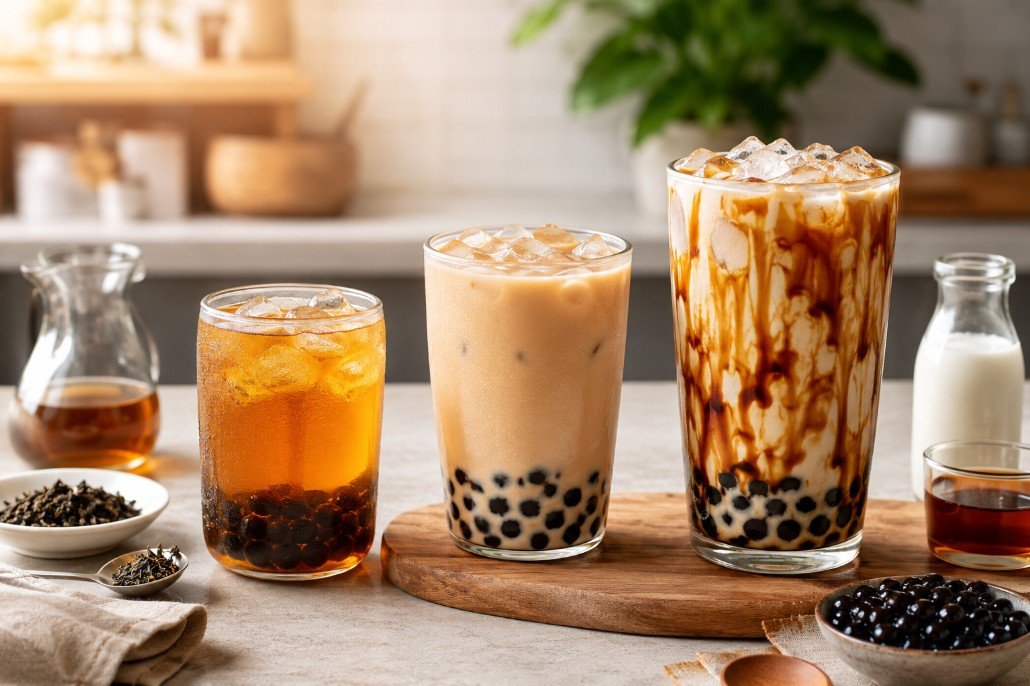
A fruit tea is not automatically vegan, dairy-free or caffeine-free. Creamer, flavored powder, foam, pudding, syrup, tea base and shared preparation equipment can change the answer.
Most boba drinks are built from a small set of flexible components.
The recipe changes, but the structure remains familiar: a base, a flavor system, sweetness, ice and an optional topping.
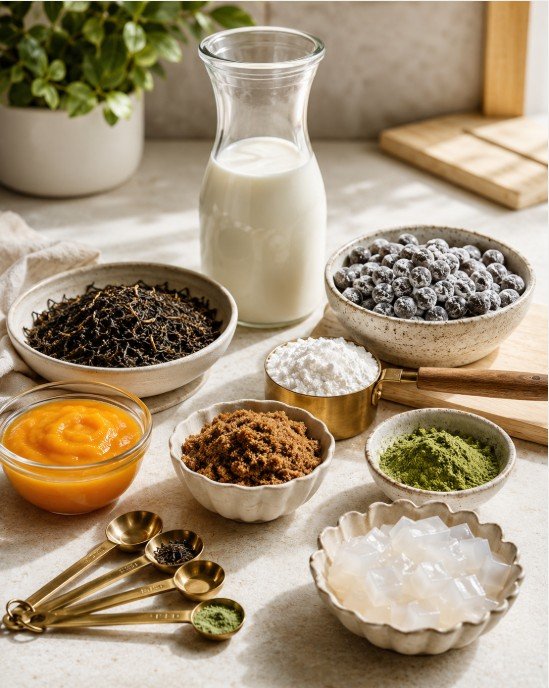
Tea or liquid base
Black tea, jasmine, green tea, oolong, matcha, fresh milk, fruit or blended ice.
Compare tea basesSweetener and flavor
Sugar syrup, brown sugar, fruit puree, juice, powder, concentrate or flavored syrup.
Explore flavor systemsMilk or creamer
Dairy milk, evaporated milk, non-dairy creamer or plant-based alternatives.
Understand milk teaToppings
Tapioca, popping boba, jelly, pudding, aloe, sago, red bean or foam.
Compare toppingsA basic home setup is smaller than most starter collections suggest.
For classic milk tea, begin with tea, milk or a plant-based alternative, sweetener and tapioca pearls. Fruit tea may use brewed tea with juice, puree or syrup. Brown sugar fresh milk needs milk, brown sugar syrup and cooked pearls. Powders and concentrates are optional rather than mandatory.
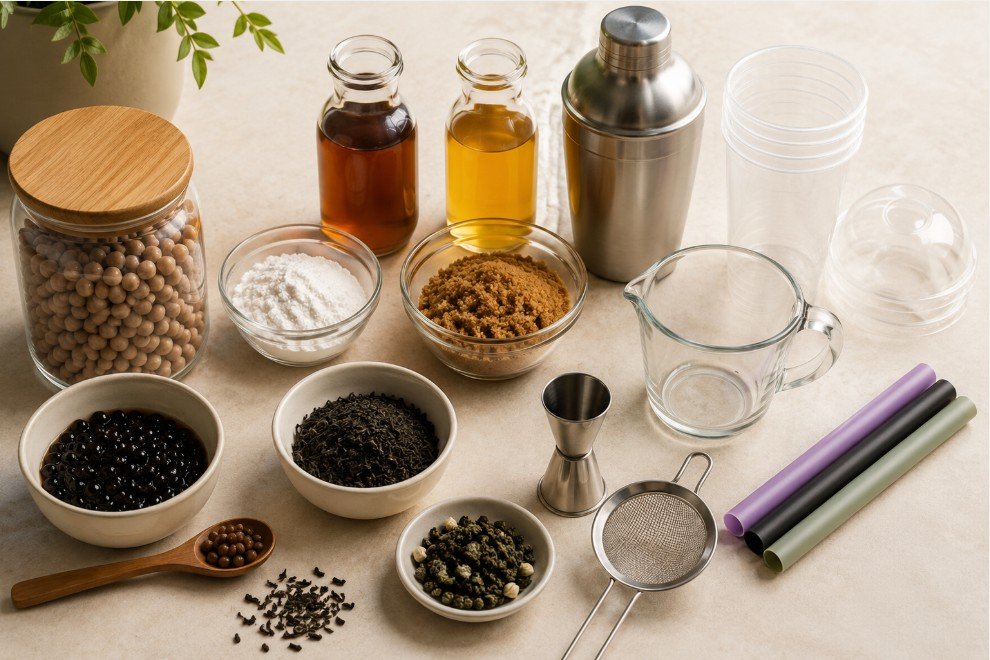
Ingredient quality matters most in the tea and topping. Tea should be strong enough to survive dilution, while pearls should include clear cooking directions and a quantity suitable for home use.
Which boba products and supplies are actually useful?
A home setup does not require a cup sealer, commercial shaker or an entire shelf of syrups.
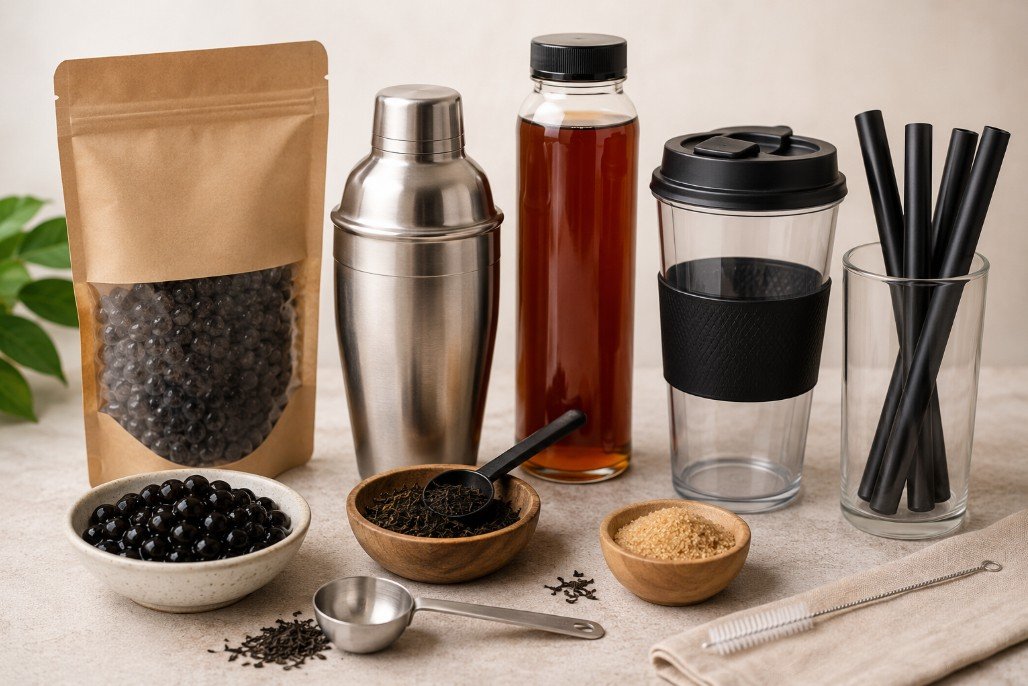
For most recipes, you need a saucepan, strainer, pitcher or jar, measuring tools, a wide straw or spoon, and ingredients sized for realistic home use. The tea and topping usually matter more than decorative equipment.
- Tapioca pearls with clear instructions and a manageable package size
- Tea strong enough to remain flavorful after milk and ice
- A shaker or sealed jar for chilled drinks
- Wide straws or long spoons for serving toppings
- Reusable cups and measuring tools if you make boba regularly
Boba comparisons turn menu confusion into a practical choice.
Comparison guides focus on the difference that changes your experience: flavor, texture, ingredients, caffeine, preparation or how filling the drink feels.
Find a boba shop that gets the basics right.
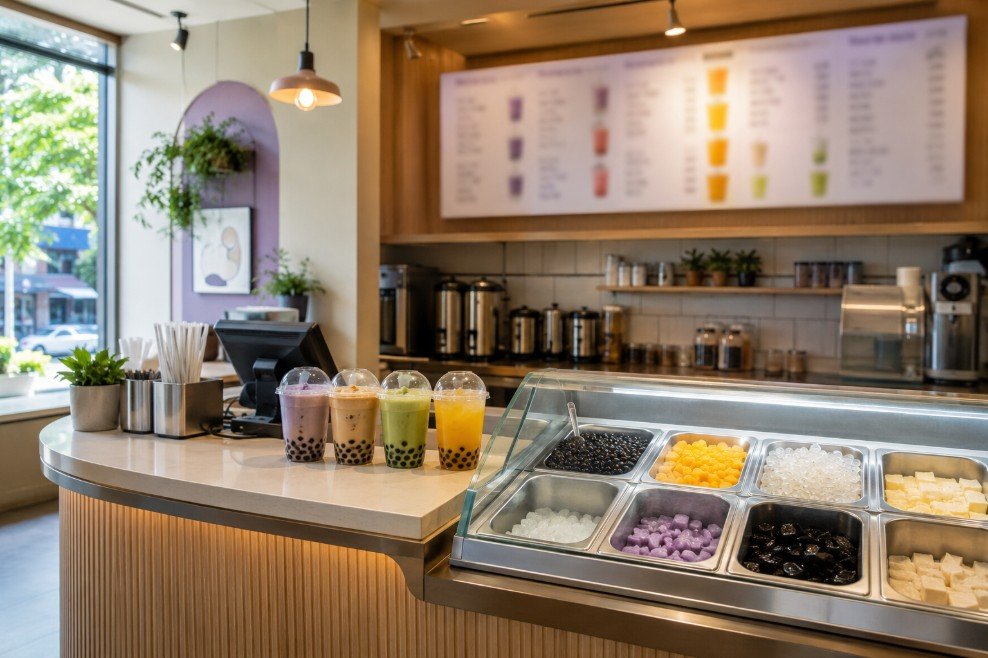
A strong shop is not defined by the longest menu. Fresh pearl texture, recognizable tea, useful customization and clear ingredient information matter more.
- Pearls are chewy without a hard center or mushy exterior.
- The menu identifies black, green, jasmine, oolong or other bases.
- Sweetness and ice can be adjusted when the recipe allows it.
- Staff can explain dairy-free options and topping ingredients.
- Signature drinks offer more than a generic syrup combination.
Which boba drink should you try first?
The best first cup usually begins with a flavor or texture you already enjoy. A familiar starting point makes it easier to notice how tea, sweetness, milk and toppings change the drink.
Try brown sugar fresh milk or brown sugar milk tea
Brown sugar creates a deep caramel-like flavor that feels familiar to people who enjoy sweet coffee drinks, crème brûlée, caramel pudding or milk-based desserts. Fresh milk versions are creamy and direct; tea-based versions add more structure and a slightly drier finish.
Choose tapioca pearls if you want the classic chewy experience, but keep the rest of the order simple. Brown sugar syrup and sweetened pearls may already make the drink rich, so full sweetness is not always necessary.
Try mango, peach, lychee or passion fruit tea
Fruit tea is usually lighter and more refreshing than milk tea. Green tea and jasmine tea work especially well with tropical and citrus flavors because they add freshness without making the drink heavy.
Aloe, fruit jelly or popping boba can reinforce the bright profile. Tapioca pearls are possible, but their brown-sugar chew may compete with a delicate fruit base.
Try matcha, taro or roasted oolong
Matcha tastes green, grassy and gently bitter. Taro is usually softer, nuttier and sometimes vanilla-like. Roasted oolong can taste warm, floral or toasted depending on the tea.
Reduced sweetness helps these bases remain noticeable. Red bean, pudding, crystal boba or a small portion of tapioca pearls can add texture without hiding the main flavor.
Try jasmine tea, green tea or a citrus fruit tea
Choose a clear tea base, moderate sweetness and regular ice. Lemon, grapefruit, peach, passion fruit and lychee are common directions that remain refreshing when the tea is brewed well.
Skip cream foam and multiple toppings on the first order. Aloe or a light jelly can add interest without turning the drink into a dessert.
Choose pudding, jelly, aloe, popping boba or no topping
Tapioca pearls are optional. Pudding is soft and creamy, jelly is firm and bouncy, aloe has a fresh bite, and popping boba releases flavored liquid. Ordering no topping is also completely normal.
The right topping depends on the base. Pudding fits milk tea and matcha, while aloe and popping boba usually fit fruit tea more naturally.
Try taro milk tea, a smoothie or brown sugar boba
These drinks emphasize body, creaminess and sweetness. They can feel closer to a shake or dessert than a simple tea. Pearls, pudding and cream foam all work, but using several rich toppings together may be overwhelming.
Start with one topping and a smaller cup. You can always make the next order more elaborate after you understand the base.
Choose one familiar flavor, request approximately 50% sweetness, keep regular or light ice, and add one topping. On your next visit, change only one variable so you can tell what improved the cup.
Because menus vary from shop to shop, the same flavor can taste very different depending on the tea strength, milk, syrup, fruit preparation, topping freshness and serving temperature. Learning the structure of the drink is more useful than memorizing a single definition or expecting every shop to use identical recipes.
What makes good boba taste balanced?
A good cup is not simply sweet, colorful or full of toppings. The ingredients should support one another, and the drink should still have a clear identity after ice begins to melt.
Pearls cooked through
Classic tapioca pearls should be soft and chewy without a hard center. They should not be mushy, dissolving, rubbery or stuck together in one cold mass. Freshly cooked pearls often taste warmer and softer than the drink around them.
Tea you can still recognize
Milk and sweetener should soften the tea rather than erase it completely. Black tea should contribute body, jasmine should remain floral, green tea should taste fresh, and oolong should retain its roasted or aromatic character.
Sweetness that fits the base
Fruit puree, powders, brown sugar syrup and toppings may already contain sugar. A balanced recipe accounts for those ingredients instead of adding the same standard syrup level to every drink.
Fresh toppings
Jelly should have a clean bite, pudding should be smooth, foam should taste fresh, and popping boba should burst rather than feel leathery. Old toppings can make an otherwise good drink feel flat.
Useful customization
A strong shop can explain which recipes allow sugar and ice adjustments and which do not. Customization should help the drink, not simply create a long list of options without guidance.
Controlled dilution
Ice should chill the drink without quickly washing out the flavor. Stronger tea, chilled ingredients and the correct ratio help the cup remain balanced as you drink it.
Look for comments about a particular drink, tea strength, pearl texture, ingredient option or service pattern. A review that only says “too sweet” may be less useful when sweetness can be customized.
Balance starts with the base
A good cup should still reveal what it is made from. Black tea should contribute maltiness, jasmine should remain floral, green tea should feel fresh, and oolong should retain some roasted or aromatic character. Milk, fruit and sweetener can soften those qualities, but they should not erase them completely.
Texture has a serving window
Tapioca pearls continue changing after cooking. Pearls that are pleasant when warm can become firm, sticky or overly soft as they sit. Jelly, pudding and foam also have their own holding limits. This is why freshness is often more important than the number of toppings offered on a menu.
Customization should improve the recipe
Sugar and ice controls are useful only when the shop understands how each change affects balance. A drink with fruit puree, sweetened powder or brown sugar syrup may still taste sweet at a reduced percentage. Less ice may also increase perceived sweetness because there is less dilution.
What should beginners avoid when ordering or making boba?
Most disappointing experiences come from combining too many unfamiliar choices, misunderstanding the ingredients or expecting every shop to use the same recipe.
Ordering full sweetness automatically
Standard sweetness can be very high, especially when the drink also contains puree, powder, flavored syrup, brown sugar or sweetened toppings. Moderate sweetness is easier to evaluate and leaves more room for the tea.
Adding several toppings immediately
Pearls, pudding, foam and jelly together can make a drink heavy and confusing. Begin with one texture, then add another only when you know why you want it.
Assuming every purple drink uses real taro
Some shops use cooked taro, while others use paste, powder, flavoring or a blend. The color alone does not reveal the recipe, texture or ingredient quality.
Treating popping boba like tapioca
Popping boba is a liquid-filled topping that bursts. Tapioca is dense and chewy. They create completely different experiences and are not direct substitutes in recipes.
Assuming fruit tea is automatically vegan
Fruit tea may contain creamer, milk foam, pudding, honey, flavored powder or ingredients prepared on shared equipment. Ask about the complete recipe when dietary requirements matter.
Keeping cooked pearls too long
Tapioca pearls are highly time-sensitive. They can harden, become sticky or turn overly soft. Prepare a small amount and serve it within the window recommended by the recipe or package.
When should boba be served, and what changes when it sits?
Bubble tea is not one uniform product. The liquid base, ice and toppings all change at different speeds after the drink is prepared.
Immediately after preparation
Tea aroma is strongest, ice has not diluted the drink, foam is still distinct and warm pearls are at their softest. This is usually the best time to judge the intended recipe.
During the first part of the drink
Ice begins to melt and the temperature evens out. A well-balanced cup should remain flavorful rather than turning watery after a few minutes.
After extended holding
Tapioca pearls may harden or become overly soft, jelly may release liquid, foam may collapse and fruit ingredients may separate. Shaking can recombine some liquids, but it cannot restore fresh pearl texture.
After refrigeration
The drink may remain safe according to its ingredients and storage conditions, but the original texture is rarely preserved. Tapioca pearls are especially poor candidates for long refrigeration.
At home, it is better to cook a smaller batch and make fresh pearls again than to prepare a large amount that will lose its chew before you can use it.
Why does boba look different from one shop or country to another?
Bubble tea is closely associated with Taiwan, but the category has expanded through local ingredients, regional tastes and new service styles.
Tea traditions remain important
Many of the strongest drinks still depend on careful brewing, fragrant tea and balance. Black tea, jasmine, green tea and oolong connect modern menus to a broader tea culture rather than treating boba as only a sweet dessert.
Local flavors change the menu
Shops may adapt recipes with regional fruit, coffee, matcha, taro, ube, red bean, herbal jelly, yogurt, cheese foam or seasonal ingredients. The format stays recognizable even when the flavor vocabulary changes.
Terminology is not perfectly universal
One shop may use “fresh milk,” another “latte,” and another “milk series” for related drinks. Crystal boba, agar pearls and konjac toppings may also be labeled differently. Ingredient descriptions are more reliable than names alone.
This variation is one reason Boba.guide separates definitions, drink families, tea bases, flavors, toppings, recipes, products and local guides. A single label cannot explain every cup, but a clear structure can help you understand what you are ordering and why it tastes the way it does.
Regional menus also differ in how they name sweetness, milk, toppings and serving sizes. One shop may call a drink brown sugar fresh milk, another may place it under milk tea, and a third may treat it as a signature drink. The most reliable way to compare menus is to identify the liquid base first, then the flavoring, then the topping and customization options.
Boba FAQ
Clear answers to common questions people ask before ordering, making or comparing boba drinks.
Is boba the drink or the pearls?
Boba can mean either the complete drink category or the chewy tapioca pearls. “Let’s get boba” usually means the drink, while “add boba” usually means tapioca pearls.
Is boba the same as bubble tea?
In everyday use, boba tea and bubble tea usually refer to the same broad category. The word boba can also refer specifically to tapioca pearls, so the terms are not identical in every sentence.
Is every boba drink made with tea?
No. Milk tea, green tea, jasmine tea and oolong drinks use tea, but fresh milk drinks, smoothies and some slushes may contain no brewed tea.
What is a good first boba order?
A jasmine milk tea or familiar fruit tea at moderate sweetness with one topping is an easy starting point. Choosing one topping makes the drink easier to evaluate.
What are tapioca pearls made from?
Traditional tapioca pearls are generally made from tapioca starch, water and ingredients used for sweetness or color. Tapioca starch comes from cassava.
Are popping boba and tapioca pearls the same?
No. Tapioca pearls are dense and chewy. Popping boba has a thin outer layer filled with flavored liquid and bursts when bitten.
Can boba be dairy-free or vegan?
Yes, but every ingredient should be checked. Plant milk may be dairy-free while creamer, powder, pudding, foam or certain toppings may not be vegan.
Can boba be caffeine-free?
Often, yes. Fresh milk and some fruit-based drinks may contain little or no caffeine, while black tea, green tea, oolong, coffee and matcha contain caffeine.
Why do shops use sugar percentages?
The percentage controls added sweetener relative to the shop’s standard recipe. Zero percent may still taste sweet when puree, powder, syrup or toppings are present.
How long do cooked tapioca pearls stay soft?
Cooked pearls are best soon after preparation. Their texture changes as they sit, and refrigeration does not reliably preserve the original chew.
Is boba served hot or cold?
Most boba drinks are served cold, but some milk teas can be ordered hot. Certain toppings are better suited to cold drinks.
What makes a boba drink good?
Good boba is balanced: the tea remains recognizable, sweetness fits the base, ice does not quickly wash out the drink, and toppings taste fresh.
Less guessing. Better boba.
Use this homepage as the map, then continue into the subject that matters to you most: tea, drinks, flavors, toppings, recipes, nutrition, products, comparisons or local discovery.