
CHOOSING THE RIGHT TEA BASE FOR BOBA
Best Tea for Boba: Black, Green, Jasmine or Oolong?
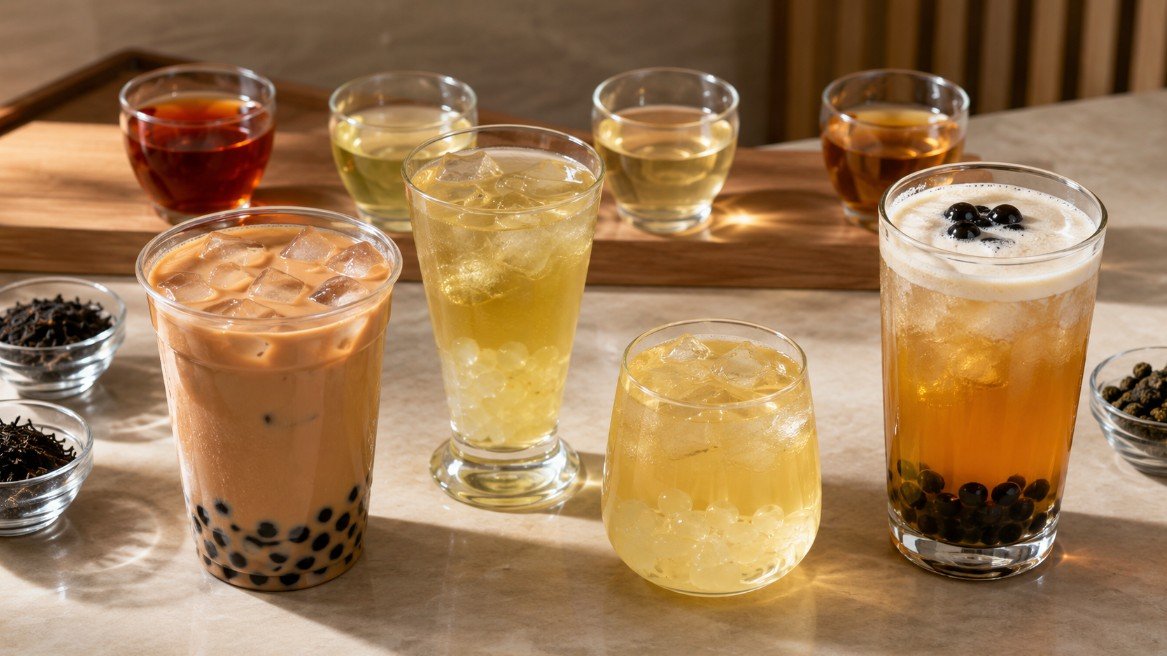
The best tea for boba depends on what the tea has to survive in the finished cup. Black tea is the most reliable starting point for classic milk tea and syrupy tapioca pearls. Green tea is a strong choice for fruit-forward drinks. Jasmine green tea adds a floral layer that works particularly well with lighter fruit and milk combinations. Oolong is the better choice when you want the tea itself to remain a major part of the flavor.
That does not mean one family is objectively superior. A tea that works beautifully with 30–50% works beautifully with 30–50% milk and sweet tapioca may be too heavy for a citrus fruit tea. A delicate green tea may feel wonderfully fresh with aloe but disappear in a rich brown-sugar build. The useful decision is therefore not “Which tea wins?” but “Which tea gives this specific boba drink enough body, aroma and finish?”
Commercial bubble-tea brewing instructions make the difference measurable. Real supplier procedures range from roughly 1:47 to 1:29 tea-to-water, with brewing times from about 6 to 15 minutes depending on the tea and the intended drink. Those figures are product-specific, but they show why “brew every tea the same way” is a poor boba strategy.
Start with the finished drink
What is the best tea for boba?
For classic milk tea with black tapioca pearls, start with black tea. For refreshing fruit boba, start with green or jasmine tea. For a more tea-forward milk drink, start with oolong. Matcha belongs in the comparison too, but it behaves differently because the powdered tea remains in the drink instead of being strained out after brewing.
That simple answer is more useful than ranking every tea on one scale. Black tea has enough body for milk, sugar and dark syrup. Green tea gives fruit a fresher base. Jasmine adds aroma. Oolong can bring roast, floral character and a longer tea finish. Matcha creates its own thicker, vegetal style.
Choose it when milk, sweetener and chewy tapioca are meant to create the familiar traditional-style combination.
Useful when citrus, passion fruit, mango or another bright fruit should feel fresh rather than creamy or heavy.
Aromatic enough to create a clear identity while remaining lighter than many black-tea milk drinks.
Roasted, floral or layered oolong can remain recognizable even when milk and tapioca are present.
Choose matcha because you want matcha itself, not simply because you need “a green tea.”
This page is the tea-family decision layer. For the broader relationship between tea, milk, flavors and toppings across the entire beverage category, use the main boba tea guide.
Quantitative reference points
Real boba brewing numbers show why tea choice matters
Different tea families are not prepared identically in commercial bubble-tea systems. Published supplier instructions vary by leaf, cut, equipment and intended drink, but they give useful reference points for understanding how much concentration boba can require.
One commercial loose-leaf procedure uses 50 g of tea with 2,000 mL of water.
A commercial green-tea procedure uses 85°C water rather than the hotter black/oolong reference.
One Taiwanese supplier lists a long extraction window for its Assam black tea.
One commercial jasmine green tea uses a lighter product-specific ratio with an 8-minute steep.
| Tea reference | Tea : water | Temperature | Time | What it tells you |
|---|---|---|---|---|
| Commercial black / oolong baseline | 1:40 | 95°C | 12–15 min | Robust leaf tea may be brewed fairly concentrated for iced or milk-based service. |
| Commercial green baseline | 1:40 | 85°C | 6–8 min | Green tea can reach boba strength without using the same heat or time as black tea. |
| POSSMEI Assam | 1:41 or 1:29 | Product method | 13–15 min | The same tea family can be prepared at different concentrations depending on the desired strength. |
| POSSMEI jasmine green | 1:47 | Hot water | 8 min | A commercial floral green base may use a lower tea concentration than Assam. |
| POSSMEI roast oolong | 1:41 | Hot water | 10 min | Roasted oolong uses its own product-specific extraction rather than copying either green or black tea exactly. |
| Classic matcha reference | 2 g / 60 mL | 80°C | Whisk about 15 sec | Matcha is dispersed into water rather than steeped and removed, so leaf-tea ratios do not translate directly. |
They come from specific commercial tea products and preparation systems. Leaf size, oxidation, roast, scenting, equipment and the amount of milk, syrup or ice in the final cup all change the result. Use the instructions for the tea you buy, then judge it in the assembled drink.
Compare the main families
Black, green, jasmine and oolong solve different boba problems
The best base is the tea whose strengths match the rest of the drink. A creamy cup with syrupy pearls asks more from the tea than a clear fruit tea with aloe. The goal is not maximum strength; it is enough flavor after dilution and competition from other ingredients.
Black tea
Body · malt · brisknessChoose black tea when you want the most dependable classic milk-tea foundation. Assam-style teas are particularly useful when the drink contains milk, creamer, sweetener and black pearls because the tea is intended to remain noticeable under several rich components.
Commercial Assam instructions illustrate the scale: one supplier publishes both 1:41 and 1:29 preparations with a 13–15 minute extraction window. That does not mean every Assam should be brewed that way. It demonstrates how concentrated a boba-oriented tea program can become.
Use the dedicated black tea for boba guide when you need to compare Assam, Ceylon and blends rather than tea families in general.
Green tea
Fresh · clean · lighter bodyChoose green tea when freshness matters more than heavy milk-tea body. It is especially useful for citrus, passion fruit and other fruit drinks where a malty black-tea foundation could make the finished cup feel heavier than intended.
Commercial preparation also shows why green tea should not simply be treated like black tea. One boba-supplier baseline uses the same 1:40 tea-to-water relationship but lowers the water reference from about 95°C to 85°C and shortens the steep from 12–15 minutes to 6–8 minutes.
For plain green tea, jasmine, sencha-style directions and fruit-vs-milk decisions, use green tea for boba.
Jasmine green tea
Floral · aromatic · fruit-friendlyChoose jasmine when aroma should be one of the defining features of the drink. The floral layer works particularly well with peach, lychee and other aromatic fruits, but jasmine can also make a lighter milk tea feel much more distinctive.
One Taiwanese commercial jasmine tea is brewed at 1:47 for 8 minutes; another supplier’s jasmine procedure uses 1:40 at 85°C for 8 minutes and moves toward 1:30 for stronger milk-tea use. The difference is a useful reminder that “jasmine tea” is not one fixed extraction formula.
For milk balance, fruit pairings and floral-intensity problems, continue to jasmine tea for boba.
Oolong
Roasted · floral · layeredChoose oolong when the tea itself should remain a major flavor rather than merely supporting milk or fruit. Roasted oolong can balance tapioca and milk with toasted depth, while lighter floral oolongs can work in cleaner, less dessert-like drinks.
Again, there is no universal number. POSSMEI’s roast oolong gives a 1:41 ratio for 10 minutes. Bossen’s general black/oolong method uses 1:40 at 95°C for 12–15 minutes, while one Four Seasons oolong product uses 1:40 at 98°C for 20 minutes. Different leaf styles genuinely require different instructions.
That is why the dedicated oolong tea for boba page should handle roast level and oolong-style selection in depth.
When milk enters the cup
Which tea is best for boba milk tea?
Black tea is the safest default for classic milk tea, oolong is the strongest alternative when you want more tea character, and jasmine works best when the milk tea is intentionally lighter and more floral.
Milk changes the tea-selection problem because it reduces how strongly many aromas and sharper tea sensations are perceived. A tea that tastes perfectly complete on its own may feel weak after milk, creamer, sweetener and ice are added.
| Milk-tea goal | Start with | Why | Watch for |
|---|---|---|---|
| Classic creamy boba | Black tea | Strong body remains easier to identify after milk and syrup. | Over-extraction turning useful strength into harshness. |
| Roasted milk tea | Oolong | Roast and aroma give the milk tea a distinct tea identity. | Choosing a very light oolong and then burying it under heavy creamer. |
| Light floral milk tea | Jasmine | Floral aroma can create character without black-tea maltiness. | Too much milk or dark syrup hiding the jasmine. |
| Vegetal creamy drink | Matcha | Powdered tea stays in the drink and creates more body. | Treating matcha as though it were ordinary brewed green tea. |
For a deeper comparison of milk quantity, tea intensity and which family works best in creamy drinks, use the best tea for milk tea.
Fruit changes the selection
Which tea is best for fruit boba?
Green and jasmine tea are the easiest general starting points for fruit boba because they can provide tea structure without adding too much weight. Oolong becomes useful when you want the tea itself to remain more obvious, while black tea works best when both the fruit and tea are intentionally bold.
| Fruit direction | Tea starting point | Reason | Good topping direction |
|---|---|---|---|
| Citrus | Green tea | Clean tea allows acidity and freshness to lead. | Aloe or light jelly |
| Passion fruit | Green or jasmine | A fresh base supports tropical intensity without creating a heavy drink. | Aloe or popping boba |
| Peach | Jasmine | Soft fruit aroma and floral jasmine can work in the same aromatic register. | Crystal boba |
| Lychee | Jasmine | The floral-fruit profile can reinforce jasmine rather than fighting it. | Crystal boba or jelly |
| Deeper stone fruit | Oolong | Roasted or floral oolong can keep a stronger tea finish under fruit syrup. | Light tapioca or jelly |
The broader fruit-specific decision belongs on the best tea for fruit tea, where individual fruit types and tea families can be compared without turning this page into another fruit-tea hub.
Toppings change how much tea you notice
Match the tea base to the weight of the topping
The sweeter and more strongly flavored the topping, the more easily a delicate tea disappears. Tapioca pearls coated in syrup create a different tea problem from aloe or crystal boba, even when both are technically “boba toppings.”
Black tapioca
Black tea or roasted oolong. Their stronger flavor profiles are well suited to chewy pearls carrying brown-sugar or syrup flavor.
Crystal boba
Jasmine or green tea. A relatively neutral chewy topping leaves more room for delicate tea and fruit aroma.
Aloe
Green or jasmine tea. Aloe is especially useful when the drink should remain clean, refreshing and fruit-forward.
Popping boba
Green or jasmine tea for most fruit builds. The topping itself releases a strong flavored liquid, so the tea still needs enough definition to avoid becoming background.
Milk foam
Black or oolong for stronger contrast; jasmine for a lighter aromatic version. Thick foam increases creaminess and can mute a delicate base.
For topping texture, flavor intensity and broader pairing decisions, use the main boba toppings guide.
The cup is a system
Milk, sweetness and ice can change which tea feels “best”
The same tea can seem strong in a plain tasting cup and weak after the full boba build is assembled. Milk softens the tea, sweetener competes for attention, and melting ice changes concentration. The more intense those components become, the more tea structure matters.
More milk
Move toward a fuller tea or a more concentrated product-specific brew. Black tea and roasted oolong are particularly forgiving when the drink is intentionally creamy.
Less milk
Jasmine, green tea and lighter oolongs become easier to appreciate because delicate aroma is no longer hidden behind as much creaminess.
Higher sweetness
Strong black tea and assertive oolong generally have an easier time remaining identifiable under syrup and sweet pearls. Delicate tea may still work, but sweetness needs to be intentional.
Lower sweetness
Floral jasmine, green tea and nuanced oolong gain more room. This is often the easier direction for someone who says they want to “taste the tea more.”
Heavy ice
The tea base needs to account for dilution as the ice melts. A strong hot brew that becomes a large iced drink is not equivalent to the same tea served without dilution.
Customization percentages themselves belong in the dedicated boba sweetness levels guide, because “50% sugar” is a shop-specific relative setting rather than a universal number of grams.
A different preparation model
Matcha belongs in boba, but it is not brewed like the other teas
Matcha is powdered green tea dispersed directly into the drink, so it should not be evaluated with the same tea-to-water rules as black, jasmine or oolong leaf tea. There is no straining step that removes the leaves; the powdered tea remains in the liquid.
A traditional tea-company reference for classic or iced matcha uses about 2 g matcha with 60 mL water at 80°C and roughly 15 seconds of whisking. A thick koicha reference moves to 4 g with only 30 mL water. Those numbers show how dramatically matcha concentration can change texture and intensity before milk or boba is even introduced.
Choose it when the earthy, vegetal, creamy matcha profile is itself the goal. For a clear peach, citrus or passion-fruit tea, brewed green or jasmine tea is generally the more natural base.
Avoid the easy failures
Common mistakes when choosing tea for boba
Most bad tea choices are not caused by picking a “low quality” tea family. They come from choosing a tea without considering what the rest of the cup will do to it.
Brewing every tea at the same temperature and time
Commercial references clearly differ: a general green-tea procedure may use 85°C for 6–8 minutes, while black/oolong can use hotter water and longer extraction. Product instructions matter.
Assuming stronger always means steeping longer
Commercial systems often change the tea-to-water ratio instead. Assam references moving from around 1:41 to 1:29 and jasmine moving from 1:40 toward 1:30 for stronger milk tea show that concentration can change without simply extending time indefinitely.
Choosing jasmine and then burying the aroma
Heavy creamer, dark brown sugar and several strong toppings can erase the reason jasmine was selected in the first place.
Using delicate green tea for an intentionally heavy dessert drink
There is nothing wrong with green tea, but a richer black tea or roasted oolong may simply fit that architecture better.
Treating all oolong as one flavor
A dark roast and a light floral oolong can produce very different milk teas. Oolong is a broad category, not one fixed taste.
Comparing matcha concentration directly with leaf tea
Matcha powder remains in the liquid. A 2 g / 60 mL matcha reference does not mean a leaf tea should use the same ratio.
Choose without overthinking it
Quick tea choice for your next boba
Turn the decision into an order
Four practical boba orders for different tea preferences
Classic first boba
Black milk tea + black tapioca + moderate sweetness. This gives you the traditional relationship between robust tea, milk and chewy pearls without adding extra flavors that make the base harder to understand.
Refreshing fruit-first boba
Green tea + passion fruit or citrus + aloe. This direction makes sense when you want a cold, bright drink and do not need milk or tapioca to be the main event.
Floral and light
Jasmine green tea + peach or lychee + crystal boba. Keep sweetness restrained enough that the floral tea remains easy to recognize.
Tea-lover milk tea
Roasted oolong milk tea + moderate or lower sweetness + tapioca or no topping. This keeps the tea itself central while still giving you the creaminess of milk tea.
The decision to remember
There is no best tea without a finished-drink goal
Black tea is the most dependable all-around base for classic milk tea, but “best tea for boba” changes as soon as the drink changes. Green tea usually fits refreshing fruit better. Jasmine is the aromatic choice. Oolong is ideal when roast or tea complexity should remain obvious. Matcha creates a different preparation and texture entirely.
The commercial numbers reinforce that point. Real boba tea procedures range from about 1:47 to 1:29 tea-to-water among the examples above, with different temperatures and steep times for different teas. Choosing the family and brewing it appropriately are two parts of the same decision.
If you are making or ordering boba, start with the result you want: creamy, refreshing, floral, roasted or earthy. Then choose the tea capable of carrying that result through milk, syrup, ice and toppings.
What is the best tea for boba?
Black tea is the most reliable overall choice for classic milk tea and tapioca, but the best tea changes with the drink. Green tea works well for refreshing fruit boba, jasmine adds floral aroma, oolong is useful for roasted or tea-forward drinks, and matcha creates a thicker vegetal style.
What tea is best for classic boba milk tea?
Black tea is the easiest starting point because its fuller flavor can remain noticeable after milk, sweetener and tapioca are added. Assam-style black tea is especially common in commercial bubble-tea preparation.
How strong is tea brewed for boba?
There is no universal ratio. Commercial examples include roughly 1:47 jasmine green tea, 1:41 roast oolong, 1:40 general loose-leaf tea preparation and Assam references as concentrated as about 1:29. These are product-specific instructions, not universal formulas.
What temperature should tea for boba be brewed at?
It depends on the tea. One commercial bubble-tea reference uses about 85°C for green tea and about 95°C for black tea and oolong. Specific products can differ, so the tea manufacturer’s instructions should take priority.
Is black tea or green tea better for boba?
Black tea is usually better for classic creamy milk tea because it has more body, while green tea is often a better starting point for refreshing fruit drinks. Neither is universally better because they serve different drink styles.
Is jasmine tea good for boba?
Yes. Jasmine green tea works especially well when floral aroma should remain noticeable, including peach, lychee and other light fruit drinks. It can also make a distinctive lighter milk tea if the milk and sweetness do not bury the jasmine.
Is oolong good for boba?
Yes. Oolong is especially useful for people who want the tea itself to remain obvious in milk tea or tapioca drinks. Roasted oolong can add toasted depth, while lighter oolongs can be more floral and aromatic.
What tea is best with tapioca pearls?
Black tea is the classic pairing because its body handles milk, sugar and syrupy pearls well. Roasted oolong is another strong choice when you want more tea complexity. Jasmine can work for a lighter contrast when the pearls are not extremely sweet.
What tea is best for fruit boba?
Green tea and jasmine green tea are the easiest general starting points. Green tea works well with citrus and tropical fruit, while jasmine is particularly useful with softer aromatic flavors such as peach and lychee. Oolong can work when you want a stronger tea finish.
Is matcha a good tea base for boba?
Yes, but matcha behaves differently from brewed leaf tea because the powdered tea remains in the drink. A traditional reference uses about 2 g matcha with 60 mL water at 80°C before other ingredients are added. Choose matcha when you specifically want its earthy, vegetal flavor and fuller body.