
GREEN TEA BASES, BREWING & BOBA PAIRINGS
Best Green Tea for Boba
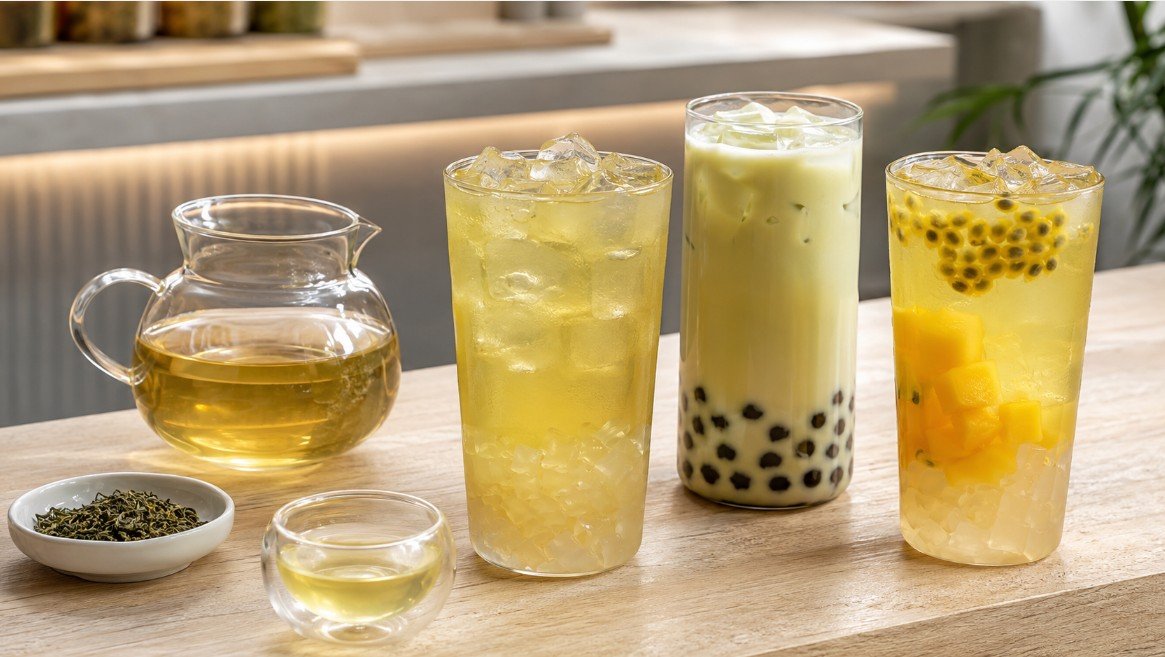
The best green tea for boba is flavorful enough to survive ice, fruit, milk or toppings without becoming harsh. For a clean iced or fruit drink, start with a fresh, balanced green tea. For milk green tea or a cup loaded with tapioca, use a more concentrated brew so the tea does not disappear behind the richer ingredients.
There is no single brewing temperature or steeping time that fits every green tea. A useful boba approach is to start from the tea maker’s recommended method, taste the plain tea first, then increase concentration only as much as the final drink requires.
Choose for the finished drink
The Best Green Tea Depends on What Goes Into the Cup
For most boba drinks, choose green tea by body and finish rather than by price or prestige. A clear fruit tea can work beautifully with a lighter, crisp brew. Milk, brown sugar and tapioca need more tea concentration because they cover subtle flavor more easily.
This is why an expensive delicate green tea is not automatically a better boba base. In a plain tasting cup, subtle sweetness and aroma can be the attraction. In a 16 oz drink with milk, ice, syrup and chewy pearls, those same details may become difficult to detect.
Best when the tea itself should remain refreshing and transparent.
Choose a brew that remains identifiable after juice, puree or syrup is added.
Milk softens tea intensity, so a very delicate brew can disappear.
Sweet pearls add another competing layer of flavor.
For the larger decision between black, green, jasmine, oolong and other bases, use the tea for boba guide. This page stays focused specifically on choosing and using brewed green tea.
Use numbers without pretending they are universal
A Practical Green Tea Brewing Range for Boba
Established green-tea recipes vary dramatically, so the safest starting point is a reference range plus the instructions for your specific tea.
| Method | Tea / water | Temperature | Time |
|---|---|---|---|
| Concentrated standard sencha reference | 10 g / 210 mL | 80°C / 176°F | 60 sec |
| Hot, fast sencha reference | 10 g / 240 mL | 100°C / 212°F | 30 sec |
| Classic green-tea reference | 2 tsp / 2 cups | Cool boiled water as directed for the tea | 30 sec |
| Cold-water / ice reference | 3 tsp / teapot | Cold | 3 min |
The important lesson is not that 30 seconds is always correct or that green tea must always be brewed at 80°C. Those published methods demonstrate how leaf quantity, temperature and time work together. A hotter brew can use a shorter contact time; a cooler method may use a different balance.
For boba, begin with the instructions for your tea. If the finished drink tastes weak after milk or ice is added, first try increasing tea concentration rather than simply steeping for several extra minutes. Longer is not automatically better.
A practical zone for many green teas when the package does not call for something different. Treat it as a starting range, not a universal rule.
This is roughly the concentration implied by the 10 g / 210–240 mL sencha references above and is much stronger than many casual mug brews.
If the tea is weak, change leaf amount, water volume, temperature or time separately so you know what improved the cup.
Do not force a delicate green tea into a boba recipe by over-steeping it. If the tea becomes rough before it becomes strong enough, increase leaf concentration or choose a more assertive tea.
Flavor matters more than the label alone
Which Green Tea Styles Work Best for Boba?
Use fresher, cleaner styles for clear and fruit drinks; use fuller green teas when milk or dense toppings are part of the recipe. You do not need to chase one exact cultivar or expensive grade to make a successful boba drink.
A useful choice when you want the tea itself to remain obvious. Sencha can work in clear drinks, fruit combinations and milk tea, but strongly vegetal examples need thoughtful fruit pairing.
Best for: clear iced tea, tea-forward fruit drinks, lighter milk tea.
A less aggressive green tea is easier to pair with fruit because it leaves more room for mango, peach, citrus or passion fruit.
Avoid if: the drink will contain a large milk portion plus sweet tapioca and heavy syrup.
Jasmine changes the aromatic profile enough that it should be treated as a separate pairing direction, especially with peach, lychee and lighter toppings.
Key difference: the floral aroma becomes part of the flavor decision.
Excellent tea can be wasted inside a heavily sweetened boba recipe. Use delicate tea when the drink is intentionally restrained rather than when every component is strong.
Best for: plain or lightly sweetened iced tea with one subtle topping.
Green tea is especially useful with fruit
Use a Cleaner Green Tea for Fruit Boba
Fruit green tea works best when the tea provides freshness and structure without competing with every fruit aroma. Citrus and passion fruit can handle a somewhat more assertive brew, while peach often benefits from a softer green tea or jasmine direction.
Keep the finish crisp
Lemon, orange and grapefruit already bring acidity. A clean green tea can give the drink length without making it taste heavy.
Use enough tea to survive the fruit
Passion fruit is intense. A very faint brew can disappear, especially once sweetness and ice are added.
Use tea to cut through ripe sweetness
Green tea can keep mango from becoming purely syrupy or dessert-like.
Plain green or jasmine can both work
Choose plain green tea for a cleaner profile or jasmine when floral aroma is part of the goal.
When adjusting a fruit recipe, do not increase fruit, syrup and topping sweetness simultaneously. Change one variable, taste again, then make the second adjustment.
Milk reduces perceived tea intensity
Milk Green Tea Needs a Stronger Base Than Clear Green Tea
If the tea tastes merely adequate before milk is added, it may taste weak afterward. For milk green tea, aim for a concentrated brew that still tastes clean on its own.
A practical home test is simple: brew the tea, reserve a small plain sample, then add milk to the rest. If the tea identity vanishes immediately, the next batch needs either more leaf, less water or a naturally fuller tea — not automatically a much longer steep.
The drink tastes mostly like sweetened milk.
Milk gives body, but the green-tea finish remains obvious.
The drink has strength, but a rough finish remains even after milk is added.
For the drink itself rather than tea selection, see the separate green milk tea guide.
Think in concentration, not vague “strong tea”
How Strong Should Green Tea Be for Boba?
A useful boba tea base should taste slightly more concentrated than the final strength you want in the finished drink. Ice, fruit, milk and syrups all dilute or mask tea flavor in different ways.
There is little competing with the brewed tea, so subtle green tea can remain noticeable.
The tea needs enough body to remain part of the drink as fruit and melting ice alter the balance.
Milk, sugar and syrup-coated pearls can collectively cover a weak tea base.
For a more detailed treatment of tea concentration across different boba bases, use the separate tea-brewing guide for boba.
Similar base, different aroma
Plain Green Tea and Jasmine Green Tea Solve Different Problems
Cleaner and more neutral
Use it when fruit should lead or when you specifically want a fresh vegetal tea character without a floral layer.
Good starting combinations: citrus, mango, passion fruit, aloe.
More aromatic
Use jasmine when floral fragrance is an intentional part of the drink rather than a background detail.
Good starting combinations: peach, lychee, crystal boba, lighter milk tea.
If you already know you want a floral tea rather than a general green-tea base, choose jasmine deliberately instead of treating the two names as interchangeable.
Both are green tea, but they behave differently
Brewed Green Tea Is Not the Same Base as Matcha
Brewed green tea is an infusion; matcha suspends powdered tea directly in the drink. That difference changes body, opacity, flavor concentration and the way each base works with milk or fruit.
Best suited to clear iced tea, fruit drinks and lighter toppings.
More naturally suited to creamy, earthy and dessert-like combinations.
If powdered tea is the flavor you actually want, go directly to the matcha boba guide rather than trying to make brewed green tea behave like matcha.
Topping weight changes how much tea you perceive
Pair Lighter Green Tea With Lighter Toppings
Crystal boba, aloe and restrained fruit jelly preserve green tea more easily than heavily sweetened black tapioca or rich pudding. Traditional tapioca can still work — especially in milk green tea — but the tea should be strong enough to remain present.
Crystal boba
One of the easiest matches for a clear green tea because it contributes chew without adding a heavy brown-sugar profile.
Aloe
Particularly useful with fruit green tea when you want texture but not another dominant flavor.
Fruit jelly
Works when the jelly supports the existing fruit direction rather than creating a second unrelated flavor.
Black tapioca
Better with a stronger green tea or milk green tea. Keep total drink sweetness under control if the pearls are already syrup-coated.
Pudding
A richer option that shifts the drink toward dessert and can easily overpower a delicate brew.
Adjust sugar in measurable steps
Start Around 50% Sweetness, Then Move One Step
If a shop offers the common 0%, 25%, 50%, 75% and 100% style of sweetness customization, 50% is a useful first test for many green-tea drinks. It is not a universal sweetness standard — shops formulate their syrups differently — but the midpoint makes it easier to decide whether the next order should move up or down.
Useful when another ingredient already contributes sweetness.
Good for aromatic tea when you still want a little sweetness.
Useful first order when you do not know the shop’s syrup strength.
Fruit and toppings begin competing more strongly with delicate tea.
Can work for dessert-like drinks but may bury a subtle green tea.
If 50% tastes too sweet, try 25% next time before changing the tea, milk and ice at the same time. If 50% tastes flat rather than merely unsweet, strengthen the tea instead of automatically adding more syrup.
Concrete starting recipes
Three Practical 16 oz Green Tea Boba Builds
These are Boba.guide starting builds for home testing, not claims about a universal shop recipe. A 16 fl oz cup is about 473 mL, and ice plus toppings occupy part of that volume.
Clear green tea with crystal boba
240 mL chilled green tea
15–20 mL simple syrup as a starting point
1/4 cup crystal boba or aloe
Ice to finish a 16 oz cup
Use this when you want the tea to lead. If it becomes watery halfway through, strengthen the next tea batch before increasing sugar.
Fruit green tea
200 mL chilled green tea
50–70 mL fruit component
0–20 mL additional syrup depending on the fruit
1/4 cup light topping, optional
Start with less additional syrup when the fruit base is already sweet. Taste before adding another full sweetener portion.
Milk green tea with tapioca
180 mL concentrated green tea
60–90 mL milk
15–25 mL sweetener as a starting range
1/4 cup cooked tapioca pearls
If the finished drink tastes like sweet milk with pearls, strengthen the tea on the next batch. If it tastes rough, reduce extraction intensity before adding more milk or sugar to hide the problem.
For a dedicated step-by-step creamy preparation rather than these comparison builds, use the green milk tea recipe.
The amount is not fixed
Green Tea Boba Usually Contains Caffeine
Regular brewed green tea contains caffeine, but the amount in a boba drink depends on the tea, leaf quantity, brewing method and how much brewed tea actually goes into the finished cup.
As a broad reference, the FDA lists a typical 12 fl oz green tea at about 37 mg of caffeine. That number should not be multiplied mechanically to estimate every boba drink: a shop may use stronger tea concentrate, a different tea-to-water ratio or less actual brewed tea because milk, fruit, ice and toppings occupy part of the cup.
If caffeine amount matters to you, the shop’s own published information is more useful than assuming all 16 oz or 24 oz green-tea boba drinks contain the same amount.
Fix the cause, not the symptom
Five Common Green Tea Boba Problems and the Next Adjustment
The drink tastes weak after ice
Next adjustment: make the tea concentrate stronger or reduce the initial water volume. Adding more syrup will not restore tea flavor.
The tea tastes bitter before anything is added
Next adjustment: check the tea’s recommended temperature and contact time before assuming the recipe needs more milk.
Milk completely hides the tea
Next adjustment: use a more concentrated brew or reduce the milk portion by roughly 15–30 mL in a 16 oz test build, then taste again.
Fruit tea tastes like syrup instead of tea
Next adjustment: reduce added syrup one step — for example from 50% to 25% on a five-level shop scale — before changing the fruit itself.
Tapioca overwhelms the drink
Next adjustment: try a stronger green tea, fewer pearls or a lighter topping such as crystal boba or aloe rather than adding multiple new flavors.
A final tasting check
A Good Green Tea Boba Still Tastes Like Green Tea
Green tea does not need to dominate every sip, but it should have a clear role. In a fruit drink, it should keep the cup fresh and structured. In milk tea, it should remain visible behind creaminess. With toppings, it should still be identifiable after the first few chews.
The most reliable method is to change one variable at a time: tea concentration first, then sweetness, then milk or fruit, then topping quantity. That gives you a repeatable recipe instead of fixing every weak cup by adding more syrup.
Common reader questions
Green Tea for Boba FAQ
What green tea is best for boba?
A clean, flavorful green tea with enough body for the finished recipe is the best starting point. Lighter tea works well for clear and fruit drinks, while milk tea and sweet tapioca usually need a more concentrated base.
What temperature should I use for green tea for boba?
There is no single temperature for every green tea. Around 75–85°C (167–185°F) is a practical starting zone for many green teas when the package does not specify something different. One established standard sencha method uses 80°C (176°F), while some fast hot-brew methods use much hotter water with a shorter steep.
How long should green tea steep for boba?
Follow the tea maker’s instructions first. Short 30–60 second methods are common in concentrated Japanese green-tea preparations, but other green teas can use different times. Do not extend the steep automatically just because the finished boba tastes weak.
Should green tea be stronger for milk tea?
Usually yes. Milk lowers the perceived intensity of the tea, so milk green tea generally needs more concentration than a clear iced green tea. Increase leaf concentration or reduce water before relying on excessive steeping time.
Is sencha good for boba?
Yes. Sencha can make a fresh, distinctly tea-forward boba base. It works especially well in clear iced drinks and can also support fruit or milk when the concentration is adjusted for the recipe.
Is jasmine green tea the same as regular green tea for boba?
Not exactly. Jasmine green tea adds a floral aroma that changes the pairing. Plain green tea is more neutral, while jasmine is particularly useful with peach, lychee and lighter toppings.
Is green tea boba the same as matcha boba?
No. Brewed green tea is an infusion made from leaves that are removed after brewing. Matcha uses powdered tea dispersed directly into the drink, making it more opaque, concentrated and full-bodied.
What sweetness level is good for green tea boba?
If a shop offers a 0%, 25%, 50%, 75% and 100% scale, 50% is a useful first test when you do not know the shop’s syrup strength. Move to 25% if the tea tastes buried by sweetness, or adjust the tea concentration if the problem is weakness rather than sweetness.
What toppings go best with green tea boba?
Crystal boba and aloe are easy matches for clear or fruit green tea because they add texture without much heaviness. Black tapioca works better when the tea is strong enough, especially in milk green tea.
How much caffeine is in green tea boba?
There is no universal amount. The FDA lists about 37 mg of caffeine as a typical value for 12 fl oz of green tea, but a boba drink can differ because tea strength, brewing method and the actual amount of tea in the cup vary. Use the shop’s own caffeine information when available.