
Choose the right tea base for every boba style
Best Tea for Boba: Black Tea, Oolong, Jasmine and Matcha
The best tea for boba depends on the drink you want to make. Assam and other black teas give classic milk tea enough body to survive milk and sugar, roasted oolong adds a smooth toasted finish, jasmine brightens fruit tea, and matcha creates an earthy, fuller-textured drink.
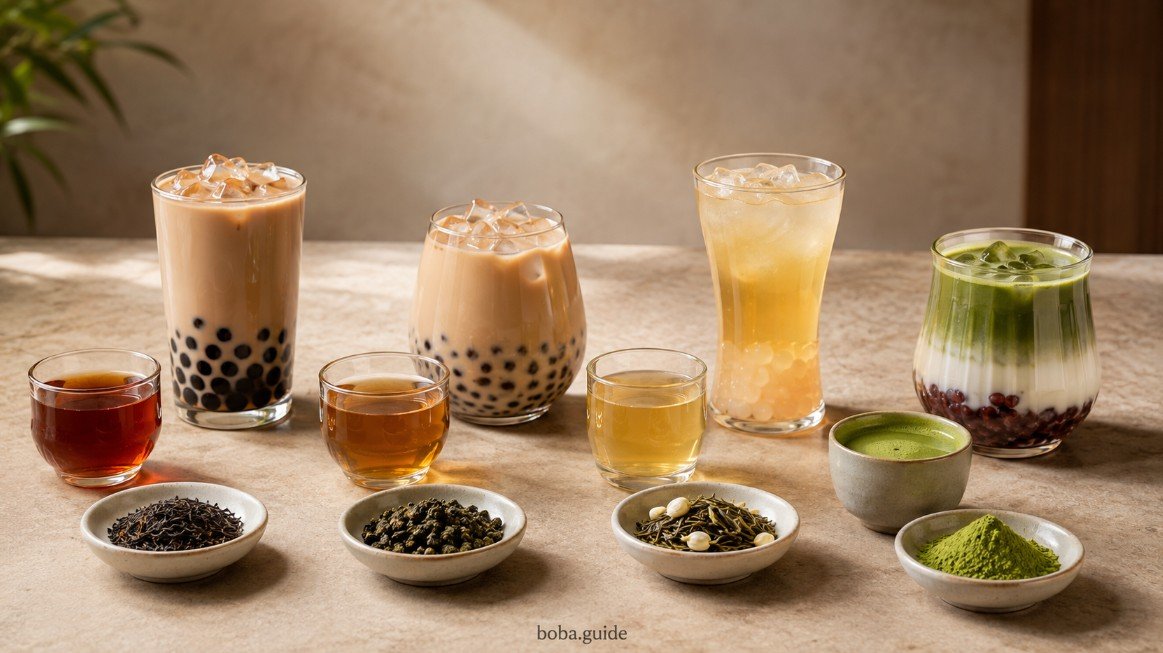
The foundation in the cup
What the Tea Base Changes in a Boba Drink
Tea gives a boba drink its aroma, bitterness, body, dryness, finish and much of its caffeine. Milk, syrup, fruit, ice and toppings change how those qualities are perceived, but they do not fully replace the brewed foundation.
Aroma
Jasmine can smell floral, roasted oolong can suggest toasted grain or nuts, and black tea may smell malty, honeyed or brisk.
Body
Body is the sense of weight and presence in the mouth. A full-bodied tea remains noticeable after milk and ice are added.
Astringency
Astringency is the drying sensation tea can leave on the tongue and cheeks. In balance, it prevents a sweet drink from feeling flat.
Finish
The finish is what remains after a sip: floral lift, roast, clean bitterness, sweetness or a dull stale note.
Contrast
Tea gives syrup, milk and chewy toppings something to push against. Without enough tea structure, a drink can taste mainly of sugar and creamer.
A strong tea base does not have to be aggressively bitter. In boba, “strong” usually means concentrated enough to survive dilution and additions. A jasmine green tea can be aromatic without feeling heavy, while a roasted oolong can have considerable body with less sharpness than an over-steeped black tea.
The same distinction helps explain why two drinks with identical sweetness and toppings can taste completely different. The tea beneath them changes the drink’s center of gravity. Black tea tends to pull an order toward malt and caramel; jasmine lifts it toward flowers and fruit; oolong adds roast or layered aroma; matcha contributes earthiness and a thicker suspended-leaf texture.
For a broader explanation of the word itself, including when boba means the drink and when it means the pearls, see what boba means as a drink and a topping.
Dry leaf
Tea character begins here
Leaf type, oxidation, roast and freshness shape the aroma and structure available for brewing.
Brewed base
Extraction determines strength
Leaf amount, water temperature and time decide whether the tea feels clear, balanced, weak or harsh.
Finished drink
Milk, fruit and ice reshape it
The brewed base must remain noticeable after sweetness, dilution and toppings enter the cup.
Four different decisions
Tea Base, Flavor and Finished Drink Are Not the Same Thing
A tea base is the brewed foundation. Flavor is an added or naturally dominant taste. The drink family describes the format, and the topping changes texture or adds another flavor.
Jasmine tea
The brewed foundation that supplies aroma, dryness and caffeine.
Peach
Fruit puree, juice, syrup or another ingredient that redirects the profile.
Fruit tea
The overall format: tea plus fruit, usually served cold and without dairy.
Aloe
The chew, crunch, softness or burst that changes each sip.
Example: Black tea can be the base, brown sugar the dominant flavor, milk tea the drink family and tapioca pearls the topping. Changing only the base to roasted oolong can make the same order feel less malty and more aromatic.
See how the full boba drink is built from tea, milk, sweetness, ice and toppings.
The practical tea map
The Main Tea Bases Used in Boba
Black tea, green tea, jasmine tea and oolong are the most common brewed foundations. Matcha, white tea, hojicha, genmaicha, rooibos and herbal infusions appear in more specialized drinks.
Classic and resilient
Black tea: brisk, malty and strong enough for milk
Black tea is the familiar foundation of many classic milk teas. Assam-style tea can feel malty and bold, while Ceylon-style tea often brings a cleaner citrus edge. The exact profile depends on origin, leaf grade, blending and extraction.
Best for: classic milk tea, brown sugar milk tea, caramel-like flavors and orders with a generous milk level.
Consider another base if: you dislike briskness or want a floral, lighter finish.
Order idea: black milk tea, 50% sweetness, regular ice and tapioca pearls.
Fresh and clean
Green tea: light, vegetal and easy to overpower
Green tea usually gives a lighter, fresher cup than black tea. Its character can range from grassy and vegetal to soft and sweet. It works especially well when a drink needs lift rather than heavy body.
Best for: citrus, passion fruit, mango, lighter fruit teas and less creamy orders.
Watch for: excessive heat or long brewing, which can turn a delicate base sharp and distractingly bitter.
Order idea: passion fruit green tea, 30% sweetness, light ice and coconut jelly.
Floral and bright
Jasmine tea: aromatic and especially useful with fruit
Jasmine tea is usually tea scented with jasmine blossoms rather than a caffeine-free flower infusion. Many boba shops use a jasmine green tea base, although other tea foundations are possible. Its floral aroma can make a fruit drink feel brighter without adding more sugar.
Best for: peach, lychee, citrus, grape, passion fruit and clean milk tea.
Avoid if: perfume-like floral notes are not your preference.
Order idea: peach jasmine tea, 30% sweetness, regular ice and aloe.
Layered and aromatic
Oolong tea: floral, creamy or roasted depending on style
Oolong is not one flavor. Light oolongs can be floral, creamy and orchid-like, while more oxidized or roasted styles can taste woody, nutty, honeyed or toasted. This range makes oolong one of the most flexible bases in a serious boba menu.
Best for: peach, lychee, milk tea, fresh milk, honey and less sugary orders where the tea should remain noticeable.
Order idea: roasted oolong milk tea, 30% sweetness, light ice and mini pearls.
Earthy and textural
Matcha: powdered leaf with a different mouthfeel
Matcha is whisked tea powder, not a filtered infusion. Because the leaf remains in the drink, matcha adds color, body and a fine suspended texture as well as vegetal, savory and mildly bitter notes. Quality and dosage strongly affect whether the result tastes vivid or chalky.
Best for: fresh milk, red bean, light brown sugar, strawberry and simple orders that let the tea remain central.
Order idea: matcha fresh milk, 30% sweetness, regular ice and red bean.
Specialty options
White tea, hojicha, genmaicha, rooibos and herbal infusions
White tea tends to be delicate and can disappear beneath strong syrup. Hojicha contributes roast with less vegetal character than standard green tea. Genmaicha adds toasted rice notes. Rooibos and herbal infusions can offer caffeine-free possibilities, but blended products may still include caffeinated tea.
Best approach: ask what is actually brewed rather than assuming the category name tells the whole story.
Taste beyond “strong” or “light”
From Floral and Fresh to Malty, Roasted and Earthy
Tea bases differ less by a single strength ranking than by the kind of flavor they contribute. Jasmine can be more aromatic without being heavier; roasted oolong can have more body without the sharp edge of over-steeped black tea.
Floral
Jasmine and light oolong bring lifted aromas that work well with peach, lychee and citrus.
Fresh
Green tea can feel grassy, leafy or clean, giving sweet fruit a drier finish.
Malty
Assam-style black tea supports milk, caramel and classic tapioca without disappearing.
Roasted
Roasted oolong and hojicha add toasted grain, nuts, wood or cocoa-like depth.
Earthy
Matcha brings vegetal and savory notes together with a thicker texture.
Pair the base with the format
Which Tea Bases Work Best with Milk?
Full-bodied black tea and roasted oolong usually remain easiest to taste through milk. Delicate green and white teas need lighter milk levels, careful brewing and restrained sweetness.
| Tea base | Body with milk | Typical result | Good starting order |
|---|---|---|---|
| Black tea | Full | Malty, brisk, classic | 50% sweetness, tapioca |
| Roasted oolong | Medium to full | Toasty, aromatic, smooth | 30% sweetness, mini pearls |
| Jasmine tea | Light to medium | Floral, clean, fragrant | 30% sweetness, crystal boba |
| Matcha | Full but different | Earthy, creamy, suspended leaf | Fresh milk, red bean |
Brightness, acidity and aroma
Which Tea Bases Work Best with Fruit?
Jasmine and green tea suit bright fruits particularly well. Black tea supports deeper citrus and stone-fruit flavors, while aromatic oolong can make peach, lychee and tropical combinations feel more layered.
Citrus
Green tea and black tea both work. Green tea feels cleaner; black tea adds firmer structure.
Try: lemon black tea with crystal boba.
Peach and stone fruit
Jasmine and oolong echo peach’s aroma without demanding excessive sweetness.
Try: peach oolong with aloe.
Lychee and floral fruit
Jasmine reinforces floral lift, while light oolong creates a rounder finish.
Try: lychee jasmine tea with coconut jelly.
Passion fruit and mango
Green tea keeps tropical fruit lively; black tea makes the result deeper and less delicate.
Try: passion fruit green tea with popping boba.
Why the same tea can taste different
How Milk, Sugar, Fruit and Ice Change Tea Flavor
Every major customization changes how clearly the tea can be tasted. Milk softens bitterness, sugar can amplify aroma but bury detail, fruit adds acidity, and melting ice reduces concentration.
Milk softens and rounds
Milk reduces the perception of sharpness and adds body, but too much can erase a delicate base. Strong black tea and roasted oolong usually tolerate more milk than subtle green or white tea.
Sugar can clarify or bury
A little sweetness may make floral and roasted aromas easier to notice. Heavy syrup can flatten the distinctions until black, jasmine and oolong taste more similar than they should.
Fruit changes acidity and aroma
Citrus and passion fruit increase brightness. Peach and lychee can reinforce floral notes. Thick purees may cover a light tea more quickly than clear juice or syrup.
Ice dilutes strength over time
A drink that tastes balanced at pickup may become watery after twenty minutes. Shops often brew tea stronger for iced service, but recipes and holding practices vary.
Toppings redirect the finish
Tapioca adds molasses-like sweetness and chew. Aloe keeps fruit tea light. Red bean makes matcha feel more dessert-like. Cheese foam adds salt, fat and a creamy finish.
Use the guide to compare sweetness levels before ordering.
Caffeine depends on the recipe
How Much Caffeine Does the Tea Base Add?
Caffeine varies with the tea, leaf amount, particle size, water temperature, brewing time, concentrate ratio and serving size. The tea name alone cannot give an exact number for a finished boba drink.
Black is not automatically highest
A heavily brewed green tea can contain more caffeine than a lightly brewed black tea. Leaf and extraction matter as much as the color category.
Matcha is different
Matcha keeps the powdered leaf in the drink rather than filtering it out, so dosage matters directly and the result can be relatively caffeine-rich.
Shop sizes change the answer
A large drink made from concentrated batch tea may contain more caffeine than a small traditionally brewed serving. Some shops also combine tea with coffee or added caffeine.
Herbal does not always mean caffeine-free
Pure rooibos or many herbal infusions contain no caffeine, but a named blend may include green, black or mate-based ingredients. Ask what is actually brewed.
When caffeine matters
Ask the shop for its own recipe or nutrition information. Avoid treating a universal online number as exact for every brand, cup size or customization. Individual sensitivity, health conditions and medications can also change how caffeine affects a person.
For ranges, menu examples and practical ordering choices, read the full guide to caffeine in boba.
Boba can describe the topping
Does Every Boba Drink Contain Tea?
No. Fresh milk drinks, some slushes, smoothies, yogurt drinks, coffee drinks and dessert-style beverages may contain boba toppings without any brewed tea.
Tea-based milk tea
Brewed tea is combined with milk, creamer or a milk alternative.
Fresh milk drink
Milk, syrup and toppings may be used without tea, as in some brown sugar fresh milk drinks.
Slush or smoothie
Fruit, ice and dairy or nondairy ingredients may form the whole base.
Coffee or yogurt drink
The stimulant or fermented base comes from something other than tea.
Menu placement is a useful clue, but it is not proof. Ask whether a drink includes brewed tea, especially when you are choosing around caffeine. Browse boba drinks made without tea for clearer non-tea options.
How shops create consistency
Brewed Tea, Concentrate, Powder and Premix Are Not Equivalent
A drink can obtain tea character from freshly brewed leaves, a prepared concentrate, instant powder, extract or a premixed base. Each method produces a different balance of aroma, speed, consistency and transparency.
| Base format | Typical strength | Operational benefit | What a customer may notice |
|---|---|---|---|
| Freshly brewed leaf | Variable by recipe | Distinct aroma and flexibility | Clearer tea character when handled well |
| Batch concentrate | High before dilution | Fast service and repeatability | Good structure, but freshness depends on holding |
| Tea extract or powder | Highly consistent | Speed and easy storage | Can taste clear, flat, dusty or flavored depending on quality |
| Premixed milk-tea powder | Preset | Minimal preparation | Tea, creamer and sweetness may be difficult to separate |
Powder does not automatically mean a bad drink, and brewed leaf does not automatically guarantee a good one. Freshness, dosage, water, storage and recipe balance still determine the result.
Judge the cup, not the marketing phrase
What a Good Tea Base Should Taste Like
A good tea base remains identifiable after sweetness, milk or fruit are added. It should taste intentional rather than watery, harsh, stale or perfume-like.
The aroma is distinct
You can tell whether the drink leans malty, floral, fresh, roasted or earthy before the topping takes over.
Bitterness is controlled
Some pleasant bitterness can create structure. A harsh, drying finish that dominates every ingredient suggests extraction or holding problems.
The tea survives the recipe
Milk and syrup soften the base, but the result should not taste like flavored creamer with an unidentified dark liquid underneath.
The finish is clean
Stale, papery, dusty or refrigerator-like notes do not become better because the cup contains expensive toppings.
The drink ages reasonably
Ice will dilute an iced drink, but a well-planned base should not collapse after a few minutes.
Use these signs together with the broader guide to recognize quality in a finished boba drink.
Troubleshooting the cup
Why Boba Tea Can Taste Weak, Bitter or Flat
Weak tea usually comes from insufficient leaf, a dilute concentrate or too much ice and milk. Harsh bitterness is more often linked to excessive heat, long extraction, old held tea or a base that was not planned for the final recipe.
Weak or watery
Likely causes: low tea concentration, melting ice, excess milk or a base designed for a smaller cup.
Order differently: request less ice, less milk or a tea-forward option rather than simply adding more sugar.
Sharply bitter
Likely causes: over-extraction, high water temperature for a delicate tea, old batch tea or too much concentrate.
Order differently: choose a smoother base such as light oolong, or ask whether a fresh batch is available.
Flat after milk
Likely causes: a delicate base, heavy creamer or excessive sweetness.
Order differently: reduce sweetness and choose black tea or roasted oolong.
Perfume-like
Likely causes: an intense floral flavoring, heavily scented jasmine or syrup that overwhelms the tea.
Order differently: request lower sweetness or switch to green or black tea.
Dusty or chalky
Likely causes: poorly dispersed powder, low-quality premix or matcha that was not whisked properly.
Order differently: choose a brewed-tea drink or ask how the matcha base is prepared.
Read more about why brewed tea becomes bitter.
A decision you can use at the counter
How to Choose a Tea Base for Your Next Boba Order
Choose by the quality you want most: black tea for body, jasmine for floral lift, green tea for freshness, oolong for layered aroma, matcha for earthiness, or a verified caffeine-free infusion when available.
Choose black tea if…
You want classic milk tea, malt, firm structure or a base that can handle brown sugar and tapioca.
Start with: black milk tea, 50% sweetness, regular ice, tapioca.
Choose jasmine if…
You prefer floral aroma, peach, lychee, citrus or a bright fruit tea that does not feel heavy.
Start with: peach jasmine tea, 30% sweetness, aloe.
Choose oolong if…
You want tea to remain noticeable and enjoy roasted, honeyed or orchid-like notes.
Start with: roasted oolong milk tea, 30% sweetness, mini pearls.
Choose green tea if…
You want a cleaner, lighter finish with passion fruit, mango, citrus or coconut jelly.
Start with: passion fruit green tea, 30% sweetness, coconut jelly.
Choose matcha if…
You enjoy earthy, vegetal flavor and a thicker drink that pairs well with fresh milk or red bean.
Start with: matcha fresh milk, 30% sweetness, red bean.
Choose a non-tea base if…
You want no brewed tea, need to avoid caffeine or prefer fresh milk, smoothie, slush, coffee or yogurt formats.
Ask: “Does this drink contain brewed tea or added caffeine?”
For a broader decision path, build a boba order around your taste preferences.
From the shop to your kitchen
Choosing and Brewing Tea for Homemade Boba
Tea for homemade boba usually needs more concentration than tea intended to be sipped plain because milk, syrup and ice will dilute it. The best home method depends on the leaf, water temperature, batch size and final recipe.
Choose the final drink first
Bold black tea and roasted oolong suit milk. Jasmine and green tea suit fruit. Matcha requires whisking or blending rather than ordinary steeping.
Plan for dilution
Brew for the milk and ice that will be added, but do not chase concentration by burning delicate leaves with excessive heat.
Cool the base deliberately
Rapid cooling can protect aroma and reduce uncontrolled extraction. Large warm batches should not sit indefinitely at room temperature.
Test one variable at a time
Adjust leaf amount, time or temperature separately so you know what improved the next batch.
Compare black tea for classic milk tea, jasmine tea for floral and fruit-forward drinks and oolong for roasted, aromatic boba, then use the practical method to brew a concentrated tea base for boba.
Boba tools and tea-making supplies
Affiliate disclosure: We may earn a commission from qualifying purchases.
How this guide is built
How Boba Guide Evaluates Tea Information
Boba Guide compares tea through hands-on tasting, home brewing tests, current shop menus, official ingredient and nutrition disclosures, established tea references and reviewed observations from the wider boba community.
Tea and caffeine vary by product and recipe, so we avoid presenting one universal number as exact for every shop. Community experience helps identify useful questions, but it is reviewed rather than treated as automatic proof.
Common tea questions
Tea for Boba FAQ
What kind of tea is normally used in boba?
Black tea, green tea, jasmine tea and oolong are the most common brewed bases. Matcha, hojicha, genmaicha, white tea, rooibos and herbal infusions appear in more specialized drinks.
Does every boba drink contain tea?
No. Fresh milk drinks, some slushes, smoothies, yogurt drinks, coffee drinks and dessert beverages may contain boba toppings without brewed tea.
Which tea base is best for classic milk tea?
Full-bodied black tea is the most familiar choice because its malty, brisk character remains noticeable through milk and sweetener. Roasted oolong is an excellent alternative when you want a smoother, toastier result.
Which tea is best for fruit boba?
Jasmine and green tea are useful starting points for bright fruit drinks. Oolong works especially well with peach and lychee, while black tea supports lemon and deeper fruit flavors.
Is jasmine tea the same as green tea?
Not exactly. Jasmine describes the scenting style, while green tea often supplies the underlying leaf base. Many jasmine teas use green tea, but jasmine-scented white, black or oolong teas can also exist.
Is oolong tea stronger than black tea?
Not in one universal sense. Oolong may be more aromatic or roasted, while black tea may feel brisker or maltier. Caffeine and extraction depend on the particular leaf and brewing recipe.
Which boba tea base has the most caffeine?
There is no reliable universal winner. Tea amount, particle size, temperature, brewing time, concentrate ratio and serving size can matter more than the category name. Matcha can be relatively caffeine-rich because the powdered leaf remains in the drink.
Why does my boba tea taste bitter?
Common causes include excessive brewing time, water that is too hot for the tea, too much concentrate, stale held tea or a recipe that is not balanced for its milk and ice level.
Can boba be made with herbal tea?
Yes. Rooibos, hibiscus and other herbal infusions can be used, especially for caffeine-free styles. Check blends carefully because some products also contain green or black tea.
Is matcha considered a tea base?
Yes, but it behaves differently from a filtered infusion. Matcha is powdered tea whisked or blended into liquid, so the leaf remains in the drink and contributes more body and texture.
How can I tell if a boba shop uses real brewed tea?
Look for a recognizable tea aroma and clean finish, check how the menu describes its bases and ask staff what is brewed. Color alone is not reliable because milk, syrup and concentrates can change appearance.
Can I ask a boba shop to change the tea base?
Sometimes. Shops that brew several bases may allow substitutions, but premixed recipes and flavor systems can limit customization. Ask before choosing sweetness and toppings.