
Milk Tea with Boba: A Guide to Tea, Milk, Pearls and Flavor
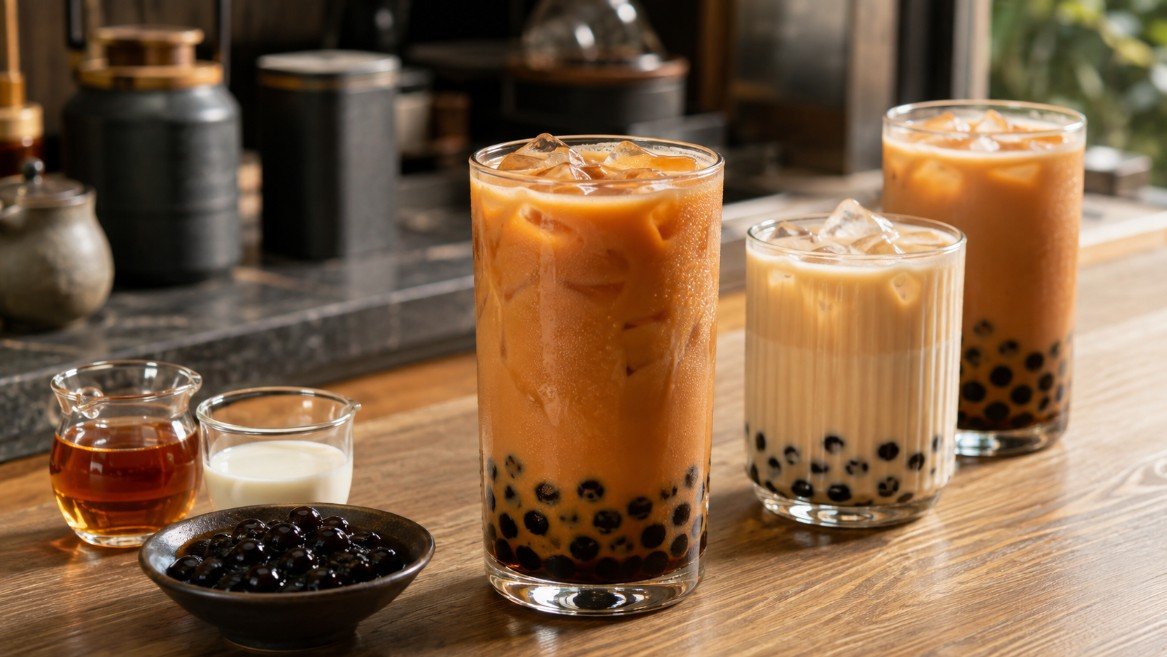
Milk tea with boba is a tea-based drink combined with milk or another creamy component and served with chewy boba pearls, usually tapioca. The familiar version uses black tea, milk, sweetness and black tapioca pearls, but that is only one interpretation. Jasmine, oolong and green tea can all become milk tea, while different milk choices, sweetness levels and toppings change the final drink.
The important idea is that “milk tea with boba” describes a drink style rather than one fixed recipe. The tea supplies aroma and structure, the milk changes body and softness, sweetener shapes the flavor balance, and the pearls turn an ordinary beverage into something you also chew.
A good cup keeps those parts in balance. You should still notice the tea beneath the milk and sweetness, while the pearls should feel soft, springy and pleasant rather than hard or mushy. Once you understand those layers, ordering milk tea with boba becomes much easier.
Milk tea with boba is milk tea plus a chewy pearl topping
Milk tea by itself does not automatically contain boba. At its simplest, milk tea is tea combined with milk, creamer or another creamy ingredient. Boba is added as a separate topping.
Tea + creamy component + optional sweetness
Usually cooked chewy tapioca pearls
A creamy tea drink with a chewy topping
This difference is useful when reading menus. A shop may list “milk tea” as a beverage category and then ask you to choose a topping separately. At another shop, a named signature drink may already include pearls by default. The wording on the menu matters.
Milk tea with boba also fits inside the wider category explained in our guide to what boba is. Not every boba drink is milk tea, and not every milk tea contains boba.
Four layers determine how milk tea with boba actually tastes
Two drinks can both be called milk tea with boba and still taste surprisingly different. The reason is that several components are adjustable independently.
Tea
Black tea can taste malty and assertive, jasmine can be floral, and oolong can bring roasted or aromatic notes. The tea establishes the foundation of the drink.
Milk or creamy component
Fresh milk, creamer and plant-based alternatives all change body, richness and the way the tea aroma comes through.
Sweetness
Syrup can make the drink lightly sweet or dessert-like. Sweetened pearls can add another layer of sweetness even when the liquid itself is ordered less sweet.
Boba texture
Chewy pearls change the pace of every sip and add a tactile element that ordinary milk tea does not have.
Ice and serving temperature add another variable, but these four elements explain most of the flavor and texture differences people notice first.
The tea base matters more than many first-time boba drinkers expect
A milk tea should not taste like sweetened milk with a vague tea color. The tea base is what gives the drink structure and keeps it from becoming flat.
Black tea is one of the easiest starting points because its stronger flavor can stand up to milk, sweetness and tapioca. It creates the profile many people imagine when they picture classic boba milk tea.
Oolong milk tea can feel more complex and less purely sweet. Roasted styles pair especially well with creamy ingredients because the deeper tea character stays noticeable.
Jasmine milk tea offers a softer aromatic profile. It can feel brighter than black tea while still gaining body from milk.
Green tea can create a cleaner milk tea profile, though the specific result depends strongly on the tea and preparation style.
Milk softens some bitterness and astringency, but it can also hide weak tea. That is why a well-made milk tea generally needs enough tea character to remain present after the creamy component, syrup and ice are added.
If you want to compare the tea bases themselves in more depth, see our guide to tea in boba.
Milk tea with boba can be creamy and sweet, but it does not have one universal flavor
The classic expectation is creamy tea with noticeable sweetness and chewy pearls. But the exact flavor depends on the tea base and how aggressively the milk and syrup are used.
More obvious tea aroma, restrained sweetness and a slightly drier finish.
Bold tea, creaminess, sweetness and tapioca in relatively equal roles.
Lighter aroma with creamy softness and a more delicate tea character.
Caramel-like sweetness and syruped pearls can dominate more of the experience.
The pearls also change perceived flavor. Plain cooked tapioca is relatively mild, but pearls held in brown sugar or another syrup can introduce their own sweetness. That is why a reduced-sugar milk tea can still taste fairly sweet if the cup contains heavily syruped boba.
For the broader flavor range across fruit teas, fresh milk drinks and other styles, see what boba tastes like.
The pearls turn milk tea from a simple drink into a drink-and-chew experience
Milk tea without pearls is primarily about aroma, sweetness, creaminess and temperature. Tapioca changes the rhythm of the drink because every sip can deliver pieces that need to be chewed.
Properly cooked tapioca adds an elastic chew rather than a crisp bite or liquid burst.
The topping interrupts the liquid flow and makes each sip more interactive.
Sweetened pearls influence the overall cup even when the tea itself is less sweet.
A portion of chewy pearls makes milk tea feel closer to a snack or treat than plain tea alone.
Good pearls should not fight the drink. If they are extremely hard, mushy, stale or excessively sweet, they can overpower a carefully brewed milk tea.
For ingredients and texture in more detail, see what boba pearls are.
The same boba topping can feel completely different with another tea base
Black milk tea with tapioca pearls
This is the reference point for many first-time drinkers: a stronger tea base, creamy body, moderate-to-rich sweetness and dark chewy pearls. When well balanced, the tea remains recognizable instead of disappearing behind sugar.
Oolong milk tea with boba
Oolong gives the drink more aromatic depth and can make it feel less one-dimensional. Roasted varieties are especially useful if you want milk tea that still tastes strongly of tea.
Jasmine milk tea with boba
Jasmine creates a lighter aromatic profile. It works well for someone who wants creaminess without the heavier malt character of black tea.
Brown sugar milk tea or fresh milk with boba
Brown sugar syrup can make the pearls and liquid taste much more caramel-like. Some popular brown sugar drinks are more milk-centered than tea-centered, so not every brown sugar boba cup is simply traditional milk tea with extra syrup.
The larger boba category also includes fruit tea, fresh tea, slushes and milk-centered drinks without a conventional milk-tea structure. Those are covered separately in our boba drinks guide.
Fresh milk, creamer and plant-based alternatives create different styles of milk tea
The word “milk” in milk tea does not guarantee one exact ingredient at every shop. Different beverage traditions and businesses use different creamy components.
Fresh milk can make the drink taste softer and more familiar while still allowing a strong tea base to show through.
Some classic shop-style milk teas use creamer rather than fresh dairy milk. The result can be richer and texturally different.
Plant-based options can work well with tea, but they are not neutral replacements. Oat, soy and other alternatives can each change body and aroma.
If dairy, allergens or ingredient restrictions matter to you, check the actual shop recipe instead of assuming that “milk tea” tells you exactly what was used. The boba dietary guide covers those choices more directly.
The pearls and the liquid can contribute sweetness separately
Many shops let customers select a sweetness level for the drink itself. That is useful, but the setting may not represent every source of sugar in the finished cup.
Controls some or most of the sweetness in the liquid base.
Pearls may already have absorbed or been coated with syrup.
The cup may taste sweeter than the liquid setting alone suggests.
This is especially noticeable with brown sugar pearls. If you prefer a tea-forward drink, reducing the liquid sweetness can help, but it does not make syruped pearls suddenly taste unsweetened.
Temperature changes both the tea and the way the pearls feel
Cold milk tea is common in boba shops. Ice makes the drink refreshing but also introduces dilution as it melts, which is why the tea base needs enough strength.
A warm milk tea can emphasize tea aroma differently and may keep tapioca feeling softer. Availability depends on the shop and topping.
Neither format is automatically better. Iced milk tea is easier to drink as a cold café beverage, while warm versions can shift attention toward aroma and comfort.
Milk tea with boba usually contains caffeine when brewed tea is the base
Black, green, jasmine and oolong teas naturally contain caffeine. The amount in a finished milk tea varies with the tea type, how much tea is used, brewing conditions and serving size.
The tapioca pearls are not what creates the caffeine. If you change from black milk tea with boba to another drink with the same pearls but a different liquid base, the caffeine profile can change substantially.
If caffeine, calories or sugar are the main concern, use the boba nutrition guide rather than trying to estimate them from the word “boba” alone.
Build your milk tea in a simple sequence instead of trying to decode the whole menu at once
Choose the tea
Black for classic strength, oolong for roasted depth, jasmine for a floral profile or another tea base offered by the shop.
Check the milk style
The drink may use fresh milk, creamer or another option. Some shops let you change it; others build each menu item around a fixed recipe.
Choose sweetness
If you are unsure, a moderate level often makes it easier to taste both the tea and the topping rather than only syrup.
Choose ice or temperature
Ice changes dilution as well as temperature, so reduced ice does not always taste identical to the shop’s standard preparation.
Add boba
Look for tapioca pearls, black boba or the shop’s equivalent classic topping if you want the traditional chewy experience.
Do not assume that every menu item already includes pearls. A drink called “milk tea” may arrive without them unless the topping is added separately. A signature “pearl milk tea,” on the other hand, normally tells you that pearls are part of the drink concept.
Choose your first milk tea by the flavor you already enjoy
The safest introduction to the combination of tea, milk, sweetness and chew.
Better if you want the tea itself to have a stronger aromatic personality.
A lighter direction with more fragrance and less malt character.
A sweeter, more dessert-like route where caramel-style syrup and pearls play a larger role.
If you are still deciding among the wider menu, use Choose Your Boba to match a drink to your preferred flavor and texture.
You can make the same basic drink more tea-forward or more dessert-like
Try a stronger black or roasted oolong base, moderate sweetness, fewer syrup-heavy toppings and a milk choice that does not completely mask the tea aroma.
Brown sugar syrup, richer milk styles, pudding or an extra topping portion can push the drink toward a more indulgent profile.
Neither direction is more authentic simply because it is stronger, sweeter or less sweet. They serve different preferences. The useful question is whether the tea, milk, sweetness and toppings work together intentionally.
Quality milk tea with boba has balance, not just sweetness and pearls
The tea should contribute aroma and structure rather than acting only as brown-colored liquid beneath milk and syrup.
The creamy component should create body while leaving enough tea character to make the drink interesting.
Good tapioca should be chewy through the center without a hard core or mushy surface.
Syrup should support the tea and milk rather than making every cup taste like the same sugar profile.
A cold drink should feel refreshing without becoming watery, while a warm version should still protect the texture of the topping.
Quality varies widely because every one of these components can be prepared well or poorly. A premium tea base cannot rescue stale pearls, and perfect tapioca cannot rescue a drink where the tea has disappeared completely.
For a deeper tasting checklist, continue to the boba quality guide.
One simple drink style, many possible results
Chew, sweetness and texture added to the milk tea.
Questions about milk tea with boba
What is milk tea with boba?
Milk tea with boba is tea combined with milk or another creamy component and served with boba pearls, usually chewy tapioca. Sweetness, tea type, milk choice, ice and toppings can all vary.
Is milk tea with boba the same as bubble tea?
Milk tea with boba is one classic type of bubble tea, but bubble tea is the broader category. Fruit teas, fresh teas, fresh-milk drinks and other boba beverages do not all have to be milk tea.
Is boba automatically included in milk tea?
No. At many shops, milk tea and toppings are separate menu choices. If you want tapioca pearls, check whether they are included or need to be added.
What tea is used for boba milk tea?
Black tea is a classic choice, but oolong, jasmine and green tea can also be used. Each creates a different balance of aroma, body and bitterness once milk and sweetness are added.
What does milk tea with boba taste like?
It is usually creamy and sweet with a noticeable tea flavor and chewy pearls. Black tea versions can be malty, oolong can be roasted, jasmine can be floral, and brown sugar styles can taste much richer and more caramel-like.
Is milk tea with boba always very sweet?
No. Many shops allow the liquid sweetness to be adjusted. However, syruped tapioca pearls can contribute additional sweetness, so the complete cup may taste sweeter than the selected drink setting suggests.
Does milk tea with boba have caffeine?
Usually, if the drink uses brewed black, green, jasmine or oolong tea. The amount varies with tea type, brew strength, recipe and serving size.
Can milk tea with boba be served hot?
Yes, some shops offer warm or hot milk tea with tapioca pearls. Availability depends on the drink and shop, and the experience differs from an iced version because temperature changes aroma and pearl texture.
What is a good milk tea with boba for beginners?
Classic black milk tea with tapioca pearls is a straightforward starting point. If you prefer a more roasted tea flavor, try oolong; if you prefer floral drinks, jasmine milk tea can be an easier fit.
Is pearl milk tea the same as milk tea with boba?
In classic usage, the terms overlap strongly. Pearl milk tea specifically describes milk tea served with pearls, while “milk tea with boba” is a natural descriptive phrase that can cover several tea bases and shop styles.
MILK TEA WITH BOBA IN ONE IDEA
Start with tea, add creaminess and sweetness, then add the chewy pearl experience. The quality of milk tea with boba depends on how well those parts stay balanced rather than on one fixed recipe.