
Boba Menu Guide: Drinks, Sizes, Sugar, Ice and Toppings Explained
A long bubble tea menu becomes much easier when you stop reading it as a list of random drink names. Most shops use the same underlying logic: choose a drink family, identify the base, check milk and flavor, then select size, sweetness, ice and toppings.
The exact words vary by shop, country and ordering app, but the structure is remarkably consistent. This guide shows you how to decode that structure, spot what a name does not tell you and compare similar drinks without guessing.
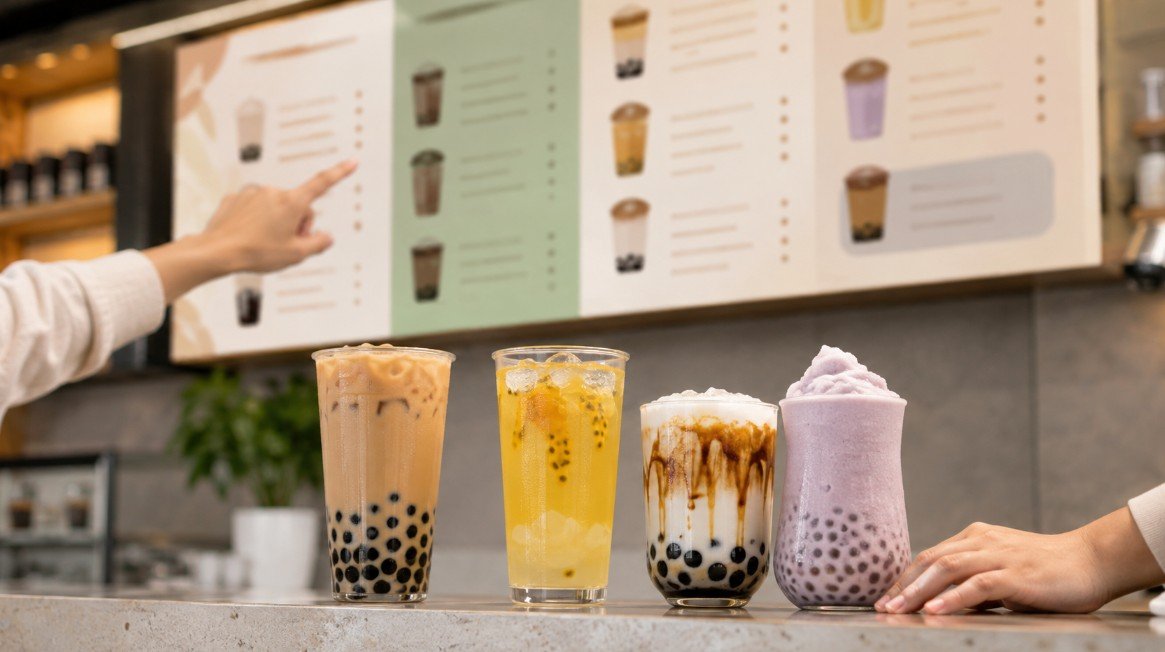
What You Usually See on a Boba Menu
Most menus group drinks by family and then attach a customization line. The menu name tells you part of the recipe; the options below it complete the order.
Drink family
Milk tea, fruit tea, fresh milk, slush, smoothie, coffee or another house category.
Base and flavor
Black tea, jasmine, oolong, matcha, coffee, milk or a fruit-forward base.
Size and price
Regular, large or one fixed cup, sometimes with different hot and cold sizes.
Sugar and ice
The shop’s adjustable syrup and ice settings, when the recipe allows changes.
Toppings
Included pearls or optional add-ons such as jelly, pudding, aloe and foam.
Important: the word “boba” may describe the whole drink category, the tapioca pearls or an included topping. The placement of the word on the menu usually reveals which meaning is intended. For the full distinction, see what boba can mean as a drink and a topping.
The Main Drink Sections on a Boba Menu
Category names are not perfectly standardized, but most menus use a recognizable set of drink families.
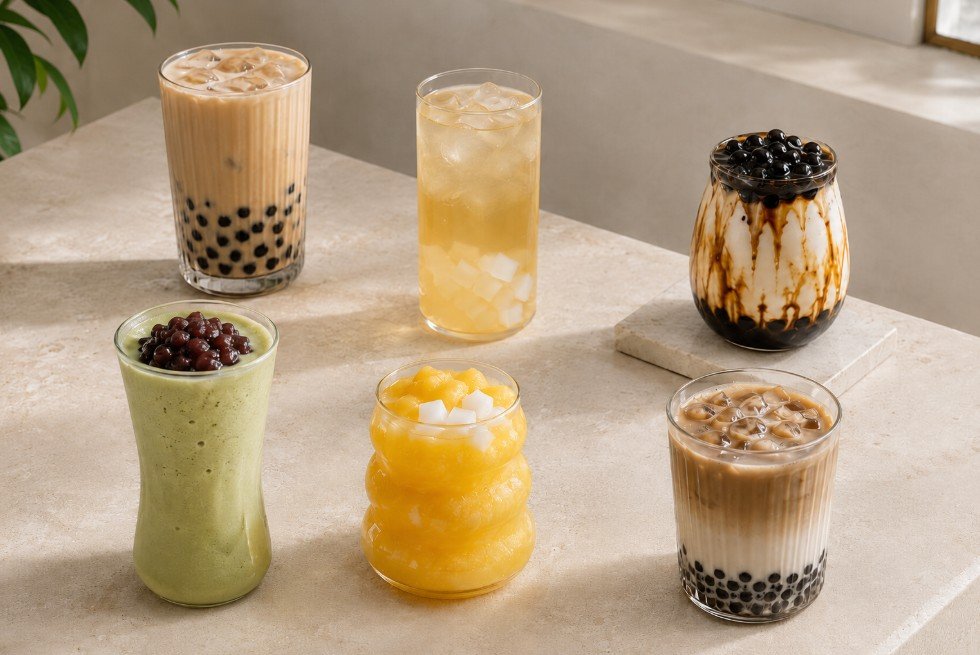
Milk tea
Brewed tea is combined with milk, creamer, milk powder or a shop-specific dairy base. The tea may be black, jasmine, green, oolong or another style.
Fruit tea
Tea is paired with fruit syrup, puree, juice, pieces or preserves. These drinks are normally clearer and brighter than milk tea, but sweetness can still be high.
Fresh milk
Milk is the main liquid. Some versions include tea, matcha or coffee, while brown sugar fresh milk may contain no brewed tea at all.
Brown sugar drinks
This label often points to caramelized syrup, coated tapioca pearls and a striped cup. It does not guarantee tea, and sweetness may be difficult to reduce.
Slushes and frozen drinks
Ice is blended into the drink, so standard ice-level controls usually do not apply. A slush may be tea-based, fruit-based, dairy-based or made from a prepared powder.
Smoothies
Smoothies are thicker than fruit tea and may contain fruit, powder, milk, yogurt or ice cream-style ingredients. They are not automatically made with fresh fruit.
Coffee and matcha drinks
Coffee, espresso and matcha can appear as their own menu families or inside milk and fresh-milk sections. Both can contribute caffeine even when no brewed tea is present.
Specialty, seasonal and signature drinks
These are predesigned combinations chosen by the shop. They are often the fastest way to order but may allow fewer adjustments than a basic tea or milk tea.
Milk Tea and Fresh Milk Are Not Interchangeable
The two categories can look similar in a cup, but they describe different recipe logic.
“Milk tea” can mean several milk systems
A milk tea may use fresh dairy milk, non-dairy milk, creamer, milk powder or a prepared base. The name mainly tells you that tea and a creamy component are combined; it does not identify the exact milk ingredient.
“Fresh milk” may contain little or no tea
Fresh-milk sections are usually milk-forward. Brown sugar fresh milk is a classic example of a boba drink that may contain pearls and syrup but no brewed tea. Matcha or tea may be added only when the name says so.
When caffeine, dairy or allergens matter, ask what the shop uses rather than relying on the category name alone. Learn more about boba drinks that may be made without tea.
How One Menu Item Is Built
A complete menu item can usually be separated into four decisions: base, flavor, milk and topping. Some names state all four; others leave one or more parts hidden.
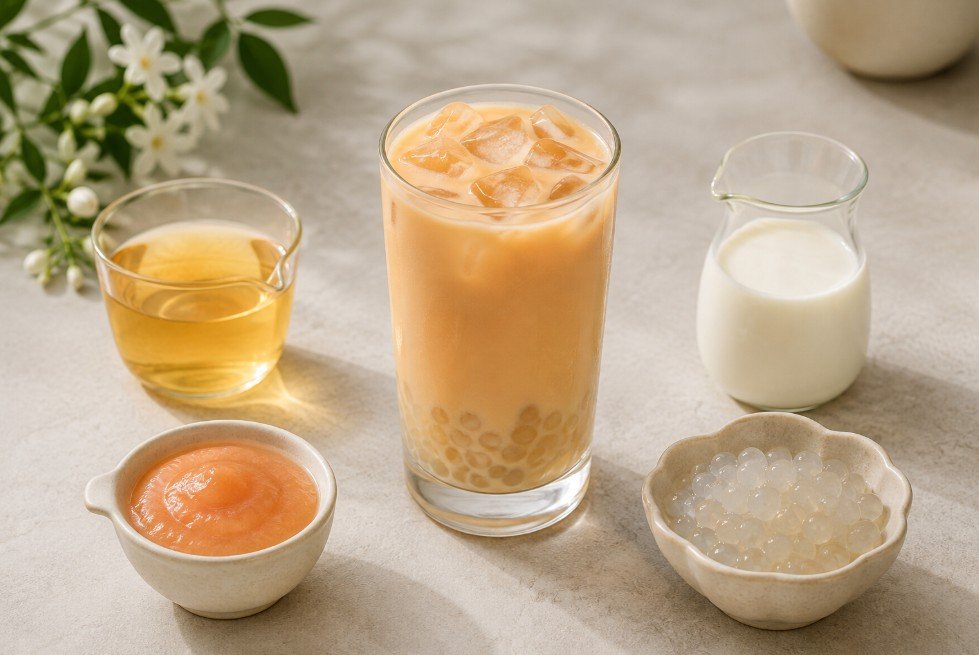
Base
The main liquid: brewed tea, milk, coffee, matcha, yogurt-style drink or a frozen base.
Flavor
Fruit, brown sugar, taro, vanilla, chocolate, floral syrup or another dominant taste.
Milk or creamer
Fresh milk, non-dairy milk, creamer, milk powder or no milk at all.
Topping
Tapioca pearls, crystal boba, pudding, aloe, jelly, red bean, foam or another texture.
Peach Jasmine Milk Tea with Crystal Boba
Jasmine tea is the base, peach is the flavor, milk tea describes the drink family and crystal boba is the topping. This structure is more useful than memorizing the full name.
What “House Special,” “Signature” and “Classic” Usually Mean
These labels are useful signals, not universal recipe standards. Treat them as an invitation to check what the shop includes by default.
Signature or house special
A recipe the shop wants to highlight. It may include a fixed topping, foam, syrup level or presentation that is not obvious from the title.
Classic or original
Usually the shop’s default version of a familiar category, such as black milk tea or pearl milk tea. The exact base and milk system can still vary.
Premium or reserve
May indicate a selected tea, ingredient or preparation method, but the term has no single industry definition.
Dirty or tiger
Often points to visible brown sugar streaks or a layered milk drink. It does not automatically mean coffee or tea.
Brûlée or cream-top
Usually suggests a rich topping such as custard, foam or a caramelized surface. Ask whether it contains dairy or egg.
Royal, supreme or deluxe
Often means an upgraded combination with several toppings or a richer base. The actual recipe remains shop-specific.
How to Read a Long Boba Drink Name
Start with the base and work outward. Words closest to the category usually tell you what the drink fundamentally is; later words add flavor, texture or topping.
Brown Sugar Oolong Milk Tea with Pearl
Base: oolong tea. Style: milk tea. Flavor: brown sugar. Topping: tapioca pearl.
Peach Jasmine Green Tea with Aloe
Base: jasmine-scented green tea. Flavor: peach. Topping: aloe. Milk: none stated.
Matcha Fresh Milk with Red Bean
Base: fresh milk plus matcha. Flavor: matcha. Topping: red bean. Brewed tea: not required.
Mango Coconut Slush with Crystal Boba
Base: frozen slush. Flavors: mango and coconut. Topping: crystal boba. Tea: must be verified.
How Boba Sizes and Prices Are Shown
Regular and large are common, but cup volume, one-size recipes and topping charges vary enough that the label alone is not a reliable measurement.
| Menu wording | What it may mean | What to check |
|---|---|---|
| Regular / large | Two shop-specific cup sizes | Actual ounces, price difference and whether toppings reduce liquid volume |
| One size only | A fixed recipe or specialty cup | Whether sweetness and ice are also fixed |
| Hot size | A smaller heat-safe cup | Which toppings are available and whether the lid supports a wide straw |
| Includes one topping | The listed price covers one add-on | Whether a named topping is already included and whether substitutions cost extra |
| Delivery price | A higher app or packaging price | Cup size, topping separation and whether the app price matches in-store pricing |
What Sugar Percentages and Ice Levels Mean
Sugar and ice controls change balance, dilution and texture, but they do not rewrite ingredients that are already sweetened or frozen.
Sugar settings are relative to the shop’s recipe
The shop’s standard syrup setting, not a universal sugar amount.
A moderate reduction that usually preserves the intended sweetness.
Half of the adjustable syrup in the standard recipe, not half of all sugars.
A lightly sweet setting that may expose more tea bitterness or fruit acidity.
No adjustable syrup added, while sweet toppings or premixes may remain.
Why 0% is not always sugar-free: fruit puree, flavored powder, condensed milk, brown sugar pearls, pudding and jelly may already contain sugar. See the full guide to boba sweetness levels.
Regular ice
The shop’s standard amount. It keeps the drink cold but creates the most dilution as the cup sits.
Light or less ice
Reduces dilution, but the shop may not replace the missing ice with more liquid.
No ice
May produce a warmer, more concentrated drink. Some recipes, slushes and foam drinks cannot use this option.
How to Read the Topping Section
A menu may include a topping in the drink price, charge for each add-on or restrict certain toppings by temperature and drink style.
| Topping group | Texture | What to watch for | Often works with |
|---|---|---|---|
| Tapioca pearls | Chewy and dense | May already be sweetened; quality changes quickly | Milk tea, brown sugar, coffee |
| Crystal boba and jellies | Firm, slippery or crisp | Ingredients vary; not all are tapioca | Fruit tea, green tea, lighter milk tea |
| Pudding and red bean | Soft, creamy or grainy | May contain dairy, egg or added sugar | Milk tea, matcha, taro |
| Aloe and fruit pieces | Juicy and tender | Often packed in sweet syrup | Fruit tea, jasmine, green tea |
| Foam and cream tops | Creamy and salty-sweet | Usually dairy; can make a drink much richer | Plain tea, fruit tea, coffee |
More toppings do not automatically make a better drink. A chewy topping, soft topping and foam can compete for attention and make the cup feel heavy. Compare boba toppings by texture and drink type.
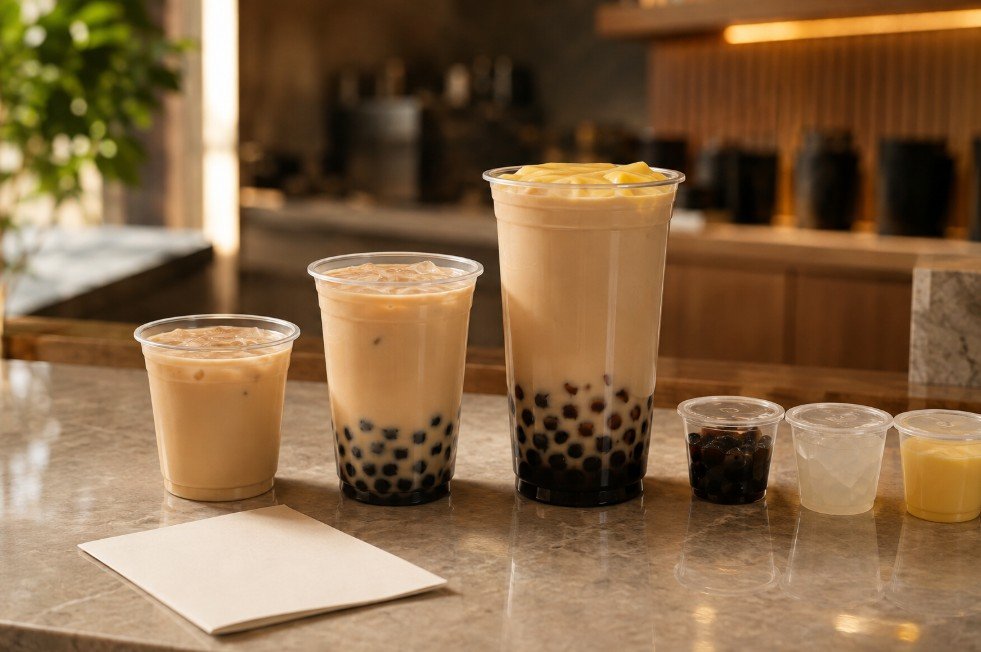
Size, Sugar, Ice and Toppings Form the Customization Line
Read these choices as one connected system. A rich topping can change the sweetness you need, and less ice can make the tea taste stronger over the full cup.
Medium roasted oolong milk tea, 50% sugar, light ice, tapioca pearls
The roasted tea retains character through milk, the reduced syrup keeps the cup from becoming dessert-heavy and light ice slows dilution without assuming extra liquid.
Large passion fruit green tea, 30% sugar, regular ice, aloe
Lower syrup leaves room for fruit acidity, while regular ice keeps the drink refreshing. Aloe adds a lighter texture than dense tapioca pearls.
Menu Icons Do Not Always Tell the Full Ingredient Story
Vegan, dairy-free, caffeine-free and allergen icons are useful starting points, but the finished drink includes more than its milk choice.
Non-dairy milk is not the same as a dairy-free drink
Creamer, milk powder, foam, pudding or a premixed base may still contain dairy. Ask whether every component, including the topping, matches your needs.
No tea does not automatically mean no caffeine
Coffee, matcha, chocolate and certain blended ingredients can contribute caffeine even when the drink contains no brewed tea.
Jelly and pearls are not one ingredient family
Tapioca, konjac, agar, coconut gel, popping boba and pudding have different formulations. A generic “jelly” label is not enough for an allergen decision.
Shared equipment can matter
Shakers, blenders, scoops and preparation surfaces may be shared. A menu icon does not replace a direct conversation with the shop when cross-contact is important.
Menu information varies by recipe and location. For broader ingredient and dietary context, use the boba dietary guide and verify details with the specific shop.
Why Some Menu Items Cannot Be Fully Customized
A shop may limit sugar, ice, milk or topping changes when the drink depends on a prepared base, layered effect or fixed ratio.
Brown sugar coating
The syrup may be cooked with the pearls or painted inside the cup, so removing it changes the identity of the drink.
Slush texture
Ice is part of the structure, not an optional cube level. Reducing it can prevent the drink from blending correctly.
Foam and brûlée layers
The top layer may require a specific cup fill level and cannot always be made dairy-free or reduced in sugar.
Premixed flavor base
Powder, puree or concentrate may already contain sugar, milk ingredients or caffeine.
Hot preparation
Some jellies and popping toppings do not hold their texture in a hot drink, and sealing options may differ.
Seasonal recipe
A limited drink may be designed as one fixed combination for speed and consistency.
How to Compare Two Similar Menu Items
Compare the base first, then milk, sweetness, texture and included topping. The most important difference is often not the flavor word in the title.
| Comparison | Main difference | Choose the first when | Choose the second when |
|---|---|---|---|
| Classic milk tea vs brown sugar milk tea | Tea balance versus caramelized syrup | You want the tea to lead | You want a richer dessert profile |
| Jasmine fruit tea vs peach green tea | Floral base versus fruit-led name | You like aroma and a lighter finish | You want peach to be the dominant signal |
| Taro milk tea vs taro fresh milk | Possible tea base versus milk-forward base | You want tea structure | You prefer a creamier, softer drink |
| Matcha latte vs matcha milk tea | Milk-forward recipe versus shop-specific tea blend | You want matcha and milk | You want to ask how the shop combines teas |
| Mango smoothie vs mango slush | Creaminess versus icy texture | You want body and richness | You want a colder, lighter frozen drink |
Common Mistakes When Reading a Boba Menu
Most disappointing orders come from assumptions about what a name guarantees.
Assuming every drink contains tea
Fresh milk, slush, smoothie and coffee sections can include boba without brewed tea.
Assuming every milk tea uses fresh milk
The creamy component may be creamer, powder or a prepared shop base.
Treating 0% sugar as sugar-free
Sweetened pearls, puree, powder and toppings may remain in the recipe.
Expecting no ice to mean more drink
Many shops keep the recipe volume fixed or charge for extra liquid.
Missing an included topping
Adding another topping can duplicate texture and raise sweetness or price.
Choosing by color alone
A purple drink could be taro, ube, sweet potato or a blended flavor powder.
A Fast Five-Step Check for Any Boba Menu
Use the same sequence whether you are looking at a wall board, paper menu, kiosk or delivery app.
- 1
Find the drink family
Decide whether you want milk tea, fruit tea, fresh milk, a frozen drink, coffee, matcha or a signature recipe.
- 2
Identify the base
Look for black tea, jasmine, green tea, oolong, milk, matcha, coffee or another foundation. Ask when the name does not say.
- 3
Check milk and flavor
Confirm whether the drink is creamy, fruit-forward or both, and whether a milk substitute changes the entire recipe.
- 4
Read size, sweetness and ice together
Choose settings that preserve balance rather than automatically selecting the largest cup, lowest sugar and no ice.
- 5
Confirm toppings and restrictions
Check what is already included, what costs extra and which parts of the recipe cannot be changed.
Bring the Menu Logic Home
Reusable wide straws, cups and beginner kits are most useful when they support the drink style you actually enjoy rather than adding more equipment than you need.
Affiliate disclosure: We may earn a commission from qualifying purchases.
How Boba Guide Interprets Menu Terms
Menu language is not universal, so we treat category names as practical signals rather than fixed legal definitions.
Boba Guide Editorial Team
We compare current menus, ingredient and nutrition disclosures, tasting observations and practical reports from boba customers and workers. When two shops use the same word differently, this guide explains the difference instead of forcing one definition.
Read our editorial standards and corrections policy.
Make your next order easier
Get practical guides to drinks, flavors, toppings and home boba without turning your inbox into another long menu.
Boba Menu FAQ
These answers cover the most common points of confusion without assuming that every shop uses the same recipe.
What is normally included on a boba menu?
Most menus show drink families, individual drink names, prices, cup sizes, sweetness options, ice levels and toppings. Better menus may also identify tea bases, milk choices, caffeine, dietary notes and whether a topping is included.
What is the difference between milk tea and fresh milk?
Milk tea normally combines tea with a milk component. Fresh-milk drinks are milk-forward and may contain tea, matcha, coffee or no caffeinated base at all. The exact recipe must be checked.
Does every boba menu item contain tea?
No. Fresh milk, slushes, smoothies, yogurt-style drinks, coffee drinks and dessert beverages can include boba toppings without brewed tea.
What does 50% sugar mean on a boba menu?
It usually means half of the shop’s adjustable syrup amount for that recipe. It does not mean the complete drink contains exactly half as much total sugar, because toppings, puree, powder and milk ingredients may already be sweetened.
Does no ice mean the shop gives me more drink?
Not necessarily. Some shops keep the liquid recipe fixed, some add more tea or milk and others charge for an extra fill. A no-ice drink may also taste warmer and more concentrated.
Is boba included in every drink?
No. Some shops use “boba” as the broad category name while tapioca pearls remain an optional topping. Look for wording such as “with pearl,” an included-topping note or an extra topping charge.
What does house special mean?
It normally means a shop-designed recipe or recommended combination. There is no universal ingredient list for a house special, so check the base, milk, sweetness and toppings before ordering.
What does fresh milk mean on a menu?
It usually means milk is a primary liquid rather than a small addition to brewed tea. The label does not prove that the drink is tea-free, dairy-only or made without syrup.
Can I change the tea base in a menu drink?
Sometimes. Simple tea and milk-tea recipes may allow a base substitution, but signature drinks, premixes, slushes and layered drinks may be fixed.
Why can’t some drinks be made with less sugar?
The sweetness may come from a prepared puree, powder, brown sugar coating, condensed milk or premixed base rather than an adjustable syrup pump.
How do I know whether a drink has caffeine?
Look for tea, coffee, matcha, cocoa or energy-style ingredients, then check the shop’s disclosure. A drink without brewed tea can still contain caffeine.
What is the fastest way to read a large boba menu?
Choose the drink family, identify the base, check milk and flavor, read size and customization options, then confirm toppings and fixed-recipe restrictions.