
Boba Atlas · Flavor Guide
Boba Flavors: Find the Bubble Tea Taste You’ll Love
Boba flavors range from tea-forward and roasted to fruity, floral, creamy, earthy, nutty and dessert-like. The flavor name is only the beginning: tea base, milk or fruit component, sweetness, ice and toppings all change the final cup.
A mango green tea can taste bright and tart, while a mango slush can feel thick and candy-sweet. Taro may be subtle and starchy when made with real root, or smoother and more vanilla-like when made from powder. Brown sugar may describe syrup, pearls, fresh milk or milk tea. This guide helps you read those differences before ordering.
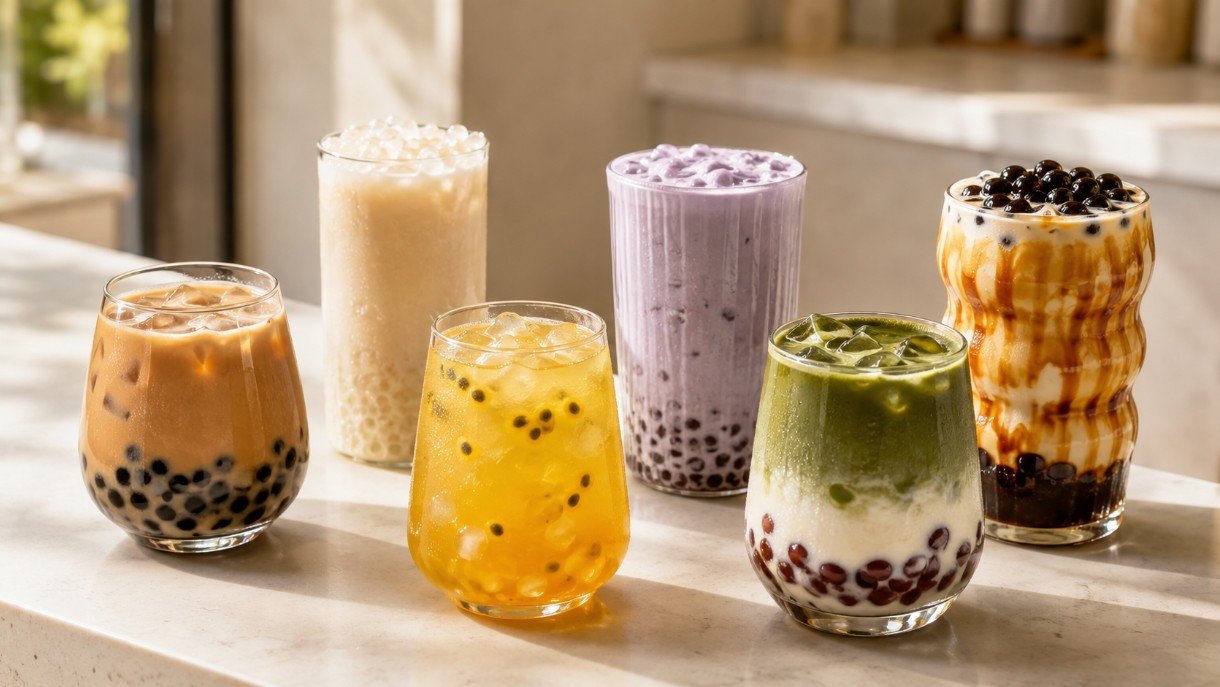
Choose by craving
Start with the taste you want, not the color in the cup
Pick the closest direction below. Each route shows the flavors, drink formats and toppings that usually fit that craving.
Build the flavor in layers
How to Read a Boba Flavor
A menu name is only a headline. The base, tea, milk or fruit component, sweetness and topping determine what reaches your palate.
A Boba Flavor Comes from More Than One Ingredient
The final flavor comes from the drink base, tea, milk or fruit component, sweetness level and toppings working together.
The base sets the direction
Black tea gives malt, briskness and tannin. Jasmine tea adds floral aroma. Oolong can be roasted, creamy or mineral. Fresh milk creates a clean dairy base, while slush and smoothie bases make the drink colder, thicker and more dessert-like.
The headline flavor may be natural, prepared or blended
Mango can come from fresh fruit, purée, jam, concentrate, syrup or powder. Taro may use cooked root, commercial powder or both. Matcha may be freshly whisked or supplied as a sweetened premix. The menu name alone rarely reveals the exact formula.
Sweetness changes what you notice
Too much sugar can hide tea aroma and acidity. Moderate sweetness can round out bitterness, sharpen fruit and make floral notes feel less perfumed. Pearls, pudding, jam, foam and brown sugar syrup may remain sweet even when adjustable sugar is reduced.
Toppings add flavor as well as texture
Brown sugar pearls add caramel-like sweetness. Pudding adds custard flavor. Red bean reinforces matcha and sesame. Coconut jelly can make mango or lychee feel more tropical. A strong topping can also overwhelm a delicate tea.
A useful shortcut is to read a drink name in this order: base → flavor → sweetness → topping. For example, “passion fruit green tea with crystal boba” tells you more than simply “passion fruit boba.”
Start with the Flavor Family That Sounds Most Like You
Choosing a flavor family first is faster than scanning every menu item. The examples below describe common tendencies, not fixed recipes.
| Flavor family | Typical taste | Common examples | Best for |
|---|---|---|---|
| Tea-forward | Malty, floral, grassy or roasted | Black tea, jasmine, oolong, matcha | People who want to taste the tea |
| Fruity | Juicy, bright, tart or tropical | Mango, peach, lychee, passion fruit | Refreshing and milk-free choices |
| Floral | Fragrant, delicate or perfume-like | Jasmine, rose, lavender, lychee | Light drinks at lower sweetness |
| Earthy | Rooty, vegetal, toasted or nutty | Taro, matcha, black sesame, red bean | Distinctive flavors with depth |
| Creamy | Soft, milky, smooth and rounded | Vanilla, coconut, honeydew milk | People who dislike sharp tea bitterness |
| Dessert-like | Caramel, chocolate, cookie or custard | Brown sugar, chocolate, cookies and cream | A rich treat rather than a light tea |
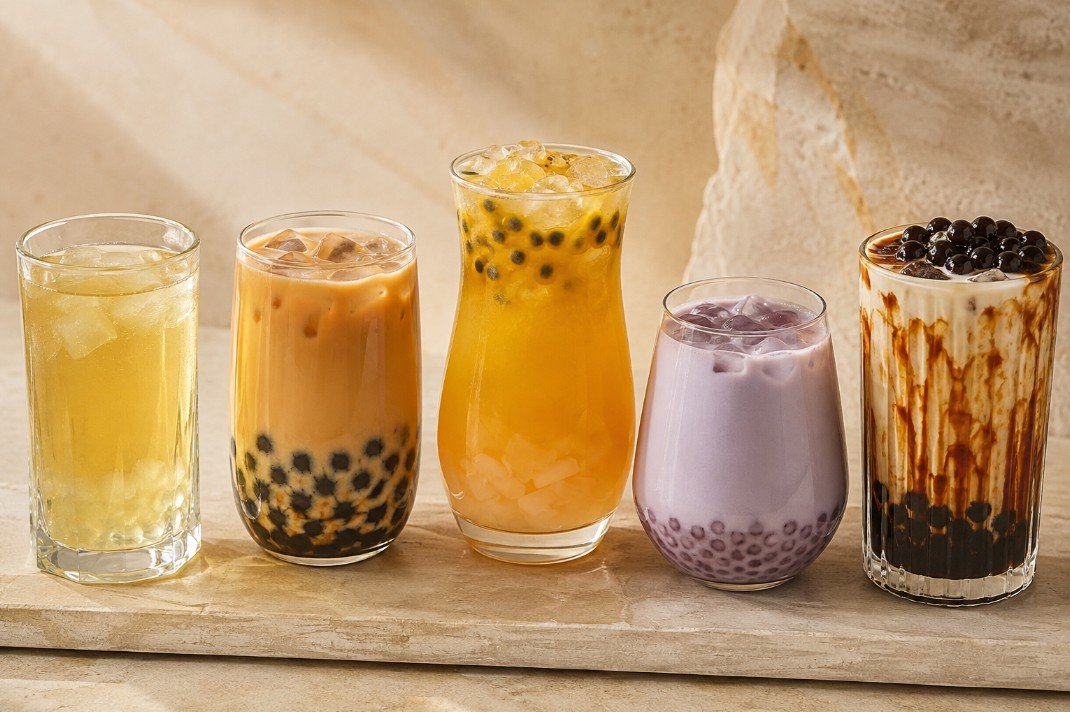
A Practical Directory of Popular Boba Flavors
Flavor names are useful only when they are tied to a taste, a likely base and a realistic pairing. This directory gives a fast starting point before the deeper sections below.
Classic milk tea
Malty, creamy and balanced. Start with black tea, regular ice and tapioca pearls.
Jasmine
Floral, light and fragrant. Best with lower sweetness, aloe or crystal boba.
Oolong
Roasted, aromatic or honeyed depending on the leaf. Strong with milk, pudding or tapioca.
Thai tea
Bold, spiced and usually sweet. Often served with milk or creamer and chewy pearls.
Matcha
Grassy, earthy, bitter and umami-rich. Fresh milk and red bean are natural partners.
Hojicha
Toasted, nutty and gentle. Works well with milk, brown sugar or pudding.
Brown sugar
Caramel-like, dark and syrupy. Usually strongest around warm pearls and fresh milk.
Wintermelon
Mellow, honeyed and lightly herbal. Often a prepared syrup paired with tea or milk.
Taro
Mild, starchy, nutty and sometimes vanilla-like. Powder versions are often sweeter.
Ube
Deeper purple-yam sweetness with an earthy dessert character. Good with coconut or milk.
Black sesame
Toasted, nutty and slightly bitter. Best in milk-forward drinks with restrained sugar.
Red bean
Earthy, soft and gently sweet. Common with matcha, milk tea and blended drinks.
Pandan
Green, aromatic and vanilla-like. Especially good with coconut milk and jelly.
Mango
Round, tropical and sweet with mild acidity. Green tea and coconut jelly keep it lively.
Passion fruit
Sharp, fragrant and tart. Excellent with green tea, aloe or fruit jelly.
Lychee
Soft, floral and lightly juicy. Jasmine tea and crystal boba preserve its delicacy.
Peach
Warm, juicy and gently tart. Works with jasmine or oolong and a light topping.
Strawberry
Fresh, jammy or candy-like depending on the recipe. Pairs with milk, green tea or yogurt.
Pineapple
Bright, tropical and more acidic than mango. Good in fruit tea, slush or sparkling styles.
Honeydew
Soft melon sweetness, usually creamy and powder-led. Mini pearls or pudding fit naturally.
Coconut
Creamy, tropical and naturally aromatic. Useful with taro, pandan, mango and coffee.
Avocado
Buttery, mild and thick. Usually behaves more like a smoothie than a tea flavor.
Durian
Custard-like, rich and intensely aromatic. Best sampled before ordering a large cup.
Rose
Fragrant and elegant at low concentration. Too much syrup can become perfume-like.
Lavender
Herbal and floral with a dry edge. Best with milk, vanilla or light tea.
Coffee
Roasted, bitter and caffeinated. Condensed milk, brown sugar or coffee jelly add richness.
Chocolate
Cocoa-rich and dessert-like. Often milk-based and better with one simple topping.
Vanilla
Soft, familiar and creamy. Useful for balancing tea bitterness or fruit acidity.
Salted caramel
Sweet, buttery and lightly salty. Works best when the drink is not overloaded with toppings.
Cookies and cream
Sweet, thick and dessert-led. Usually best as a slush or milk drink with minimal extra syrup.
The aromatic side of boba
Tea, Roast and Floral Notes
These flavors reward people who want aroma and structure from the leaf rather than sweetness alone.
Tea-Forward Boba Lets the Leaf Stay in the Lead
Tea-forward drinks keep black tea, jasmine, green tea, oolong, matcha or roasted tea recognizable after milk, sugar and toppings are added.
Black tea
Black tea is usually the boldest classic base. It can taste malty, brisk, caramel-like or slightly tannic. Milk softens the edges, while tapioca and pudding add weight. Choose black tea when you want a reliable first milk tea or a drink that can carry brown sugar and rich toppings.
Jasmine tea
Jasmine is lighter, fragrant and floral. It works especially well with peach, lychee, mango, citrus, aloe and crystal boba. In milk tea it produces a softer cup than black tea. Too much syrup can bury the aroma, so 25–50% sweetness is often a useful starting point.
Oolong tea
Oolong is not one flavor. Light oolong may be floral and creamy, while roasted oolong can taste nutty, toasted or mineral. It is one of the best choices for people who want noticeable tea character without the sharper edge of some black teas.
Green tea
Plain green tea can taste fresh, grassy or lightly vegetal. It pairs naturally with passion fruit, citrus, honey and light jellies. Poor brewing can make it bitter, while excessive fruit syrup can make the tea disappear.
Matcha
Matcha is ground tea powder, so the leaf remains in the drink rather than being removed after brewing. Good matcha tastes grassy, creamy, vegetal and slightly bitter. Some shops use sweetened mixes, which produce a softer, more dessert-like profile.
Hojicha and roasted grain flavors
Hojicha is roasted green tea with a toasted, nutty character and lower perceived bitterness. Barley and roasted grain drinks can offer a similarly warm aroma, although caffeine and ingredients vary by recipe.
| Tea | Main character | Pairs naturally with | Use caution with |
|---|---|---|---|
| Black | Malty, robust | Milk, tapioca, pudding | Very delicate fruit |
| Jasmine | Floral, light | Peach, lychee, aloe | Heavy brown sugar |
| Oolong | Roasted or aromatic | Milk, grass jelly, pudding | Strong candy syrups |
| Green | Fresh, grassy | Citrus, passion fruit, jelly | Overbrewing |
| Matcha | Earthy, vegetal | Fresh milk, red bean | Too much syrup |
| Hojicha | Toasted, nutty | Milk, caramel, pudding | Sharp citrus |
Explore the tea bases behind boba flavors.
Roasted Tea and Brown Sugar Create Warm, Deep Flavors
Roasted, caramel-like and coffee flavors can feel related, but they come from different parts of the recipe.
Roasted oolong and hojicha
The depth comes from tea processing. These drinks may taste toasted, nutty, woody or mineral even before sweetener is added. Moderate milk can round the roast without removing it.
Brown sugar
Brown sugar is a syrup or sweetener profile rather than a tea type. In a fresh-milk drink it can taste caramel-heavy and dairy-forward. In milk tea it sits on top of black or oolong tea. Warm pearls coated in dark syrup can make the entire cup taste sweeter than the selected sugar percentage suggests.
Thai tea
Thai tea is strongly aromatic, creamy and usually sweet. The exact blend varies, but the experience is bolder and more dessert-like than a lightly sweetened black milk tea. Simple tapioca or no topping is often enough.
Coffee
Coffee boba ranges from milk coffee with pearls to espresso-matcha hybrids. It usually carries more roast, bitterness and caffeine than tea-only drinks. Condensed milk and brown sugar can move it quickly toward dessert.
Wintermelon
Wintermelon syrup is typically mellow, sweet and caramel-like rather than tasting like fresh melon. Because the base is often presweetened, sugar adjustments may have less effect than expected.
Choose roasted oolong when you want tea complexity. Choose brown sugar fresh milk when you want caramel, milk and warm pearls. Choose coffee boba when roast and caffeine are part of the goal.
Floral Boba Can Taste Delicate, Fragrant or Perfumed
Floral flavor may come from scented tea, flower syrup, fruit aroma or bergamot, so two drinks described as floral can behave very differently.
Jasmine
Jasmine tea gives a recognizable flower aroma while still tasting like tea. It usually works best at moderate sweetness with crystal boba, aloe, pudding or no topping.
Rose and lavender
These flavors can be elegant in a light milk tea or fruit tea, but overconcentration quickly becomes soap-like. Less syrup and a simple topping keep them balanced.
Lychee and peach
These fruits are often perceived as floral because their aromas are soft and fragrant. Lychee is translucent and perfumed; peach is warmer and rounder.
Earl Grey
Bergamot gives Earl Grey a citrus-floral perfume. It pairs with milk, vanilla and light caramel, but may be too aromatic for people who dislike scented tea.
Osmanthus
Osmanthus is a small fragrant flower used with tea in East Asia. It can taste honeyed, apricot-like and floral. It is usually best when the tea remains visible.
How to order floral flavors
Choose 25–50% sweetness, regular ice and a light topping. Heavy brown sugar pearls can erase delicate aroma and make the drink feel unbalanced.
Bright, refreshing and varied
Fruit, Citrus and Tropical Flavors
Fruit boba can be gentle and juicy, lush and tropical, or sharp enough to stay lively at lower sweetness.
Fruit Boba Ranges from Soft and Juicy to Sharp and Tangy
Fruit flavor may come from fresh fruit, purée, juice, jam, concentrate, syrup or powder. That ingredient form often matters more than the color of the drink.
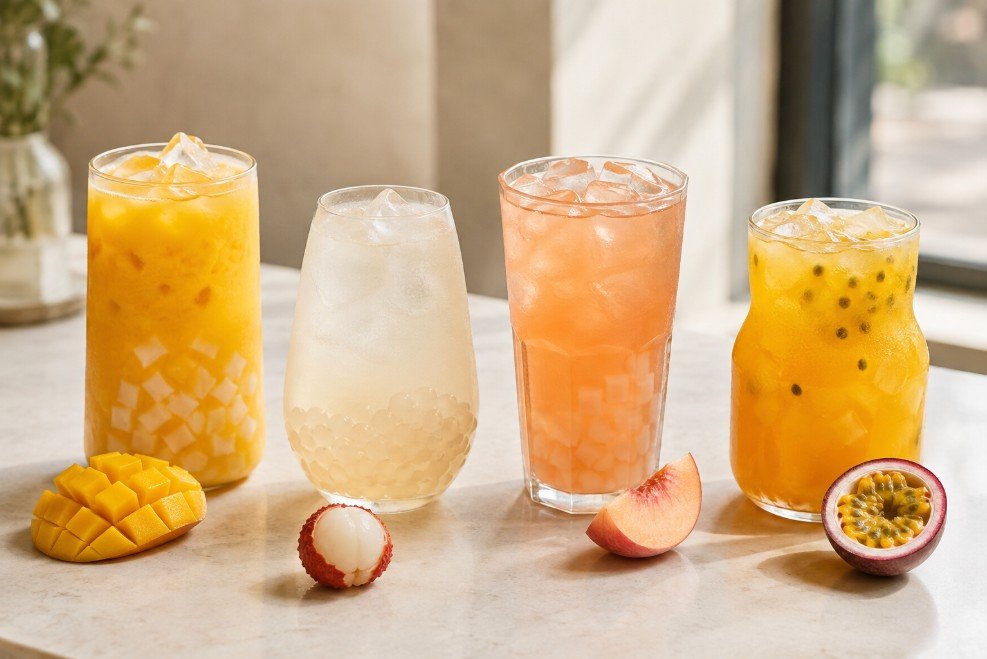
Soft and approachable fruit flavors
Peach, lychee, strawberry, watermelon and grape are common beginner choices because they are familiar and usually less bitter than tea-forward drinks. Peach and lychee work especially well with jasmine tea. Strawberry can taste fresh, jammy or candy-like depending on the recipe. Watermelon is light when fresh but can become very sweet when syrup-led.
Rich tropical flavors
Mango, pineapple, coconut, banana, avocado and durian create fuller tropical profiles. Mango is usually round, sweet and easy to pair. Pineapple adds more acidity. Coconut can taste creamy even without dairy. Banana and avocado are often blended or milk-based. Durian is rich, custard-like and strongly aromatic, making it one of the most polarizing choices.
Bright and tart flavors
Passion fruit, grapefruit, lemon and citrus blends remain lively at lower sweetness because acidity supplies structure. Passion fruit is fragrant and tart. Grapefruit can add a pleasant bitter edge. These drinks often pair better with aloe, crystal boba or coconut jelly than with heavy pudding.
| Flavor | Sweetness and acidity | Best tea base | Best topping |
|---|---|---|---|
| Mango | Sweet, rounded, mildly tart | Green or jasmine tea | Coconut jelly |
| Lychee | Soft, floral, low acidity | Jasmine tea | Crystal boba |
| Peach | Juicy, warm, gently tart | Jasmine or oolong | Aloe |
| Passion fruit | Sharp, tropical, aromatic | Green tea | Fruit jelly |
A fruit tea is not automatically low in sugar. Purée, jam, syrup and popping boba can already be sweet before adjustable syrup is added.
Soft, grounded and distinctive
Creamy, Root-Based and Nutty Flavors
Creamy body and earthy ingredients create some of the most recognizable—and most frequently confused—boba flavors.
Creamy Flavors Soften Tea and Make the Drink Feel Richer
Creaminess may come from dairy milk, plant milk, creamer, milk powder, condensed milk, coconut milk, yogurt or a blended base.
Vanilla and classic milk
Vanilla softens bitterness and makes black tea, taro, coffee and chocolate feel familiar. It is often used implicitly in powders and creamers even when not named on the menu.
Coconut
Coconut can be a flavor syrup, coconut milk or coconut cream. It pairs naturally with mango, pandan, taro and sago. It may also be an allergen concern for some customers, so the ingredient form matters.
Honeydew milk
Honeydew boba is usually pale green, sweet and creamy. Some shops use fruit, but many rely on flavored powder. It is approachable for people who want a smooth melon profile without tea bitterness.
Horchata-style boba
Horchata-inspired drinks can combine rice, cinnamon, milk and vanilla notes. They sit between creamy, spiced and dessert-like categories and work well with tapioca or pudding.
Avocado
Avocado drinks are thick, mild and buttery rather than strongly savory. They are often blended with milk or condensed milk and can be more filling than a standard tea.
Yogurt and cultured styles
Yogurt-style drinks balance creaminess with tang. They pair well with citrus and tropical fruit but may be presweetened even when the finish tastes tart.
“Non-dairy creamer” does not automatically mean milk-protein-free. For an allergy, ask about the ingredient list rather than relying on the product name.
Taro, Ube, Matcha and Black Sesame Are Distinct Flavors
These drinks are often grouped together because of their strong colors, but their ingredients and flavor profiles are not interchangeable.
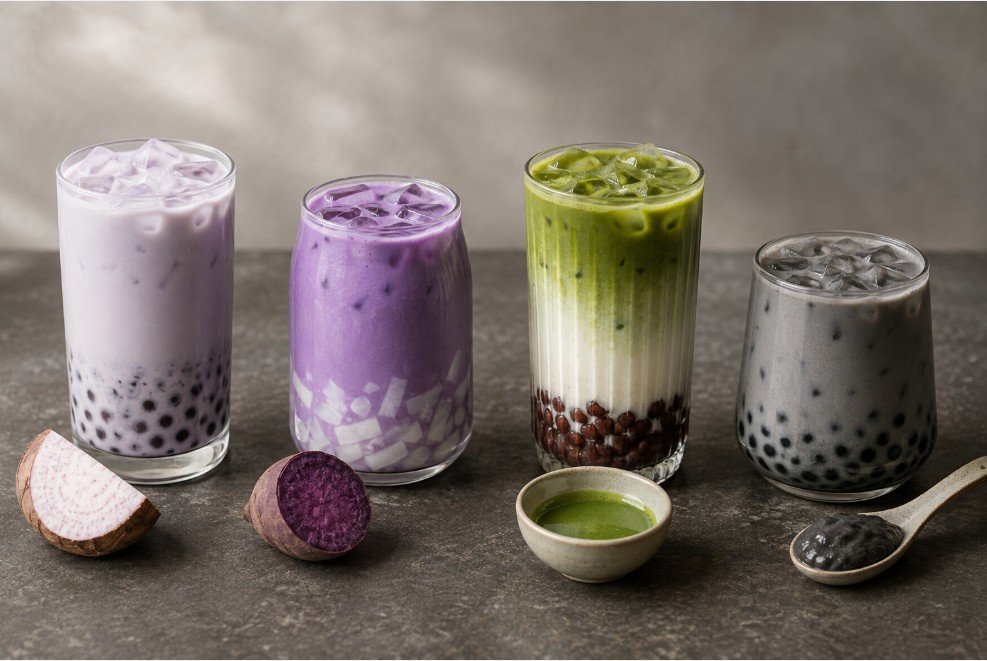
Taro
Taro is a starchy root with a mild, nutty and vanilla-like character. Real taro can be subtle and slightly grainy. Powdered versions are often smoother, sweeter and more purple. Color alone does not prove how much real taro is present.
Ube
Ube is purple yam, not taro. It usually tastes sweeter, deeper and more dessert-like, with vanilla and earthy notes. Ube drinks may also use extract, jam or powder, so recipes vary.
Matcha
Matcha is vegetal, grassy, creamy and lightly bitter. Fresh milk and red bean can support it. Heavy syrup can hide the tea, while poor-quality powder may taste dull or chalky.
Black sesame
Black sesame tastes toasted, nutty and slightly bitter. It creates a gray or charcoal drink and works well with milk, pudding and tapioca. The flavor is stronger and less sweet than taro unless the recipe adds significant sugar.
Red bean
Red bean is earthy, mildly sweet and soft. It can be a flavor, a paste or a topping. It is especially natural with matcha, milk and shaved-ice-inspired drinks.
Pandan
Pandan is aromatic, grassy and vanilla-like. It pairs well with coconut and milk. Bright green color may come from extract or added color rather than the leaf alone.
| Flavor | Source | Typical taste | Common confusion |
|---|---|---|---|
| Taro | Taro root or powder | Mild, starchy, vanilla-like | Mistaken for ube |
| Ube | Purple yam | Sweet, earthy, rich | Called taro because it is purple |
| Matcha | Ground green tea | Grassy, vegetal, bitter | Sweet mix treated as pure matcha |
| Black sesame | Sesame seed paste or powder | Toasted, nutty, slightly bitter | Judged only by gray color |
Rich, bold and memorable
Dessert Flavors and Adventurous Choices
Some drinks behave more like desserts; others stand out because they are floral, savory, funky or unfamiliar.
Dessert Boba Flavors Can Feel More Like a Treat Than a Tea
Chocolate, cookies and cream, salted caramel, vanilla, banana and heavily topped brown sugar drinks often prioritize sweetness, creaminess and texture over tea aroma.
Chocolate and cocoa
Chocolate can be cocoa-forward and slightly bitter or milk-chocolate sweet. It pairs with coffee, milk, pudding and tapioca. A chocolate drink may contain little or no tea.
Cookies and cream
This flavor is usually powdered, blended or milk-based. Crushed cookie pieces add texture but may make a wide straw difficult to use. It is one of the least tea-forward choices.
Salted caramel
Salt can make caramel taste deeper and less flat. The drink may use syrup, foam or both. Pair it with black tea or coffee when you want more structure.
Banana and coconut desserts
Banana is often blended and creamy. Coconut adds richness and tropical aroma. Together they can resemble a smoothie more than tea.
Pudding and foam-heavy drinks
Pudding contributes custard flavor, while cheese foam adds salty-sweet creaminess. Multiple rich toppings can make the cup difficult to finish, especially at full sweetness.
For a dessert-like drink, start with regular size and one topping. Reducing adjustable sugar may improve balance without making the cup feel plain.
Some Boba Flavors Are Loved Because They Are Unusual
Unfamiliar flavors are easier to enjoy when you know whether their defining trait is aroma, texture, bitterness or richness.
Durian
Strong personality: rich, custard-like and highly aromatic. Try a sample or small size first if you have never eaten durian.
Avocado
Medium adventure: thick, buttery and mild. It often tastes more like a creamy shake than a vegetable.
Rose or lavender
Medium adventure: fragrant and elegant when restrained, perfume-like when overused.
Black sesame
Medium adventure: toasted and nutty, with a gray color and lightly bitter finish.
Wintermelon
Familiar starting point: mellow, syrupy and caramel-like rather than tasting like fresh melon.
Cheese foam
Texture-led adventure: salty, sweet and creamy. Sip through the foam before mixing to understand the contrast.
Decision support at the counter
Choose a Flavor Without Regretting the Order
A strong guide should help you decide, not only define terms. Use these comparisons, sweetness ranges and pairing rules to narrow the menu.
Beginner-Friendly Flavors Are Familiar, Balanced and Easy to Customize
A first flavor should make it easy to notice the base and one topping without forcing you to decode several strong ingredients at once.
| What you usually like | Start with | Sweetness | Topping |
|---|---|---|---|
| Classic iced tea with milk | Black milk tea | 50–70% | Tapioca pearls |
| Floral tea | Jasmine milk tea | 30–50% | Pudding or crystal boba |
| Tropical fruit | Mango green tea | 30–50% | Coconut jelly |
| Sweet caramel desserts | Brown sugar fresh milk | Lowest useful setting | Included pearls |
| Earthy flavors | Taro milk tea | 50% | Mini pearls |
| Matcha latte | Matcha fresh milk | 25–50% | Red bean |
See more beginner-friendly boba choices.
Similar-Looking Drinks Can Taste Very Different
The comparisons below prevent common ordering mistakes without replacing the dedicated flavor pages.
Taro vs. ube
Shared: purple color and creamy presentation. Main difference: taro is milder, starchier and nuttier; ube is sweeter, deeper and more yam-like. Choose taro for subtlety and ube for a richer dessert profile.
Matcha vs. taro
Shared: earthy, milk-friendly flavors. Main difference: matcha is grassy and bitter because it is tea; taro is root-based, mild and usually caffeine-free unless tea is added.
Thai tea vs. classic milk tea
Shared: tea, milk and sweetness. Main difference: Thai tea is more aromatic, usually sweeter and often more vividly colored; classic black milk tea is simpler and more tea-led.
Mango vs. passion fruit
Shared: tropical fruit appeal. Main difference: mango is round and sweet; passion fruit is sharper, more aromatic and more acidic. Choose mango for softness and passion fruit for refreshment.
Brown sugar vs. classic milk tea
Shared: milk and tapioca are common. Main difference: brown sugar drinks center caramel syrup and warm pearls; classic milk tea centers brewed tea. Ask whether the brown sugar drink contains tea.
Wintermelon vs. brown sugar
Shared: mellow caramel-like sweetness. Main difference: wintermelon is usually a prepared syrup used with tea or milk, while brown sugar is a darker sugar profile often concentrated around the pearls.
Sweetness Can Reveal, Balance or Completely Hide a Flavor
Sweetness percentages are not standardized across shops, so use them as relative controls rather than universal measurements.
Tea-forward and floral drinks
Start around 25–50%. This often preserves jasmine, oolong, green tea and matcha character while removing harshness. If a drink tastes bitter, the cause may be brewing rather than insufficient sugar.
Tart fruit drinks
Passion fruit, grapefruit and citrus often work around 50–70%, but strong purée or jam can already contribute sugar. Lower sweetness first when you want acidity and aroma to remain visible.
Powdered and dessert flavors
Taro, honeydew, cookies and cream and some matcha mixes may be presweetened. A 0% setting may remove only added syrup, not sugar already in the powder.
Brown sugar drinks
Pearls and cup syrup may be sweet regardless of the selected level. Ask which components are adjustable before assuming that 0% makes the drink low-sugar.
Cold, Ice and Dilution Change Flavor Intensity
Very cold drinks mute aroma, melting ice dilutes sweetness and hot service can make tea and roasted notes more obvious.
Regular ice
Best for a shop’s intended balance. The drink stays cold and gradually dilutes as you drink.
Less ice
May give more liquid at some shops, but it can make the drink warmer and change the tea-to-milk ratio.
No ice
Works for some brewed teas and milk teas, but can make fixed-syrup recipes taste stronger. It does not apply to slushes.
Hot service
Highlights tea aroma, roast and milk warmth. Tapioca texture may be softer initially but still changes as the drink sits.
Slushes
Intensely cold and thick. Delicate floral notes may be muted, while fruit, taro and dessert powders often become more prominent.
Delivery
Ice melts, foam settles and pearls firm. Tea and fruit drinks usually travel better than delicate foam drinks or slushes.
The Best Topping Reinforces the Drink Instead of Hiding It
Match topping flavor, weight and texture to the base. One thoughtful topping is usually more useful than three competing ones.
| Flavor | Good topping | Why it works | Pair cautiously with |
|---|---|---|---|
| Roasted oolong | Tapioca or pudding | Strong tea carries rich texture | Bright popping boba |
| Jasmine | Crystal boba or aloe | Light texture preserves aroma | Heavy brown sugar syrup |
| Mango | Coconut jelly | Reinforces tropical character | Custard pudding |
| Passion fruit | Aloe or fruit jelly | Keeps the drink bright | Dense red bean |
| Taro | Mini pearls or pudding | Soft texture matches the creamy base | Sharp citrus jelly |
| Matcha | Red bean | Classic earthy pairing | Strong fruit popping boba |
| Brown sugar | Included tapioca | The signature pairing is already complete | Several extra sweet toppings |
| Coffee | Coffee jelly or tapioca | Supports roast and bitterness | Delicate floral jelly |
A Flavor Name Alone Does Not Confirm Tea, Milk or Caffeine
The same flavor can appear as milk tea, fresh milk, fruit tea, slush or a tea-free drink, so verify the base when caffeine, dairy or allergens matter.
| Flavor | Tea likely? | Milk likely? | What to verify |
|---|---|---|---|
| Taro | Maybe | Often | Tea base, powder ingredients |
| Matcha | Yes | Often | Pure matcha or sweetened mix |
| Brown sugar | Maybe | Often | Fresh milk or milk tea |
| Mango | Often | Sometimes | Fruit tea, milk drink or slush |
| Thai tea | Yes | Usually | Creamer and sweetness |
| Coffee | Maybe | Often | Coffee amount and tea blend |
| Wintermelon | Maybe | Sometimes | Presweetened syrup and tea base |
| Chocolate | Maybe | Often | Cocoa, powder and caffeine sources |
Matcha and coffee are usually caffeinated. Taro, brown sugar and fruit flavors may be tea-free, but only the shop’s recipe can confirm that.
Apply the flavor in real life
From Menu Name to Better Drink
Flavor quality depends on preparation, format and balance. These sections turn the flavor idea into a practical order or recipe direction.
A Good Boba Flavor Tastes Clear, Balanced and Intentional
The best drinks let you identify the promised flavor without needing extreme sweetness or artificial color to make the point.
Signs of a well-made flavor
- Tea remains identifiable in tea-based drinks.
- Fruit has acidity or aroma, not only sweetness.
- Powder is fully dissolved with no chalky pockets.
- Milk rounds the drink without flattening it.
- Topping flavor belongs with the base.
- The finish is clean rather than chemical or perfumed.
Common warning signs
- Harsh bitterness hidden behind full sugar.
- Undissolved powder or grainy syrup.
- One-note candy flavor in a drink sold as fresh fruit.
- Strong artificial aftertaste.
- Toppings overwhelm the tea or clog the straw.
- Color looks vivid but the named ingredient is hard to detect.
Quality also depends on preparation. The same flavor can taste excellent at one shop and flat at another because of tea strength, ingredient freshness, syrup ratio and how long the topping has been held.
Describe the Taste You Want Before Naming a Drink
A clear description helps staff recommend a drink even when the shop uses unfamiliar names.
Tea-forward or dessert-like?
Choose tea-forward for black, jasmine or oolong character. Choose dessert-like for brown sugar, chocolate, cookies, taro slush or foam-heavy drinks.
Creamy or refreshing?
Creamy usually points to milk tea, fresh milk or blended drinks. Refreshing points to fruit tea, pure tea, aloe and light jelly.
Floral or fruity?
Jasmine, rose and lavender are fragrance-led. Mango, peach and passion fruit are fruit-led, although lychee sits between both groups.
Sweet or tart?
Brown sugar, wintermelon and honeydew are usually sweet. Passion fruit, grapefruit and citrus are more acidic.
Familiar or adventurous?
Start with black milk tea, mango or peach for familiarity. Try durian, black sesame, rose or cheese foam when novelty is part of the appeal.
Chewy, jelly-like or no topping?
Tapioca is chewy, aloe and jelly are lighter, pudding is soft and creamy, and no topping keeps the flavor easiest to evaluate.
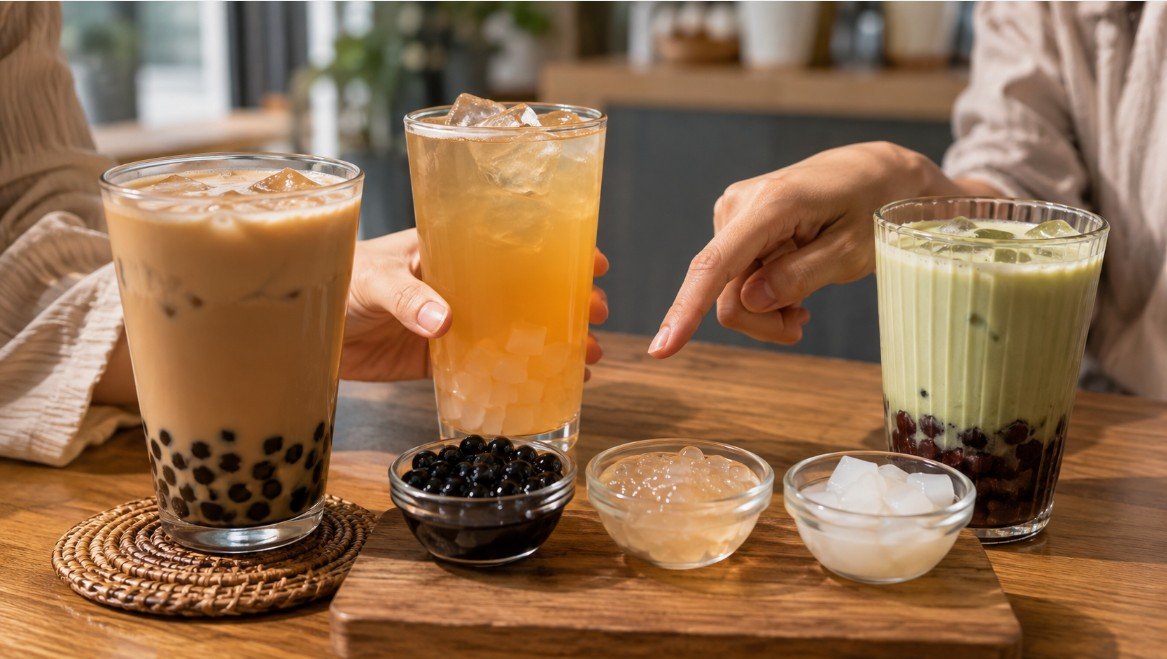
Color and Menu Names Can Be Misleading
A good choice comes from understanding the base and recipe, not selecting the brightest cup.
Choosing only by color
Purple may mean taro, ube, coloring or a mix. Green may mean matcha, honeydew, pandan or food color.
Assuming taro and ube are the same
They are different roots with different flavor profiles, even when menus use similar purple imagery.
Treating toppings as the main flavor
Popping boba, pudding and jelly can change the cup, but the liquid base still determines most of the drink.
Ignoring the tea base
Mango with jasmine tastes different from mango with black tea or no tea.
Ordering full sugar with a presweetened powder
Taro, honeydew and some matcha mixes may already contain sugar.
Combining several strong flavors
Brown sugar, cheese foam, pudding and popping boba can overwhelm one another.
Assuming fruit means fresh fruit
Many drinks use syrup, jam, purée or powder. Ask when ingredient form matters.
Judging a flavor by one shop
A weak taro or matcha may reflect the recipe, not the entire flavor category.
Use Each Flavor in the Drink Format That Shows It Best
A flavor can succeed in milk tea, fruit tea, fresh milk, slush, smoothie or a hot drink, but the best format depends on aroma, acidity, fat and texture.
Milk tea
Best for black tea, oolong, jasmine, Thai tea, hojicha, taro, black sesame and chocolate. Milk rounds bitterness and carries roasted or nutty aromas. Use less syrup when the base already contains powder or condensed milk.
Example: roasted oolong milk tea with 50% sweetness and tapioca.
Fruit tea
Best for mango, passion fruit, lychee, peach, pineapple and citrus. Green or jasmine tea keeps the drink aromatic, while acidity prevents sweetness from feeling flat.
Example: passion fruit green tea with aloe and regular ice.
Fresh milk
Best for brown sugar, matcha, ube, strawberry, taro and black sesame when the ingredient itself should remain central. Fresh milk creates a cleaner profile than heavy creamer.
Example: matcha fresh milk with red bean and no extra syrup.
Slush or smoothie
Best for mango, strawberry, taro, honeydew, avocado, coconut, cookies and cream and durian. Blending emphasizes body and coldness but can mute delicate tea and floral aromas.
Example: mango slush with coconut jelly instead of dense pearls.
Hot or warm drinks
Best for black tea, oolong, hojicha, matcha, brown sugar, sesame and chocolate. Warmth increases aroma and reduces the numbing effect of ice, but some toppings soften or become awkward.
Example: warm hojicha milk tea with pudding.
Home syrups and purées
Fruit purée, brown sugar syrup, pandan extract and sesame paste can be prepared separately and added to a neutral tea or milk base. This makes sweetness easier to control and allows one batch to support several drinks.
Example: peach purée divided between jasmine tea and a sparkling tea version.
| Flavor | Best format | Tea or liquid base | Useful topping |
|---|---|---|---|
| Taro | Milk tea or slush | Black tea or milk | Mini pearls |
| Mango | Fruit tea or slush | Green tea or ice blend | Coconut jelly |
| Matcha | Fresh milk | Milk | Red bean |
| Brown sugar | Fresh milk | Milk or black tea | Warm tapioca |
| Passion fruit | Fruit tea | Green tea | Aloe |
| Black sesame | Milk tea | Milk or roasted tea | Pudding |
The Same Flavor Can Change from Shop to Shop
A familiar menu name does not guarantee a standard recipe. Tea strength, ingredient format, milk choice, sweetness system and preparation method can all change the cup.
Fresh-brewed tea vs. concentrate
Fresh-brewed tea usually has a clearer aroma and a more specific finish. Concentrate can be consistent and strong, but it may taste flatter or more tannic when the ratio is heavy. A mango green tea built on fresh jasmine may feel floral and light, while the same flavor built on concentrate may taste sweeter and less distinct.
Fresh fruit vs. syrup or powder
Fresh fruit and purée add acidity, pulp and natural variation. Syrup gives a brighter, sweeter and more repeatable result. Powder is useful for creamy drinks and slushes but may create a candy-like profile. Many shops combine two or more forms rather than choosing only one.
Fresh milk vs. creamer
Fresh milk generally tastes cleaner and lighter. Creamer creates a fuller café-style body and can make tea taste smoother, but it may also reduce aroma. Plant milks add their own flavor: oat is cereal-like, coconut is tropical, soy can be bean-like and almond may taste nutty.
Real ingredients vs. prepared mixes
Real taro, ube paste, sesame paste and freshly whisked matcha usually have more natural variation. Prepared mixes are consistent and often sweeter. Neither format automatically guarantees quality; balance, freshness and correct preparation still matter.
When a flavor disappoints you, identify the exact problem before rejecting the category. The issue may be excessive sugar, weak tea, old powder, artificial aftertaste or a topping that does not fit the base.
Flavor Choices Can Change the Price of the Drink
In U.S. shops, standard boba drinks commonly fall around $4–$9 before tax, tip and delivery, while premium fruit, foam, specialty powders and extra toppings can push the total higher.
| Flavor style | Common shop range | Why price changes | Best-value approach |
|---|---|---|---|
| Classic tea or milk tea | About $4.50–$7.50 | Size, milk and included pearls | Regular size, one topping |
| Fruit tea | About $4.50–$7.50 | Fresh fruit or premium purée | Core-menu fruit tea |
| Brown sugar or fresh milk | About $5.50–$8.50 | Warm pearls and syrup treatment | Use included topping only |
| Slush or dessert blend | About $5.50–$9.00 | Blending, dairy and powders | Skip multiple add-ons |
| Seasonal or specialty | About $6.00–$10+ | Foam, collaborations and premium ingredients | Compare with a core-menu equivalent |
Delivery can add service fees, delivery fees, markup, tax and tip, so a flavor that costs $6–$8 at pickup may become a much more expensive order. Flavor quality also declines during travel when slush melts, foam settles or warm pearls harden.
Affiliate disclosure: We may earn a commission from qualifying purchases.
How Boba Guide Describes Flavor
Flavor descriptions combine tasting observations, current shop menus, ingredient disclosures, tea knowledge and reviewed community input.
Recipes vary by country, chain, location and season. We describe common tendencies without claiming that every shop uses the same ingredients. When a flavor may contain tea, milk, caffeine or an allergen, the guide tells readers what must be verified rather than making a universal promise.
Questions About Boba Flavors
What are the most popular boba flavors?
Classic milk tea, brown sugar, taro, mango, matcha, Thai tea, strawberry, peach and passion fruit appear frequently across modern menus. Popularity changes by country and shop, so use the list as a starting point rather than a worldwide ranking.
What is the best boba flavor for a beginner?
Black milk tea, jasmine milk tea, mango green tea and peach tea are reliable first choices because the flavors are familiar and easy to customize. Start with one topping and moderate sweetness.
What does taro boba taste like?
Taro usually tastes mild, starchy, nutty and lightly vanilla-like. Real taro can be subtle and slightly grainy, while powdered versions are often smoother, sweeter and more purple.
Are taro and ube the same flavor?
No. Taro is a different root from ube. Taro is usually milder and starchier, while ube is a purple yam with a sweeter, deeper and more dessert-like flavor.
What is the fruitiest boba flavor?
Mango, passion fruit, peach, lychee, strawberry and pineapple are all strongly fruit-led. Passion fruit and pineapple are sharper, while mango, peach and lychee are softer and sweeter.
Which boba flavors are not milky?
Fruit tea, pure tea and many refresher-style drinks can be made without milk. Mango, peach, lychee, passion fruit, citrus, jasmine and oolong are common choices, but verify foam, creamer and toppings.
Which boba flavors usually contain caffeine?
Black tea, green tea, jasmine, oolong, matcha, Thai tea and coffee flavors usually contain caffeine. Taro, brown sugar fresh milk and fruit flavors may be tea-free, but recipes vary.
Is brown sugar boba a flavor or a drink?
It can describe a flavor profile, syrup, sweetened pearls or a complete drink. Brown sugar fresh milk may contain no tea, while brown sugar milk tea includes a tea base.
What is the difference between mango and passion fruit boba?
Mango is usually rounder, sweeter and softer. Passion fruit is more aromatic, acidic and tart. Mango pairs naturally with coconut jelly, while passion fruit works well with aloe or fruit jelly.
Which toppings go best with fruity boba?
Aloe, coconut jelly, crystal boba and light fruit jelly usually preserve a refreshing fruit profile. Dense pudding and red bean are better reserved for milkier or earthier drinks.
Why does the same boba flavor taste different at different shops?
Shops may use different tea bases, fruit forms, powders, syrups, milk products, sweetness scales and brewing methods. A name such as taro or mango does not guarantee one standard recipe.
How much sweetness should I choose for a new flavor?
For many milk and fruit teas, 50% is a practical starting point. Choose 25–50% for floral or tea-forward drinks and ask whether powders, fruit bases, pearls or brown sugar syrup are already sweetened.