
The texture guide to a better cup
Boba Toppings: Pearls, Jellies, Pudding and More
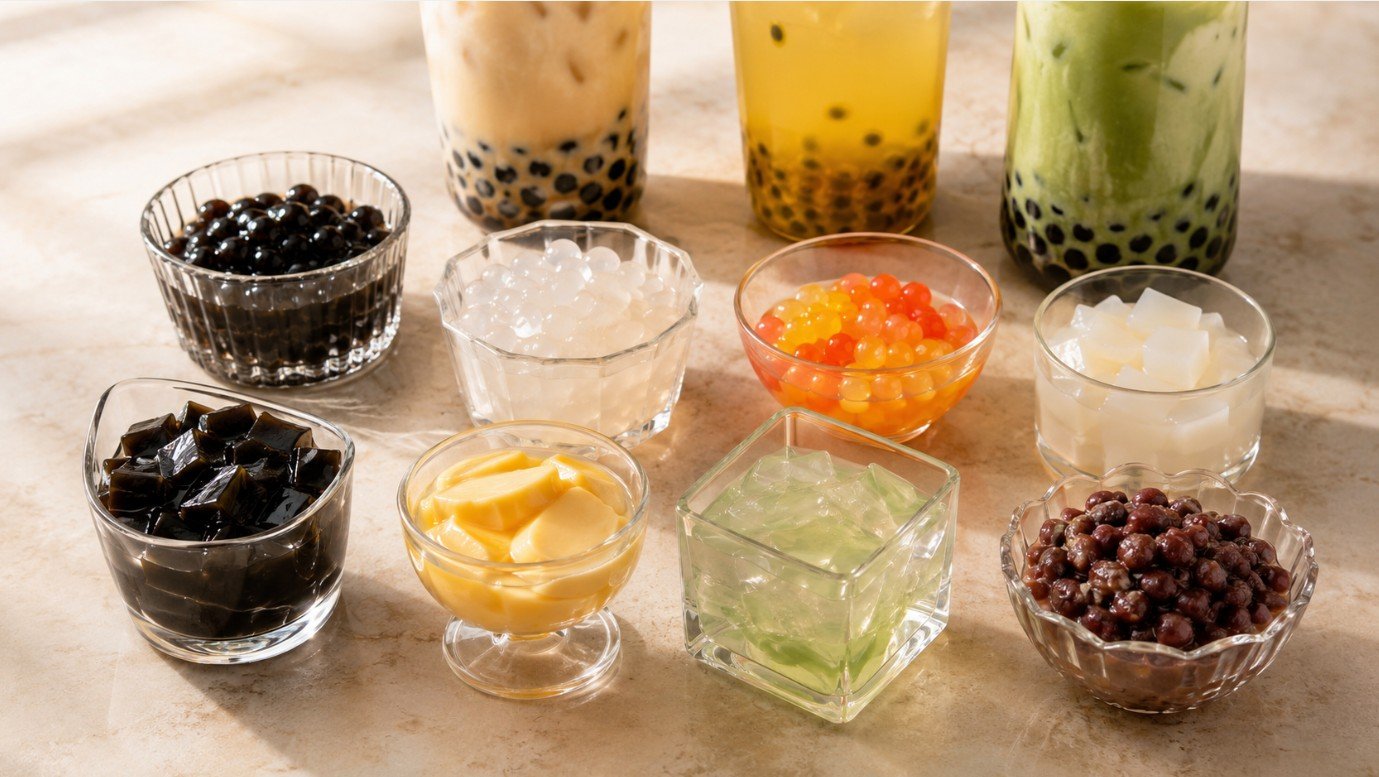
Boba toppings change the way a drink feels as much as they change its flavor. This guide helps you compare chewy pearls, bursting spheres, slippery jellies, creamy pudding, aloe, red bean and foam—then match one to the drink you actually want.
Start with the drink, choose one texture, and keep the cup balanced. A topping should sharpen the experience—not bury the tea under sweetness and competing textures.
Created by the Boba Guide Editorial Team
Updated August 5, 2026
Built from menu comparison, tasting logic and practical ordering experience
Start with the distinction
What counts as a boba topping?
A boba topping is any added texture served inside the drink, layered on top or spooned into the cup before sealing. Traditional tapioca pearls are the most recognizable example, but modern menus also use popping boba, crystal boba, jellies, pudding, aloe vera, red beans, sago, mochi-like pieces and flavored foams.
The word boba can refer to the whole drink or specifically to tapioca pearls, depending on context. On a menu, however, the topping section usually covers a much wider set of textures. That is why ordering “boba” does not always mean your drink must contain black tapioca pearls.
A practical texture map
The five main families of boba toppings
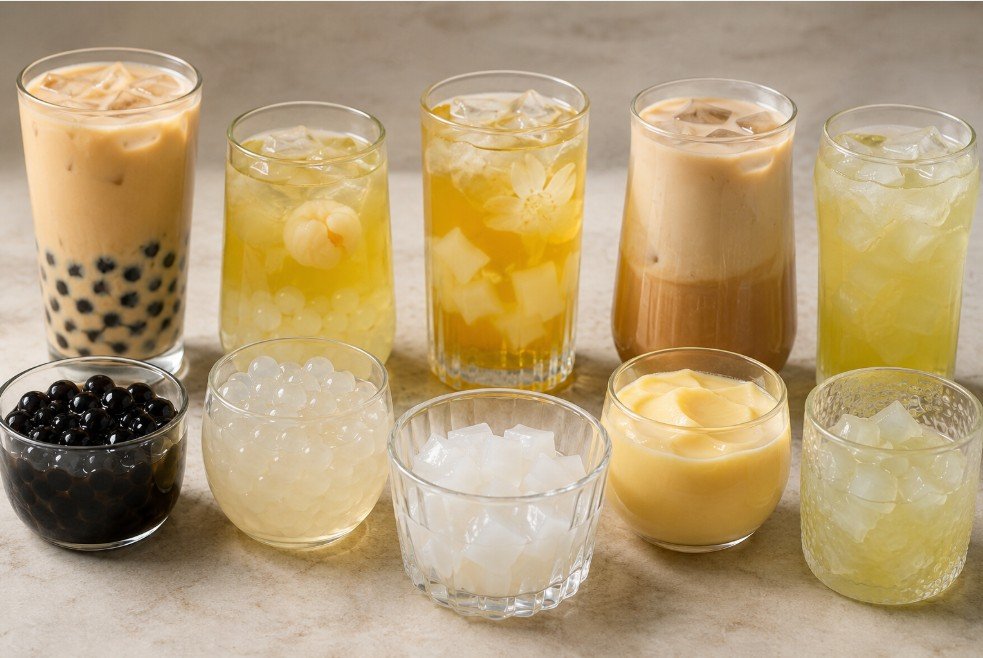
Names vary by shop, but most toppings fall into five useful texture families. Thinking in families is faster than memorizing every menu item.
Chewy
Examples: tapioca pearls, mini boba, golden boba and some mochi-style toppings.
These toppings require real chewing and slow the drink down. They work best when the tea or milk base is strong enough to remain noticeable between bites.
Bursting
Examples: mango, strawberry, lychee and passion fruit popping boba.
A thin outer membrane releases flavored liquid when bitten. The sensation is juicy rather than chewy, so it suits bright and cold drinks better than dense milk tea.
Bouncy
Examples: crystal boba, white pearls, agar pearls and some sago preparations.
These toppings are usually lighter in flavor than black tapioca. Their springy, firmer bite can add structure without making a delicate tea taste like dessert.
Silky and slippery
Examples: grass jelly, herbal jelly, coconut jelly, lychee jelly and aloe vera.
These pieces move easily through the straw and feel cooler and lighter than dense pearls. Shape matters: cubes, strips and irregular pieces each create a different sip.
Soft and creamy
Examples: egg pudding, custard pudding, red beans, cheese foam and milk foam.
These toppings make the drink feel fuller and more dessert-like. Some are sipped through the straw; others are tasted from the top or broken into soft spoonable pieces.
Know what will arrive in your cup
Popular boba toppings, explained without menu jargon
The most useful comparison is not which topping looks best. It is how much chewing, sweetness and extra flavor the topping adds to the base drink.
Black tapioca pearls
Black tapioca pearls are dense, elastic and mildly sweet after cooking in syrup. Fresh pearls should compress easily when bitten, then spring back slightly without a hard center.
- Texture
- Chewy and soft-elastic
- Flavor
- Brown sugar, caramel or neutral sweetness
- Best match
- Black milk tea, oolong milk tea, brown sugar fresh milk
- Think twice if
- You dislike sustained chewing or plan to drink very slowly
Crystal boba
Usually translucent and lighter in flavor, with a firmer, cleaner bite than cooked tapioca.
Choose it for: jasmine, lychee, peach or lightly creamy drinks.
Popping boba
Juice-filled spheres that burst quickly. The flavor is more obvious than the texture itself.
Choose it for: fruit tea, slushes and playful cold drinks.
Coconut jelly
Small strips or cubes with a light bounce and clean sweetness. Easier to chew than dense pearls.
Choose it for: mango, passion fruit, peach and green tea.
Grass jelly
Dark herbal jelly with a soft, slippery texture and a subtle bittersweet or roasted character.
Choose it for: milk tea, wintermelon, coffee or roasted tea.
Egg pudding
Soft custard-like pieces that dissolve into the drink and make each sip richer.
Choose it for: milk tea, matcha, taro or coffee boba.
Aloe vera
Cool, juicy pieces with a light bite. It adds texture without making the drink heavy.
Choose it for: citrus, jasmine, green tea and tropical fruit.
Sweet red bean
Soft whole or partially mashed beans with an earthy sweetness and substantial body.
Choose it for: matcha, fresh milk, taro and shaved-ice styles.
Cheese or milk foam
A creamy top layer that may taste lightly salty, tangy or sweet. It changes the first sip more than the last.
Choose it for: tea-forward drinks that benefit from a creamy contrast.
The three round toppings people confuse most
Tapioca pearls vs crystal boba vs popping boba
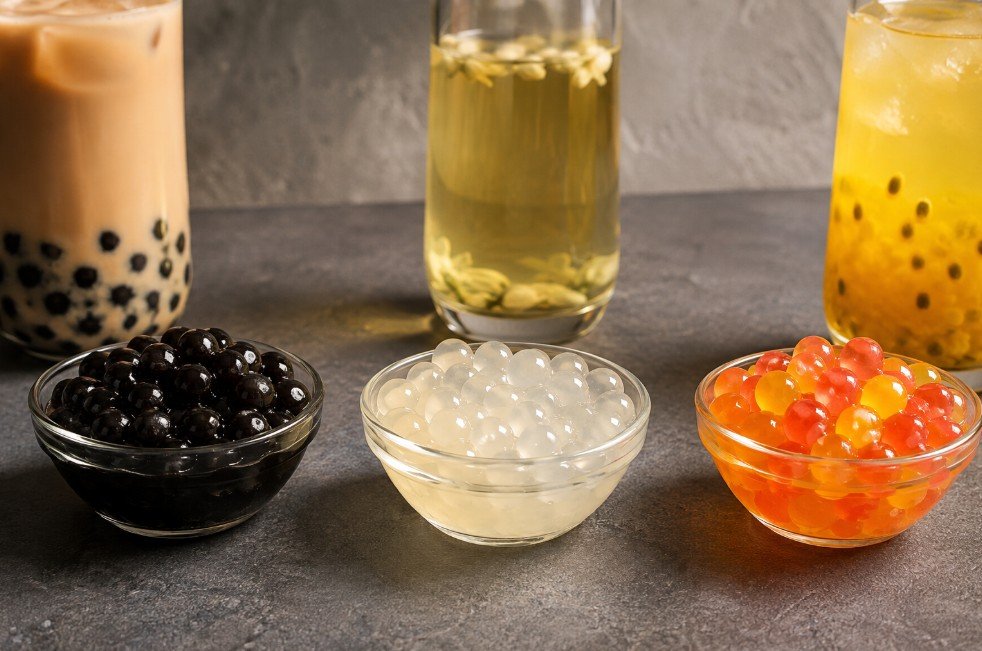
They may share a round shape, but they create completely different drinking experiences.
| Topping | Bite | Flavor impact | Best use |
|---|---|---|---|
| Tapioca pearls | Dense, chewy, soft-elastic | Moderate; often brown-sugar sweet | Creamy or roasted drinks with enough body |
| Crystal boba | Firm, bouncy, lighter | Low to moderate | Floral tea, fruit tea and lighter milk drinks |
| Popping boba | Thin shell with a quick burst | High and immediate | Cold fruit tea, lemonade-style drinks and slushes |
Beyond pearls
Jelly, pudding, aloe and red bean change the cup in quieter ways
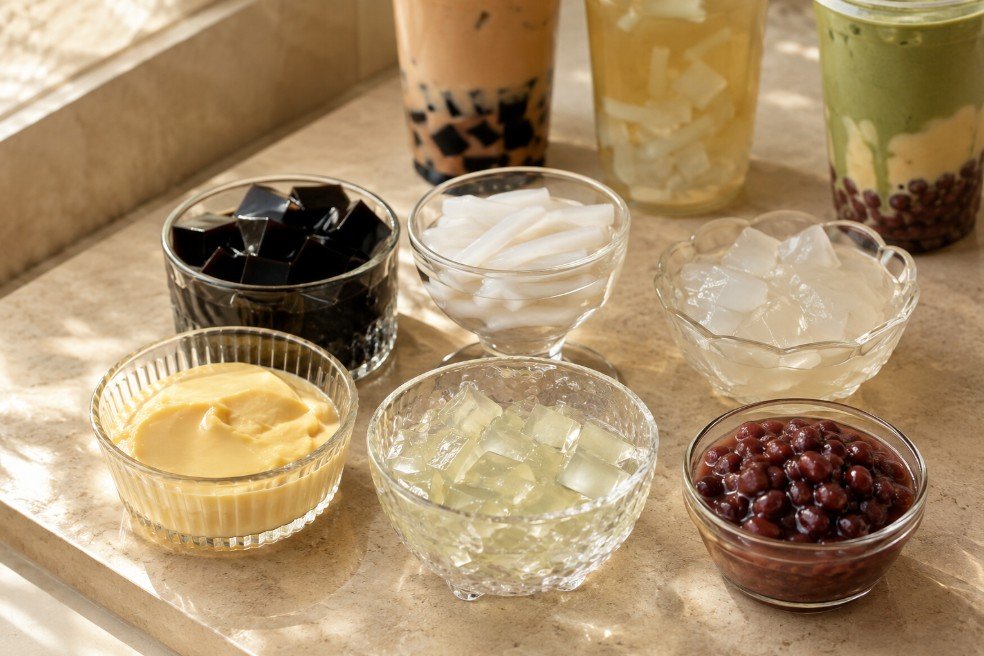
Not every topping needs to be round or strongly chewy. Softer additions can support the base instead of competing with it.
Jelly keeps a drink moving
Jelly pieces slide through a wide straw more easily than dense pearls. Coconut and fruit jellies feel clean and bouncy; grass jelly is softer and more herbal.
Pudding turns tea into dessert
Pudding breaks into soft pieces and blends with milk tea as you drink. It adds body, sweetness and a custard note, so extra syrup may be unnecessary.
Aloe adds freshness, not heaviness
Aloe works when you want a visible topping and a gentle bite without the density of tapioca. It is especially natural with citrus and floral tea.
Red bean is soft but substantial
Red bean is not a neutral topping. Its earthy sweetness belongs with matcha, taro, fresh milk and other flavors that can support its weight.
Pairing before novelty
Which toppings go best with each boba drink?
A good pairing keeps the drink recognizable. A poor pairing adds so much sweetness, chew or competing flavor that the tea disappears.
Reliable: tapioca pearls or pudding.
Lighter: grass jelly or crystal boba.
Avoid overload: sweet pearls, pudding and foam together can bury the tea.
Reliable: aloe, coconut jelly or crystal boba.
Bolder: one matching popping-boba flavor.
Avoid overload: several fruit toppings can taste like mixed candy.
Reliable: warm tapioca pearls or red bean.
Bolder: pudding with matcha or taro.
Avoid overload: delicate jelly can feel disconnected from a heavy brown-sugar base.
Reliable: red bean, pudding or white pearls.
Lighter: aloe in a less creamy matcha tea.
Avoid overload: strong tropical popping boba often fights the matcha.
Reliable: popping boba or small jelly pieces.
Bolder: mini pearls if the shop serves them soft.
Avoid overload: large firm toppings can become awkward in a very thick drink.
Reliable: no bottom topping or a small portion of jelly.
Bolder: grass jelly with roasted tea.
Avoid overload: foam plus pudding plus pearls creates too many competing textures.
Still choosing the liquid itself? Compare the main boba drink families before adding a topping.
More is not automatically better
How many toppings should you order?
For a first order, one topping is usually enough. It lets you understand the drink base and topping separately, keeps the sweetness easier to predict and prevents the bottom of the cup from becoming crowded.
Two toppings can work when they have different roles—for example, chewy tapioca plus soft pudding, or crisp aloe plus slippery jelly. Three or more toppings are better treated as a deliberate dessert cup rather than a normal tea drink.
Tea first
Best for judging the base clearly.
Best starting point
One clear texture without clutter.
Intentional contrast
Pair different textures, not duplicates.
Dessert cup
Expect more sweetness and less drink.
What the menu name may not tell you
Sweetness, calories, allergens and dietary questions
Toppings are ingredients, not decoration. They can materially change the sugar, energy, allergen and texture profile of a drink.
Sweetness
Cooked tapioca is commonly held in syrup. Popping boba contains flavored liquid, pudding is sweetened, and jelly may arrive pre-sweetened. Reducing the drink’s syrup does not necessarily remove the topping’s sugar.
Calories
A large serving of dense pearls or pudding generally contributes more energy than a small serving of aloe or jelly, but recipes and scoop sizes differ widely by shop. Use the shop’s own nutrition data when exact numbers matter.
Milk and eggs
Pudding, cheese foam, milk foam and creamy jellies may contain dairy, egg or both. A tea ordered with plant milk is not automatically dairy-free once a topping is added.
Gelatin and gelling agents
Jellies may use agar, konjac, carrageenan, gelatin or proprietary blends. Do not assume that every clear or fruit-flavored jelly is vegan.
Gluten and shared equipment
Plain tapioca starch is naturally gluten-free, but finished pearls, powders, flavorings and shared preparation areas require confirmation from the shop when cross-contact matters.
Children and swallowing
Round chewy toppings can be difficult to manage for young children. Age, chewing ability and supervision matter; ask the shop about smaller or softer alternatives and seek professional guidance for individual safety concerns.
A topping should improve the cup
How to recognize fresh, well-prepared boba toppings
Tapioca pearls
Soft through the center, lightly elastic, separate rather than fused together, and sweet enough to taste without overwhelming the tea.
Jelly and aloe
Clean shapes, fresh moisture, no dried edges, no harsh refrigerator flavor and pieces small enough to move safely through the supplied straw.
Popping boba
Intact spheres with a clean burst. Too many broken skins or excessive syrup at the bottom can make the drink muddy.
Pudding and foam
Smooth, cohesive texture with no watery separation, graininess or stale dairy aroma.
Common warning signs
A hard white center in tapioca, pearls that crumble instead of bending, dried jelly edges, strongly fermented aromas where none are expected, broken popping boba or a topping temperature that feels inappropriate for the drink.
Use familiar preferences
Build a boba order by texture
These combinations are starting points, not fixed recipes. Keep the first version simple, then change one detail on your next visit.
Roasted oolong milk tea + tapioca pearls
Ask for moderate sweetness so the tea remains visible beside the syrup-soaked pearls.
Peach jasmine tea + aloe vera
Aloe adds a gentle bite without making the floral fruit tea feel heavy.
Passion fruit green tea + lychee popping boba
Use one popping-boba flavor so the fruit profile stays understandable.
Matcha fresh milk + red bean
The earthy matcha and soft bean texture balance each other without needing several add-ons.
Jasmine milk tea + grass jelly
A softer, more slippery alternative for someone who dislikes dense chewing.
Classic milk tea + mini pearls
Choose a smaller pearl size when available and avoid adding a second topping until you know the texture.
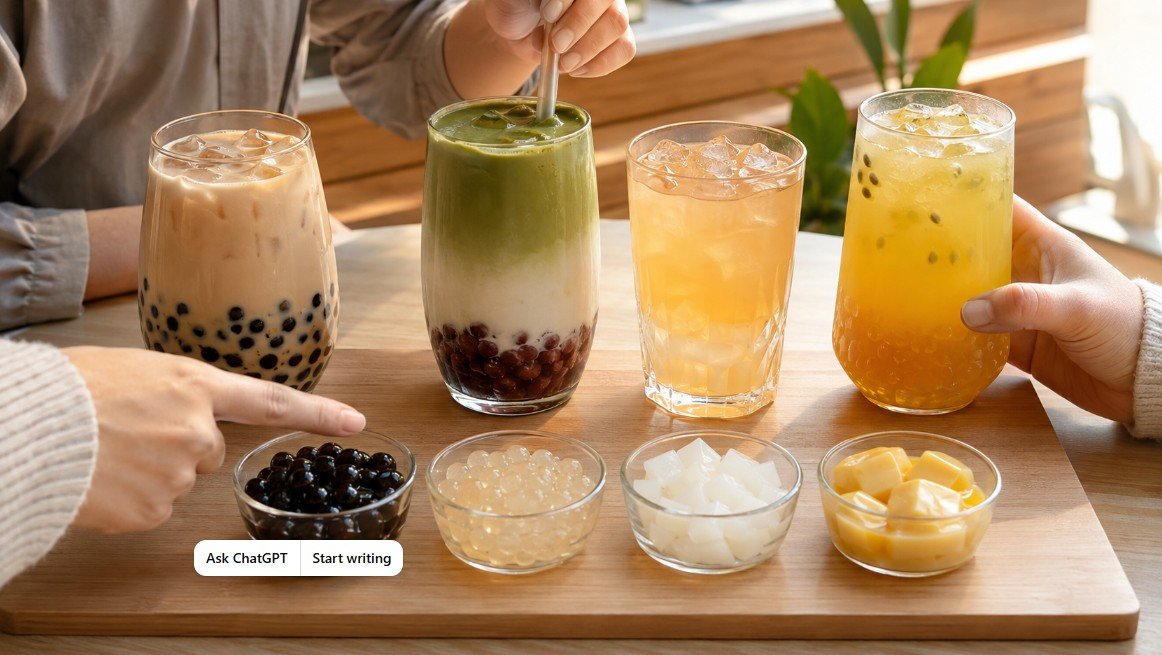
Your next cup can stay simple
Choose one texture you are curious about
You do not need the longest topping list to make a good order. Start with the drink family you already enjoy, add one texture that complements it, and notice whether you want more chew, more freshness or less sweetness next time.
Match a topping with your flavorAffiliate disclosure: We may earn a commission from qualifying purchases.
Remember the cup as a whole
A topping cannot rescue the wrong drink base
If the tea is too bitter, the fruit flavor too artificial or the milk base too heavy, another topping usually adds complexity rather than balance. The strongest order begins with a base you would enjoy even without toppings.
Think of toppings as texture seasoning: enough to create contrast, not enough to replace the drink. When you understand that distinction, even a long menu becomes easier to read.
How this guide is maintained
Practical guidance, clear boundaries and corrections
Boba Guide compares topping terminology, preparation logic, texture and pairing patterns across current menus while recognizing that recipes differ by shop and region. Ingredient, nutrition and allergen details should always be confirmed with the business serving the drink.
Questions people ask before ordering
Boba toppings FAQ
What is the most popular boba topping?
Black tapioca pearls are the classic and most widely recognized topping. They are especially common in milk tea and brown sugar drinks, but popularity varies by region and shop.
Are all boba toppings made from tapioca?
No. Tapioca pearls use tapioca starch, while other toppings may be made from agar, konjac, fruit juice, aloe, beans, dairy, eggs or different starch blends.
What is the difference between popping boba and tapioca pearls?
Tapioca pearls are dense and chewy. Popping boba has a thin outer shell filled with flavored liquid that bursts when bitten. They differ in ingredients, texture, flavor intensity and the drinks they suit best.
What topping is best for milk tea?
Tapioca pearls are the safest classic choice. Pudding, grass jelly and crystal boba also work well, depending on whether you want a creamy, slippery or lighter bouncy texture.
What topping is best for fruit tea?
Aloe vera, coconut jelly, crystal boba and one matching popping-boba flavor usually complement fruit tea without making it too heavy.
Can I order boba without tapioca pearls?
Yes. A bubble tea can contain jelly, pudding, aloe, popping boba, foam or no topping at all. Tapioca pearls are traditional, not mandatory.
How many boba toppings should I add?
One topping is a good starting point. Two can work when they provide contrasting textures. Three or more usually creates a heavier dessert-style cup and may make the base harder to taste.
Are boba toppings vegan?
Some are, but the name alone is not enough to confirm it. Plain tapioca, many agar-based jellies and aloe may be vegan, while pudding, foam, gelatin-based jelly or toppings processed with dairy or honey may not be. Check the shop’s ingredients.
Do toppings make boba sweeter?
Often, yes. Pearls may be held in syrup, popping boba contains flavored liquid, and pudding or jelly is commonly sweetened. A reduced-sugar drink can still taste sweet after toppings are added.
Why are my tapioca pearls hard?
Pearls can harden when they cool for too long, sit past their best serving window or are not cooked through. A well-prepared pearl should not have a firm white center.