
Boba Recipes
Boba recipes are easiest to choose when you first decide what kind of drink you want: tea-forward, creamy, fruity, layered, frozen or dessert-like. This collection organizes homemade bubble tea recipes by flavor, base, topping and difficulty, then points you to the exact recipe that matches your kitchen and your craving.
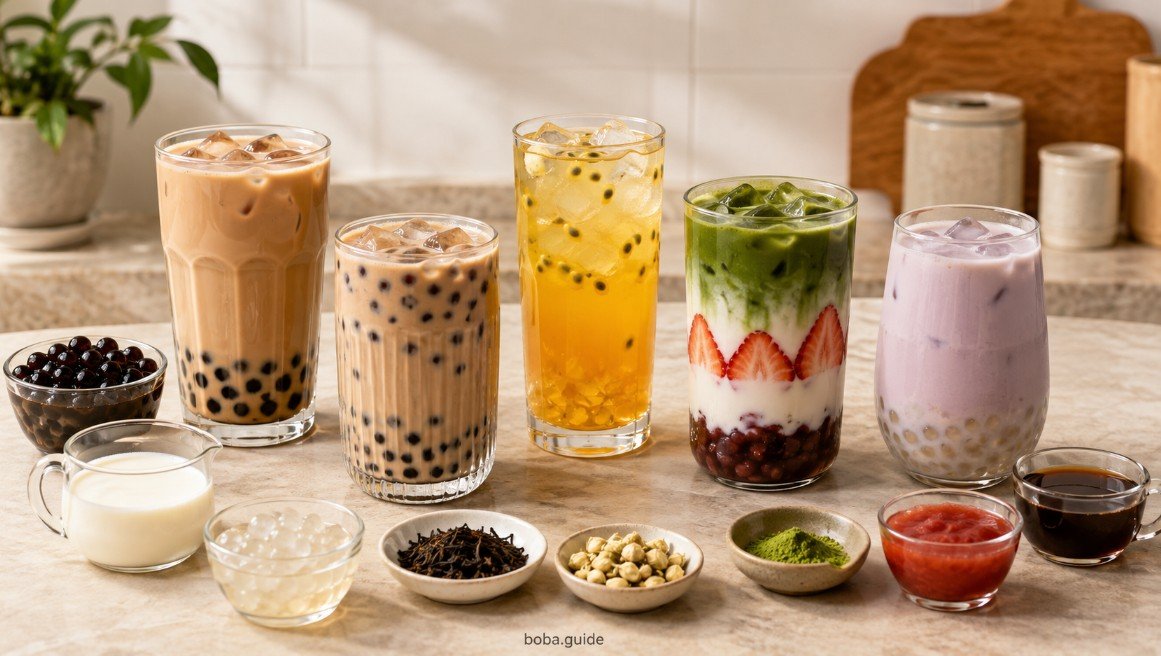
A homemade boba drink has four separate jobs
The base provides the main flavor, the sweetener rounds it out, the topping adds texture and the final assembly controls dilution. Treating those jobs separately makes recipes easier to understand and easier to adjust.
A useful boba recipe is not just a list of colorful ingredients. It explains how a drink base, milk or fruit component, sweetener, ice and topping work together. Tea may need to be brewed stronger than a normal drinking cup because milk and ice reduce its intensity. Fruit drinks usually need enough acidity and aroma to remain clear after syrup and ice are added. Fresh-milk drinks depend more heavily on the flavor of the syrup or topping because there may be no brewed tea underneath.
The topping is its own preparation. Tapioca pearls, crystal boba, popping boba, jelly, pudding and red bean behave differently, so a recipe that works with one cannot always be copied directly with another. Tapioca needs cooking and a serving window. Popping boba is ready to use but adds sweetness and liquid. Jelly changes the chew and may already carry flavor. Treat those differences as part of the recipe rather than decoration at the end.
Finally, assembly matters. A well-balanced drink can become thin if hot tea is poured over too much ice, overly rich if a large amount of creamer replaces fresh milk, or unpleasantly sweet if the pearls, syrup and flavored powder all contribute sugar. The recipes collected here are organized to help you choose the right direction before you start measuring.
Tea, milk, fruit or blended drink
The main flavor and body of the cup.
Syrup, sugar, honey or puree
Balances bitterness, acidity and dilution.
Pearls, jelly, pudding or beans
Adds chew, softness, pop or creaminess.
Temperature, ice and final ratio
Determines the finished strength and texture.
Browse recipes by the drink you want to make
These collections group similar methods without pretending that every drink uses the same formula. A black milk tea, a mango fruit tea and a taro drink may all contain boba, but they need different decisions in the kitchen.
Classic and flavored milk tea recipes
Strong brewed tea balanced with milk, creamer or a non-dairy alternative. Best when you want a familiar café-style drink with enough tea character to stand up to tapioca pearls.
Fruit tea and refreshing boba recipes
Tea or a tea-free fruit base combined with puree, juice or syrup. Best for bright flavors, lighter body and toppings such as aloe, jelly or popping boba.
Matcha and fresh-milk recipes
Layered drinks where matcha, brown sugar syrup, strawberry puree or another concentrated flavor sits against fresh milk rather than a classic milk-tea base.
Taro, ube and dessert-style recipes
Creamier drinks built around powders, purees or cooked ingredients. Best for a fuller, sweeter, snack-like cup rather than a tea-forward refreshment.
Homemade pearls and topping recipes
Techniques for cooking, sweetening, holding and pairing tapioca pearls plus other toppings that change texture, sweetness and serving time.
Pick a recipe by flavor, texture and effort
The best first recipe is not automatically the most famous one. Choose a drink that matches the ingredients you already enjoy and the amount of preparation you actually want to do.
| What you want | Best recipe direction | Texture pairing | What to expect |
|---|---|---|---|
| Classic and balanced | Classic bubble milk tea recipe | Tapioca pearls | Strong black tea, creamy body and a familiar chewy finish. |
| Deep caramel sweetness | Brown sugar boba recipe | Warm brown-sugar pearls | Syrup-forward flavor, fresh milk and pronounced sweetness. |
| Earthy and layered | Matcha boba recipe | Tapioca or red bean | Vegetal matcha, creamy milk and visible layers. |
| Creamy dessert | Taro milk tea recipe | Crystal boba or mini pearls | Soft vanilla-like, nutty and starchy notes with a fuller body. |
| Spiced and aromatic | Thai milk tea recipe | Tapioca pearls | Bold tea, fragrant spice and rich sweetness. |
| Bright and fruity | Mango boba recipe | Popping boba, aloe or jelly | Juicy fruit flavor, lighter body and a refreshing finish. |
Choose a simpler first recipe when…
- You want to learn one new technique at a time.
- You are using quick-cooking pearls or a ready topping.
- You already own tea, milk and a basic sweetener.
- You prefer a drink that is easy to taste and adjust before serving.
Choose a more involved recipe when…
- You want homemade pearls, foam or multiple layers.
- You enjoy measuring separate syrups and bases.
- You are serving several people and can plan batches.
- The visual presentation is part of the experience.
Milk tea recipes begin with tea strength, not milk quantity
A milk tea tastes balanced when the brewed tea remains recognizable after milk, sweetener and ice are added. If the tea disappears, adding more syrup usually makes the problem worse rather than better.
Classic bubble milk tea is the clearest starting point because its structure is easy to understand: a robust black tea, a creamy component, sweetness and tapioca pearls. Assam often creates a malty, assertive cup, while Ceylon can feel brighter and lighter. Roasted oolong produces a warmer, more aromatic direction. Jasmine tea gives a floral result that feels softer than a typical black-tea milk tea. The exact tea matters, but the principle stays the same: brew for the finished drink, not for the plain tasting cup.
Milk choice changes both flavor and texture. Whole milk gives clean dairy flavor but less of the shop-style weight associated with some creamers. Evaporated milk can provide a concentrated richness. Non-dairy milks vary widely: oat milk often adds body, soy milk may contribute a distinct bean note, almond milk is lighter and coconut milk brings its own flavor. A substitution is successful when it supports the tea rather than simply making the drink dairy-free on paper.
Sweetener should be treated as part of the liquid ratio. Simple syrup dissolves easily in cold drinks, while condensed milk adds both sweetness and dairy richness. Brown sugar syrup brings darker caramel notes and may dominate delicate teas. Honey can work with floral teas, but its own aroma remains noticeable. Start with less than you think you need, taste the combined drink before adding ice and remember that cold temperature can mute sweetness.
Classic black milk tea
The benchmark recipe for learning tea strength, creaminess and sweetness. Choose it when you want the most transferable home-boba method.
Best first project for learning milk tea balanceBrown sugar boba
A syrup-led drink where warm pearls and dark sugar are more important than tea. It rewards careful timing because the pearl texture is best while fresh.
Best when fresh pearls are the main attractionThai milk tea
A stronger, sweeter and more aromatic direction than standard milk tea. Use a measured recipe rather than trying to copy the color alone.
Best for a bold, aromatic milk teaOolong or jasmine milk tea
These recipes are useful when you want tea aroma to lead. Roasted oolong feels warm and nutty; jasmine feels floral and lighter.
Learn the milk-tea methodFruit tea needs clarity, acidity and controlled sweetness
A good fruit tea tastes refreshing because the tea and fruit remain distinct. It should not feel like syrup diluted with ice or a smoothie poured over pearls.
Jasmine green tea is a common partner for fruit because its floral aroma supports peach, lychee, mango and passion fruit without creating the heavier tannic impression of a strong black tea. Green tea can work when a cleaner, grassier profile is wanted. Black tea suits darker fruit flavors, citrus and recipes that need more structure. The tea should be cooled before final assembly so the ice controls temperature rather than becoming the main source of water.
Fruit can enter the drink as puree, juice, concentrate, jam, syrup or fresh pieces. These are not interchangeable in equal amounts. Puree contributes body and may settle; juice adds volume and acidity; syrup adds sweetness with concentrated flavor; jam brings both fruit solids and sugar. A recipe should identify the form because it determines how much additional sweetener and water the drink needs.
Topping choice changes the impression of the same fruit base. Popping boba intensifies sweetness and creates bursts of liquid. Aloe feels cleaner and less candy-like. Coconut or lychee jelly adds a firmer chew. Crystal boba offers a translucent, softer bite. Tapioca can work, but its brown-sugar character may pull a delicate fruit tea toward a heavier dessert profile.
Peach and lychee
Floral, fragrant and best with jasmine or green tea.
Mango
Round, tropical and suitable for tea, milk or blended recipes.
Passion fruit
Bright acidity that stays noticeable through ice and syrup.
Strawberry
Works as a fruit tea, fresh-milk layer or matcha pairing.
Citrus
Refreshing but needs careful handling with dairy ingredients.
Acidic fruit can affect dairy texture. Follow a tested method for the exact fruit-and-milk combination instead of adding milk to an ordinary fruit tea at the end.
Layered fresh-milk recipes depend on concentrated flavor
Fresh milk is mild, so the syrup, matcha or puree must carry enough flavor to remain distinct after the layers are mixed.
Matcha boba
Matcha is whisked separately so it disperses smoothly, then combined with milk and a topping. The quality and quantity of matcha matter more than artificial green color.
Best when you want an earthy layered drinkStrawberry matcha milk
A fruit layer, milk layer and matcha layer create contrast in both flavor and appearance. The strawberry must be concentrated enough to survive dilution.
Brown sugar fresh milk
The syrup and pearls carry the flavor. The drink can be tea-free, which makes pearl freshness and syrup balance especially noticeable.
Best for a tea-free caramel directionUbe or pandan milk
These ingredients bring distinct aroma and color, but powders, extracts and cooked purees behave differently. Use a recipe written for the ingredient form you own.
A common layering mistake is building a beautiful glass that tastes weak after stirring. Visual separation is temporary; the final flavor should still work when the drink is mixed. Taste the syrup or puree with a small amount of milk before assembling the full cup. If the sample is barely flavored, the finished iced drink will be even softer.
Matcha also needs a different approach from brewed tea. It is suspended powder rather than an infusion, so sifting and whisking affect texture. Very hot water can emphasize bitterness, while insufficient whisking leaves clumps. A dedicated recipe should specify the matcha amount, water temperature and mixing method rather than treating it as green tea concentrate.
Taro, ube and blended boba are closer to a dessert than a plain tea
These recipes often rely on powder, puree, cooked root, coconut milk or a blended base. They need enough liquid to move through a wide straw without becoming thin.
Taro milk tea
Powder creates consistency and sweetness, while cooked taro gives a more natural, starchy profile. The two methods should not be measured as if they were identical.
Best for a creamy, starchy dessert drinkUbe boba
Ube brings a vanilla-like purple-yam aroma that is different from taro. Extract, jam and cooked ube each create a different recipe structure.
Best with milk or coconut notesFrozen and blended boba
Ice becomes part of the body, not only temperature control. Too much ice makes the flavor hollow; too little makes the drink loose and warm.
Use toppings after blendingDessert-style recipes are also where sweetness can escalate quickly. A flavored powder may already contain sugar, condensed milk adds more, and cooked pearls may be held in syrup. Taste each sweet component before adding a separate syrup. The goal is not to remove sweetness from a dessert drink but to prevent all sweet elements from competing at full strength.
Texture should remain drinkable. A thick taro or ube puree may need to be loosened before it is added to cold milk. A blended drink should move through the straw without requiring the pearls to be crushed. If a recipe contains pudding, red bean or multiple chewy toppings, use a cup and straw size that can handle the combination rather than shrinking every component to fit a decorative glass.
The topping recipe controls texture and serving time
Cooked tapioca is time-sensitive, while ready toppings are easier to hold. Choose the topping before planning the rest of the recipe so the drink is ready when the texture is at its best.
| Topping | Preparation | Best pairings | Planning note |
|---|---|---|---|
| Tapioca pearls | Cook, rest and sweeten according to the pearl type. | Milk tea, brown sugar drinks, coffee and richer flavors. | Prepare close to serving for the best chew. |
| Crystal boba | Often ready to use; drain or portion as directed. | Fruit tea, jasmine tea, taro and lighter drinks. | Check whether the product already contains syrup. |
| Popping boba | Ready to use and handled gently. | Fruit tea, lemonade-style drinks and yogurt drinks. | Adds sweetness and liquid as the pearls burst. |
| Jelly | Cut or drain if needed; keep pieces straw-friendly. | Fruit tea, coffee, coconut and herbal drinks. | Flavor and firmness vary by jelly type. |
| Red bean or pudding | Cook or chill separately, then portion carefully. | Matcha, taro, fresh milk and dessert drinks. | Creates a heavier spoonable texture. |
Traditional and quick-cooking tapioca pearls do not share one universal cooking time. Use the instructions or tested method for the exact pearls you have. Plenty of boiling water helps the pearls move freely, while crowding can produce uneven cooking. After cooking, a resting phase may finish the center. Sweetening the pearls after cooking gives them flavor, but holding them too long can change their chew.
For a full cooking process, use the dedicated guide to cook tapioca pearls for boba. That page owns the detailed water ratio, timing, resting and texture troubleshooting; this collection keeps the focus on choosing the right topping for each recipe.
Prepare the topping first, then build the drink around its serving window
The most reliable sequence prevents the tea from becoming watery and the pearls from waiting too long.
Read the complete recipe before heating anything
Identify which components must be hot, chilled or freshly cooked. Check whether the tea needs cooling time and whether the topping has a limited serving window.
Prepare syrups, purees and measured ingredients
Mix cold-dissolving syrups in advance and portion milk, tea leaves, matcha or fruit. This prevents the pearls from sitting while you search for ingredients.
Cook or portion the topping
Start tapioca early enough to cook and rest, but not so early that it becomes firm before serving. Ready toppings can be drained and measured closer to assembly.
Brew or mix the drink base
Use the strength intended for an iced mixed drink. Cool tea safely and avoid relying on a large amount of ice to reduce the temperature of a hot concentrate.
Taste the base before final ice
Check tea intensity, fruit acidity, sweetness and milk balance. The base should taste slightly more concentrated than the final iced drink, but not harsh.
Assemble and serve promptly
Add topping, syrup, ice and the drink base in the order needed for flavor or layers. Provide a wide straw and encourage stirring when the recipe is designed to be mixed.
The broader how to make boba at home guide explains equipment, preparation order and complete assembly without turning this recipe collection into a duplicate how-to page.
You can make most boba recipes with ordinary kitchen tools
A saucepan, kettle, fine strainer, measuring tools and wide straws cover most beginner recipes. Specialized equipment becomes useful only when it solves a real repetition or consistency problem.
Essential
Saucepan, heat-safe spoon, measuring cups or scale, tea strainer and a cup large enough for ice and toppings.
Enough for most home recipesHelpful
Cocktail shaker or sealed jar, matcha whisk, blender, squeeze bottles and a timer.
Useful for specific drink stylesOptional
Commercial sealer, fructose dispenser, large batch warmer or shop-size shaker.
Usually unnecessary at homeA scale is particularly useful for repeatability. Tea leaves, matcha, powders and syrups can vary significantly when measured with casual spoonfuls. A blender is valuable for slushes and smoothies but irrelevant to a classic milk tea. A matcha whisk improves dispersion but a small sealed jar can work for many home recipes. Buy equipment after you know which drinks you repeat, not before you make your first cup.
Discover more cooking ideas beyond the boba cup
Explore recipe-led food content when you want to turn a drink experiment into a larger home cooking session.
Change one structural ingredient at a time
A substitution is easiest to judge when you know which job the original ingredient performed: flavor, sweetness, fat, acidity, color or texture.
| Original ingredient | Possible substitute | What changes | How to adjust |
|---|---|---|---|
| Whole milk | Oat, soy or another non-dairy milk | Body, sweetness and background flavor. | Taste with the tea before adding syrup; some milks are already sweetened. |
| Simple syrup | Honey, brown sugar syrup or another liquid sweetener | Aroma, color and perceived sweetness. | Begin below the original volume and taste. |
| Loose-leaf tea | Tea bags of the same style | Leaf grade and extraction speed. | Use enough tea for concentration without extending steep time into bitterness. |
| Fruit puree | Juice or syrup | Body, acidity and sugar. | Recalculate both liquid and sweetener rather than swapping spoon for spoon. |
| Tapioca pearls | Crystal boba, jelly or popping boba | Chew, flavor and serving window. | Reduce syrup if the replacement topping is already sweet. |
Changing several major ingredients at once makes troubleshooting nearly impossible. If you replace the tea, milk, sweetener and topping in one attempt, you cannot tell which change caused a thin texture or strange flavor. Start with the original structure, then adapt the ingredient that matters most to your dietary need or preference.
Dairy-free does not have to mean tea-free, and tea-free does not have to mean flavorless. A robust tea can pair with oat or soy milk, while a fresh-milk recipe can become a fruit-and-coconut drink. The useful question is not “Can I substitute this?” but “What function must the replacement still perform?”
Scale the stable components, not the fragile texture
Tea, syrup and some fruit bases can be prepared in larger quantities, but tapioca pearls are usually better cooked closer to service.
Good components to prepare ahead
- Measured dry tea or matcha portions.
- Simple syrup and flavored syrups.
- Chilled brewed tea, when the recipe allows.
- Fruit puree stored appropriately.
- Cups, ice, wide straws and labels.
Components to keep close to serving
- Cooked tapioca pearls.
- Whisked foam and delicate toppings.
- Blended slushes and smoothies.
- Final ice and milk assembly.
- Layered presentation.
For several guests, offer a small menu rather than attempting ten custom drinks. One milk tea base, one fruit tea base and two toppings provide variety without creating a shop-level prep problem. Label sweetened and unsweetened components, keep allergen information clear and use serving tools that prevent toppings from being mixed accidentally.
Batching also changes dilution. A large pitcher of tea cools more slowly than a single serving, while a container packed with ice may water down before everyone is served. Chill the base separately, add ice to individual cups and reserve enough concentrated tea or syrup for final adjustments. A dedicated party guide can cover quantities for larger groups without making every recipe card carry event-planning instructions.
Most home boba problems come from strength, dilution or timing
Diagnose the dominant problem first. Adding random syrup, powder or ice often hides the symptom while creating a second problem.
The drink tastes watery
The tea or flavor base was too weak, too much ice melted, or the fruit ingredient added more water than expected. Increase base concentration next time rather than only adding sugar.
The tea tastes bitter
The water may have been too hot for the tea, the steep was too long, or the leaf quantity and steep time were both increased. Strength and bitterness are not the same thing.
The pearls are hard in the center
They may need more cooking or resting time, or the batch may have cooled too long before serving. Use the method for the exact pearl type.
The pearls are mushy
Overcooking, long holding or aggressive reheating can soften the exterior. Cook smaller batches and keep the service window realistic.
The drink is much too sweet
Count the sugar in flavored powder, condensed milk, syrup and sweetened toppings before adding a separate sweetener. Adjust the full system, not one ingredient.
The layers disappear immediately
Density and pouring order were not strong enough, or the ingredients had similar weights. Remember that layers are presentation; the mixed drink still needs to taste balanced.
Matcha forms clumps
Sift it, use the intended water amount and whisk before adding milk. Pouring dry matcha directly into cold milk rarely creates a smooth result.
The fruit and milk separate
Acidity may be affecting the dairy. Use a tested fruit-milk recipe, choose a compatible milk or keep the fruit in a separate layer designed for mixing.
Buy only what supports the recipes you will repeat
A starter setup should solve your next few recipes, not imitate a commercial shop. Choose pearls, tea, wide straws and measuring tools before decorative machines.
Affiliate disclosure: We may earn a commission from qualifying purchases.
Judge the finished drink as a complete recipe
A strong homemade boba drink does not need to copy a chain exactly. It needs clear flavor, intentional sweetness, suitable texture and a serving temperature that supports the recipe.
Flavor remains clear
You can identify the tea, fruit, matcha or dessert ingredient after milk and ice are mixed in.
No mystery sweetnessTexture suits the drink
The topping is chewable through the straw and does not overwhelm every sip.
No stale or incompatible toppingDilution is controlled
The last third of the drink still tastes like the recipe, not lightly flavored water.
Ice supports, not erasesConsistency improves when you record the parts that matter: tea weight, water volume, steep time, sweetener amount, milk amount and ice. A brief note after each batch is more useful than trying to remember whether the previous cup used “a little more” syrup. Once the structure works, toppings and flavor variations become much easier to explore.
Do not confuse a homemade difference with failure. Fresh milk may taste cleaner than commercial creamer. Real fruit puree may look less uniform than syrup. Homemade pearls can vary slightly in size. Decide which qualities you value, then improve the recipe toward those qualities rather than toward a photograph alone.
Recipe discovery first, complete methods on dedicated pages
This collection is maintained by the Boba Guide Editorial Team. It organizes drink styles, practical choices and recipe routes while keeping complete quantities and step-by-step methods on the appropriate dedicated recipe or technique page. Corrections and meaningful updates are handled under the site’s published editorial policies.
Boba recipe FAQ
These answers cover recipe selection and general method without replacing the dedicated instructions for each drink or topping.
What is the easiest boba recipe for beginners?
Classic black milk tea with quick-cooking tapioca pearls is one of the easiest starting points because the structure is clear and the ingredients are widely available. Brew a strong black tea, balance it with milk and syrup, then add freshly cooked pearls. A fruit tea with a ready topping can be even simpler if you do not want to cook tapioca.
Can I make boba without tea?
Yes. Brown sugar fresh milk, taro drinks, fruit-and-milk drinks, smoothies and some dessert-style boba recipes can be tea-free. The flavor must then come from syrup, fruit, powder, matcha-like ingredients, coffee or another base. Tea-free does not mean caffeine-free if coffee, matcha or another caffeinated ingredient is used.
Can I make boba without milk?
Yes. Fruit tea, sparkling drinks, herbal tea and many iced tea recipes can be made without dairy or plant milk. Milk-tea recipes can also use suitable non-dairy alternatives, but the flavor and body may change. Choose the milk based on how it pairs with the tea rather than treating every alternative as identical.
Do I need homemade tapioca pearls?
No. Ready-to-cook pearls are practical for most home recipes. Homemade pearls offer more control over ingredients, shape and flavor, but they add mixing, shaping and cooking work. Start with purchased pearls if your main goal is learning drink balance, then try a homemade pearl recipe when you want a separate cooking project.
Why should tea for boba be brewed stronger?
Milk, syrup and melting ice dilute tea flavor. A slightly concentrated brew helps the tea remain identifiable in the finished drink. Stronger does not mean steeping indefinitely: excessive time or unsuitable water temperature can create bitterness. Adjust leaf quantity and brew method according to the tea.
How much sugar should I use in a homemade boba drink?
There is no single amount because sweetened milk, flavored powder, puree, syrup and toppings may all add sugar. Begin with the recipe’s lower range, taste the combined base and add more only if needed. Remember that a cold drink may seem less sweet than a warm sample.
What toppings work best in fruit tea?
Aloe, coconut or lychee jelly, crystal boba and popping boba often suit fruit tea because their lighter texture and flavor do not hide the fruit. Tapioca can still work with stronger flavors such as mango or passion fruit, but its chew and brown-sugar notes create a heavier result.
How do I keep homemade boba from becoming watery?
Cool the drink base before assembly, use a sufficiently concentrated tea or flavor base and add only the ice required for serving. Do not pour very hot tea over a full cup of ice and expect the original strength to remain. Measure juice and puree as part of the liquid volume.
Can boba recipes be prepared in advance?
Syrups, measured dry ingredients and many chilled tea or fruit bases can be prepared ahead when stored appropriately. Cooked tapioca pearls are more time-sensitive and are usually better made close to serving. Final ice, milk layers and blended drinks should also be assembled shortly before drinking.
What is the difference between a boba recipe and a bubble tea recipe?
In everyday use, the terms often overlap. A bubble tea recipe describes the complete drink, while “boba recipe” may refer to the complete drink or specifically to pearls depending on context. On Boba Guide, this collection is for complete drinks and recipe discovery; dedicated pearl pages cover pearl-making and cooking techniques.
Can I reduce the sweetness in boba recipes?
Usually, but reduce sweetness across the whole recipe rather than only removing the final syrup. Check whether the milk, powder, puree and topping are already sweetened. A lower-sugar cup still needs enough flavor concentration to avoid tasting flat once ice is added.
Which recipe should I make for a group?
Choose one stable milk tea base and one fruit tea base, then offer two toppings. This creates variety without requiring many separate syrups and cooking schedules. Prepare tea and syrup ahead, cook tapioca close to serving and add ice to individual cups rather than one large pitcher.