
Matcha Boba: Taste, Milk, Toppings & How to Order
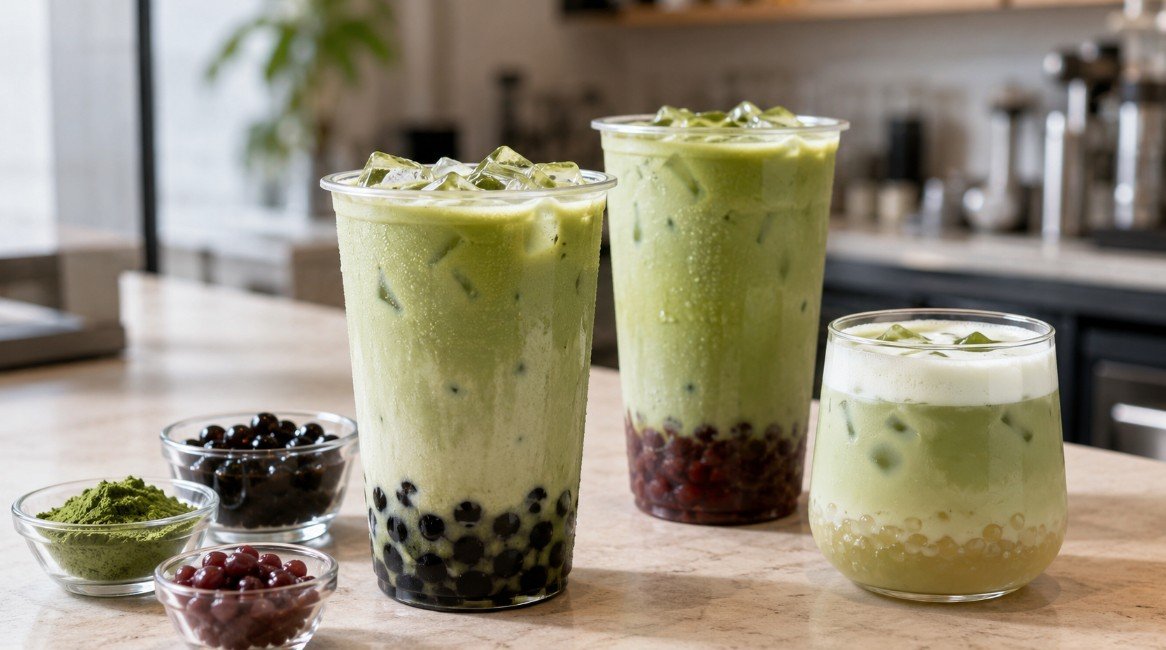
Matcha boba is a bubble tea style built around matcha — finely powdered green tea with a distinctive vegetal, lightly bitter and savory-sweet character. It is commonly paired with milk and toppings such as black tapioca pearls, red bean, crystal boba or milk foam, but there is no single recipe that every shop follows.
The best order depends on what you want matcha to do. More milk makes it softer and creamier. More sweetness can tame bitterness but also hide the tea. Tapioca adds a dark chewy contrast, while red bean creates a softer dessert-style pairing. Understanding those choices makes matcha much easier to order well.
What Is Matcha Boba?
Matcha boba is a bubble tea drink in which matcha provides the main tea flavor, usually combined with milk or another creamy base and one or more boba toppings. Black tapioca pearls are the classic choice, but matcha also works with red bean, crystal boba, foam and other textures.
The term is broad. One shop may serve an iced matcha milk with tapioca. Another may call a similar drink matcha milk tea or matcha latte with boba. A third may offer matcha as a slush, add milk foam or build a dessert-style version with red bean.
The important common element is the matcha itself. Unlike a drink flavored mainly with syrup, matcha contributes recognizable tea bitterness, vegetal notes, color and body. That character should still be noticeable after milk, sweetener and toppings are added.
Matcha creates the tea identity. Milk determines how creamy and soft it feels, sweetness controls how prominent the bitterness remains, and the topping determines much of the texture.
Matcha is one of many distinct boba flavors. For the wider structure of tea bases, milk, ice, sweetness and toppings, see our boba tea guide.
Matcha Is Not the Same as Brewed Green Tea
Matcha and ordinary brewed green tea can come from the same broad tea family, but they behave very differently in a boba drink. With brewed tea, water extracts compounds from the leaves and the leaves are then removed. With matcha, finely ground tea remains in the drink.
Green tea boba
Tea leaves are steeped in water and removed. The result is usually lighter, clearer and less dense, especially when served without milk.
Matcha boba
Finely powdered tea is dispersed through the liquid. That can give matcha more body, stronger vegetal character and a different mouthfeel from a conventionally brewed green tea.
This is why comparing matcha boba only by color can be misleading. A pale green drink may contain plenty of milk, while a darker drink may taste more assertively of tea. What matters is whether the matcha character survives the complete recipe.
For the brewed alternative, see our guide to green tea boba.
What Does Matcha Boba Taste Like?
Matcha boba usually combines vegetal green-tea flavor, mild bitterness, subtle savory or umami notes and creamy sweetness. Tapioca, red bean, foam and other toppings then add their own texture and flavor.
Someone expecting a purely sweet vanilla-like drink may find matcha surprising. Good matcha has enough character to push back against milk and sugar. That contrast is a large part of its appeal.
Fresh green, leafy or grassy notes are normal parts of matcha’s flavor profile.
A subtle savory depth can make matcha feel fuller and less one-dimensional than a simple sweet green-tea flavor.
A gentle bitter edge gives structure. Excessive bitterness can indicate an unbalanced drink or simply a preparation that is stronger than you enjoy.
Milk rounds the sharper edges and gives matcha boba its familiar latte-like body.
Sweetener softens bitterness, while sweetened toppings can make individual mouthfuls considerably sweeter than the liquid alone.
Tapioca adds a dense, elastic texture that contrasts strongly with the smooth matcha base.
Milk Changes Matcha More Than It Changes the Color
Milk softens matcha’s bitterness and vegetal edge, but too much can flatten the tea until the drink tastes mostly creamy and sweet. The goal is not maximum greenness or maximum creaminess; it is enough matcha to remain recognizable after dilution.
Very tea-forward
Less milk or a stronger matcha proportion leaves more bitterness, vegetal flavor and tea intensity. This suits people who already enjoy matcha on its own.
Balanced and creamy
Enough milk softens the edges without removing the tea. This is usually the easiest starting style for someone trying matcha boba for the first time.
Very milk-forward
A high milk proportion creates an easy-drinking latte texture, but a weak matcha base can disappear once ice, sweetener and toppings are added.
A vivid green cup is not automatically better, and a lighter cup is not automatically weak. Different powders, milk ratios, lighting and preparation methods all change appearance.
Matcha Boba Comes in Several Drink Styles
Matcha can be built as a milk drink, milk tea, foam-topped drink, slush or dessert-style combination. Those formats can taste different even when matcha appears in every name.
Matcha milk + boba
CreamyMatcha mixed with milk and sweetener, then paired with tapioca. This is one of the most approachable versions because milk softens the tea.
Matcha milk tea
Tea-forwardNaming varies between shops, but the drink is generally designed around a creamy tea experience rather than a clear brewed green tea.
Matcha + milk foam
LayeredFoam creates a richer top layer, so the first sips can feel creamier or slightly savory before the drink becomes more uniformly mixed.
Matcha slush
FrozenA blended icy format is colder and thicker. It can feel more dessert-like and may require enough matcha strength to survive the extra ice dilution.
Which Toppings Work Best With Matcha Boba?
Black tapioca, red bean and lighter translucent pearls all work with matcha, but they create very different drinks. The best topping is the one that adds a texture you actually want without burying the green-tea character.
Black tapioca pearls
Tapioca creates the strongest familiar boba texture. Dark syrup on the pearls can contrast nicely with matcha, although heavily sweetened pearls may make the bottom of the cup noticeably sweeter.
Sweet red bean
Red bean is softer and more spoonable than tapioca, with an earthy sweetness that sits naturally beside matcha rather than introducing a bright competing fruit flavor.
Crystal boba
A translucent chewy topping can keep the drink visually and aromatically lighter than dark syrup-coated tapioca.
Milk foam
Foam adds richness without adding another chew. It works particularly well when you want texture contrast from the drink itself rather than from several solid toppings.
For a wider comparison of pearls, jellies, foam and other add-ons, browse our boba toppings guide.
Why Matcha and Red Bean Work So Well Together
Matcha and sweet red bean create a useful contrast between green-tea bitterness and soft earthy sweetness. Unlike a strongly flavored syrup, red bean changes both the texture and the sweetness of the drink.
Its texture is also completely different from tapioca. Tapioca is elastic and chewy; cooked sweet red bean is soft and tender. Combining both can make a matcha drink much more dessert-like, which is why adding red bean is not merely a minor topping swap.
Established bubble tea menus use the combination too. Chun Shui Tang has documented a matcha milk tea with both pearls and red beans, showing that the pairing is part of real contemporary bubble tea menus rather than an arbitrary topping suggestion.
How Sweet Should Matcha Boba Be?
Matcha usually benefits from some sweetness, but too much can erase the bitterness and vegetal character that distinguish it from an ordinary sweet milk drink. There is no universal best percentage because shops use different recipes and sweetness scales.
The matcha may seem grassy, sharp or more bitter than you expected.
Sweetness rounds the bitter edge while the matcha remains clearly identifiable.
The cup begins to taste mainly of sweet milk, syrup or toppings, with green tea reduced to background flavor.
Remember that toppings matter too. Sweetened tapioca, red bean, foam and flavored add-ons may contribute sweetness even when the liquid itself is ordered at a reduced level.
Our guide to boba sweetness levels explains why a percentage on one shop’s menu cannot be treated as a universal recipe.
Iced vs Hot Matcha Boba
Iced matcha boba is cooler, more refreshing and more diluted by ice, while a hot version can feel creamier and place more emphasis on tea aroma. Availability and topping suitability vary by shop.
Brighter and more refreshing
Ice makes matcha easier to drink in warm weather and creates a stronger temperature contrast with freshly prepared tapioca.
Too much melting ice can thin a weak matcha base.
Softer and more aromatic
A warm matcha milk drink can feel fuller and more comforting, with no ice dilution changing the last part of the cup.
Not every topping or sealed takeaway cup is offered hot, so check the shop’s menu.
Does Matcha Boba Have Caffeine?
Yes, a drink made with actual matcha contains caffeine because matcha is tea. The amount in a specific boba drink depends on how much matcha the shop uses, the serving size and the complete recipe.
That makes a single universal caffeine number for “matcha boba” unreliable. Two similarly sized cups can use different quantities of powder, milk, ice and toppings.
Use the shop’s own ingredient or nutrition information when available. The green color of the drink is not a reliable way to estimate caffeine.
How to Order Matcha Boba
Choose how strong and creamy you want the matcha first, then choose one topping and adjust sweetness. Starting with toppings before deciding the drink style often produces a busier cup than you actually wanted.
First matcha boba
Try: iced matcha milk + black tapioca pearls + moderate sweetness.
This gives you the familiar creamy boba structure without making the matcha excessively intense.
More matcha-forward
Try: a stronger matcha base + lighter milk + crystal boba or no heavy topping + reduced sweetness.
This keeps more of the tea’s vegetal and gently bitter character in front.
Dessert-style matcha
Try: creamy matcha + red bean, or matcha + pearls + red bean if you deliberately want a fuller dessert texture.
There is usually little reason to stack several additional jellies and syrups on top unless that maximal style is exactly what you enjoy.
“Is your matcha drink more tea-forward or milk-forward, and which topping do you recommend without covering the matcha flavor?”
How to Tell If Matcha Boba Is Well Made
A good matcha boba drink should taste integrated: recognizable matcha, appropriate creaminess, controlled sweetness and a smooth texture without distracting clumps.
You can actually taste matcha
The drink should offer more than sweetness and green color. There should be a recognizable tea character underneath the milk.
The texture feels integrated
Matcha is powdered tea, but the finished drink should not be dominated by large dry clumps or an unpleasantly chalky mouthfeel.
Bitterness has a purpose
A mild bitter edge can make matcha interesting. Harsh bitterness that overwhelms every other component is a different experience.
Milk does not erase the tea
Creaminess should soften matcha, not reduce it to a faint green background note.
The topping fits the intention
Tapioca should provide chew, red bean should create a dessert-like contrast, and lighter toppings should stay relatively unobtrusive.
Color is not doing all the work
A beautiful green cup can be appealing, but flavor, aroma, texture and balance are better quality signals than color alone.
If you want to go deeper into powder selection and preparation rather than the finished drink, see our guide to matcha for boba.
Matcha vs Jasmine vs Black Tea Boba
Matcha is fuller and more vegetal, jasmine is lighter and more floral, and black tea is typically maltier and more familiar in classic milk tea. The best choice depends more on your preferred tea character than on which one is “best.”
Vegetal + full
Choose matcha when you enjoy creamy drinks with noticeable green-tea bitterness, body and savory depth.
Floral + light
Choose jasmine when fragrance and a lighter tea profile matter more than dense creamy body.
Malty + strong
Choose black tea when you want the familiar foundation of a classic milk tea with enough strength for rich milk and tapioca.
Who Should Try Matcha Boba?
Matcha boba is a strong choice if you want a creamy drink that still has an unmistakable tea personality. It is especially useful for people who find plain green tea too light but do not necessarily want the roasted depth of oolong or the maltiness of black tea.
You may love matcha boba if…
You like matcha lattes, green-tea flavor, mild bitterness, creamy textures, red bean desserts or drinks where the tea itself remains noticeable.
You may prefer another style if…
You dislike grassy or vegetal tea notes, want a clear fruit drink, strongly prefer floral tea or simply want brown sugar and caramel sweetness to dominate.
The Main Challenge Is Smooth, Balanced Matcha
Home preparation is less about turning the drink as green as possible and more about dispersing the matcha smoothly, using enough tea to survive milk and ice, and choosing sweetness that does not erase the flavor.
For exact ingredients and preparation rather than the drink guide, use our matcha boba recipe.
Matcha Boba FAQ
What is matcha boba?
Matcha boba is a bubble tea style made with matcha as the main tea flavor, usually combined with milk or another creamy base and toppings such as tapioca pearls, red bean or crystal boba.
What does matcha boba taste like?
It usually tastes vegetal, creamy, mildly bitter and sweet, with subtle savory or umami character from the matcha. Toppings can make it chewier, sweeter or more dessert-like.
Is matcha boba the same as green tea boba?
Not exactly. Matcha is finely powdered tea dispersed through the drink, while many other green tea boba drinks use brewed tea from which the leaves are removed. The resulting flavor and body can be quite different.
Is matcha boba made with milk?
Many popular versions are made with milk or a creamy milk component because milk softens matcha’s bitterness. Recipes vary, and matcha can also appear in other formats such as foam-topped or blended drinks.
Does matcha boba have caffeine?
Yes, a drink made with actual matcha contains caffeine. The exact amount depends on how much matcha is used and the specific serving and recipe.
Is matcha boba bitter?
Matcha naturally has some bitterness, but milk and sweetener soften it. A balanced matcha boba drink should normally offer bitterness as part of the flavor rather than letting it overwhelm the cup.
What toppings go best with matcha?
Black tapioca pearls are the classic chewy choice. Red bean adds a softer dessert-like texture, while crystal boba can provide a lighter chew. Milk foam works well when you want additional creaminess without another solid topping.
Is red bean good with matcha boba?
Yes. The soft earthy sweetness of red bean contrasts well with matcha’s vegetal and bitter notes. It makes the drink feel more dessert-like than plain matcha with tapioca alone.
Can matcha boba be served hot?
Some shops offer hot matcha drinks and hot milk-based boba options, but availability varies. Check whether the specific drink and topping combination can be prepared hot.
Is matcha boba good for beginners?
Yes, especially if you start with a creamy matcha milk or matcha milk tea at moderate sweetness. If you already enjoy strong unsweetened matcha, you may prefer a more tea-forward version.
Editorial note: Matcha drink names and recipes vary between bubble tea shops. Boba Guide compares the actual drink base, matcha intensity, milk, sweetness and toppings rather than assuming that every menu uses the same formula.