
HOW TO CHOOSE 0%, 30%, 50%, 70% OR FULL SWEET
Boba Sweetness Levels Explained
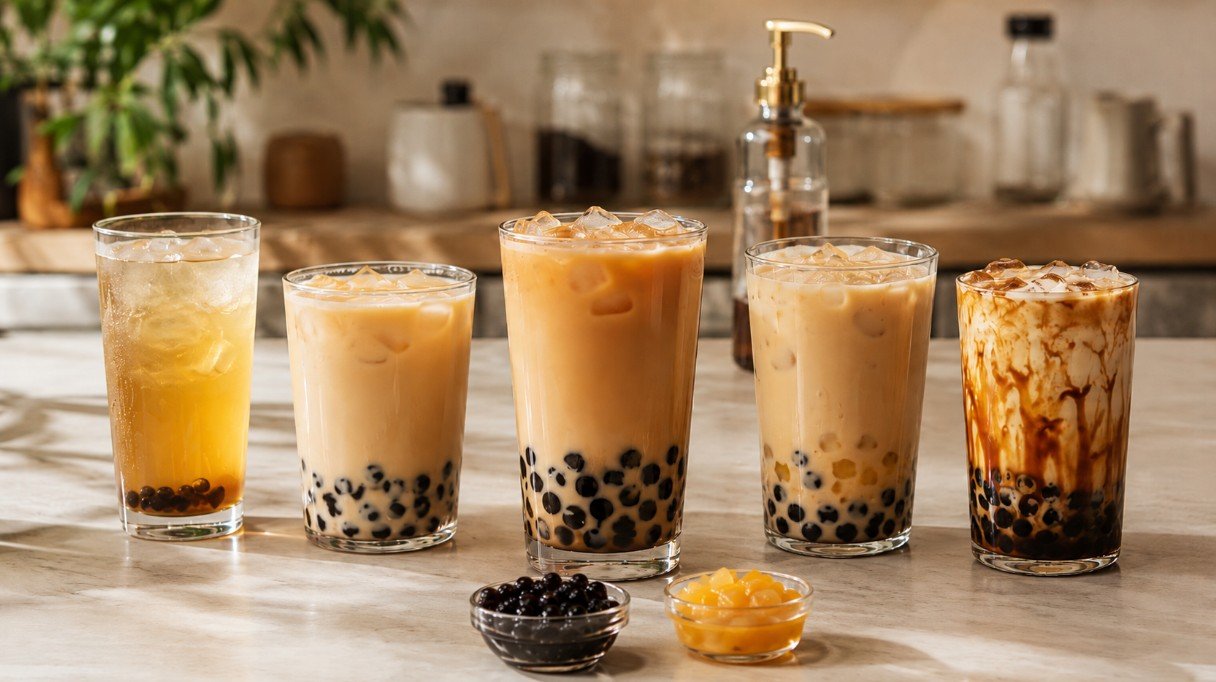
Boba sweetness levels usually describe how much of a shop’s adjustable sweetener goes into your drink—not the percentage of total sugar in the finished cup. That is why 50% sweetness does not reliably mean half the total sugar, and 0% does not automatically mean sugar-free.
A practical way to order is to treat the percentage as a flavor control. Lower it when you want tea, matcha or fruit acidity to stay noticeable. Raise it when the drink is naturally bitter, tart or deliberately dessert-like. Then account for ingredients such as brown-sugar pearls, pudding, fruit puree and flavored jellies, which may already bring sweetness of their own.
There is also no universal percentage system. Gong cha in the U.S., for example, publishes 0%, 30%, 50%, 70% and 100%, while other shops may use 25%, 50%, 75% or simple labels such as zero, light, less and standard. The percentage only makes sense relative to that store’s recipe.
The number is a recipe setting
What do boba sweetness percentages actually mean?
A sweetness percentage normally tells the shop what fraction of its standard adjustable sweetener to use. If a shop’s regular recipe is called 100%, then 50% usually means the worker or machine reduces that adjustable syrup to roughly half of the shop’s standard setting.
It does not mean that exactly 50% of the drink is sugar. It also does not mean that the finished drink contains exactly half as much total sugar as the same drink at 100%.
Sweetness setting ≠ total sugar content. The setting may control one syrup dose while other sweet ingredients remain unchanged.
Imagine a milk tea containing brewed tea, milk, an adjustable sugar syrup and sweet tapioca pearls. Reducing the syrup changes one part of the recipe. The sugar already present in the pearls does not necessarily disappear with it.
The same logic applies to fruit drinks built with sweetened puree, flavored concentrate or jelly. A 30% setting may taste noticeably sweeter than a 30% plain jasmine tea because their non-adjustable ingredients are different.
This is why learning to order boba is easier when you think about the whole cup rather than focusing only on the number. Our broader guide to ordering boba covers the complete process from tea base to ice and toppings.
A practical scale
What do 0%, 30%, 50%, 70% and 100% sweetness taste like?
There is no universal taste scale, but a major bubble-tea chain provides a useful real-world reference. Gong cha currently lists five customizable settings in the U.S.: 0%, 30%, 50%, 70% and 100%.
No adjustable sugar
Best when you want the tea base to dominate. It can work particularly well with naturally aromatic oolong, green tea or other drinks that already contain a sweet component.
Lightly sweet
Enough sweetness to soften bitterness or acidity without making syrup the main flavor. Gong cha specifically describes 30% as a lightly sweet option.
Half sweet
A useful starting point for many first-time custom orders because tea character usually remains easier to detect while the drink still feels clearly sweet.
Medium sweet
Closer to the richer sweetness many people expect from milk tea while still below the shop’s full standard syrup setting.
Full or standard sweet
The shop’s regular adjustable sweetness level. It is not a scientific universal standard and can taste very different from 100% at another chain.
The same principle applies. Some shops use quarter-step systems rather than 30/50/70. Read the numbers as positions on that shop’s own sweetness scale, not as standardized nutrition measurements.
The biggest misconception
Why 50% sweetness at one boba shop may not taste like 50% somewhere else
Boba shops do not share one universal syrup recipe, cup size, tea concentration or percentage system. Each brand designs its own drinks.
That means two shops can both call an order “50% sweet” while producing noticeably different cups.
Different standard syrup doses
Half of a large standard syrup dose can still be sweeter than half of a restrained one.
Different tea strength
Strong black or oolong tea can make the same amount of syrup feel less dominant than a delicate tea base.
Different cup sizes
The relationship between sweetener and total liquid volume matters as much as the percentage label.
Different fixed ingredients
Fruit concentrate, brown sugar, condensed milk or flavored powder may contribute sweetness outside the adjustable setting.
For that reason, your preferred percentage is best treated as brand-specific memory. If 30% is perfect at one chain, do not assume you need exactly 30% everywhere else.
Zero is often misunderstood
Does 0% sweetness mean a boba drink has no sugar?
No—not necessarily. A 0% sweetness setting generally means no adjustable sugar syrup is added at that stage of preparation. It does not guarantee that every other ingredient is unsweetened.
This distinction matters especially for brown-sugar drinks. If brown sugar is part of the drink’s defining ingredient rather than merely the adjustable sweetener, selecting 0% may not remove it.
Likewise, some fruit bases are already formulated with sweetness. A zero-syrup fruit tea can therefore taste much sweeter than an unsweetened brewed tea.
If your goal is nutritional rather than purely sensory—such as understanding how much sugar a drink actually contains—the percentage selector is not enough. Use the shop’s nutrition information when available. Our separate boba sugar guide focuses on that question.
The topping may change the answer
How toppings change the sweetness level you should order
Toppings can make a lower-sugar drink taste much sweeter than its percentage suggests. Gong cha itself recommends considering a lower sugar setting when toppings are naturally sweet.
| Topping | Sweetness effect | Practical response |
|---|---|---|
| Black tapioca pearls | Often served after soaking or holding in sweet syrup. | Consider dropping the drink one sweetness step if the pearls are noticeably sweet. |
| Brown-sugar pearls | Can add a strong molasses-like sweetness independently of the tea syrup. | A lower adjustable sugar level often keeps the drink more balanced. |
| Pudding | Adds a creamy dessert-like sweetness. | Usually pairs better with moderate rather than maximum syrup. |
| Fruit jelly | Can add both flavor and sweetness to every sip. | Taste expectations should be adjusted even if the tea itself is ordered light. |
| Aloe or herbal jelly | Often feels lighter than heavily syruped pearls, although recipes vary. | Can work well when you want a lower-sweetness tea-focused drink. |
The general rule is simple: the sweeter the topping, the less additional syrup you may need. If toppings are the part of boba you are still learning, use our boba menu guide before choosing the final sweetness setting.
Sweetness and dilution interact
Does less ice make boba taste sweeter?
It can. Ice affects the finished concentration of a cold drink. As standard ice melts, it introduces water and gradually dilutes tea, milk, syrup and other dissolved ingredients.
Gong cha describes no-ice drinks as stronger and more concentrated and less-ice drinks as having less dilution. That does not mean a shop automatically adds extra syrup when you choose less ice; it means the flavor balance can feel different because there is less melting water in the cup.
No ice
Can feel more concentrated. A sweetness setting you normally enjoy with standard ice may seem stronger.
Less ice
Reduces dilution while keeping the drink chilled. Tea and syrup may both feel slightly more pronounced.
Standard ice
Usually matches the balance the shop designed its standard cold recipe around.
Extra ice
Can create more dilution as the drink sits, although the immediate result also depends on preparation method and serving time.
This is one reason changing sweetness and ice simultaneously can make it harder to learn your preferred order. When possible, adjust one variable at a time.
Different drinks need different starting points
What sweetness level works best for different types of boba?
There is no percentage that is best for every drink. The better question is how much sweetness the base needs before its defining flavor becomes either balanced or buried.
Plain black, jasmine or oolong tea
Start around 0–30% if your main goal is tasting the tea. Strong or aromatic teas usually need less syrup to remain interesting.
Classic milk tea
About 30–50% is a useful first experiment when the shop allows it. Milk softens tea, so some sweetness can round the drink without necessarily hiding the base.
Fruit tea
About 30–70% can make sense depending on fruit acidity and whether the fruit component is already sweetened. Gong cha notes that higher sweetness can help offset tart fruit flavors.
Brown sugar boba
Consider the lowest adjustable setting available before adding more syrup. Brown sugar and pearls may already provide much of the drink’s sweetness.
Matcha milk tea
Start around 30–50% if you want matcha bitterness and tea character to remain obvious. Increase only if the result feels too austere for you.
Taro, pudding or creamy specialty drinks
These can contain sweetened components before the adjustable syrup is considered. A lower percentage may taste much sweeter here than in plain brewed tea.
Actual sweetness depends on the shop and specific recipe. Use the first order as calibration, then move one step up or down the next time.
A simple beginner strategy
What sweetness level should you choose for your first boba?
If the shop offers it, 50% is often the most useful starting point for a first customized order. Gong cha explicitly recommends starting there when you are new to adjusting sweetness.
The reason is practical rather than magical. Half sweet gives you information in both directions. If the drink still feels too sweet, you know to try 30% or 0% next time. If it feels too dry or bitter, move upward.
If the entire menu is unfamiliar, our best boba for beginners guide can help you choose the drink before worrying about every customization option.
Turn percentages into actual orders
Five practical boba sweetness orders
Jasmine green tea + aloe + 30% sweetness
A useful direction when you want floral tea to stay visible and the topping to remain light.
Black milk tea + tapioca + 50% sweetness
A balanced first experiment. If the pearls are heavily sweetened, reduce the syrup on the next order if the cup feels too dessert-like.
Oolong tea + light topping + 0–30% sweetness
Useful when roasted or floral tea character is the reason you chose oolong in the first place.
Passion fruit green tea + 50–70% sweetness
A tart fruit base may tolerate more sweetness than plain tea, but sweet jelly or popping boba can quickly change the balance.
Brown sugar milk + pearls + minimum adjustable sugar
Start by recognizing that the brown-sugar component and pearls may already provide substantial sweetness before an extra syrup setting is considered.
Three ordering mistakes
Why boba can still taste too sweet after you reduce the percentage
You reduced syrup but ignored the toppings
Sweet pearls, pudding, jelly and fruit components still affect the complete drink even when the adjustable syrup is reduced.
You assumed percentages are standardized
Your perfect 30% order at one brand may require 50% somewhere else. Recalibrate when you change shops.
You changed sugar, ice and toppings at the same time
When several variables change together, it becomes difficult to identify why the new order tastes better or worse. Adjust one or two things at a time.
The rule worth remembering
Choose sweetness for the whole boba drink, not just the syrup percentage
Boba sweetness levels are most useful when you stop treating them like universal nutrition measurements and start treating them as recipe controls.
0%, 30%, 50%, 70% and 100% tell you how a particular shop adjusts its sweetener. They do not erase sugar already present in pearls, puree, pudding or other ingredients, and they do not guarantee the same sweetness from one shop to another.
For many people, the easiest strategy is to start near the middle, evaluate the finished drink, and then adjust one step at a time. Lower the percentage when tea flavor or sweet toppings are being buried. Raise it when bitterness or fruit acidity needs more balance.
Once you understand that system, ordering boba becomes much less about guessing a “correct” percentage and much more about building the cup you actually want.
What do boba sweetness levels mean?
Boba sweetness levels usually indicate how much of a shop’s standard adjustable sweetener is used. They do not represent the percentage of the entire drink that is sugar, and the system is not standardized between different shops.
Is 50% sweetness half the sugar in boba?
Not necessarily. It usually means roughly half of the shop’s standard adjustable syrup dose. Sugar from tapioca pearls, fruit puree, pudding, flavored powders or other ingredients may remain unchanged, so total sugar does not always fall by exactly 50%.
Does 0% sweetness mean sugar-free boba?
No. A 0% setting can mean that no adjustable sugar syrup is added, but the drink may still contain sugar from brown-sugar pearls, fruit bases, pudding, jelly, sweetened milk or other ingredients.
What sweetness level is best for a first boba order?
If the shop offers it, 50% is a useful starting point for many first-time customized orders. It gives you room to move down toward 30% or 0% if the drink is too sweet, or upward if you prefer a sweeter result.
What is the difference between 30%, 50%, 70% and 100% sweetness?
At shops using those settings, 30% is a lightly sweet option, 50% is approximately half of the standard adjustable sweetness, 70% is closer to a medium-sweet drink, and 100% is the shop’s full standard setting. Exact sweetness still varies by drink and store.
Do tapioca pearls make boba sweeter?
They can. Tapioca pearls are often held or served with sweet syrup, and brown-sugar pearls can add substantial sweetness. A drink with sweet pearls may therefore need less adjustable syrup than the same tea without them.
Does less ice make bubble tea taste sweeter?
It can make the drink taste more concentrated because there is less melting ice to dilute the tea, milk and sweetener. The effect depends on how the shop prepares the drink and how quickly you drink it.
What sweetness is best for milk tea?
Around 30–50% is a useful starting range when the goal is to keep the tea noticeable while still having a clearly sweet milk tea. Rich toppings or already-sweet ingredients may justify going lower.
What sweetness is best for fruit tea?
Fruit tea often works across a wider range because acidity and the sweetness of the fruit base vary. A tart fruit tea may handle 50–70%, while an already-sweet puree or jelly can make a lower setting more appropriate.