
Best Boba Kits: Bubble Tea Starter Kits for Home
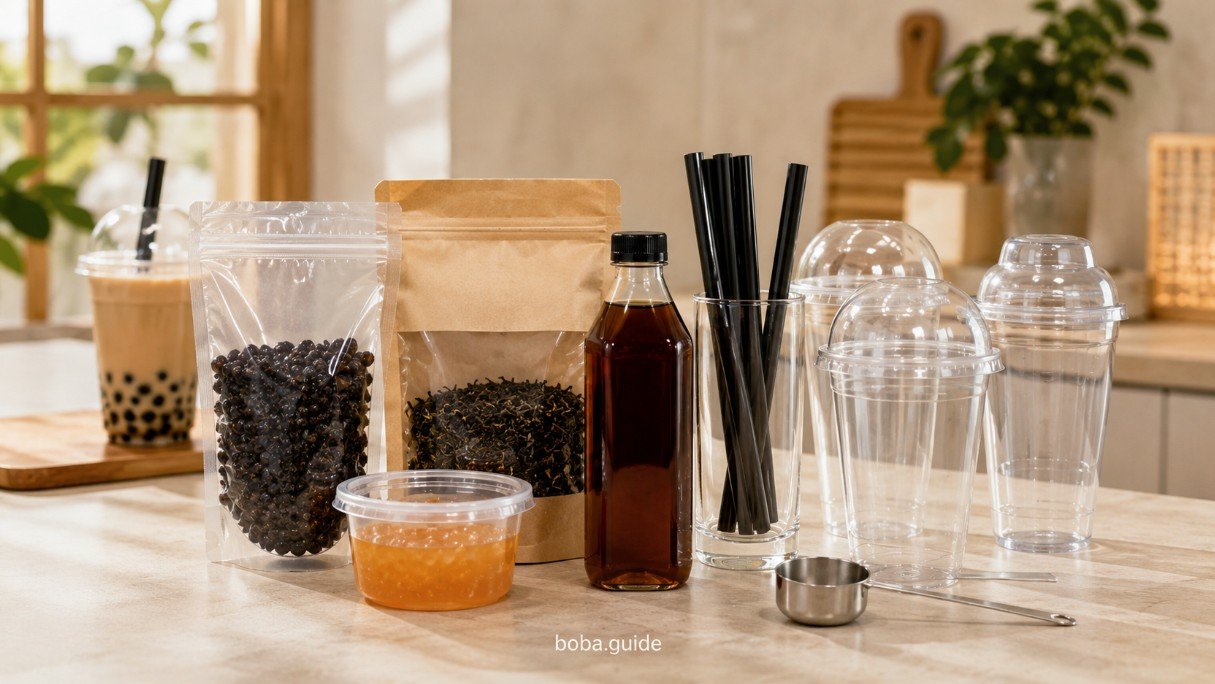
The best boba kit is not necessarily the one with the most pieces. A useful kit gives you the ingredients and tools needed for the kind of bubble tea you actually want to make, in quantities you can realistically use.
For a beginner, that usually means some combination of tea or a prepared drink base, tapioca pearls, sweetener, wide straws and clear instructions. More complete sets may also include cups, shakers, measuring tools or extra toppings. The right choice depends on whether you want convenience, control over the recipe, a gift-ready experience or a reusable home setup.
A good boba kit should make the first drinks easier, not create more confusion
A kit is valuable when its parts work together. You should be able to open the box, understand what each component does and make a drink without discovering that one essential item is missing.
A clear drink base
The kit should tell you whether it uses brewed tea, instant tea, flavored powder or another prepared base. That determines how much control you have over tea strength, milk and sweetness.
Tapioca pearls or another defined topping
The topping should include realistic preparation instructions. Pearls that require cooking are a different experience from individually packed instant boba.
A sweetness plan
Some kits combine sugar and creamer into the drink mix. Others let you sweeten separately. Neither approach is automatically better, but separate sweetness gives you more control.
A way to drink the topping
If the kit includes pearls but no appropriately wide straw, that is an incomplete serving experience unless you already own reusable boba straws.
Instructions that match the ingredients
Good directions should explain portions, water or milk quantities, pearl preparation and serving order. Vague instructions make a starter kit harder than buying the ingredients separately.
A starter kit does not need cups, a shaker, a scoop, a sealing machine and six toppings to be “complete.” It needs to include the parts required for the specific drink it promises.
Four boba-kit styles solve very different problems
Bubble-tea kits range from extremely simple instant sets to larger ingredient packages intended for repeated home use. Comparing them as if they were the same product is misleading.
Instant single-flavor kit
Usually built around pre-portioned drink powder or instant tea, instant pearls and straws. This is the easiest route when you want a fast result with minimal equipment.
Home ingredient kit
Contains larger packs of pearls and drink base, often with sweetener, straws and a scoop. It is better for repeating the same drink and learning portions across several servings.
Multi-flavor tasting kit
Provides several flavors or toppings in smaller portions. This works well when you are still deciding whether you prefer classic milk tea, taro-style drinks, fruit flavors or another direction.
Reusable setup kit
Pairs ingredients with reusable cups, metal or durable plastic straws, a shaker, measuring tools or a strainer. The initial box matters less than whether the tools remain useful after the ingredients are gone.
Four boba kits that make sense for different kinds of buyers
These kits are not interchangeable. One prioritizes speed, another gives you a larger flavor sampler, and another is built more like a party set. Package contents and availability can change, so confirm the current listing before ordering.
This is a deliberately simple four-drink format: four milk-tea powder packs, four instant-boba packs and four paper straws. It is a sensible reference point for someone who wants to understand what a true convenience kit looks like without paying for a pile of accessories.
An eight-serving format with classic milk tea and taro gives a beginner two familiar directions instead of committing to one flavor. The format also uses brown-sugar tapioca pearls and includes paper straws, so it stays focused on quick home preparation.
This format goes further on the serving experience: the three-serving brown-sugar version includes soft boba, syrup, clear cups with lids and wide tea-fiber straws. It suits someone who values a coordinated, ready-to-serve setup more than learning traditional pearl cooking.
A ten-serving variety format is more useful when several people want to sample different milk-tea flavors. The current bundle combines classic, taro and strawberry with instant bubble pearls and straws, making it more of a group sampler than a reusable equipment set.
How to use this shortlist: choose by the experience you want first, then compare ingredient lists, allergens, current serving count and preparation instructions. We do not assume a larger box or a longer accessory list automatically means a better kit.
Use these seven checks before buying a boba kit
How many actual drinks does it make?
A large-looking box may make only a handful of drinks, while a plain ingredient kit can make dozens. Compare realistic servings, not package size.
Are the pearls instant or cook-from-dry?
Instant pearls save time. Dry pearls offer a more traditional preparation process but require cooking, resting and timing.
Is sweetness adjustable?
If sugar is already blended into the drink powder, your control is limited. Separate tea, milk and sweetener let you customize more aggressively.
Does the kit contain real tea or only flavor powder?
Read the ingredient list. “Milk tea” on the front does not tell you whether you are brewing tea or simply dissolving a premix.
Are the tools useful after the kit is finished?
A durable shaker, cup or reusable straw can keep adding value. Disposable decorative pieces cannot.
Will you use every flavor?
A sampler is only good value if the variety interests you. Six flavors you did not choose can be worse than one flavor you genuinely enjoy.
Can you easily replace the ingredients later?
A better starter setup transitions into normal refill purchases rather than forcing you to buy the same full kit again.
Pay more attention to the pearls than the number of accessories
For most classic boba kits, tapioca is the part that makes the drink feel like bubble tea rather than flavored milk or iced tea with a straw.
Useful for quick kits because preparation can take only a few minutes or less. The tradeoff is that texture and sweetness are largely predetermined.
A middle ground for home users. You still cook and sweeten the pearls, but the process is designed to be faster than traditional long-cook products.
Better for someone who actually wants to learn pearl preparation. They require more attention to timing, texture and holding.
If the pearl quality matters more to you than having everything bundled together, compare tapioca pearls separately and build the rest of the setup around them.
The tea base determines how much control the kit gives you
Fastest, but least flexible
Powder-based kits can combine tea flavor, creamer and sweetness into one mix. They are convenient but may leave little room to adjust individual components.
A little more control
You can change milk and sweetness while keeping preparation easy. This can be a good bridge between an instant kit and full brewing.
Better for learning real milk tea
You control brewing strength, milk and sweetener separately. It takes more work, but the skills transfer directly to future homemade drinks.
If you care about tea character, a kit with separate tea is usually more educational than one where every flavor, milk component and sweetener arrives pre-blended.
Do not pay extra for tools your kitchen already has
If the kit includes tapioca pearls, the straw opening needs to fit them. See our boba straw comparison if you want reusable or more durable options.
A scoop helps repeat portions, but an ordinary kitchen scale or measuring spoon may be more precise.
A well-sealing shaker is practical for milk tea and fruit tea. A flimsy decorative bottle that leaks is not an upgrade.
Check capacity, lid seal, straw opening and cleaning. The cup should remain useful after the included ingredients are finished.
If the kit uses tea bags or instant powder, a strainer may add no value at all.
For a broader equipment setup, use the boba equipment checklist rather than treating every kit accessory as necessary.
A cheaper kit can cost more per drink
Kit value becomes clearer when you separate consumable ingredients from reusable tools and estimate how many finished drinks the consumables can reasonably make.
Count realistic servings. Use the limiting ingredient. If the kit has enough tea for 20 drinks but pearls for 8, it is effectively an 8-drink kit unless you buy more pearls.
Separate reusable value. A good cup or shaker can survive many refills, while powder, pearls and straws are consumed.
Check refill cost. A kit is more attractive when you can replace pearls, tea and sweetener individually instead of rebuying the entire bundle.
Include waste. An oversized topping tub is not a bargain if half of it expires after opening.
For one-time gifts, convenience can matter more than the lowest cost per cup. For regular home use, refillability and reusable tools usually become more important.
Compare complete boba kits in one place before buying everything separately
If you want a quick home setup, compare kits by servings, pearl type, drink base, included tools and refillability—not by the number of colorful pieces in the box.
As an Amazon Associate I earn from qualifying purchases.
A boba kit is perfect for some buyers—and unnecessary for others
Buy a kit if…
- you are making boba for the first time;
- you want one coordinated shopping decision;
- you are buying a gift;
- you want to test whether homemade boba is worth pursuing;
- you prefer clear portions and instructions.
Buy separately if…
- you already own cups, straws and a shaker;
- you care strongly about tea quality;
- you want specific pearls or toppings;
- you make boba often enough to buy refill quantities;
- you want precise control over sweetness and milk.
If you prefer to build your own first setup piece by piece, see the boba starter kit checklist. If you already know what you need and just want shopping channels, see where to buy boba supplies.
Six ways a boba kit can look better than it really is
The box counts every straw as a “piece”
A 30-piece kit can sound impressive until you discover that most of those pieces are disposable straws.
The kit includes too many tiny flavors
Variety is useful only if each portion is large enough to properly test the drink.
There are pearls but no clear pearl instructions
Tapioca texture depends heavily on preparation. A beginner kit should not make you search elsewhere for basic cooking directions.
The serving count ignores the limiting ingredient
Marketing may emphasize the ingredient with the highest yield. Count the ingredient that runs out first.
The “premium tools” are ordinary low-value accessories
A basic plastic scoop or disposable cup does not justify a large price increase.
You cannot easily buy refills
A starter set should make future boba easier. If every refill requires another full bundle, the kit may be a poor long-term setup.
For gifts, the experience matters more than maximum ingredient volume
A gift kit should feel easy to understand and fun to open. Individually portioned ingredients, a recognizable flavor, a wide straw and straightforward instructions can be more successful than a huge bulk package.
The recipient can make a first drink without buying four additional ingredients.
The flavor is familiar enough that the recipient is likely to enjoy it.
Preparation fits the recipient’s kitchen and comfort level.
The kit is effectively restaurant-size inventory disguised as a present.
Tell us what was actually useful inside the box
If you have tried a home boba kit, send the kit name, what it included, how many drinks you realistically made and which parts you would buy again to info@boba.guide. Real serving counts and preparation details are more helpful than simply saying a kit was “good” or “bad.”
Best boba kits: common questions
Answers about starter kits, instant boba, pearls, tools, servings and whether buying a complete set makes sense.
What should a good boba kit include?
At minimum, a useful kit should include a defined drink base, tapioca pearls or another topping, clear preparation instructions and a practical way to drink the topping. Depending on the kit, it may also include sweetener, wide straws, cups, a shaker or measuring tools.
Are boba kits good for beginners?
Yes. A well-designed kit reduces the number of separate ingredients a beginner has to choose and usually provides portions and instructions. Kits are especially useful for someone who wants to make a few drinks before investing in a larger home setup.
Is instant boba the same as dry tapioca pearls?
No. Instant boba is designed for very fast preparation and is common in convenience-focused kits. Dry tapioca pearls require cooking and give you more control over preparation, sweetness and holding, but they also require more time.
Are boba kits cheaper than buying ingredients separately?
Sometimes, but not always. Compare the number of realistic drinks, the quantity of the ingredient that runs out first, and whether the tools are reusable. Separate ingredients often become more economical for frequent home use.
Should a boba kit include cups and straws?
Wide straws are particularly useful when the kit includes tapioca pearls. Cups are convenient but not essential because ordinary glasses or reusable boba cups can work. Do not pay a large premium for disposable serving pieces alone.
What is the best type of boba kit for a gift?
A simple kit with a familiar flavor, manageable portions, pearls, wide straws and easy instructions is usually more gift-friendly than a large commercial-size bundle. The recipient should be able to make the first drink without needing many additional purchases.
Is a boba kit worth it if I already make bubble tea at home?
Often not. If you already own reusable tools and know which tea, pearls and sweetener you prefer, buying refills separately usually gives you more control. A kit may still make sense when you want to sample several unfamiliar flavors.
How many drinks should a boba kit make?
There is no single correct number because kits range from small instant sets to large home ingredient bundles. Compare the realistic serving count of every major ingredient and pay attention to whichever one runs out first.
Should I choose a kit with powder or real tea?
Powder-based kits are faster and more consistent. Kits with tea bags or loose tea give you more control over brewing strength, milk and sweetness and are better if you want to learn how milk tea is actually built.
Can I refill a boba kit after the included ingredients are gone?
A good reusable setup should make that easy. Check whether the pearls, tea, sweetener and other consumables can be replaced individually. Refillable ingredients make a kit more useful for long-term home boba.