
Bubble tea powder buyer’s guide
Best Boba Powders: How to Choose the Right Mix for Every Drink
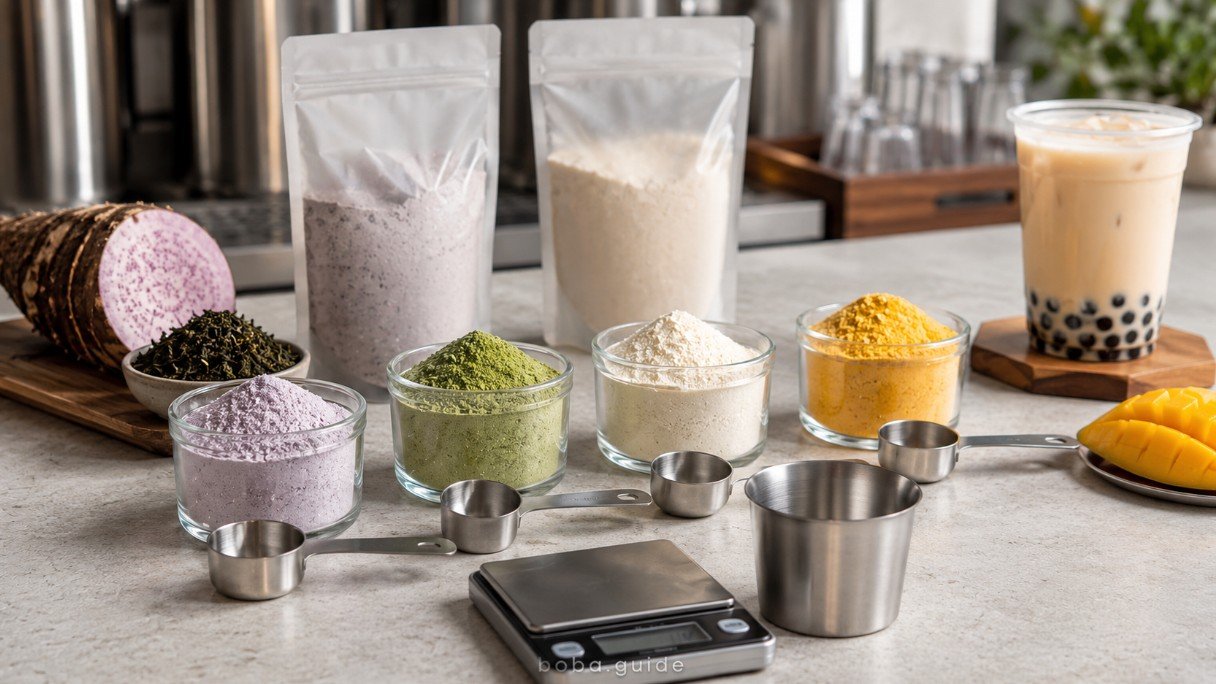
The best boba powder is not simply the flavor you like most. Before comparing taro, mango, honeydew, matcha or milk tea powders, you need to know what kind of product you are actually buying. One bag may be an almost complete drink premix with sugar and creamer already built in. Another may be a tea-based powder that still needs milk and sweetness. A third may be a more concentrated ingredient intended to become only one part of the recipe.
Those differences affect taste, sweetness control, allergens, cost per drink and how consistently a shop can reproduce the same order. They also explain why two powders with the same flavor name can behave completely differently once milk, tea, ice and toppings are added.
This guide focuses on choosing commercial powders. If you first want to understand the entire category before comparing products, use our guide to boba powders.
First Decide What Kind of Boba Powder You Need
“Boba powder” is a convenient retail label, not one standardized product type. Commercial beverage suppliers sell powders that perform very different jobs.
Complete or near-complete premix
Usually combines several jobs in one bag: sweetness, creaminess, flavor and sometimes tea. It can reduce training and preparation steps, but it also reduces your control over those variables.
Tea-based drink powder
Contains tea powder or tea flavor as part of the blend. Some versions also include creamer and sugar, while others expect those components to be added separately.
Flavor powder
Designed primarily to create a recognizable flavor such as honeydew, mango, coconut or taro. The recipe may still require milk, creamer, tea or additional sweetness.
Ingredient-forward powder
A product such as pure matcha or a simpler root-derived powder acts more like an ingredient than a complete drink formula. It gives you more recipe control but requires more formulation work.
The larger ingredient system—tea, milk, syrups, purees, sweeteners and toppings—is covered separately in our boba ingredients guide.
The Same Flavor Can Hide a Completely Different Formula
Matcha is one of the clearest examples. A pure matcha powder and a matcha latte premix may be stored in similar bags and make similarly green drinks, but they do not perform the same job.
You build the drink around it
The tea itself provides the flavor and color. Milk, water, sweetness and concentration remain separate choices.
Part of the recipe is already decided
Sugar, milk powder or creamer can already be integrated into the powder, making preparation faster while limiting how independently those elements can be adjusted.
Taiwan beverage suppliers sell these formats separately. One current MasterCarefully matcha latte powder is packaged in 1 kg bags, 20 per case, and uses a powder-to-liquid preparation system. The same supplier also sells separate matcha powders intended as tea ingredients rather than complete latte mixes.
The distinction matters for taro too. A taro premix may contain sugar, glucose, creamer, flavor and color alongside—or sometimes instead of a prominent quantity of taro root powder. Our taro powder for boba guide breaks that category down in detail.
What Boba Powders Currently Cost
Current U.S. listings show that many food-service flavor powders sit within a relatively compact price range, but package size varies enough that the sticker price alone is misleading.
For the similarly sized 2.2 lb bags above, the observed sample spans roughly $5.68–$7.95 per pound. That is an August 2026 supplier snapshot, not a national average.
If sourcing rather than product selection is your primary question, continue to our guide to buying boba ingredients.
How Much Powder Does One Boba Drink Use?
Powder dosage varies widely enough that there is no responsible universal “two scoops per cup” rule.
Possmei currently recommends about 0.97–1.41 oz per serving for its Bubble Tea Powder. That converts to approximately 27.5–40 g. Taiwan supplier MasterCarefully gives a different type of instruction for its honeydew flavor powder: approximately 20–30 g of powder per 250 ml of water or milk.
The same 30 g therefore does not mean the same thing across products. A powder made mostly to provide flavor can need different supporting ingredients than a blend that already contains glucose, creamer and tea powder.
This is another reason a home recipe should follow the exact product instructions before you start modifying ratios.
Cost Per Serving Matters More Than Bag Price
A 2.2 lb bag weighs about 998 g. If a particular powder uses 30 g per drink, that bag contains roughly 33 theoretical powder portions before spills or recipe variation. At 40 g per drink, the same bag falls to roughly 25 portions.
That means a $13.50 bag used at 30 g per drink has a powder cost of roughly $0.41 per theoretical serving. The same bag used at 40 g is closer to $0.54.
But powder cost is not finished-drink cost. Depending on the product, the recipe can still require tea, milk or creamer, sugar, ice, topping, cup, lid and straw.
A powder that costs slightly more may be economical if it already includes components that another recipe requires separately. The opposite is also true: a cheaper premix can be poor value if you dislike its sweetness and cannot adjust it without weakening the whole flavor.
Choose the Powder Type by the Drink You Want to Make
| Drink goal | Useful powder type | What to watch |
|---|---|---|
| Classic milk tea | Tea-based premix or separate tea + creamer | Whether real tea powder is present and how much sweetness is already built in. |
| Taro drink | Taro-containing premix or root-forward powder | Actual taro content, creamer, added color and sweetness control. |
| Matcha latte | Pure matcha or matcha latte mix | Whether you want tea control or one-step convenience. |
| Honeydew or mango milk drink | Fruit-flavor powder | Flavor intensity, color, creamer requirements and final sweetness. |
| Smoothie or slush | Flavor powder designed for blending | Whether the powder remains aromatic after dilution by ice. |
| Premium tea-forward drink | Pure tea or ingredient-forward powder | More preparation steps, but significantly greater recipe control. |
A finished matcha boba drink is a different subject from selecting the ingredient itself; see our matcha boba guide for that drink-level perspective.
Read These Five Things Before You Buy a Powder
Sweetener
If glucose or sugar appears near the beginning of the ingredient list, reducing the powder can reduce flavor and sweetness at the same time.
Creamer or milk ingredients
A powder may already be designed to become creamy before you add any fresh milk. That affects both recipe control and dietary suitability.
The named ingredient
Look for tea powder, taro powder, coffee powder, matcha or another recognizable component. Its presence and position help explain what is actually creating the flavor.
Flavoring
Flavor is not inherently a problem. It is a formulation tool. What matters is knowing whether the powder is ingredient-driven, flavor-driven or a mixture of both.
Color
Bright green, purple or yellow powder is not proof of higher ingredient quality. Color may come partly from added coloring or complementary plant ingredients.
If your goal is specifically choosing matcha itself rather than a general boba powder, use the dedicated matcha powder for boba guide.
Powder vs Fresh Ingredient Is a Workflow Decision
Powder often gets described as the cheap shortcut and fresh ingredients as the premium answer. Real beverage operations are more complicated.
Consistency and speed
A properly measured commercial powder can make the same flavor easier to reproduce across staff members, shifts and locations. Dry storage is usually simpler, and preparation can be fast.
The trade-off is that the manufacturer may already have decided part of the sweetness, creaminess, flavor and color for you.
Control and identity
Real taro, separate brewed tea, fruit puree or pure matcha gives the recipe maker more control over the drink’s architecture.
The trade-off is more prep, more variability, shorter prepared-ingredient life and a greater need for staff training.
The best operation may use both. A shop can build one premium drink around fresh taro while using a consistent powder for a high-volume honeydew slush. The correct tool depends on what the menu is promising the customer.
Home Bag and Shop Case Are Different Purchases
A 2.2 lb bag is a manageable food-service package for a shop, but it can represent dozens of drinks at home. A case multiplies that difference dramatically.
Choose a flavor you will actually use, a package you can reseal well and a recipe simple enough to repeat. Saving $1 per pound is meaningless if most of the bag sits open for months.
A powder that works in milk tea, smoothies and slushes can turn faster than a single-purpose novelty flavor.
Case size, supplier reliability, formula stability and staff-friendly preparation become more important than the price of one retail bag.
Possmei, for example, currently packs its 2.2 lb Bubble Tea Powder as 10 bags per case. Taiwan suppliers commonly offer formats such as 1 kg × 20 bags per case for certain drink powders. Those quantities make sense in commercial operations but can be excessive for occasional home use.
For the wider buying system around powder containers, cups, shakers, sealers and other equipment, see our boba supplies guide.
Shelf Life Is Product-Specific
Dry powder often has a long unopened life, but there is no responsible universal expiration rule for “boba powder.” Different formulations and packages carry different manufacturer guidance.
Current stated shelf life; reseal after opening and use promptly.
Current unopened room-temperature statement.
Current unopened statement for the premixed latte powder.
Current separate matcha powder example, with prompt use recommended after opening.
These examples demonstrate why ingredient type matters. A tea powder, a sweetened latte mix and a fruit-flavor powder should not be assumed to share the same storage behavior simply because they all come as dry powder.
How to Compare Two Boba Powders Properly
If you are standing between two bags with similar flavor names, work through these checks in order.
Identify the product type
Is it a complete premix, a flavor powder, a tea-based blend or a relatively pure ingredient? Do not compare different categories as if they perform the same job.
Read the first ingredients
They usually reveal whether the formula is dominated by glucose, creamer, actual tea or root powder, or another ingredient system.
Check the allergen statement
Do not infer dairy-free, vegan or allergen suitability from the flavor name or the phrase non-dairy creamer.
Find the recommended dose
A slightly more expensive bag may cost less per drink if its recipe uses less powder.
Calculate the whole recipe
Include additional creamer, milk, tea and sweetener. Powder price alone can hide the true difference between two formulas.
Match package size to turnover
A low price per pound only matters if you can use the powder while it remains in good condition.
Test it in the finished drink
Judge sweetness, aroma, color, body and aftertaste after the powder meets milk, tea, water, ice and toppings—not by smelling the open bag.
A good commercial powder makes the drink easier to reproduce without forcing you into a flavor profile you do not want. A good ingredient powder gives you enough control to justify the extra preparation. Neither format wins automatically.
Know a Powder Formula We Should Examine?
Commercial powder recipes and package specifications change. If you manufacture, distribute or regularly use bubble-tea powders in a U.S. shop, send current ingredient panels, preparation ratios, package sizes or correction notes to info@boba.guide.
We use submitted information as research leads. Sending a sample or specification does not guarantee inclusion, a favorable review or an editorial recommendation.
Questions About Choosing Boba Powders
These are the practical follow-up questions that matter after you have narrowed the choice to a few powder systems.
What is the best boba powder for beginners?
For a beginner, a well-labeled premix with clear serving instructions is usually easiest because fewer recipe variables need to be managed. The trade-off is less control over sweetness, creamer and flavor concentration. Once you understand the recipe, more ingredient-forward powders can give you greater flexibility.
Are boba powders the same as bubble tea premixes?
Not always. Some boba powders are complete or near-complete premixes containing sugar, creamer and flavor. Others are tea powders, fruit-flavor powders or more concentrated ingredients intended to be combined with other components. Read the ingredient list and preparation directions rather than assuming every powder performs the same job.
How much boba powder should I use per drink?
It depends on the product. Current examples range from roughly 20–30 g for some flavor powders to approximately 27.5–40 g for Possmei Bubble Tea Powder. Those are product-specific examples, not a universal dosage. Follow the manufacturer’s recipe first and adjust only after tasting the finished drink.
How much does boba powder cost?
In an August 2026 snapshot, several common 2.2 lb Tea Zone and Possmei powders ranged from about $12.50 to $17.50 per bag, although package sizes vary by product. For comparable 2.2 lb bags, that is roughly $5.68–$7.95 per pound. These are current supplier examples rather than a national average.
Is boba powder dairy-free?
Not automatically. Some commercial powders contain creamer with milk-derived ingredients such as sodium caseinate, and some suppliers explicitly identify milk as an allergen. Check the ingredient and allergen statement for the exact product even if the formula uses the phrase non-dairy creamer.
Is pure matcha better than matcha latte powder?
They solve different problems. Pure matcha gives you much greater control over tea concentration, milk and sweetness. Matcha latte powder can be faster and more consistent because part of the recipe is already blended into the powder. The better choice depends on whether you prioritize recipe control or preparation speed.
Are fruit boba powders made from real fruit?
Some may contain fruit-derived ingredients, but a fruit flavor name does not prove a high fruit content. Commercial fruit powders can use flavoring, sweeteners, color and other ingredients to create a consistent drink profile. Check the current ingredient list rather than judging by the flavor name or powder color.
How long does boba powder last after opening?
There is no universal opened-life rule. Current unopened shelf-life examples range from about 12 to 18 months depending on the powder. After opening, keep the bag dry and well sealed and follow the manufacturer’s instructions. Several current suppliers specifically recommend using opened powder promptly.
Should a boba shop buy powder by the case?
Case buying makes sense when the flavor has predictable turnover and the shop can store the product correctly. A low-volume or experimental flavor may be better purchased one bag at a time. Compare case price, serving yield, storage space, supplier reliability and how quickly an open bag is realistically used.