
Boba ingredient sourcing guide

Where to Buy Boba Ingredients: Home, Shop & Wholesale Guide
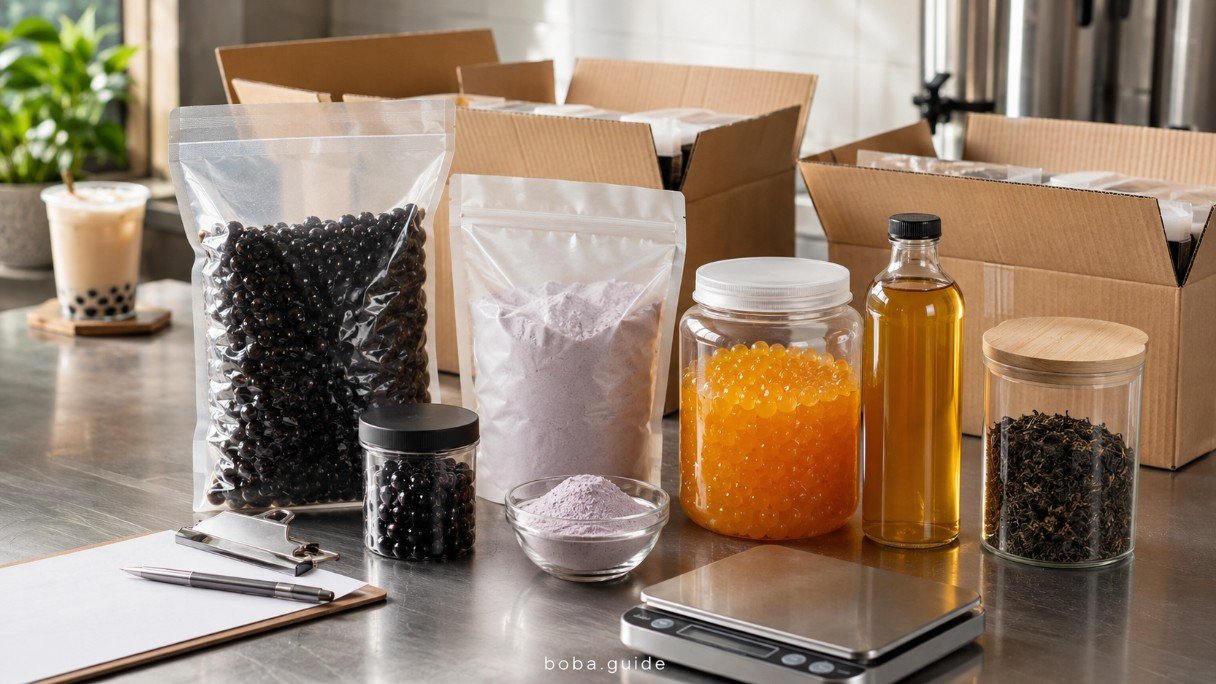
Boba ingredients in retail and food-service packages including tapioca pearls, powders, tea, syrup and popping boba

Where you should buy boba ingredients depends on two things that matter more than finding the lowest-looking price: what you are buying and how quickly you can use it. A home kitchen may need one manageable bag of tapioca pearls, a small bottle of syrup and a single tea. A busy boba shop may need cases of pearls, multiple tea bases, food-service jars of toppings and a supplier that can reproduce the same order every week.

The smartest sourcing plan is usually mixed. Shelf-stable specialty ingredients such as tapioca pearls, popping boba, flavored powders and commercial syrups are easy to buy from dedicated bubble-tea suppliers. Fresh milk, ice, fresh fruit and other perishables often make more sense through local grocery or food-service channels. Large operators may eventually consider importing from Taiwan, but that becomes a procurement decision involving carton quantities, freight, inventory and lead time—not simply an online shopping order.

If you are still deciding what belongs in the drink rather than where to purchase it, start with our guide to boba ingredients.

The Best Place to Buy Depends on the Ingredient

There is no single store that is automatically the best source for every part of a boba menu. Even large specialty suppliers are strongest when the product benefits from bubble-tea-specific packaging, recipes, flavors or food-service formats.

Tapioca pearls Specialty boba supplier

Dedicated suppliers usually offer traditional, quick-cook and other shop-oriented formats with preparation instructions and case quantities.

Popping boba Specialty boba supplier

Food-service jars, flavor selection and opened-container guidance make specialist sourcing particularly useful.

Drink powders Specialty beverage supplier

Compare dose, package size, creamer, sugar, flavor system and case configuration rather than shopping only by flavor name.

Tea leaves Boba or quality tea supplier

A shop can source tea from a bubble-tea distributor or a dedicated tea company depending on the desired quality, format and volume.

Fresh milk Local grocery or food-service distributor

Cold-chain logistics, turnover and local pricing usually matter more than having a bubble-tea label on the carton.

Fresh fruit Produce channel

Local produce suppliers, warehouse clubs and food-service distributors are usually more practical than shipping ordinary fresh fruit from a boba specialist.

This distinction saves money because it prevents a common mistake: buying ordinary commodities from a specialist simply because you are already ordering pearls there.

Four Ways to Buy Boba Ingredients

Most U.S. buyers fall into one of four sourcing routes. The right route can change as a home hobby becomes a catering operation or as one shop grows into several locations.

1

Small retail packages

This is the easiest route for home use and recipe testing. You buy one bottle, one bag or one flavor without committing to a case.

The price per pound is often higher, but total cash spent and opened-product waste can be much lower.

2

U.S. specialty boba suppliers

Companies focused on bubble tea can combine pearls, popping boba, powders, tea, syrups and toppings in one order. This is often the practical middle ground for cafés and independent boba shops.

3

Food-service distributors

A restaurant distributor can be useful for milk, sugar, cups, fresh ingredients and other everyday supplies, especially when the business already receives scheduled deliveries.

Selection of specialized Taiwanese toppings may be narrower than at a dedicated boba supplier.

4

Direct manufacturer or importer relationship

This route becomes relevant when volume, private label, custom formulation or multi-location purchasing justifies cartons, freight planning and longer replenishment cycles.

What a Specialty Boba Supplier Is Especially Good For

One of the strongest reasons to use a dedicated supplier is assortment. Current U.S. specialty catalogs can cover several parts of the drink in the same order.

Tapioca pearls
Popping boba
Crystal boba
Jellies
Tea leaves
Drink powders
Fruit syrups
Sweeteners
Creamers
Purees & jams

Tea Zone/Lollicup, Bossen and Possmei are examples of supplier ecosystems where several of these categories can be purchased together. That convenience can matter even when an individual item is a little cheaper elsewhere because fewer separate orders may mean fewer freight charges, fewer receiving events and simpler inventory planning.

For product-level comparisons rather than sourcing routes, see our best tapioca pearls guide, best popping boba guide and best boba powders guide.

Some Boba Ingredients Usually Make More Sense to Buy Locally

Bubble tea may be Taiwanese, but that does not mean every ingredient needs an international supply chain.

Milk and dairy

Fresh milk is heavy, refrigerated and used quickly. A local grocery, warehouse club or food-service dairy distributor often offers a more logical supply chain than a distant specialty store.

Fresh fruit

For drinks built around real mango, strawberry, citrus or avocado, quality and ripeness can matter more than purchasing everything from the same vendor.

Ice

Ice is operational infrastructure. Shops normally make it on site or use a local ice supplier rather than treating it as a bubble-tea ingredient order.

Basic sugar

Standard granulated sugar is a commodity. A boba supplier becomes more valuable when you need specialized fructose, brown-sugar syrup or a shop-specific sweetener system.

A strong purchasing system therefore separates specialty ingredients from local commodities. That is usually more rational than trying to receive every ingredient from one truck.

Package Size Changes the Meaning of “Cheap”

Boba ingredients are commonly sold in sizes that make sense for very different users. A single retail bottle can be convenient for home use, while the same topping may be sold to shops in jars weighing roughly six or seven pounds. Powders often appear in packages around 2.2 lb or 1 kg, with multiple bags per case.

Small retail ≈1–2 lb

Useful for home testing, occasional drinks and low commitment.

Food-service unit ≈2–7 lb

Common territory for powder bags, tapioca bags and topping jars.

Case purchasing Multiple units

Useful once demand is predictable enough to justify storage and cash tied up in inventory.

A current example illustrates the difference. Possmei sells some popping boba in approximately 1.21 lb retail bottles, while its larger food-service products are around seven pounds. The small package can cost substantially more per pound yet still be the better purchase for a household because the total amount is realistic.

The same logic applies to powders. A 2.2 lb flavor bag can make dozens of drinks. Buying a case of ten or twenty bags only helps if consumption matches that scale.

Compare Delivered Cost, Not Just Product Price

A supplier can appear cheaper until shipping is added. Another supplier may have a slightly higher shelf price but offer case pricing, consolidated freight or a local pickup option.

Imagine Supplier A sells a jar for $2 less but you need a separate shipment only for that jar. Supplier B charges slightly more for the topping but can include it with pearls, powders and tea already being delivered. The cheaper product can become the more expensive purchasing decision.

Waste matters just as much. A large food-service container may have the lowest unit cost, but if half of it is never used in good condition, the effective cost per usable serving doubles.

Home buyer

Optimize for realistic quantity and total spend.

Independent shop

Optimize for usable cost, shipping and reliable replenishment.

Multi-unit operation

Optimize for case economics, consistency, freight and inventory control.

When Does Buying Boba Ingredients by the Case Make Sense?

A case discount is valuable only when the ingredient turns over predictably. Before committing, estimate how many units your operation actually consumes between orders.

01

Measure weekly usage

Do not estimate from memory. Count how many bags, jars or bottles are actually opened in a normal week.

02

Check unopened shelf life

The inventory should realistically be used well before the manufacturer’s storage window becomes relevant.

03

Check opened-product turnover

Popping boba, prepared sauces and other products can have much shorter practical windows after opening than the sealed package suggests.

04

Calculate weeks of stock

If one case equals six months of demand for one café, the apparent discount may simply create overstock.

05

Leave room for menu changes

Buying twelve bags of a flavor before learning whether customers like it converts a menu experiment into an inventory commitment.

06

Protect cash flow

A low unit price does not help if too much operating cash is sitting on shelves.

Should a U.S. Boba Shop Buy Ingredients Directly From Taiwan?

Taiwan is a natural sourcing market because manufacturers there produce tapioca pearls, popping boba, syrups, tea leaves, flavored powders, jellies and many of the systems used by bubble-tea chains around the world.

But buying directly from a manufacturer is fundamentally different from adding two bags to an online cart.

Direct sourcing becomes more attractive when you need volume, customization, private label or multi-location consistency.

MOQ

Manufacturers may require multiple cartons rather than individual bags.

Freight

International shipping can materially change landed ingredient cost.

Lead time

You need enough stock to survive manufacturing, shipping and customs timelines.

Compliance

Food labeling, import documentation and U.S. regulatory requirements need proper handling.

Storage

A wholesale price only works when you have safe room for wholesale quantities.

Cash exposure

Direct orders can move more money into inventory before one drink is sold.

Current published OEM information from Taiwan manufacturer Kei Fu makes the scale difference concrete. Its standard quantities are listed at 5 cartons for tea leaves, 5 cartons for bubble-tea powder, 20 cartons for concentrated syrup, 54 cartons for tapioca pearls and 72 cartons for popping boba, with quantities described as adjustable depending on requirements.

That is distributor, chain or private-label territory—not a normal purchasing route for someone making boba at home and not necessarily the best first move for a single new shop.

Taiwan suppliers such as Kei Fu and Fokus also advertise OEM/ODM services, custom formulation and private-label programs. Those services become strategically useful when a business wants its own product rather than simply a cheaper version of an existing jar. :contentReference[oaicite:1]{index=1}

How to Evaluate a Boba Ingredient Supplier

A supplier should be judged on more than the number of flavors in its catalog. Use a repeatable scorecard.

Product specifications

Are package weight, ingredients, allergen information, preparation directions and storage instructions clear?

Consistency

Can you reorder the same product and reasonably expect the same size, flavor and preparation behavior?

Case configuration

How many bags or jars are in a case, and does that quantity match your turnover?

Shipping

What does delivery do to actual cost, and are there thresholds or freight options that improve economics?

Availability

A wonderful ingredient that is routinely out of stock can create an operational problem.

Support

Can the supplier answer preparation, formulation, storage and business-account questions?

Traceability

For a commercial operation, lot information and clear product identification matter if an issue ever needs to be investigated.

Food-safety documentation

International manufacturers may publish certifications and export documentation relevant to professional buyers.

For example, Taiwan supplier Fokus currently describes itself as an export and OEM supplier rather than an overseas retail chain and publishes HACCP, ISO 22000, HALAL and SGS-related quality information. This is the kind of documentation a commercial importer evaluates differently from a home buyer choosing one bag of pearls. :contentReference[oaicite:2]{index=2}

What Ingredients Should You Order First?

A new setup does not need twenty syrups and fifteen toppings. A smaller, flexible ingredient system makes testing easier and reduces opened-container waste.

Tea 2 core bases

A black tea plus jasmine green tea can cover many milk and fruit drinks before the menu expands.

Pearls 1 tapioca system

Choose a traditional or faster-cooking product that matches your expected service volume.

Sweetness 1 flexible system

Simple syrup, fructose or another consistent sweetener is easier to manage than several overlapping sweeteners.

Milk 1–2 core choices

Start with the dairy or alternative milk options your actual customer base requires.

Fruit 2–4 versatile flavors

Select flavors that can work across fruit tea, lemonade, slush or sparkling drinks rather than one highly specialized recipe each.

Extra topping 1–2 jars

Popping boba or jelly can expand menu variety without creating a wall of slow-moving open containers.

If taro is one of the first powder-based drinks you plan to build, our taro powder guide explains the difference between premix-style and more ingredient-forward products.

A Better Buying Checklist for Home Boba

Home sourcing is mostly an exercise in avoiding unnecessary quantity. Food-service packaging can look exciting and economical until your pantry contains seven pounds of every topping.

1

Start with one tea and one pearl

Learn the base drink before multiplying flavors.

2

Prefer realistic package sizes

A more expensive small bottle can be cheaper than throwing away half a food-service jar.

3

Check preparation time

Traditional pearls are not automatically the best home purchase if you rarely want to run a long cooking cycle.

4

Read opened-storage guidance

This matters especially for topping jars and products that require refrigeration after opening.

5

Consolidate shipping where practical

If one specialty supplier carries the pearls, tea and powder you want, one sensible order may cost less than several tiny shipments.

6

Buy fresh ingredients locally

Milk and ordinary produce do not need to travel across the country simply because they are going into boba.

A Better Buying Checklist for a Boba Shop

Commercial sourcing starts with repeatability. The shop needs to make the same drink next week, next month and during a busy Saturday rush.

01

Document every approved ingredient

Record brand, exact product, package size and supplier instead of ordering “any mango powder” when stock runs low.

02

Set a reorder point

Do not wait until the last bag is opened. Lead time and normal weekly usage should determine when the next order is placed.

03

Track opened waste

If a flavor repeatedly expires or loses quality before the container is finished, reduce the package size or remove the ingredient from the menu.

04

Keep backup options deliberate

A substitute should be tested before an emergency. Two products with the same name may require different recipes.

05

Compare case economics quarterly

Volume changes. A product that did not justify a case six months ago may now be one of the shop’s fastest-moving ingredients.

06

Separate ingredients from equipment purchasing

Cups, sealing film, shakers and machines follow different replacement cycles from tea, pearls and syrups.

For that broader purchasing category, including equipment and non-food items, continue to our guide to buying boba supplies. If the priority is finding physical options in your area rather than ordering nationally, use Boba Supplies Near Me.

Help Us Build a Better U.S. Boba Supplier Map

Ingredient availability varies by region, and many useful distributors serve only certain states or offer local warehouse pickup that is difficult to discover from a national search.

If you manufacture, import or distribute bubble-tea ingredients in the United States, you can send your current product categories, package sizes, wholesale requirements, service area and pickup locations to info@boba.guide. Providing information does not guarantee inclusion or a recommendation.

Questions About Buying Boba Ingredients

These are the practical questions that usually come up when a shopping list becomes a real order.

Where is the best place to buy boba ingredients?

For most home users and independent shops, specialty U.S. bubble-tea suppliers are the easiest place to buy tapioca pearls, popping boba, powders, syrups, jellies and tea in practical formats. Fresh milk, ordinary sugar and fresh fruit often make more sense from local grocery or food-service suppliers. Larger businesses may consider distributors or direct Taiwan sourcing when their volume justifies case quantities and freight.

Can I buy boba ingredients in small quantities for home use?

Yes. Look for individual bags and smaller retail bottles instead of automatically choosing food-service jars and cases. A smaller package may cost more per pound but can be cheaper overall if you avoid wasting opened product. Start with one tea, one tapioca pearl product and one or two flavors before expanding the pantry.

Where do boba shops buy tapioca pearls?

Boba shops commonly buy tapioca pearls from specialty bubble-tea distributors, importers or ingredient manufacturers. These suppliers can offer food-service bags, case quantities and product-specific cooking instructions. The best choice depends on pearl style, weekly usage, delivered cost and how reliably the same product can be reordered.

Is it cheaper to buy boba ingredients by the case?

The unit price can be lower, but case buying is only cheaper when you can use the inventory. Calculate weekly consumption, number of units per case, storage requirements and shelf life before committing. A case that takes many months to use can tie up cash or create waste even if the price per bag is attractive.

Should I buy fresh milk and fruit from a boba supplier?

Usually not unless the supplier has a strong local refrigerated program. Fresh milk, common dairy products and fresh fruit are typically more practical through local grocery, produce or food-service channels because freshness, cold-chain delivery and local pricing matter more than specialty bubble-tea branding.

Can a U.S. boba shop import ingredients directly from Taiwan?

Yes, but direct importing is a commercial procurement decision rather than a normal retail order. Manufacturers may require multiple cartons, and the buyer must account for international freight, lead time, storage, import documentation and U.S. food requirements. Current Taiwan manufacturer examples show standard quantities ranging from several cartons to dozens of cartons depending on the product category.

What should I check before choosing a boba supplier?

Check exact product specifications, ingredient and allergen information, preparation instructions, package size, case configuration, shelf life, shipping cost, stock reliability and customer support. Commercial buyers should also consider lot consistency and food-safety documentation. A supplier with a huge catalog is not automatically the best source for every ingredient.

What boba ingredients should I buy first?

A simple starter system can include black tea, jasmine green tea, one tapioca pearl product, one sweetener, milk or a preferred alternative, and a few versatile fruit flavors or toppings. This gives you enough range to make several drinks without opening many slow-moving jars and bags at once.

Is direct Taiwan sourcing cheaper than buying from a U.S. distributor?

Not automatically. Manufacturer pricing may be lower at scale, but the final cost can include international freight, customs-related expenses, warehousing, larger minimum orders and cash tied up in inventory. A U.S. distributor can be more economical for a smaller shop because it breaks large imports into practical quantities and shortens replenishment time.