
Milk Tea, Fruit Tea, Fresh Milk, Slushes and More
Boba Drinks: Types, Ingredients, Sizes, Prices and How to Choose
Boba drinks are customizable beverages built from a drink family, a liquid base, flavor, sweetness, ice and an optional topping. Most menus can be understood through four core families—milk tea, fruit tea, fresh milk and blended drinks—plus tea-forward, coffee, yogurt, sparkling and foam-topped styles. This guide explains what each category tastes like, what it usually contains, how large the cups tend to be, what a typical U.S. order may cost, which toppings fit, and how to build a drink that matches your preferences.
The direct answer
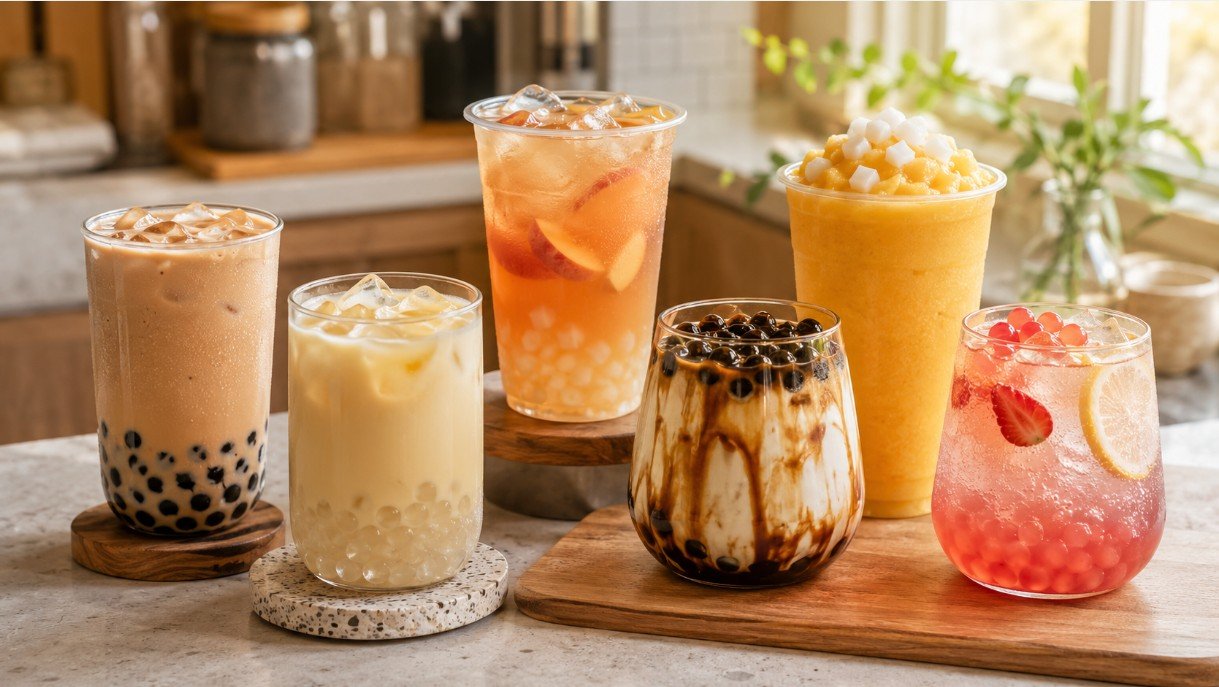
Most boba menus are built from four core drink families.
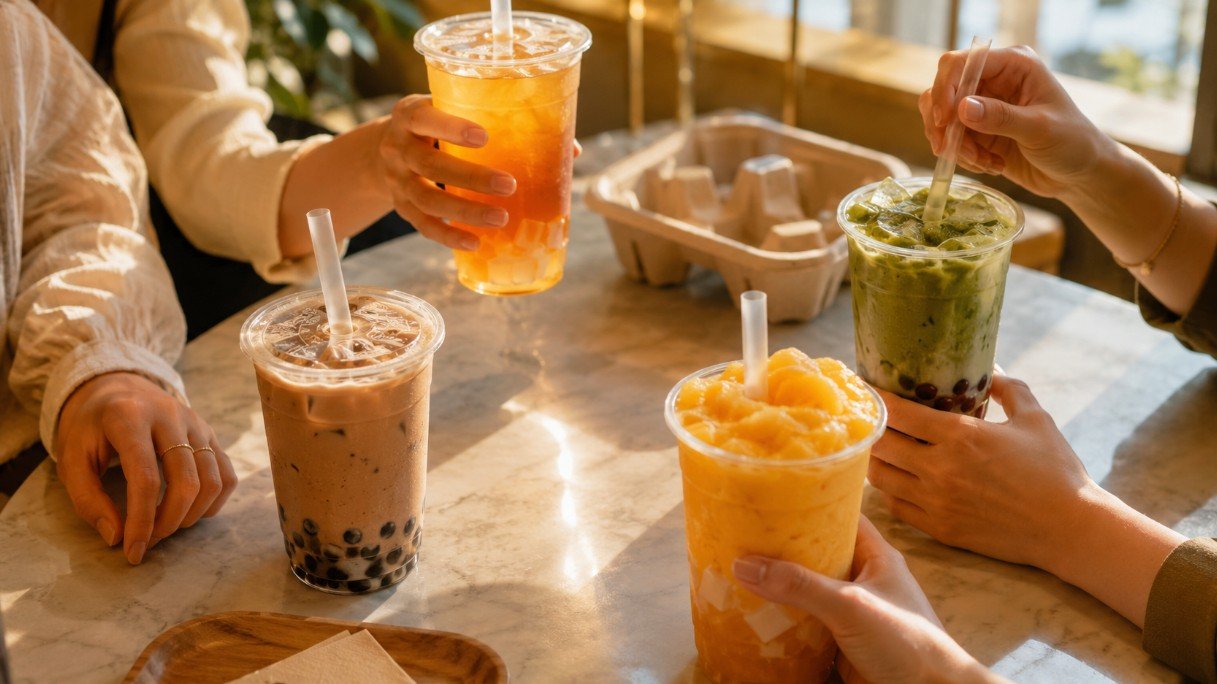
Milk tea is creamy and tea-based. Fruit tea is lighter and refreshing. Fresh milk drinks put milk at the center and may contain no brewed tea. Slushes and smoothies are defined by a frozen or blended texture. Modern menus then add pure tea, coffee, yogurt, sparkling drinks, cheese foam and other specialties.
Milk tea
Brewed tea mixed with dairy milk, plant milk or creamer. Usually smooth, creamy and medium-bodied.
Best for: a balanced first order.
Fruit tea
Tea or a fruit base combined with juice, puree, syrup, jam or fresh fruit. Usually lighter and brighter.
Best for: hot days and dairy-free routes.
Fresh milk
Milk-centered drinks, often layered with brown sugar pearls, fruit puree, matcha or taro.
Best for: richer, dessert-like drinks.
Blended
Slushes, smoothies and yogurt blends with an icy, thick or spoonable texture.
Best for: a cold treat.
Read the menu correctly
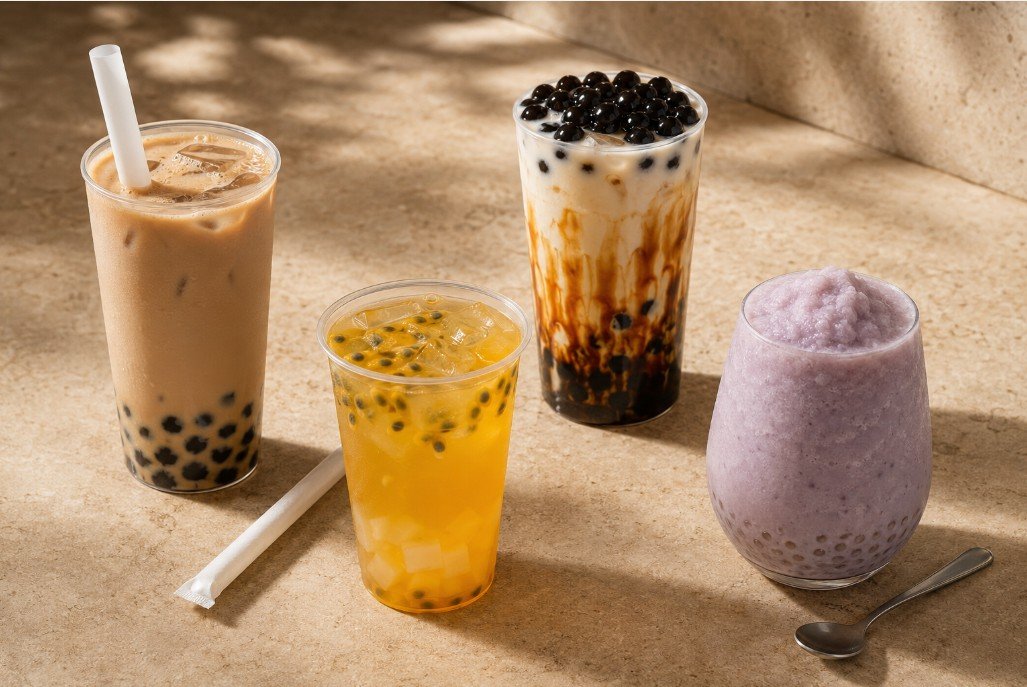
Drink type, tea base, flavor and topping describe different parts of the cup.
A menu becomes confusing when mango, milk tea, jasmine and tapioca are treated as equivalent choices. They are not. “Milk tea” names the family, “jasmine” names the tea base, “mango” names the flavor and “tapioca pearls” name the topping. Reading these layers separately makes it easier to predict the final drink.
| Menu layer | What it describes | Examples | Question it answers |
|---|---|---|---|
| Drink family | Main beverage format | Milk tea, fruit tea, fresh milk, slush | What kind of drink is it? |
| Base | Main liquid or tea | Black tea, jasmine tea, oolong, milk, coffee | What is underneath the flavor? |
| Flavor | Dominant taste direction | Mango, taro, strawberry, brown sugar | What will it taste like? |
| Topping | Added texture or finish | Tapioca, aloe, pudding, jelly, foam | What will I chew, sip or spoon? |
For a deeper flavor map, explore popular boba flavors.
Core family 1
Milk tea is the classic creamy boba drink family.
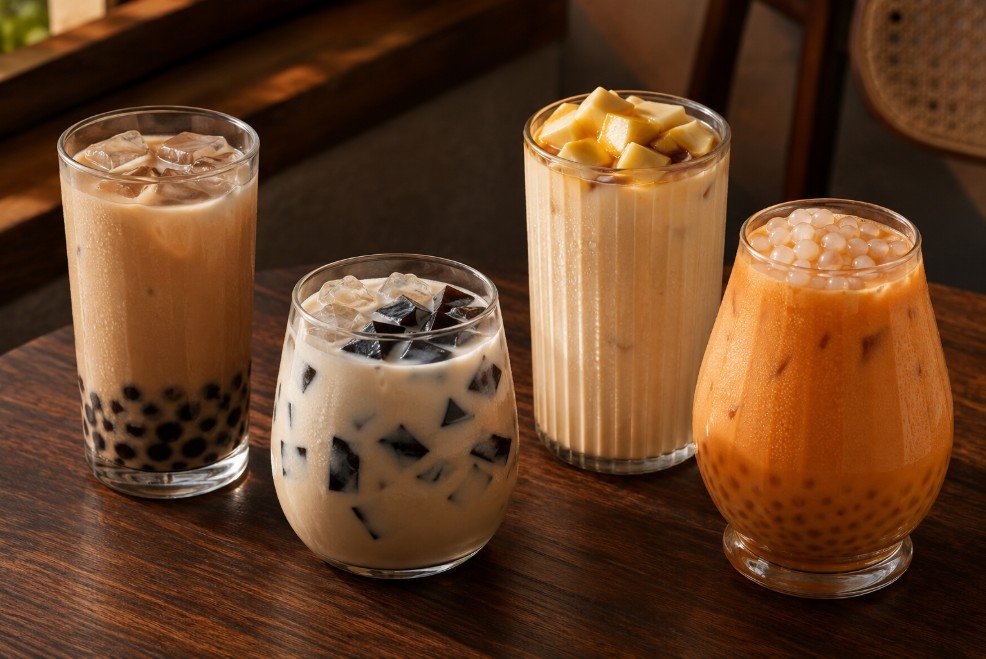
Milk tea combines brewed tea with milk, creamer or a plant-based alternative. The tea should still be noticeable. Black tea gives a malty, brisk backbone; jasmine tea is floral and lighter; oolong can be roasted, nutty, mineral or fragrant; Thai tea is aromatic and usually sweeter; matcha is grassy and concentrated.
Black milk tea
Classic, malty and strong enough for tapioca, pudding or grass jelly.
Jasmine milk tea
Floral and softer. Better with pudding, crystal boba or fewer pearls.
Oolong milk tea
Roasted or aromatic, with more tea character than many signature drinks.
Thai or flavored milk tea
Sweeter and more aromatic, often driven by the flavor blend as much as the tea.
Choose 50–70% sweetness, regular ice and one topping. Reduce sweetness before removing all the ice if you want the tea to taste clearer. Less ice can change temperature and dilution, while less sugar more directly exposes the tea.
Continue with the dedicated milk tea drinks guide.
Core family 2
Fruit tea is the most refreshing major family.
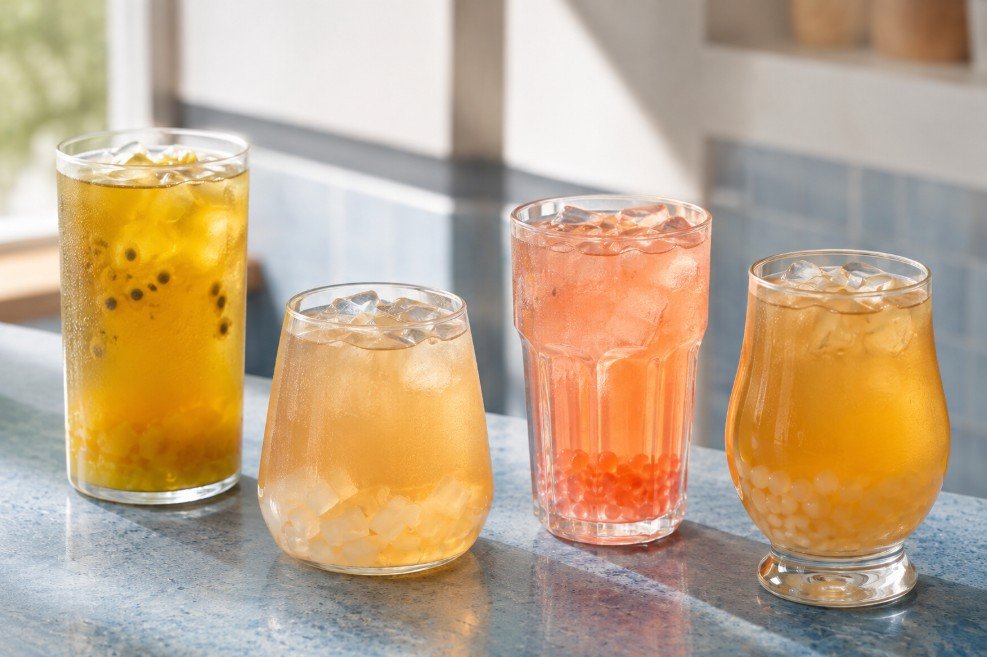
Fruit tea usually combines green, jasmine, black or oolong tea with fruit juice, puree, syrup, jam or fresh fruit. It can be crisp and tea-forward or sweet and fruit-led. Fruit tea is not automatically low in sugar: a large drink may combine sweetened puree, flavored syrup and a sweet topping.
Soft and floral
Peach and lychee are approachable and work well with jasmine tea, aloe or crystal boba.
Round and tropical
Mango and pineapple are fuller and sweeter, often able to support tapioca or coconut jelly.
Tart and sharp
Passion fruit, lemon and grapefruit keep a drink lively at lower sweetness.
Aloe, coconut jelly, fruit jelly, crystal boba and popping boba usually preserve a light mouthfeel. Dense tapioca works better with mango, passion fruit or a stronger black-tea base than with a delicate jasmine-citrus drink.
Explore fruit tea drinks in more detail.
Core family 3
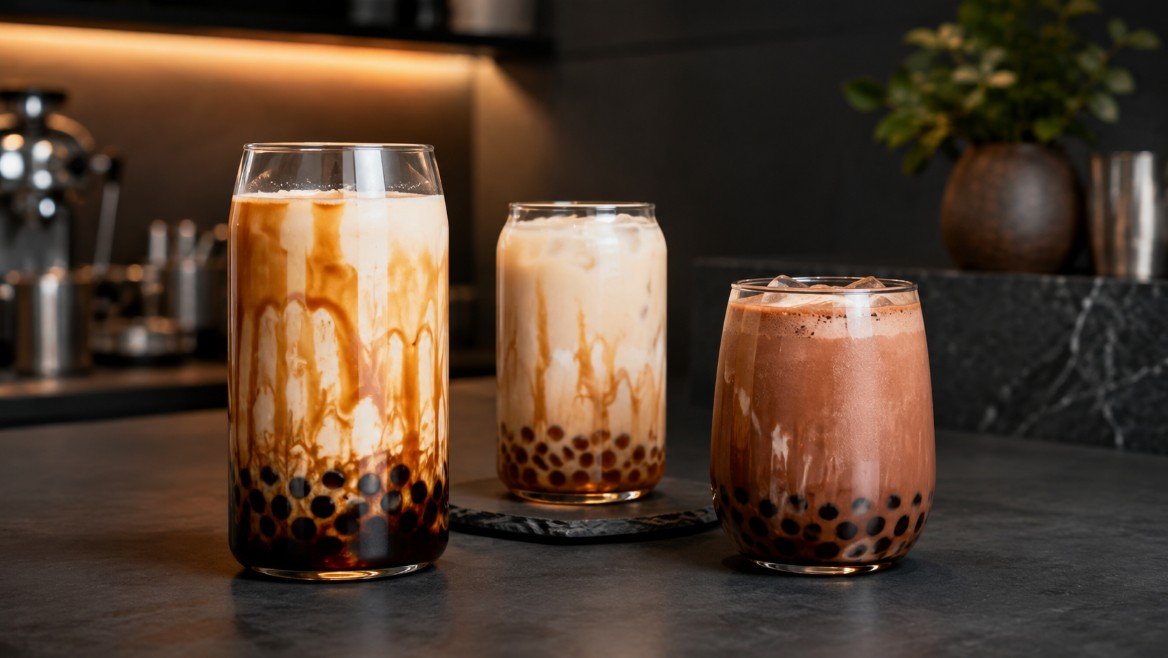
Fresh milk drinks can look like milk tea but may contain no tea.
A fresh milk boba drink uses milk as the central liquid instead of combining milk with brewed tea. Brown sugar fresh milk is the best-known example: cold milk, dark syrup and warm pearls create a strong contrast in temperature and texture. Strawberry milk, taro fresh milk and chocolate milk may be tea-free; matcha fresh milk contains tea leaf powder.
What makes it different
Milk tea starts with brewed tea and softens it with milk. Fresh milk drinks start with milk and add syrup, fruit, powder, matcha or pearls. The menu name alone cannot confirm caffeine.
What to check
Ask whether tea, coffee or matcha is included. Remember that brown sugar syrup and pearls may remain sweet even at “0% sugar.” Drink warm-pearl versions soon because tapioca becomes firmer as it cools.
See more fresh milk boba drinks.
Core family 4
Slushes and smoothies are defined by blended texture.
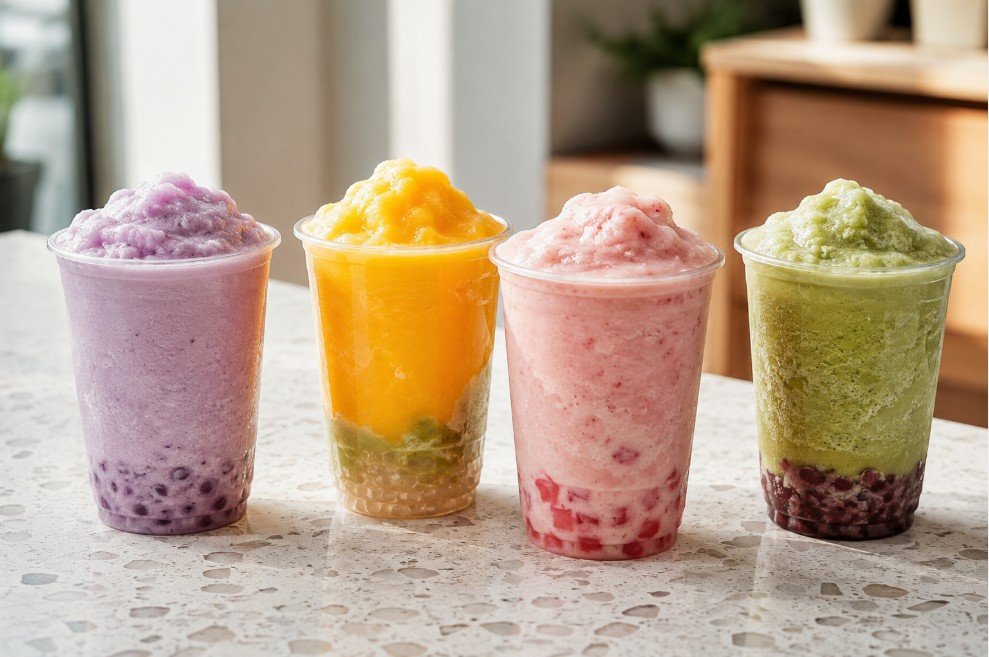
A slush blends ice with tea, fruit or a flavored base, while a smoothie is usually creamier and may include milk, yogurt, fruit or powder. Shops use these names inconsistently. Ask whether dairy or tea is included when that matters.
Fruit slush
Icy and bright. Jelly or popping boba usually moves through it more easily than large pearls.
Milk slush
Creamier and heavier, often built around taro, matcha, chocolate or powder.
Yogurt blend
Tangy and smooth, commonly paired with citrus or tropical fruit.
Smoothie-style drink
Thick and dessert-like, sometimes closer to a snack than a simple tea.
Blended drinks are among the least delivery-friendly choices. Ice crystals melt, layers separate and tapioca can firm before the cup arrives. Pickup or immediate drinking protects the intended texture.
Compare more boba slushes.
Beyond the core four
Specialty boba drinks combine familiar bases with new textures and serving styles.
The four core families explain most menus, but larger shops often organize additional categories around coffee, cultured dairy, foam, sparkling water or a specific tea. These are not random exceptions. Each style changes the body, caffeine, sweetness and topping compatibility of the final cup.
Pure brewed tea
Black, green, jasmine and oolong tea can be served with sweetness, ice and an optional topping but without milk or fruit. This is usually the clearest route for tasting the tea itself and controlling added sugar. Aloe, grass jelly and a light milk foam add texture without turning the drink into a dessert.
Choose it when: you want fragrance, a lighter body and fewer competing flavors.
Coffee boba drinks
Vietnamese-style coffee, coffee milk tea, espresso matcha and coffee slushes combine roasted bitterness with milk, sugar and chewy toppings. Some recipes contain coffee only; others combine coffee and tea, which can make the caffeine load less obvious than the menu name suggests.
Choose it when: you prefer coffee intensity and do not mind a richer, sweeter profile.
Matcha drinks
Matcha is powdered green tea, not a flavor syrup. It can appear in milk tea, fresh milk, slushes, smoothies and coffee hybrids. Good matcha brings grassy bitterness and a creamy texture, while sweetened matcha mixes taste softer and may contain much more sugar.
Choose it when: you enjoy earthy tea flavor and a fuller body.
Yogurt and cultured drinks
Yogurt drinks are tangy, creamy and frequently paired with mango, grape, citrus or purple rice. Yakult-style drinks are thinner and brighter but still usually sweetened. Neither category should be assumed dairy-free, and both may contain tea depending on the shop.
Choose it when: you want acidity with a smooth or lightly cultured finish.
Cheese foam and milk foam tea
A brewed tea is topped with a creamy, slightly salty layer. Sip through the foam first to taste the contrast, then mix if you prefer an even drink. Foam can add dairy, sugar and sodium, so a plain tea underneath often creates the best balance.
Choose it when: you want tea aroma with a rich top layer rather than pearls throughout the cup.
Sparkling boba drinks
Sparkling water or soda is combined with fruit, tea or syrup and usually a light topping. Crystal boba and popping boba work better than dense tapioca because they preserve the fizzy, refreshing character. Foam and large pearls can make the drink awkward to sip.
Choose it when: you want something closer to a fruit soda than a milk tea.
Coffee drinkers can continue with coffee boba drinks, while tea-first readers can compare bases in the tea guide.
Choose the tea underneath the flavor
The tea base controls bitterness, aroma, body and caffeine.
Two drinks with the same flavor can taste unrelated when they use different tea. A mango black tea is darker and more tannic than a mango jasmine tea. An oolong milk tea can taste roasted and nutty, while a jasmine milk tea is floral and soft. Understanding the base helps you choose a drink that still tastes good after the syrup and topping are added.
| Tea base | Typical character | Works especially well with | Watch for |
|---|---|---|---|
| Black tea | Malty, brisk, caramel-like or tannic | Milk, brown sugar, coffee, pudding and tapioca | Can taste harsh when overbrewed |
| Jasmine green tea | Floral, fragrant and lighter | Peach, lychee, mango, citrus, aloe and crystal boba | Heavy syrup can hide the aroma |
| Plain green tea | Fresh, grassy or lightly vegetal | Passion fruit, lemon, honey and light jelly | Can become bitter if brewed too hot or too long |
| Oolong tea | Floral, roasted, nutty or mineral | Milk tea, foam, peach and low-sugar orders | Style varies widely between light and roasted oolong |
| Earl Grey | Black tea with citrus-like bergamot aroma | Milk, vanilla, caramel and light foam | Perfumed character can dominate delicate flavors |
| Matcha | Grassy, creamy and slightly bitter | Fresh milk, red bean, pudding and strawberry | Sweetened powder is different from plain matcha |
| Herbal or grain tea | Floral, tart, roasted or caffeine-free depending on the base | Honey, citrus, fresh milk or jelly | “Herbal” does not mean unsweetened |
Choose black tea for bold and classic, jasmine for floral and refreshing, oolong for complex and tea-forward, matcha for grassy richness, and a verified herbal or tea-free base when caffeine is the deciding factor.
Sweetness, ice and toppings
Customization changes the drink, but the percentages are not standardized.
A 50% sweetness setting at one shop may taste like 70% somewhere else. The percentage usually controls adjustable syrup, not sugar already present in fruit puree, flavored powder, brown sugar pearls, pudding or condensed milk. Ice settings also behave differently: less ice may give more liquid at one shop, while another keeps the recipe volume fixed.
0% sweetness
No adjustable sugar is added, but the drink can still contain sugar from powders, puree, pearls, milk or syrup already built into the recipe.
25–30%
Useful for tea lovers, tart fruit drinks and orders where sweet toppings provide enough sweetness.
50%
A practical first setting for many milk and fruit teas because it leaves room for tea flavor without tasting unsweetened.
70–100%
Better for people who know they like sweet drinks or for recipes designed around a full-sugar balance.
Regular ice
Usually gives the drink the temperature and dilution intended by the shop. It is the safest baseline for a first order.
Less or no ice
Can make the drink warmer and stronger, but it does not guarantee extra tea. Slushes and some shaken drinks cannot be made with no ice.
Start at 50–70% sweetness, regular ice and one topping. On the next visit, change only one variable. That makes it possible to tell whether sweetness, ice, base or topping actually improved the drink.
Tea-based vs tea-free
Not every boba drink contains tea.
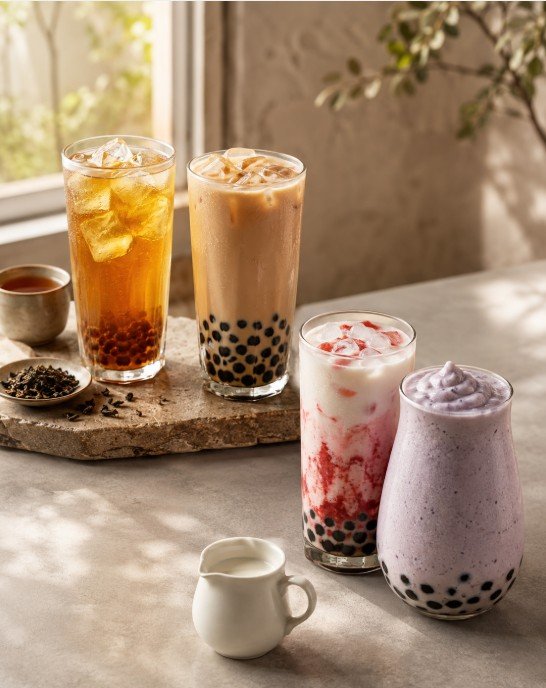
Boba can be added to tea, milk, coffee, fruit drinks, yogurt drinks, sparkling drinks, smoothies and slushes. The presence of pearls or another topping does not prove brewed tea is included.
Milk tea, fruit tea and pure tea
These normally begin with black, green, jasmine, oolong or another tea base.
Fresh milk, fruit drinks and smoothies
These may contain no tea, but some recipes quietly add black tea, green tea or matcha.
Coffee and matcha drinks
Matcha contains powdered tea leaf; coffee hybrids may be among the stronger caffeine choices.
Herbal, taro and wintermelon drinks
These can be caffeine-free, but a shop may still use tea as the liquid base.
For a dedicated list, see boba drinks without tea.
Inside the cup
Six ingredient groups determine how a boba drink tastes and feels.
Even drinks with the same menu name can taste different because shops use different tea strength, fruit formats, milk products, sweeteners and toppings. Ingredient format matters as much as the headline flavor.
1. Tea or liquid base
Black tea, jasmine tea, green tea, oolong, milk, coffee, yogurt, fruit juice or a tea-free refresher creates the foundation.
2. Milk or creamer
Fresh dairy milk tastes cleaner; plant milk changes body and flavor; café creamer creates a fuller, stable texture but may contain milk-derived ingredients.
3. Flavor
Fresh fruit, puree, jam, syrup and powder produce very different acidity, sweetness, color and aroma.
4. Sweetener
Simple syrup, brown sugar, honey, fructose syrup or sweetened powder may be adjustable—or partly fixed in the recipe.
5. Texture
Tapioca, sago, aloe, jelly, pudding, red bean, popping boba and foam change how the drink moves through the straw and mouth.
6. Ice and temperature
Ice controls temperature and dilution. Hot tea, room-temperature pearls and cold milk can also create deliberate contrast.
| Component | Fresh or brewed version | Convenience version | What changes |
|---|---|---|---|
| Tea | Fresh-brewed leaves | Concentrate or premix | Aroma, bitterness and finish |
| Fruit | Fresh fruit or puree | Syrup, jam or powder | Acidity, pulp and sweetness |
| Taro | Cooked taro | Sweetened taro powder | Earthiness, color and body |
| Matcha | Whisked matcha | Sweetened matcha mix | Bitterness, tea intensity and sugar |
| Pearls | Freshly cooked | Long-held or instant pearls | Elasticity, center firmness and sweetness |
Use the full boba ingredients guide when you need deeper ingredient detail.
At-a-glance comparison
Compare the main boba drink types before you order.
The table below compares the practical experience rather than only the menu name. “Tea included” means typical practice, not a guarantee; shop recipes vary.
| Drink family | Typical body | Tea usually included? | Best for | Use carefully |
|---|---|---|---|---|
| Milk tea | Creamy, smooth, medium-bodied | Yes | Classic first order | Heavy toppings can hide tea |
| Fruit tea | Light, juicy, tart or floral | Usually | Refreshing and dairy-free routes | Puree and syrup can add substantial sugar |
| Fresh milk | Rich, silky, milk-centered | Sometimes | Dessert-like drinks | Tea and caffeine are not obvious from the name |
| Pure tea | Light, crisp, aromatic | Yes | Strong tea flavor and easier sugar control | Can taste bitter if brewed poorly |
| Slush | Icy and thick | Sometimes | Hot weather | Poor for long delivery |
| Smoothie | Creamy, thick, sometimes yogurt-based | Sometimes | A snack-like drink | Dairy and fixed sugar may be hidden |
| Coffee boba | Bold, creamy, caffeinated | Sometimes | Coffee drinkers | May combine coffee and tea caffeine |
| Yogurt drink | Tangy, smooth | Sometimes | Bright cultured flavor | Usually contains dairy and added sugar |
| Sparkling drink | Light, fizzy, fruit-forward | Sometimes | A soda-like experience | Large toppings and foam are awkward |
| Foam-topped tea | Light tea plus creamy top layer | Yes | Sweet-salty contrast | Foam can add dairy, sugar and sodium |
Cup size and volume
Common U.S. boba cups range from about 16 to 24 ounces.
A regular boba cup is commonly around 16–20 oz, while a large is often around 22–24 oz. Some chains use 25 oz or larger cups, and kid-size or hot cups may be much smaller. Compare ounces rather than assuming “regular” and “large” mean the same thing everywhere.
12–16 oz
Small, hot or kid-size drinks. Useful for rich milk tea, coffee boba or a first taste.
16–20 oz
Common regular size. Usually the easiest balance of liquid, ice and one topping.
22–24 oz
Common large size. Better value per ounce, but sugar and caffeine rise with volume.
25 oz and above
Extra-large or chain-specific cups. A topping-heavy drink can become a full snack or dessert.
Ice, toppings and foam occupy volume. A large cup with heavy ice and two toppings may contain less liquid tea than a regular cup with one topping. “No ice” does not always mean the shop fills the entire difference with extra tea.
Typical U.S. cost
Most pickup boba drinks commonly fall around $4–$9 before tax and tip.
Price varies by city, shop, cup size and recipe. Pure tea and simple milk tea usually sit at the lower end. Fresh fruit, blended drinks, foam, premium milk and several toppings move the order upward. Delivery can push a single drink well beyond the menu price because of platform markups, service fees, delivery fees and tip.
| Drink type | Common pickup range | What usually raises the price | Best-value approach |
|---|---|---|---|
| Pure brewed tea | $4.00–$6.50 | Premium tea, foam, fruit and toppings | Regular size, no premium topping |
| Classic milk tea | $4.50–$7.50 | Large size, plant milk, extra pearls | Choose a drink with pearls included |
| Fruit tea | $4.50–$7.50 | Fresh fruit, puree, multiple jellies | One light topping |
| Fresh milk or brown sugar | $5.50–$8.50 | Premium milk, warm pearls, foam | Keep the included pearls only |
| Slush or smoothie | $5.50–$9.00 | Fresh fruit, yogurt, blending, toppings | Pickup and regular size |
| Specialty or seasonal | $6.00–$10+ | Collaboration ingredients, foam, layered recipes | Check whether customization is limited |
Standard topping
Often about +$0.50–$1.25.
Premium foam or topping
Often about +$0.75–$1.75.
Plant-based milk
Often about +$0.50–$1.50.
Size upgrade
Commonly about +$0.50–$1.50.
These are practical ranges, not national fixed prices. Local menus and delivery platforms vary. Check the final checkout price before comparing shops, because a $6 menu drink can become a $12–$18 delivered order after customization and fees.
Use the boba menu guide to understand how shops organize categories and upgrades.
60-second drink finder
Choose the experience first, then choose the flavor.
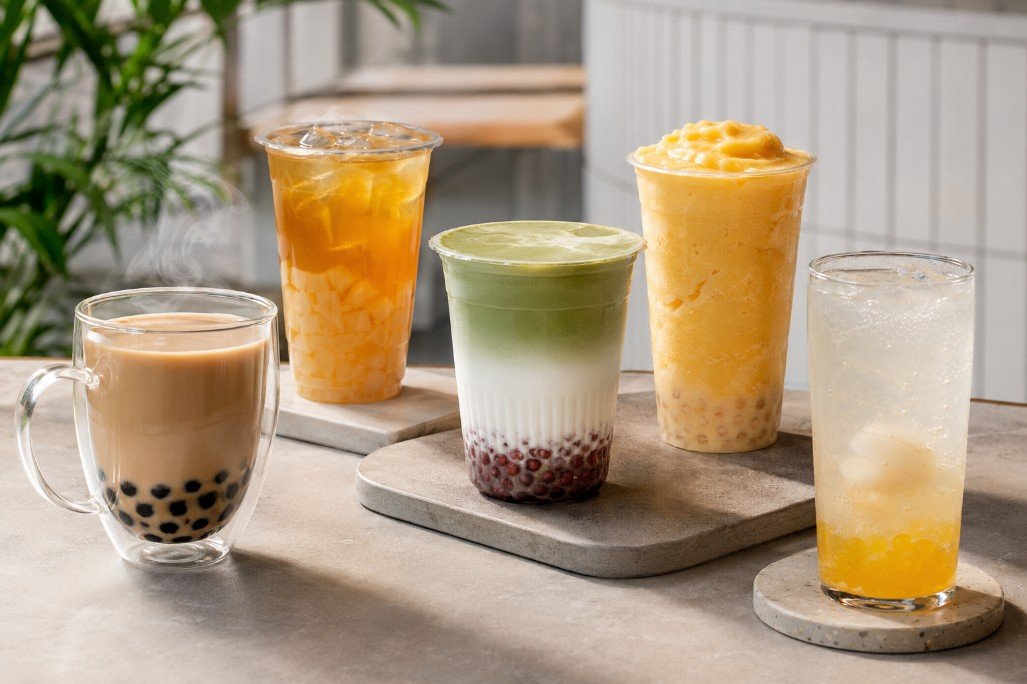
Start with the result you want. This is more reliable than choosing by color, trend or the longest menu description.
I want the classic experience
Choose black milk tea, 50–70% sweetness, regular ice and tapioca pearls.
I want something refreshing
Choose jasmine or green fruit tea at 30–50% sweetness with aloe or crystal boba.
I want creamy but not heavy
Choose jasmine or light oolong milk tea with regular ice and one soft topping.
I want a dessert-like drink
Choose brown sugar fresh milk, pudding milk tea or a taro smoothie.
I dislike chewy pearls
Choose pudding, aloe, grass jelly, crystal boba, popping boba or no topping.
I want strong tea flavor
Choose pure oolong, black tea or low-sugar milk tea without a heavy topping.
I want no milk
Choose pure tea, fruit tea or a sparkling tea and verify that foam and creamer are excluded.
I want lower caffeine
Ask which drinks contain no tea, coffee or matcha; do not guess from flavor alone.
For a deeper route, use Choose Your Boba.
Texture pairing
A good topping supports the drink instead of overwhelming it.
For a first order, choose one topping. Two can work when they contrast—such as pearls plus pudding—but three or more often make the cup crowded, expensive and hard to drink.
| Drink | Strong pairing | Why it works | Use carefully |
|---|---|---|---|
| Black or oolong milk tea | Tapioca, pudding, grass jelly | Strong tea supports rich texture | Several sweet toppings |
| Jasmine milk tea | Pudding, crystal boba, fewer pearls | Soft texture protects floral aroma | Heavy brown sugar syrup |
| Fruit tea | Aloe, coconut jelly, fruit jelly | Keeps the cup refreshing | Pudding and dense red bean |
| Fresh milk | Included warm pearls | The signature contrast is already complete | Extra syrup and multiple add-ons |
| Slush | Mini pearls, jelly, red bean | Smaller pieces move through thick liquid | Large firm toppings |
| Pure tea | Aloe, grass jelly, light foam | Adds texture without burying tea | Strongly flavored popping boba |
Compare the full range of boba toppings.
Temperature and travel
Hot, iced and blended drinks behave differently after they leave the shop.
Fresh pearls, foam and blended ice are time-sensitive. The best delivery drink is often simpler than the most exciting in-store drink.
Best hot
Black milk tea, oolong milk tea and some taro or matcha drinks. Warm pearls are soft, but they should be eaten soon.
Best iced
Fruit tea, pure tea, classic milk tea, fresh milk and sparkling drinks. Regular ice gives the intended temperature and dilution.
Best immediately
Slushes, smoothies, cheese foam, layered brown sugar drinks and anything built around warm fresh pearls.
Classic milk tea and fruit tea with jelly usually travel better than slushes, delicate foam drinks or warm-pearl specialties.
See which hot boba drinks are designed for warm service.
Dietary and caffeine routes
The drink family narrows your options, but it cannot guarantee ingredients.
Recipes vary by shop, powder, syrup, creamer and topping. Ask about the complete drink, not only the liquid base.
Dairy-free
Fruit tea and pure tea are often easier starting points, but foam, pudding and “non-dairy” creamer may contain milk-derived ingredients.
Caffeine-aware
Fresh milk, herbal or fruit drinks may be caffeine-free only when no tea, matcha or coffee is added.
Lower sugar
Pure tea usually offers the clearest control. Flavored powders, puree, pearls and brown sugar syrup may remain sweet at reduced settings.
Allergy-aware
Ask about dairy, egg, gelatin, soy, nuts, coconut and shared equipment. A category name cannot confirm cross-contact practices.
Use the boba dietary guide for more careful ingredient questions.
Common mistakes
Do not choose a boba drink by color or category name alone.
Treating taro as a drink family
Taro is a flavor. It can appear in milk tea, fresh milk, a smoothie or a slush.
Assuming fresh milk contains no tea
Matcha, coffee and some house recipes add caffeinated ingredients to a milk-centered drink.
Assuming fruit tea is low sugar
Sweet puree, syrup, jam and toppings can make fruit tea as sweet as milk tea.
Calling every frozen drink a smoothie
A slush may be mostly ice and fruit, while a smoothie is usually creamier or yogurt-based.
Treating toppings as flavors
Tapioca, pudding and jelly describe texture. They do not tell you the liquid base.
Assuming menu names are standardized
“Latte,” “dirty,” “fresh milk” and “refresher” can mean different things at different shops.
Practical next step
Choose one family first, then customize the details.
This sequence makes an order easier to understand and easier to improve next time.
Choose the family
Milk tea, fruit tea, fresh milk, pure tea or blended.
Choose the base
Black, jasmine, oolong, milk, coffee or another liquid.
Choose the flavor
Mango, taro, matcha, brown sugar or a house flavor.
Set sweetness and ice
Start moderate unless the recipe has fixed settings.
Add one topping
Choose a texture that supports the drink instead of overwhelming it.
Find the right shop
The best shop depends on the drink family you want.
A tea-focused shop may be ideal for oolong or jasmine milk tea. A fresh-fruit specialist may be stronger for citrus and mango drinks. A dessert-focused shop may excel at brown sugar pearls, taro blends and foam. Check recent drink photos, customization choices and whether pearls look fresh before making a long trip.
Your next cup
The best boba drink is the one that matches the experience you want.
Choose the family first. Then choose a base, flavor, sweetness level and one topping. A simple order gives you a clean reference point; on your next visit, change one variable and notice what improved.
Questions people ask
Boba drink FAQ
What are the main types of boba drinks?
The four core families are milk tea, fruit tea, fresh milk drinks and blended drinks such as slushes or smoothies. Modern menus also include pure tea, coffee, yogurt, sparkling and foam-topped drinks.
Does every boba drink contain tea?
No. Boba can be added to fresh milk, fruit drinks, smoothies, slushes, yogurt drinks, coffee and sparkling drinks. Ask whether the recipe contains black tea, green tea, oolong, matcha or coffee when caffeine matters.
What is the difference between milk tea and fresh milk boba?
Milk tea starts with brewed tea and adds milk or creamer. Fresh milk boba uses milk as the central liquid and may contain no brewed tea, although matcha, coffee or tea can still be added.
What is the difference between fruit tea and a fruit drink?
Fruit tea normally includes a brewed tea base. A fruit drink may use juice, puree, syrup, soda or water without tea. Menu names are not standardized, so verify the base.
Are boba slushes and smoothies the same?
Not necessarily. A slush is usually icier and may be tea- or fruit-based. A smoothie is commonly creamier and may contain milk, yogurt, fruit or powder. Shops sometimes use the terms loosely.
How large is a regular boba drink?
A regular U.S. boba drink is commonly around 16–20 ounces. Large cups are often around 22–24 ounces, although exact sizes vary by shop.
How much does a boba drink usually cost?
A typical U.S. pickup order commonly falls around $4–$9 before tax and tip. Premium fruit, large sizes, plant milk, foam and extra toppings increase the price, while delivery adds platform fees and tip.
Which boba drink is best for beginners?
Classic black milk tea with tapioca is the standard reference point. Jasmine milk tea with pudding and peach green tea with aloe are lighter alternatives. Start with 50–70% sweetness and one topping.
Can you order boba without tapioca pearls?
Yes. Tapioca is optional at most shops. You can choose aloe, jelly, pudding, red bean, popping boba, crystal boba, foam or no topping.
Which boba drink is easiest to order with less sugar?
Pure brewed tea usually offers the clearest sugar control because it can be ordered unsweetened or lightly sweetened. Fruit puree, powders, brown sugar syrup and sweetened toppings may contain sugar even when the adjustable setting is reduced.
Which boba drinks travel best?
Classic milk tea, pure tea and fruit tea with jelly usually travel better than slushes, foam-topped drinks and drinks built around warm fresh pearls.