
Boba Dietary Guide: Vegan, Dairy-Free, Gluten-Free and Allergen Questions
A boba drink can look simple and still contain several ingredients that matter for a dietary restriction: the tea or milk base, creamer, flavored powder, syrup, topping, foam and the equipment used to prepare it. The safest way to order is not to judge the drink by color or name. It is to check the complete recipe and decide how much uncertainty is acceptable for your needs.
This guide explains how to approach vegan, vegetarian, dairy-free, gluten-free, nut-free, soy-free, egg-free, gelatin-free, halal and kosher questions without pretending that every shop uses the same formula. It also gives you practical questions to ask before ordering and clear situations in which a confident answer requires an ingredient label, allergen guide or certification.
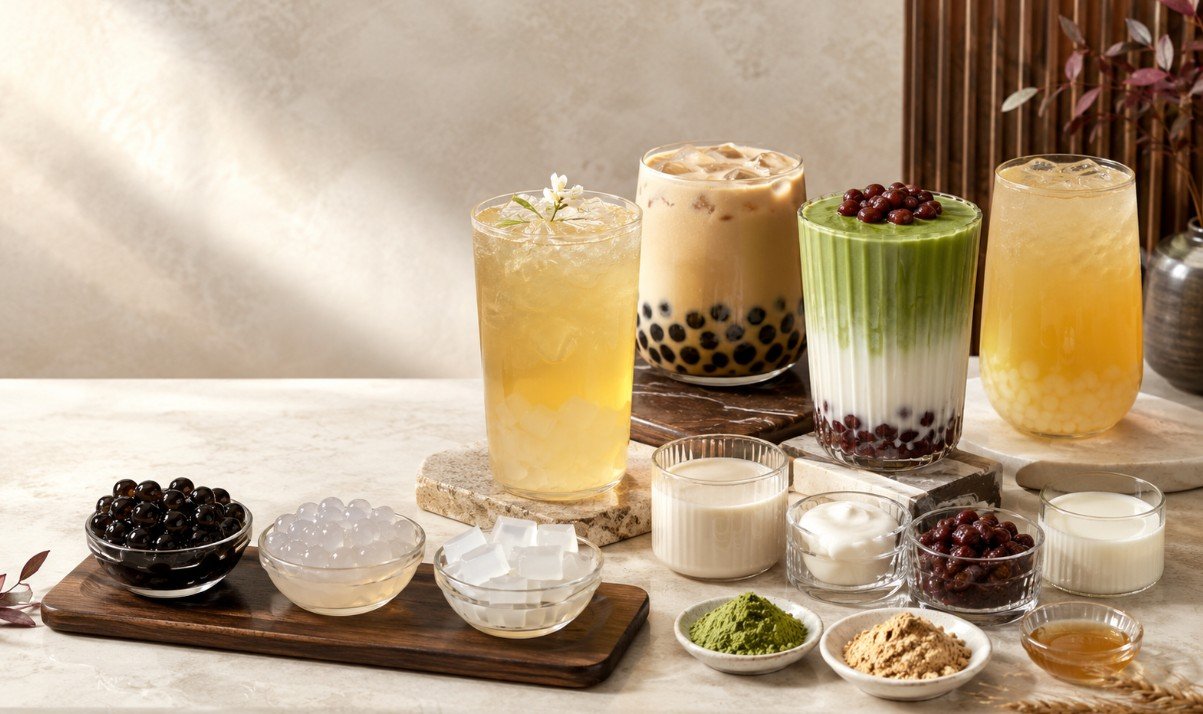
Check the Drink as Six Separate Decisions
A dietary question becomes much easier when you stop treating “boba” as one ingredient. A finished drink is a chain of decisions, and any link in that chain can change the answer.
Base
Confirm whether the liquid is brewed tea, fresh milk, a dairy creamer, a plant beverage, fruit concentrate, coffee or a premixed powder. A name such as “taro milk tea” does not reveal which of those systems the shop uses.
Flavor system
Ask whether the flavor comes from fresh fruit, jam, syrup, powder or a prepared sauce. Powders and sauces may contain milk, soy, gluten-containing ingredients, color carriers or emulsifiers that are not obvious from the flavor name.
Milk or creamer
Distinguish fresh dairy milk, non-dairy creamer and a named plant milk. “Non-dairy” on a creamer does not always mean milk-protein-free, and a plant-milk substitution does not remove dairy already present in the powder or foam.
Topping
Check pearls, jelly, pudding, red bean, popping boba, foam and any house topping separately. Two toppings with the same visual texture can be produced from completely different ingredient lists.
Preparation
Shared shakers, scoops, blenders, strainers, sealing areas and topping utensils create cross-contact questions. This matters most when a restriction is medically necessary rather than a preference.
Evidence
Decide what level of proof you need: a staff answer, a current ingredient label, an official allergen guide, a manufacturer statement or recognized certification. A confident-sounding guess is not the same as verification.
“Can you check every ingredient in this exact drink, including the powder, creamer, topping and foam?”
“Is boba vegan?” The category is too broad for a reliable universal answer.
Which Parts of a Boba Order Usually Need Verification?
This matrix does not certify any drink. It shows where hidden ingredients or preparation concerns commonly appear so you know what to investigate first.
| Dietary need | Often simpler starting point | Ingredients to verify | Preparation concern |
|---|---|---|---|
| Vegan | Plain tea or fruit tea | Honey, milk, creamer, foam, pudding, powders, gelatin or animal-derived additives | Shared scoops and shakers with dairy-based recipes |
| Dairy-free | Tea without milk or foam | Milk proteins in creamer, powders, pudding, foam, sauces and premixes | Shared blenders and pitchers |
| Gluten-free | Plain brewed tea with a verified topping | Powders, cookies, malt, sauces, flavored pearls, jelly and oat products | Shared utensils, storage and blending equipment |
| Nut-free | Plain tea made away from nut ingredients | Almond milk, nut flavors, praline, pistachio, toppings and seasonal sauces | Shared blender, shaker and milk-pour area |
| Soy-free | Plain tea or verified fresh-milk drink | Soy milk, non-dairy creamer, lecithin, powders and sauces | Shared pitchers and scoops |
| Egg-free | Tea without pudding or custard toppings | Egg pudding, custard powder, cake or cookie inclusions | Shared topping utensils |
| Halal | Certified products or a certified shop | Gelatin, emulsifiers, enzymes, flavor carriers and alcohol-containing flavor systems | Certification scope and shared facility practices |
| Kosher | A drink made in a certified establishment | Certification status, dairy or pareve designation, powders and toppings | Equipment and supervision are part of the answer |
Important: “often simpler” does not mean automatically suitable. It means the recipe has fewer moving parts to verify.
Is Boba Vegan or Vegetarian?
Some boba drinks are vegan, many are vegetarian, and neither label can be assumed from the appearance of the cup. Traditional tapioca starch, tea, water and sugar can fit a vegan recipe, but the finished drink may include dairy, honey, egg pudding, milk foam, gelatin-containing components or flavor systems with animal-derived ingredients.
The pearls are only one part of the answer
Classic black tapioca pearls are commonly made from tapioca starch, water, sugar and color, which can be compatible with a vegan diet. That does not make every pearl at every shop vegan. Instant pearls, flavored pearls and manufacturer-specific products may use different stabilizers, colors or processing aids. Ask for the package or supplier specification when the answer matters.
The larger source of confusion is usually the drink around the pearls. Milk tea may use fresh milk, condensed milk, dairy powder or a creamer. Taro, chocolate, cookies-and-cream and other powdered drinks may contain milk even when the customer selects oat milk. Cheese foam, milk foam and many puddings are not vegan unless the shop has a specifically formulated plant-based version.
Fruit tea is a useful starting point, not a guarantee
A clear fruit tea often has fewer obvious animal ingredients than a creamy drink. Still, check whether the recipe contains honey, a dairy-containing fruit powder, a non-vegan jelly or a topping prepared with an animal-derived setting agent. Popping boba and jelly recipes differ by supplier; the visible form cannot confirm the ingredient source.
For a strict vegan order, ask the shop to verify the tea base, sweetener, fruit preparation and topping. If the employee can only confirm the milk substitution but cannot check the powder or topping label, the answer remains incomplete.
How to Order Dairy-Free Boba More Reliably
Replacing cow’s milk with oat, almond, soy or coconut milk addresses only the milk poured into the cup. A truly dairy-free order must also account for creamer, powder, foam, sauce, pudding and cross-contact.
Fresh milk
This is straightforward dairy. A plant-milk substitution may solve the issue if no other part of the recipe contains milk and the shop can manage preparation appropriately.
Non-dairy creamer
The name is not enough. Some products marketed as non-dairy may still contain milk-derived proteins such as caseinates. Ask for the ingredient label rather than relying on the front-of-package term.
Flavor powders
Taro, chocolate, matcha blends and seasonal powders may contain milk powder or whey. Choosing plant milk does not remove those ingredients.
Foam and pudding
Milk foam, cheese foam and custard-style pudding commonly involve dairy. A shop must identify a specifically dairy-free formulation before you treat it as suitable.
Dairy allergy and lactose intolerance are not the same question
Lactose intolerance concerns digestion of lactose and may allow different individual choices. A milk allergy involves an immune response to milk proteins and requires allergen-level verification. Lactose-free dairy milk still contains milk proteins, while a plant beverage may avoid dairy ingredients but still be prepared on shared equipment. Use the language that accurately describes your need when speaking with staff.
“I need this drink to contain no milk ingredients. Can you check the powder, creamer, foam and topping, not only the milk option?”
Is Boba Gluten-Free?
Plain tea and tapioca starch are naturally free from gluten, but a complete boba drink is not automatically gluten-free. Powders, sauces, cookie toppings, malt ingredients, flavored jellies, oat products and shared preparation equipment can change the answer.
Why tapioca does not settle the question
Tapioca comes from cassava, not wheat, barley or rye. That makes plain tapioca starch a promising ingredient for a gluten-free recipe. However, commercially prepared pearls can include additional flavors, colors, sweeteners and processing ingredients. The package or manufacturer specification is the evidence that matters.
The FDA definition for a packaged food labeled “gluten-free” generally requires the food to contain less than 20 parts per million of gluten and to meet additional ingredient conditions. A café drink assembled from multiple packages is more complicated: the shop may not make a formal gluten-free claim, and shared utensils or equipment may introduce cross-contact.
Cross-contact changes the practical answer
For a person with celiac disease, a naturally gluten-free ingredient is not sufficient if it is handled with contaminated scoops, stored beside crumb toppings or blended in equipment that is not cleaned to an appropriate standard. The Celiac Disease Foundation advises diners to research menus, contact restaurants when possible, explain the seriousness of the need and ask specific questions about shared preparation.
Cookie crumbs, cake toppings, malted flavorings and some cereal-style additions are obvious concerns. Less obvious issues include a flavored powder whose label is unavailable, oat milk that is not certified gluten-free, a shared blender used for cookie drinks, or a topping scoop moved between containers.
Milk, Egg, Soy, Wheat, Peanuts, Tree Nuts, Sesame, Fish and Shellfish
The FDA recognizes nine major food allergens in the United States: milk, egg, fish, Crustacean shellfish, tree nuts, peanuts, wheat, soybeans and sesame. Not all are common in boba, but the full framework matters because shops may sell food, seasonal flavors or toppings beyond the basic tea menu.
Milk
Check milk, condensed milk, creamer, milk powder, whey, caseinates, foam, pudding and dairy-containing sauces. Milk is one of the most frequent boba-related allergen concerns.
Egg
Egg pudding, custard powder, cake toppings and bakery-inspired seasonal drinks are the obvious areas. Do not assume every “pudding” has the same formula.
Soy
Soy may appear as soy milk, soy protein, lecithin or part of a creamer, powder or topping. The supplier label is more reliable than the drink name.
Wheat
Look for cookies, cake, malt, cereal additions, sauces, powders and cross-contact. Tapioca itself does not eliminate these other sources.
Peanuts and tree nuts
Almond milk, pistachio, peanut, praline and nut-flavored specials create direct concerns. Shared blenders, milk pitchers and topping areas also matter.
Sesame
Sesame became the ninth major U.S. allergen effective January 1, 2023. Black sesame drinks, powders and toppings require the same seriousness as other major allergens.
Fish and shellfish
These are uncommon in standard boba drinks, but a shared food-service operation may handle them. A shop-wide allergen question can matter even when the beverage recipe does not contain them.
Allergens outside the U.S. list
Other countries use different priority-allergen frameworks. Your personal allergy can also involve an ingredient that is not one of the nine U.S. major allergens.
“May contain” and cross-contact language deserves attention
The FDA notes that people with food allergies should read labels and avoid foods containing their allergens. There is no universal threshold established by the FDA below which every food-allergic person is guaranteed not to react. When the consequence could be severe, an uncertain verbal answer is not enough.
Gelatin, Jelly, Pudding, Soy and Specialty Toppings
Texture does not reveal composition. A clear jelly may be plant-based, a pudding may contain egg and dairy, and a creamy topping may rely on soy or milk ingredients. Verify each product by supplier rather than grouping it by appearance.
Gelatin and setting agents
Some jellies use plant-derived gelling agents such as agar or konjac, while other products may use gelatin or a proprietary blend. Popping boba, crystal boba and coconut jelly are not interchangeable ingredient categories. Ask for the package when avoiding animal-derived gelatin for vegan, halal or kosher reasons.
Egg pudding
Egg pudding commonly contains egg and dairy, but formulations vary. It is unsuitable for an egg-free or vegan order unless the shop documents a different recipe. Shared spoons can also move residue between topping containers.
Soy ingredients
Soy can appear directly as soy milk or indirectly through lecithin, protein, creamer or flavor preparations. People avoiding soy should ask about every premix, not only the selected milk.
Red bean and bean toppings
Cooked sweet red beans can have a simple plant-based formula, yet packaged versions may include flavorings or be handled with shared utensils. A simple appearance still requires verification when allergies or certification rules apply.
Halal and Kosher Boba Require More Than an Ingredient Guess
A recipe may look free from obvious prohibited ingredients and still lack the certification, equipment controls or supervision required by a customer’s standard. The strongest answer comes from recognized certification covering the relevant product or establishment.
Focus on ingredient source and certification scope
Potential questions include gelatin source, flavor carriers, alcohol in flavor systems, enzymes, emulsifiers and animal-derived ingredients. IFANCA’s consumer guidance identifies ingredients such as enzymes, mono- and diglycerides and some other additives as items that may require confirmation because their source can vary.
A staff statement that a drink “has no pork” is not a complete halal assessment. Ask whether the ingredients or shop are certified, which certifier is involved, and whether toppings and flavor systems are included in that certification.
Ingredients, dairy status and equipment all matter
Kosher status depends on more than a list of familiar ingredients. Certification can identify whether a product is dairy, pareve or produced on particular equipment. OU Kosher explains that an OU-D mark indicates dairy ingredients, while a plain OU symbol generally denotes a pareve product under its certification system.
A non-certified café using individually certified products does not automatically become a certified kosher establishment. Customers who require kosher supervision should confirm the status of the shop, its ingredients and its equipment with the certifying authority or their own religious advisor.
This guide describes a verification process. It does not issue halal or kosher rulings and does not certify any shop or product.
Questions That Produce Better Answers From a Boba Shop
Ask a narrow, ingredient-specific question and explain whether the restriction is an allergy, celiac disease, a religious requirement or a personal preference. This helps staff understand the level of care you need.
“Can I see the ingredient or allergen information for this exact drink?”
This moves the conversation from memory to evidence. Specify the size, flavor, milk, topping and foam because a menu category can contain several formulas.
“Does the powder or syrup already contain milk, soy, wheat, egg or another allergen?”
Many mistakes occur because only the visible milk is discussed. Premixes can contribute ingredients before customization begins.
“What is the topping made from, and can you check the package?”
This is more useful than asking whether all pearls or all jelly are suitable. Supplier formulas vary.
“Are the blender, shaker, scoop or pitcher shared with drinks containing my allergen?”
Ask about the specific equipment involved in your order. A clean cup does not resolve shared preparation.
“Can this be prepared with clean equipment and fresh utensils?”
A shop may or may not be able to accommodate the request safely during service. Accept a clear “we cannot guarantee it” as useful information rather than pressure staff to promise.
“Is the certification current, and does it cover this product or location?”
This matters for halal, kosher and certified gluten-free questions. A supplier logo, an old certificate or a certified ingredient does not always cover the finished drink.
Staff checks a current label or official guide, names the ingredients, explains shared equipment and states what can or cannot be controlled.
“It should be fine,” “most people order it,” or “the pearls are just tapioca” without checking the rest of the drink.
The ingredient list is unavailable, staff cannot identify the product, or the shop cannot manage a risk that is medically or religiously important to you.
Lower-Uncertainty Starting Orders for Different Needs
These are checking templates, not guarantees. Their advantage is that they reduce the number of components that must be confirmed.
Plain jasmine tea with verified crystal boba
Confirm that the sweetener and topping contain no animal-derived ingredients or honey. Skip foam and powdered flavors unless documented.
Fruit tea without milk, creamer or foam
Check the fruit preparation and topping for milk ingredients, then ask about shared shakers or blenders if dairy allergy is involved.
Plain brewed tea with a packaged verified topping
Confirm the topping label and preparation area. Avoid cookie, malt and cereal-style additions, and discuss cross-contact for celiac disease.
Plain black or green tea prepared away from nut milks
Ask whether almond milk or nut flavors use the same pitcher, blender, shaker or pour area.
Plain tea or verified fresh-dairy drink
Check creamers, powders, lecithin and sauces. A coconut or oat milk option may still be prepared near soy milk.
Tea without pudding, custard or bakery toppings
Verify powders and seasonal add-ons, and request a clean topping utensil when necessary.
Cross-Contact in a Boba Shop
Boba shops are fast-moving preparation environments. Even when every ingredient in your chosen recipe is suitable, the way the drink is assembled can introduce another ingredient.
Shakers
One shaker may handle milk tea, fruit tea and powdered drinks. Rinsing practices vary and may not meet the needs of a severe allergy.
Blenders
Frozen drinks can leave dairy, nut, soy, cookie or powder residue in shared blender jars and lids.
Scoops and spoons
Topping utensils may be moved between pearls, pudding, jelly and red bean during busy service.
Milk pitchers and pour stations
Dairy and plant milks can share containers, steam tools or counter space depending on the shop.
Powder and topping storage
Open containers placed closely together create spill and scoop-contact concerns.
Food service around the drink station
A café selling waffles, fried snacks or bakery items may introduce allergens not visible on the beverage menu.
Preference and medical necessity require different handling
A shop may be able to make a reasonable ingredient substitution for a preference while being unable to guarantee protection from cross-contact for an allergy or celiac disease. State your need accurately and respect the shop’s limitations. The honest answer “we cannot safely accommodate this” is better than an unsupported promise.
When a Staff Answer Is Enough—and When It Is Not
Not every dietary choice needs the same evidence. A customer avoiding dairy by preference may accept a knowledgeable staff explanation, while someone with a severe milk allergy may need a current label, a documented allergen procedure and confidence that the preparation area can be controlled.
You may decide that a plant-milk substitution and a staff-confirmed ingredient list are sufficient. The remaining cross-contact risk may be acceptable to you even if the shop cannot make a medical guarantee.
You may need manufacturer information or recognized certification rather than a general statement that the drink contains no obvious animal ingredient. Ask what the certification covers and whether it is current.
For food allergy or celiac disease, treat missing labels, unknown supplier formulas and uncontrolled shared equipment as meaningful uncertainty. It is reasonable to choose a different drink or not order.
Do not force a yes-or-no answer when the evidence is incomplete
A responsible employee may say that they cannot guarantee a drink. That response is more useful than reassurance based on appearance or past orders. Ingredient suppliers, seasonal recipes and store procedures can change, so a previous successful order does not prove that the current version is identical.
How This Guide Was Checked
Universal claims were avoided. Regulatory and health-sensitive points were checked against current authoritative guidance, while bubble-tea examples were kept at the level supported by actual menu structures and supplier variation.
Ingredient formulations and shop practices can change. Recheck the current label or official guide at the time of ordering.
Boba Guide Editorial Team
We combine hands-on boba experience with current official guidance and clearly separate practical ordering advice from medical, regulatory and religious certification decisions. When a universal answer is not supported, this guide tells readers what evidence to request instead.
Boba Dietary Questions Answered
These answers give practical orientation but do not replace the current ingredient information for a specific shop and order.
Is boba vegan?
Some boba drinks are vegan, but the category is not automatically vegan. Check milk, creamer, honey, powders, foam, pudding, jelly and the exact pearl or topping formula.
Are tapioca pearls dairy-free?
Plain tapioca pearls can be made without dairy, but prepared or flavored pearls vary by supplier. Confirm the ingredient label and ask whether they are handled with shared utensils.
Does choosing oat milk make milk tea dairy-free?
Not necessarily. The flavor powder, creamer, foam, pudding or sauce may already contain milk. A dairy-free order requires checking the complete recipe.
Is boba gluten-free?
Plain tea and tapioca starch are naturally gluten-free, but powders, sauces, cookie toppings, malt, flavored toppings and cross-contact can change the answer. People with celiac disease should ask detailed preparation questions.
Does boba contain gelatin?
Some toppings may contain gelatin, while others use plant-derived gelling agents such as agar or konjac. The appearance of a jelly or popping topping cannot confirm its formula.
Can boba contain egg?
Yes. Egg pudding, custard powders, cake toppings and some specialty recipes can contain egg. Tea and plain pearls may not, but the finished order must be checked component by component.
Can boba contain soy?
Yes. Soy may appear in soy milk, creamer, lecithin, powders, sauces or toppings. Ask for the supplier ingredient information when avoiding soy.
Is bubble tea nut-free?
It cannot be assumed. Shops may use almond milk, pistachio, peanut or other nut flavors, and shared blenders or milk stations may create cross-contact.
Is boba halal?
Some ingredients or shops may be halal certified, but “no pork” is not a complete answer. Verify gelatin, flavor systems, emulsifiers, ingredient sources and the scope of any certification.
Is boba kosher?
Kosher status depends on certified ingredients, dairy or pareve classification, equipment and supervision. A drink made from some certified products is not automatically a certified kosher drink.
Verify the Whole Drink, Not the Most Visible Ingredient
A plant milk does not erase dairy from a powder. Tapioca starch does not make a cookie-topped drink gluten-free. A clear jelly does not reveal whether it is vegan, halal or kosher. The most reliable order is the one whose base, flavor system, milk, topping and preparation can all be explained with evidence appropriate to your needs.