
Plan the drinks, not just the decorations
Boba Parties: How to Plan a Bubble Tea Bar for Any Event
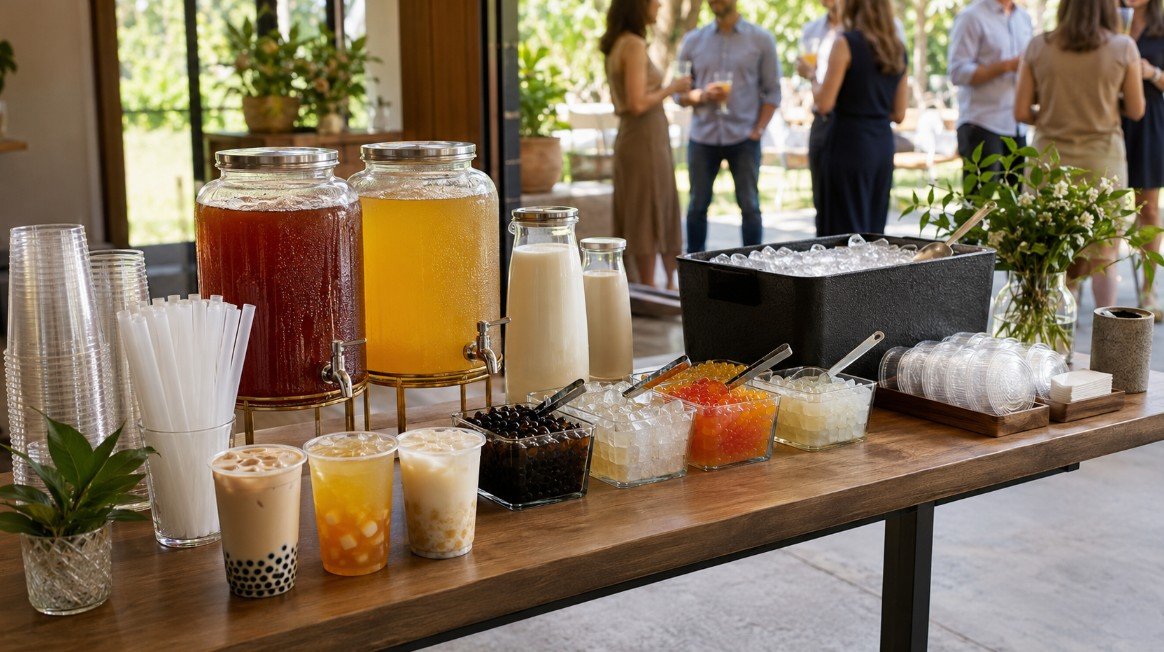
A boba party can work for a birthday, graduation, wedding, baby shower, office event, backyard dinner or a casual night with friends. The successful versions all solve the same practical problem: how do you serve a drink with tea, ice, milk, sweetness and chewy toppings to a group of people without turning the host into a full-time boba-shop employee?
The answer is usually restraint. A party menu does not need twelve flavors. A self-serve bar does not need every topping you have ever seen. Guests need a few clearly different choices, fresh pearls, enough ice and cups, an obvious path through the station, and a serving window that protects both texture and food quality. Once those basics are right, the event can still look beautiful—but the beauty comes from a station that actually works.
This guide covers the operational side of a bubble tea party: choosing between ready-to-serve drinks, DIY and catering; planning quantities without false precision; deciding which ingredients can be prepared early; keeping perishable components cold; choosing party-friendly toppings; building an efficient service flow; and scaling the setup from ten guests to a crowd of one hundred.
First decision
Choose the Party Format Before You Choose the Flavors
The biggest planning mistake is starting with a long shopping list. Before buying pearls, syrups or cups, decide how guests will actually receive their drinks. The service model determines almost everything else: how much prep you can handle, how many choices are realistic and whether someone needs to stay at the station during the event.
Ready-to-serve finished drinks
Drinks are assembled in advance or delivered ready for pickup. This is the cleanest option for a tight event schedule, but customization is limited and timing matters because ice and toppings continue to change after assembly.
Simple DIY boba bar
Two drink bases, two or three toppings and a clear station give guests enough choice without making the host manage a miniature restaurant. This is usually the sweet spot for home birthdays, showers and casual gatherings.
Full build-your-own station
Guests choose bases, milk, sweetness and several toppings. It sounds exciting, but every new variable creates another ingredient to chill, label, refill and clean. This format works only when the host enjoys the operational side or has someone assigned to manage it.
Staffed or catered boba service
A staffed station makes sense when the event has a strict timeline, a larger guest count or a host who should be enjoying the party rather than cooking pearls. Local boba shops may offer party packs, large-format drinks, staffed service or other event options depending on the market.
For most parties, a smaller menu with clear contrasts produces a better guest experience than a huge bar where nobody knows what to build.
Quantity without fake precision
Plan for Likely Boba Drinkers, Not the Total Invitation Count
There is no universal cups-per-person formula that works for every party. The useful number is not how many invitations were sent, but how many guests are likely to want bubble tea during the service window. A dinner where boba is one of several beverages behaves differently from a graduation party where the boba bar is a central attraction.
Start near one serving per likely drinker
If boba is served once with a meal or dessert, many guests will take one cup. A modest buffer covers spills, unexpected arrivals and people who want another drink.
Add more flexibility
Hot weather, outdoor events and long open-house schedules can increase beverage demand. Extra tea and ice are often more useful than preparing a huge quantity of pearls at the beginning.
Expect more second servings
If the boba bar is part of the entertainment, guests are more likely to return, compare combinations and make a second cup. This is where a small reserve of drink base becomes useful.
Guest mix also matters. Some people avoid caffeine. Some do not drink milk. Some dislike chewy textures. Children may need a different plan entirely. The safest approach is to estimate the number of likely drinkers, choose a realistic serving size and build a buffer around the beverages rather than dramatically overproducing every topping.
The ingredient with a clock
Tapioca Timing Can Make or Break the Party
Tapioca is the least forgiving part of a DIY boba bar. Tea can be brewed ahead and chilled. Many packaged jellies can be portioned before guests arrive. Cups and straws can be staged hours early. Cooked pearls, however, are valued for a narrow texture target: tender, elastic and chewy without becoming hard-centered or excessively soft.
That is why the best planning strategy is usually to make pearls close to the time they will be served and to avoid cooking the entire night’s supply unnecessarily early. For a longer event, a smaller second batch can produce better texture than one oversized batch expected to remain perfect for hours.
Brew and chill tea, prepare syrups, organize cups, straws and labels, chill milk and other perishable ingredients, portion stable toppings and set up the physical station.
Cook the tapioca according to the product or recipe instructions, finish the pearls as intended and move them into the serving plan while the texture is at its best.
Consider a smaller refresh batch if pearls are a major part of the experience. Do not assume one pot prepared far in advance will stay at peak texture for the entire party.
For topping-specific texture and pairing ideas, use our boba toppings guide. At a party, the key is to choose toppings that taste good and are practical to portion repeatedly.
Choose toppings for service, not spectacle
Party-Friendly Toppings Need Good Texture and Easy Portioning
A home boba bar becomes difficult when every topping behaves differently. Some ingredients are easy to hold, scoop and refill. Others add refrigeration, whisking, delicate texture or extra utensils. The best party toppings are not necessarily the most dramatic ones; they are the ones guests can serve without destroying the flow of the station.
Tapioca pearls
Essential if traditional chewy boba is part of the event. The main challenge is timing rather than complicated service.
Jellies and aloe
Coconut-style jellies, crystal-style toppings and aloe can provide a lighter texture with easy scoop-and-serve handling when used according to package directions.
Popping boba
Useful for fruit teas and guests who prefer a burst rather than chew. Keep flavors limited so the topping table does not become a candy counter.
Pudding, foam and highly perishable toppings
These can be excellent in a shop but require more temperature control, portioning and service attention. Add them only if they genuinely improve the event.
Design the movement
A Good Boba Bar Needs Service Flow More Than Extra Decorations
The physical layout determines whether the station feels elegant or chaotic. If guests have to reach across one another for ice, return to the beginning for a straw and then squeeze back through the line to find a lid, the table is badly designed no matter how beautiful the flowers are.
Build the station in one direction. Put the starting supplies where people enter the line and the finishing supplies where they leave. Exact assembly order can change depending on the recipe, but the human traffic should remain intuitive.
Cups and a very short explanation of the available bases. If guests need to identify dairy, non-dairy or caffeine differences, make that information clear here.
Tea bases, milk or sweetener only if the recipe is designed for self-service, followed by toppings in stable containers with dedicated scoops.
Ice where appropriate, lids, wide straws, napkins and a nearby place for drips or discarded packaging. Guests should leave the station without needing to walk backward through the line.
For larger parties, one table may not be enough. Separating drink dispensing from toppings can prevent a slow guest from blocking everyone behind them. A dedicated pickup zone is especially useful when drinks are being assembled by a host or staff member instead of entirely self-served.
Know when to hand off the work
DIY and Catering Make Sense for Different Events
DIY feels economical because the ingredients can look inexpensive compared with buying dozens of finished drinks. But ingredients are only one part of the cost. Time, equipment, transport, ice, service, cleanup and the person who has to manage the station during the event all matter.
Small home or backyard gatherings
If the group is manageable, the host enjoys preparation and the menu stays at two or three bases, DIY can be relaxed and genuinely fun.
Flexible serving times
When there is no exact ceremony, presentation or meeting schedule, the host has more room to refresh pearls, refill ice and adjust the station without disrupting the event.
Weddings and tightly scheduled events
A staffed service is useful when there is a defined reception window, formal clothing, a large crowd or no realistic opportunity for the host to manage drink assembly.
Large corporate or school events
Once dozens of people may arrive at the station at nearly the same time, throughput becomes an event-management problem. Staffed service can be more valuable than offering more flavors.
Different events need different decisions
Weddings, Birthdays and Office Events Should Not Use the Same Boba Setup
A wedding boba bar works best when it has a defined serving period rather than sitting unattended for the entire reception. Smaller cups can make sense because guests may already have dinner, dessert and other beverages. Staff service also reduces spills and keeps formal clothing away from a crowded self-serve topping table.
If the drink is tied to the couple’s cultural background or a personal story, let that meaning guide the menu instead of turning the station into generic wedding décor.
Fruit teas, a familiar milk tea and clearly separated toppings make birthdays easy to navigate. For young children, the host should be especially cautious with chewy or round toppings because choking risk depends on age, developmental readiness and how the food is served. Our boba safety guide covers this topic more fully.
Do not assume a “kid-friendly” color or flavor automatically makes every topping appropriate for every child. The safest party design is the one that lets adults make informed choices for the children in their care.
Graduation parties often have guests arriving in waves, which makes a flexible service plan useful. If the event is outdoors, ice and cold-holding capacity deserve more attention than decorations. Keep perishable ingredients properly chilled and avoid letting a beautiful display override temperature control.
A workplace break can send many people to the station at once. Pre-selected bases, limited toppings and either pre-assembled drinks or staffed service keep the line moving. A complicated DIY system may consume more of the event than the event itself.
Dietary planning without turning the table into a puzzle
Offer Clear Alternatives Instead of Endless Milk and Sweetener Choices
Trying to satisfy every possible preference by placing six milks and four sweeteners on a table usually makes service worse. A better party menu builds inclusion into the base choices themselves.
One dairy milk tea, one clearly identified non-dairy route and one naturally milk-free fruit tea can cover a much wider group than a cluttered customization station. Ingredient information should be easy to understand, especially when allergens, caffeine or other dietary concerns matter to guests.
For a fuller breakdown of milk choices, common ingredients and dietary considerations, use our boba dietary guide. At an event, clarity is the practical goal: guests should know enough about the drink to choose without needing to interrogate the host during the busiest part of service.
Perishable milk, prepared foods and cut produce should not be treated as decorative items. Keep cold foods properly chilled, use smaller serving containers when helpful and refresh them rather than leaving large amounts out for long periods.
The boring details save the party
Cups, Wide Straws, Ice and Waste Control Deserve Their Own Checklist
The drink ingredients get all the attention, but the event can fail because of supplies nobody remembered. Running out of wide straws with a full container of pearls is not a small inconvenience. Neither is discovering that the lids do not fit the cups ten minutes before guests arrive.
Cups, matching lids and proper wide straws
Test the cup-and-lid combination in advance and make sure the straw diameter works with the largest topping you plan to serve.
More ice capacity than you think you need
Ice is both an ingredient and a temperature-management tool. Outdoor events can consume it quickly, especially when guests are building drinks slowly.
Dedicated scoops and serving utensils
Each topping needs its own tool. Shared utensils slow service and can create unnecessary ingredient mixing.
Napkins, drip control and a nearby trash zone
A sticky station becomes unpleasant quickly. Give guests an obvious place to deal with straw wrappers, used napkins and small spills without blocking the service line.
If you are building a DIY station and need a broader equipment overview, our boba supplies guide covers the tools and consumables used for making and serving bubble tea.
Scale changes the job
A Boba Bar for 10 Guests Is Not the Same Project as One for 100
Two drink bases and two or three toppings are plenty. You can keep extra tea in the refrigerator, cook one manageable batch of pearls close to serving time and let guests experiment without causing a long line. DIY is usually very realistic at this scale.
Keep the same focused menu rather than doubling the number of choices. Prepare backup tea, extra ice and spare cups out of sight so the visible station remains clean. If several guests arrive at once, one person may need to refill or manage the line temporarily.
Two beverage dispensers and a limited topping set can still work, but separate the serving path carefully and plan refills before the event begins. Consider assigning someone other than the host to manage pearls and supplies. If everyone is expected to arrive at the bar in the same short window, staffed service becomes increasingly attractive.
Throughput, cold holding, ingredient storage, pearl timing, waste and staffing all matter. A highly simplified self-serve model can work, but many hosts will be better served by pre-made drinks, a staffed station or professional catering. The goal is not to prove that DIY is possible; it is to make the event enjoyable for both guests and host.
Concentrate the experience
A Focused Boba Service Window Usually Works Better Than an All-Day Bar
Leaving a fully stocked boba station open for many hours sounds generous, but it creates unnecessary problems. Pearls change texture. Ice melts. Perishable ingredients need ongoing temperature control. The table gets messy. Guests who arrive late may receive a much worse drink than the first group.
A better model for many events is a defined boba moment: open the station when the largest number of guests can enjoy it, keep it active for a focused period and then reduce or close the service rather than pretending every ingredient should sit indefinitely. This also helps the host estimate demand because the drinks are consumed within a more predictable window.
This does not mean every party needs an exact sixty-minute cutoff. The point is operational: concentrate the experience enough that the drinks stay good and the station can be actively managed.
Fix the problem before adding more decoration
What Usually Goes Wrong at a DIY Boba Party?
They were probably prepared too early, held poorly or left beyond their best texture window. The practical fix is smaller batches closer to service rather than one enormous early batch.
Ice dilution was not considered, or the tea base was brewed too weak for a cold mixed drink. Build the recipe for the way it will actually be served, not for how the tea tastes before milk and ice are added.
There are usually too many decisions or too few service points. Reduce customization, separate toppings from drink dispensing or switch part of the menu to ready-to-serve cups.
The portion scoop is probably too large or the topping is far more popular than the rest. Use smaller portions and keep a reserve container away from the main table.
The bases, syrups and toppings are stacking sugar on top of one another. Use a less-sweet base and let sweet toppings provide contrast instead of making every layer intense.
The supply plan was treated as secondary. Count serviceware separately from drink ingredients and build a reasonable backup into consumables that are cheap to store.
The menu is too complicated or the station lacks clear identification. Simplify the bases and make dairy, non-dairy, caffeine and major allergen information easy to understand.
If the party inspires you to start making the drinks themselves more often, our boba recipes guide is the better place to go deeper into home preparation. This page stays focused on serving a group successfully.
FAQ
Common Questions About Boba Parties
How much boba do I need for a party?
Estimate the number of guests who are likely to drink boba rather than using the full invitation count. For a short event, starting around one serving per likely drinker plus a modest buffer is more practical than producing huge amounts of every ingredient.
How many bubble tea flavors should I serve?
Two clearly different bases are enough for many parties: one creamy milk tea and one lighter fruit or floral tea. Add a third only when it serves a distinct need or the guest count is large enough to justify it.
Can I make tapioca pearls ahead of time?
You can prepare many other parts of the bar early, but pearls are best planned close to service because their texture changes with holding time. Follow the instructions for the specific pearls you use and avoid assuming they will stay at peak quality all day.
What toppings are easiest for a boba bar?
Tapioca, jellies, aloe and popping boba are generally easier to portion than elaborate foams or highly perishable homemade toppings. The best choice depends on the drink bases and the storage directions for each ingredient.
How do I keep ingredients safe during a party?
Keep perishable ingredients properly chilled until and during service, use clean utensils and smaller refill containers when helpful, and follow the storage directions for each ingredient. Hot outdoor conditions require even closer attention to cold holding.
Is DIY boba cheaper than catering?
Ingredient cost may be lower, especially for a small party, but compare the full workload: equipment, ice, cups, prep time, transport, service and cleanup. At larger events, paying for staff can be valuable even when the raw ingredients cost less at home.
What is the best boba setup for 50 guests?
Keep the menu focused, use a clear one-direction service flow, prepare backup tea and ice away from the visible bar, and assign someone other than the host to manage refills. If most guests will arrive at once, consider staffed service.
Can you serve bubble tea at a wedding?
Yes. A defined serving window, smaller cups and staffed service often work well because they reduce queues and spills while letting guests enjoy boba as part of the reception rather than as an all-night self-serve station.
How do I plan boba for guests with dietary restrictions?
Use a small number of clearly different options rather than many unlabeled substitutions. One dairy drink, one clearly identified non-dairy route and one milk-free fruit tea can cover many preferences while keeping ingredient information understandable.
The best boba party is not the one with the most toppings. It is the one where guests understand the choices, the pearls still have good texture, the drinks stay cold, the line moves naturally and the host gets to enjoy the event too.