
Ordering & customization
Boba Ice Levels: Regular, Less, No Ice and What Changes
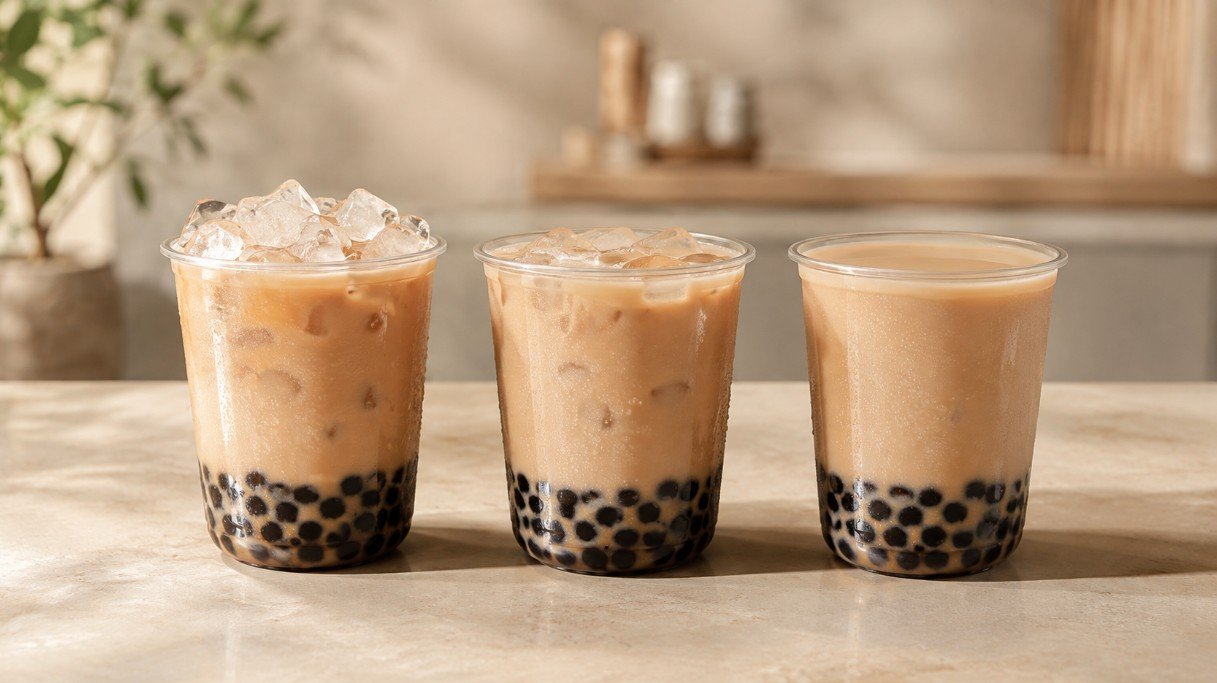
Ice level changes more than how cold your boba feels. It also changes how quickly the drink dilutes, how concentrated the tea and sweetness taste, and how the flavor develops while you sip. Regular ice, less ice and no ice can therefore make the same milk tea taste surprisingly different.
If you are ordering for the first time, less ice is often an easy middle ground: the drink stays cold while giving melting ice less influence over the flavor. But it is not automatically the best choice for every drink. Rich brown sugar drinks, refreshing fruit teas, slushes and delicate brewed teas all behave differently.
What Do Boba Ice Levels Mean?
There is no single worldwide ice scale used by every bubble tea shop. A simple menu may offer regular, less and no ice, while another shop may add light ice or extra ice. The useful way to read these options is relative to that shop’s normal recipe rather than assuming that every label represents a universal percentage.
This is also why two “less ice” drinks from different shops may arrive with noticeably different amounts of ice.
Extra ice
More ice than the shop normally uses.
Colder for longer, with more potential dilution as the ice melts.Regular ice
The shop’s standard amount.
Usually the reference point the recipe was designed around.Less ice
Less than the standard amount.
Keeps the drink cold while reducing the amount of melting ice.Light ice
A small amount of ice, where offered.
Useful when you want a cold drink with only a little ice remaining in the cup.No ice
No ice cubes left in the finished drink.
The drink may still be chilled. No ice does not necessarily mean room temperature.If the terminology on a shop’s board is unfamiliar, our boba menu guide explains how ice fits alongside drink bases, sweetness, toppings and other common menu choices.
Ice Changes Four Things at Once
Thinking only about temperature misses most of what ice is doing inside the cup. Changing the ice level can affect four parts of the drinking experience at the same time.
Temperature
More ice generally keeps a cold drink chilled for longer, especially if you are carrying it around before finishing it.
Dilution
Ice becomes water as it melts. The longer it sits in the drink, the more it can soften the concentration of tea, milk, syrup and other flavor components.
Flavor concentration
With less melting water, a no-ice or low-ice drink may keep a more concentrated tea, milk or syrup character as time passes.
Time
The difference matters much more when a drink sits for a while. A cup finished quickly has less time to change than one carried through a commute or delivered across town.
If you want the mechanism rather than just the ordering effect, see how ice dilutes boba and changes the concentration of a finished drink.
Regular Ice, Less Ice or No Ice: Which Should You Choose?
There is no universal “best” ice level. Start with how cold you like your drink, then think about how strong the flavor is and how long you expect the cup to sit.
Choose it when you want the shop’s standard cold-drink experience, expect to drink the boba fairly soon, or have a rich and sweet drink that benefits from some dilution as the ice melts.
Choose it when you still want a properly cold drink but prefer less dilution. It is a practical starting point for many milk teas and brewed tea drinks when you want the tea character to remain noticeable.
Choose it where available if you want only a small amount of ice left in the cup. This sits between less ice and no ice, but the exact amount is shop-specific.
Choose it when you do not want ice cubes sitting in the finished drink and you are comfortable with the drink warming sooner. Ask the shop if you specifically need room temperature, because “no ice” alone may still produce a chilled drink.
Choose it when staying very cold matters more to you than minimizing dilution. It can make sense on a hot day or when the drink will spend time outside, provided the shop offers the option.
Ice is only one part of the cup. When you are ready to combine ice, sweetness, milk, toppings and other options into one deliberate order, use our guide to customizing your boba.
The Best Ice Level Depends on the Drink
The recipe matters. A robust black tea milk tea can tolerate melting ice differently from a floral jasmine tea, while a slush uses ice as part of its actual structure. These are useful starting points rather than fixed rules because individual shops formulate their drinks differently.
| Drink style | Good starting point | Why |
|---|---|---|
| Classic milk tea | Regular or less ice | Regular keeps the intended cold balance; less ice can preserve a stronger tea-and-milk flavor as you sip. |
| Black or oolong milk tea | Less ice | A good option when you want the stronger brewed-tea character to stay noticeable. |
| Green or jasmine tea | Less ice | Less melting water can help a lighter, more aromatic tea remain distinct, especially if you drink slowly. |
| Fruit tea | Regular or less ice | Regular ice suits the refreshing style; less ice works when you prefer a more concentrated fruit-and-tea flavor. |
| Brown sugar drinks | Regular ice | These can be rich and sweet, so some melting ice may make the drink feel more balanced over time. |
| Fresh milk drinks | Regular or less ice | The better choice depends on how concentrated the syrup or brown sugar component is. |
| Slush | Usually fixed | Ice is blended into the drink itself, so many slush recipes do not allow a normal ice-level adjustment. |
| Hot boba tea | Not applicable | Hot is a temperature choice rather than an ice level. |
Does Less Ice Mean More Boba Tea?
Sometimes, but not always. Removing ice creates more physical room in the cup, but that does not guarantee that every shop will replace the missing ice with an equal amount of extra tea or milk.
A shop may use a standardized recipe, add more base liquid, change the fill method, restrict no-ice customization on certain drinks, or charge for a modification. The result depends on the shop and the drink.
If getting more liquid is important to you, asking the shop is more reliable than treating “no ice” as a volume hack. Cup capacity also changes what is possible, which is why it helps to understand common boba cup sizes rather than assuming that less ice automatically creates a larger serving.
Why No-Ice Boba Can Taste Sweeter
Imagine two identical sweetened milk teas. One has regular ice and the other has no ice. As the ice in the first cup melts, it adds water and gradually lowers the concentration of the sweetened drink. The no-ice cup does not get that same dilution.
That means the no-ice version can taste richer or sweeter as the drinking session goes on, even when both cups started with the same sweetness setting. The effect is especially noticeable in drinks built around sweet syrups, brown sugar or rich milk bases.
This does not create a universal rule such as “always lower your sugar by one level when ordering no ice.” Recipes differ too much between shops for that. Instead, treat sweetness and ice as two controls that interact.
If sugar customization is the part of the menu you are trying to decode, see our guide to boba sweetness levels.
No Ice Does Not Always Mean a Warm Drink
Taiwanese hand-shaken tea culture has a useful vocabulary for ice that makes this distinction clearer. A drink can have no ice cubes and still be cool from preparation or chilled ingredients.
So if temperature itself matters to you, “no ice” and “room temperature” should not automatically be treated as the same request.
There is another reason not to assume every shop uses identical definitions: some Taiwanese drink shops distinguish between an ice-removed drink that may retain a little crushed ice and a completely ice-free option.
For the narrower menu question, see exactly what “no ice” means in boba and why the answer can depend on the shop’s preparation method.
How Fast You Drink Your Boba Matters
Ice level is partly a time decision. The longer ice remains in the cup, the more opportunity it has to melt and change the drink.
Drinking it right away
If you finish a cold boba soon after it is made, regular ice has less time to dilute the drink dramatically. The cold, refreshing effect may matter more than later flavor changes.
Taking it on a walk or commute
Less ice becomes more attractive when the cup will sit for a while. You still get active cooling, but there is less ice available to turn into water.
Ordering delivery
Think about travel time as well as personal preference. A drink can spend a meaningful part of its life in transit before the first sip, so regular ice may arrive more diluted than it would across the counter.
Saving it for much later
Reducing ice can limit dilution, but it does not solve every storage problem. Tea aroma changes, milk drinks warm up, and tapioca pearls can lose their ideal texture. Boba is generally at its best as a freshly prepared drink.
Some Boba Drinks Do Not Have a Normal Ice Choice
Ice customization is common, but it is not universal. A menu can limit the option when ice is part of the recipe rather than something added after the drink is prepared.
Slushes
A slush gets its frozen texture from blended ice. Removing that ice would change the drink itself, so a normal “less ice” request may not be available. Learn more about how boba slush drinks differ from shaken tea.
Other blended drinks
Smoothies and frozen signature drinks may also have fixed recipes. A shop may be able to alter consistency, but that is not the same as removing loose ice cubes from a tea.
Signature recipes
Some drinks are intentionally sold with fixed sweetness or ice because the shop designed the ingredients to work at a particular balance.
Hot drinks
For hot milk tea or brewed tea, choose the temperature rather than trying to translate a cold-drink ice level into the order.
Four Easy Ice-Level Orders to Try
If you are still figuring out your preference, change one or two variables at a time. These are starting points, not universal recipes.
Classic milk tea
Less ice + moderate sweetness + tapioca pearls. A simple way to keep the drink cold while letting the tea-and-milk base stay more concentrated.
Bright fruit tea
Regular ice + moderate sweetness + a light jelly topping. Regular ice suits the refreshing character of many fruit teas, particularly when you plan to drink it soon.
Tea-forward oolong
Less ice + lower sweetness. This puts more attention on the roasted or floral tea character instead of making syrup and melting ice the main event.
Rich brown sugar milk
Regular ice first. If your shop’s version is particularly rich, allowing some ice to melt can make the later sips feel less heavy. Adjust on your next visit once you know that shop’s recipe.
Once you know your preferred ice and sweetness, the rest becomes much easier. Our choose your boba guide can help you match the drink style and toppings to what you actually enjoy.
Your Ice Level Is Part of the Recipe
The useful question is not simply “more ice or less ice?” It is what you want the drink to taste like from the first sip to the last. Regular ice prioritizes a colder standard experience, less ice reduces the amount of melting water while keeping the cup chilled, and no ice removes the cubes without necessarily making the drink warm.
When you are new to customization, start with one change and remember what happened. After a couple of orders, “less ice” stops being mysterious menu language and becomes one more way to make the drink yours.
For the complete sequence from choosing a drink base to sweetness, ice and toppings, read how to order boba.
Boba Ice Level Questions
What does less ice mean in boba?
Less ice means the shop uses less ice than its standard amount. The drink is still served cold, but there is less ice available to melt into the tea over time. The exact amount varies by shop because there is no universal bubble tea ice scale.
Does no ice mean boba will be warm?
No. A no-ice drink can still be chilled from preparation or cold ingredients. In Taiwanese drink terminology, removing the ice and ordering a drink at room temperature can be separate choices. Shop practices vary, so ask if you specifically want room temperature.
Does less ice give you more bubble tea?
Not necessarily. Less ice creates more space in the cup, but each shop decides how that space is handled. Some may add more tea or milk, while others follow a fixed recipe or use a different fill policy. Do not assume that no ice always means more drink.
Does boba taste sweeter with no ice?
It can. A regular-ice drink becomes more diluted as the ice melts, while a no-ice drink does not receive that extra water. As a result, the sweetness and other flavors can remain more concentrated. The difference depends on the recipe and how long you take to finish the drink.
What ice level is best for milk tea?
Regular or less ice are both useful starting points. Regular ice gives you the shop’s standard cold experience, while less ice can preserve a stronger tea-and-milk flavor as you drink. Rich, very sweet milk teas may benefit from the dilution that regular ice provides.
What ice level is best for fruit tea?
Regular ice works well when you want a very cold, refreshing fruit tea and plan to drink it soon. Less ice is worth trying when you prefer a more concentrated fruit-and-tea flavor or expect to carry the drink for a while.
Can you ask for extra ice in boba?
Some shops offer extra ice, while others only list regular, less and no ice. Extra ice keeps the drink colder for longer but also gives more ice the opportunity to melt and dilute the drink. Check the shop’s customization options before ordering.
Why can’t some boba slushes be ordered with less ice?
A slush uses blended ice to create its frozen texture, so ice is part of the drink rather than simply cubes added to a finished tea. Reducing it can change the recipe and consistency, which is why some shops do not allow normal ice-level customization for slushes.