
Toppings & ordering
How Many Boba Toppings Should You Order?
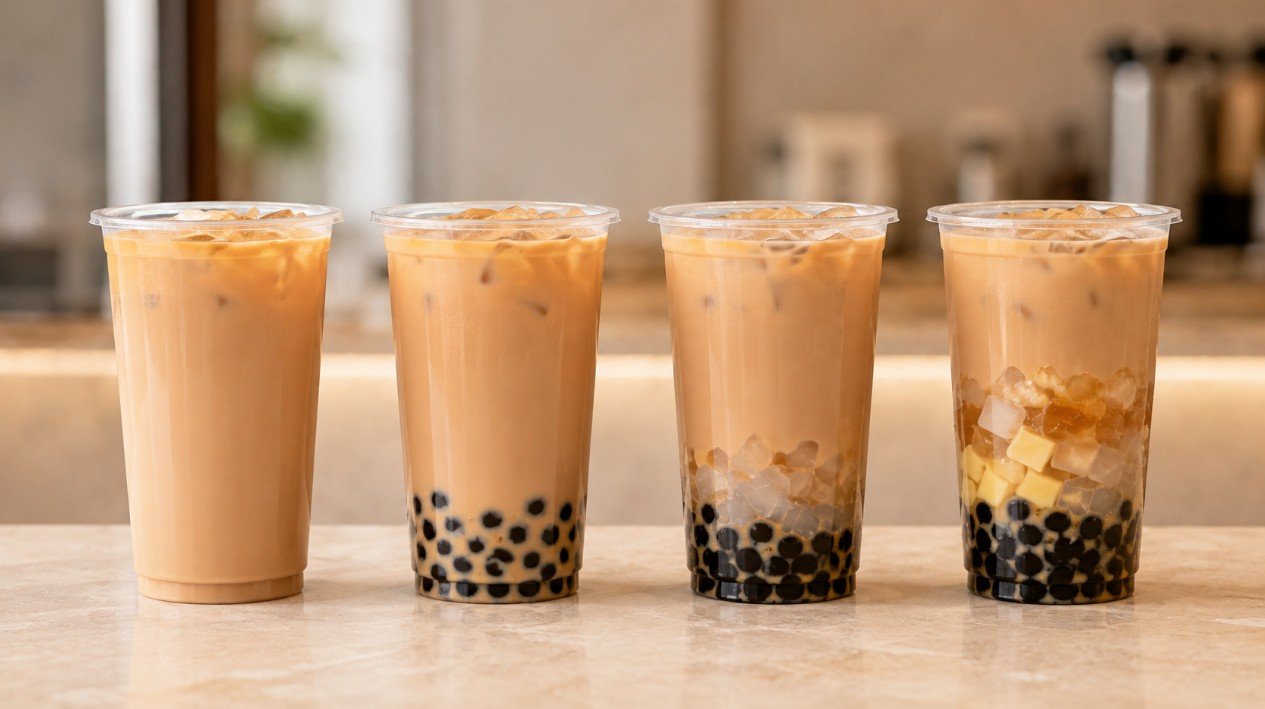
One topping is the easiest starting point for most boba orders. It gives the drink one clear texture without crowding the cup, making the flavor harder to read or turning every sip into a mixture of competing add-ons. Two toppings can work beautifully when they complement each other. Three or more can still make sense, especially in a drink designed around several textures, but by then the toppings become a major part of the experience rather than a small extra.
There is no universal shop rule that says “two is the maximum.” Real bubble tea menus include signature drinks built with two and three toppings, while customization systems at some shops allow considerably more. The better question is not how many toppings you are allowed to add. It is how many make this particular drink better.
Start With One Topping, Then Add a Second for a Reason
For a first order, an unfamiliar shop or a drink you have never tried, one topping is usually the most useful choice. You can actually tell whether you like the drink and whether the topping belongs with it.
Two toppings are a good next step when they add different but compatible textures: chewy tapioca with a softer jelly, for example, or a juicy topping paired with a clear fruit tea. Three toppings can be excellent when the recipe is built around them. The classic example is a “3Q” style milk tea combining tapioca, pudding and herbal jelly.
Once you move past three or four additions, the drink may still be enjoyable, but you are deliberately choosing a topping-heavy cup. At that point, texture, sweetness, cost and the amount of liquid left in the cup matter much more.
What Changes as You Add More Toppings?
The number itself is less important than what each extra topping does. Moving from zero to one topping changes the drink differently from moving from three to four.
No topping
The drink base stays completely in focus.
Useful for tea-forward drinks, foam-topped drinks or anyone who dislikes chewy and jelly textures.One topping
The easiest balance of drink and texture.
Ideal for beginners and for judging whether a new topping actually works with the beverage.Two toppings
A more layered cup without automatically becoming crowded.
Best when the two additions have distinct but compatible texture or flavor roles.Three or more
The toppings become part of the drink’s main identity.
Excellent in some signature recipes; less useful when additions are chosen without a pairing idea.If you are still learning what all the options actually are, start with the broader boba toppings guide. This page is about quantity; that guide owns the full topping universe.
Every Extra Topping Changes Three Parts of the Cup
Adding a topping is not just a flavor decision. It changes the physical and sensory balance of the drink.
Texture density
More pearls, jelly, pudding or other solids mean more bites and chews per sip. The beverage gradually becomes a more food-like experience.
Flavor balance
Sweetened pearls, flavored jellies, pudding and syrups can add their own sweetness or aroma instead of acting as neutral texture.
Liquid-to-solids ratio
Toppings occupy physical volume in the same cup. A heavily topped drink can contain a different proportion of beverage to solids even when the cup size stays unchanged.
That last point connects directly to boba cup sizes: a 24 oz container describes total capacity, not 24 oz of liquid tea plus unlimited toppings on top.
Two Toppings Work Best When They Do Different Jobs
Two toppings are often more successful when they create contrast rather than duplicate each other. You do not need two different chewy additions simply because both sound good on the menu.
Tapioca + jelly
Chewy pearls plus a softer or more slippery jelly create obvious textural contrast. This is one reason combinations such as tapioca with lychee jelly appear in real signature drinks.
Tapioca + pudding
Chewy and creamy can work well in milk tea, especially when you deliberately want a dessert-like cup rather than a tea-forward one.
Crystal boba + fruit jelly
A lighter pairing for fruit teas when you want texture without making the drink feel as heavy as a large portion of traditional tapioca.
Aloe + popping boba
Two juicy styles can work in a bright fruit drink, but because both add their own character, the base should be simple enough to keep the cup from becoming chaotic.
For drink-specific combinations, use the best toppings for milk tea or the best toppings for fruit tea. Those pages own pairing by drink family rather than the number of additions.
Toppings Take Up Real Space in the Cup
A scoop of tapioca, pudding or jelly is not a decoration floating outside the serving size. It lives inside the same container as your tea, milk and ice.
This means a topping-heavy cup can feel dramatically different even when the shop does not change its nominal size. The exact portion varies by chain and location, but current menus that publish topping weights show individual servings that can run from a few dozen grams to around 100 grams depending on the ingredient.
That is enough variation to make “five toppings” a completely different order from “one topping,” even before sweetness or ice enters the equation.
Extra Toppings Can Change the Price Faster Than You Expect
A topping often looks inexpensive in isolation, but several additions accumulate quickly. Current menus commonly charge separately for add-ons, and the amount can differ by ingredient and shop.
A modest surcharge may be easy to justify if it meaningfully improves the drink.
The final drink can move into a noticeably different price tier, especially when premium toppings have different surcharges.
At this point compare the finished order price, not the tiny-looking price beside each individual topping.
Some signature drinks already include toppings in their listed price. Before adding extras, read the ingredients so you do not accidentally order duplicates of something already in the cup.
How Many Toppings Make Sense for Different Boba Drinks?
The same topping count can feel restrained in one drink and excessive in another. Start with the weight of the base itself.
| Drink style | Useful topping approach | Good pairing direction | Watch for |
|---|---|---|---|
| Classic milk tea | 1–2 toppings | Tapioca alone, or tapioca plus pudding/jelly | Too many sweet, heavy additions can bury the tea. |
| Strong black or oolong milk tea | 1 topping first | Tapioca or a restrained jelly | Preserve enough tea character to taste the brewed base. |
| Fruit tea | 1–2 lighter toppings | Lychee jelly, aloe, crystal boba or popping boba | Too many flavored toppings can compete with the fruit profile. |
| Brown sugar drink | 0–1 extra topping | Often tapioca is already enough | Brown sugar plus several sweet toppings can become extremely dessert-like. |
| Matcha or taro drink | 1–2 toppings | Red bean, tapioca, pudding or complementary chewy texture | Dense add-ons can make an already creamy drink feel very heavy. |
| Signature multi-topping drink | Use the included build first | Trust the designed combination before adding more | Extra toppings may duplicate flavors or textures already built into the recipe. |
If you are new to the category altogether, beginner-friendly boba toppings are a better starting point than trying to maximize the number in your cup.
Build the Drink Before You Build the Topping Stack
1. Choose the drink first
Milk tea, fruit tea, fresh milk, matcha, coffee and slushes create different foundations. A topping should support that base rather than force it into the background.
2. Check what is already included
Signature drinks may already contain tapioca, jelly, pudding or fruit pieces. Count those before adding extras.
3. Pick one main texture
Chewy, juicy, creamy, crunchy or slippery: choosing one texture intentionally gives the cup a clear direction.
4. Add a second only if it adds something different
Contrast usually creates a more interesting cup than simply doubling down on the same mouthfeel.
5. Recheck sweetness, ice and size
Several sweet toppings can make a normal sweetness level feel stronger, while cup size and ice influence the balance between beverage and solids.
The full system is explained in how to customize a boba order. If the shop’s menu structure itself is confusing, start one step earlier with the boba menu guide.
Can You Mix Different Boba Toppings?
Usually, yes—if the shop allows the combination. The more useful question is whether those toppings make sense together in the same drink.
Mix for contrast
Tapioca plus a jelly, pudding plus chewy pearls, or aloe plus a juicy topping all create clearly different sensations.
Watch repeated sweetness
Several syrup-soaked or flavored toppings can turn a moderate drink into a much sweeter cup even when the base sweetness setting stays unchanged.
Check physical compatibility
Large pieces, thick pudding and some fruit additions may behave differently through a wide boba straw than small pearls or jelly strips.
Do not confuse “allowed” with “balanced”
A customization screen can offer ten possible add-ons without implying that all ten belong in one cup.
For the narrower combination question, see whether and how to mix boba toppings. That page can go deeper into pairing compatibility without turning this quantity guide into a full topping encyclopedia.
Ice and Sweetness Matter More as the Cup Gets Busier
Many toppings bring sweetness of their own. Brown-sugar-soaked tapioca, flavored jelly, pudding and popping boba can all alter the finished flavor even though the shop’s sweetness selector technically applies to the drink base.
This is why “50% sugar with three toppings” may not taste remotely like “50% sugar with no toppings.” The percentage is not a universal measurement of total sugar in the finished cup.
Ice also changes the experience. More melting ice can dilute the liquid portion over time, while a heavily topped no-ice drink may remain especially concentrated and dense.
Keep those variables separate by using our guides to boba sweetness levels and boba ice levels.
Five Topping Mistakes That Make a Good Drink Harder to Enjoy
Adding toppings before reading the recipe
You may pay to add tapioca to a signature drink that already includes tapioca.
Choosing every texture you like separately
Five favorite toppings do not automatically create one favorite combination.
Ignoring sweetness from the toppings
The base’s sweetness setting does not describe every sweet component in the finished cup.
Forgetting the cup has finite space
Toppings occupy part of the same serving volume as liquid and ice.
Ordering three extras on a drink you have never tasted
If the cup is disappointing, you will have no idea whether you disliked the base or the combination you built on top of it.
Those mistakes become much easier to avoid when you think of the order as a sequence. The broader boba ordering mistakes guide covers the rest of the menu decisions.
Three Complete Orders Show the Difference
Simple and tea-forward
Oolong milk tea + less ice + moderate sweetness + tapioca. One topping gives the drink texture without hiding the roasted tea.
Bright and layered
Passion fruit green tea + regular ice + lower sweetness + lychee jelly + crystal boba. Two lighter textures suit the refreshing base.
Dessert-style
Milk tea + tapioca + pudding + herbal jelly. Three toppings intentionally turn the cup into a dense, multi-texture drink rather than a lightly topped tea.
For more finished combinations instead of individual rules, use our planned boba order examples. If you still do not know which drink family suits you, choose your boba before worrying about extra toppings.
The Best Topping Count Is the One You Can Still Taste
A useful boba topping should add something recognizable: chew, softness, juiciness, creaminess, flavor or contrast. When every addition has a purpose, even a three-topping drink can feel coherent. When toppings are added simply because the menu permits them, one good tea can disappear underneath a pile of textures.
For a new drink, start with one. Add two when you understand why they belong together. Choose three or more when you genuinely want the toppings to become a major part of the cup.
For the full ordering sequence—drink base, size, sweetness, ice and toppings—read how to order boba.
Found a Topping Combination We Should Try?
Boba shops are unusually creative with toppings, and some of the most interesting combinations never become national-menu standards. If your local shop serves an unexpected pairing that genuinely works—an unusual jelly, a regional topping, a brilliant three-texture signature drink or something we have not covered—tell the Boba Guide Editorial Team about it.
We are especially interested in clear menu photos, the name and location of the shop, what the topping is made from when you know, how it changes the drink, and photos of the finished cup. Home boba experiments are welcome too: if you have found a topping pairing or preparation trick worth investigating, send it our way.
Community tips give us leads for future research and updates. We verify factual details separately before adding them to our guides.
Questions About Ordering Boba Toppings
How many toppings should I get in boba?
One topping is a useful starting point for most first-time or unfamiliar orders. Two toppings can work well when they add complementary textures or flavors. Three or more can still be balanced, especially in signature drinks designed around multiple toppings, but they make the cup more topping-heavy and can change sweetness, price and the liquid-to-solids ratio.
Is two boba toppings too many?
No. Two toppings can be an excellent combination when they do different jobs, such as chewy tapioca with soft jelly or pudding. The better test is whether both additions improve the same drink rather than whether the number is exactly two.
Are three toppings too much for bubble tea?
Not necessarily. Some signature bubble tea drinks are intentionally made with three toppings. A three-topping cup will usually be more texture-heavy and filling, so it works best when the drink was designed for that style or when you already know you enjoy the combination.
Do boba toppings take up space in the cup?
Yes. Tapioca pearls, jelly, pudding and other toppings occupy physical volume inside the same container as the drink and ice. A heavily topped cup can therefore have a different liquid-to-solids ratio from the same cup with fewer toppings.
Do extra boba toppings cost more?
Usually, but pricing varies by shop and topping. Some signature drinks include one or more toppings in the listed price, while additional toppings are charged separately. Check the final order price rather than assuming every topping has the same surcharge.
Can you mix different toppings in bubble tea?
Usually yes if the shop allows it. The best combinations tend to add complementary textures or flavors instead of simply stacking several similar additions. Tapioca with jelly or pudding is a common example of using contrasting textures.
What is the best first boba topping?
Classic tapioca pearls are a useful first choice if you want to experience the chewy texture most closely associated with boba. If you dislike chewy foods, a jelly, pudding, aloe or another softer topping may be a better introduction.
Should I add toppings to a signature boba drink?
Check what is already included first. Many signature drinks already contain tapioca, jelly, pudding, fruit or foam. Try the designed combination before adding several extras, especially when ordering the drink for the first time.