
Caffeinated vs Caffeine-Free Boba
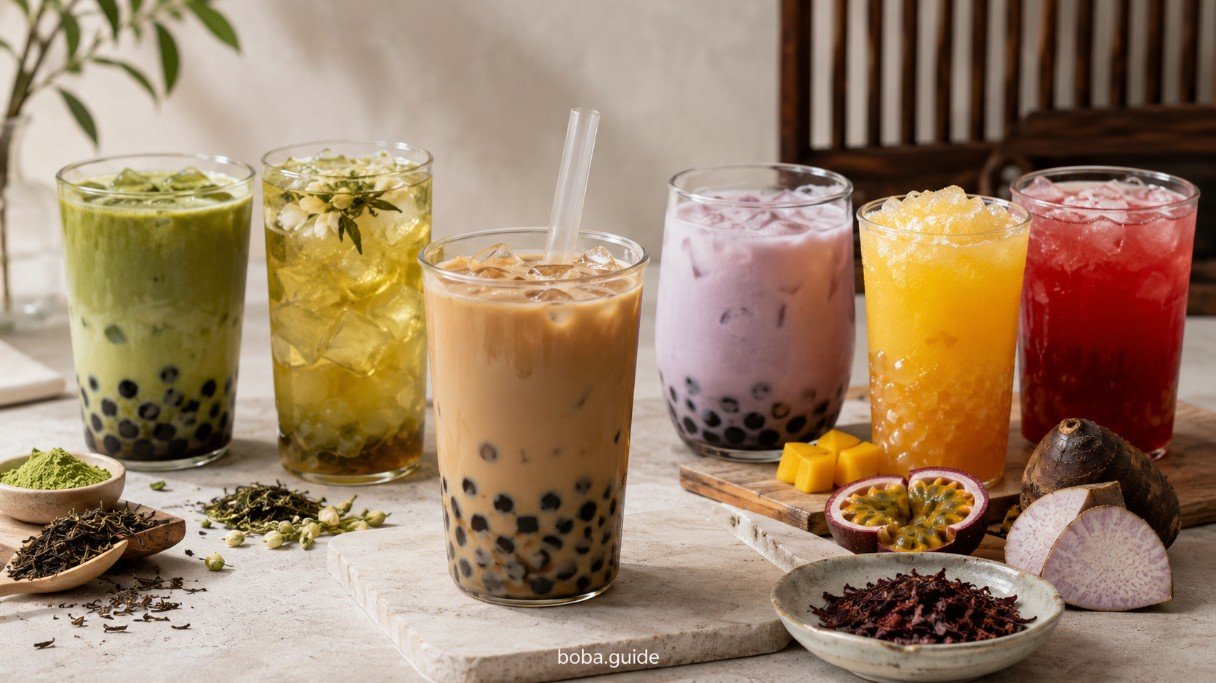
Caffeinated boba gets its caffeine mainly from tea, matcha or coffee. Caffeine-free boba is possible when the complete drink uses none of those ingredients or another caffeine source. The safest comparison is therefore not “milk tea versus fruit drink” or “brown versus purple.” It is caffeinated ingredient versus no caffeinated ingredient.
Black tea, green tea, jasmine tea, oolong, matcha and coffee sit on the caffeinated side. Fresh milk, tea-free fruit drinks, pure rooibos and pure hibiscus can sit on the caffeine-free side. Taro, brown sugar, fruit, chocolate and house-special names fall in the middle because the same flavor can be built more than one way.
Think of caffeine in boba as a four-step ladder
A drink name tells you less than the ingredient that contributes caffeine. This ladder separates genuinely caffeine-free builds from drinks that are simply lower or less obvious in caffeine.
Caffeine-free build
No caffeinated tea, matcha, coffee or other caffeine source is used in the complete drink. A tea-free fruit drink, plain fresh-milk drink or pure caffeine-free herbal infusion can fit here when the recipe is confirmed.
Decaffeinated or reduced-caffeine build
Decaffeinated tea or coffee has had most caffeine removed, but decaf is not automatically identical to zero caffeine. It belongs between caffeine-free and regular caffeinated drinks.
Tea-based boba
Black, green, jasmine, oolong, white and other true teas naturally contain caffeine. Milk, fruit syrup, ice and tapioca can change the taste, but they do not remove caffeine from the tea base.
Matcha or coffee-based boba
Matcha is powdered tea leaf and coffee is a separate caffeine source. Their exact caffeine content still varies by recipe and serving size, but neither should be treated as caffeine-free.
Tea-free does not always mean caffeine-free. A coffee boba can contain no tea and still be caffeinated.
Which boba drinks are usually caffeinated?
These are practical category-level expectations, not universal recipes. Shops can formulate the same named drink differently, so uncertain categories still need a recipe check.
For the broader families behind these drinks, see boba drink types. For tea-specific differences, see tea used in boba.
The flavor name alone can put two very different drinks under one label
Mango green tea vs tea-free mango drink
Both can look bright and fruity. The first contains a caffeinated tea base; the second can be caffeine-free if the recipe contains no other caffeine source.
Brown sugar milk tea vs brown sugar fresh milk
Milk tea normally includes tea. Fresh milk can be a non-tea build. Brown sugar changes sweetness and flavor, not the caffeine status by itself.
Taro milk tea vs taro milk
The purple color can be nearly identical while the base changes completely. “Milk tea” points toward tea; “taro milk” still needs its recipe confirmed.
Four practical swaps from caffeinated boba to caffeine-free-style alternatives
A swap does not have to taste identical. The goal is to preserve the part of the drink you enjoy—creaminess, fruit, chewy pearls or a deeper roasted character—while removing the obvious caffeine source.
Tea-forward, creamy, chewy.
Keeps creaminess and tapioca while removing the tea base when the recipe is genuinely tea-free.
Cold, bright and fruit-forward.
Keeps the fruit and refreshment while replacing the green-tea base.
Creamy with an earthy profile.
Not a flavor match, but it keeps a creamy, dessert-like body without genuine matcha.
Deep, roasted and milk-friendly.
A confirmed pure rooibos base can offer deeper, warm flavor without coffee or true tea.
Use the dedicated caffeine-free boba page for deeper ingredient checks and drink-selection guidance.
Caffeinated and caffeine-free builds often feel different in the cup
The difference is not only caffeine. Removing true tea, matcha or coffee can change aroma, dryness, bitterness, roast, floral notes and how strongly the drink stands up to milk and sweetness.
More likely to feel tea-forward, roasted, floral or gently bitter
Black tea can bring malt and tannin; jasmine and green tea can bring floral or vegetal notes; oolong can bring roast or fragrance; matcha can feel grassy and dense; coffee can add obvious roast and bitterness.
These flavors often give a drink more contrast against milk, syrup and tapioca.
More likely to lean fruit-forward, milk-forward, herbal or dessert-like
Tea-free fruit drinks emphasize fruit and acidity. Fresh-milk drinks emphasize dairy and syrup. Taro can feel creamy and starchy. Rooibos and hibiscus can bring herbal, woody, tart or fruity notes without true tea.
These are broad sensory tendencies, not promises about every shop recipe.
Milk, sugar, ice and plain tapioca do not cancel caffeine that is already in the base
Many menu customizations change taste, texture or concentration without changing the basic answer to “is this caffeinated?” Once black tea, green tea, matcha or coffee is part of the recipe, ordinary add-ons do not remove that caffeine source.
Milk softens tea flavor but does not make tea caffeine-free
A black milk tea may taste gentler than straight black tea because milk changes the balance of bitterness, tannin and sweetness. The underlying tea is still present, so the drink remains caffeinated.
Less sugar is not the same as less caffeine
Choosing 0%, 25% or full sweetness changes added sugar, not the caffeine already contributed by tea, matcha or coffee. A low-sugar matcha drink is still a matcha drink.
Ice can dilute flavor without changing the source
More ice may make a drink taste lighter as it melts, but dilution is different from removing caffeine. The original caffeinated ingredient remains part of the cup.
Plain pearls usually add texture, not the main caffeine source
Classic tapioca pearls are normally not why a boba drink is caffeinated. Specialty toppings can be different, especially when coffee, matcha, chocolate or other flavored ingredients are involved.
If a drink starts with caffeinated tea, matcha or coffee, it stays on the caffeinated side unless that ingredient itself is removed or replaced.
Two drinks in the same category can contain different amounts of caffeine
“Caffeinated” is a category answer. The exact amount is a recipe answer. Tea variety, leaf amount, steeping conditions, concentrate strength, matcha quantity, coffee dose and cup size can all move the final number.
A shop that brews a concentrated black-tea base for milk tea can produce a different cup from a shop using a lighter tea base, even when both menus simply say “black milk tea.” The same applies to matcha: one recipe may use a restrained amount of powder while another uses considerably more. Coffee drinks vary with the amount and type of coffee added.
That is why this comparison does not assign one universal caffeine number to “milk tea,” “matcha boba” or “fruit tea.” The category tells you where caffeine comes from; the shop recipe determines how much is in a particular serving.
For someone choosing between caffeinated and caffeine-free boba, this distinction is more useful than treating every cup in a category as nutritionally identical.
Some menu names are high-confidence; others are impossible to classify without the recipe
The caffeine source is named directly
Black tea, green tea, jasmine tea, oolong, matcha and coffee are strong signals. You do not need to infer caffeine from color or sweetness when the source is already in the name.
The base can naturally avoid true tea and coffee
Plain fresh milk, tea-free fruit drinks, pure rooibos and pure hibiscus can qualify. The final recipe still matters because flavor powders, chocolate, coffee jelly or mixed concentrates can change the answer.
The name describes flavor rather than the base
Taro, brown sugar, wintermelon, fruit, chocolate and house-special names can appear in both caffeinated and caffeine-free-style builds. These are the drinks where one short recipe question matters most.
If the answer is unclear, the drink is not a high-confidence caffeine-free choice.
For the full ordering sequence beyond caffeine—including sweetness, ice and toppings—see how to order boba.
Decaf belongs between caffeine-free and regular caffeinated boba
Decaffeination removes most caffeine from tea or coffee, but decaf products can retain a small amount. That makes “decaf” a different claim from a drink built without a caffeine source in the first place.
Best matched to drinks built without true tea, matcha, coffee or another caffeinated ingredient.
Useful when lower caffeine is acceptable, but it should not automatically be treated as zero.
The exact amount varies with product, preparation, concentration and serving size.
Caffeinated boba is defined by its caffeine source; caffeine-free boba is defined by the absence of one
Tea, matcha and coffee are the clearest caffeinated signals. Tea-free fruit, fresh milk and selected herbal bases can be caffeine-free when nothing else in the recipe adds caffeine. Flavor words such as taro, mango and brown sugar do not answer the question by themselves.
Send us the wording you saw
If a shop uses an unusual name for a tea-free, herbal, decaf or fresh-milk drink, send the wording or a clear menu photo to info@boba.guide.
Caffeinated vs caffeine-free boba FAQ
Questions about tea, matcha, coffee, fruit drinks, taro, brown sugar and decaf boba.
Does boba always have caffeine?
No. Boba can be made with caffeinated or caffeine-free bases. Tea, matcha and coffee normally contribute caffeine, while a confirmed tea-free fruit, fresh-milk or caffeine-free herbal build can contain no caffeine source.
Which boba drinks are usually caffeinated?
Classic milk tea, black tea, green tea, jasmine tea, oolong tea, fruit tea made on a tea base, matcha drinks and coffee boba are usually caffeinated because the base itself contains caffeine.
Can fruit boba be caffeine-free?
Yes, when it is a genuinely tea-free fruit drink and no other caffeine-containing ingredient is added. Fruit green tea, fruit black tea and fruit jasmine tea are caffeinated because they still contain true tea.
Is brown sugar boba caffeinated?
Brown sugar does not determine caffeine status. Brown sugar milk tea normally contains caffeinated tea, while brown sugar fresh milk can be caffeine-free when the recipe contains no tea, matcha, coffee or other caffeine source.
Does taro boba have caffeine?
It depends on the build. Taro milk tea normally contains caffeine from tea, while a tea-free taro milk or taro slush may be caffeine-free. Premixes can vary, so the actual recipe matters.
Does matcha boba have caffeine?
Yes. Genuine matcha is powdered tea leaf and naturally contains caffeine. Adding milk, syrup or tapioca does not make the matcha itself caffeine-free.
Is coffee boba tea-free and caffeine-free?
It can be tea-free but still caffeinated because coffee is its own caffeine source. This is why tea-free and caffeine-free are not interchangeable descriptions.
Are herbal boba drinks caffeine-free?
Some can be. Pure rooibos and pure hibiscus are naturally caffeine-free, but a shop blend can include true tea, yerba mate or another caffeine source, so the blend should be confirmed.
Is decaf boba completely caffeine-free?
Not necessarily. Decaffeinated tea and coffee can retain a small amount of caffeine. A drink built without a caffeine source is a clearer caffeine-free category than a decaf version of a caffeinated ingredient.
What is the easiest way to compare caffeinated and caffeine-free boba?
Identify the caffeine source. If the drink contains tea, matcha, coffee or another caffeinated ingredient, treat it as caffeinated. If the complete recipe contains none of those, it can be caffeine-free.