
Caffeine-Free Boba: Drinks, Ingredients and How to Order Without Caffeine
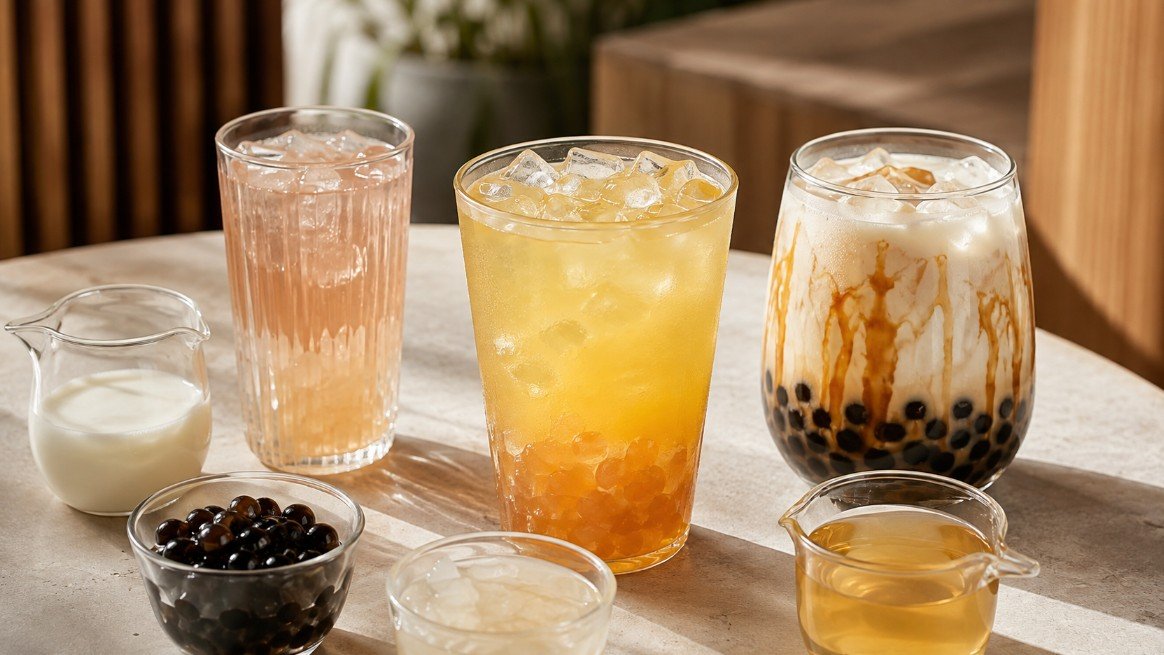
Caffeine-free boba is possible when the complete drink is made without a caffeine-containing base, flavor ingredient or topping. Fruit drinks made without tea, fresh-milk drinks made without tea or coffee, and some herbal or non-tea drinks can fit this category. The important word is complete: a fruit flavor can still sit on green tea, a milk drink can include coffee, and a topping can introduce coffee, matcha or chocolate even when the base looks caffeine-free.
The easiest mistake is to treat “tea-free” and “caffeine-free” as synonyms. They are not. Coffee contains caffeine without containing tea, matcha is a tea ingredient, cocoa can contribute caffeine, and decaffeinated coffee or tea is not necessarily completely caffeine-free. A reliable order therefore starts by identifying every meaningful caffeine source rather than guessing from the drink name.
This guide focuses on that practical decision. It explains which common boba bases usually contain caffeine, which drinks may work without it, why fruit tea and taro need closer inspection, what to ask a shop, and how to choose toppings without turning a simple caffeine-free order into a guessing game.
Boba is a drink format, not a caffeine category
The word boba tells you very little about caffeine. A boba shop can serve black tea, green tea, oolong, coffee, matcha, fruit drinks, milk drinks, slushes and other bases, all with similar toppings. Some of those bases contain caffeine naturally; others may be made without it.
Tea, coffee, milk, fruit, herbal infusion or another prepared base.
Matcha, cocoa, coffee, syrups, powders or other flavor ingredients can change the answer.
Tapioca may be simple, while coffee jelly or matcha-flavored toppings need another check.
A drink is meaningfully caffeine-free only when those parts do not introduce caffeine. This is why the most useful question at the counter is not merely “Is this tea?” but “Does this complete drink contain caffeine?”
Plain tapioca pearls are not what normally makes a boba drink caffeinated
Classic tapioca pearls are built around tapioca starch and sweetening or cooking ingredients rather than tea or coffee. In a standard pearl drink, caffeine usually comes from the liquid base or from another flavored component, not from tapioca itself.
That distinction is useful because it lets you keep the classic chewy texture while changing the drink underneath. A fresh-milk drink with tapioca can be built very differently from black milk tea with the same pearls. The topping looks identical, but the caffeine question is different.
Commercial recipes can vary, so a flavored or specialty pearl should still be checked when strict avoidance matters. For the ingredient and texture basics, see what boba pearls are.
Tea and coffee are obvious, but matcha, cocoa and specialty ingredients can be easy to overlook
Traditional tea from Camellia sinensis contains caffeine. That includes familiar black, green, oolong and white tea styles. Jasmine tea is commonly scented tea made with a true tea base, so a jasmine boba drink should not be assumed caffeine-free simply because its aroma is floral.
These are true tea categories and normally contribute caffeine.
Matcha is powdered tea, so a genuine matcha drink is not caffeine-free.
Tea-free coffee boba can still be clearly caffeinated.
Cocoa naturally contains caffeine, so strict caffeine-free ordering should include it in the ingredient check.
These can introduce caffeine even when the drink is not described as coffee or traditional tea.
A pure herbal base can be a useful path, but blended products may include true tea or another caffeine source.
That source-based approach is more reliable than judging by color. A pale green drink may contain caffeinated green tea or matcha; a dark drink may simply be brown sugar milk; and a bright fruit drink may be either tea-free or built directly on caffeinated green tea.
Removing tea solves only one possible caffeine source
A drink can contain no tea at all and still get caffeine from coffee.
If the full recipe contains no tea, coffee, matcha, cocoa or other caffeine source, this can be a straightforward caffeine-free style.
The same logic applies to chocolate, mocha and specialty “energy” flavors. A drink does not become caffeine-free merely because black or green tea is absent. When strict avoidance is the goal, check the actual source ingredients instead of using “no tea” as the finish line.
Decaf is a reduction category, not a promise of zero caffeine
This is the clearer target when someone specifically wants to avoid caffeine rather than merely reduce it.
Decaffeinated coffee and tea can retain a small amount of caffeine, so the term should not be treated as identical to caffeine-free.
This distinction matters at boba shops that offer decaf coffee or tea. A decaf coffee boba may be much lower in caffeine than the regular version, but that still does not make “decaf” and “zero caffeine” interchangeable descriptions.
If a menu only says “decaf,” ask whether the shop has information about residual caffeine or whether a genuinely non-coffee, non-tea option would better match what you want.
Fruit, fresh milk and some herbal bases are useful starting points — with recipe checks
There is no universal caffeine-free boba menu because shops build drinks differently. The useful approach is to start with categories that can exist without caffeine and then verify the exact recipe.
Bright and refreshing
Mango, peach, lychee, strawberry and similar fruit drinks can be caffeine-free when they are made without black, green, oolong or jasmine tea and without another caffeine-containing ingredient.
Simple and creamy
Fresh milk, brown sugar and tapioca can create a tea-free drink with no obvious caffeine source. The recipe still needs checking when flavored powders, cocoa or specialty syrups are involved.
Frozen and tea-free
A fruit-and-ice slush can be a practical choice when the shop confirms there is no tea, coffee, matcha or caffeinated additive in the base.
Potentially caffeine-free
Herbal infusions are botanically different from traditional tea, but a shop blend may combine herbs with green, black or other true tea. Confirm the blend rather than relying on the word herbal alone.
Fruit flavor does not tell you whether tea is hiding underneath it
Fruit base + water or another non-caffeinated liquid can work.
The fruit is added to green tea, so the drink should not be treated as caffeine-free.
Black tea remains caffeinated even when fruit dominates the flavor.
Jasmine aroma does not turn a true tea base into an herbal infusion.
This is one of the most common menu traps. A peach drink and a peach green tea may look almost identical in a photograph. One can potentially be built without caffeine, while the other clearly contains a tea source. For the tea-based category itself, see fruit tea with boba.
Milk-first drinks can create one of the simplest caffeine-free paths
A drink built from fresh milk, brown sugar syrup and tapioca does not inherently need tea or coffee. That makes this style useful for someone who wants classic boba texture in a creamy drink without choosing milk tea.
The naming detail matters. “Brown sugar fresh milk” can be different from “brown sugar milk tea.” Once actual tea is part of the recipe, the caffeine answer changes. See our fresh milk boba guide for the broader milk-first style.
Taro is a flavor clue, not enough information to answer the caffeine question
A taro drink can be made as taro milk, taro slush, taro milk tea or a powdered blend with additional ingredients. Taro itself does not tell you whether black tea, green tea, coffee, matcha or another caffeine source has been added.
This makes taro a classic “depends on the recipe” order. Ask whether the drink is made with tea, whether its powder or premix contains tea or caffeine, and whether the version you are ordering is milk-only or milk-tea based. The purple color cannot answer any of those questions.
Herbal infusions can be useful, but “herbal” should describe the actual base rather than hide a tea blend
Traditional black, green, oolong and white teas come from Camellia sinensis. Herbal teas are infusions made from other plants. That botanical distinction makes a pure herbal infusion a different starting point from ordinary tea.
For boba ordering, however, the practical question is whether the shop uses a pure herbal infusion or a blend. Hibiscus, mint or another herbal ingredient can be combined with green or black tea, and specialty botanical ingredients such as yerba mate can contain caffeine themselves.
This wording is more useful than asking only whether the drink is “herbal,” because it forces the base itself to be identified.
Milk, fruit or a creamy appearance does not cancel the caffeine in the base
Adding milk changes taste and body, not the caffeine already present in black, green, oolong or jasmine tea.
Matcha is powdered tea, so genuine matcha should not be placed on a caffeine-free list.
Even decaf should not automatically be called caffeine-free.
Coffee and cocoa can both matter depending on the recipe.
For tea-based creamy drinks, see milk tea with boba. For the coffee category, see coffee boba.
Many familiar toppings are not caffeine sources, but flavored toppings can change the answer
Classic pearls do not ordinarily rely on tea or coffee for their identity.
The basic topping may be simple, but commercial formulations and added flavors vary.
Fruit flavor does not automatically reveal every ingredient in the commercial topping.
A coffee-flavored topping is an obvious place to check when caffeine avoidance matters.
Real matcha introduces a tea-derived caffeine source.
Cocoa can contribute caffeine, so strict avoidance requires ingredient confirmation.
The simplest order is often the easiest to verify. One clearly identified non-caffeinated base plus plain tapioca or another confirmed topping creates fewer hidden variables than a cup with three flavored add-ons. For more topping types, see our boba toppings guide.
Caffeine-free does not mean sugar-free, dairy-free or automatically “healthy”
A caffeine-free fruit slush or brown sugar fresh milk can still contain substantial added sweetness.
Fresh milk can fit a caffeine-free recipe while still being entirely dairy-based.
Serving size, syrups, milk and toppings determine energy content independently of caffeine status.
For calories, sugar and broader caffeine context, use our boba nutrition guide. For dairy and other ingredient-related needs, see the boba dietary guide.
Choose a confirmed caffeine-free build instead of guessing from words such as fruit, milk or decaf
Some people look for caffeine-free boba later in the day, and parents or caregivers may also want to identify drinks without caffeine for a child. The ordering principle remains the same: do not infer caffeine status from sweetness, color or whether the drink looks like tea.
For strict avoidance, verify the base, flavor ingredients and toppings. This guide does not turn a specific drink into a medical recommendation; it simply helps identify where caffeine may enter a boba order and how to ask clearer ingredient questions.
Use a five-step ingredient check instead of asking for a random “non-tea” drink
Choose a non-tea, non-coffee base
Start with a fruit drink, fresh milk, fruit slush or another base that can exist without black tea, green tea, oolong, jasmine tea or coffee.
Check matcha, cocoa and specialty ingredients
Tea-free is not enough if matcha, chocolate, guarana, yerba mate or another caffeine source is still part of the recipe.
Ask about powders and premixes
Taro, fruit, milk and other flavors can be prepared from shop-specific mixes. Ask whether the mix itself contains tea, coffee or caffeine.
Check the topping separately
Plain tapioca is simple to understand, while coffee jelly, matcha toppings and chocolate components deserve another question.
Confirm the finished drink
Ask whether the complete order is caffeine-free rather than merely tea-free or decaffeinated.
Specific questions are easier for staff to answer accurately
“Does this drink contain black, green, oolong or jasmine tea?”
“Does the flavor powder or premix contain tea, matcha, coffee or caffeine?”
“Is there cocoa, coffee or another caffeinated flavor in this drink?”
“Is this actually caffeine-free, or is it decaffeinated?”
“Does this topping contain coffee, tea, matcha or chocolate?”
You usually do not need to ask every question. Pick the ones relevant to the drink. A plain fresh-milk-and-tapioca order may need only a quick recipe confirmation; a specialty taro-chocolate-coffee creation obviously has more moving parts.
Choose a simple build that makes the caffeine source easy to verify
Ask specifically for the version without green, black or jasmine tea.
A straightforward milk-first combination when the shop confirms there is no tea or coffee.
Useful when you want a cold dessert-style drink without relying on a tea base.
Confirm the powder or mix and avoid assuming every taro drink has the same recipe.
Verify that the infusion is not blended with true tea, mate or another caffeine source.
For frozen drink structure, see our slush boba guide.
Ingredient transparency matters more than a confident-looking menu label
You know whether the drink uses tea, coffee, milk, fruit or an herbal infusion.
Powders, cocoa, matcha and specialty ingredients have been accounted for.
Reduced caffeine is not presented as identical to caffeine-free.
The topping does not quietly reintroduce coffee, tea, matcha or another source.
The explanation identifies the recipe instead of relying only on a product name.
Ingredient clarity is also part of overall drink quality. For the broader framework covering freshness, flavor, texture and preparation, see our boba quality guide.
Follow the drink from base to topping before calling it caffeine-free
Questions about caffeine-free boba
What boba drinks are caffeine-free?
Potential options include fruit drinks made without tea, fresh milk with brown sugar and tapioca, fruit slushes without tea, and some confirmed caffeine-free herbal drinks. Exact recipes vary, so the full base, flavor ingredients and toppings should be checked.
Does boba itself contain caffeine?
Plain tapioca pearls are not normally the main caffeine source in a boba drink. Caffeine is more likely to come from tea, coffee, matcha, cocoa or another flavored ingredient. Specialty or flavored toppings should still be checked individually.
Is fruit boba caffeine-free?
It can be, but fruit tea is not automatically caffeine-free. Mango green tea, peach black tea and similar drinks contain a tea base. Ask for a fruit drink made without caffeinated tea if that is your goal.
Is brown sugar boba caffeine-free?
Brown sugar fresh milk with tapioca can be caffeine-free when no tea, coffee, matcha, cocoa or other caffeine source is included. Brown sugar milk tea is different because the tea base contributes caffeine.
Is taro boba caffeine-free?
Sometimes. Taro milk or a taro slush can potentially be made without caffeine, while taro milk tea contains tea. Powders and premixes also vary, so the exact shop recipe needs checking.
Is milk tea caffeine-free?
Not when it is made with regular caffeinated tea. Black, green, oolong and jasmine milk teas use tea as the base, and adding milk does not remove its caffeine.
Is matcha boba caffeine-free?
No, not when it contains real matcha. Matcha is made from tea and contains caffeine, even though its appearance and preparation differ from brewed black or green tea.
Is decaf boba completely caffeine-free?
Not necessarily. Decaffeinated coffee and tea can retain some caffeine. If you specifically need a caffeine-free drink, a base with no caffeine source is clearer than assuming “decaf” means zero.
Can boba toppings contain caffeine?
Yes, depending on the topping. Plain tapioca is usually straightforward, while coffee jelly, matcha toppings, chocolate components and some specialty flavored toppings should be checked for caffeine-containing ingredients.
How do I order caffeine-free boba?
Choose a non-tea, non-coffee base, check matcha, cocoa and specialty ingredients, ask about powders or premixes, verify the topping, and then confirm that the complete finished drink is caffeine-free rather than only tea-free or decaffeinated.
CAFFEINE-FREE BOBA IN ONE IDEA
Do not choose by color or flavor name; choose by ingredients. Identify the base, check the flavor and topping, and confirm the complete build. That turns caffeine-free boba from a guess into a repeatable ordering decision.