
Coffee Boba: Taste, Milk, Tapioca, Coffee Jelly and How to Order
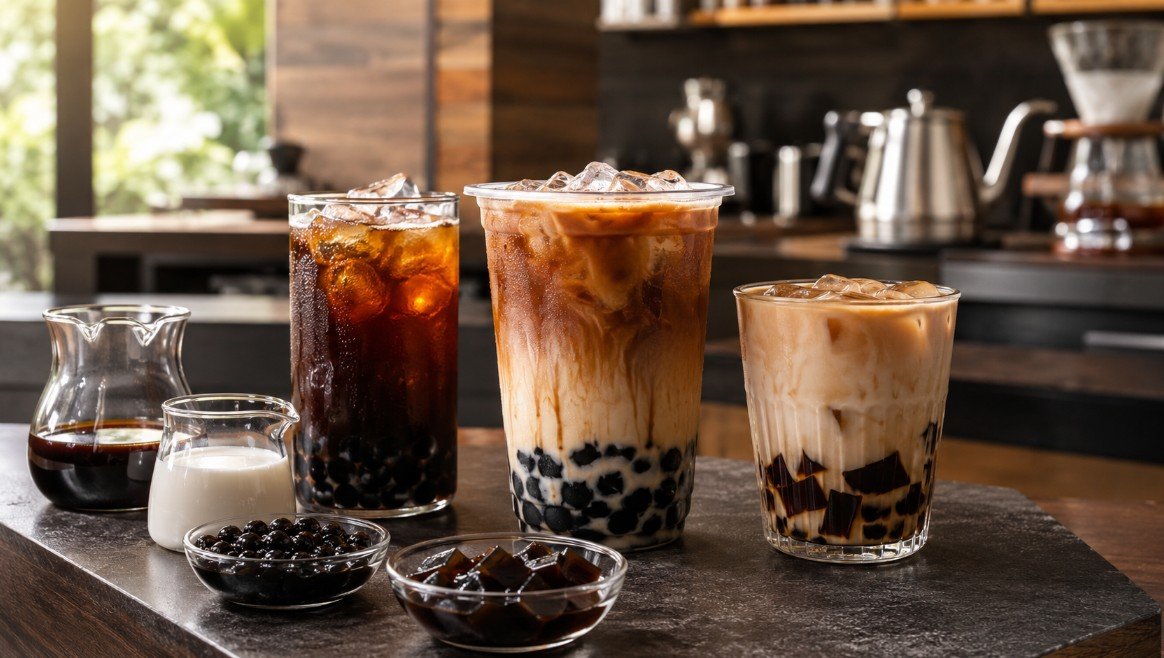
Coffee boba is a bubble tea-style drink made with coffee and a chewy or jelly topping, most often tapioca pearls. The coffee can be black, mixed with milk, combined with fresh milk, sweetened with brown sugar or paired with coffee jelly. Unlike milk tea, the dominant bitterness, roast and aroma come from coffee rather than tea.
That sounds simple, but coffee boba can vary dramatically. One shop may use brewed coffee, another may use espresso-style concentrate, and another may build the drink around cold brew or a house coffee base. Milk, syrup, ice and toppings then change how much of the roast, bitterness and aroma remain visible.
The useful way to choose coffee boba is to start with how much coffee character you want. From there, decide whether you want milk, how sweet the drink should feel and whether the topping should contrast with the coffee or reinforce it.
Coffee boba starts with a coffee base and uses bubble-tea toppings to change texture
The word “boba” can describe the topping or the broader drink format, so coffee boba does not need tea in order to belong on a bubble-tea menu. If the liquid base is coffee and the drink includes tapioca, coffee jelly or another boba-style topping, the result can reasonably be described as coffee boba.
Provides roast, aroma, bitterness, acidity and body.
Controls how sharp, creamy or dessert-like the cup feels.
Adds chew, contrast or an extra layer of coffee flavor.
Coffee boba therefore is not one standardized recipe. The drink can be very close to iced coffee with pearls, or it can resemble a creamy coffee dessert with milk, brown sugar and multiple textures.
Roast and bitterness lead the drink, while milk, sugar and toppings decide how soft or rich it becomes
Coffee boba can taste roasted, bittersweet, chocolatey, nutty, caramel-like or fruity depending on the coffee and preparation. Milk can make those notes feel softer and rounder, while brown sugar and tapioca can pull the drink toward caramel and dessert flavors.
Coffee stays most obvious when there is little or no milk.
Milk reduces perceived bitterness and adds body.
Brown sugar or sweetened pearls can amplify darker roasted notes.
Tapioca and coffee jelly create very different mouthfeel.
The cup does not need to taste extremely bitter to taste like coffee. A good coffee boba can be balanced and creamy while still keeping the roast and aroma recognizable.
Brewed coffee, espresso-style concentrate and cold coffee bases do not produce the same drink
Bubble-tea shops can use several coffee systems. Some brew coffee in a batch, some use espresso-style shots, some use concentrates designed for iced drinks, and some offer cold-brew-style coffee. The menu name “coffee boba” does not tell you which system is underneath.
Familiar and flexible
A brewed coffee base can work black or with milk. Its success depends on whether it stays flavorful after ice and toppings are added.
Concentrated and milk-friendly
A concentrated coffee base can remain noticeable through milk and syrup, but an overly dark or burnt shot can dominate the entire cup.
Smooth-feeling and cold from the start
This direction can work well in iced boba because the coffee is already designed for cold service, though flavor still depends on the actual recipe.
Built for consistency
Some shops use a prepared coffee base that is easier to reproduce across milk, brown sugar and blended drinks.
None of these approaches is automatically superior. The useful quality test is whether the final cup still tastes intentionally like coffee after dilution, milk and toppings are accounted for.
Not necessarily — a coffee boba can be completely tea-free
A bubble-tea menu does not require every drink to contain tea. Coffee, fresh milk, fruit drinks and slushes can all be served with boba toppings. A coffee drink made with coffee, milk, syrup and tapioca may contain no tea at all.
Some shops do create coffee-and-tea hybrids, but that is a separate variation. If caffeine source or ingredients matter to you, read the specific menu description instead of assuming “boba” automatically means tea.
Coffee and tea can share milk and tapioca while creating very different flavor structures
The coffee determines the core flavor and often gives the cup a heavier roasted impression.
Tea tannin and aroma remain the center even when milk and pearls are added.
A broad family that can use black, oolong, jasmine or another tea base.
For a tea-based comparison, see black tea boba. If your main question is how tea and milk work together across the category, see milk tea with boba.
The amount and type of milk decides whether coffee stays sharp or turns soft and dessert-like
Coffee, ice, sweetness and pearls create a strong contrast between bitterness and chewy syruped tapioca.
Milk softens roast and bitterness while making the drink feel closer to an iced latte with boba.
Fresh milk can make the coffee feel less processed and keep the drink simpler than a heavily flavored creamer-based version.
Milk should support the coffee rather than erase it. If the finished drink tastes like sweet milk with a faint brown color, the coffee base may be too weak for the amount of milk and ice used.
Dark sweetness naturally complements roasted and caramel-like coffee notes
Brown sugar coffee boba works because several components point in a similar direction. Coffee contributes roast and bitterness, brown sugar contributes deep sweetness, milk rounds the edges, and tapioca adds chew plus additional syrup.
Roast and bitterness.
Molasses-like sweetness.
Softness and body.
Chew and syrup.
The risk is excess. When every component is heavily sweetened, coffee becomes background flavor instead of the reason to order the drink. Brown sugar should deepen coffee, not bury it.
Strong coffee and condensed milk can overlap, but the two names are not interchangeable
Vietnamese coffee has its own preparation traditions and cultural identity. Coffee boba is a broader modern drink category defined by coffee plus a bubble-tea topping. A coffee boba can borrow the rich combination of strong coffee and sweetened condensed milk, but that does not make every condensed-milk coffee with tapioca “Vietnamese coffee.”
The distinction matters because menu language should describe the drink honestly. A Vietnamese-inspired coffee boba may intentionally reference that flavor direction, while a generic coffee milk boba can use condensed milk simply because the ingredient works well with strong coffee.
One topping contrasts with coffee while the other reinforces it
Tapioca is elastic and relatively neutral apart from the syrup it carries. It adds texture while letting coffee remain the main flavor.
- chewy and dense
- often brown-sugar or syrup flavored
- makes the cup more filling
Coffee jelly is softer and more slippery, and its flavor can reinforce the coffee base instead of creating a separate contrast.
- soft jelly texture
- reinforces coffee aroma
- can make the drink feel lighter than tapioca
Neither topping is automatically better. Tapioca is usually the stronger choice when you want the classic boba chew; coffee jelly makes more sense when you want the coffee identity repeated in the topping.
For classic pearl ingredients and texture, see what boba pearls are. For the wider topping family, see our boba toppings guide.
Coffee can handle rich toppings, but stacking too many can make the drink unnecessarily heavy
Works with creamy coffee, especially when you intentionally want a fuller dessert cup.
Useful when you want coffee to lead without the dark syrup character of black tapioca.
Can add contrast to black coffee, but may become excessive when milk and syrup are already substantial.
Best when you want the topping to taste like part of the coffee rather than a separate element.
Dairy, oat, soy and coconut do not behave like interchangeable white liquids
Dairy milk provides familiar sweetness and body. Oat-based milk can add cereal-like or nutty sweetness that often fits roasted coffee. Soy can introduce its own aroma and a different body, while coconut has a strong flavor that can transform the entire drink.
That does not mean one milk is universally best for coffee boba. The right option depends on the coffee, sweetness and topping. A strong dark roast may handle a more flavorful milk substitute easily, while a delicate coffee can disappear behind it.
Coffee bitterness can make a drink seem less sweet than it actually is
May be adjustable at the register.
Condensed or prepared milk components can contribute sugar independently.
Often used because it complements roasted coffee.
Pearls can stay sweet even when the liquid setting is reduced.
Coffee’s bitterness can mask sweetness perceptually, so a coffee boba may taste balanced while still containing several sweet components. That is why a menu sweetness percentage does not always describe every source of sweetness in the cup.
There is no reliable universal number because the coffee base and serving can vary too much
A coffee boba made with one espresso-style shot, a large cold-brew base and a mild batch-brewed coffee are not equivalent. Caffeine depends on the coffee itself, dose, extraction, serving size and how the shop builds the drink.
It is also too simplistic to say coffee boba always has more caffeine than tea boba. Coffee drinks can be highly caffeinated, but a real comparison requires the recipes and serving sizes of the two drinks being compared.
If caffeine intake matters to you, the most useful question for the shop is what coffee base or how many shots are used in that specific size. For the wider nutrition picture, see our boba nutrition guide.
Temperature and texture change how clearly the coffee comes through
Ice keeps the drink refreshing while preserving the familiar contrast between liquid coffee and chewy topping.
A blended base can soften the coffee impression and make the cup feel closer to a frozen dessert.
Boba in a blended drink can also feel more dramatic because the thick liquid slows the pearls and changes how each sip reaches the straw. A coffee frappé or smoothie is not automatically boba, though; it becomes coffee boba when a boba-style topping is actually part of the drink.
Choose the coffee intensity first, then decide how much milk, sweetness and texture you want
Choose the coffee style
Ask whether the drink uses brewed coffee, espresso-style coffee, cold brew or a house coffee base if the menu does not make it clear.
Choose black or milk
Black keeps roast and bitterness most obvious; milk makes the drink softer and more familiar.
Set sweetness
Remember that pearls, condensed milk or brown sugar may add sweetness beyond the register setting.
Choose iced or blended
Iced is more coffee-forward, while blended versions usually feel thicker and more dessert-like.
Choose tapioca or coffee jelly
Tapioca adds classic chew; coffee jelly reinforces coffee flavor with a softer texture.
Check caffeine intensity when needed
If caffeine matters, ask what coffee base or shot count is used rather than relying only on the drink name.
Start from the kind of coffee drink you already enjoy
Creamy, familiar and easy to understand.
Keeps the coffee direct while pearls add sweetness and chew.
Richest direction, with roast, milk and dark syrup working together.
Repeats the coffee identity in both the liquid and topping.
Less heavy than black tapioca while still giving the drink a topping.
Use the shop’s default build before changing several variables at once.
If you are choosing across the full menu rather than only coffee drinks, use Choose Your Boba.
The coffee should remain identifiable after milk, sugar, ice and toppings are added
Roast should taste purposeful rather than stale, flat or aggressively burnt.
Creaminess should round the coffee without erasing it.
Sugar should soften bitterness, not reduce the drink to syrup.
Pearls should not be hard in the center or mushy outside.
The jelly should contribute coffee flavor rather than tasting like generic sweet gelatin.
The drink should still taste like coffee after the first few minutes.
More coffee does not automatically mean better coffee boba. A harsh concentrated base can be just as unbalanced as a weak one. The best cup has enough coffee to survive the other ingredients without dominating them.
For a broader framework for judging boba drinks, see our boba quality guide.
Start with the coffee, then move outward one decision at a time
Questions about coffee boba
What is coffee boba?
Coffee boba is a coffee-based bubble tea-style drink served with a topping such as tapioca pearls or coffee jelly. It may be black, creamy, sweetened, brown-sugar flavored, iced or blended.
What does coffee boba taste like?
It can taste roasted, bittersweet, creamy, nutty, chocolatey or caramel-like depending on the coffee and recipe. Milk softens bitterness, while syrup and tapioca make the cup sweeter and more dessert-like.
Does coffee boba contain tea?
Not necessarily. Many coffee boba drinks contain coffee, milk, sweetener and toppings without any tea. Coffee-and-tea hybrids exist, but they are separate variations.
Does coffee boba have caffeine?
Usually yes when it is made with caffeinated coffee. The amount varies significantly with the coffee base, dose, brewing method, serving size, shot count and dilution, so there is no single caffeine number for all coffee boba.
Is coffee boba stronger than milk tea?
It can taste more roasted or bitter, but “stronger” can mean flavor or caffeine. Both depend on the actual recipe, so the drink names alone are not enough for a reliable comparison.
What is coffee milk tea with boba?
Some shops combine coffee and tea in one drink, creating a hybrid coffee milk tea with boba. That is different from a coffee boba made only from coffee and milk, so check the menu description if you want to know whether tea is included.
What toppings go best with coffee?
Black tapioca is a natural choice for classic chew and dark syrup flavor, while coffee jelly reinforces the coffee itself. Crystal boba and pudding can also work depending on how light or dessert-like you want the drink.
Is coffee jelly the same as boba?
No. Tapioca boba is typically chewy and elastic, while coffee jelly is softer and gelatinous. Both can function as toppings in a coffee boba drink, but their ingredients, texture and flavor are different.
Can coffee boba be ordered less sweet?
Often yes, but not every source of sweetness may be adjustable. Prepared tapioca, condensed milk, brown sugar syrup or a premixed coffee base can remain sweet even when the drink’s syrup setting is reduced.
What coffee boba is best for beginners?
A standard iced coffee milk boba with one portion of tapioca is an easy starting point. If you already prefer black iced coffee, try a clearer coffee-forward version; if you love coffee flavor, coffee jelly is a useful alternative to pearls.
COFFEE BOBA IN ONE IDEA
Coffee should remain the reason the drink tastes the way it does. Choose black or milk, set sweetness carefully, then use tapioca for contrast or coffee jelly to reinforce the coffee itself.