
Black Tea Boba: Taste, Milk, Tapioca Pearls and How to Order
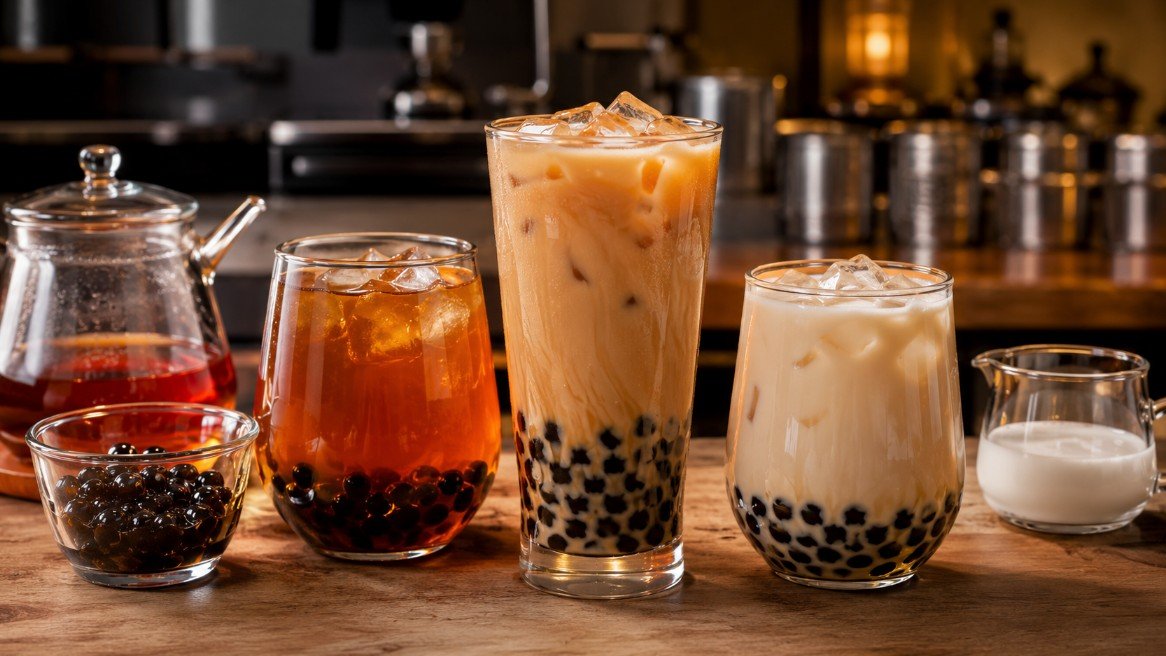
Black tea boba is a bubble tea style built around black tea and served with boba pearls, usually chewy tapioca. Milk is common but not required. A classic version combines strong black tea, milk, sweetness and black pearls, while a more tea-forward version can be served without milk at all.
Black tea works especially well in boba because it has enough body and flavor to remain noticeable after milk, syrup and ice are added. Depending on the tea, the cup can taste malty, brisk, fruity, lightly floral or even gently spicy. The pearls then add a completely different dimension: soft, springy chew and often a little syrup sweetness.
The best way to understand this drink is to think tea first. Black tea establishes the structure; milk, sweetness, temperature and toppings decide how far the final cup moves toward creamy, refreshing or dessert-like.
Black tea boba starts with black tea, not with milk or syrup
The phrase “black tea boba” describes a drink where black tea is the identifying tea base and boba pearls are part of the order. Some shops may use the phrase for a milk tea, while others may offer clear black tea with pearls, fruit-flavored black tea or fresh-milk black tea.
The main source of aroma, tannin, body and tea character.
Changes the drink from clear and brisk to creamy and rounded.
Usually tapioca, adding chew and often syrup sweetness.
This is more specific than the broad category “milk tea with boba.” Milk tea can be made with black tea, oolong, jasmine or another base. Black tea boba tells you which tea family is doing the structural work.
For the broader milk-tea category, see our guide to milk tea with boba.
Expect a deeper tea profile with malt, briskness and enough structure to handle milk and sweetness
There is no single flavor shared by every black tea, but black tea boba usually tastes more robust than drinks built on lighter jasmine or green tea. The tea can bring malt, dried-fruit notes, briskness, gentle tannin or aromatic spice depending on the leaves and brewing style.
Clear tea, sweetness and tapioca with no creamy layer softening the base.
Milk rounds the tea while the base still provides structure.
Fresh milk gives body while keeping the drink recognizably tea-based.
Brown sugar pushes the cup toward a darker, sweeter flavor profile.
One of black tea’s strengths is contrast. It can remain noticeable beneath creamy ingredients instead of disappearing completely. That does not mean stronger is always better: tea brewed too aggressively can become harsh, while too little tea can make the finished cup taste like sweet milk.
For the larger flavor picture across the whole category, see what boba tastes like.
Different black teas can make the same boba format taste completely different
A menu may simply say “black tea,” but the leaves behind that label can vary. Origin, cultivar, oxidation, roasting or drying style and brewing all influence the finished profile.
Bold, malty and strong with milk
Assam-style black tea is often associated with a fuller, maltier cup. That kind of strength is useful in milk tea because the base can remain obvious after creaminess and syrup are added.
Brisk, bright and clean
Ceylon-style black tea can create a lighter-feeling but still structured cup. In boba, that brightness can keep milk tea from feeling too heavy.
Aromatic, fruity or gently spicy
Taiwan produces distinctive black teas with their own aromatic character. Depending on cultivar and preparation, the cup may show fruit, floral, mint-like or spice-like notes rather than only straightforward malt.
The practical point is simple: “black tea boba” does not guarantee one standardized flavor. If a shop tells you which black tea it uses, that information can explain why one version tastes round and malty while another feels brighter or more aromatic.
For a broader explanation of tea families used in bubble tea, see our tea guide.
Black tea sits close to the historical heart of hand-shaken bubble tea
Black tea feels familiar in boba for a reason. Taiwan’s hand-shaken beverage culture developed around tea drinks before the category expanded into the enormous range of fresh milk, fruit, matcha and topping combinations seen today.
Historical accounts from Taiwan’s tea research institutions identify bubble black tea in the early development of the modern category and pearl milk tea soon afterward. That makes black tea more than just another flavor option: it is closely connected to the drink’s early tea-shop identity.
That history should not be confused with a rule saying authentic boba must use black tea. Modern bubble tea is much broader. The value of this context is simply that black tea remains one of the clearest ways to experience the category as a tea drink first and a customized beverage second.
Black tea boba can move from clear and brisk to creamy without changing its tea identity
The clearest expression of the tea. Expect more briskness, less richness and stronger contrast between liquid tea and chewy pearls.
Milk softens tannin and bitterness, adds body and creates the familiar creamy profile associated with classic pearl milk tea.
Fresh milk can create a cleaner dairy profile while keeping black tea clearly recognizable if the base is strong enough.
Milk changes more than color. It softens some of the sharper edges of black tea, increases perceived body and can make sweetness feel rounder. At the same time, too much milk can mute delicate aromas and leave the drink flat.
This is why “black milk tea” and “black tea boba” overlap but are not identical terms. Black milk tea specifically tells you milk is present. Black tea boba can be served with or without it depending on the menu.
Chewy pearls pair naturally with the malt, caramel and roasted direction of black tea
Traditional black tapioca pearls are mild on their own, but they are often held in syrup after cooking. That makes them especially compatible with black tea because the sweet caramel-like notes around the pearls can echo the deeper flavors already present in the drink.
The springy topping breaks up the smooth liquid texture.
Pearls can contribute flavor beyond the sweetness selected for the liquid.
The drink becomes slower and more interactive than plain iced tea.
Because black tea already has a stronger flavor foundation, it can handle tapioca without the topping automatically dominating the cup. Still, the balance can fail if the pearls are overly sweet or stale.
For the topping itself, see what boba pearls are.
One tea base can support creamy, clear, brown sugar and fruit-forward drinks
Black milk tea with tapioca
Black tea, milk, sweetness and chewy pearls create the reference version. This is often the easiest starting point for someone who wants the familiar “boba milk tea” experience.
Iced black tea with boba
Skipping milk keeps the tea brighter and more direct. Sweetness can be adjusted, and the tapioca becomes an even stronger textural contrast against the clear liquid.
Black tea with fresh milk and pearls
This version still begins with tea, but fresh milk creates a softer dairy profile. It differs from milk-first fresh milk boba because black tea remains the central flavor.
Brown sugar black tea boba
Brown sugar adds a deeper caramel-like sweetness that naturally fits the darker tea profile. A good version should still let the tea show through.
Black tea with fruit and boba
Peach, citrus, lemon and passion-fruit directions can work with black tea. Fruit can brighten the drink, though strong flavoring can easily overpower the tea if the recipe is unbalanced.
These variations show why black tea boba is more useful as a tea-base category than as one recipe. The base stays recognizable while milk, fruit, sugar and toppings change around it.
Black tea usually feels deeper and more structured than oolong or jasmine boba
Works especially well with milk, brown sugar and classic tapioca.
Can feel more perfumed or roasted, depending on the oolong style.
Usually creates a brighter, more delicate profile than black tea.
This is not a quality ranking. A strong black tea is not automatically better than jasmine or oolong. The question is what kind of flavor architecture you want. Black tea is often the easiest choice when you want the tea to survive milk, syrup and a chewy topping without disappearing.
Black tea can handle sweetness, but too much syrup still erases the tea
One reason black tea works so well in boba is that its stronger structure can tolerate milk and sugar. A lighter tea may become difficult to notice when the recipe gets rich, while black tea can continue contributing bitterness, malt or briskness.
Useful when you want aroma and tannin to stay obvious.
Tea, milk and tapioca can share the cup without one component dominating.
Brown sugar and pearl syrup can move attention away from the tea itself.
Remember that the sweetness setting may control only part of the drink. Tapioca pearls can already be sweetened, and flavored syrups can add another layer. “Less sweet” is therefore not always the same thing as an unsweetened cup.
Yes, when the drink is actually made with brewed black tea
Black tea naturally contains caffeine. The amount in a finished boba drink depends on how much tea is used, how it is brewed, the serving size and how much the tea is diluted by milk, ice or other ingredients.
The tapioca pearls themselves are not the source of caffeine. A black tea drink with or without pearls can still contain caffeine because the tea base is what contributes it.
That makes the menu name useful: a black tea boba drink and a plain fresh milk boba can have very different caffeine profiles even if both contain identical tapioca pearls. For the larger nutrition picture, see our boba nutrition guide.
Temperature changes aroma, dilution and pearl texture
Cold service emphasizes refreshment, but melting ice gradually dilutes tea and sweetness. A strong enough base matters.
Warm tea can make aroma feel more obvious and may keep tapioca softer, though not every shop offers every topping hot.
There is no universal best temperature. Choose iced when you want a colder, lighter-feeling café drink and warm when you want tea aroma and comfort to play a larger role.
Start with the tea, then decide how creamy and sweet you want the cup to become
Choose the black tea style
If the menu offers several choices, decide whether you want classic black tea, a named Taiwan black tea, a stronger Assam-style profile or another house blend.
Choose milk or no milk
Milk makes the cup rounder and creamier. No milk keeps the tea more direct and refreshing.
Set sweetness
Moderate sweetness is often easier for tasting the tea, while brown sugar or high sweetness makes the drink more dessert-like.
Choose ice or temperature
Remember that ice affects both temperature and dilution rather than functioning only as a cooling choice.
Add tapioca pearls
Look for boba, black boba or tapioca pearls if the drink does not already include them.
If the menu feels overwhelming, the structure is simpler than it looks: tea → milk choice → sweetness → ice → topping. Once those decisions are made, most black tea drinks become easy to decode.
Choose your black tea boba by how much tea intensity you want
The safest introduction to the familiar creamy, malty and chewy profile.
Useful if you want the tea to remain obvious but still enjoy some creaminess.
A clear, refreshing path where the tea and pearls provide most of the experience.
Choose this when caramel-like sweetness matters more than a restrained tea profile.
If you are still comparing tea, fruit, milk and fresh-milk families, use Choose Your Boba for a wider decision path.
The tea should still have a voice after milk, sugar, ice and pearls are added
The base should taste like black tea rather than generic sweet brown liquid.
Enough structure is needed for milk and ice, but excessive extraction can make the finish rough.
The creamy component should round the tea rather than erase it.
Tapioca should have a pleasant chew without a hard core or mushy surface.
Syrup should enhance malt and caramel-like notes rather than flattening every flavor into sugar.
The last half of the drink should not taste like watered-down tea.
A strong black tea base gives the shop room to add milk, syrup and toppings, but balance still matters. The best cup is not automatically the darkest, strongest or sweetest one.
For a wider tasting framework, continue to the boba quality guide.
Keep the tea at the center, then build outward
Questions about black tea boba
What is black tea boba?
Black tea boba is a bubble tea drink built around black tea and served with boba pearls, usually tapioca. It can be made with milk, fresh milk or no milk at all depending on the style.
What does black tea boba taste like?
It often tastes deeper and more structured than lighter tea-based boba. Depending on the tea, you may notice malt, briskness, dried-fruit character or aromatic spice, plus creaminess if milk is added and chew from the pearls.
Is black tea boba the same as milk tea?
Not exactly. Black tea boba identifies black tea as the base and boba as the topping. Milk tea is a broader family that can use black tea, oolong, jasmine or another tea and does not automatically include pearls.
Does black tea boba always contain milk?
No. Clear iced black tea can be sweetened and served with tapioca pearls without milk. Adding milk turns it into a creamier black milk tea style.
What black tea is used for boba?
It varies by shop. Bold Assam-style profiles, brisk Ceylon-style teas, Taiwan black teas and house blends can all work. The important characteristic is enough flavor and body for the intended drink.
Is black tea good with tapioca pearls?
Yes. Black tea’s deeper malt, caramel and brisk notes pair naturally with chewy tapioca, especially when the pearls are lightly sweetened with syrup.
Does black tea boba have caffeine?
Yes, when it is made with real brewed black tea. The amount varies with the tea, brew strength, amount used and serving size. Tapioca pearls are not the source of the caffeine.
Is black tea boba stronger than jasmine boba?
Black tea usually tastes deeper, maltier and more structured, while jasmine tea is generally lighter and more floral. Actual strength still depends on how each tea is brewed.
Can black tea boba be served hot?
Yes, many black tea and black milk tea drinks can be served warm or hot with tapioca. Availability depends on the shop and topping, and warm service changes both aroma and pearl texture.
What is a good black tea boba for beginners?
Classic black milk tea with tapioca pearls is the most straightforward starting point. If you want more tea character, reduce the milk or sweetness; if you want something richer, try a brown sugar variation.
BLACK TEA BOBA IN ONE IDEA
Black tea boba works because the tea is strong enough to stay recognizable. Start with the black tea profile you like, then decide whether milk, brown sugar, fruit or a simpler clear style should surround the chewy pearls.