
Your coffee order is the shortcut
Best Boba for Coffee Drinkers
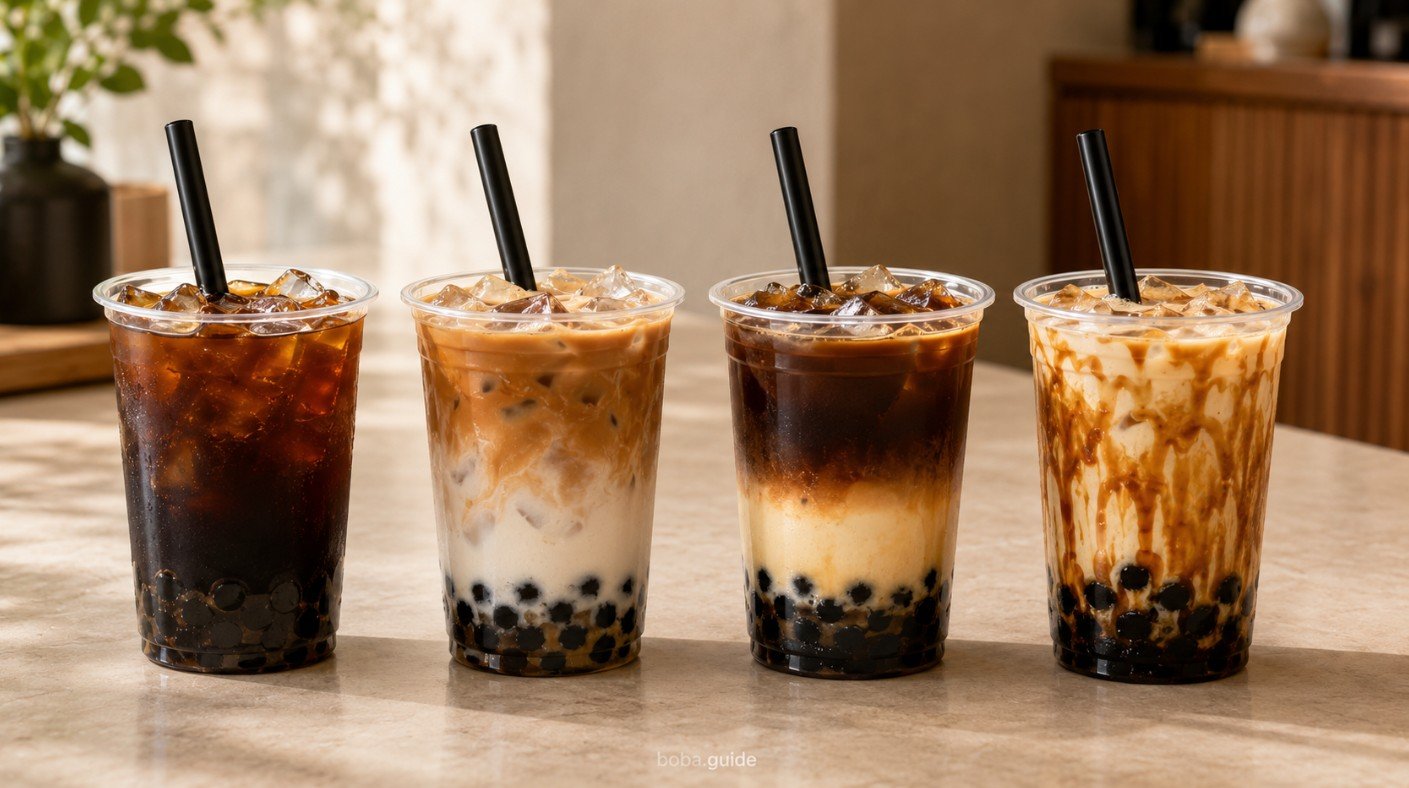
If coffee is already your drink, the easiest way into boba is usually not to ignore coffee — it is to use your normal coffee order as a map. An iced-latte drinker will probably want something different from a black-coffee drinker, and someone who loves Vietnamese iced coffee is already much closer to certain boba-shop flavors than they may realize.
The most important thing to know is that “coffee boba” can mean several different drinks. One shop may serve coffee with tapioca pearls. Another may make coffee milk tea using both coffee and tea. Another may let you add coffee to a brown sugar milk tea. Those are not interchangeable.
So rather than asking for “the coffee boba,” start with the coffee profile you already enjoy — bold, creamy, caramel-sweet, chocolatey or condensed-milk rich — and then decide how much of the traditional boba world you want to add.
Translate the Coffee You Already Love Into a Boba Order
You do not need to learn the whole bubble-tea menu first. Your regular café order already tells you a lot about the sweetness, milk level and coffee intensity you are likely to enjoy.
Start with the most coffee-forward option on the menu and keep the extras restrained. Tapioca or coffee jelly can add texture without turning the drink into a caramel dessert.
A milk-coffee boba or coffee latte with tapioca is the most natural transition. You keep the familiar creamy coffee profile and introduce one new element: chewiness.
Brown sugar coffee, caramel coffee or a coffee-added brown sugar milk tea can make sense because the roasted coffee and caramelized sweetness already speak the same language.
Look for a bold, condensed-milk-style coffee drink or another strong sweet coffee option with tapioca. This route is usually richer and more intense than a soft café latte.
Prioritize coffee intensity and reduce the number of sweet add-ons. If the shop has a brewed coffee or cold-brew-style base, try it with one chewy topping before adding foam or syrup.
A chocolate-coffee drink, if available, is an obvious bridge. Tapioca works if you want chew; pudding can turn the cup even further toward dessert.
If you prefer to choose from your entire flavor personality rather than coffee alone, use our boba chooser based on the flavors and textures you already enjoy.
“Coffee Boba” Can Mean Three Very Different Things
This distinction matters more than the name printed at the top of the menu.
The liquid is fundamentally a coffee drink and tapioca, jelly or another topping is added. This is usually the safest starting point for someone who wants coffee to remain unmistakably dominant.
Coffee and tea share the cup, usually with milk or creamer. The result can be more aromatic, tannic and layered than an ordinary latte. It can also taste strange if what you really wanted was simply iced coffee with pearls.
Some shops treat coffee as a customization for an existing milk tea, brown sugar drink or caramel drink. Here, the original tea recipe still matters because coffee is being added rather than replacing the tea base.
If these menu labels are unfamiliar, our guide to reading a boba menu separates drink families before you start customizing them.
Seven Boba Orders That Make Sense for Coffee Drinkers
These are order ideas, not universal recipes. Coffee programs vary dramatically between boba shops, and some stores have no coffee section at all.
Iced Coffee + Tapioca Pearls
This is the cleanest starting experiment. You already understand the drink; the only new variable is tapioca.
If you usually drink coffee with little sugar, resist the temptation to automatically add brown sugar syrup, milk foam and pudding. First find out whether you actually enjoy the contrast between coffee bitterness and chewy pearls.
Coffee Latte + Tapioca Pearls
This is the easiest transition for an iced-latte drinker. Coffee, milk and ice already make sense together, and tapioca simply adds a soft-chewy texture at the bottom.
If the shop’s default coffee latte is already sweet, taste that combination before adding another sweet topping.
Vietnamese-Inspired Coffee + Tapioca
This route works especially well for people who like coffee strong, cold and unapologetically sweet. A condensed-milk-style profile gives the coffee enough richness to stand up to chewy pearls.
Do not assume every drink called “Vietnamese coffee” uses the same beans, brewing method or milk product. Treat the name as the shop’s style description unless the menu explains the preparation.
Brown Sugar Coffee + Pearls
For caramel-latte drinkers, this may be the most obvious bridge. Brown sugar adds a dark caramelized sweetness that can work naturally with roasted coffee flavors.
The danger is sweetness stacking: sweet coffee + brown sugar syrup + sweet pearls can become much richer than the caramel latte you had in mind.
Coffee + Coffee Jelly
If the shop offers coffee jelly, it can reinforce the flavor instead of competing with it. You get two expressions of coffee — liquid and jelly — with a softer, cleaner texture than tapioca.
This is a particularly useful option for someone who likes coffee but is unsure about the heavier chew of traditional pearls.
Coffee Milk Tea + Tapioca
This is where you deliberately enter the tea side of the menu. A coffee milk tea combines roasted coffee character with brewed-tea flavor and milk or creamer.
It is a good choice if you are curious about tea but want coffee to act as the familiar bridge. It is a poor choice if you specifically want your boba to taste exactly like a normal iced latte.
Mocha-Style Coffee Boba + Tapioca or Pudding
If your café order is already halfway to dessert, there is no reason your boba order has to pretend otherwise. Coffee and chocolate are familiar partners, and tapioca gives chew without introducing a new flavor.
Pudding makes the drink softer and richer. Choose it deliberately rather than adding it alongside every other topping.
Keep the Part of Coffee You Actually Care About
Two people can both say “I love coffee” and want opposite things from the cup.
Choose a stronger coffee base and avoid burying it under maximum sweetness, milk foam and several sugary toppings.
Ask which coffee option tastes most coffee-forward. A tea-heavy coffee milk tea may not be the best first test.
A coffee latte or milk-coffee style drink is a more natural bridge than plain coffee with pearls.
Brown sugar and caramel directions are logical, but toppings can push an already-sweet drink much further.
Milk, sweetness or a dessert-style coffee drink may make more sense than choosing the strongest black coffee available.
Coffee and Tea in the Same Cup Is Not as Strange as It Sounds
If “coffee milk tea” sounds like somebody accidentally mixed two café orders, there is useful context.
Hong Kong has a well-established drink called yuenyeung or yuanyang, traditionally combining coffee with Hong Kong-style milk tea. The idea of balancing coffee’s roasted character against black tea and milk therefore predates modern coffee-boba menus.
A boba-shop coffee milk tea is not automatically the same recipe as traditional yuenyeung, but the broader coffee-and-tea pairing is a real beverage tradition rather than a novelty invented for a bubble-tea menu.
If you want to understand what the tea half contributes, continue with our guide to tea in boba drinks.
Your Normal Coffee Sweetness Is a Better Starting Point Than the Shop Default
Coffee bitterness and boba-shop sweetness pull against each other. If you normally drink an unsweetened Americano, a default coffee drink plus syrup plus sweet tapioca can feel dramatically sweeter than expected.
If you normally order caramel lattes or Vietnamese-style iced coffee, the opposite may be true: a lightly sweetened coffee milk tea may feel thin or harsh compared with the coffee profile you enjoy.
Sweetness systems differ by shop. Some use percentages; others use labels such as standard, less, little or zero; some drinks have fixed sweetness because syrup or premixed ingredients are part of the recipe.
So the useful rule is simple: start near the way you already drink coffee, then account for the sweetness of the topping.
If you want to adjust several parts of the drink without losing track of what changed, use our guide to customizing sweetness, ice and toppings.
The Best Topping Depends on Whether You Want Coffee or Dessert
Tapioca pearls
The classic route. Pearls add chew and their sweetness can soften a bitter coffee without changing the dominant flavor as much as pudding or foam.
Coffee jelly
A flavor-aligned option when you want texture without moving away from coffee. Usually easier for people who are unsure about dense tapioca.
Grass jelly
Its herbal character can work with darker coffee and tea-coffee drinks, especially when you prefer less candy-like toppings.
Pudding
Soft, creamy and dessert-like. It makes more sense with latte, mocha or brown-sugar coffee than with a black-coffee-style drink.
Milk foam
Think of it as a rich creamy top layer rather than a neutral topping. It can soften bitterness but also obscure the coffee itself.
Fruit popping boba
Possible, but rarely the most intuitive first match for roasted coffee. Start with a coffee-compatible topping before combining coffee with bright fruit bursts.
If you are choosing your first topping rather than specifically a coffee pairing, compare the textures in our beginner-friendly topping guide. The broader boba toppings guide covers the full range separately.
When Coffee Milk Tea Is Better Than Coffee With Pearls
Coffee milk tea is not automatically the “more authentic” choice. It is simply a different drink.
when you want your boba experience to remain recognizably coffee-first.
when you want coffee and brewed tea to share the flavor rather than treating tea as something to avoid.
when caramelized sweetness is part of what you enjoy about flavored café drinks.
when creamy iced coffee is already your comfort zone and you mainly want to experiment with toppings.
If you deliberately want to move farther into tea rather than staying coffee-first, our milk tea guide for beginners gives you a cleaner next step.
Do Not Guess the Caffeine From How Dark the Drink Looks
A pale coffee milk tea can contain coffee and brewed tea. A dark brown sugar drink may contain no coffee at all. Color is not a caffeine meter.
Caffeine can come from coffee, tea or both, and the amount depends on the coffee preparation, tea base, serving size and recipe. This is one of the reasons we do not give one universal caffeine number for “coffee boba.”
If caffeine is important to your decision, ask what is actually in the drink and use our dedicated boba caffeine guide rather than assuming coffee milk tea behaves like your usual café latte.
If You Love Coffee but Don’t Like Tea, Stay Coffee-First at the Beginning
A coffee milk tea is not necessarily the best gateway for someone who already knows that brewed-tea flavor is the part they dislike.
Start with coffee + tapioca, coffee + coffee jelly, a latte-style boba or another genuinely coffee-led drink. Once you know you enjoy the texture, you can decide whether coffee-and-tea combinations are worth exploring.
If avoiding tea flavor is the real decision, see our separate guide to boba for people who don’t like tea.
If Your First Coffee Boba Is Wrong, Diagnose the Wrong Part
The coffee may be fine. Next time reduce the drink sweetness or choose a less sweet topping rather than abandoning coffee boba entirely.
You may have chosen coffee milk tea when what you actually wanted was a coffee-based drink. Ask which menu item has coffee as the dominant base.
Move from coffee milk tea to coffee + pearls or another coffee-first option.
Skip foam or pudding and ask whether a less-milky coffee option exists. Do not assume switching toppings will fix a fundamentally creamy base.
Try coffee jelly or another lighter-feeling topping. You can like coffee boba without liking tapioca.
Simplify. Coffee base + one topping usually tells you much more than syrup, foam, pudding and pearls in the same first order.
One Topping Is Usually Enough for Your First Coffee Boba
Your first cup should answer a useful question: Do I like coffee with boba texture?
An iced latte with tapioca answers that cleanly. Vietnamese-style coffee with pearls tests a stronger and sweeter version. Coffee with coffee jelly tests texture without traditional boba.
Add three toppings and a foam cap on day one, and you may finish the cup without knowing whether you liked the coffee, the tapioca, the pudding or simply the sugar.
If this is also your first visit to a bubble-tea shop, our first-time boba ordering guide walks through the entire sequence.
The Best First Coffee Boba Is the One Closest to the Coffee You Already Order
Black-coffee drinker? Keep it bold and simple. Latte drinker? Start creamy. Caramel person? Brown sugar is a natural direction. Vietnamese-coffee fan? Look for a strong sweet coffee base. Mocha drinker? Chocolate makes more sense than forcing yourself into jasmine milk tea.
Once you know that the combination of coffee and boba texture works for you, then experiment with tea, foam, brown sugar, pudding and more unusual toppings.
For the full process of putting drink, sweetness, ice and topping together, continue with our complete boba ordering guide. If you want a broader first-drink shortlist rather than a coffee-specific one, use our best boba choices for beginners.
Found a Coffee Boba That Actually Satisfies a Coffee Person?
Coffee menus vary far more than the phrase “coffee boba” suggests. Some shops make excellent coffee-forward drinks with pearls, some have surprisingly good coffee milk tea, and others have unusual combinations such as coffee jelly, brown sugar coffee or local coffee-and-tea hybrids.
If you have found one worth investigating, send the Boba Guide Editorial Team the shop name and location, exact drink, topping, sweetness or ice changes if relevant, and what kind of coffee drinker you think would enjoy it.
Menu photos and clear drink photos are useful too, especially when the shop’s terminology is unusual. Reader submissions give us leads to verify rather than automatically becoming published recommendations.
Questions Coffee Drinkers Ask About Boba
What is the best boba drink for a coffee drinker?
The best starting point usually resembles the coffee you already enjoy. Iced-latte drinkers can start with a coffee latte and tapioca, black-coffee drinkers may prefer a stronger coffee-based drink with a simple topping, and caramel-latte fans may enjoy brown sugar coffee. Recipes vary by shop.
Does coffee boba contain tea?
Sometimes, but not always. A shop may serve coffee with pearls, coffee milk tea containing both coffee and tea, or a milk tea with coffee added. Check the menu description or ask what the drink base actually contains.
What topping goes best with coffee boba?
Tapioca pearls are the most straightforward first choice because they add chew without introducing a strong new flavor. Coffee jelly is another natural match. Pudding and milk foam make coffee drinks richer and more dessert-like.
Is coffee jelly good in boba?
Coffee jelly can work especially well in coffee-based drinks because it reinforces the coffee flavor while adding a softer texture than tapioca pearls. Availability and recipes vary by shop.
What is coffee milk tea?
Coffee milk tea combines coffee with tea and a milk or creamer component. It can taste more layered and tea-forward than an ordinary iced latte. The specific tea base and coffee preparation depend on the shop.
Is coffee mixed with tea a real drink?
Yes. Hong Kong has a traditional drink known as yuenyeung or yuanyang that combines coffee with Hong Kong-style milk tea. A modern boba-shop coffee milk tea is not necessarily made the same way, but coffee and tea are an established pairing.
Does coffee boba have more caffeine than milk tea?
There is no universal answer. Caffeine depends on the amount and type of coffee, whether brewed tea is also present, serving size and the shop’s recipe. A coffee-and-tea drink can contain caffeine from both sources, so check the specific drink when caffeine matters.
Should I get coffee boba if I don’t like tea?
A coffee-based drink with tapioca or coffee jelly can be a good choice because tea does not have to be part of the drink. Avoid assuming that coffee milk tea is also tea-free, since that style normally combines coffee with a tea component.
Is brown sugar coffee boba very sweet?
It can be. Brown sugar syrup, a sweetened coffee base and sweet tapioca can stack sweetness in the same cup. If the shop allows customization, consider the sweetness already coming from the pearls and syrup before adding more.