
A parent-first guide to the boba menu
Best Boba for Kids: What Parents Should Know
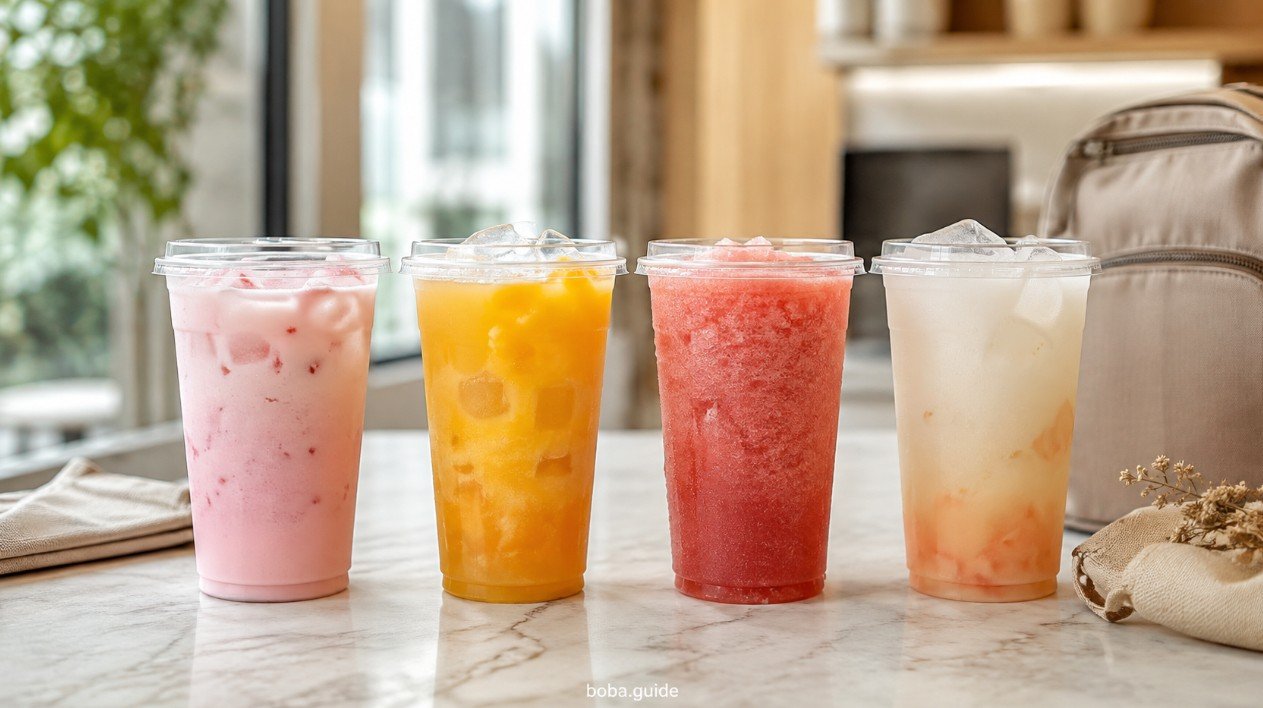
The best boba order for a child is not automatically the brightest drink or the topping kids find most exciting. Parents need to think about four separate things first: whether the topping texture is appropriate for the child, whether the drink contains caffeine, how much added sugar is involved, and whether any ingredients or allergens matter for that child.
For younger children especially, traditional tapioca pearls should not be treated as a default. Small, chewy, sticky or round foods can present choking concerns, and a wide boba straw does not make an inappropriate texture safer.
For older children and teens, the decision shifts toward the actual tea base, caffeine, sweetness, portion size and toppings. The useful question is therefore not simply “Which boba flavor do kids like?” but “Which parts of this particular order make sense for my child?”
Start With the Child, Not With a List of “Kid Flavors”
Strawberry, mango and chocolate may sound child-friendly, but flavor is only the last part of the decision. A useful parent checklist starts earlier.
Can the child comfortably manage the size, shape and texture of the topping? If you are uncertain, skipping chewy or round toppings is the cautious direction.
Tea, matcha and coffee can all contribute caffeine. A fruit flavor or pale color does not tell you whether the drink is caffeine-free.
The liquid, flavored syrup, sweetened pearls and other toppings can all add sweetness. Reducing only the drink setting may not remove the sugar already built into the recipe.
Milk, creamer, pudding, nut products, soy and other ingredients vary by shop. An attractive menu name is not an allergen statement.
A large sweet caffeinated drink in the evening is a different decision from a smaller, non-caffeinated treat earlier in the day.
Do Not Label a Boba Topping “Safe for Kids” Just Because It Is Softer
There is no universal topping that becomes appropriate for every child simply because it bursts, melts faster or feels softer than tapioca.
They are round and chewy. For young children, skipping them is the cautious choice rather than relying on a wide straw or telling the child simply to chew more carefully.
Do not automatically treat the bursting shell as a safety guarantee. Shape, size, texture, swallowing ability and how the child eats still matter.
Soft does not mean risk-free. Gummy and chewy foods are specifically among the textures parents of young children are advised to approach carefully.
These change the texture differently from pearls, but ingredients, allergens and sugar still need consideration. They are not automatically the “healthy” alternative.
If the topping itself is the uncertain part, ordering the drink without pearls or jelly is completely legitimate. Boba-shop drinks do not require tapioca to be enjoyable.
For a general explanation of pearl, jelly and foam textures, use our guide to boba toppings. It is not a substitute for deciding whether a texture is appropriate for a particular child.
Two Numbers Parents Should Understand — Without Turning Them Into “Safe Boba Limits”
The American Academy of Pediatrics says avoiding caffeine is the best choice for children. AACAP states that there is no proven safe dose for children; pediatricians advise against routine caffeine for children under 12 and suggest limiting ages 12–18 to no more than about 100 mg per day. That figure is guidance for total daily caffeine, not permission to treat a 100 mg boba drink as automatically appropriate.
AAP guidance recommends aiming for less than 25 grams of added sugar per day for children age 2 and older and avoiding added sugar for children under 2. Use the shop’s published nutrition information when available; “50% sweetness” is not the same thing as 50% of that 25-gram benchmark.
For the deeper drink-by-drink questions, use our separate guides to caffeine in boba and sugar in boba drinks.
Simpler Boba-Shop Orders Parents Can Consider
These are not universal recommendations for every age or child. They are deliberately simple order structures that make it easier to check the drink base, sweetness and toppings one variable at a time.
A Confirmed Non-Caffeinated Drink With No Topping
If the shop can identify a genuinely non-caffeinated drink and the child’s main interest is trying the flavor or fun cup, there is no requirement to add pearls.
This is also the simplest order for separating “Do they like the drink?” from “Can they manage the topping?”
A Fruit-Based Drink With the Base Confirmed
Fruit flavors can be familiar and appealing, but “mango,” “strawberry” or “peach” does not tell you whether the drink contains tea. Ask whether it is a fruit drink, fruit tea, lemonade, slush or another recipe.
When the shop offers sweetness adjustment, the simplest order is usually easier to evaluate than adding syrup, jelly and foam simultaneously.
A Milk-Style Drink With Caffeine Checked Separately
Strawberry milk, taro-style drinks and other creamy options may look tea-free, but recipes vary. Some are milk-based; some use tea; some use powders or premixed bases.
If milk or another allergen matters, verify the ingredients rather than relying on color or name.
A Smaller, Simpler Version of a Drink the Child Already Knows
For an older child or teen, starting close to a familiar flavor can make the order easier to judge. The useful change may be simply adding one topping or trying a lower sweetness setting rather than choosing the most elaborate drink on the menu.
“Fruit Tea” and “Fruit Drink” Are Not the Same Thing
This distinction matters particularly when parents are trying to avoid caffeine.
A fruit tea usually still begins with tea. Mango green tea, peach jasmine tea or passion fruit tea may taste primarily fruity while still containing caffeine from the tea base.
A fruit drink, lemonade or shop-specific refresher may be made differently — but the name alone is not enough to prove that it contains no caffeine.
Before ordering, use the boba menu guide if the shop’s categories are difficult to decode.
Topping Choice Should Come After the Drink Choice
No topping
Completely valid and often the clearest starting point when texture, choking or ingredients are uncertain.
Tapioca
Traditional, round and chewy. Do not use a generic “kid-friendly” label; consider the individual child’s chewing/swallowing development and supervision.
Jelly
Texture varies from soft to distinctly gummy. Ingredients also vary, so “jelly” is not one universal food.
Popping boba
Fun sensory texture, but not an automatic choking-risk workaround simply because the shell bursts.
Pudding
Softer and more dessert-like, but often sweet and potentially relevant to dairy, egg or other ingredient questions depending on the recipe.
If an older child is simply new to boba and texture is not a safety concern, our beginner topping comparison helps explain what each option feels like.
Ingredient Questions Become More Important When a Child Has Dietary Restrictions
A drink that looks clear may still have an ingredient that matters. A creamy drink may use dairy, non-dairy creamer, plant milk or a shop-specific powdered base. Pudding, foams, jellies and syrups can add another ingredient layer.
If there is a known food allergy, intolerance or dietary restriction, use current shop ingredient/allergen information rather than general boba assumptions.
Our boba allergen guide explains the common places allergens can appear, while the broader boba dietary guide routes vegan, dairy-free, gluten-related and other compatibility questions to their dedicated pages.
A Smaller Cup Does Not Automatically Mean a Better Ingredient Profile
Portion size matters, but the recipe matters too. A smaller cup can still be very sweet; a larger tea drink can still contain significant caffeine; a small drink with several toppings can become a substantial dessert.
Instead of treating cup size as the single health switch, look at the combination: drink base, sweetness, topping amount and serving size.
If the shop allows customization, our customization guide explains which settings usually change the drink and which ingredients may already be fixed in the recipe.
Five Useful Questions to Ask Before Ordering for a Child
“Does this drink contain brewed tea, matcha, coffee or another source of caffeine?”
“Is the sweetness adjustable, and are the toppings already sweetened?”
“Can I order this without pearls or other toppings?”
“What is the actual base of this fruit or milk-style drink?”
“Where can I check the current ingredient or allergen information?”
For the full shop-order sequence, continue with our dedicated guide to ordering boba for kids.
For Older Kids and Teens, Treat Boba More Like a Customizable Treat Than a Default Drink
An older child may be perfectly capable of handling a chewy topping, but caffeine, added sugar and portion size still matter.
The advantage of a customizable boba shop is that a teen can learn what is actually in the cup: tea or no tea, standard or reduced sweetness, one topping or several, milk or another base.
That is more useful than teaching a simple rule that “fruit is healthy” or “milk tea is bad.” The actual recipe and frequency matter.
For children who are old enough to make more of their own flavor decisions, choose boba by familiar flavors and textures can help without replacing the parent’s ingredient and caffeine check.
If You Are Completely New to Boba, Keep the First Order Boring on Purpose
One drink base. One decision about sweetness. Zero or one topping.
That may sound less exciting than rainbow jellies, popping pearls and foam in the same cup, but it makes it much easier to understand what the child actually liked — and what needs to change next time.
For a broader explanation of drink families, see the main types of boba drinks. If you are choosing alongside adults or older teens who are also new to boba, our general beginner guide handles the non-child-specific side.
Where Our Child-Safety Guidance Comes From
For choking prevention, we rely on pediatric guidance that focuses on the child’s developmental ability and the food’s shape, size and texture rather than assigning a universal “safe age” to a particular boba topping. See the CDC guidance on choking hazards.
For caffeine, the American Academy of Pediatrics parent guidance says avoiding caffeine is the best choice for children. AACAP provides additional age-specific context in its Caffeine and Children guidance.
For added sugar, the AAP guidance on reducing added sugar provides the 25-gram daily benchmark for children age 2 and older.
This page is general educational information, not individualized pediatric advice. A child’s doctor can help with questions about development, swallowing, allergies, caffeine sensitivity or other individual health considerations.
Found a Boba Shop That Makes Family Orders Easier to Understand?
Some shops do an excellent job of clearly labeling tea bases, caffeine, ingredients, sweetness options and toppings. Others have useful smaller portions or make it easy to order drinks without pearls.
If you know a shop with unusually clear family ordering information, send the Boba Guide Editorial Team the shop name and location, current menu details and what made the ordering process easier to understand.
We are also interested in menu photos or current ingredient information when they help us verify a local variation. Reader submissions are leads for review, not automatic safety endorsements.
Questions Parents Ask About Boba for Kids
What is the best boba drink for kids?
There is no single best order for every child. Start by checking whether the topping texture is appropriate, whether the drink contains caffeine, how sweet the recipe is and whether any ingredients or allergens matter. A simple confirmed non-caffeinated drink with no topping can be a useful starting point when the toppings themselves are uncertain.
What age can kids have tapioca boba?
There is no universal age at which tapioca pearls become automatically safe. Choking risk depends on the child’s chewing and swallowing development as well as the food’s shape, size and texture. For young children, skipping traditional tapioca pearls is the cautious choice, and children should be supervised while eating.
Is popping boba safer for children than tapioca?
Do not assume that popping boba is automatically safe simply because the shell bursts more easily. Shape, size, texture, the child’s swallowing ability and supervision still matter. If topping safety is uncertain, ordering the drink without a topping is a reasonable option.
Does boba tea have caffeine?
Many boba drinks do because black, green, jasmine and oolong tea naturally contain caffeine. Matcha and coffee drinks also contain caffeine. Fruit flavor does not necessarily mean caffeine-free because fruit tea can still use a tea base. Ask the shop what the drink contains.
How much caffeine can kids have?
The American Academy of Pediatrics says avoiding caffeine is the best choice for children. AACAP states that there is no proven safe dose for children; pediatricians advise against routine caffeine use under age 12 and suggest no more than about 100 mg per day for ages 12 to 18. This is total daily caffeine guidance, not a recommendation to give a child a 100 mg boba drink.
How much sugar should kids have?
AAP guidance recommends aiming for less than 25 grams of added sugar per day for children age 2 and older and avoiding added sugar for children under 2. A boba shop’s sweetness percentage does not directly equal grams of added sugar, so use published nutrition information when available.
Can kids get boba without pearls?
Yes. Tapioca pearls are optional at many shops, and a drink does not need chewy toppings to be enjoyable. Ordering without pearls is especially useful when a parent is uncertain about topping texture or simply wants to evaluate the drink first.
Is fruit tea caffeine-free for kids?
Not necessarily. Fruit tea commonly uses black, green, jasmine or another brewed tea base, so it may contain caffeine even when fruit is the dominant flavor. Ask whether the shop offers a genuinely non-caffeinated fruit drink instead of assuming from the flavor name.
What should parents ask at a boba shop?
Ask whether the drink contains tea, matcha or coffee; whether sweetness can be adjusted; whether toppings are sweetened; whether the drink can be ordered without toppings; and where to find current ingredient and allergen information.