
Tea first, sweetness second
Least Sweet Boba Drinks: What to Order
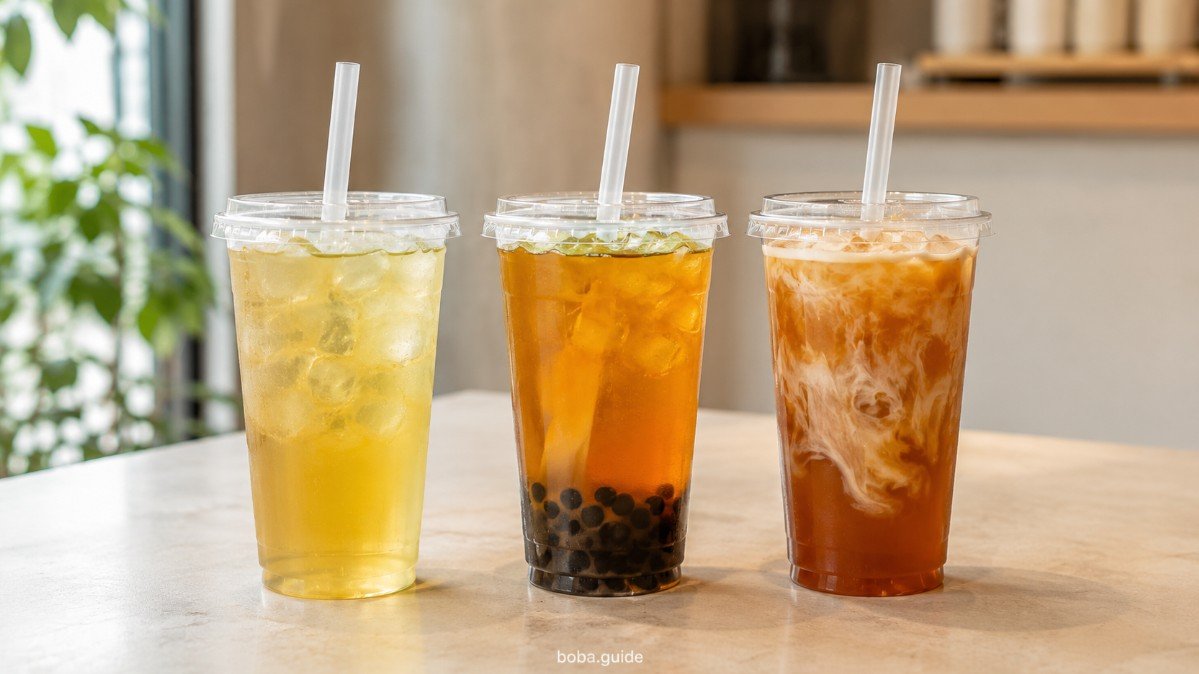
If you want boba that tastes genuinely less sweet, start with the drink that needs the least sweetness in the first place. Plain jasmine, green, oolong and black teas are usually easier to keep tea-forward than brown sugar drinks, dessert-style milk teas or syrup-heavy fruit drinks.
The second rule is just as important: your sweetness setting is only one layer of the cup. Tapioca pearls may already be sweetened. Fruit flavor may come from syrup or concentrate. Pudding, jellies, foam and brown sugar streaks can add sweetness even when the liquid itself is ordered with little or no added sweetener.
So the least-sweet order is usually not “take any drink and press 0%.” It is a deliberately simple combination: a tea-forward base, a sweetness level the shop can actually adjust, and one restrained topping — or no topping at all.
The Easiest Way to Get Less-Sweet Boba Is to Stop Fighting the Drink
A drink designed around brewed tea is much easier to keep restrained than a drink whose identity depends on brown sugar syrup, flavored powder, condensed milk or several sweet toppings.
Unsweetened or lightly sweetened tea gives you a cleaner starting point than trying to remove sweetness from a dessert-style recipe.
Use the shop’s available setting — whether that is Zero, Little, Less, percentages or another system — rather than assuming every chain uses the same scale.
If your pearls or jelly are already sweet, they can provide enough contrast without making the drink itself syrupy.
Low sweetness makes tea quality, milk choice and topping quality easier to notice. That can be a feature, not a compromise.
Start Here: Boba Drinks That Are Naturally Easier to Keep Less Sweet
This is a taste-first ranking, not a nutrition ranking. The exact recipe still depends on the shop.
One of the cleanest places to begin if you already enjoy unsweetened iced tea. Floral jasmine and fresh green-tea character can remain interesting without much added sweetness.
Roasted, floral or nutty oolong can have enough character to stand on its own. It is particularly useful when you want flavor complexity without relying on syrup.
Deeper and more tannic than many green teas. Black tea works well when you prefer a stronger brewed flavor and do not need sweetness to soften every edge.
Milk can round out strong tea even when added sugar is reduced. The important question is whether the shop makes the milk tea to order or uses a sweetened premixed base.
It can work well at reduced sweetness when tea and real fruit acidity do most of the work. It is less predictable when the fruit profile depends heavily on syrup or concentrate.
If tea itself is the reason these options appeal to you, our guide to tea bases for boba explains how black, green, jasmine and oolong behave in the cup.
Your Cup Has a Sweetness Stack — Not Just a Sugar Button
When a drink still tastes sweet at a low setting, one of these other layers is usually the reason.
This is the part the shop’s sweetness control most obviously changes: sugar syrup, fructose or another added sweetener mixed into the drink.
Fruit concentrate, flavored syrup, sweetened powder, brown sugar mixture or another premade ingredient can carry sweetness that is not fully controlled by the regular sweetness setting.
Some milk and creamer components are unsweetened; others contribute sweetness themselves. The recipe matters more than the color of the drink.
Pearls are commonly cooked or held with sweetener, while jellies, pudding and popping boba may carry their own sweet flavor.
Brown sugar streaks or other syrups added around the cup remain part of the drink even if the tea or milk base itself receives less added sugar.
If you want to understand how these components affect actual sugar rather than just perceived sweetness, continue with our guide to sugar in boba.
0%, 25%, 50% and “Less” Are Settings — Not Universal Recipes
Many shops use percentage-style sweetness controls, while others use labels such as Standard, Less, Little and Zero. The exact amount behind those labels is not standardized across every boba shop.
Usually means no regular sweetener is added to the adjustable liquid portion. It does not automatically mean the completed drink contains zero sugar or even tastes completely unsweetened.
Where available, this is typically a very lightly sweetened direction. It makes sense for people who still want a small amount of sweetness around a strong tea base.
A common reduced-sweetness choice, but the number should be understood relative to that shop’s own standard recipe — not as a universal gram count.
Still intentionally sweet. It may feel noticeably lighter than the house default at one shop while remaining quite sweet at another.
The shop’s regular sweetened recipe. It does not mean “100% sugar” by weight or volume.
The important idea is relative: the setting tells the shop how much of its adjustable sweetener to use. It does not provide a universal nutritional measurement.
Our boba sweetness-level guide owns the full comparison of these systems, while what 50% sugar means on a boba order goes deeper into that specific label.
Six Less-Sweet Boba Orders Worth Trying
Use these as order structures rather than universal recipes. If the shop cannot adjust a particular component, ask what is fixed before assuming the percentage changes the whole drink.
Unsweetened Jasmine Tea + Tapioca Pearls
This is one of the clearest ways to let the topping supply most of the sweetness. Floral jasmine keeps the liquid interesting while sweetened pearls provide occasional contrast.
If the pearls are heavily sweetened, you may find the cup needs no additional syrup at all.
Oolong Tea + Little or Minimal Sweetener
Roasted or aromatic oolong is especially good when you want the tea itself to provide complexity. A little sweetness can soften tannic edges without turning the drink syrupy.
Black Milk Tea at Reduced Sweetness
If you still want creaminess, classic black milk tea is often easier to understand than a heavily flavored dessert drink. Milk rounds out the tea while reduced sweetener lets more of the malt or tannin show through.
Ask whether the milk-tea base itself is adjustable. Some recipes may use premixed or already-sweetened ingredients.
Green Tea + One Light Topping
A clean green-tea base pairs well with a single topping when you want texture but not a dessert cup. If tapioca feels too sweet or heavy, choose a topping whose flavor does not dominate the tea.
Citrus or Passion Fruit Tea at Reduced Sweetness
Acidity can make a drink feel vivid without requiring as much sweetness. But fruit tea becomes less predictable when the fruit flavor comes from a heavily sweetened syrup or concentrate.
Ask whether the fruit component itself is sweetened before assuming 0% produces an unsweetened drink.
Plain Tea With No Topping
It is the least dramatic answer, and sometimes the best one. If you primarily want good tea from a boba shop, you do not have to add a sweet topping simply because it is available.
Once you know how the tea tastes on its own, you can add one topping next time and understand exactly what changed.
One Sweet Topping Can Work Better Than a Sweet Drink
People who dislike very sweet boba often assume they need to remove toppings first. That is not always the most satisfying route.
A clean unsweetened tea with a modest portion of sweet pearls can create contrast: most sips taste like tea, while the pearls give occasional sweetness and chew. The experience is different from sweet tea plus sweet pearls plus sweet foam.
The mistake is stacking several sweet toppings at once. If your goal is restraint, choose one texture and learn how much sweetness it contributes.
Our guide to how many boba toppings to order explains why adding more is not automatically better.
Some Boba Drinks Are Much Harder to Make Genuinely Less Sweet
You can still enjoy these drinks, but reducing the regular sweetness control may not change the defining sweet components of the recipe.
Brown sugar syrup is part of the identity of the drink, not merely an optional spoonful of sweetness added at the end.
Some taro, chocolate, flavored milk and other drinks use premixed powders that may already contain sweetener.
A fruit drink can look light and refreshing while much of its flavor comes from a sweetened concentrate or syrup.
Sweet pearls, pudding, jelly and popping boba can make a low-sweetness liquid taste much sweeter once every sip includes a topping.
A less-sweet tea can still become rich and dessert-like when topped with sweet foam and syrup.
If your actual goal is to reduce sugar rather than simply reduce perceived sweetness, use our dedicated low-sugar boba guide. Those are related decisions, but they are not identical.
Milk Tea Can Still Work for Someone Who Dislikes Very Sweet Boba
Milk tea is not inherently required to taste like liquid candy. A strong black, jasmine or oolong tea base with milk and restrained sweetener can be aromatic, creamy and relatively tea-forward.
The important question is whether the shop gives you real control over the recipe. A freshly built milk tea may respond well to reduced sweetness. A drink made from an already-sweetened premix may not.
For drink-family differences, see our milk tea drinks guide.
Fruit Tea Can Taste Fresh Without Becoming Candy-Like — but Check the Base
Fruit acidity and fragrance can carry a drink at lower sweetness particularly well. Citrus, passion fruit and other tart directions can feel lively without needing the same sweetness as a dessert-style milk drink.
But “fruit” is not a guarantee of low sweetness. Shops can use fresh fruit, puree, concentrate, syrup or combinations of them. Some of those components may already contain substantial sweetness before the adjustable sugar setting is applied.
Our fruit tea drinks guide owns the larger category.
Do Not Confuse Less Sweet With Less Ice
Sweetness and ice solve different problems. Less ice may change dilution and the final volume of ice in the cup; it does not automatically reduce the amount of sweetener in the recipe.
In fact, if a drink normally softens as ice melts, ordering less ice can make the sweetness feel more concentrated over time.
If you are changing both at once, our boba customization guide helps separate sweetness, ice, milk and toppings so you know which adjustment produced the result.
The Best Counter Question Is More Specific Than “Can You Make It Less Sweet?”
If you want tea to dominate:
“I prefer drinks that are not very sweet. Which tea-based drinks can you make with little or no added sweetener?”
If fruit tea interests you:
“Is the fruit base itself sweetened, or does the sweetness mainly come from the adjustable syrup?”
If you want pearls:
“Are the tapioca pearls already sweetened? If they are, I may want the tea itself unsweetened.”
If the menu uses percentages:
“Does 25% or 50% change only the added sweetener, or are other parts of this drink already sweet?”
For the step-by-step process of building a lower-sugar order rather than merely a less-sweet one, continue with how to order low-sugar boba.
A Good First Less-Sweet Order Has Very Few Moving Parts
If you are new to boba and already know you dislike sugary drinks, do not begin with the most elaborate cup on the menu.
Choose one recognizable tea base. Pick the lowest sweetness level that still sounds enjoyable. Add either one topping or none. Then taste what the tea actually contributes.
If you like the drink but want more texture next time, add a topping. If the tea feels too sharp, move the sweetness up one step rather than jumping straight to the house default.
For a broader first-order framework, see our best boba choices for beginners.
The Goal Is Not the Lowest Number — It Is a Drink That Still Tastes Complete
Ordering 0% simply because it is the smallest number does not automatically produce the best cup. A good less-sweet boba order still needs enough flavor, aroma, body and contrast to feel intentional.
For some people that is unsweetened jasmine with pearls. For others it is oolong at a small amount of sweetness. Someone else may prefer black milk tea at half of the shop’s standard sweetener.
The useful target is not “as little sugar as physically possible.” It is the point where sweetness stops covering the tea and toppings you actually wanted to taste.
Once you know that preference, the full boba ordering guide helps you combine sweetness with size, ice, milk and toppings deliberately.
Found a Boba Order That Lets the Tea Speak?
Some of the best low-sweetness discoveries are surprisingly shop-specific: an oolong that tastes complete at almost no added sugar, a jasmine tea whose sweet pearls provide enough contrast, or a fruit tea that stays bright without becoming syrupy.
If you have found one, send the Boba Guide Editorial Team the shop name and location, exact drink, sweetness setting, topping and what made the balance work. If the menu uses unusual sweetness terminology, a current menu photo is especially useful.
Reader submissions give us combinations and menu systems to investigate. We verify factual details before turning them into guide updates or recommendations.
Questions About Ordering Less-Sweet Boba
What are the least sweet boba drinks?
Plain jasmine, green, oolong and black teas are usually the easiest boba-shop drinks to keep minimally sweet because brewed tea itself does not require a sweet flavored base. Classic milk tea and some simple fruit teas can also work when their sweetness is genuinely adjustable. Recipes vary by shop.
What sweetness level should I order if I don’t like sweet boba?
If the shop uses percentages, 25% to 50% can be a useful reduced-sweetness starting range, while people who already enjoy unsweetened tea may prefer 0%. However, sweetness systems are not standardized between shops, so treat the percentage as relative to that shop’s own recipe.
Does 0% sweetness mean zero sugar?
No. It often means that no adjustable sweetener is added to the liquid base. Tapioca pearls, fruit syrup, flavored powders, milk products, pudding, jelly or brown sugar syrup can still contribute sugar and sweetness.
Is 50% sugar literally half as much sugar in the whole drink?
Not necessarily. The setting generally refers to the shop’s adjustable sweetener relative to its standard preparation. Sugar already present in toppings, premixed ingredients or flavored components may remain unchanged.
Which tea is best for boba with very little sugar?
Jasmine, oolong, green and black tea are all useful options because they have recognizable flavor without depending on a sweet syrup. Oolong is especially appealing if you like roasted or floral notes, while jasmine gives a more fragrant profile.
Can milk tea be ordered less sweet?
Often, yes, but it depends on how the shop prepares it. A freshly mixed milk tea may respond well to reduced sweetener, while a premixed or already-sweetened base may offer less control. Ask what part of the recipe is adjustable.
Are fruit teas less sweet than milk teas?
Not automatically. Fruit tea can taste bright and refreshing at low sweetness, but fruit syrup, concentrate or puree may already contain sugar. The specific recipe matters more than the category name.
Do tapioca pearls make a low-sweetness drink taste sweeter?
They can. Tapioca pearls are commonly cooked or held with sweetener, so an unsweetened tea with pearls may still have noticeable sweetness. This can be useful if you want most of the cup tea-forward with occasional sweet chewy bites.
What should I say when ordering boba that is not very sweet?
Tell the staff you prefer tea-forward drinks and ask which options can be made with little or no added sweetener. If the drink contains fruit syrup, powder or sweetened toppings, ask which parts remain sweet even when the regular sweetness setting is reduced.