
Smoothie Boba: Texture, Toppings, Flavors & How to Order
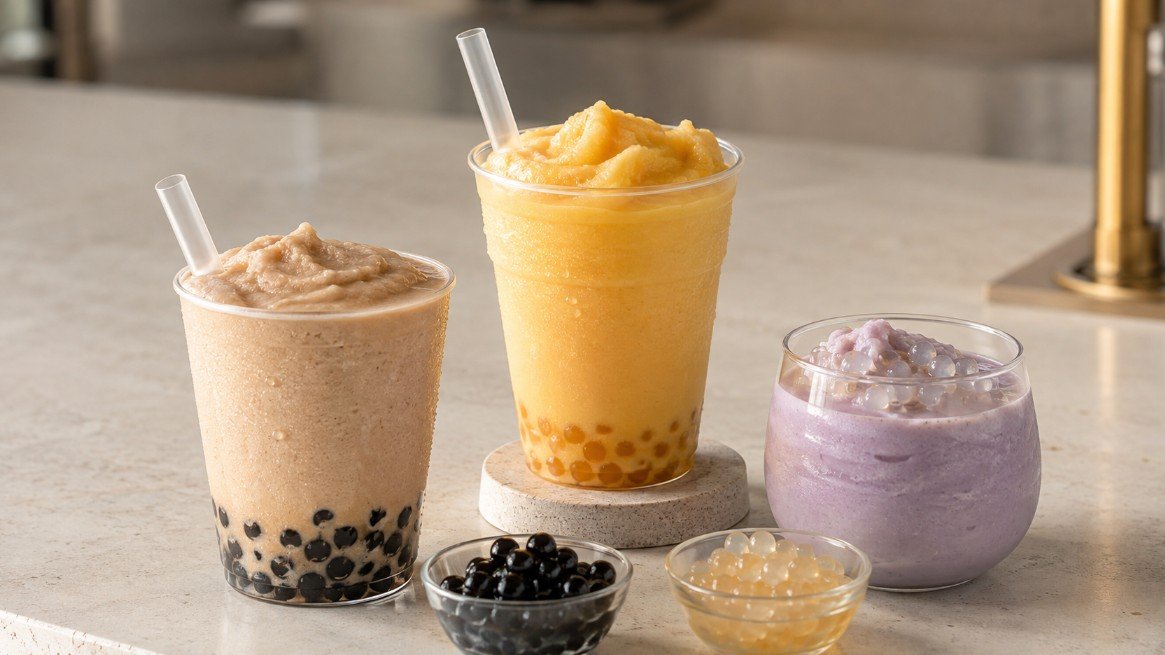
Smoothie boba is a thick, blended bubble tea drink made with a frozen creamy, tea-based, fruit-based or dessert-style base and customized with toppings such as tapioca pearls, popping boba or crystal boba. Unlike regular milk tea or fruit tea, its defining feature is the blended texture rather than one particular flavor.
That means a boba smoothie can be surprisingly different from one shop to another. One may be a milk tea blended with ice, another may be mango-forward and refreshing, while a taro or cookies-style smoothie can feel much more like dessert. The best topping depends on how thick, sweet and flavorful that base already is.
What Is Smoothie Boba?
Smoothie boba is a blended bubble tea drink with a thick, cold texture and one or more boba-style toppings. The base can be milk tea, fruit, taro, matcha, chocolate or another creamy flavor, so “smoothie” describes the format more than the flavor.
This is why a smoothie boba menu can look very different from a classic milk tea menu. The drink is typically blended with ice until it develops a dense, semi-frozen body instead of remaining thin and pourable like regular iced tea.
Black tapioca pearls are a familiar pairing, but they are only one option. Popping boba can add bursts of fruit flavor, crystal boba creates a lighter chew, and pudding or red bean can move the drink further toward dessert territory.
Smoothie describes the texture. Milk tea, mango, taro, matcha or another flavor tells you what the smoothie tastes like. The topping then adds chew, pop, softness or extra richness.
For the broader bubble tea system of bases, milk, ice and toppings, see our boba tea guide. If you want a collection of specific blended drink ideas rather than an explanation of the format, browse our boba smoothie drinks.
Smoothie Boba Is a Texture Category First
The main difference between a smoothie boba and regular bubble tea is physical texture: the drink is blended, colder and considerably thicker. That changes how sweetness, toppings and even flavor are perceived.
Blending creates body
Finely crushed ice and the drink base combine into a thicker consistency that moves more slowly through the straw than conventional milk tea.
Cold changes flavor perception
A very cold drink can make sweetness and aroma feel different from the same ingredients served as a regular iced tea or milk drink.
Toppings become more prominent
Chewy pearls or bursting toppings have to move through a dense frozen base, so the contrast between drink and topping can feel stronger.
Thick does not mean solid. If the drink behaves like soft-serve or requires a spoon rather than a wide boba straw, it has moved beyond what most people expect from smoothie-style bubble tea.
Boba Smoothies Usually Fall Into Three Broad Families
Most smoothie boba drinks can be understood as milk-tea-based, fruit-based or dessert-style. The boundaries are not rigid, but the distinction helps predict how creamy, refreshing or rich the finished cup will feel.
Creamy and familiar
A milk tea base is blended with ice into a thicker frozen drink. This keeps much of the familiar milk-tea flavor while changing the body dramatically.
Natural pairing: black tapioca pearls.
Bright and refreshing
Mango, strawberry, passion fruit and other fruit directions can create a colder, brighter smoothie that sits between beverage and frozen dessert.
Natural pairing: popping boba, crystal boba or aloe depending on the flavor.
Rich and indulgent
Taro, matcha, chocolate, cookies-and-cream and similar styles can produce a thicker, more dessert-forward drink where toppings should be chosen with restraint.
Natural pairing: one complementary topping rather than several heavy additions at once.
Chatime currently illustrates how broad the category can be: its Signature Boba Smoothie is built from milk tea blended into a creamy smoothie, while its Smoothies category also includes dessert and fruit-oriented drinks.
Smoothie Boba vs Slush Boba
A smoothie is usually positioned as the thicker and creamier frozen option, while a slush is often icier and more refreshing. Bubble tea terminology is not standardized, so individual shops may use these words differently.
Kung Fu Tea describes its slush format as a blended-ice version of a tea or fruit drink, which is a useful example of why the exact shop definition matters. For the format itself, see our guide to slush boba.
Tapioca Pearls Behave Differently in a Thick Smoothie
Black tapioca can feel more substantial in a smoothie because the dense frozen base slows the drink around each pearl. Instead of pearls moving easily through liquid tea, the straw pulls frozen drink and chewy toppings together.
This can be excellent when the proportions are right. Creamy smoothie plus chewy tapioca gives you two strongly contrasting textures in each sip.
It can also become tiring when the drink is extremely thick or overloaded with toppings. A cup containing tapioca, pudding, jelly, foam and a dense frozen base may be technically possible to drink but no longer especially pleasant through a straw.
Temperature matters too. Tapioca is generally most enjoyable when pleasantly chewy. A very cold environment can make texture differences more noticeable, particularly as the smoothie melts and the drink around the pearls becomes thinner.
Which Toppings Work Best in a Boba Smoothie?
The best smoothie topping depends on whether you want chew, bursts of juice, a lighter bite or a richer dessert texture. There is little advantage to adding every texture to the same thick drink.
Black tapioca pearls
Best with milk tea, taro, matcha and other creamy smoothies when you want the familiar boba experience. Their dark syrup can also make the bottom of the cup sweeter.
Popping boba
Particularly natural in fruit smoothies. The liquid center creates a sharp texture contrast against the dense frozen drink.
Crystal boba
A useful option when you want chew without the darker syrup profile of classic tapioca.
Pudding or red bean
These work best when the smoothie flavor already points toward dessert, such as taro or matcha. They can make an already thick cup considerably more filling.
To compare the wider range of textures available at bubble tea shops, see our boba toppings guide.
Creamy vs Fruity Smoothie Boba
Creamy smoothies emphasize body and dessert-like richness, while fruit smoothies emphasize brightness and refreshment even though both are blended and frozen.
Milk tea, taro, matcha and dessert styles
These usually benefit from toppings that add chew or softness rather than another strong flavor.
tapioca, crystal boba, pudding or red bean depending on the base.
Mango, strawberry, passion fruit and similar styles
These are usually brighter and can work well with toppings that reinforce juiciness rather than making the drink heavier.
popping boba, crystal boba, aloe or one restrained jelly.
Does Smoothie Boba Contain Tea?
Sometimes. A boba smoothie can be made from milk tea, brewed tea, fruit or a non-tea dessert base. The word “smoothie” tells you about the texture, not whether tea is present.
Chatime’s Signature Boba Smoothie is a clear example of a tea-based format because it uses the chain’s milk tea blended into a smoothie. Other smoothie flavors can be constructed differently.
Likely to contain tea if actual milk tea is the base.
May contain tea, but the name alone does not prove it.
May be tea-based or completely non-tea depending on the recipe.
Does Smoothie Boba Have Caffeine?
Smoothie boba contains caffeine when its base contains caffeinated tea, coffee, matcha or another caffeinated ingredient. A fruit or dessert smoothie without those ingredients may have little or no caffeine.
Because the category is so broad, there is no useful universal caffeine number for “boba smoothie.” A milk-tea smoothie and a mango smoothie can have completely different caffeine profiles despite sharing the same frozen texture.
Ask what the smoothie base contains or use the shop’s ingredient and nutrition information. Do not infer caffeine from the drink’s color or thickness.
How Sweet Is Smoothie Boba?
A smoothie can taste sweeter than its menu percentage suggests because sweetness may come from the base, fruit preparation, syrup and toppings in addition to adjustable sugar.
A flavored milk tea or dessert mix may already contain sweetness.
Puree, concentrate or syrup can contribute sweetness independently of the customization setting.
Pearls may arrive sweetened from their holding syrup.
These can add another pronounced sweet element.
That makes it useful to ask what the shop can actually reduce. Our guide to boba sweetness levels explains why menu percentages are not standardized.
Why Does Smoothie Boba Melt and Separate?
A boba smoothie gradually becomes thinner because its finely blended ice melts, changing the ratio between frozen water and the rest of the drink. Some separation over time is normal for a blended beverage.
Dense and evenly blended
The texture is at its thickest and the drink holds toppings most effectively.
Softer and easier through the straw
Ice begins to melt and the base loosens. This is not necessarily a quality problem.
Thin, diluted and less integrated
The intended frozen texture gradually disappears and heavier ingredients may settle more noticeably.
If you are ordering delivery or carrying the drink for a long time, smoothie texture is inherently less stable than ordinary iced tea. It is usually best enjoyed reasonably soon after blending.
How to Order Smoothie Boba
Choose the smoothie family first, then one topping, then decide how sweet you want the complete combination. This keeps a thick drink from becoming unnecessarily crowded.
Your first boba smoothie
Try: milk-tea smoothie + black tapioca pearls + moderate sweetness.
This gives you a familiar bubble tea flavor with a clearly different frozen texture.
You want fruit and refreshment
Try: mango or another fruit smoothie + popping boba or crystal boba.
A lighter topping keeps the drink bright and avoids turning the smoothie into a heavy dessert.
You want a dessert-style cup
Try: taro, matcha or another creamy smoothie + one complementary topping such as tapioca, pudding or red bean.
If the smoothie is already rich, adding several toppings plus foam may be more texture than you actually want.
“Is this smoothie milk-tea-based, fruit-based or non-tea, and which topping works best with its thickness?”
How to Tell If a Boba Smoothie Is Well Made
A good boba smoothie should feel evenly blended, clearly flavored and thick without becoming difficult to drink. The toppings should work with the frozen base instead of fighting it.
The ice is finely blended
Large hard ice chunks interrupt the texture. A smoothie should feel more uniform than a loosely crushed iced drink.
The flavor survives the cold
The drink should still taste recognizably of milk tea, mango, taro or its intended base rather than simply tasting cold and sweet.
The straw can handle the texture
You should be able to pull both smoothie and topping through the straw without constant blockage.
The sweetness has room to breathe
Frozen texture, flavored base and toppings can all add intensity. A good cup still has a recognizable flavor beyond sugar.
The topping still has its own texture
Tapioca should remain chewy, popping boba should still burst and crystal boba should not disappear into the frozen base.
Melting is gradual, not immediate collapse
A smoothie naturally loosens with time, but it should not arrive already looking like thin separated liquid unless that is the intended recipe.
Smoothie Boba vs Milk Tea vs Fruit Tea
Choose smoothie boba when you want a thick frozen drink, milk tea when you want a creamy but pourable tea experience, and fruit tea when you want something lighter and more refreshing.
Thick + frozen
Best when texture and coldness are central to the drink experience.
Creamy + pourable
Best when you want milk and tea with less frozen density and easier customization.
Explore milk tea with bobaLight + refreshing
Best when fruit and brewed tea matter more than creamy body.
Explore fruit tea with bobaWho Should Choose Smoothie Boba?
Smoothie boba is especially good for people who want bubble tea to feel colder, thicker and more like a frozen treat.
You may love it if…
You enjoy frozen drinks, creamy textures, fruit smoothies, taro or matcha desserts, strong temperature contrast and boba that feels substantial.
Another format may suit you better if…
You prefer clear tea, subtle aromas, very light drinks, minimal sweetness or a beverage that stays almost the same texture for a long time.
Smoothie Boba FAQ
What is smoothie boba?
Smoothie boba is a thick blended bubble tea drink made from a creamy, tea-based, fruit-based or dessert-style base and served with toppings such as tapioca pearls, popping boba or crystal boba.
Is smoothie boba the same as a slush?
Not necessarily. Smoothies are often thicker and creamier, while slush drinks are commonly icier and lighter. Bubble tea shops use these terms differently, so check the specific menu description.
Does smoothie boba contain tea?
Sometimes. A milk-tea smoothie contains tea if the milk tea base is brewed from tea, while fruit and dessert smoothies may or may not contain tea depending on their recipe.
Does smoothie boba have caffeine?
It can. Tea-based, coffee-based and matcha smoothies normally contain caffeine from those ingredients. A non-tea fruit or dessert smoothie may not, so check the specific recipe.
What toppings are best in a boba smoothie?
Black tapioca works especially well in creamy smoothies, popping boba is a natural match for fruit smoothies, and crystal boba provides a lighter chew. Pudding and red bean can work in richer dessert-style drinks.
Are tapioca pearls good in smoothies?
Yes. Tapioca adds strong chewy contrast to the thick frozen base. The combination works best when the smoothie is still drinkable through a wide straw and the cup is not overloaded with additional heavy toppings.
What is the difference between a boba smoothie and milk tea?
A boba smoothie is blended into a thick frozen texture. Regular milk tea remains pourable and typically puts more emphasis on the brewed tea and milk rather than frozen texture.
Is fruit smoothie boba dairy-free?
Not automatically. Some fruit smoothies may contain milk, creamer, yogurt or other dairy ingredients. Check the shop’s ingredient and allergen information rather than assuming from the fruit flavor.
How sweet is smoothie boba?
It varies widely. Sweetness can come from the smoothie base, fruit preparation, syrup and toppings as well as adjustable sugar. A reduced percentage does not necessarily reduce every source of sweetness.
Why does boba smoothie melt or separate?
The finely blended ice gradually melts, making the drink thinner and allowing heavier components to settle more noticeably. Some change over time is normal for a frozen blended beverage.
Editorial note: Bubble tea shops do not use “smoothie” and “slush” terminology in exactly the same way. Boba Guide compares the actual base, texture and toppings rather than assuming every menu follows one naming system.