
Taro Milk Tea: Taste, Color, Toppings & How to Order
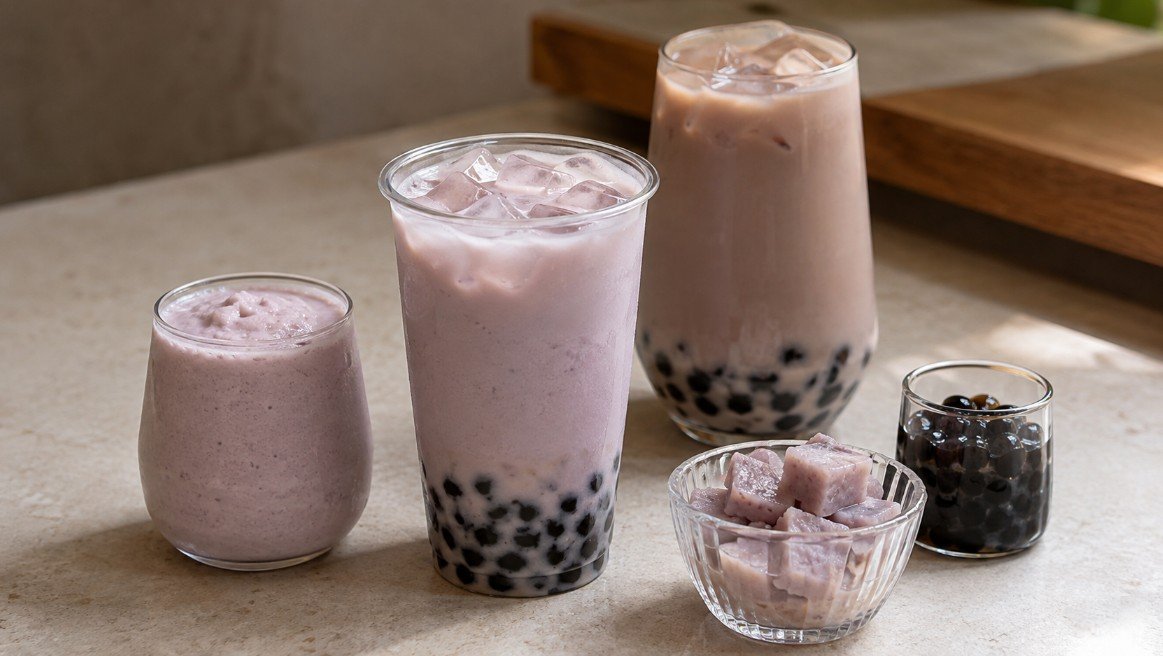
Taro milk tea is a creamy bubble tea style flavored with taro and commonly combined with milk, a tea base and toppings such as black tapioca pearls. It is often associated with a pale purple color, but real drinks can range from cream and beige-lilac to deeper muted lavender depending on the taro preparation, tea base, milk and shop recipe.
That variation is useful to understand before ordering. One taro milk tea may taste soft, sweet and almost dessert-like, while another has a clearer black- or green-tea backbone. A blended taro smoothie is different again: colder, thicker and usually more focused on the taro flavor than on the experience of milk tea.
What Is Taro Milk Tea?
Taro milk tea is a creamy drink that combines taro flavor with milk or creamer and, in many versions, a brewed tea base. Tapioca pearls are a popular addition but are not required for the drink itself.
Taro is a starchy root vegetable used in many Asian cuisines and desserts. In bubble tea, its flavor is generally presented in a sweet, creamy direction rather than as a savory root vegetable. Depending on the preparation, people may notice mild nuttiness, vanilla-like sweetness, earthiness or a soft starchy character.
The phrase “taro milk tea” does not guarantee one universal formula. Some shops pair taro with black tea, some offer green-tea versions, and some sell milk-based taro drinks or blended slushes separately.
Taro tells you the main flavor direction. The tea base controls much of the aroma and caffeine, milk controls richness, and toppings determine whether the drink feels simple, chewy or dessert-like.
For the broader family of tea, milk, toppings and customization, see our boba tea guide. If your interest is taro as a flavor across different drink formats rather than milk tea specifically, continue to our taro boba flavor guide.
Why Is Taro Milk Tea Purple — and Why Is It Sometimes Not?
Taro milk tea does not have one mandatory shade of purple. Its final appearance depends on the taro preparation, tea base, milk ratio and other ingredients used by the shop.
Pale cream or lavender
A milk-forward preparation can look very light, particularly when the tea base is subtle and the taro mixture itself is only softly colored.
Muted lavender
This is the color many people associate with taro milk tea: creamy purple rather than vivid violet.
Darker beige-purple
A darker tea base can visually pull the drink toward taupe, brown-lilac or dusty mauve instead of bright purple.
A dramatically purple cup is not automatically stronger, fresher or higher quality. Aroma, texture, tea balance and the actual taro flavor tell you more.
What Does Taro Milk Tea Taste Like?
Taro milk tea usually tastes creamy, gently sweet, mildly nutty and softly earthy, often with a vanilla-like or starchy dessert quality. The underlying tea can add maltiness, freshness or light bitterness depending on the base.
It is generally less sharp than fruit tea and less vegetal than matcha. Its appeal comes from softness: the taro flavor, milk and sweetness tend to blend into a rounded drink rather than producing strong acidity or pronounced bitterness.
Milk or creamer gives taro its familiar soft, dessert-like body.
Some preparations create a subtle nut-like impression without actually tasting like a specific nut.
The sweet, rounded profile can remind people of vanilla or a mild bakery-style dessert, although taro has its own flavor.
Preparations containing more actual taro can feel fuller or slightly thicker than a conventional flavored milk tea.
Black tea can make the finish darker and stronger, while green tea can keep the drink lighter and fresher.
Black Tea vs Green Tea Taro Milk Tea
The tea base can change taro milk tea almost as much as the topping does. Black tea generally creates a deeper and stronger drink, while green tea can keep the profile lighter.
Deeper and more structured
Black tea can add maltiness, darker color and more contrast behind the sweet taro. It is a useful choice when you want the drink to feel like milk tea rather than mainly flavored milk.
People who enjoy classic milk tea and want taro layered over a stronger tea foundation.
Lighter and fresher
Green tea can give taro a cleaner background with less of the darker malt character associated with black tea. The final drink may also look lighter or brighter.
People who want creamy taro but prefer a less heavy tea finish.
If you want to understand the whole category before choosing a flavored version, our milk tea with boba guide explains how tea, milk and pearls interact.
Taro Preparation Changes Texture, Flavor and Consistency
Bubble tea shops can build taro flavor in different ways, including preparations containing cooked taro and more standardized taro bases or powders. Neither label alone tells you whether you will personally prefer the drink.
More whole-taro character
A preparation containing noticeable taro solids may feel thicker, softer or slightly textured. The flavor can seem more root-like and less perfectly uniform from sip to sip.
Smoother standardized base
A powder or prepared taro base can create a very consistent color, sweetness and creamy texture. What is actually in that base varies by product and shop, so ingredient questions should be answered from the specific menu or ingredient disclosure.
This distinction matters most if you care about texture, allergens, dairy ingredients or exactly what produces the flavor. Do not assume the recipe from appearance alone.
For ingredient-focused information rather than the finished drink, see our guide to taro powder for boba.
Taro Milk Tea vs Taro Smoothie
Taro milk tea is generally a pourable milk-tea-style drink, while a taro smoothie or slush is blended with ice into a thicker frozen texture.
Which Toppings Work Best With Taro Milk Tea?
Tapioca pearls are the easiest classic pairing, while pudding and milk foam make taro richer and lighter jellies change the texture without adding as much dark syrup flavor.
Black tapioca pearls
The dark chewy pearls contrast with taro’s soft creamy profile. This is the safest first topping if you specifically want the familiar boba experience.
Pudding
Pudding reinforces taro’s creamy direction and replaces some of the chew with a softer texture. The combination can become quite rich, so it works best when that is intentional.
Milk foam
A creamy foam layer adds contrast at the top of the drink without introducing another solid topping.
Crystal boba or restrained jelly
These can add chew while keeping the flavor profile less dominated by dark pearl syrup.
If you want to compare more textures before ordering, use our complete boba toppings guide.
How Sweet Should Taro Milk Tea Be?
The best sweetness level depends on how the shop builds its taro base, because part of the flavor mixture may already contain sweetness before your customization is applied.
That is why choosing “50% sugar” should not automatically be interpreted as cutting the total sweetness of every ingredient in half. The adjustable sweetener may be only one part of the finished cup.
May be adjustable when the tea is mixed to order.
May already contribute sweetness depending on how the shop prepares it.
Can add another concentrated sweet element if stored in syrup.
May add further sweetness or richness even when the tea itself is reduced-sugar.
“Is the taro base already sweetened, or does the sweetness percentage control most of the drink?”
For a broader explanation of shop percentages, see our boba sweetness levels guide.
Does Taro Milk Tea Have Caffeine?
Taro itself does not tell you whether the finished drink contains caffeine; the answer depends mainly on whether the recipe includes a caffeinated tea base.
A taro milk tea made with black or green tea will normally contain caffeine from the tea. A taro milk drink or smoothie made without tea may be caffeine-free, provided no other caffeinated ingredient is included.
Ask what tea base the shop uses or check its current ingredient and nutrition information. Do not assume that every taro drink follows the same recipe.
For the broader topic, see our boba caffeine guide.
Hot vs Iced Taro Milk Tea
Iced taro milk tea is cooler and more refreshing, while hot taro milk tea can emphasize creaminess and aroma without dilution from melting ice. Availability depends on the shop and recipe.
Refreshing and familiar
Cold taro milk tea gives the creamy flavor a cleaner finish and creates a strong contrast with chewy tapioca pearls.
Too much melting ice can make a mild taro base increasingly thin toward the end.
Soft and comforting
A hot version can make taro feel rounder and more dessert-like, particularly when paired with a stronger tea base.
Not every topping or shop preparation is offered hot, so confirm the available combinations before ordering.
How to Order Taro Milk Tea
First choose whether you want a tea-forward milk tea or a softer dessert-style taro drink, then select sweetness and one topping. This prevents the cup from becoming overloaded before you know what the taro itself tastes like.
Your first taro milk tea
Try: taro milk tea + black tapioca pearls + moderate sweetness + regular ice.
This keeps the classic creamy taro profile while giving you the traditional chewy boba texture.
You want more actual tea character
Try: taro with a black tea base, one topping and restrained sweetness.
The stronger tea gives the sweet taro more structure and makes the cup feel closer to conventional milk tea.
You want a dessert drink
Try: creamy taro + pudding or milk foam, with pearls only if you specifically want both soft and chewy textures.
Once several rich toppings are combined, the drink becomes much more about dessert texture than tea.
“What tea base is used in your taro milk tea, and is the taro mixture already sweetened?”
How to Tell If Taro Milk Tea Is Well Balanced
Good taro milk tea should have a recognizable taro flavor, smooth body, appropriate sweetness and toppings that feel intentional. Bright purple color by itself tells you very little about the drinking quality.
The taro is recognizable
The cup should taste like more than sweet milk. Taro’s creamy, earthy and mildly nutty character should remain identifiable.
The texture matches the style
A smooth milk tea should feel integrated, while a preparation containing taro pieces can naturally be fuller or slightly textured.
The tea contributes something
If the menu calls it milk tea, the black or green tea should ideally provide some recognizable structure instead of disappearing completely.
Sweetness does not flatten everything
Taro is naturally suited to dessert-style drinks, but the final cup should still offer more than undifferentiated sugar.
The pearls are fresh
Tapioca should be pleasantly chewy rather than dry, hard in the middle or collapsing into mush.
The shade of purple is secondary
Flavor, aroma, texture and balance matter more than whether the drink matches a particular social-media color.
Taro vs Matcha vs Thai Tea
Taro is soft, creamy and mildly nutty; matcha is greener, more vegetal and bitter; Thai tea is stronger, sweeter and more aromatic. Choosing between them is mostly about the flavor direction you want.
Creamy + nutty
Choose taro when you want a soft dessert-style profile with little acidity and only gentle tea bitterness.
Vegetal + bittersweet
Choose matcha when you want a stronger green-tea identity, mild bitterness and more savory depth.
Bold + sweet
Choose Thai tea when you want a stronger tea profile with a richer, more aromatic and typically sweeter impression.
Who Should Try Taro Milk Tea?
Taro milk tea is particularly approachable for people who like creamy, gently sweet drinks and want something softer than matcha or strong black milk tea.
You may love taro if…
You enjoy creamy desserts, mild nutty or vanilla-like flavors, tapioca pearls, pudding, thick milk drinks or bubble tea without sharp fruit acidity.
Another drink may suit you better if…
You want crisp citrus, very strong tea bitterness, pronounced roasted notes, a very light transparent drink or a flavor that is less creamy and dessert-like.
Taro Milk Tea FAQ
What is taro milk tea?
Taro milk tea is a creamy drink flavored with taro and usually combined with milk or creamer. Many versions also include a black or green tea base, and toppings such as tapioca pearls can be added.
What does taro milk tea taste like?
Taro milk tea generally tastes creamy, mildly nutty, softly earthy and sweet, sometimes with a vanilla-like or starchy dessert quality. The tea base can add additional maltiness, freshness or mild bitterness.
Why is taro milk tea purple?
The color comes from the complete taro preparation and recipe rather than from one universal rule. Taro drinks can appear cream, pale lavender, dusty purple or darker beige-lilac depending on the ingredients and tea base.
Is taro milk tea always purple?
No. Its shade varies substantially between shops and recipes. A darker tea base can make the drink browner or more muted, while other preparations can appear lighter or brighter.
Does taro milk tea always contain real taro?
Not necessarily in the same form or amount. Shops may use different taro preparations, including bases or powders, while some drinks may contain more noticeable taro solids. Check the shop’s ingredient information if the exact composition matters to you.
Does taro milk tea have caffeine?
It can. A taro milk tea made with black or green tea contains caffeine from the tea. A taro milk drink or smoothie prepared without caffeinated tea may not contain caffeine, depending on its other ingredients.
What tea is used in taro milk tea?
There is no single mandatory base. Black tea and green tea are both used in commercial taro drinks. The tea choice affects flavor, color and caffeine.
What toppings go best with taro milk tea?
Black tapioca pearls are the classic choice. Pudding makes taro more dessert-like, milk foam adds a creamy top layer, and crystal boba or light jelly can provide a less syrup-heavy chew.
What is the difference between taro milk tea and taro smoothie?
Taro milk tea is normally smoother and more pourable, often with a tea component. A taro smoothie or slush is blended with ice into a thicker frozen drink and may place more emphasis on the taro flavor itself.
Can taro milk tea be served hot?
Some bubble tea shops offer hot taro milk tea, although availability and compatible toppings differ by menu. If you want it hot, check the specific shop’s temperature options.
Editorial note: Taro recipes, colors and tea bases are not standardized across bubble tea shops. Boba Guide compares the actual drink construction rather than assuming that every purple taro drink uses the same ingredients.