
Boba vs Tapioca Pearls: What’s the Difference?
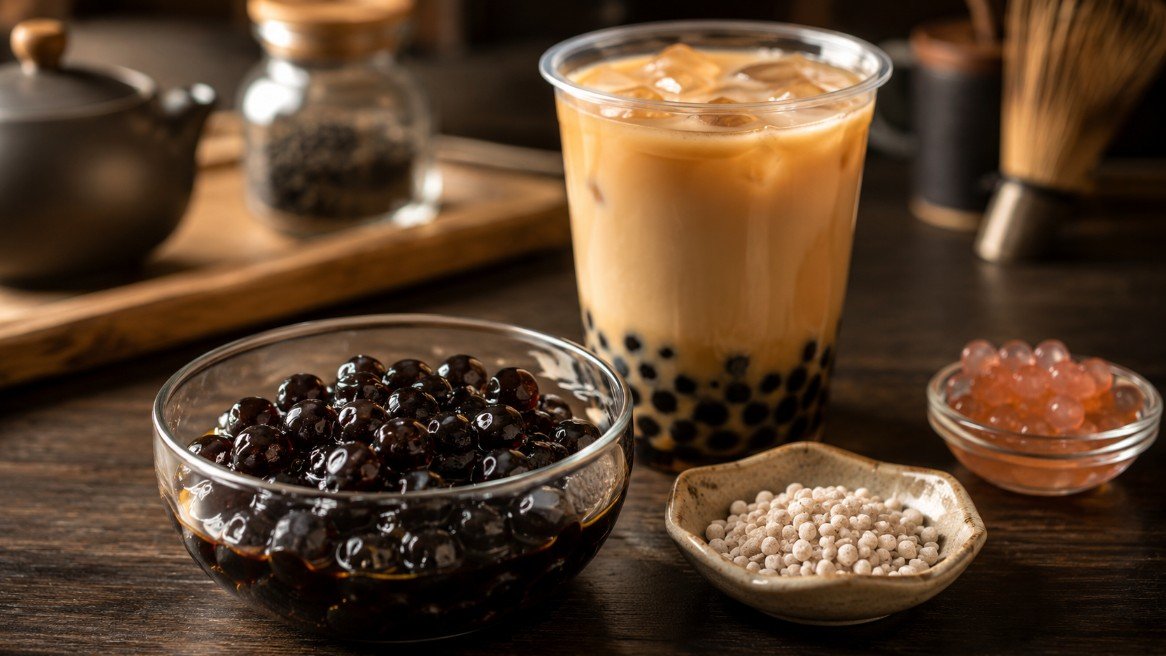
Traditional boba pearls and tapioca pearls usually refer to the same chewy topping, but the words are not perfectly identical. Tapioca pearls are a specific food made primarily from tapioca starch, which comes from cassava. “Boba” is a broader word: depending on context, it can mean those tapioca pearls, another pearl-style topping, or the entire bubble tea drink category.
That means the comparison works in one direction better than the other. A classic black boba pearl is normally a tapioca pearl. But something called boba is not automatically a traditional tapioca pearl. Popping boba, for example, has a very different structure and eating experience. And when someone says, “Let’s get boba,” they are normally talking about drinks rather than a bowl of tapioca pearls.
The easiest way to keep the terminology straight is to separate ingredient, topping and drink category. Tapioca tells you something about the material. Pearl tells you the shape. Boba tells you how the word is being used in modern bubble tea culture — and context determines exactly what it means.
The key difference is that tapioca pearls are specific, while “boba” can mean several things
If a bubble tea menu lists traditional black boba, the topping is usually a form of tapioca pearl. In that context, using “boba pearls” and “tapioca pearls” for the classic chewy spheres is completely understandable.
But boba has grown beyond that one ingredient meaning. It is also an established name for the beverage category itself, and the word appears in names for toppings that do not behave like traditional tapioca pearls.
| Term | What it describes | Usually chewy? | Made from tapioca? | Can mean a drink? |
|---|---|---|---|---|
| Boba | A drink category or a topping, depending on context | Sometimes | Sometimes | Yes |
| Tapioca pearls | A specific pearl-shaped tapioca product | Yes when cooked for bubble tea | Yes | No |
| Black boba | Usually the classic dark chewy pearl topping | Yes | Usually yes | No in normal menu usage |
| Popping boba | A separate liquid-filled pearl-style topping | No prolonged tapioca chew | Not traditional tapioca pearls | No |
Classic tapioca pearls can be called boba. But not everything called boba is necessarily a classic tapioca pearl.
If you need the broadest definition first, our guide to what boba is explains why the same word can refer to both a drink and a topping.
In a classic bubble tea order, “boba” often means tapioca pearls
Imagine you are ordering a milk tea and the shop offers one dark, chewy pearl topping simply labeled boba. In that situation, the word usually points toward traditional tapioca-style pearls.
The same overlap appears in ordinary conversation. Someone may say “tapioca boba,” “boba pearls,” “black boba” or “tapioca pearls” while describing essentially the same classic topping.
Often means: add classic tapioca pearls.
More ingredient-specific wording for the classic chewy topping.
Usually points toward the familiar dark tapioca pearl used in many milk teas.
Common language for pearl-shaped boba, often tapioca-based unless another type is specified.
This overlap explains why many people learn the two expressions as if they were synonyms. For a first classic milk tea order, that shortcut often works perfectly well.
The problem starts only when the word boba is used outside that narrow classic-topping context.
“Boba” can mean things that “tapioca pearls” cannot
This is the most important part of the comparison. Tapioca pearls remain a specific food product. Boba is a flexible cultural and menu term.
“Let’s get boba.”
Here, boba normally means bubble tea drinks. Replacing it with “Let’s get tapioca pearls” would completely change the sentence.
“This boba shop is busy.”
The phrase describes a beverage business. It does not mean a shop selling only tapioca pearls.
“Try the mango popping boba.”
The word boba appears in the topping name, but the product is texturally and structurally different from traditional chewy tapioca pearls.
“No boba in my drink.”
Depending on the menu and conversation, this may mean no classic pearls, while the customer still orders a bubble tea drink.
So the relationship is not a simple equality. Tapioca pearl is an ingredient/product term. Boba is a context-dependent term.
The language side of that distinction is explored further in our guide to what the word boba means.
What exactly is a tapioca pearl?
Tapioca is derived from cassava starch. Cassava is a starchy root crop, and its extracted starch can be processed into several food forms, including pearls.
For bubble tea, those pearl-shaped starch pieces are cooked with water until their texture changes dramatically. The dry pearl becomes hydrated and develops the soft, elastic chew associated with classic boba.
That starch identity is what makes tapioca pearl a more precise term than boba. If somebody tells you a topping is a tapioca pearl, they are identifying its food category. If they merely call something boba, you may still need context to know exactly which topping they mean.
The full ingredient, cooking and texture explanation belongs in our separate guide to what boba pearls are made of.
Black boba is usually tapioca boba, but tapioca itself is not naturally defined by a black color
The image many people associate with boba is a cluster of glossy black or very dark brown pearls at the bottom of milk tea. Those pearls are commonly tapioca-based, but their dark appearance should not be confused with the natural identity of tapioca starch itself.
Tapioca starch is pale. The darker appearance of finished pearls can come from the pearl formulation and ingredients used for color and flavor, while cooked pearls may also be held or coated in brown sugar or another syrup.
The starch base behind traditional tapioca pearls.
A shaped piece designed to cook into a soft, resilient sphere.
The familiar dark chewy topping seen in many bubble tea drinks.
This is why “black boba” and “tapioca pearls” often refer to the same classic topping family while still describing different aspects of it. One emphasizes how the topping appears on a menu; the other identifies the tapioca product more directly.
Popping boba shows why “boba” cannot always mean tapioca pearls
If there were only one kind of boba topping, the terminology would be much easier. Modern menus changed that.
Chew it
- Structure
- Soft, cohesive pearl
- Mouthfeel
- Elastic and chewy
- Center
- Continues the cooked pearl texture
- Experience
- Several chews before swallowing
Burst it
- Structure
- Thin outer layer around liquid
- Mouthfeel
- Delicate shell with a sudden pop
- Center
- Liquid filling
- Experience
- Breaks quickly instead of giving a long chew
The two toppings can both carry the word boba, yet they are clearly not the same food. This single example is enough to show why treating boba as a strict synonym for tapioca pearl is too broad.
If your main goal is choosing between chewy, juicy, silky and bursting additions, our boba toppings guide compares the larger topping landscape.
Some pearl-shaped toppings use the boba name without being classic black tapioca pearls
Crystal boba is another reason to read the exact menu rather than assume every pearl-shaped topping has the same ingredients. These toppings are typically more translucent and can have a different bite from classic black tapioca.
The precise formulation can vary by product and shop, so it is better not to declare that every item sold as crystal boba follows one universal recipe. The useful distinction for this page is simpler: the menu word “boba” does not by itself prove that a topping is a traditional black tapioca pearl.
That matters especially for people choosing toppings based on texture, ingredients or dietary considerations. A similar-looking sphere can behave very differently once you bite it.
For a dedicated comparison of mouthfeel rather than terminology, see the boba texture guide.
Boba can describe the entire drink category; tapioca pearls cannot
This distinction is easy to miss because the pearls became such a recognizable visual symbol of bubble tea. But in everyday English, boba has expanded beyond the topping.
“Boba shop,” “boba drink,” “get boba” and “I love boba” can all refer to the wider beverage culture. Tapioca pearls cannot naturally replace the word in those sentences.
“Let’s get boba.”
“Let’s get tapioca pearls.”
That is why the difference between boba and tapioca pearls is ultimately larger than an ingredient comparison. One term became a cultural category name; the other remains a specific food description.
Use the most specific topping name when you care about exactly what you get
You normally do not need to worry about terminology if a menu has only one traditional pearl option. But specificity helps once several boba types appear side by side.
Ask for tapioca pearls or the shop’s classic boba
If the menu says “black boba,” use that wording. If it says “tapioca pearls,” use that. Both can point toward the traditional chewy topping.
Ask for the specific popping boba flavor
Do not assume that simply asking for boba communicates that you want popping pearls rather than tapioca.
Say “no tapioca pearls” when precision matters
This avoids ambiguity if the shop uses boba as a general word elsewhere on the menu.
“Boba,” “boba tea” and “bubble tea” can all work
At category level, you are no longer referring specifically to tapioca pearls.
Once you understand the topping, the next decision is the drink around it. The boba drinks guide explains the major beverage families you can pair with pearls or other toppings.
One word is broad; the other is specific
Can describe the beverage category or a topping.
The entire beverage.
Context tells you which type.
Chewy pearls made from tapioca starch.
These boba and tapioca explanations sound simple but lose important context
“Boba and tapioca pearls are always exactly the same.”
They overlap when boba refers to traditional tapioca pearls, but boba can also mean the beverage category or appear in names for nontraditional pearl-style toppings.
“Anything round in bubble tea is a tapioca pearl.”
Modern shops use several round or pearl-like toppings with very different structures, from chewy tapioca to liquid-filled popping spheres.
“A boba drink must contain tapioca pearls.”
Boba is also a category name. A modern bubble tea drink can use another topping or be ordered without traditional tapioca.
Questions about boba vs tapioca pearls
Are boba and tapioca pearls the same thing?
Traditional boba pearls usually are tapioca pearls, so the terms often overlap when discussing classic chewy black pearls. But boba is a broader word that can also mean the beverage category or appear in names for other toppings.
Are all boba pearls made from tapioca?
No. Traditional tapioca boba is made from tapioca starch, but modern menus also use names such as popping boba and crystal boba for toppings with different formulations and textures.
Are black boba pearls tapioca pearls?
Usually, yes. The familiar dark, chewy pearls served in classic milk tea are typically tapioca-based. Their dark appearance comes from the finished pearl formulation and flavoring or coloring ingredients rather than tapioca starch naturally being black.
Is popping boba made from tapioca?
Popping boba is not the same product as a traditional chewy tapioca pearl. It is designed with a delicate outer structure surrounding a liquid center, so it bursts rather than giving the prolonged chew associated with tapioca boba.
What is the main difference between boba pearls and tapioca pearls?
When “boba pearls” means traditional chewy pearls, there may be little practical difference. The distinction is that “tapioca pearls” specifically identifies a tapioca product, while “boba” is a broader and more context-dependent term.
Why are tapioca pearls called boba?
Boba became an established English-language term associated with the pearls and later the wider bubble tea category. As the drink culture expanded, the word began doing more than one job.
Can boba mean the whole drink?
Yes. In phrases such as “get boba,” “boba shop” or “boba drink,” the word commonly refers to bubble tea or the broader beverage category rather than the topping alone.
Does every boba drink contain tapioca pearls?
No. Many shops allow tapioca to be replaced with jelly, pudding, aloe, popping boba or another topping, and some drinks can be ordered without any solid topping.
What should I order if I want classic chewy boba?
Look for tapioca pearls, black boba, black pearls or the shop’s standard classic boba topping. If several types of boba are listed, asking specifically for tapioca pearls is the clearest option.
Are tapioca pearls naturally black?
No. Tapioca starch itself is pale. The dark brown or black appearance of classic boba pearls comes from how the pearls are formulated and colored, along with ingredients or syrups used in preparation.
BOBA VS TAPIOCA PEARLS IN ONE IDEA
Traditional tapioca pearls are classic boba, but boba is the broader word. It can identify those chewy pearls, other named boba toppings, or the entire bubble tea drink category.