
Name, language and drink culture
Why Is It Called Boba? The Meaning and Origin of the Name
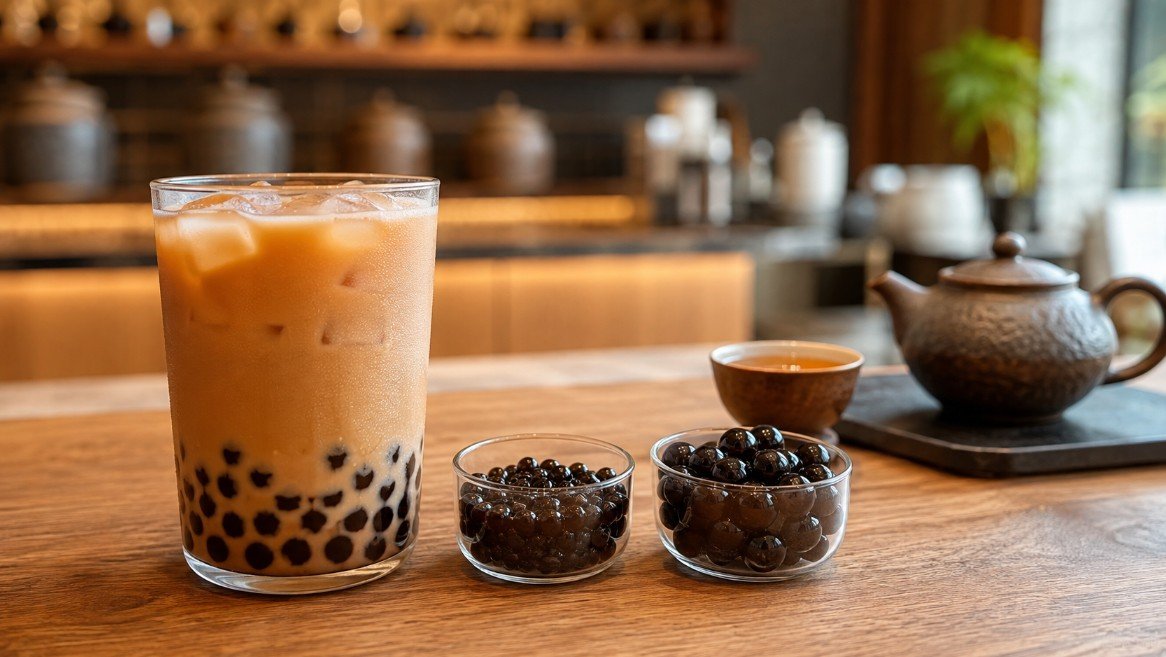
Boba is called “boba” because the Taiwanese term 波霸 (bōbà) became associated with larger tapioca pearls, and then the name gradually expanded to the milk tea containing those pearls. Over time, especially in English-speaking markets, the word moved even further: many people now use “boba” to mean the pearls, the drink, the whole shop category or even the act of going out for bubble tea.
That short answer matters because a lot of people assume “boba” simply means “bubble” or that it is a direct translation of “bubble tea.” It is not. The history is more specific, more Taiwanese and more interesting. The word has roots in local slang, it passed through the naming of large tapioca pearls, and it eventually became one of the most widely recognized global words connected to Taiwanese tea culture.
This guide explains where the word came from, why larger pearls matter to the story, how “boba” differs from “bubble tea” and “pearl milk tea,” and why the meaning of the word now depends on context. Our guides are created by the Boba Guide Editorial Team using hands-on tasting, home testing, menu analysis and questions we repeatedly see from readers and the broader boba community.
The first misconception
Boba Does Not Literally Mean “Bubble Tea”
One of the most common misunderstandings is the idea that “boba” is just another word for “bubble” and that “bubble tea” and “boba” are therefore the same term in two different languages. That sounds tidy, but it skips over how the naming actually happened.
In modern English, the two words often point to the same broad drink category. Someone might say, “Let’s get bubble tea,” and another person might say, “Let’s get boba,” while both mean the same outing. But the origin of the words is not identical. The word bubble became connected to the drink through the visual bubbles or foam created by shaking tea. The word boba, by contrast, is tied to the pearls and to Taiwanese naming culture.
That is why this page is different from our boba vs bubble tea guide. That page helps readers understand how the two terms function side by side today. This page goes deeper into the naming question itself: why the word “boba” exists at all and how it became so influential.
“Boba” did not start as a neutral English category word. It first became linked to larger tapioca pearls, then to drinks made with those pearls, and only later became a broad everyday term for bubble tea in many places.
The key word behind the story
What Does 波霸 (Bōbà) Mean?
The word most often cited in the origin story is 波霸, pronounced bōbà in Mandarin. In Taiwanese popular usage, it was slang associated with a large bust. That point can feel surprising to readers who know “boba” only as a friendly café word, but it explains why the term later became attached to larger tapioca pearls.
This does not mean that every time someone orders boba today they are consciously using an adult joke. Language changes. Meanings soften, shift and become ordinary. Many people who use the word now have never heard the earlier slang explanation. Still, if you want to understand why the word exists, that older layer matters.
A careful way to say it is this: the original word behind “boba” had a playful, slang-driven cultural meaning before it became normalized in beverage culture. Once that slang term was applied to large pearls, the connection to the drink became much easier to understand.
What people often assume
Many readers think “boba” is simply the Chinese word for bubble tea or a literal translation of the drink name.
What is more accurate
The word came into drink culture through 波霸, a slang term later associated with large tapioca pearls, and only then expanded toward the drink itself.
Important nuance: this is a naming history, not a moral lesson and not clickbait. The interesting part is not the slang on its own. The interesting part is how a slang word became a food word, and then a global drink word.
A widely repeated cultural link
The Amy Yip Reference Is Part of the Story, Not the Entire Story
Many retellings of boba history connect the spread of 波霸 to the public image of Hong Kong actress Amy Yip, whose nickname and screen persona helped popularize the term in broader pop culture. That explanation is widely repeated because it helps people understand why the slang carried the connotation it did.
What is important here is not turning the whole origin into celebrity trivia. Amy Yip did not invent bubble tea, and she is not the reason the entire drink exists. Her relevance is narrower: she helps explain why the term 波霸 was recognizable and how it carried a meaning that later made sense for the naming of larger pearls.
So if you see an origin summary claiming that “boba was named after Amy Yip,” treat that as an oversimplification. A better reading is that the slang environment around the word made it available and culturally legible, which in turn helped the term stick when it was applied to the pearls.
How a slang term became a drink word
The Word Took a Very Specific Journey From Slang to Shop Counter
Words rarely jump straight from one meaning to another. “Boba” moved in stages. Once you see the sequence, the whole naming puzzle becomes much easier.
A slang word already exists
波霸 is already present in popular language as a playful slang term connected with a large bust. At this stage it is not yet a global beverage word.
The term gets attached to larger pearls
When larger tapioca pearls need a memorable name, the existing slang term provides one. The size association is the key bridge between the older meaning and the food meaning.
The pearls give their name to the drink
Once a milk tea contains those pearls, it becomes natural for customers and shops to refer to the drink using the pearl name as shorthand.
The word broadens in English-speaking markets
Outside Taiwan, “boba” starts to mean not only the pearls and not only one milk tea, but often the whole bubble tea category, the shop type and even the social activity of going out for a drink.
Without the step where 波霸 became associated with larger tapioca pearls, the modern use of “boba” for drinks would make far less sense.
Why size matters
Large Pearls Are the Missing Piece in the Naming Story
If you skip the size distinction, the story sounds random. But once you understand that “boba” was linked to larger tapioca pearls, the logic becomes much clearer. The large pearls had a specific visual identity, and they needed a name that distinguished them from smaller pearl forms.
That is why our boba vs tapioca pearls guide is useful alongside this page. It explains a distinction that modern readers often miss: tapioca pearls are the ingredient, while “boba” can function as a more flexible word that refers to those pearls, to a drink with them or to a broader beverage culture. Historically, though, the pearl side of the meaning came first.
Once the larger pearls became familiar, the drink inherited their identity. This kind of naming shift is common in food culture. A prominent component ends up lending its name to the whole dish or drink. In the case of boba, the component was visually distinctive enough to carry the brand of the drink with it.
The main terms people mix up
Boba, Bubble Tea and Pearl Milk Tea Are Related—but Not Identical
Part of the confusion comes from the fact that all three names can be used for overlapping things. They are related, but they highlight different aspects of the drink.
The pearl-linked name
Historically tied to larger tapioca pearls. In current English usage, it may mean the pearls, the drink, the shop category or the outing itself.
The foam or shaken-drink name
Often connected to the bubbles or froth created by shaking tea. In English it has become one of the broad standard names for the category.
The ingredient-based descriptive name
This points more directly to the structure of the original classic drink: milk tea plus pearls. It stays closer to the descriptive naming logic used in Chinese.
The modern English blend
This is not “wrong” or redundant in normal usage. It combines the familiar word “tea” with the shorter category shorthand “boba,” making the phrase easy to understand for a wide audience.
So when people ask whether boba and bubble tea are “the same,” the answer depends on whether they mean historically, linguistically or practically. In practical English today, the terms overlap heavily. Historically, they reached the drink by different routes. If you want the deeper comparison, see our full boba vs bubble tea comparison.
A helpful language distinction
“Pearl Milk Tea” Explains More Than “Boba” Does
For readers who want a more descriptive name, “pearl milk tea” is often the easiest one to understand. It tells you what the drink is made of in a straightforward way: milk tea plus pearls. That is why this name can feel more transparent than “boba” to people outside the culture.
It also helps explain why “boba” is not a literal translation of the whole drink. If you start from a descriptive structure like pearl milk tea, you can see that “boba” is doing something different. It is not naming every part of the drink. It is spotlighting one culturally loaded part of it.
This matters because a lot of language around food becomes detached from its original structure once it travels internationally. The global audience often inherits the short catchy term, while the more descriptive original naming system fades into the background. That is one reason readers exploring what boba is often end up surprised when they learn how specific the original word story really is.
How the English naming field expanded
In English, “Boba” Became Shorter, Cooler and More Flexible Than the Original Story
Once the word moved into English-speaking food culture, it gained three advantages. First, it was short. Second, it sounded distinctive. Third, it was flexible enough to stretch beyond one precise meaning. Those three qualities helped it spread quickly.
That flexibility is why the word now behaves differently from its original context. People say “add boba” when they clearly mean pearls. They also say “I’m going for boba” when they mean the whole category of drinks and the social ritual around them. A café may call itself a “boba shop” even if many drinks on the menu use jelly, aloe, pudding or no topping at all.
In other words, the English success of the word came partly from the fact that it stopped acting like a narrow term. It became a banner term. That broadening is not a mistake. It is one of the reasons the word became globally recognizable.
The Taiwan context still matters
What Do People in Taiwan Actually Call the Drink?
Readers often ask this because they want to know whether “boba” is the most authentic term. The answer is: not exactly in the way many English speakers imagine. In Taiwan, people may use several overlapping terms depending on context, shop style and habit.
A very important term is pearl milk tea, commonly written as the phrase meaning “pearl milk tea” in Chinese. There are also shortened everyday forms that people use conversationally. Historically, terms referring to large pearls also appear in menu language, especially when there is a reason to distinguish the size of the pearls.
So if you want to sound careful, it is better not to say, “Taiwanese people all call it boba.” The reality is more layered. Taiwan is the cultural home of the drink, and it also contains a richer naming environment than the simplified English version people usually encounter abroad.
What English often does
English compresses many meanings into one convenient word: boba.
What the Taiwan context shows
The Taiwanese naming landscape is broader, more descriptive and more connected to ingredients, tea style and pearl distinctions.
The global spread of the term
Why Many Americans Say “Boba” More Readily Than “Bubble Tea”
Regional English habits helped the word spread. In parts of the United States—especially where Taiwanese and broader Asian diaspora food cultures were more visible early on—the word “boba” became a natural everyday term. It was short, brandable and easy to use in shop names, social speech and menu shorthand.
That did not erase “bubble tea.” In many places both terms coexist. But “boba” often feels more informal and more native to the café culture around the drink. It can describe the drink, the craving, the shop and the outing with almost no friction. That kind of flexibility is part of why the word travelled so well.
This is also why someone can be completely correct when saying “I love boba” even if the drink they order most often contains crystal boba, jelly, pudding or no tapioca pearls at all. The word no longer behaves only as an ingredient label. It behaves as a category word shaped by community usage.
How the word works today
Does “Boba” Mean the Pearls or the Drink?
The most useful answer is: both, depending on context.
If someone says, “Can you add boba?” they usually mean the chewy tapioca pearls. If someone says, “Let’s go get boba,” they almost certainly mean the drink or the shop experience. If a headline says “boba trends,” it may be talking about the entire market rather than pearls alone.
This context sensitivity is exactly why the word became so powerful. It is specific enough to feel meaningful and broad enough to remain practical. The tradeoff, of course, is that new readers get confused. That confusion is not a sign that they are missing something obvious. The word genuinely carries more than one layer of meaning.
“Add boba”
Here the word almost always means pearls, usually chewy tapioca pearls unless the shop uses broader menu shorthand.
“I’m drinking boba”
Here the word means the beverage, often without needing the longer phrase “bubble tea.”
“Boba shop”
Here the word means the whole style of tea-and-toppings café, not just one ingredient.
“Let’s go for boba”
Here the word acts almost like a cultural activity, the same way some foods become a shorthand for going out together.
The modern broadening of the term
Can a Drink Still Be “Boba” If It Has No Tapioca Pearls?
In strict historical logic, the original power of the word came from the pearls. In current everyday English, though, the answer is often yes. A lot of people use “boba” as a category term even when the drink has crystal boba, popping boba, aloe, grass jelly, pudding or no topping at all.
That does not erase the original pearl meaning. It just shows how language behaves once a food culture grows. The category name stretches to cover more variations than the original prototype. This is especially obvious in modern topping culture, where a classic milk tea with black tapioca pearls sits next to fruit teas and non-tapioca options on the same menu. If you want the topping side explored in detail, our boba toppings guide goes much deeper.
So the best answer is not “yes, always” or “no, never.” The best answer is that the word now operates on two levels at once: a historical level rooted in pearls, and a modern category level that often extends beyond them.
A question people ask surprisingly often
Is “Boba Tea” Redundant or Wrong?
Not in normal usage. It may look slightly redundant if you treat “boba” as already meaning the drink, but real language does not obey that kind of perfect logic. “Boba tea” works because it helps many readers immediately identify the category, especially people who may know the word “tea” more confidently than the word “boba.”
The phrase also helps bridge two worlds: the short culture word and the descriptive drink word. That is why you will see “boba tea,” “bubble tea,” “milk tea” and “boba drinks” all living next to each other without any of them being inherently wrong. They simply carry slightly different tones and expectations.
If your goal is clarity, “boba tea” is perfectly understandable. If your goal is historical precision, then you still need the deeper explanation on this page: the word “boba” reached the drink through the pearls and did not start as a literal name for the whole beverage.
Why this naming history is worth caring about
The Name Matters Because It Carries Taiwanese Culture Into Global Drink Culture
For many people, “boba” is just a fun café word. But the name is also a small piece of Taiwanese cultural history. It carries traces of local slang, menu evolution, tea-shop innovation and the way Taiwanese drink culture travelled internationally.
This does not mean every customer needs a lecture before ordering. It simply means that understanding the word adds depth to something many people already enjoy. The drink did not emerge from nowhere, and neither did the language around it. That is one reason our boba culture guide looks beyond ingredients and into the broader social life of the drink.
Once you know the story, the word feels richer. It becomes more than a generic café label. It becomes a good example of how food language travels, changes and still leaves traces of where it came from.
The clean conclusion
Boba Started as a Pearl Word and Grew Into a Drink Word
The simplest responsible summary is this: “boba” is called boba because the term became associated with larger tapioca pearls, and then the name spread from the pearls to the drink. After that, English-speaking usage widened the meaning even further until “boba” could describe the pearls, the beverage, the café category and even the social ritual around it.
That is why the word can feel both precise and slippery. Historically, it points to something quite specific. In modern usage, it is much broader. Both layers are real, and understanding both of them is the best way to answer the question honestly.
If you want the broader foundation after reading this page, continue with what boba is. If you want to compare the terms more directly, go to boba vs bubble tea. And if you want to understand the ingredient side of the word in more detail, our boba vs tapioca pearls guide is the best next read.
FAQ
Common Questions About the Name “Boba”
Why is bubble tea called boba?
It is called boba because the Taiwanese term 波霸 became associated with larger tapioca pearls, and that pearl name later spread to the drink itself. In modern English, the word expanded further and now often refers to the whole bubble tea category.
Does boba literally mean bubble tea?
No. “Boba” is not a literal translation of “bubble tea.” The two names reached the drink by different routes. “Boba” is tied to the naming of larger pearls, while “bubble tea” is more closely associated with the bubbles or foam created by shaking the drink.
What does boba mean in Chinese?
The word most often linked to the history is 波霸 (bōbà), a slang term that became associated with large tapioca pearls. The modern English use of “boba” is broader than that original context.
Does boba mean the pearls or the drink?
It can mean both. In a phrase like “add boba,” it usually means pearls. In a phrase like “let’s get boba,” it usually means the drink or the whole café outing.
Is boba the same as tapioca pearls?
Not exactly. Tapioca pearls are the ingredient. “Boba” can refer to those pearls, but in modern usage it can also refer to the drink or the broader category around it.
What do people in Taiwan call it?
People in Taiwan use more than one term, including names equivalent to pearl milk tea and shortened everyday versions. “Boba” is part of the naming history, but it is not the only term in Taiwanese drink culture.
Is “boba tea” wrong or redundant?
No. It is a normal modern English phrase. Even if “boba” can already imply the drink, adding “tea” makes the phrase more instantly recognizable to many readers and customers.
Can fruit tea or a non-tapioca drink still be called boba?
In modern everyday English, often yes. Many people use “boba” as a broad category term for drinks sold in boba shops, even when the topping is not classic black tapioca pearls.
The word “boba” became powerful because it kept growing. It started with a very specific pearl-related meaning, then attached itself to a drink, and finally became a global shorthand for an entire tea culture. That layered history is exactly why the name still sparks so many questions today.