
Taiwan, tea and the origin of pearl milk tea
Where Did Boba Originate? The Taiwan Story Behind Bubble Tea
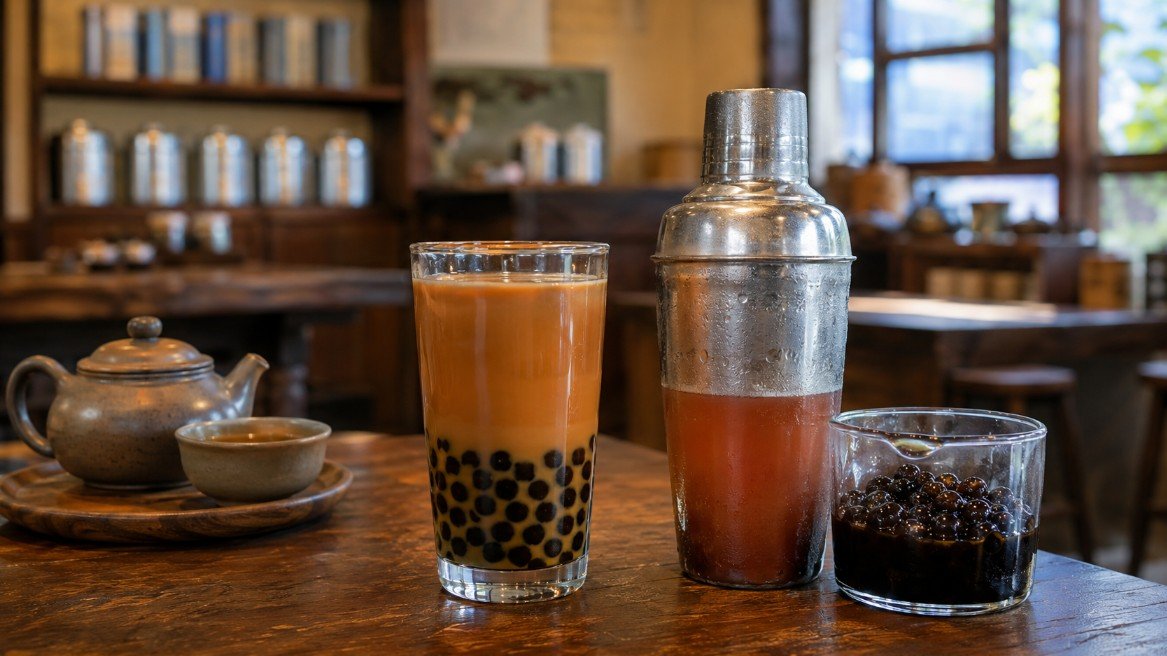
Boba, or pearl milk tea, originated in Taiwan in the 1980s. That country-level origin is the clearest part of the history. What is less certain is the exact person, shop and moment that should receive credit for inventing the modern drink. Two famous stories are tied to Taiwan: Chun Shui Tang in Taichung and Hanlin Tea Room in Tainan.
That distinction matters. It is accurate to call boba a Taiwanese drink. It is much harder to prove that one universally accepted inventor created it on one exact day. Modern pearl milk tea emerged during a period when Taiwanese tea shops were already experimenting with chilled tea, shaking, sweetness, texture and new ways of serving tea to younger customers.
This guide separates what is well established from what remains contested. It explains the tea culture that came before boba, the two major invention claims, why tapioca pearls were such an important addition, what Taiwan actually invented, and how the drink moved from local tea-shop innovation to an international category.
The part of the story that is clear
Boba Originated in Taiwan
If someone asks where boba came from, the best concise answer is Taiwan. Taiwanese government and tea-industry sources consistently describe pearl milk tea as a Taiwanese creation that emerged during the 1980s. It later became one of the country’s most internationally recognizable food and drink exports.
The uncertainty begins only when the question becomes more specific: which shop invented it first? That is where Taichung and Tainan enter the story. Both have well-known claims, and both belong to the same broader period of rapid experimentation in Taiwanese tea culture.
Taiwan is the established origin of modern pearl milk tea. The exact inventor is disputed.
This is also why it is misleading to describe boba merely as an Asian drink with no more precise origin. The modern beverage form has a specific Taiwanese history. For the broader cultural story surrounding that history, our boba culture guide follows the drink from Taiwan into its global social life.
The drink had a prehistory
Modern Boba Did Not Appear From Nothing
Before tapioca pearls entered the cup, Taiwan already had a rich tea culture and a rapidly changing café and beverage culture. Traditional tea drinking existed alongside newer shops that were making tea colder, sweeter, more casual and more attractive to younger customers.
One crucial predecessor was foamy or hand-shaken black tea. Tea was combined with syrup and ice in a shaker, producing a cold drink with a layer of fine bubbles on top. This changed the experience of tea at once: the drink became chilled, portable, customizable and more closely connected to a social tea-shop setting.
Traditional tea culture
Taiwan already had established tea-growing, brewing and tea-house traditions. Tea was not an afterthought waiting for tapioca to arrive.
Cold, sweetened and shaken tea
Tea shops began treating tea as a customizable cold beverage, using ice, syrup and shaking to create a different texture and serving style.
Toppings enter the drink
Adding chewy tapioca to this already-evolving tea format created the key contrast that would make pearl milk tea distinctive.
Pearl milk tea becomes a category
Once the combination proved popular, shops could build entire menus around tea bases, milk, sweetness and texture.
That sequence matters because it prevents the history from being reduced to “someone dropped pearls into milk.” The modern drink was born inside a tea culture that was already reinventing how tea could be prepared and consumed. Our tea guide explains the tea foundations that still shape boba today.
Why the shaker matters
Hand-Shaken Tea Was a Major Step Toward Modern Bubble Tea
The cocktail-style tea shaker is one of the most important pieces of the origin story because it shows that bubble tea was initially connected to preparation technique as much as to tapioca. Shaking chilled tea with sweetener created foam, changed mouthfeel and made the process visually performative.
This also helps explain why “bubble tea” and “boba” have different naming histories. The bubbles can refer to the foam produced during shaking, while “boba” later became associated with the pearls and eventually the drink. Those two naming paths overlap today, but they do not begin at exactly the same point.
The rise of cold hand-shaken tea also changed how tea shops operated. Drinks could be customized for sugar and ice, served quickly and consumed casually rather than only through a slower traditional tea-service ritual. That commercial flexibility created the environment in which a chewy topping could become part of an everyday beverage.
Origin claim one
The Taichung Story: Chun Shui Tang
Chun Shui Tang was founded in Taichung in 1983 and is widely associated with the development of cold, shaken tea. Taiwan’s Tea and Beverage Research Station describes the teahouse as having created a famous bubble black tea and says that pearl milk tea was presented there in 1988.
The well-known shop account says that employee Lin Hsiu Hui added tapioca pearls to tea during a staff meeting in 1988. The combination was liked, refined and eventually sold to customers. This version is repeated frequently because it connects a specific person, workplace and moment to the drink.
The careful wording is important: according to the Chun Shui Tang account, this was the moment that produced pearl milk tea. That is a significant historical claim, but it is not the only claim in Taiwan.
Chun Shui Tang’s importance does not depend solely on winning an invention dispute. Its role in the development of cold shaken tea makes Taichung central to the history regardless. Even if one remains neutral about who was first to add tapioca, the shop belongs to the movement that transformed Taiwanese tea into the modern hand-shaken drink format.
Origin claim two
The Tainan Story: Hanlin Tea Room
Hanlin’s founder, Tu Tsong He, is associated with a competing story in which tapioca pearls were introduced into tea in Tainan during the 1980s. Taiwanese government coverage of bubble tea history explicitly presents Hanlin and Chun Shui Tang as rival claimants rather than treating one account as undisputed fact.
The Hanlin story is important because it prevents the history from being flattened into one Taichung narrative. Tainan belongs in any serious explanation of where pearl milk tea came from because a major competing origin claim developed there during the same broad period.
As with the Taichung version, the responsible phrasing is “according to the Hanlin account” rather than presenting the story as conclusively proven.
This is one of those food histories where uncertainty is part of the history itself. Two influential shops in different Taiwanese cities are tied to a drink that emerged from a wider wave of experimentation. It is possible to tell that story clearly without pretending the evidence gives us a single uncontested inventor.
The answer is more nuanced than a name
So Who Actually Invented Boba?
The most responsible answer is that there is no universally accepted single inventor of modern pearl milk tea. Chun Shui Tang in Taichung and Hanlin Tea Room in Tainan both have prominent claims, and Taiwanese official sources acknowledge both.
This tells us something useful about how the drink emerged. Pearl milk tea was created in an environment where many tea shops were already experimenting with cold tea, shaking, sweetness, new textures and younger café culture. The combination may have felt revolutionary to customers, but it also made sense inside the direction Taiwanese drinks were already moving.
Taiwan is the origin
The country-level origin of modern pearl milk tea is not the controversial part of the story.
Taichung is tied to Chun Shui Tang
The shop is associated with cold shaken tea and a 1988 pearl milk tea account involving Lin Hsiu Hui.
Tainan is tied to Hanlin
Hanlin founder Tu Tsong He is linked to a competing tapioca-in-tea origin story.
One universally accepted inventor
The evidence and historical record do not justify declaring one claimant the uncontested winner.
The safest historical conclusion is therefore broader: modern pearl milk tea emerged from Taiwan’s rapidly evolving hand-shaken tea culture during the 1980s.
What exactly was the innovation?
Taiwan Did Not Invent Tapioca—It Reimagined What Tapioca Could Do in Tea
Tapioca is made from cassava starch, and neither cassava nor tapioca itself was invented in Taiwan. This distinction is essential because discussions of boba origin often mix the history of an ingredient with the history of a specific drink.
The important Taiwanese innovation was combining chewy tapioca pearls with the island’s modern cold tea culture in a way that became commercially repeatable and culturally distinctive. The pearls did more than add sweetness. They changed the physical experience of drinking tea by adding chew, resistance and rhythm.
That is why the ingredient matters so much. Tea provides aroma, bitterness, tannin and refreshment. Pearls provide texture. Milk and sweetness can soften and round the drink. Together they create something that feels different from conventional tea, milk tea or tapioca dessert alone.
If you want the ingredient distinction itself explained more precisely, see our boba vs tapioca pearls guide.
Tea came first
The Original Story Is Closer to Tea Culture Than to a Dessert Milkshake
Modern boba menus can make the category look like a dessert universe: taro slushes, brown sugar fresh milk, cream foams, fruit drinks, smoothies and elaborate toppings. Those are real parts of today’s category, but they can obscure the historical starting point.
The origin story begins in tea shops. Brewed tea, chilling, shaking, milk, sugar and pearls formed the backbone of the classic drink. Even the texture innovation was added to a beverage whose identity was still recognizably tea-forward.
This matters culturally because boba was not simply “invented as candy in a cup.” It emerged from a Taiwanese effort to make tea more contemporary, casual, customizable and attractive to a new generation of customers. The dessert-like directions came later as the category expanded.
Two myths worth separating
Taiwan Did Not Invent Milk Tea Either
Milk tea existed in many forms long before pearl milk tea. British tea traditions, South Asian chai traditions and other milk-tea cultures all predate the Taiwanese boba boom. So the claim is not that Taiwan invented the idea of putting milk into tea.
What Taiwan created was a particular modern drink format: cold or iced tea, often shaken, combined with sweetness and chewy pearls, then sold through a fast-moving tea-shop culture that encouraged customization.
Separating these histories makes the origin claim stronger, not weaker. You do not need to claim that Taiwan invented tea, milk tea or tapioca in order to recognize that modern pearl milk tea is a Taiwanese creation.
How the local drink became an icon
Pearl Milk Tea Spread Through Taiwan Before It Became a Global Drink
Once the format proved popular, pearl milk tea fit naturally into Taiwan’s growing hand-shaken beverage culture. The drink could be customized, taken away, consumed socially and adapted with new tea bases or toppings. It was both familiar and novel: still tea, but with a striking new texture.
That flexibility helped it move beyond one shop or city. Pearl milk tea became part of a larger Taiwanese drink culture in which customers could choose sweetness, ice and ingredients rather than ordering one rigid formula.
This local success is crucial. Boba did not become global because one foreign market discovered an obscure novelty and transformed it. It first became a meaningful Taiwanese category, and international expansion followed from there.
Globalization was gradual
Boba Left Taiwan Through a Process, Not One Single Launch Date
There is no one clean year when bubble tea suddenly “went international.” The drink spread over time through East Asia, Taiwanese and broader Asian diaspora communities, restaurants, tea shops and entrepreneurs who adapted the format to local markets.
As it traveled, the category changed. Some markets preferred the term “bubble tea,” while others increasingly used “boba.” Menus expanded beyond classic pearl milk tea into fruit tea, flavored milk tea, slushes, fresh milk drinks and a much wider topping culture.
The important historical point is that globalization did not erase the Taiwanese origin. It layered new names, recipes and local habits on top of it. Our guide to why it is called boba explains how the word itself took a different path from the drink’s geographic origin.
The North American chapter
Diaspora Communities Helped Boba Become Familiar Abroad
In North America, boba grew through communities already connected to Taiwanese and broader East Asian food culture. Tea shops became social spaces, especially for younger customers, students and people looking for an alternative to coffee-shop culture.
California became especially important because of its large Asian American communities, dense restaurant scenes and strong links to Taiwan and East Asia. But it would be misleading to reduce North American boba history to one city or to claim a single first shop without strong documentation.
The broader pattern is more useful: diaspora communities helped carry the drink, local entrepreneurs adapted it, and the category gradually moved from a culturally specific food experience into mainstream café culture.
What survived the journey
The Original Structure Is Still Visible in Modern Boba
Even with hundreds of modern variations, the historical framework remains easy to recognize in many shops. Tea is brewed. Sweetness is adjusted. Ice changes temperature and dilution. Toppings add texture. Drinks may be shaken, stirred or layered. Customers customize the result.
The cultural foundation
Black tea, green tea, oolong and jasmine remain core bases even as menus expand.
The defining innovation
Chewy tapioca turned tea into something that was consumed and chewed at the same time.
The modern preparation language
Cold shaken tea helped establish the energetic, customizable format that preceded pearl milk tea.
The format could evolve
Sugar, ice, toppings and tea bases could change without destroying the category’s identity.
This is why a modern drink can look radically different from a classic 1980s pearl milk tea and still belong to the same family. To understand the broad category after the history, see what boba is today.
A common identity question
Is Boba Taiwanese or Chinese?
In food-history terms, modern boba is Taiwanese in origin. Pearl milk tea developed in Taiwan’s tea-shop culture during the 1980s, and Taiwanese institutions consistently present it as a representative Taiwanese drink.
That answer does not require turning a food-history page into a geopolitical debate. The relevant historical fact is simply that the drink developed in Taiwan, in Taiwanese tea shops, within Taiwan’s modern hand-shaken beverage culture.
Using “Taiwanese” is therefore not decorative branding. It is the most precise geographic description of where the modern drink emerged.
Why different answers appear online
Several Different Origin Questions Are Often Collapsed Into One
Confusion happens because the word “origin” can refer to many different things. Tea itself has an ancient history. Milk tea has multiple traditions. Cassava comes from a completely different agricultural history. Tapioca desserts existed before pearl milk tea. The word “boba” has its own linguistic story. The international spread happened later still.
Not the same as boba origin
Boba did not invent tea, tea cultivation or the idea of drinking tea with milk.
Not the same as pearl milk tea origin
Cassava and tapioca existed independently of Taiwanese bubble tea.
This is the Taiwan story
The modern combination of hand-shaken tea and tapioca pearls emerged in Taiwan in the 1980s.
A separate linguistic story
The term “boba” developed through Taiwanese slang and pearl terminology rather than simply being another geographic origin claim.
Keeping those questions separate makes the history easier to understand and avoids exaggerated claims.
The most accurate compact timeline
From Taiwanese Tea Culture to Global Boba
Before the 1980s
Taiwan already has established tea traditions, while tapioca exists independently as an ingredient in food and dessert contexts.
Early 1980s
Cold, sweetened and foamy hand-shaken tea becomes an important part of a younger Taiwanese beverage culture.
1980s
Pearl milk tea emerges in Taiwan as tapioca enters the modern tea-shop drink format.
Late 1980s
Taichung’s Chun Shui Tang and Tainan’s Hanlin Tea Room become the two best-known names associated with competing invention stories.
1990s and beyond
The drink spreads internationally, while names, recipes and toppings diversify across markets.
This timeline is deliberately careful. It shows the historical sequence without pretending every development has one perfectly documented date.
The clean historical conclusion
What Can We Say With Confidence About Boba’s Origin?
We can say that modern pearl milk tea originated in Taiwan during the 1980s. We can say it grew out of an innovative hand-shaken tea culture rather than appearing in isolation. We can say that Taichung and Tainan are both central to the invention debate through Chun Shui Tang and Hanlin Tea Room.
What we cannot responsibly do is erase the competing claim and declare one universally accepted inventor as established fact. The uncertainty is part of the historical record.
That does not make the answer vague. It makes it more precise: boba is a Taiwanese drink whose exact shop-level invention remains disputed. If you want to compare the modern names after understanding the origin, our boba vs bubble tea guide explains how the terminology overlaps today.
FAQ
Common Questions About Where Boba Came From
Where did boba originate?
Modern boba, or pearl milk tea, originated in Taiwan in the 1980s. The exact shop or inventor is disputed, with famous claims linked to Chun Shui Tang in Taichung and Hanlin Tea Room in Tainan.
Was boba invented in Taiwan?
Yes. Taiwanese government and tea-industry sources consistently identify pearl milk tea as a Taiwanese creation that developed within the island’s hand-shaken tea culture.
What city invented boba?
There is no universally accepted single city. Taichung is tied to the Chun Shui Tang account, while Tainan is tied to the Hanlin Tea Room account. Both are important to the origin story.
Who invented bubble tea?
No single inventor is universally accepted. Chun Shui Tang’s Lin Hsiu Hui is central to one widely repeated 1988 story, while Hanlin founder Tu Tsong He is associated with a competing Tainan claim.
Was boba invented in Taichung or Tainan?
Both cities have prominent claims. The safest conclusion is that pearl milk tea emerged from Taiwan’s wider hand-shaken tea culture during the 1980s rather than pretending the historical dispute has been definitively settled.
When was boba invented?
The modern drink emerged in Taiwan during the 1980s. Chun Shui Tang’s account places its pearl milk tea in 1988, while the wider category developed during the same decade.
Did Taiwan invent tapioca pearls?
No. Tapioca comes from cassava starch and existed independently of bubble tea. Taiwan’s major innovation was integrating chewy tapioca pearls into a modern cold tea-shop drink format.
Is boba Taiwanese or Chinese?
In food-history terms, modern pearl milk tea is Taiwanese in origin. It developed in Taiwan’s tea-shop culture during the 1980s.
How did boba become popular worldwide?
It first spread through Taiwan and then moved internationally through tea shops, diaspora communities and entrepreneurs. As it traveled, the menu expanded and the terms “bubble tea,” “boba” and “boba tea” became common in different markets.
Boba’s history is strongest when it is told without forcing certainty where the evidence is contested. Taiwan is the origin. The 1980s are the key period. Taichung and Tainan both matter. And the drink that eventually went global began as a creative evolution of Taiwanese tea culture.