
STRONG MALTY BLACK TEA FOR CLASSIC BOBA
Assam Tea Boba: Why This Malty Black Tea Works So Well
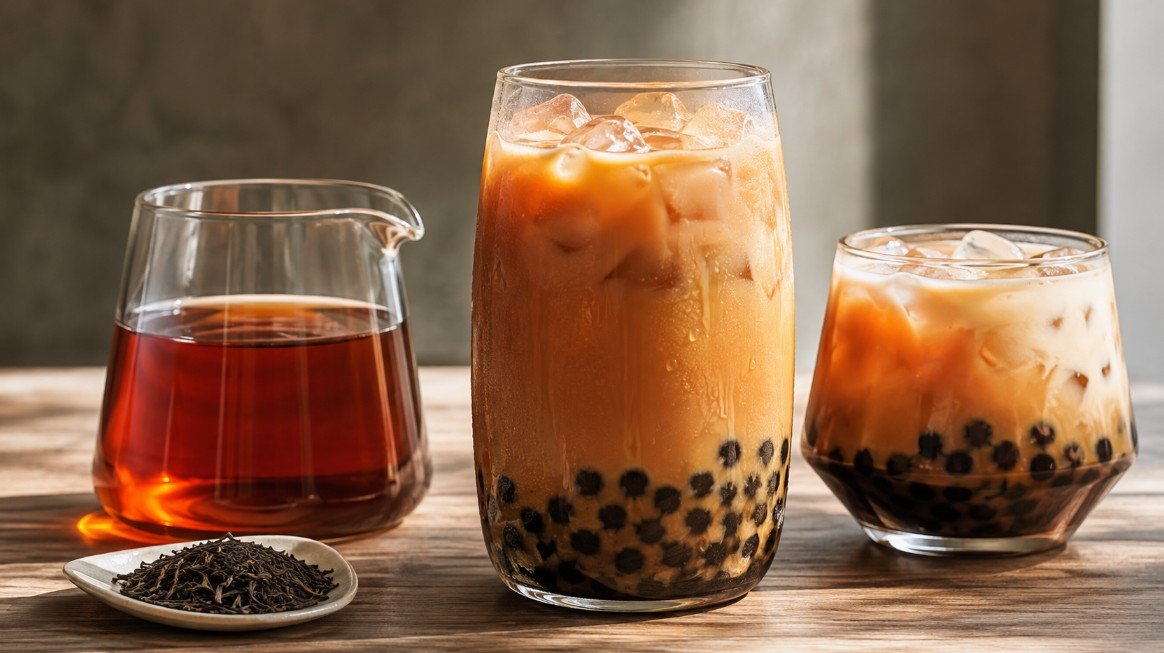
Assam is one of the most dependable teas for classic boba because it brings the body that milk tea needs. Milk, creamer, ice, sugar and tapioca all soften or compete with brewed tea. Assam starts with a naturally rich, brisk and malty black-tea character, so it has a better chance of remaining recognizable after the complete drink is assembled.
That does not make Assam the best base for every bubble tea. Jasmine can be more expressive in a refreshing fruit drink. Oolong can add roast or floral complexity. Earl Grey adds bergamot. But if your target is a creamy black milk tea with chewy tapioca and a clear tea backbone, Assam is one of the strongest places to start.
The key is concentration. Commercial bubble-tea instructions for Assam include ratios around 1:41 and a stronger 1:29, with a product-specific extraction of 13–15 minutes. Those are not universal recipes, but they demonstrate how differently tea may be prepared when it still has to survive milk, ice and sweetener.
Start with the base tea
What is Assam tea boba?
Assam tea boba is bubble tea built around Assam black tea as the primary brewed tea base. Assam tea is associated with a rich deep-amber liquor, substantial body and a distinctive malty character. Those traits are useful in boba because the tea rarely remains alone in the cup.
A classic Assam boba may combine concentrated black tea with fresh milk or creamer, sweetener, ice and black tapioca pearls. The exact recipe can vary substantially between shops, but the successful versions share one important characteristic: the finished drink still tastes like tea.
If milk, sugar and pearls are clearly recognizable but the black tea is not, the Assam base is probably too weak for that particular drink build.
If you are comparing Assam with Ceylon, Earl Grey and other black-tea styles rather than focusing specifically on Assam, use our guide to black tea for boba.
Body matters in milk tea
Why Assam works so well in boba
Bubble tea is a demanding environment for brewed tea. Milk reduces perceived astringency but can also soften aroma. Ice dilutes the drink as it melts. Sugar changes flavor perception. Tapioca contributes both texture and, in many recipes, additional brown-sugar sweetness.
A very delicate tea can be pleasant before those ingredients are added and surprisingly anonymous afterward.
Assam has an advantage because its basic profile is already substantial. Tea Board India describes Assam tea as rich, full-bodied and deep amber, with the region particularly known for strong malty tea. Those characteristics explain why Assam has become such a natural foundation for milk-based drinks.
Body
Assam has enough structural weight to remain noticeable after milk is added.
Maltiness
The malty direction naturally suits creamy, caramel-like and brown-sugar flavors.
Briskness
A little briskness provides contrast so a sweet milk tea does not feel flat.
Color
A deep amber brew also produces the visually familiar warm-brown milk-tea appearance.
Commercial reference points
How strong can Assam tea for boba actually be?
“Brew strong tea” is vague advice. Commercial preparation numbers show how concentrated a real boba base can become.
Commercial Assam reference
One bubble-tea supplier publishes roughly one part Assam tea to forty-one parts water.
Stronger option
The same supplier publishes a substantially more concentrated alternative.
Product-specific extraction
These Assam ratios are paired with a relatively long commercial steep.
Another black-tea benchmark
This equals approximately a 1:40 tea-to-water ratio.
Hot-water reference
Bossen’s Assam instructions use water at about 95°C, approximately 203°F.
Batch yield
One published Assam preparation is designed around roughly two liters of brewed tea.
Leaf grade, particle size, blend, water, equipment and intended finished drink all change extraction. A fine commercial Assam can behave very differently from a large whole-leaf Assam brewed at home.
The useful lesson is not that every Assam needs a fifteen-minute steep. It is that boba tea may be intentionally concentrated because brewed tea is only the first stage of the finished beverage.
For the complete method rather than the Assam-specific decision, use our guide to how to brew tea for boba.
The main use case
Assam with fresh milk, creamer or richer dairy
Assam works particularly well with milk because it has enough flavor weight to survive creaminess. The question is not whether milk belongs with Assam. The question is how much milk the brewed base can support before the drink stops tasting tea-forward.
Fresh milk
Fresh milk usually produces a cleaner Assam profile. Maltiness remains relatively easy to detect, especially when sweetness is restrained.
This is a useful direction when you want a tea-first milk drink rather than an especially thick dessert drink.
Non-dairy creamer
Creamer can create the round texture associated with many commercial milk teas, but it can also cover subtle tea flavor faster than a lighter addition of milk.
This helps explain why commercial suppliers pair concentrated Assam with creamer and sweetener.
Evaporated milk
Evaporated milk creates a richer dairy profile. Assam’s maltiness fits that richness naturally, but tea concentration becomes even more important.
If your main decision is which tea family works best with dairy rather than whether Assam specifically works, compare the options in our guide to the best tea for milk tea.
Tea and topping have to coexist
Why black tapioca pearls suit Assam
Classic black tapioca is not merely a texture. Pearls are commonly sweetened after cooking, and brown-sugar preparations can contribute substantial caramel or molasses-like flavor to every sip.
That makes Assam a logical partner. Its strong black-tea structure and maltiness can sit beside those darker flavors instead of disappearing underneath them.
If the only flavor you notice when pearls enter the straw is brown sugar, the drink has crossed from tea-forward Assam boba into a topping-forward dessert drink. That can still taste good, but it is a different balance.
Sugar changes what you notice
How sweetness changes Assam boba
Sweetener can help round Assam’s brisk edges, but increasing sugar does not simply make the same drink sweeter. It changes which flavors dominate.
Lower sweetness
The black tea, maltiness and astringency remain more exposed. Useful when you deliberately want a tea-forward drink.
Moderate sweetness
Maltiness becomes rounder and the drink moves toward the familiar profile of classic milk tea.
Heavy sweetness
Syrup and sweetened tapioca increasingly define the drink. Differences between Assam and other black teas become harder to notice.
Shop settings such as 25%, 50%, 75% and 100% are not standardized gram amounts. A “50% sweetness” order means half of that shop’s own regular syrup dose, not a universal amount that can be compared directly between every boba shop.
Choose by finished-drink character
Assam vs Earl Grey, Ceylon and oolong for boba
| Tea | Main character | Best reason to choose it |
|---|---|---|
| Assam | Malty, full-bodied, brisk | Classic creamy black milk tea and tapioca. |
| Earl Grey | Black tea plus bergamot aroma | Aromatic milk tea or peach/citrus directions. |
| Ceylon | Brighter, cleaner black-tea profile | A lighter-feeling black tea without bergamot. |
| Oolong | Can be roasted, floral or complex | A more distinctive tea-driven milk drink. |
Assam is usually the simplest choice when the main requirement is strength under milk. Earl Grey is more aromatic. Ceylon can feel brighter. Oolong can provide more obvious roast or floral complexity.
For the full family-level comparison, see our guide to the best tea for boba.
Not every strong tea needs milk
Can Assam work in fruit boba?
Yes, although fruit tea is not where Assam has its clearest advantage.
Assam can work with lemon, peach and other flavors that make sense beside black tea. The finished cup will generally feel deeper than the same fruit paired with jasmine or a light green tea.
That can be useful when you intentionally want a black-tea fruit drink. It is less useful when the target is an especially light, floral or highly refreshing fruit boba.
The choice therefore depends on what should lead the drink. If fruit should feel bright and transparent, a lighter tea may be better. If you want fruit sitting on top of a noticeable black-tea foundation, Assam becomes more interesting.
Where strong tea goes wrong
Three common Assam boba mistakes
Brewing a pleasant plain cup and expecting it to survive milk
A tea can taste perfectly balanced by itself and become almost invisible after milk, ice and syrup are added. Judge concentration in the context of the finished drink.
Using steeping time as the only strength control
More time can increase astringency faster than useful flavor. Increasing tea quantity can sometimes create a cleaner strong base than simply extending extraction indefinitely.
Letting brown sugar erase the reason you chose Assam
Assam and brown sugar pair naturally, but heavy syrup, sweet pearls and rich milk can still bury the tea. If Assam is the identity of the drink, it should remain detectable.
Quick decision
When should you choose Assam for boba?
The principle to remember
Assam works because boba needs tea with enough weight to stay present
Assam does not need unusual flavoring to make sense in bubble tea. Its advantage is structural. The tea begins rich, malty and full-bodied, which gives it room to lose some intensity to milk, sweetener and ice without becoming irrelevant.
The commercial numbers reinforce that point. Assam-specific boba instructions can reach roughly 1:41 or 1:29 for 13–15 minutes, while other commercial black-tea systems use around 50 g per 2000 ml near 95°C / 203°F. These are product-specific references, not one recipe for every Assam.
The underlying rule is much more useful: brew Assam for the finished boba drink you are actually building. If the tea still tastes distinctly malty and black-tea-forward after the milk, ice, sugar and pearls arrive, the base is doing its job.
Is Assam tea good for boba?
Yes. Assam is particularly well suited to classic milk tea boba because its full-bodied, malty black-tea character can remain noticeable after milk, sweetener, ice and tapioca pearls are added.
What does Assam boba taste like?
Assam boba usually tastes rich, malty, brisk and tea-forward. Milk softens the tea while sweetener rounds its astringency, but a balanced Assam milk tea should still taste clearly like black tea.
How strong should Assam tea be for boba?
There is no universal ratio. One commercial Assam product for bubble tea publishes tea-to-water ratios of 1:41 or 1:29 with a 13–15 minute extraction. Another commercial Assam method uses 50 g of tea and yields about 2000 cc. These are product-specific reference points rather than universal recipes.
What temperature should Assam tea be brewed at for boba?
A commercial Assam preparation from Bossen uses water at about 95°C, or roughly 203°F. The ideal temperature can vary with the specific tea grade, particle size and brewing system, so the manufacturer’s instructions should take priority.
Is Assam better than Earl Grey for milk tea?
Assam is usually better when you want strong malty black-tea body without added citrus aroma. Earl Grey is more distinctive when bergamot is meant to be part of the drink. Both can make excellent milk tea, but they create different flavor profiles.
Does Assam tea work with tapioca pearls?
Yes. Assam’s full body and malty flavor work especially well with traditional black tapioca pearls, including pearls served with brown-sugar syrup. The tea still needs enough concentration to remain noticeable beside the topping.
Can Assam tea be used for fruit boba?
Yes, particularly with fruit flavors that already work naturally with black tea, such as lemon or peach. Assam creates a deeper fruit-tea profile than jasmine or light green tea, so it is less suited to drinks intended to feel extremely light or floral.
Why does my Assam milk tea taste weak?
The brewed tea may be too dilute for the amount of milk, ice, sweetener and toppings in the finished cup. Commercial boba Assam can be significantly more concentrated than ordinary drinking tea, so concentration should be judged after the complete drink is assembled.