
Start with the texture
Best Boba Toppings for Beginners: What to Try First
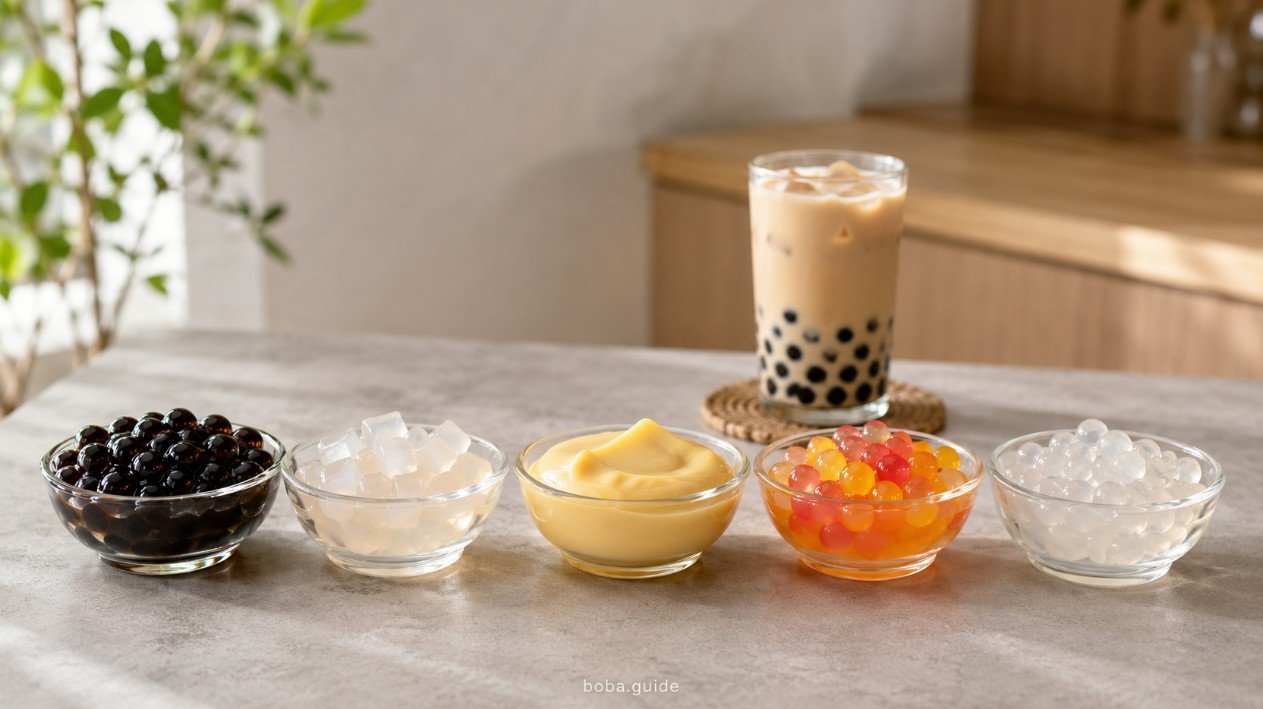
The best first boba topping depends more on texture than flavor. Choose classic tapioca pearls if you like chewy foods, lychee jelly if you prefer a softer gummy-like bite, crystal boba if you want a lighter chew, pudding if creamy desserts sound better than chewy pieces, or popping boba if you want a juicy burst rather than a traditional pearl.
If you have never had bubble tea before, start with one topping. That gives you enough texture to understand the experience without making it difficult to tell whether you actually like the drink underneath.
There is no single topping that every beginner will enjoy. Tapioca may be the classic choice, but someone who dislikes mochi, gummy candy or chewy food may have a much better first experience with pudding, jelly or no topping at all.
Pick Your First Boba Topping by Texture
Forget the giant topping list for a moment. Think about foods you already enjoy. The closest familiar texture is usually a better guide than choosing whichever topping has the cutest name.
Start with classic tapioca pearls. They give you the traditional soft-chewy boba texture and work especially naturally with milk tea.
Try lychee jelly or another fruit jelly. The pieces are usually softer and less dense than traditional pearls, with more obvious flavor of their own.
Crystal boba is worth trying. It generally has a cleaner, springier texture than tapioca and works well when you do not want the topping to dominate every sip.
Choose pudding. It changes the drink through softness and richness rather than through a strong chew.
Popping boba is the obvious experiment. It behaves very differently from tapioca because the thin outer shell releases flavored liquid when bitten.
Order no topping. Bubble tea does not have to become a chewing exercise just because tapioca is famous.
Five Boba Toppings That Are Easy to Understand on a First Try
Classic Tapioca Pearls — Best for the Traditional Experience
Tapioca pearls are the topping most closely associated with boba. Properly prepared pearls are soft and chewy, not crunchy or hard, and they are commonly sweetened after cooking.
For a beginner who already likes chewy foods, tapioca is the most useful starting point because it teaches you what people often mean when they talk about the classic boba texture.
The important caveat is simple: chewiness is the whole point. If you dislike mochi, gummy candy or foods that require repeated chewing, choosing tapioca just because it is traditional may be the wrong introduction.
For the ingredient and preparation itself, see our guide to tapioca pearls.
Lychee Jelly — Best for a Softer Fruity First Topping
Lychee jelly is an easy transition for someone who understands gummy or jelly textures but is unsure about dense tapioca. It brings its own fruity character, so you notice both the texture and the flavor immediately.
It fits particularly naturally with fruit tea, jasmine tea and other lighter drinks. Unlike tapioca, it does not try to create the traditional brown-sugar-and-chew experience.
That makes it a useful beginner choice for someone who wants bubble tea to feel closer to an iced fruit drink than a creamy dessert.
If this sounds more appealing than pearls, read about lychee jelly in bubble tea.
Crystal Boba — Best for a Cleaner, Lighter Chew
Crystal boba gives you a pearl-like addition without copying the dense softness of traditional tapioca. Depending on the product and shop, the texture is generally springy, translucent and more restrained.
It is especially useful for someone who wants to try “something in the bottom of the cup” but does not want every sip dominated by dark chewy pearls.
Crystal boba can work with milk tea, fruit tea and many tea-forward drinks because its flavor is often less assertive than strongly sweetened tapioca or fruit-filled popping pearls.
Our separate crystal boba guide goes deeper into what it is and how it differs from regular pearls.
Pudding — Best if You Prefer Creamy Desserts to Chewy Candy
Pudding changes the entire character of a drink. Instead of adding a firm chew, it gives the cup a soft custard-like texture and makes milk-based drinks feel richer and more dessert-like.
It is a particularly good beginner option for someone who finds the idea of tapioca strange but already enjoys flan, custard, pudding or very soft desserts.
Because pudding adds richness and often sweetness, it usually makes more sense with milk tea, taro, Thai tea or similar creamy drinks than with a delicate, bright fruit tea.
See the dedicated guide to pudding as a boba topping for the full texture and pairing breakdown.
Popping Boba — Best if You Want a Burst Instead of a Chew
Popping boba is not trying to imitate tapioca. The small spheres contain flavored liquid and burst when bitten, creating a juicy sensation instead of the repeated chew of a starch pearl.
For some beginners that feels instantly fun. For others the thin outer membrane is the strangest texture on the entire menu. It is therefore an excellent option when you already know that bursting candy or juice-filled sweets sound appealing.
Fruit teas, lemonades and other bright drinks are usually the easiest place to start because the fruit-flavored topping can reinforce the drink instead of fighting a creamy milk base.
For the ingredient itself, continue to what popping boba is and how it tastes.
The Five Beginner Toppings Feel Very Different
Calling all of them “toppings” can hide the most important difference: your mouth experiences each one differently.
Tapioca: chew repeatedly
The pearl stays intact while you chew. This is the texture most people associate with classic boba.
Jelly: softer bite
Jelly is usually easier to bite through and often contributes a clearer fruit flavor of its own.
Crystal boba: springy bite
It gives you a pearl-shaped texture without feeling exactly like cooked tapioca.
Pudding: almost no chew
The texture is much softer and integrates into a creamy drink rather than behaving like a discrete chewy pearl.
Popping boba: bite and burst
You break the outer shell and release the flavored liquid rather than chewing a dense center.
No topping: drink only
Sometimes the best beginner comparison is simply tasting the tea first and experimenting with texture on your next order.
If texture itself is the confusing part, use our beginner guide to boba textures rather than choosing only from photographs.
Quick Comparison: Which First Topping Sounds Most Like You?
| Topping | Texture | Flavor impact | Easy first pairing |
|---|---|---|---|
| Tapioca pearls | Soft, dense chew | Usually mild to sweet | Classic black milk tea |
| Lychee jelly | Soft gummy-like bite | Noticeably fruity | Jasmine or passion fruit tea |
| Crystal boba | Springy, lighter chew | Usually restrained | Green tea or lighter milk tea |
| Pudding | Soft and creamy | Rich, dessert-like | Milk tea or taro |
| Popping boba | Thin shell, juicy burst | Often strongly fruity | Fruit tea or lemonade-style drink |
Should Your First Topping Be Tapioca Pearls?
If your goal is to understand the classic bubble tea experience, yes, tapioca is the logical first topping. It gives you the characteristic contrast between a cold drink and warm or room-temperature chewy pearls that made the category famous.
But “classic” is not the same as “best for every person.” Texture preferences are unusually personal. Someone who loves mochi may immediately understand tapioca. Someone who hates gummy candy may decide they dislike bubble tea when the real problem was simply one topping.
That is why we would rather match the topping to the person than insist that everyone begin with the same cup.
If you are planning your entire first order rather than choosing only a topping, use our first-time boba ordering guide.
Milk Tea and Fruit Tea Usually Want Different First Toppings
For milk tea
Tapioca is the easiest classic pairing because the dark chewy pearls fit naturally with creamy black, oolong or jasmine milk tea.
Pudding works when you deliberately want the drink to become richer and more dessert-like.
Crystal boba is a useful lighter option when traditional pearls sound too dense.
For more combinations, compare the best toppings to pair with milk tea.
For fruit tea
Lychee jelly is a forgiving choice because its fruity character feels natural alongside mango, passion fruit, peach, citrus and floral teas.
Popping boba works when you want the topping itself to contribute a strong fruit flavor.
Crystal boba gives you texture without making the drink feel as heavy as traditional tapioca can.
For a wider pairing list, see the best toppings for fruit tea.
For Your First Cup, One Topping Is Usually Enough
A beginner does not gain much from putting tapioca, jelly, pudding and popping boba into the same cup. You may enjoy it, but you will have no clean reference for what each topping actually contributes.
One topping
You can clearly identify the texture and decide whether you want it again.
Two toppings
Useful after you understand one of them and deliberately want a second texture.
Three or more
Best treated as a topping-heavy style rather than a neutral first tasting.
Once you know which textures you enjoy, our guide to how many boba toppings to order explains when adding a second or third topping actually improves the cup.
Which Toppings Are Harder to Recommend Blindly to a Beginner?
There are no “bad” toppings. Some simply require a more specific preference.
Grass or herbal jelly can bring a distinctive herbal character. Red bean has a soft, starchy texture that is very different from pearls. Cheese or milk foam sits on top of the drink and changes richness and saltiness rather than behaving like a pearl at the bottom. Oreo pieces and other dessert additions can quickly make an already rich drink feel much heavier.
All of those can be excellent. They are simply harder to recommend to a complete beginner without knowing what flavors and textures that person already enjoys.
If the menu offers twenty choices and you want to understand what they all are rather than just choose your first one, use our complete guide to boba toppings.
What if You Already Know You Hate Chewy Food?
Then you do not need to “learn” to like tapioca before you are allowed to enjoy bubble tea.
Start with pudding if very soft textures appeal to you. Try popping boba if a liquid burst sounds more fun than a chew. Choose a soft jelly if gummy textures are acceptable but dense pearls are not. Or order the tea without a topping and decide later whether anything needs to be added.
A drink without tapioca is still a perfectly reasonable order at shops that treat pearls as an optional addition. The practical details are covered in how to order boba without pearls.
Three Beginner Orders That Put the Topping in Context
The classic test
Black milk tea + tapioca pearls. Choose this when you want to understand the traditional creamy-plus-chewy combination without several extra flavors competing for attention.
The fruity test
Passion fruit green tea + lychee jelly. This works well for someone coming from iced tea, lemonade or fruit drinks rather than from milk tea.
The soft-dessert test
Milk tea + pudding. A useful alternative for someone intrigued by bubble tea but unconvinced by the idea of chewing tapioca through a straw.
If you are still deciding on the whole drink rather than the topping alone, start with the broader beginner boba guide.
Five First-Topping Mistakes That Are Easy to Avoid
Choosing tapioca only because it feels mandatory
If chewy textures already sound unpleasant, another topping is a better way to learn whether you enjoy bubble tea.
Adding several unfamiliar toppings at once
You lose the ability to tell which texture or flavor you actually liked.
Ignoring the drink underneath
A fruit-flavored topping can be great in fruit tea and distracting in a delicate milk tea. The pairing matters.
Assuming all pearl-shaped toppings feel alike
Tapioca, crystal boba and popping boba may share a rounded shape, but their textures are fundamentally different.
Deciding all boba is bad after one texture
If you enjoyed the tea but hated the pearls, change the topping before giving up on the entire category.
The Best First Topping Is the One That Teaches You Something
Your first topping does not need to be adventurous. It needs to give you a clear answer: do I enjoy this texture in a drink?
Choose tapioca to experience the classic chew. Choose jelly for something softer and fruitier. Choose crystal boba for a lighter pearl. Choose pudding for creaminess. Choose popping boba for a juicy burst. Choose nothing if you want to understand the tea first.
After one or two cups, you will have much better information than any universal “top five” list can give you. From there, choose your next boba by the flavors and textures you actually enjoy, or use our complete boba ordering guide when you are ready to combine drink, size, sweetness, ice and toppings more deliberately.
Which Topping Would You Give to a Friend Trying Boba for the First Time?
We are especially interested in beginner recommendations that come with a reason. Maybe your local shop has unusually soft tapioca, a lychee jelly that converts people who normally avoid toppings, a crystal boba worth traveling for, or a pudding-and-milk-tea combination that makes immediate sense to someone new.
Send the Boba Guide Editorial Team the shop name and location, the topping, the drink you paired it with, and what the texture was actually like. Clear menu photos and photos of the finished drink are useful too.
Reader experiences help us find combinations and local differences worth checking. We verify factual details before adding them to our guides.
Questions About Boba Toppings for Beginners
What is the best boba topping for a beginner?
Classic tapioca pearls are the best starting point if you like chewy foods and want the traditional bubble tea experience. If you dislike chewy textures, lychee jelly, crystal boba, pudding, popping boba or no topping may suit you better.
What does tapioca boba feel like?
Well-prepared tapioca pearls have a soft, dense and chewy texture. They are meant to be chewed rather than swallowed whole and feel quite different from jelly or popping boba.
What topping should I get if I do not like tapioca pearls?
Try lychee jelly for a softer gummy-like texture, crystal boba for a lighter springy chew, pudding for something very soft and creamy, or popping boba for a juicy burst. You can also order no topping.
Is popping boba good for beginners?
It can be, especially if you like fruit flavors and juice-filled candy. Popping boba bursts when bitten instead of having the dense chew of tapioca, so the experience is very different from classic boba pearls.
Is jelly or tapioca better for a first bubble tea?
Choose tapioca if you enjoy chewy foods and want the classic experience. Choose jelly if you prefer a softer bite and a topping with a more noticeable fruit flavor. Neither is universally better.
How many toppings should a beginner add to boba?
One topping is usually enough for the first cup. It lets you clearly understand the texture and decide whether you want it again. You can experiment with two or more toppings after you know which individual additions you enjoy.
What boba topping goes best with milk tea for beginners?
Tapioca pearls are the classic pairing with milk tea. Pudding is a softer, creamier alternative, while crystal boba can work when you want a lighter chew.
What boba topping goes best with fruit tea for beginners?
Lychee jelly is an approachable choice because its soft fruity texture naturally complements many fruit teas. Popping boba can work if you want a stronger juicy burst, while crystal boba is useful for a more neutral texture.