
CEYLON BLACK TEA, MILK BALANCE & BOBA BUILDING
Ceylon Tea for Boba
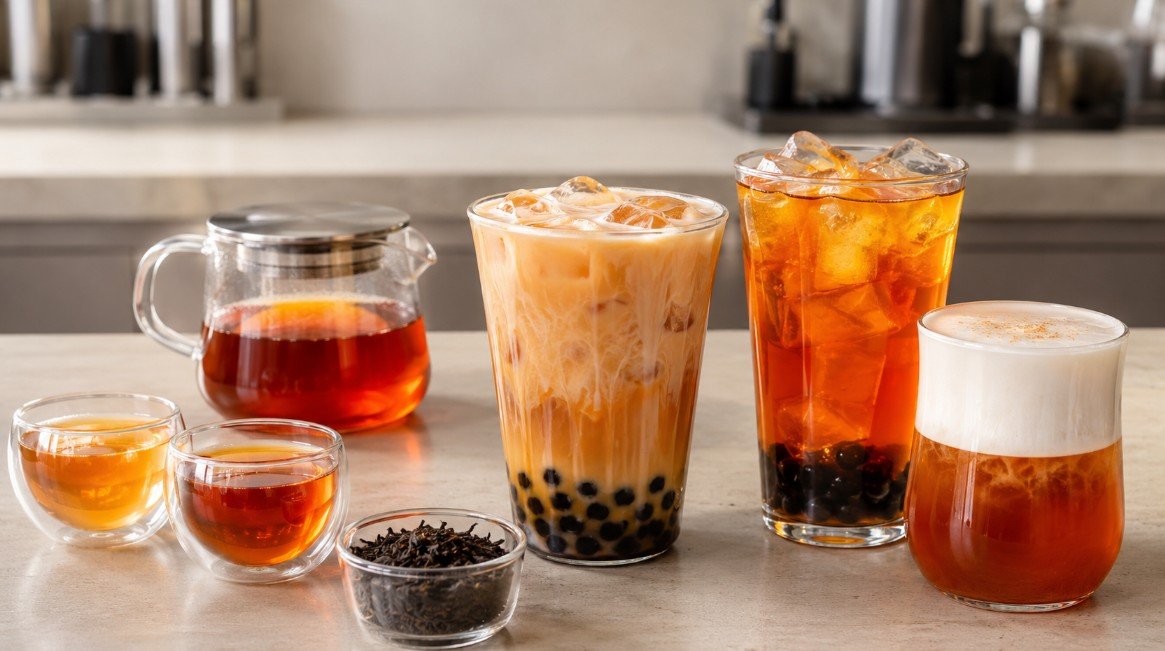
Ceylon tea is especially good for boba when you want a brisk, clean black-tea finish instead of the deepest possible malty milk tea. It can work as a clear iced tea with pearls, a tea-forward milk tea, or a black-tea base under a light milk-foam layer. The important part is preserving the brightness that makes Ceylon useful in the first place.
The name “Ceylon” does not describe one single flavor. Tea from Sri Lanka varies by growing region, elevation, manufacture and leaf grade, so one Ceylon can feel light and aromatic while another is rounder and more substantial. For boba, that means the best choice is not simply “Ceylon tea”; it is the Ceylon style whose body and briskness match the milk, sweetness, ice and toppings you plan to add.
The reason to choose it
Ceylon Earns Its Place in Boba Through Brightness, Not Maximum Heaviness
Black tea is often chosen for boba because it can stand up to milk and sweetness, but “strong” is not one flavor. Assam is famous for depth and malt. Ceylon often brings a cleaner, brisker edge. In a finished drink, that difference can be useful: the cup can still feel creamy and sweet without losing a clear black-tea outline.
This is why Ceylon is a smart choice for people who like milk tea but do not want every sip to feel dense. A good Ceylon-based boba can finish cleaner, feel less heavy, and make the tea itself easier to identify between bites of tapioca. It can also be excellent without milk, because briskness and aroma have more room to show in a clear iced tea.
The tradeoff is that brightness is easier to bury than maltiness. If you use too much creamer, a large dose of brown sugar syrup and very sweet pearls, the Ceylon may stop contributing anything distinctive. The drink can still taste pleasant, but you have lost the reason to choose Ceylon instead of another black tea.
Enough milk for softness, but not so much that the brisk black-tea finish disappears.
Little stands between the tea and the palate, so aroma and briskness remain easy to notice.
Works when sweetness is restrained; aggressive caramelized syrup can overwhelm the cleaner Ceylon profile.
If you want the wider comparison between Ceylon, Assam and other black teas before choosing a base, use the best tea for boba guide. This page stays focused on getting more value from Ceylon specifically.
Taste the same tea four times
The Ceylon Brightness Test Shows Exactly Where Your Recipe Loses the Tea
A vague instruction like “brew it stronger” is not enough when a drink tastes flat. The more useful approach is to find the exact stage where the Ceylon character disappears. Brew one batch, then taste it in four controlled states. Do not change the tea between steps.
Plain brewed tea
The liquor should taste clearly like black tea, with enough body to feel complete but without a rough, drying finish. If it already tastes thin here, the problem is brewing or tea choice, not milk.
After milk
Add the milk quantity you intend to use. If the tea suddenly becomes anonymous, reduce milk or increase tea concentration on the next test instead of immediately adding sugar.
After sweetness and pearls
Now add syrup and tapioca. If sweetness covers the brisk finish, lower the adjustable sugar or use less syrup on the pearls before changing the tea again.
After 5–10 minutes over ice
Taste again after dilution begins. If Ceylon was clear at minute 0 but weak at minute 10, the starting tea needs more concentration or the drink needs less ice.
This sequence makes recipe development faster because each result points to a different fix. Thin plain tea suggests tea-to-water or extraction issues. Tea that disappears only after milk suggests a milk threshold problem. Tea that survives milk but disappears after sweet pearls points to sweetness. Tea that fades only with time points to dilution.
Ceylon is a place, not one fixed taste
Growing Region and Elevation Can Change What “Ceylon Tea” Means in Your Cup
Sri Lanka’s tea country is divided into recognized growing districts, and the Sri Lanka Tea Board emphasizes that different districts are known for different characters. The industry also commonly groups tea by elevation: low country from sea level to about 600 meters, mid country from about 600 to 1,200 meters, and up country above 1,200 meters.
For a boba drinker, those categories are useful because they warn against treating every Ceylon package as interchangeable. Higher-grown teas are often bought for brightness and aroma, while lower-grown styles can offer more color and body. The exact result still depends on estate, season, grade and manufacture, but the regional idea helps explain why two “100% Ceylon” teas can behave differently under milk.
These are selection clues, not guarantees. The Sri Lanka Tea Board itself stresses that regional variation is real. Use elevation to decide what to test first, then judge the actual brewed tea in your recipe.
Use the producer method as the baseline
For Ceylon Boba, 90–95°C and 3–5 Minutes Is a Useful Published Starting Point
Current Dilmah guidance for a pure Ceylon black tea uses 200 mL water, 1 teaspoon of loose leaf, 90–95°C / 194–203°F water and a 3–5 minute steep. Another Dilmah black-tea reference uses 95–100°C / 203–212°F and 3–5 minutes, while an older product guide specifies roughly 2–2.5 g per 220 mL and identifies 5 minutes as a milk-tea direction.
Those variations are useful because they prevent a common mistake: treating one temperature as sacred. Start with the instructions for the tea you actually bought. Then adapt concentration for boba without assuming that a much longer steep is automatically the answer.
Increasing leaf quantity raises concentration without necessarily extracting the same extra roughness that can come from leaving the leaves in hot water far beyond their intended time. Broken-leaf teas may extract especially quickly, so watch the clock rather than using color alone as your signal.
For a fuller explanation of concentration, hot brewing, cooling and iced-tea preparation across tea families, continue to how to brew tea for boba.
Find the point where tea turns into sweet milk
The Milk Threshold Matters More With Ceylon Than “More Milk Is Creamier”
Milk can make Ceylon softer and rounder, but it also lowers the apparent briskness that makes the tea interesting. The right amount is therefore not the maximum amount your cup can hold. It is the amount that adds creaminess while leaving a clear black-tea finish.
For a 16 fl oz / about 473 mL test drink, begin with a strong tea base and adjust milk in 15–30 mL steps. That interval is large enough to taste but small enough to preserve the rest of the recipe. If 90 mL of milk hides the tea, test 60–75 mL before rebuilding everything. If 60 mL leaves the drink sharper than you want, test 75 mL.
The tea may taste brisk but thin or sharper than the creamy drink you intended.
Creaminess arrives, but the finish still reads clearly as black tea.
The cup tastes smooth and sweet, but Ceylon no longer contributes a recognizable advantage.
If the goal is the finished drink rather than the tea itself, the separate black milk tea guide owns that broader drink intent. Here, the key lesson is simply to protect Ceylon’s brightness by measuring milk rather than pouring until the color looks familiar.
Choose by what you want to notice last
Ceylon vs Assam: Brisk Finish or Malty Weight?
Assam and Ceylon can both make excellent boba, but they solve different problems. Assam is an easy choice when the drink needs obvious weight, malt and enough force to survive generous milk and brown sugar. Ceylon becomes more compelling when you want the tea to feel cleaner, brighter and more defined.
You want the tea to finish brisk and clear
Useful for restrained milk tea, clear iced tea, milk foam, or a cup where pearls should not turn every sip into dessert.
You want maximum body under rich ingredients
Useful when brown sugar, lots of milk or a very creamy build would make a lighter black tea disappear.
A blend can be smarter than treating the choice as a contest. Gong cha’s current signature black tea is described as a blend of Assamica and Ceylon Orange Pekoe. That is a practical example of beverage design: one tea can contribute body while another contributes definition and aromatic shape.
Ceylon’s hardest stress test
Brown Sugar Can Work With Ceylon, but It Can Also Erase the Reason You Chose It
Brown sugar brings caramelized, molasses-like depth that is easy to love and easy to overuse. With Ceylon, the challenge is not whether the flavors are compatible. They are. The challenge is proportion: a bright black tea can become a generic background note if both the drink syrup and the tapioca syrup are aggressive.
Build the sweetness in layers. Taste the pearls first. If they are already heavily coated, reduce the adjustable syrup in the drink. Then add milk. Only after those two components are balanced should you decide whether the tea needs more concentration.
If you use a shop’s percentage controls, treat them as relative settings, not universal grams of sugar. A 50% setting at one chain is not chemically equivalent to 50% somewhere else. The useful question is whether the selected level still lets the black-tea finish appear after the pearls.
Match topping weight to tea character
Black Tapioca Is Not the Only Good Topping for Ceylon Tea
Traditional black pearls make sense with Ceylon, especially in milk tea, but they are not always the best way to show the tea. The more syrup a topping carries, the more concentration the tea needs. A lighter topping can make a high-grown or aromatic Ceylon feel much more distinctive.
Black tapioca
Choose it for classic chew. Keep the pearl syrup restrained if you want briskness to survive.
Best with: medium-bodied or stronger Ceylon milk tea.Milk foam
Creates creaminess on the surface instead of diluting the entire cup with milk.
Best with: clear Ceylon tea when tea character is the priority.Crystal boba
Adds chew with less brown-sugar flavor, allowing a lighter Ceylon to stay noticeable.
Best with: bright iced tea or lightly sweetened builds.Aloe or light jelly
Useful when you want texture but do not want another heavy flavor competing with the tea.
Best with: refreshing, lower-milk Ceylon drinks.For the full topping decision beyond this Ceylon-specific matching logic, use the site’s broader topping coverage rather than turning this page into a topping catalog.
Temperature changes what you perceive
Hot Ceylon Boba Shows Aroma; Iced Ceylon Boba Tests Your Concentration
Hot and iced Ceylon boba can feel like different drinks even with the same tea. Warmth makes aroma easier to notice and eliminates meltwater, so a hot milk tea can carry a relatively subtle brew. An iced drink has the opposite challenge: cooling changes perception, and every melting cube lowers concentration.
For an iced build, do not judge only at the moment you finish shaking. Taste immediately, then again at 5 and 10 minutes. If the tea stays balanced at minute 0 but disappears by minute 10, the recipe needs either a stronger initial tea base or a lower ice load. Adding more syrup solves neither problem.
No meltwater means the tea does not need as much protection from dilution.
Plan for the drink you will taste halfway through, not only the first sip.
What a current boba chain tells us
Ceylon Already Appears Inside Modern Bubble-Tea Black Tea Programs
Ceylon is not merely a traditional tea-category topic disconnected from modern boba. Gong cha currently describes its bold black tea as a blend of Assamica and Ceylon Orange Pekoe, with dried-fig, honey and woody notes. Its current Black Milk Tea material uses that blend as the base for a creamy classic.
That example matters because it shows how professional beverage programs think about tea: not every cup needs one origin to act alone. Ceylon can be used to sharpen or clarify a blend rather than carry the entire drink by itself. If pure Ceylon tastes too lean in your milk-tea recipe, a blend is a legitimate design solution rather than a compromise.
Do not chase a “secret authentic Ceylon boba tea” package. Shops can use origins, grades and blends differently. Reproducing the finished cup requires matching concentration, milk, sweetness, ice and toppings as well as the tea name.
Three measured starting points
Build Ceylon Boba Around Briskness, Not Just Cup Color
These are Boba.guide home-test formulations, not claims about a universal shop recipe. A 16 fl oz cup is about 473 mL, and ice plus toppings occupy part of the final volume.
Brisk classic milk tea
200–220 mL
strong Ceylon tea
60–80 mL
milk
15–25 mL
sweetener
1/4 cup
cooked tapioca
Start with the lower milk number when using a lighter Ceylon. Add ice to finish the 16 oz cup. If tea disappears after 10 minutes, increase tea concentration on the next batch rather than increasing syrup.
Lower-sugar Ceylon pearl tea
250–270 mL
chilled Ceylon
10–15 mL
sweetener
1/4 cup
lightly syruped pearls
Ice
to finish
This build makes the tea easier to evaluate because milk is removed. If the drink feels too sharp, adjust sweetness in small steps before deciding the tea is unsuitable.
Ceylon tea with milk foam
240–260 mL
chilled Ceylon
10–20 mL
sweetener
30–45 mL
milk foam
0–1/4 cup
optional topping
Because the creamy element sits on top instead of being mixed through the whole cup, this format can preserve more tea character while still giving a creamy first impression.
When you are ready to turn one of these test builds into a fully measured recipe workflow, the black milk tea recipe is the better next page.
The finished cup is giving you clues
What Your Ceylon Boba Is Telling You
The tea base is too weak for the milk and sweetness. Test 15–30 mL less milk or raise leaf concentration before adding more tea time.
Strength came from over-extraction rather than useful concentration. Shorten the steep toward the producer’s range and increase leaf quantity instead.
The brew is not concentrated enough for the meltwater. Compare the same drink at minute 0, 5 and 10 to confirm dilution.
The topping syrup is too dominant for this Ceylon. Use less syrup, fewer pearls or a lighter topping before abandoning the tea.
Brewing harder did not preserve the desirable part of the tea. Return to the proper time and temperature, then change concentration.
You may be using a very brisk or aromatic Ceylon where the recipe needs more body. Try a fuller Ceylon, a broken-leaf style, or a blend rather than simply adding sugar.
Read the package like a drink builder
How to Buy Ceylon Tea for Boba Without Paying for the Wrong Strengths
You do not need a package labeled “bubble tea.” A pure Ceylon black tea, a Ceylon breakfast tea or a robust broken-leaf tea can all work. What matters is whether the tea gives your intended drink enough body and definition without forcing you into harsh extraction.
Look for pure Ceylon when you want to learn the profile
A 100% Ceylon tea gives you a clearer baseline than a breakfast blend whose origins may vary. Once you know what Ceylon contributes, blends become easier to evaluate.
Do not fear Broken Orange Pekoe
“Broken” describes leaf size, not inferior flavor by definition. Smaller broken leaf can extract more quickly and can be useful when a milk drink needs a strong, repeatable black-tea base.
Use region and elevation as clues
If the package identifies a district or growing elevation, use that information to predict whether brightness, aroma or body may be especially important, then confirm by tasting.
Check the brewing instructions before buying a huge bag
Specific time, temperature and water guidance makes repeat testing easier. A tea that only tastes good when you ignore its normal preparation method may not be the easiest boba base.
Buy for the drink, not prestige
A delicate single-estate tea can be wonderful plain and wasteful under heavy brown sugar. A straightforward BOP or breakfast-style Ceylon may be the more intelligent boba purchase.
Dilmah currently sells pure Ceylon black tea and Ceylon breakfast BOP with practical 90–95°C and 3–5 minute brewing guidance. Those products are examples of the kind of clear specification that makes home testing easier; they are not the only teas capable of making good boba.
One final tasting rule
The Best Ceylon Boba Still Lets You Recognize Ceylon at the End of the Sip
A successful Ceylon boba does not need to be unsweetened or aggressively tea-forward. It can be creamy, cold, chewy and comforting. But after the sweetness and milk arrive, there should still be a reason the recipe used Ceylon rather than any generic black tea.
That reason is usually a cleaner line through the drink: briskness after the first sweet impression, a brighter aroma above the milk, or a finish that keeps the cup from feeling heavy. Protect those qualities by measuring leaf, water, time, milk and syrup rather than adjusting everything by color.
Start with the tea maker’s method, use a controlled concentration increase when necessary, test milk in 15–30 mL steps, and taste iced drinks again after 5–10 minutes. Those simple measurements tell you far more than the vague instruction to “make it strong.” For the broader framework behind black, green, jasmine, oolong and other bases, continue with the tea for boba guide.
Questions people actually ask
Ceylon Tea Boba FAQ
Is Ceylon tea good for boba?
Yes. Ceylon tea is especially useful when you want a brisk, clean black-tea finish in milk tea or iced tea. It can pair with tapioca, milk foam and lighter toppings, but very heavy milk or brown sugar can hide the brightness that makes Ceylon distinctive.
What does Ceylon tea boba taste like?
The exact flavor depends on the Ceylon tea, but a good Ceylon boba often feels brisk, clean and tea-forward rather than extremely malty. Regional origin, elevation, leaf grade, milk and sweetness can all change the finished profile.
What temperature should I use for Ceylon tea?
Follow the instructions for your specific tea. Current Dilmah guidance for one pure Ceylon black tea uses 90–95°C (194–203°F), while broader black-tea guidance can reach 95–100°C (203–212°F). The product method should be your starting point.
How long should Ceylon tea steep for boba?
A 3–5 minute range is a useful published reference for many Ceylon black teas. If the finished boba tastes weak, increasing leaf concentration can be more useful than steeping far beyond the recommended time and creating a dry or bitter cup.
Is Ceylon or Assam better for boba milk tea?
Choose Ceylon when you want a brisker, cleaner finish and Assam when you want deeper maltiness and more obvious body under rich milk and brown sugar. A blend can combine those strengths, and some current bubble-tea programs use both.
Can I use Ceylon tea bags for boba?
Yes. Tea bags can work well if the tea has enough body for your recipe. Use the package brewing directions as a baseline, then increase tea concentration carefully if milk, ice or toppings make the finished drink taste weak.
Does Ceylon tea work with brown sugar boba?
Yes, but brown sugar can easily dominate a bright Ceylon. Taste the sweetness already carried by the pearls, keep adjustable syrup controlled and use a stronger Ceylon base when necessary. For very rich brown-sugar drinks, Assam or a blend may be easier.
What toppings pair best with Ceylon tea?
Black tapioca works for classic milk tea, while milk foam, crystal boba, aloe and lighter jellies can preserve more of Ceylon’s brisk tea character. Match the topping to the strength and sweetness of the tea rather than assuming black pearls are always required.
Can Ceylon tea be served as clear iced boba tea?
Yes. Clear iced Ceylon is one of the best ways to notice its briskness and aroma. Use a measured tea concentrate and taste again after 5–10 minutes over ice so you can see whether dilution is making the tea disappear.
Does Ceylon tea contain caffeine?
Yes. Ceylon black tea naturally contains caffeine. The amount in a finished boba drink varies with the tea, leaf quantity, brewing method and how much brewed tea is actually present after milk, ice and toppings are added, so cup size alone is not a reliable estimate.