
Roasted Japanese tea in bubble tea
Hojicha Boba: Roasted Tea Flavor, Milk, Pearls & How to Order It
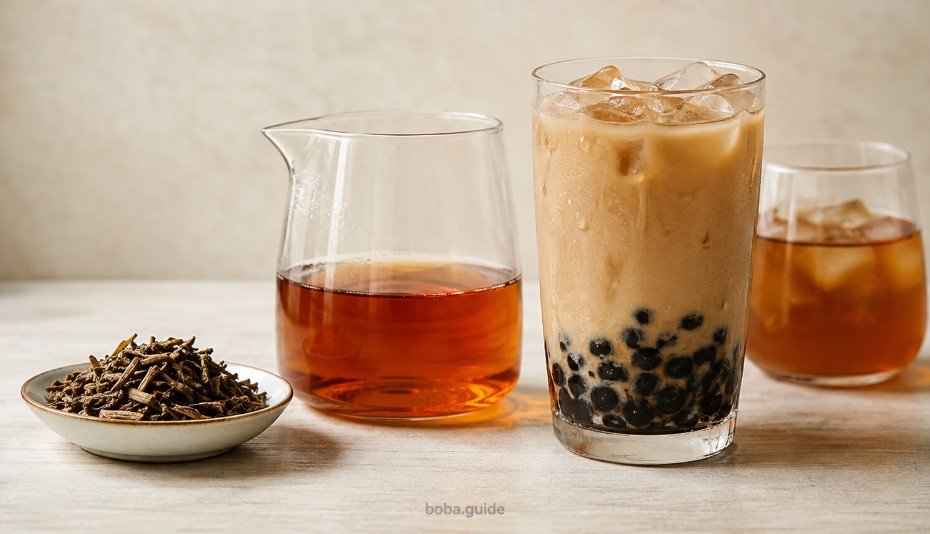
Hojicha boba is bubble tea made with hojicha, a Japanese green tea that is roasted after processing. Roasting changes the experience dramatically: instead of the grassy, vegetal profile people often associate with green tea, hojicha tends to taste warm, toasted, nutty, gently woody and sometimes caramel-like. In milk tea, those roasted notes can stay noticeable without the drink tasting as sharp as coffee or as grassy as matcha.
For a first order, a useful starting point is hojicha milk tea with black tapioca pearls, moderate sweetness and regular ice. If your shop uses percentage-style sugar settings, about 30-50% sweetness is a practical place to begin when you want the roasted tea to remain obvious rather than letting syrup dominate it.
The essential distinction
What is hojicha boba?
Hojicha boba combines roasted Japanese green tea with the customizable format of bubble tea. The drink may be served as milk tea, fresh-milk tea, a lighter iced tea, or occasionally a latte-style drink, with tapioca pearls or another topping added according to preference.
The defining ingredient is the hojicha itself. Hojicha is not black tea, even though the dry leaves and brewed liquor are brown. It begins as Japanese green tea material, then roasting creates the darker color and toasted aroma. Japan’s Ministry of Agriculture, Forestry and Fisheries groups hojicha with bancha and genmaicha among teas commonly prepared with very hot water, while Japanese tea companies describe hojicha primarily through its roasted, aromatic character.
That distinction matters in boba because milk and sugar can make many tea bases taste similar. A well-made hojicha drink should still give you a recognizable roasted-tea aroma after milk, ice and pearls are added. If the cup tastes only like brown sugar, vanilla creamer or generic caramel syrup, the tea base is probably not doing enough work.
Hojicha is also useful for drinkers who want a tea base that feels familiar without tasting generic. Its roast can echo flavors people already know from toasted bread, roasted nuts, cereal or light caramelization, yet the cup still behaves like tea: it can be brewed lighter or stronger, served clear, combined with milk, poured over ice or used as the aromatic base beneath chewy toppings. That flexibility is why hojicha can work as both a restrained tea-first order and a richer dessert-style boba without needing to change its identity completely. It also gives beginners a useful reference point for learning how roast, milk and sweetness interact in one cup.
Within the broader world of tea bases used in boba, hojicha fills a useful niche: it is roasted and comforting, but it is not coffee; it is Japanese green tea, but it does not taste like matcha or sencha; and it pairs naturally with milk without requiring an extremely bitter brew.
Flavor before customization
What does hojicha boba taste like?
Hojicha boba should taste roasted first, creamy second and sweet third when the recipe is balanced. The exact cup can move from light and tea-forward to rich and dessert-like, but the core flavor usually sits in the toasted, nutty, woody and gently caramelized part of the spectrum.
Roasted grain, toast and warm wood
The smell is often the first clue that hojicha is different from ordinary green tea. Roasting shifts the aroma away from fresh grass and toward toast, roasted grain, nuts and warm woody notes.
Smooth enough for milk, but not naturally thick
Brewed hojicha itself is relatively light. Milk gives it a rounder body, while tapioca adds chew and syrupy sweetness. A creamy texture should come from the milk component, not from pretending the tea itself is heavy.
Dry-toasty rather than grassy or coffee-bitter
A good finish stays aromatic without becoming burnt. Dark roasting can suggest cocoa or coffee to some drinkers, but hojicha should still read as tea, especially when brewed cleanly.
Numbers that actually matter
How strong should hojicha be for boba?
There is no single universal hojicha brewing formula, and official Japanese tea guidance shows a surprisingly wide range. The practical lesson for boba is to start hot and fairly concentrated, then adjust for the amount of milk and ice you plan to add.
Ippodo basic hojicha
Tea10 g
Water240 ml
Temperature100°C / 212°F
Steep30 sec
Yamamotoyama loose leaf
Tea3-5 g
Water200-240 ml
Temperature80-90°C / 170-190°F
Steep30-60 sec
Yamamotoyama tea education
Tea6-9 g
WaterTeapot serving
TemperatureBoiling water
Steep30 sec
ITO EN hojicha latte
Tea4 tsp
Water8 fl oz / 237 ml
Temperature200°F / about 93°C
Steep2 min
Use heat to release the roast
Hojicha is generally much more comfortable with high-temperature water than delicate gyokuro or premium sencha. MAFF specifically says bancha, hojicha and genmaicha can be brewed by pouring hot water directly without first cooling it.
For milk tea, favor the stronger end
Because milk and ice dilute aroma, a boba-oriented brew usually benefits from the stronger end of the published preparation range. A practical Boba Guide starting point is roughly 6-10 g of loose hojicha per 240 ml of water, brewed hot for about 30-60 seconds, then tasted before milk is added. This is a working milk-tea starting point, not a universal Japanese standard.
Do not confuse longer with automatically better
Very long steeping can pull more woody or dry notes without necessarily making the aroma cleaner. If the tea disappears under milk, increasing the leaf dose can be more useful than simply leaving the same leaves in water for many extra minutes.
Hojicha is not supposed to be green in the cup. The brown leaves and copper-to-reddish brewed color are part of the roasting process, not a sign that someone accidentally used black tea.
What the shop is actually using
Loose-leaf hojicha, powder and concentrate do not make identical boba
A menu can say “hojicha” even when the shop is not brewing loose roasted leaves for every cup. Commercial hojicha can appear as brewed leaf tea, tea bags, unsweetened powder, sweetened powder mixes or prepared concentrates, and that format changes flavor, sweetness control and texture.
Brewed loose leaf
This gives the clearest connection to traditional hojicha preparation. The drink can be adjusted through leaf dose, water temperature and steep time, and the finished tea remains translucent before milk is added. For a boba shop, the main challenge is consistency: a weak batch can disappear under milk, while an overworked batch can taste dry or burnt.
What to expect: the cleanest tea aroma and the most visible variation between lighter and deeper roasts.
Hojicha powder
Powder can create a fuller, more opaque latte-like drink because fine tea material is dispersed rather than simply infused and removed. Japanese producer Marukyu Koyamaen sells hojicha powder and also a sweetened hojicha mix designed for beverages, showing that powdered hojicha is a legitimate cafe ingredient rather than a made-up bubble-tea shortcut.
What to check: whether the powder is pure hojicha or already mixed with sugar. A pre-sweetened mix reduces how much control the shop has over the final sweetness.
Concentrate or premix
Concentrates make service faster and more repeatable. Marukyu Koyamaen also lists concentrated hojicha for cafe and restaurant use that is diluted with water or hot water. In a busy boba shop, a concentrate can be perfectly reasonable if it tastes clean and the recipe is transparent about added sugar or flavoring.
What to expect: high consistency, but the ingredient list matters more because the concentrate may already contain components that affect sweetness or body.
Color is a clue, not a quality score
Why can hojicha boba be beige, tan, copper or deep brown?
Hojicha color changes with roast, concentration, milk, powder format and syrup, so there is no single “correct brown” for every cup. The important question is whether the color matches a believable tea-and-milk recipe rather than whether it looks as dark as coffee.
Clear copper to reddish amber
Typical of brewed hojicha without milk. A clear infusion can look surprisingly bright even though the dry leaves are dark brown.
Warm beige to light chestnut
Common for hojicha milk tea. More milk creates a paler cup; a stronger tea base creates a deeper tan without needing caramel coloring.
More opaque brown
Powder-based drinks can look denser and more uniform because the tea solids remain in the beverage rather than being strained out.
Dark streaks or syrup bands
Usually indicate brown sugar, caramel-style syrup or another sweetener on the cup wall. Those streaks are not proof that the hojicha itself is stronger.
This distinction is useful when ordering from photos. A dramatic dark-brown cup may be a sweet brown-sugar hojicha drink, while a pale tan cup may still contain a strong roasted tea base. Judge the ingredient description and flavor balance, not photography color alone.
Build the cup around the tea
How much milk and sweetness work with hojicha?
Hojicha usually needs less sweetness than a heavily flavored dessert drink because roasting already creates naturally warm, caramel-adjacent aromas. Milk should soften the roast without erasing it.
For home testing, a useful starting ratio is around 2 parts strong brewed hojicha to 1 part milk. For example, 160 ml of concentrated tea with about 80 ml of milk gives you a 240 ml liquid base before ice and toppings. This is not a formal Japanese tea rule; it is a practical starting ratio for tasting whether the tea remains recognizable in a milk-tea format.
If the drink tastes watery after ice is added, fix the tea concentration before adding more syrup. If it tastes like warm milk with only a faint roasted smell, reduce the milk or increase the leaf dose. If it tastes harsh or burnt, more sugar may hide the problem, but it will not solve the brew.
Milk choice also changes perception. Dairy milk tends to make hojicha feel round and classic. Oat milk can emphasize cereal and roasted-grain notes. Soy milk can work well but may add a more obvious bean character. Coconut milk is much more assertive and can pull the drink toward dessert.
Best when you want the roasted aroma to lead and the pearls are already syrupy.
A practical middle setting at shops that offer percentage control.
Useful only if you deliberately want syrup, brown sugar or cream to compete with the tea.
Texture without hiding the roast
Which toppings pair best with hojicha boba?
Classic tapioca pearls are the safest pairing because their chew and brown-sugar sweetness reinforce hojicha’s roasted profile without introducing a completely different fruit flavor. Softer, less assertive toppings can work too.
Black tapioca pearls
Chewy, syrupy and familiar. They make the drink feel unmistakably like boba while leaving the tea aroma easy to identify.
Pudding
Good for a creamier, custard-like cup. Use lower sweetness if the pudding itself is already sweet.
Red bean
A more Japanese-dessert direction. The soft, earthy sweetness can work with roast, though the texture is less universal than tapioca.
Grass jelly
Useful when you want less syrupy chew and a cleaner finish, especially in an iced hojicha milk tea.
Bright popping boba can be fun, but intense mango, strawberry or passion-fruit centers often pull attention away from the toasted tea. If your goal is to understand hojicha itself, start with one topping rather than stacking three or four textures.
Three orders, three different experiences
How should you order hojicha boba for the first time?
Start with a simple order that lets you taste the tea before adding foam, extra syrup or multiple toppings. The best version depends on whether you want tea character, classic milk tea comfort or a richer dessert cup.
Hojicha milk tea + tapioca + 50% sweetness + regular ice
This is the easiest reference point. Milk softens the roast, tapioca gives the expected boba chew, and a middle sweetness setting leaves enough room to decide whether you want the next cup drier or more dessert-like.
Iced hojicha + 30% sweetness + no topping or grass jelly
Choose this if you mainly want to learn the taste of roasted tea. Without a large amount of milk or brown sugar, the difference between hojicha and ordinary green tea is much easier to notice.
Hojicha fresh milk + tapioca + 50% sweetness
This pushes the cup toward a latte. It works best when the shop uses a concentrated hojicha base; otherwise fresh milk can overwhelm the roast quickly.
If your first hojicha boba is too sweet, change sweetness next time before changing milk, ice and toppings all at once. That gives you a much clearer sense of what actually improved the drink.
Do not assume “roasted” means caffeine-free
How much caffeine is in hojicha boba?
Hojicha contains caffeine, but there is no trustworthy single milligram number for every hojicha boba. Leaf material, dose, water, steeping, product format and cup size can all change the final amount.
ITO EN lists approximately 11.4 mg caffeine per 150 ml for one of its hojicha tea-bag products.
ITO EN lists approximately 60 mg per 16.9 fl oz bottle for its unsweetened ready-to-drink hojicha.
Those two manufacturer disclosures are a useful warning against repeating the common internet shortcut that “hojicha has X mg of caffeine.” They are different products with different serving sizes and preparation methods, so their numbers should not be converted into a universal shop-boba estimate.
Milk does not remove caffeine. Adding ice does not make the caffeine disappear either; it only changes concentration and serving volume. If caffeine matters to you, ask the shop whether its hojicha is brewed from loose leaves, tea bags, concentrate or powder and whether nutrition information is available for that specific drink.
Temperature changes what you notice
Is hojicha boba better hot or iced?
Hot hojicha emphasizes aroma; iced hojicha emphasizes refreshment and demands a stronger base because melting ice dilutes the drink. Neither is automatically better.
Choose hot when…
You want the roasted aroma to be the main event, you prefer a softer milk-tea texture, or you are ordering without chewy pearls. A hot cup is especially good for noticing toast, grain and woody fragrance.
Choose iced when…
You want classic bubble-tea refreshment and tapioca texture. Use a concentrated tea base so the cup still tastes like hojicha after milk and ice are present.
Pick the tea by flavor, not color
Hojicha vs. matcha, genmaicha and oolong boba
Hojicha is the roasted option: less grassy than matcha, more purely roasted than genmaicha and usually less floral or fruity than many oolongs. These teas can all work with milk and pearls, but they lead the drink in different directions.
Hojicha
Main impressionToasted, nutty, woody
With milkWarm and latte-like
Best ifYou want roast without coffee
Matcha
Main impressionGrassy, vegetal, umami
With milkCreamy and vivid
Best ifYou like strong green-tea character
Genmaicha
Main impressionGreen tea + roasted rice
With milkSoft and cereal-like
Best ifYou want toast plus a greener edge
Oolong
Main impressionFloral, roasted, fruity or mineral
With milkVaries widely by style
Best ifYou want more aromatic range
For toasted rice and green tea together, compare genmaicha boba.
For a tea with a much wider floral-to-roasted spectrum, see oolong tea for boba.
For powdered green tea with a more vegetal, umami profile, use the matcha for boba guide.
A better cup is easy to recognize
How can you tell if hojicha boba is well made?
Good hojicha boba keeps the roasted tea recognizable from the first smell through the finish. Milk, sugar and pearls should support that profile rather than cover it.
Roast you can smell before sipping
The cup should suggest toast, roasted grain or warm wood before you have to search for the flavor.
Tea that survives the milk
A milk tea can be creamy without becoming anonymous. You should still be able to identify a roasted-tea backbone.
Burnt bitterness mistaken for strength
Deep roasting is not the same as scorched flavor. Harsh ashiness or an aggressively burnt finish is not a requirement for “strong hojicha.”
Syrup becoming the only flavor
If brown sugar or caramel completely erases the tea, lowering sweetness may improve the cup more than adding another topping.
Pearls separately from the tea
Fresh tapioca should feel soft and chewy rather than hard in the center. Pearl quality can make an excellent tea base feel disappointing.
A practical home test
A simple starting method for hojicha milk tea with boba
Use this as a calibration method, not as the only possible recipe. It is designed to help you taste whether the tea is strong enough before you start changing several variables at once.
- 1
Brew a concentrated cup
Start with about 6-10 g loose hojicha and 240 ml hot water. Use roughly 90-100°C / 194-212°F water and taste around 30-60 seconds. The exact leaf and roast may need adjustment.
- 2
Judge the tea before milk
It should smell clearly roasted and taste stronger than the final drink needs to taste. If it is already faint at this stage, milk and ice will not rescue it.
- 3
Add milk gradually
A useful test is roughly 160 ml strong tea + 80 ml milk. Stop earlier if the roast begins disappearing. Different milks need different amounts.
- 4
Sweeten after tasting
Add only enough sweetener to round the toasted edges. Remember that cooked tapioca is often already coated in syrup, so the topping contributes sweetness too.
- 5
Add pearls and ice last
This lets you see how dilution changes the final flavor. If the drink becomes weak, strengthen the next tea brew rather than automatically adding more sugar.
Who should order it?
Hojicha boba is for people who want warmth and roast without turning the drink into coffee
If your ideal bubble tea is aromatic, creamy and gently toasted rather than fruity or intensely grassy, hojicha is one of the most distinctive tea bases to try. Start simple: strong hojicha, moderate milk, moderate sweetness and one topping. Once you know what the tea itself tastes like, every later customization becomes easier to judge.
For the larger map of green, black, jasmine, oolong, roasted and herbal options, browse the Boba Guide tea section.
Preparation ranges were checked against Japanese government guidance and current tea-maker instructions, then interpreted for the practical problem of keeping hojicha recognizable after milk and ice are added. Where manufacturers disagree, this page shows the range instead of pretending one brewing number is universal.
Common questions
Hojicha boba FAQ
What is hojicha boba?
Hojicha boba is bubble tea made with hojicha, a Japanese green tea that is roasted after processing. The roasting gives the tea a toasted, nutty and gently woody profile that works especially well with milk and black tapioca pearls.
Does hojicha boba taste like coffee?
Not exactly. Hojicha can suggest coffee, cocoa or toasted grain because of its roasted aroma, but it is still tea. A balanced hojicha milk tea should taste smoother and more tea-like than a typical coffee drink, without needing coffee bitterness to create depth.
Is hojicha the same as matcha?
No. Both come from Japanese green tea traditions, but matcha is powdered tea with a grassy, vegetal and umami-forward profile, while hojicha is roasted and usually tastes toastier, nuttier and less grassy. They also behave differently with milk and sweeteners.
What sweetness level is best for hojicha boba?
For a first order, about 30-50% sweetness is a useful starting point if the shop offers percentage control. Thirty percent keeps the roasted tea more prominent; 50% gives a more familiar milk-tea balance. The percentages are shop-specific settings, not standardized grams of sugar.
What toppings go well with hojicha milk tea?
Black tapioca pearls are the most reliable pairing. Pudding, red bean and grass jelly can also work because their flavors are relatively compatible with roasted tea. Very bright fruit popping boba may overpower the hojicha if your goal is to taste the tea clearly.
How hot should the water be for hojicha?
Published tea-maker guidance ranges from roughly 80-90 degrees C (170-190 degrees F) to boiling water, and Japan’s MAFF guidance says hojicha can be prepared with hot water poured directly without cooling first. For a milk-tea base, using the hotter and stronger end of the range is a practical starting point because milk and ice dilute aroma.
How long should hojicha steep for boba?
Many traditional loose-leaf methods are short: about 30-60 seconds is common in published Japanese tea guidance, although some latte recipes use longer steeps. For boba, start by increasing leaf concentration rather than assuming a very long steep is always better.
Does hojicha boba have caffeine?
Usually yes if the drink contains real hojicha. The exact amount varies widely by leaf material, brewing method, dose and serving size. Manufacturer examples range from about 11.4 mg per 150 ml for one ITO EN hojicha tea-bag product to about 60 mg per 16.9 fl oz for an ITO EN ready-to-drink hojicha, so there is no responsible single caffeine number for every shop-made hojicha boba.
Can hojicha boba be dairy-free?
Often, yes. If the shop offers plant milk, hojicha works particularly well with oat milk because the cereal-like notes can complement the roasted tea. However, powders, creamers, foam, pudding or other toppings may contain dairy, so confirm the complete ingredient list when dairy avoidance is important.
Is hojicha boba better hot or cold?
Hot hojicha emphasizes aroma and can feel especially smooth with milk. Iced hojicha is more refreshing and works naturally with tapioca pearls, but the tea base needs enough concentration to remain noticeable after ice dilution. Choose based on whether you value aroma or classic cold-boba texture more.