
TOASTED RICE GREEN TEA FOR MODERN BOBA
Genmaicha Boba: How Roasted Rice Green Tea Works in Bubble Tea
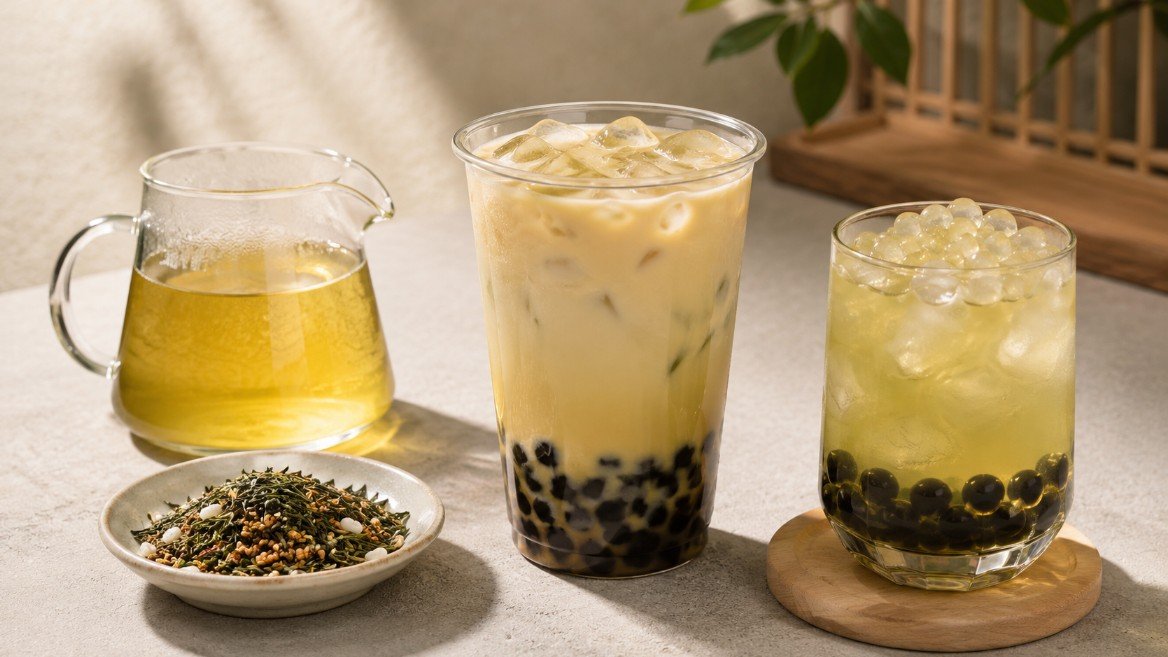
Genmaicha boba stands out because it does not taste like plain green tea, matcha or hojicha. It combines Japanese green tea with roasted rice, so the finished drink can carry both a gentle tea freshness and a distinctive toasted, nutty, almost popcorn-like warmth. In bubble tea, that gives genmaicha a very different role from floral jasmine or stronger black tea.
When it works well, genmaicha boba feels balanced, calm and tea-driven. The roasted rice softens the sharper grassy side of green tea, while the green tea prevents the drink from becoming just another creamy toasted beverage. The challenge is keeping both sides visible after milk, sweetness, ice and toppings enter the cup.
Published brewing references already show why genmaicha can be tricky. One loose-leaf method uses 3–5 g per 200–240 mL at 80–90°C for just 30–60 seconds. Another respected Japanese tea method uses 10 g per 240 mL at 100°C for 30 seconds. That range tells you immediately that tea type, leaf style and intended result matter more than chasing one universal genmaicha formula.
Start with the tea itself
What is genmaicha boba?
Genmaicha boba is bubble tea made with genmaicha as the tea base. Genmaicha is a Japanese tea that blends green tea leaves with roasted rice, often including some popped rice as well. That roasted rice changes the character of the tea dramatically. Instead of tasting purely grassy or marine like some green teas, genmaicha tends to feel toastier, nuttier and softer.
In boba, that matters because the drink can move in two different directions:
Creamy genmaicha milk tea
A lighter milk tea where roasted rice adds warmth and comfort without the darker heaviness of black tea or hojicha.
Clear genmaicha tea boba
A tea-forward build that keeps the toasted-rice identity visible while feeling cleaner and more refreshing.
The successful versions do not let one side erase the other. If the green tea disappears completely, the drink becomes too generic. If the roasted-rice character disappears, it no longer feels distinctively genmaicha.
For the broader category rather than this specific tea, use our main guide to tea for boba.
This is not just another green tea
Why genmaicha tastes different from plain green tea
Most green-tea boba discussions focus on freshness, floral character or a grassy profile. Genmaicha changes that conversation because roasted rice brings a second flavor axis into the cup.
Green tea
Provides freshness, structure and a recognizable tea backbone.
Roasted rice
Adds toasted, nutty and warm grain notes that soften sharp grassy edges.
Combined result
Feels gentler than many green teas, less intense than matcha and less roasted than hojicha.
Best use in boba
Works well when you want a comforting tea profile that still stays relatively light.
This is exactly why genmaicha deserves its own page rather than being treated as a small note under generic green tea. It solves a different flavor problem. If jasmine is about floral lift and hojicha is about roast, genmaicha is about toasted balance.
If a drink tastes like plain green tea with milk, it probably is not expressing genmaicha strongly enough. If it tastes like a dark roasted tea, it may be drifting too close to hojicha territory. Genmaicha should feel toasted, but still light enough to remind you it began as green tea.
If you want the broader family comparison first, see green tea for boba.
Useful practical numbers
What genmaicha brewing numbers tell you before milk and tapioca are added
Genmaicha is a very good example of why tea advice needs context. Published brewing instructions can vary a lot even for respected tea producers.
Loose-leaf reference
One product guideline uses 3 to 5 grams of genmaicha for one cup.
Water range
The same loose-leaf method pairs that amount with roughly one cup of water.
Lower hot-water range
Some genmaicha is brewed below boiling to protect the green-tea character.
Short infusion
Short steeps can be enough when the tea is intended as a gentle, aromatic cup.
Stronger reference
Another Japanese method uses a larger dose of leaves for the same amount of water.
Boiling-water method
Some genmaicha styles are brewed with boiling water and a very short infusion.
The real lesson is that genmaicha depends heavily on leaf style, roast level and intended result. A boba base may also need more concentration than a plain drinking cup because milk, ice and sweetener will dilute what you taste.
That is why you should not automatically copy a standard teacup recipe into bubble tea and expect the finished drink to stay expressive. A base that tastes complete on its own can become too soft after milk and ice are added.
For the step-by-step method behind tea concentration, use our separate guide to how to brew tea for boba.
The creamy version
How genmaicha works in milk tea boba
Genmaicha can make a very elegant milk tea, but it usually works best when the drink stays lighter than a black milk tea. Too much dairy can flatten the green-tea side. Too much sweetness can bury the roasted-rice nuance.
Why milk can help
Milk softens green tea’s sharper edges and makes the toasted-rice warmth feel smoother and rounder.
This is especially useful for people who find some green teas too sharp or too grassy by themselves.
Why milk can hurt
Heavy dairy reduces delicacy. If the milk base becomes too thick, the drink can stop reading as tea-forward and start feeling like a generic creamy beverage with only faint roasted notes.
Best direction
Genmaicha usually performs best in a lighter milk-tea build: enough milk for creaminess, but not so much that the green tea disappears.
If your target drink is intentionally rich, dense and dark, genmaicha may not be the strongest fit. In that case, a stronger black tea or roasted tea can hold its ground more easily. For the more general milk-tea decision, see our guide to the best tea for milk tea.
Often the best showcase
Why clear genmaicha tea boba can be even more expressive
Genmaicha does not need milk to make sense in bubble tea. In fact, one of the clearest ways to understand the tea is in a lighter, clearer drink where the toasted-rice aroma remains open.
A clear genmaicha boba can feel refreshing while still having more warmth than a floral green tea. The roasted rice adds a comforting note that prevents the drink from tasting too thin or too sharp.
If your goal is to learn what makes genmaicha different, a clear tea format is often the easier place to start. Once you understand that profile, it becomes much easier to judge whether a creamy version is still preserving enough of the tea.
Texture should support the tea
What toppings suit genmaicha boba best?
Because genmaicha is gentler than many black-tea bases, topping choice matters more than people think. The wrong topping can dominate the drink very quickly.
| Topping | How it works with genmaicha | Best use case |
|---|---|---|
| Black tapioca pearls | Adds classic chew and darker sweetness, but can overpower a very delicate tea base. | Best in milk tea when the genmaicha is brewed strongly enough. |
| Crystal boba | Lighter and less dominant than black tapioca. | Very good in clear genmaicha tea. |
| Grass jelly | Adds texture without much sugar load. | Useful if you want the tea to stay front and center. |
| Popping boba | Usually too fruity and too attention-grabbing for the tea’s quiet toasted profile. | Generally not the most natural partner. |
Black tapioca can absolutely work with genmaicha, but it asks more from the tea. The roasted-rice identity has to stay visible beside the pearls. If that seems too difficult, crystal boba or jelly often give a more balanced result.
The easiest way to lose the tea
How sweetness changes genmaicha boba
Sweetness is where many genmaicha drinks lose precision.
Lower sweetness
The roasted-rice note stays clearer, the green tea remains more visible and the drink feels calmer and more tea-led.
Moderate sweetness
The drink feels rounder and more approachable, especially in milk tea. This is often the safest range for a broad audience.
High sweetness
Sugar begins to blur the subtle difference between genmaicha and other light tea bases. The roasted-rice nuance can get lost first.
Shop percentages like 25%, 50%, 75% and 100% still are not universal gram amounts. They only represent fractions of that specific shop’s own standard sweetener dose. For a subtle tea like genmaicha, starting lower makes it easier to judge whether the tea itself is working.
Know what kind of tea character you want
Genmaicha vs jasmine, matcha and hojicha for boba
Genmaicha vs jasmine
Jasmine is floral and lifted. Genmaicha is toasted and grounded. Choose jasmine for bright fruit tea and fragrance; choose genmaicha for warmth and balance.
Genmaicha vs matcha
Matcha is more concentrated, more intense and visually dramatic. Genmaicha is lighter, more transparent and less assertive. Matcha dominates a drink; genmaicha invites more restraint.
Genmaicha vs hojicha
Both can feel toasted, but hojicha is more fully roasted and usually darker. Genmaicha still keeps an obvious green-tea side and feels lighter overall.
If the question is simply “which tea family makes the strongest all-around case in boba?”, use our broader comparison at best tea for boba.
Where the drink usually goes wrong
Three common genmaicha boba mistakes
Treating it like generic green tea
If you ignore the roasted-rice side, you lose the reason to choose genmaicha. The finished drink should not taste like ordinary green tea with a random topping.
Using too much milk or too much sugar
Both quickly flatten the tea’s subtle balance. Genmaicha usually rewards a lighter touch more than a heavy dessert build.
Assuming one brewing rule fits every genmaicha
Published instructions range from 80–90°C to 100°C, and from 3–5 g per cup to 10 g per 240 mL. Product style matters. Use the actual tea and the finished drink goal as your guide.
Quick decision
When should you choose genmaicha for boba?
The core takeaway
Genmaicha works best when you protect both the green tea and the roasted rice
Genmaicha boba succeeds because it offers something rare in bubble tea: a profile that feels light but comforting at the same time. The green tea keeps the drink fresh enough to remain tea-driven, while the roasted rice adds warmth and a quiet toasted sweetness that makes the cup feel distinctive.
The practical challenge is balance. Published brewing guides can range from 3–5 g per 200–240 mL at 80–90°C for 30–60 seconds to 10 g per 240 mL at 100°C for 30 seconds. That variation is not a problem. It is a reminder that genmaicha is not one rigid formula.
If you want genmaicha to survive in boba, build the drink around its actual strengths: moderate concentration, restrained sweetness, toppings that do not shout too loudly and enough space for the roasted-rice identity to remain visible. When that happens, genmaicha boba tastes like itself — and that is the whole point.
What is genmaicha boba?
Genmaicha boba is bubble tea made with genmaicha, a Japanese tea that combines green tea leaves with roasted rice. The result is a drink that can taste toasted, nutty and gently tea-forward rather than purely grassy or floral.
Is genmaicha good for milk tea?
Yes, especially if the milk tea stays relatively light. Genmaicha can make a very elegant milk tea, but too much dairy or too much sweetness can flatten the green-tea side and hide the roasted-rice character.
What does genmaicha boba taste like?
Genmaicha boba usually tastes like a balanced mix of green tea freshness and toasted-rice warmth. Depending on the recipe, it can feel nutty, mellow, lightly savory and gently sweet.
How should genmaicha be brewed for boba?
It depends on the specific tea. Published references range from 3–5 g per 200–240 mL at 80–90°C for 30–60 seconds to 10 g per 240 mL at 100°C for 30 seconds. The right method depends on leaf style, roast level and how strong the final boba drink needs to be.
Is genmaicha the same as hojicha?
No. Both can feel toasted, but hojicha is usually more fully roasted and darker. Genmaicha still keeps a clear green-tea side because it is green tea blended with roasted rice.
Which toppings work best with genmaicha boba?
Black tapioca pearls can work well in milk tea if the tea base is strong enough. Crystal boba and grass jelly are often easier choices when you want the tea to stay lighter and more expressive.
Is genmaicha better as milk tea or clear tea boba?
Both can work, but clear genmaicha boba often shows the tea’s character more clearly. Milk tea can be excellent too, as long as the creamy side does not cover the toasted-rice identity.
Why does my genmaicha boba taste weak?
The tea base may be too gentle for the amount of milk, ice, sweetener or toppings in the finished cup. Genmaicha is more delicate than many black-tea bases, so balance matters more than simply adding sugar or pearls.