
Texture, choice and the social appeal of bubble tea
Why Is Boba So Popular? What Makes Bubble Tea So Appealing
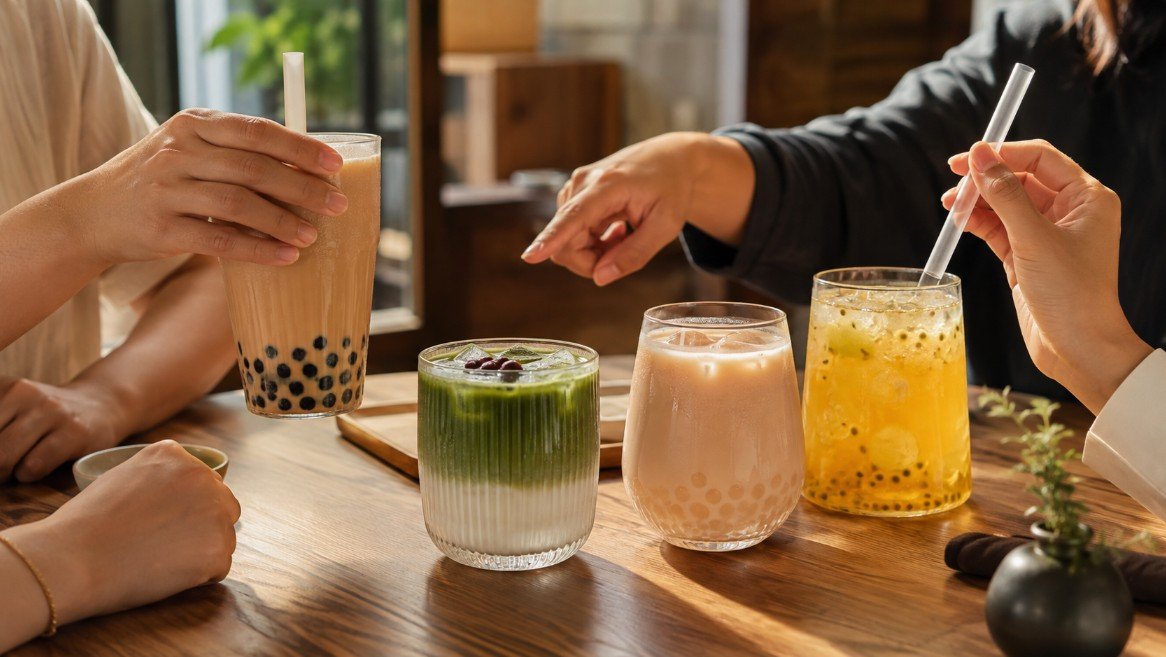
Boba is popular because it combines several experiences that ordinary drinks usually offer separately: flavor, texture, customization, visual appeal and a social café ritual. One cup can be tea-forward, creamy, fruity, dessert-like or refreshing. It can be adjusted for sweetness, ice and toppings, and the chewy pearls make drinking it physically different from drinking coffee, soda or plain iced tea.
That combination helps explain why boba has lasted far beyond a short novelty cycle. The category can keep changing without losing its identity. A customer can order the same oolong milk tea every week or try a new fruit tea, jelly, foam or seasonal flavor while still participating in the same recognizable boba experience.
Social media has amplified that appeal, but it did not create it from nothing. Bubble tea had already spread internationally long before short-form video became dominant. The stronger explanation is that boba was unusually well designed for repeat discovery: people can personalize it, compare orders with friends, photograph it, chew it, revisit familiar favorites and still find something new.
The central advantage
Boba Packs Several Experiences Into One Cup
Most drinks are experienced mainly through flavor, aroma, temperature and sweetness. Boba adds a second physical layer: texture. That simple difference creates a more active experience. You are not only sipping tea; you may also be chewing tapioca, catching jelly through a wide straw or alternating between a creamy drink and a springy topping.
Then customization adds another layer. The same menu item can taste different depending on tea strength, sweetness, ice, milk and topping choices. For one person, boba is a roasted oolong milk tea with restrained sweetness. For another, it is a bright passion fruit tea with jelly. For someone else, it is a rich brown sugar fresh milk drink that behaves more like dessert.
That flexibility gives the customer more reasons to return than a single fixed recipe would.
Taiwanese official coverage of bubble tea describes it as a global phenomenon known for customizable flavors and chewy tapioca pearls. Those two traits—choice and texture—are not incidental decoration. They are central to why the format works so well.
The feature ordinary drinks do not have
Texture Makes Boba Feel Interactive
The strongest physical difference between boba and most café drinks is that boba asks you to chew. Classic tapioca pearls are soft, springy and resistant enough to create a contrast with the liquid around them. A sip becomes a small sequence: tea first, then pearls, then another sip.
That changes pacing. A plain iced tea can disappear quickly because each sip is essentially the same. With boba, the distribution of pearls changes from sip to sip. The straw may deliver mostly tea, then several pearls at once, then another stretch of liquid. The drink is repetitive enough to be comforting but variable enough to stay interesting.
Texture also helps explain why people can strongly love or strongly dislike boba. Some customers immediately enjoy the chew. Others find it strange because they expect a beverage to remain completely liquid. Neither reaction is mysterious; the defining feature is genuinely unusual.
The drink has resistance
Tapioca gives the mouth something to do rather than simply letting the liquid pass through.
Soft tea meets springy pearls
Temperature, sweetness and smooth liquid are interrupted by a distinct chewy element.
Every sip is slightly different
The changing ratio of tea to topping creates a small amount of unpredictability throughout the cup.
Our boba textures guide goes deeper into why tapioca feels chewy, how different toppings compare and why freshness changes texture so dramatically.
Choice without losing the category
Customization Lets People Build a Drink That Feels Personal
Many beverages can be customized, but boba builds customization directly into the normal ordering language. Tea base, milk, sweetness, ice and topping can often be changed independently. That means the customer is not merely selecting an item from a menu; they are finishing the recipe.
This matters because repeated choice creates ownership. Someone who always orders jasmine milk tea at 50% sweetness with less ice and pearls is not simply buying “a jasmine milk tea.” They have developed a personal version of it. That makes switching shops, comparing recipes and refining preferences part of the experience.
Choose the base
Black tea, oolong, jasmine, green tea, matcha, fruit tea or a fresh-milk style establishes the core direction.
Adjust intensity
Sweetness and ice can change how aromatic, rich, refreshing or dessert-like the same drink feels.
Add texture
Pearls, jelly, pudding, aloe or other toppings give the drink a different physical personality.
Repeat or experiment
The customer can keep the exact favorite or change only one variable next time.
This combination of familiarity and control is one reason the category encourages repeat visits. If a first order feels overwhelming, our choose your boba guide turns those decisions into simpler taste and texture paths.
The psychology of repeat discovery
Boba Offers Controlled Novelty
People often like novelty, but complete novelty can require effort. Boba creates a useful middle ground. You can keep most of an order familiar and change one element: a new topping, a different tea base, less sugar, a seasonal fruit or a new foam.
That is controlled novelty. The customer gets a new experience without abandoning what they already understand. It is one reason boba menus can stay interesting for a long time without requiring every drink to become a completely new invention.
The same mechanism works at the shop level. A regular may have a default order but still notice a seasonal drink. A newcomer may start with classic milk tea and eventually move toward oolong, jasmine, matcha or fruit tea. The menu supports progression instead of demanding expertise on the first visit.
That simple pattern gives boba a repeatable way to create novelty without exhausting the customer.
One category, very different moods
Boba Can Be Creamy, Fruity, Tea-Forward or Dessert-Like
Another reason the category travels so well is that it does not force everyone toward one flavor profile. Classic milk tea is only one branch. A modern boba shop can serve people who want roasted tea, floral jasmine, bright citrus, matcha, fresh milk, brown sugar, fruit or icy blended drinks.
Tea-forward
Oolong, black tea, jasmine and other brewed bases appeal to people who want aroma, tannin and a more restrained sweetness.
Creamy
Milk tea and fresh-milk drinks soften bitterness and create a richer, rounder cup.
Refreshing
Fruit teas, lighter green teas and citrus combinations can function more like cold refreshers than dessert drinks.
Dessert-like
Brown sugar, taro, richer toppings and blended formats can turn the drink into a treat with more weight and sweetness.
This variety gives groups a practical advantage too: several people can visit the same shop without wanting the same style of drink. Our boba flavors guide maps the major flavor families in more detail.
The menu never has to feel finished
Boba Is Modular Enough to Keep Reinventing Itself
The basic structure of boba is unusually modular. A shop can change the tea, milk, sweetener, flavor or topping while leaving the rest of the system recognizable. That makes innovation easier than it would be in a category built around one fixed recipe.
New trends can therefore appear without replacing the old ones. Brown sugar drinks can become fashionable while classic milk tea remains. Cheese foam can attract curiosity without eliminating tapioca. Fruit teas can grow while roasted oolong still serves tea-focused customers.
This helps explain longevity. Individual drinks can feel trendy, but the category is broad enough to absorb trends and then move on. If one flavor loses attention, the entire idea of boba does not disappear with it.
Built to be seen as well as tasted
Boba Is Naturally Visual
Transparent cups make the structure of the drink visible. Black pearls sit against pale milk tea. Matcha creates green layers. Fruit tea catches light differently from an opaque milk drink. Foam, jelly and fresh fruit can create vertical contrast before the customer has taken the first sip.
That appearance matters even without social media because customers often choose with their eyes. A neighboring drink on the table can make someone ask, “What did you order?” The visual difference between drinks helps the menu explain itself socially.
Social platforms later amplified this strength because the product was already photographable. Layers, pearls and colorful tea bases translate well into short video and images. But the timeline matters: bubble tea was internationally popular before TikTok existed. Social media accelerated discovery; it did not invent the underlying appeal.
A small treat can still feel like an event
One Cup Can Function as a Personal Reward
Boba often occupies an interesting space between an everyday beverage and a dessert occasion. Ordering a customized drink can feel more special than buying bottled tea, yet it usually requires less time and commitment than sitting down for dessert or a full meal.
That makes the drink useful as a small reward: after class, after work, during shopping or on the way home. The purchase can mark a moment without needing a major plan around it.
This does not mean boba is universally inexpensive. Prices differ greatly by city, shop, size and topping count. The stronger point is about scale of experience: a single cup can deliver a surprisingly elaborate combination of taste, texture and personalization in a contained format.
The wide straw is part of the design
Even the Straw Changes How Boba Is Experienced
The oversized straw is one of the category’s most recognizable functional features. It is not simply decorative branding. It has to be wide enough for pearls or other toppings to travel with the liquid.
That means the topping and tea are experienced together rather than as separate courses. A well-proportioned sip can deliver tea, sweetness and texture at once. This sounds like a small detail, but product experiences are often defined by details exactly like this.
The straw also reinforces recognizability. Even before seeing the pearls clearly, the visual language of a sealed cup and wide straw can signal “boba” immediately.
Good boba has a tea backbone
Tea Gives the Category More Depth Than Sweetness Alone
Boba is often described as a sweet drink, and many versions certainly are. But the best examples are not interesting only because of sugar. Tea contributes bitterness, tannin, floral aroma, roast, grassiness or depth depending on the base.
That matters because tea can balance the richness of milk, brown sugar or toppings. A roasted oolong milk tea has a different structure from a drink made mainly from sweet flavoring and dairy. Jasmine can make a fruit tea feel aromatic rather than simply sugary.
Taiwanese official coverage of bubble tea consistently places the drink inside Taiwan’s tea culture, not outside it. If you want to understand how black tea, oolong, jasmine, green tea and other bases change the drink, see our tea guide.
Why the format travels well
Boba Can Adapt to Different Markets Without Losing Its Identity
A rigid drink is difficult to localize because changing too much can make it stop being recognizable. Boba is different. Its identity is built from a system rather than one exact recipe: tea or another drink base, customization, texture and a modern tea-shop format.
That system can absorb local fruit, different dairy preferences, sweetness habits and flavor trends. One market may emphasize milk tea. Another may lean heavily toward tropical fruit. A premium shop may foreground single-origin tea, while a dessert shop may foreground rich toppings.
As long as enough of the format remains recognizable, the category can evolve without feeling disconnected from its Taiwanese roots. That flexibility helped the drink move from Taiwan into East Asia, North America, Europe and many other markets.
The wider historical and cultural side of that journey is explored in our boba culture guide.
Social media is an amplifier
TikTok Did Not Invent Boba’s Popularity
Short-form video is a nearly perfect environment for boba. The drinks have visible layers, shaking, pouring, sealing, pearls and dramatic color contrast. Custom orders also create endless content: unusual toppings, low-sugar versions, seasonal specials and shop comparisons.
But saying “TikTok made boba popular” confuses amplification with origin. Modern pearl milk tea dates to 1980s Taiwan, and the drink had already spread internationally for decades before TikTok became a major platform.
A more accurate explanation is that social media rewarded qualities boba already had: visual contrast, customization, novelty, strong shop identity and a social consumption ritual. The platform fit the drink unusually well because the underlying product was already designed around visible choice.
Why younger customers often connect with it
Boba Fits a Social, Customizable and Non-Alcoholic Café Occasion
It is easy to make exaggerated demographic claims about boba, so it is better to focus on the experience. The category offers many traits that can appeal to younger customers: visual variety, customizable orders, shareable shop visits, frequent new flavors and a social setting that does not require alcohol.
It also rewards exploration. A customer can develop preferences over time and learn the vocabulary of tea bases, sugar levels and toppings. That creates a mild sense of expertise without requiring formal knowledge.
None of this means boba belongs to one generation. The category is broad enough for children, adults, tea enthusiasts, dessert lovers and people who simply want a cold fruit tea. Its popularity is stronger precisely because the appeal is not limited to one demographic stereotype.
Why some people bounce off the category
Not Everyone Likes Boba—and That Helps Explain What Makes It Distinctive
The same features that make boba memorable can make it polarizing. Chewy pearls may feel strange to someone who expects beverages to stay liquid. A default sweetness level may be too high. Some milk teas can feel heavy. A large menu can create decision fatigue. Poorly held tapioca can turn a first experience into a rubbery disappointment.
That is why “I don’t like boba” can sometimes mean “I did not like that particular combination.” Someone who dislikes black tapioca might enjoy aloe or jelly. Someone who finds milk tea heavy may prefer citrus green tea. Someone who dislikes very sweet drinks may enjoy tea-forward options at lower sweetness.
The category’s flexibility is therefore both a strength and a challenge: there are many ways to love boba, but also many ways to order a first cup that does not suit you.
Trend versus durable category
Boba Is Bigger Than Any One Viral Flavor
Calling boba a short-lived trend does not fit the timeline. Modern pearl milk tea emerged in Taiwan in the 1980s and has remained commercially and culturally relevant for decades. It has crossed countries, languages, generations and menu styles.
That does not mean every boba trend lasts. Brown sugar waves, particular foams, novelty toppings and visually dramatic seasonal drinks can rise and fall quickly. The durable part is the underlying system that keeps producing new variations.
Individual viral drinks
A flavor can spike in popularity and disappear without damaging the category.
Texture + customization
The core experience remains useful even when menu fashion changes.
Social occasion
Meeting for a drink is a repeatable behavior rather than a one-season visual trend.
Tea foundation
The category can repeatedly return to brewed tea even after more dessert-like trends pass through it.
The reason it lasts
No Single Factor Explains Boba’s Popularity
If boba were only sweet, other sweet drinks could replace it easily. If it were only visual, the novelty would fade. If it were only Taiwanese tea tradition, it might remain culturally important without becoming such a flexible global café category.
Its strength comes from the combination. Tea gives flavor depth. Pearls and other toppings create texture. Customization creates ownership. Variety makes group visits easier. Visual contrast encourages discovery. A low-pressure café occasion makes the drink social. A modular menu allows constant experimentation.
Those elements reinforce each other. That is the deeper reason boba has remained popular: it does not ask one feature to carry the entire experience.
Why groups work so well
One Boba Shop Can Satisfy Very Different People at the Same Table
Group compatibility is an underrated reason for boba’s popularity. A restaurant often forces a group to agree on one cuisine. A specialty coffee shop may work poorly for someone who does not like coffee. A boba shop can cover a much wider range of preferences inside one ordering system.
One person can choose roasted oolong milk tea with pearls. Another can order a clear fruit tea with aloe. Someone who wants something earthy can choose matcha, while another person may prefer a fresh-milk drink with no tea-forward bitterness at all. A customer who dislikes tapioca can skip it without leaving the category.
That flexibility reduces social friction. Friends do not all need the same taste profile to agree on the destination. The shop provides a shared occasion while the drinks remain highly individual.
Everyone visits the same shop
The group gets one destination and one pickup point without forcing everyone toward the same drink style.
Orders can look completely different
Milk tea, fruit tea, matcha and fresh milk can sit at the same table without anyone feeling they ordered from the wrong category.
Trying someone else’s order becomes part of the fun
Different toppings and flavors naturally create recommendations, swaps and future-order ideas.
Habit without monotony
Boba Makes It Easy to Have a Regular Order Without Getting Bored
Repeat businesses need a balance between reliability and discovery. If the product changes too often, customers lose trust. If nothing ever changes, regulars may lose curiosity. Boba handles that tension unusually well because the menu can offer a stable core and rotating edges at the same time.
A customer can return for the same black milk tea every Friday because they know exactly what they want. At the same shop, another customer may rotate through seasonal fruit, new foam, a different tea base or an unfamiliar topping. Both behaviors support the same business and the same social category.
This helps explain why a favorite order can become emotionally sticky. The drink may become associated with a commute, a friend, an after-class routine or a particular neighborhood. Once that happens, the appeal is no longer only about flavor. The product becomes attached to memory and routine.
That does not make boba unique among all foods or drinks, but its combination of personalization and repetition gives it unusually fertile ground for those habits to form.
Ordering is part of the experience
The Menu Gives Customers a Small Sense of Expertise
Boba menus can look intimidating at first, but they also reward learning. Once a customer understands the basic structure—tea base, milk, sweetness, ice and topping—the menu becomes easier to navigate and more interesting to explore.
That creates a small progression from beginner to regular. A first-time customer may simply order classic milk tea with pearls. Later they may learn that they prefer oolong over black tea, that 50% sweetness works better for them, or that crystal boba gives a different texture from tapioca.
Knowledge then becomes part of enjoyment. People recommend orders to friends, compare shops and develop opinions about pearl texture, tea strength and sweetness balance. The drink gives customers enough complexity to become interesting without requiring the formal expertise of wine, specialty coffee or traditional tea ceremony.
That middle ground is valuable: boba can be casual on the first visit and surprisingly deep for people who want to keep exploring.
FAQ
Common Questions About Why Boba Is Popular
Why is boba so popular?
Boba combines flavor, texture, customization, visual appeal and a social café experience. It can also change dramatically from one order to another while remaining recognizably part of the same drink category.
Why do people like tapioca pearls?
Many people enjoy the soft, springy chew and the contrast between the pearls and the liquid. Tapioca makes the drink interactive because each sip can contain a different mix of tea and texture.
Why is boba popular with younger people?
The category fits several experiences that can appeal to younger customers: customization, visual variety, social shop visits, new flavors and a non-alcoholic café setting. However, boba’s audience is much broader than any single age group.
Did TikTok make boba popular?
No. Bubble tea had already spread internationally for decades before TikTok became important. Social media amplified an existing drink culture because boba is visual, customizable and easy to share online.
Is boba just a trend?
No. Modern pearl milk tea dates to 1980s Taiwan and has remained popular for decades. Individual flavors can be trendy, but the broader category has shown much greater staying power.
Why are boba shops so popular?
They offer more than a single drink. Customers can personalize tea, milk, sweetness, ice and toppings, meet friends without committing to a full meal and return for new drinks without abandoning familiar favorites.
Why is bubble tea so customizable?
The drink is modular. Tea base, milk, sweetener, ice and toppings can often be adjusted separately, so shops can create many combinations from a shared set of ingredients and customers can build personal orders.
Why do people keep buying boba?
Repeat customers can keep a favorite order while still experimenting with new toppings, seasonal drinks or tea bases. That balance between routine and novelty gives the category strong repeat appeal.
The category also benefits from being easy to explain through recommendation. A regular can tell a newcomer, “Start with milk tea and pearls,” or “Try fruit tea if you want something lighter,” and that advice immediately narrows a complicated menu. Good recommendations reduce the fear of ordering wrong and make discovery social rather than technical. Over time, those person-to-person suggestions help shops build local favorites and give customers a reason to return with friends who have not tried the category yet.
Boba became popular because it turned a drink into something more participatory. You choose it, customize it, sip it, chew it, compare it and often share the occasion with someone else. The individual trends will keep changing, but that underlying experience is much harder to replace.
A low-pressure social ritual
“Want to Get Boba?” Works Because the Occasion Is Easy
Boba does not require the commitment of a full meal. That makes it useful for short social occasions: an after-school stop, a study break, an informal date, a post-dinner drink, a meeting between errands or a group pickup.
The experience is similar to going for coffee in one important way: the drink creates a reason to meet. But boba adds more visible choice and more conversation around the order. Friends can compare sugar levels, toppings, favorite shops and whether someone chose a safe regular or tried something unusual.
That social role is important because products become stronger when they are attached to repeatable occasions. Boba is not only something people consume. It can be something people suggest doing together.
No full meal required
A drink can support a quick social visit without forcing the group into a restaurant-sized commitment.
Orders are naturally comparable
Different tea bases, sweetness levels and toppings give people something easy to discuss and recommend.
The occasion can repeat
A weekly or after-class boba stop can become a habit attached to friendship, school, work or neighborhood life.
The shop itself shapes that ritual. Our boba shops guide explains why tea-first shops, dessert-oriented cafés, chains and independents can create very different experiences even when all of them sell bubble tea.