
Local boba, city by city
Boba by City: Find Bubble Tea Scenes, Shops and Local Favorites
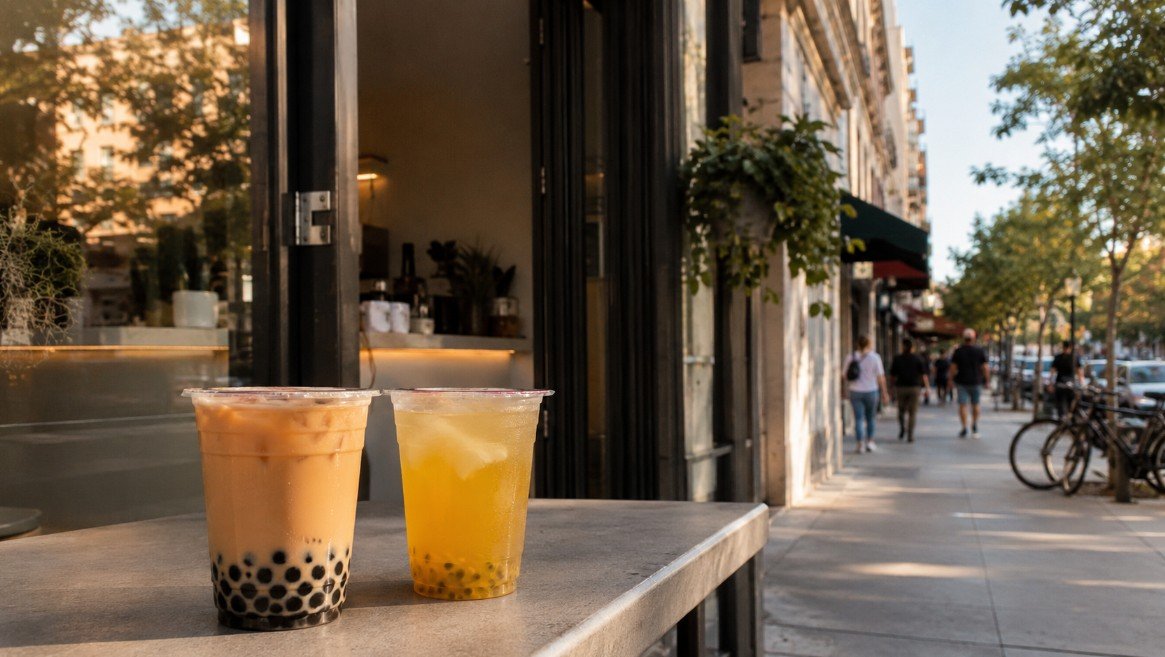
The best way to explore boba in a city is not to ask only which shop has the highest rating. Start by asking where the local scene actually lives. In some cities, bubble tea clusters around universities. In others, the strongest choices sit in Asian commercial districts, suburban food centers, downtown corridors or shopping malls. A city may have dozens of shops and still have only two or three neighborhoods where the competition is intense enough to produce genuinely interesting tea.
That local geography affects more than convenience. Competition changes menus. Neighborhood demographics influence sweetness, tea strength and flavor choices. University areas reward late hours and fast customization. Established Asian dining districts may support deeper tea menus, Taiwanese brands and specialist toppings. A newer boba market may be more chain-heavy because standardized operators can expand faster than independent tea shops.
This guide is the starting point for understanding those differences. It is not a ranking of “the best boba cities,” and it does not pretend that one list can stay permanently current while shops open, close and change menus. Instead, it shows how to read a local boba scene, what kinds of neighborhoods usually matter, how major cities differ, and what future Boba.guide city guides should help you discover before you spend time crossing town for a drink.
Global drink, local behavior
Boba Changes When It Moves From One City to Another
Bubble tea may travel through international brands, social media and shared drink trends, but local boba scenes do not develop in identical ways. A popular drink in one city can be almost invisible in another. One market may reward fragrant tea and restrained sweetness; another may lean toward brown sugar, cream-heavy drinks or fruit teas. Even the meaning of a “boba shop” changes. It can be a dedicated tea bar, a dessert café, a bakery counter, a mall kiosk or one part of a larger Asian restaurant.
The roots of that adaptability go back to the culture that produced modern bubble tea. Customization, hand-shaken preparation, texture and experimentation made boba unusually easy to localize. Our guide to boba culture explains how a Taiwanese-origin drink became a flexible global format without needing every city to copy the same recipe.
For local discovery, the useful question is therefore not “Does this city have boba?” Most large metropolitan areas now do. The better question is “What kind of boba scene has developed here, and where is its center of gravity?”
That is why crossing a city boundary tells you less than knowing which university strip, suburban commercial center or Asian food district has real shop density.
How to read a local scene
What Actually Makes a City Good for Boba?
Shop count matters, but it is not enough. Fifty scattered stores can create a less interesting experience than fifteen shops concentrated in a few walkable districts where customers can compare tea, toppings and service styles easily. A strong scene tends to have several forces working together: enough demand to support specialists, enough competition to push quality, and enough cultural variety to keep the menu from collapsing into the same five sweet drinks everywhere.
Several shops close together create real comparison
When customers can choose among multiple tea shops on the same street or within one commercial district, operators have to compete on more than convenience. Tea quality, toppings, branding, price and new drink launches become visible differences.
Existing food culture gives boba somewhere to belong
Asian commercial districts, Taiwanese and Chinese communities, international student populations and broader tea-drinking habits can all support a deeper market than a city where boba arrives mainly as a novelty.
More choice can push shops toward clearer identities
One shop may focus on premium tea, another on fruit, another on fresh milk, another on dessert-style drinks. Mature scenes are often interesting because not every operator needs to serve the same customer in the same way.
Busy shops can have an advantage with fresh toppings
High traffic does not guarantee quality, but rapid turnover can matter for ingredients such as cooked tapioca pearls that change with holding time. A busy location also produces more recent customer feedback to evaluate.
A mature scene usually offers more than one drink style
Tea-forward shops, fruit specialists, Taiwanese chains, newer Chinese tea brands, independent cafés and dessert concepts can coexist. That variety makes a city more useful for exploring the category, not simply for finding one safe order.
The neighborhood matters more than the pin
Start With the City, Then Find the Neighborhood Where Boba Actually Lives
Local search encourages people to think in terms of distance: open a map, type “boba,” and choose the nearest result. That works when you simply want a drink. It works less well when you want to understand a city’s scene. The strongest boba areas often form around a specific kind of neighborhood rather than distributing evenly across the metro.
Dense student populations support frequent visits, group ordering, late hours, experimental menus and shops that can survive on small repeat purchases rather than occasional destination traffic.
These areas can support more specialized tea concepts because customers may already understand oolong, jasmine, fresh milk tea, taro, grass jelly or less familiar toppings without needing every menu item simplified.
In many North American metros, some of the deepest Asian food scenes sit outside downtown. Shopping plazas and suburban commercial corridors can hold major boba clusters even when tourists rarely see them.
Here, portability and late hours may matter more. Menus often need to work for customers already moving between restaurants, entertainment and transit.
Chains perform well in these environments because recognizable menus, standardized service and high foot traffic make quick decisions easier. They can also introduce boba to customers who were not specifically seeking it.
A strong city guide should therefore tell you more than an address. It should explain the geography around that address: what else is nearby, whether you can compare several shops on foot, whether the district is worth visiting for food more broadly, and whether the shop is a destination or simply one convenient option in a crowded local market.
Different cities, different strengths
Major U.S. Boba Scenes Are Better Understood as Starting Points, Not Rankings
There is no defensible permanent ranking of American boba cities. Shop openings move too quickly, metro boundaries are messy, and the idea of “best” changes depending on whether you care about tea quality, independent shops, Taiwanese chains, fruit tea, late-night options or sheer density. A more useful approach is to identify cities and metro areas where the scene is developed enough to reward exploration.
Depth comes from the broader metro, not only central Los Angeles
The San Gabriel Valley is especially important. Cities such as San Gabriel, Alhambra, Arcadia and Monterey Park sit inside one of Southern California’s deepest Asian dining regions. Local food coverage has documented blocks where multiple boba shops compete within a very small area, which makes SGV one of the clearest examples of neighborhood density shaping drink culture.
Scale creates several overlapping boba markets
Manhattan, Queens and Brooklyn do not behave like one uniform scene. Chinatown, Flushing, university areas, high-traffic Midtown corridors and neighborhood independents can all produce different shop mixes. NYC rewards searching by neighborhood rather than treating the entire five-borough city as one list.
The University District shows what concentrated demand can do
Seattle’s U District is repeatedly identified by local coverage and neighborhood organizations as one of the city’s densest bubble-tea areas. The scene also extends through Capitol Hill, the Chinatown–International District, Bellevue and other parts of the metro, showing how one city can contain both a student-driven cluster and broader regional tea culture.
The metro works through multiple cities rather than one downtown core
San Francisco, the Peninsula, South Bay and East Bay create a distributed market. For visitors, that means “San Francisco boba” can be a misleadingly narrow phrase when many compelling shops are part of the larger Bay Area food geography.
Expansion is accelerating across several large markets
Austin, Dallas–Fort Worth, Houston and San Antonio continue to attract both established chains and local operators. Recent franchise expansion plans from major Taiwanese brands illustrate how Texas is becoming a more competitive multi-city boba market rather than a single standout-city story.
Students and dense walkable districts support repeat demand
The university ecosystem creates the kind of customer base that fits boba well: international exposure, frequent group visits, transit and walking, and willingness to compare shops rather than treating bubble tea as an occasional novelty.
Neighborhood choice matters more than a citywide average
Chinatown and university-adjacent areas offer a different experience from mainstream downtown locations. As in other large cities, a citywide “best boba” list can flatten neighborhood differences that are more useful to a visitor.
Asian food corridors help create strong destination clusters
Instead of focusing only on downtown, boba explorers often benefit from looking toward areas with concentrated Asian dining and shopping, where several drink concepts can be compared in the same outing.
For broader geographic navigation, city and state pages should work together rather than compete. A city guide explains local neighborhoods and shop styles; our boba by state guide is the better starting point when you are comparing metros or traveling across a larger region.
A recurring pattern
Why University Areas So Often Become Boba Hotspots
Bubble tea fits university life unusually well. The price is typically low enough to function as a repeat treat rather than a special-occasion purchase. Drinks are portable. Groups can order together while choosing completely different flavors. Cafés can stay useful between classes, after dinner and into the evening. International students may already know the category, while other students are exposed to it through friends.
University districts also create the kind of density that makes experimentation financially possible. A shop does not need every customer to love one signature drink if thousands of young customers pass through the area and return frequently. One concept can focus on fruit tea, another on strong tea, another on desserts, and another on trendy fresh-milk drinks. Competition happens in public because the shops are often close enough for students to compare them directly.
Seattle’s University District is an unusually clear example. Local food coverage has described an intense concentration of boba businesses there, and the neighborhood even hosts a dedicated Boba Fest. The broader lesson is not that every great boba city needs a university district. It is that compact communities with frequent, social, repeat beverage habits can support a deeper scene than population size alone would predict.
Two ways a city scene grows
Big Chains and Independent Shops Solve Different Problems
A city with strong boba culture usually contains both standardized brands and independent operators. Treating one side as automatically superior makes local discovery less useful. Chains and independents often succeed for different reasons, and understanding those differences helps you decide where to start.
Predictability lowers the risk of an unfamiliar menu
Established brands often have consistent recipe names, sweetness levels, training systems and recognizable best sellers. For travelers or first-time drinkers, that predictability can make ordering easier.
Scale can bring newer formats into a city quickly
Large operators can introduce fresh-tea systems, seasonal drinks and specialized equipment across multiple locations faster than a small local shop can expand.
Local shops can respond more directly to a neighborhood
An independent café may adjust tea strength, source unusual ingredients, build drinks around local fruit or keep a shorter menu that reflects what its regular customers actually order.
Variation is both the attraction and the risk
A small shop can be exceptional, but branding tells you less about what to expect. Current reviews, actual drink photos and menu clarity matter more when the operation is unfamiliar.
Our boba shops guide goes deeper into shop types, chains, independent tea bars and the practical signs that separate a thoughtful operation from a menu built mainly around novelty.
The same drink name can mean different things
What Usually Changes From City to City?
Regional difference is not limited to which brands are available. The entire default experience can shift. A milk tea ordered at the same sweetness percentage in two cities may still taste different because the tea, creamer, cup size and topping preparation are different. City guides are most useful when they make those local tendencies visible instead of pretending that every “classic milk tea” is equivalent.
Markets with more tea-focused competition may reward aromatic oolong, jasmine and fresh-brewed tea, while newer scenes can lean more heavily toward sweetness and flavored bases.
The same “regular sugar” label is not standardized across every brand or city. Local preference and brand origin both influence what feels normal.
Tapioca may dominate one market while another offers grass jelly, taro balls, sago, aloe, pudding, crystal boba, cheese foam or specialty textures as everyday choices.
Climate, supply chains and regional taste affect which fruits appear frequently and whether shops rely more on fresh fruit, purées, syrups or seasonal specials.
Rent, labor costs, serving size and local competition all shape value. Comparing only the sticker price can be misleading if one city defaults to much larger cups or more expensive fresh ingredients.
Some cities favor compact takeaway counters. Others support sit-down tea spaces, dessert cafés, kiosks or delivery-heavy operations. The format affects how long customers stay and what kinds of drinks make sense.
Choosing a shop without wasting a trip
How to Judge a Boba Shop Before You Order
Ratings are useful, but they compress too many things into one number. A beautiful shop can earn praise for atmosphere while serving weak tea. A tiny counter can look unimpressive online and still cook excellent pearls. When you are deciding whether to cross a city for boba, look for signals that reveal the drink itself.
Can you tell what the base actually is?
A clear menu distinguishes brewed teas, milk teas, fresh-milk drinks, fruit teas and frozen styles rather than hiding everything behind flavor names. That makes it easier to predict what you are buying.
Look for comments about tea and texture, not only décor
Recent reviewers who mention fragrant tea, hard pearls, fresh fruit, inconsistent sweetness or topping texture give you more decision value than dozens of photos of the wall mural.
Busy periods can tell you something about freshness
Tapioca is time-sensitive. High-volume stores are not automatically better, but a shop that moves toppings steadily has a different operational challenge from a quiet shop holding one batch all afternoon.
Useful choices are better than endless choices
Sweetness and ice control can help you tailor a drink. A giant list of random add-ons does not necessarily mean the shop understands balance.
If you want to evaluate the cup after it arrives, use our boba quality guide for tea strength, pearl freshness, texture, sweetness and overall balance.
A better travel method than choosing the nearest pin
How to Find Good Boba When You Are Visiting an Unfamiliar City
Travel changes the decision because you usually have fewer chances. At home, a mediocre drink costs you one order. On a short trip, crossing town for a disappointing shop can waste an afternoon. The efficient strategy is to search from broad geography toward specific drinks rather than selecting a store immediately.
Find the likely boba neighborhoods first
Search for the city’s Asian dining districts, university areas and commercial centers. If several highly regarded tea shops sit close together, that cluster is usually more useful than one isolated high-rated store.
Check what kind of shops dominate the area
Is the neighborhood mostly Taiwanese chains, dessert cafés, newer Chinese tea brands or local independents? That tells you what type of drink is likely to be strongest.
Read current menus before choosing a destination
A shop famous two years ago may have changed ownership, menu focus or hours. Current official menus and recent customer photos reduce the chance of making a trip for a drink that no longer exists.
Choose one drink that reveals the shop
If the shop claims tea expertise, order something where you can actually taste the tea. If it specializes in fruit, choose a fruit drink. If pearls are the signature, test the pearls rather than hiding them under five toppings.
Use local search for convenience after you understand the scene
Once you know which neighborhoods and shop types interest you, our boba near me guide helps with the immediate “what is close to me right now?” part of the decision.
A city guide should save you decisions
What a Useful Boba City Guide Should Tell You Before You Go
A list of addresses ages quickly. A strong city guide needs enough local context to remain useful even when individual stores change. That means explaining why a neighborhood matters, what drink styles it supports and what kind of customer the area serves. The point is to make your next decision easier, not to make the page longer.
Which neighborhoods deserve attention?
The guide should distinguish a citywide scene from the handful of districts where boba density or quality is actually notable.
What kind of boba does the city do well?
A traveler benefits from knowing whether the local scene is especially good for tea-forward drinks, fruit, independent concepts, Taiwanese chains or dessert-heavy menus.
What should a first-time visitor choose?
Recommendations should match the shop’s actual strength. If ordering terminology is unfamiliar, our how to order boba guide explains sweetness, ice, bases and toppings without assuming every menu uses identical language.
What does the local menu language mean?
Regional chains and newer tea brands can use category names differently. Our boba menu guide is the reference for decoding base, flavor, milk, sweetness and topping when the shop’s naming gets complicated.
When is the shop actually useful?
Hours, lines, topping availability and late-night service can matter as much as the drink rating. A great shop that closes before your itinerary reaches the neighborhood is not a useful recommendation.
Boba cities beyond the United States
The Global City Story Is Bigger Than North American Bubble Tea
Any city-by-city boba project becomes misleading if it treats the United States as the whole category. Taiwan remains the cultural origin and one of the richest places to understand hand-shaken tea as everyday life. Other Asian cities combine boba with their own long-standing tea, café and dessert cultures. Canadian, British and Australian cities have also developed dense markets shaped by immigration, university populations and international chains.
A huge contemporary hand-shaken drink market where boba is only one part of a broader tea landscape. The value for visitors is choice: traditional tea influence, major chains, small operators and constant drink innovation can coexist within the same city.
Historically important to the development of modern shaken tea and pearl milk tea. Its significance is cultural and historical, which is not the same thing as claiming it is objectively the “best” boba city today.
A large, highly diverse metro where neighborhood food cultures matter enormously. Downtown, North York, Scarborough, Markham and Richmond Hill can offer very different Asian dining and tea contexts, so a simple “Toronto” label hides useful geography.
The wider metro is more useful than Vancouver proper when exploring Asian food and tea. Richmond in particular changes the geography of what visitors should consider a local boba search.
A global city where high-traffic central locations, universities, Asian commercial districts and major international brands create several different bubble-tea audiences.
Bubble tea enters a city with its own deeply developed beverage and tea culture, so competition is not only between boba brands but also against a wide range of familiar local drinks.
Large Asian communities, university populations and established international chains have made boba a normal part of many central and suburban food districts rather than a niche novelty.
History and current size are different questions
Taipei vs Taichung Shows Why “Best Boba City” Is Usually the Wrong Question
Taichung matters enormously to the historical story of modern hand-shaken tea and pearl milk tea. Taipei, meanwhile, offers one of the world’s largest and most visible contemporary urban tea scenes. Trying to turn those facts into a simple first-place ranking loses the distinction between historical importance and current market breadth.
The same problem appears elsewhere. Los Angeles may be used casually as shorthand for a scene whose deepest concentration sits in the San Gabriel Valley. Vancouver visitors may find important choices in Richmond. A “Dallas” search can really mean a large North Texas metro. New York changes dramatically between neighborhoods and boroughs. City labels are useful entry points, but the real boba geography often ignores the neat boundaries people type into search boxes.
For Boba.guide, the goal of city coverage should therefore be practical rather than competitive: show where the scene is, why it developed there, what is distinctive about it and how to make a good first choice.
Local information ages quickly
City Guides Need Current Menus, Hours and Shop Status to Stay Useful
Local boba is more volatile than a general explanation of tapioca or tea. Shops close. New brands arrive. Independent cafés change owners. A location can stop carrying the drink that made it famous. Delivery-only concepts appear and disappear. Hours shift between school terms or seasons. A recommendation that was accurate two years ago can become actively inconvenient today.
That is why individual city guides should be treated as living local resources. Before publication or major updates, the useful checks include whether a shop is still operating, whether the specific location is current, whether the official menu still contains the recommended drink, whether recent customer feedback suggests quality has changed, and whether the neighborhood context still makes sense.
Historical reputation can remain useful, but it should never substitute for current operating reality. The more specific the local claim, the more important the update date becomes.
FAQ
Common Questions About Finding Boba by City
Which city has the best boba?
There is no single defensible winner because “best” can mean shop density, tea quality, independent creativity, Taiwanese brands, value or variety. Cities such as Taipei, Taichung, Los Angeles and the San Gabriel Valley, New York, Seattle, the San Francisco Bay Area, Toronto and Vancouver all offer strong but very different scenes.
Which U.S. cities have strong boba scenes?
Large markets include the Los Angeles metro and San Gabriel Valley, New York City, the San Francisco Bay Area, Seattle, several Texas metros, Boston, Chicago, San Diego, Honolulu and other cities with dense Asian food districts or university populations. The strongest area may sit outside the downtown core.
Why do university neighborhoods have so many boba shops?
Boba fits student routines well: it is portable, social, customizable and easy to buy repeatedly between classes or in the evening. International student populations and compact commercial streets can also create enough demand for several specialized shops to compete close together.
Is boba usually better in a big city?
Not automatically. Large cities usually offer more choice, but an excellent independent shop can operate in a smaller market. Density mainly improves your ability to compare several concepts and may support more specialized tea or topping options.
How do I find good boba while traveling?
Find the city’s likely boba neighborhoods first, compare several current menus, read recent reviews that discuss tea and texture, and choose a shop whose specialty matches what you want to order. Checking operating hours and current location status before crossing town is especially important.
Are chain boba shops better than independent shops?
Neither category is automatically better. Chains can offer consistency and clearer expectations, while independents may provide local creativity, shorter menus or stronger specialization. Judge the individual drink, tea, toppings and freshness rather than the ownership model alone.
What neighborhoods usually have the most bubble tea?
University districts, Asian commercial centers, Chinatown-style districts, suburban Asian shopping corridors, malls and dense mixed-use food neighborhoods often support multiple shops. The pattern varies by city, so local geography matters more than a universal rule.
Why can the same boba order taste different in different cities?
Sweetness standards, tea strength, dairy choices, portion sizes, fruit sourcing, topping preparation and brand mix can all vary. Even identical menu language does not guarantee an identical recipe.
The most useful way to explore boba by city is to think smaller than the city itself. Find the neighborhoods where tea shops cluster, understand what those shops specialize in, and then choose the drink that lets the local scene show you what it does well.