
Understanding boba shops
Boba Shops: How to Choose, Compare and Find a Good Bubble Tea Shop
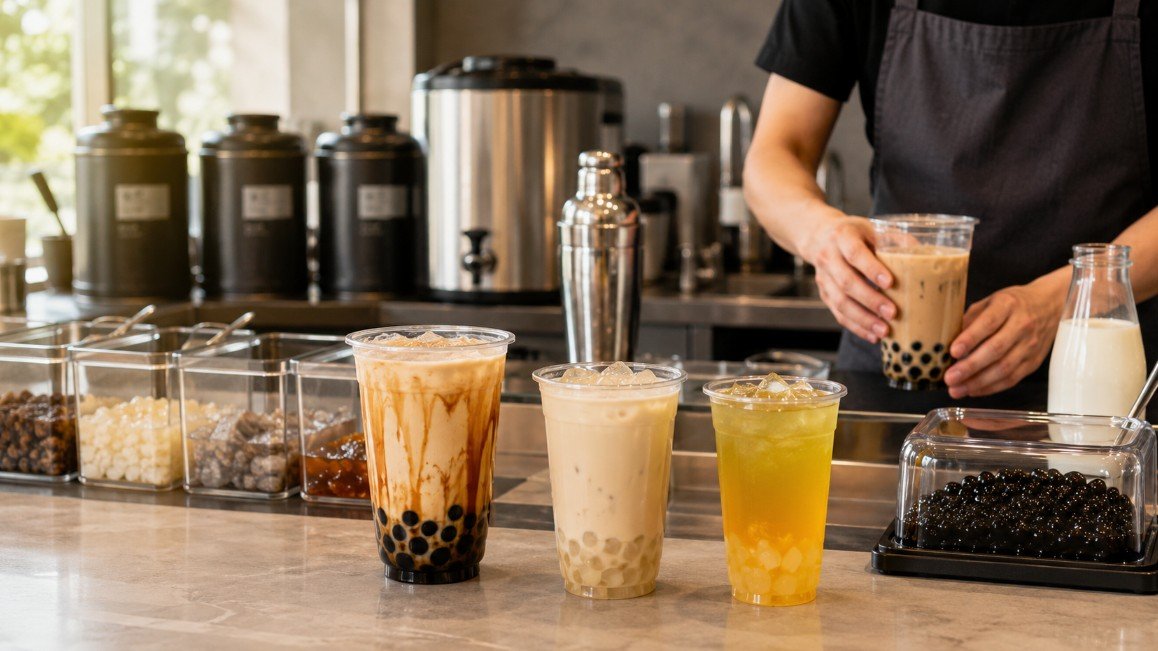
Not every place that sells bubble tea works the same way. Some shops are tea-first and let the brewed base lead the drink. Some are dessert-first and focus on sweetness, texture and indulgent combinations. Some are global chains built around operational consistency. Others are local independents with a shorter menu, stronger personality and more experimentation. There are also bakeries, dessert cafés, mall kiosks and restaurant add-ons that offer boba without being dedicated tea shops.
That variety is exactly why so many people feel uncertain at the counter. A beautifully designed shop can still serve tired pearls. A basic-looking shop with a high daily turnover can produce better texture and a more balanced drink. A famous chain may deliver reliable customization, while a neighborhood independent may do a better job with tea character. The useful question is not simply “Which shop has the highest rating?” but “What kind of boba shop is this, and what is it likely to do well?”
This guide helps you read a bubble tea shop before you order. We will look at the major shop types, the difference between tea-first and dessert-first menus, how to compare chains and independents without clichés, what a menu can tell you about quality, how to read reviews intelligently and how to choose a first order that actually reveals the strengths of the shop. Once you understand the logic behind the counter, choosing better boba becomes much easier.
Start with the shop model
Not Every Place Selling Boba Is Really the Same Kind of Boba Shop
People often talk about “boba shops” as if they were a single category, but that flattens several very different business models into one label. The way a shop is built affects the menu, the drink style, the likely strengths of the operation and even what you should order first. If you ignore the shop type, it becomes much harder to judge whether a disappointing drink was a one-off mistake or simply the wrong match between your expectations and the shop’s core identity.
Dedicated hand-shaken tea shop
These are the places most people imagine first: a focused menu built around tea bases, milk teas, fruit teas and topping customization. They tend to give you the clearest sense of how the business thinks about tea, pearls and drink balance.
Taiwanese tea house or tea-forward concept
Some shops emphasize tea more explicitly, either through heritage, brewing style or menu structure. In these places, the tea base often matters more than novelty flavoring, and the best first order is usually a simpler drink rather than a heavily customized dessert cup.
International or regional chain
Chains typically offer familiar categories, predictable customization and operational systems designed to produce similar drinks across multiple locations. That can be a real advantage when you want reliability, or when you are still learning how different bases and toppings work.
Independent neighborhood boba café
Independents vary more, for better and for worse. Some are inventive and tea-literate. Others are simply smaller businesses with less menu discipline. Their individuality can be their strength, but it also means you should judge them on execution rather than romance.
Dessert café, bakery or snack shop with bubble tea
These places may do excellent sweet drinks, slushes or visually playful combinations, yet bubble tea is only one part of the offer. Sometimes that leads to creative drinks. Sometimes it means the tea side is secondary and the menu leans more heavily on sweetness and toppings.
Restaurant add-on or convenience counter
Some restaurants or food courts add boba because customers expect it. That does not automatically make the drinks bad, but it changes the odds. A place built mainly around another food category may not turn pearls over as quickly or think about tea as carefully as a specialized shop.
The main lesson is simple: before deciding whether a drink is “good” or “bad,” figure out what kind of shop you walked into. A tea house should not be judged by the same criteria as a sugar-heavy dessert café, and a mall kiosk built for convenience should not be expected to behave like a serious tea bar. Knowing the type gives you the right expectations and a smarter ordering strategy from the start.
The most useful distinction
Tea-First and Dessert-First Shops Create Very Different Drinking Experiences
If there is one distinction that helps more than any other, it is whether a shop is fundamentally tea-first or dessert-first. Neither model is automatically better. The difference is that they aim at different kinds of pleasure. A tea-first shop wants the base to remain visible. A dessert-first shop is often more interested in richness, sweetness, visual drama or heavy texture contrast.
That question is more useful than arguing about chains versus independents or hunting for a viral drink on social media.
A tea-first shop usually gives you better clues about the structure of the drink. The categories are clearer, the tea families are more visible and you have a better chance of tasting the difference between roasted, floral and brisk profiles. A classic milk tea, a clean fruit tea or a straightforward fresh-milk tea is often the best first order in this kind of shop because it reveals whether the base has real character.
These places are often the easiest way to understand why tea matters in bubble tea at all. If you are trying to learn what roasted oolong, black tea or jasmine brings to a drink, you will probably get more useful information from a tea-first menu than from a shop built mainly around syrups and visual toppings. For a deeper explanation of tea bases themselves, see our tea guide.
A dessert-first shop often works best when you order on its own terms. If the menu is clearly built around richer, sweeter, more treat-like drinks, then a stripped-down tea order may not showcase the part of the business that customers actually love. In that context, a brown sugar fresh milk, a creamy taro drink or a fruit-forward special can be a fairer way to evaluate the shop.
The key is not to confuse preference with quality. Some people genuinely want a refreshing tea-driven drink. Others want something closer to a dessert. Trouble begins when a tea-first drinker orders from a dessert-first menu and then complains that the tea tastes secondary—or when a sweetness-seeking customer walks into a tea-focused shop and decides it feels “too plain.” A good choice starts with knowing which style fits your mood.
Avoid the cliché
Chain vs Independent Is the Wrong First Question
One of the laziest myths in boba culture is that chains are bland and independents are automatically more authentic, more interesting or simply better. Reality is messier. Chains and independents solve different problems. A chain may provide consistency, transparent customization and recognizable categories that help newcomers order confidently. An independent may offer better local experimentation, a more focused tea point of view or a tighter menu. Either one can also do a poor job if the pearls are tired, the tea is weak or the menu logic is sloppy.
Consistency and predictability
Well-run chains are often good at repeatability. The menu language is clearer, sweetness and ice levels are familiar and customers can return to a drink they already understand. That makes chains useful for beginners and travelers.
Standardization can flatten personality
Consistency is useful, but it can also reduce local variation. Some chain locations feel more like a system executing recipes than a shop developing a point of view. Whether that matters depends on what you want from the experience.
Flexibility and local character
Independent shops can respond more quickly to local tastes, experiment with smaller menus and create signature drinks that actually feel tied to the neighborhood. When that freedom is backed by skill, the results can be memorable.
Variation and uneven control
Freedom does not guarantee discipline. Some independent shops do not have the operational systems, staffing or recipe clarity needed to produce the same drink well all week long. Charm cannot replace consistency.
So instead of asking whether chains are good or whether independents are more “real,” ask a better question: what does this particular shop seem to care about, and does the operation support that priority? If you want dependable customization and a known menu structure, a chain may be ideal. If you want a neighborhood voice and a more exploratory menu, an independent may be a better fit. But you still have to judge the drink in front of you.
What a good shop gets right
A Good Boba Shop Has to Make Several Systems Work at the Same Time
When people say a shop is “good,” they often mean that one drink tasted nice. That is not enough. A serious boba shop needs several parts of the operation to support each other: the tea, the pearls, the other toppings, the sweetness system, the menu structure, the assembly process and the ability to reproduce the same drink reliably. If even one element slips badly, the whole cup can feel off.
Tea should remain identifiable
Even in a milk tea, the base should not disappear entirely unless the drink is intentionally dessert-like. If everything tastes like generic sweetness with a faint color behind it, the shop may not be doing much with the tea.
The clearest way to test this is with a relatively simple drink. If a classic milk tea or a clean fruit tea has no structure, then an overloaded signature cup probably is not hiding some secret excellence. Our boba quality guide explains this evaluation framework in more depth.
Pearls should feel fresh, not exhausted
Good tapioca pearls should have bounce and tenderness at the same time. They should not be hard in the center, gluey on the outside or so swollen that they feel mushy and lifeless.
Freshness is one reason high-turnover shops sometimes outperform prettier competitors. Pearls are a living timing problem. If a shop is not rotating them well, the drink can lose its appeal even when the tea is acceptable.
Other toppings need their own logic
Crystal boba, grass jelly, aloe, pudding, red bean and popping boba all behave differently. A good shop treats them as ingredients with texture and storage needs, not merely decorations added for visual variety.
If you want a refresher on how toppings should feel and when they make sense in a drink, our boba toppings guide can help you separate curiosity from overload.
Sweetness should support the drink, not erase it
One of the easiest ways for a shop to hide weak tea is to bury the cup under sugar. Good customization is not just the ability to select a percentage. It is the ability of the recipe to remain coherent at different sweetness levels.
If a drink becomes thin and unpleasant the moment you lower the sugar, that can be a clue that the formula relies on sweetness to do too much of the work.
Menu clarity matters
Confusing labels, mixed categories and duplicated flavor descriptions make it harder to trust the operation. A good shop helps customers understand what they are ordering without making every drink sound the same.
The menu does not need to be minimalist, but it should reveal a system rather than a pile of disconnected ideas. That becomes especially important when you are ordering in a new place and need one drink that shows the shop well.
Consistency is part of quality
A one-time great drink is pleasant, but a good shop should be able to deliver something similar again. If every repeat order feels like an entirely different recipe, the business may not have its basics under control.
Consistency matters because boba is often customized. The more variables a shop offers, the more discipline it needs behind the counter to keep the results stable.
Fresh pearls beat a pretty room
Pearl Freshness Usually Matters More Than a Fancy Store Interior
It is easy to confuse atmosphere with quality. A polished counter, branded cups and a beautiful interior can make a shop feel impressive before you even take a sip. None of that guarantees that the pearls are in good shape. In practice, many drinkers would be happier with a plain room and better texture than with a photogenic room and tired tapioca.
Pearls are time-sensitive. They cannot simply sit forever and become more delicious. A shop with steady turnover may have an advantage because the pearls are moving, being refreshed and getting eaten before they have time to collapse into mediocrity. But busy is not the same thing as good. A crowded shop can still overcook, oversweeten or mishandle its toppings if the operation lacks discipline.
What you are really looking for is not glamour, but signs of care. Are the toppings held in a way that looks organized and food-safe? Does the drink arrive with pearls that feel alive instead of exhausted? Does the shop seem built around drink production, or is the boba menu a side attraction to décor? Once you start thinking this way, some “Instagrammable” rooms stop looking so convincing.
Stars are not enough
How to Read Reviews Without Letting Ratings Fool You
Online reviews are useful, but many are poor at describing what actually matters in a cup. “Cute place,” “great vibe,” “friendly staff” and “so aesthetic” may all be true, yet tell you almost nothing about tea quality or topping freshness. Even a strong star rating can hide important details if most reviewers are responding mainly to atmosphere, novelty or convenience.
Tea flavor, pearl texture and consistency
The best review language mentions whether the tea had character, whether pearls were fresh, whether fruit tasted clean and whether repeat visits felt consistent. Those details are much more helpful than generic excitement.
Customization accuracy
If many people mention that reduced sugar still tastes balanced or that a favorite order comes out reliably, that suggests a shop has its formulas under control.
Room décor and social-media appeal
These are not irrelevant, but they should not dominate your decision unless ambience is your main priority. A beautiful interior cannot tell you whether the pearls have been sitting too long.
One-star and five-star extremes
Very high or very low emotions can obscure the everyday truth. A complaint about one busy afternoon may be less valuable than several calm reviews noting the same recurring issue with sweetness, service or texture.
The goal is not to distrust reviews. It is to read them as evidence instead of entertainment. Look for repeated specific signals. Ignore vague noise. And remember that a review only becomes truly useful when matched against the kind of shop you are evaluating.
A loaded word needs nuance
What Does “Authentic” Really Mean in a Boba Shop?
People use the word “authentic” too casually in food conversations, and boba is no exception. Sometimes they mean Taiwanese origin. Sometimes they mean a shop tastes like something they had in Asia. Sometimes they mean less sugar, stronger tea or less gimmickry. Sometimes they simply mean “I liked it.” That makes the label slippery and not very useful on its own.
A better approach is to break the idea apart. A shop can be Taiwanese-origin as a brand. It can be Taiwanese-style in the way it thinks about tea and milk tea structure. It can be heavily inspired by modern global boba culture, where adaptation and experimentation are normal. It can be a local independent with no direct Taiwanese brand heritage, yet still produce careful, balanced drinks that show real understanding of the category.
This is why “authentic” should not be turned into a purity test. Bubble tea began in Taiwan, and that cultural history matters. At the same time, boba became a global drink precisely because it could adapt to different cities, communities and tastes. If you want the broader story of how that happened, our boba culture guide traces that evolution in more detail.
In practical shop terms, authenticity is less useful than clarity. Is the shop honest about what it is? Does it understand tea? Does the menu have an identity? Do the drinks feel intentional rather than random? Those questions will usually tell you more than a romantic label.
Menu size is a clue, not a verdict
Big Menus and Small Menus Both Have Strengths and Risks
Some customers feel reassured by giant menus because they look like abundance. Others distrust them immediately and assume a smaller menu must mean more focus. Both instincts can be partially right, but neither should become a rule.
The risk is that variety becomes camouflage. If the shop presents dozens of drinks that are mostly slight variations of sweetness, syrup and toppings, then the apparent choice may be less meaningful than it looks. Large menus also demand tighter operational control. The more options a shop manages, the more likely weak recipe discipline will reveal itself.
Still, a big menu is not automatically a warning sign. Some well-run chains and mature shops can handle breadth because they have the systems to support it. The key is whether the categories make sense and whether the drinks feel like real families rather than random branching.
The risk is simply limitation. A small menu does not automatically equal mastery. Some short menus are focused because the shop is disciplined. Others are short because the operation is narrow or underdeveloped. You still have to judge the drinks themselves.
The useful mindset is this: let menu size tell you how the shop thinks, but do not let it make the decision for you. Breadth can be thoughtful. Restraint can be meaningful. What matters is whether the menu reveals a coherent system.
Match the shop to the person
Different Shop Types Work Better for Different Drinkers
A useful boba guide should not pretend everyone wants the same experience. Some people are exploring tea. Some want a social comfort drink. Some are cautious first-timers. Some want dessert in a cup. Matching the shop to the person often matters more than chasing a universal “best.”
Taiwanese-style or tea-house concepts
Great for tea lovers, people interested in origin and customers who want to learn the difference between bases rather than just stacking toppings.
Global chains
Helpful for first-time drinkers, travelers and anyone who wants predictable customization and a familiar ordering structure from city to city.
Independent specialty shops
Ideal for people who enjoy exploration, want a shop with local personality or are curious about drinks that go beyond the most standardized formulas.
Dessert cafés
Good for sweetness-seeking customers, groups and anyone who sees bubble tea as a treat rather than a tea experience first.
Fruit-tea specialists
Strong option for drinkers who want lighter, brighter, more refreshing profiles instead of milk-heavy richness.
Kiosks and convenience counters
Useful when speed and location matter most. The goal here is usually convenience, so evaluate them fairly on that basis rather than expecting a full tea-house experience.
How to test a new shop
Your First Order Should Reveal the Shop, Not Hide It
Many disappointing first visits happen because customers order something too complicated to reveal what the shop actually does well. If your first cup contains five toppings, heavy sweetness and a long list of flavor add-ons, it becomes hard to tell whether the tea was good, whether the pearls were fresh or whether the shop has any balance at all.
Choose a clear, simple base drink
A classic milk tea, a roasted tea with pearls or a clean fruit tea will usually tell you more than a loaded signature drink. You want the shop’s fundamentals to show themselves.
Order within the style that defines the menu
It may be fairer to try a house brown sugar drink, a creamy taro or another house specialty. You are still testing quality, but you are letting the shop play its strongest card.
Avoid too many add-ons the first time
One topping is often enough for a first visit. When too many textures compete, it becomes harder to decide what is working and what is not.
Do not sabotage the drink accidentally
If you drastically reduce sugar or change multiple elements at once, you may learn more about your own unusual customization than about the intended drink. Adjust, but do it with purpose.
If ordering itself still feels stressful, our how to order boba guide breaks the process down step by step. The goal is not to overthink every cup. It is simply to make the first order useful enough that you know whether the shop deserves a second visit.
Fair comparisons create better judgments
To Compare Two Boba Shops Fairly, Compare Similar Drinks
People often compare shops in ways that make no sense. They judge one place by a brown sugar milk and another by a citrus fruit tea, then conclude one shop is better overall. Those are not equivalent tests. Different drink families highlight different strengths and weaknesses.
A more useful comparison keeps the variables controlled. Try similar tea bases. Use the same topping when possible. Keep sweetness adjustments close. Compare pearls with pearls and fruit teas with fruit teas. This does not turn you into a laboratory technician; it simply prevents obvious confusion.
Fair comparison also reminds you that no shop has to win every category. One may be stronger with classic milk tea, another with bright fruit drinks, another with house desserts. If you compare thoughtfully, you may stop asking “Which shop is best?” and start asking the better question: “Which shop is best at the kind of drink I actually want?”
Bad fit is not always bad quality
Sometimes a Shop Is Probably Just Not for You
One of the most useful habits you can develop is separating objective problems from preference mismatch. A shop may be clean, consistent and well-liked, yet still not be your place.
You may struggle with powder-heavy or syrup-driven menus
If the menu gives almost no attention to tea bases and emphasizes sweetness above everything else, a tea-focused drinker may simply not find what they want there.
A shop with weak customization may feel frustrating
Some menus are built to taste good only at their default sweetness. If reduced sugar regularly produces flat drinks, the place may not suit your preferences.
Topping-heavy specials may be the wrong starting point
Not everyone wants a cup full of contrast. Some drinkers enjoy pearls and little else. Knowing that can save you from ordering the busiest option on the menu just because it looks exciting.
Clarity matters more than hype
A trendy shop with vague labeling may be less useful to you than a simpler place that communicates ingredients clearly and lets you order with confidence.
The point is not to lower standards. It is to be honest about the difference between “this shop failed” and “this shop is aiming at a different kind of customer than me.” That honesty leads to much better recommendations.
Context changes shop expectations
Shop Quality Also Depends on the Local Market Around It
A boba shop in a dense university district may compete in a very different way from one serving a smaller market with fewer direct rivals. In some cities, customers can compare many concepts on the same afternoon, which pushes shops to sharpen their menus or stand out through quality and specialization. In a smaller market, even a decent tea shop may become the default simply because there are fewer alternatives.
That is one reason it helps to separate shop logic from geography. A page about shops should teach you how to judge the business model and the drink. A city guide should show how those businesses interact inside a local scene. If you want that metro and neighborhood layer, our boba by city guide is the next step.
And if you are already out, already thirsty and simply want to narrow the field to current nearby options, jump to our boba near me guide. That page solves the immediate location problem; this one is about becoming better at choosing once you are actually at the counter.
FAQ
Common Questions About Boba Shops
Are chain boba shops good?
They can be. A good chain often provides consistency, familiar customization and reliable core drinks. What matters is how well the location executes tea, pearls and recipe balance—not the fact that it belongs to a chain.
Are independent boba shops better than chains?
Not automatically. Independents may offer more local character or experimentation, but they can also be uneven. Chains may feel less distinctive, yet be more reliable. Judge the operation, not the myth.
How can I tell if boba pearls are fresh?
Fresh pearls should feel soft and pleasantly chewy, not hard in the center or mushy throughout. If the pearls feel tired, the shop may not be rotating them well or managing timing carefully enough.
What should I order at a new boba shop?
Start with a drink that reveals the shop’s style. In a tea-first shop, choose a classic milk tea or a clean fruit tea. In a dessert-first shop, try a house specialty or signature drink that reflects what the menu clearly does best.
What makes a boba shop authentic?
Authenticity can refer to Taiwanese origin, Taiwanese-style tea thinking or simply a shop’s seriousness about the category. It is better to ask whether the shop has a clear identity, understands tea and produces intentional drinks than to rely on a vague label.
Is a very large menu a bad sign?
Not always. A large menu can indicate breadth and good organization, especially in a well-run chain. It becomes a warning sign only when the choices seem random, repetitive or unsupported by a clear structure.
How do I know if a shop uses real tea seriously?
Look for visible tea bases on the menu, balanced simple drinks, clearer categories and reviews that mention tea flavor rather than only sweetness or décor. A shop that expects customers to care about the base usually communicates it.
What should I look for in boba-shop reviews?
Prioritize reviews that mention tea quality, pearl freshness, fruit clarity, consistency and customization accuracy. Atmosphere matters, but it should not be the only thing people can describe.
A great boba shop does more than sell a sweet drink. It aligns tea, toppings, menu logic and execution so the cup makes sense from start to finish. Once you learn to see those patterns, you stop choosing by hype alone and start choosing with confidence.