
Brown Sugar Boba Tea: Taste, Tiger Stripes, Milk vs Milk Tea
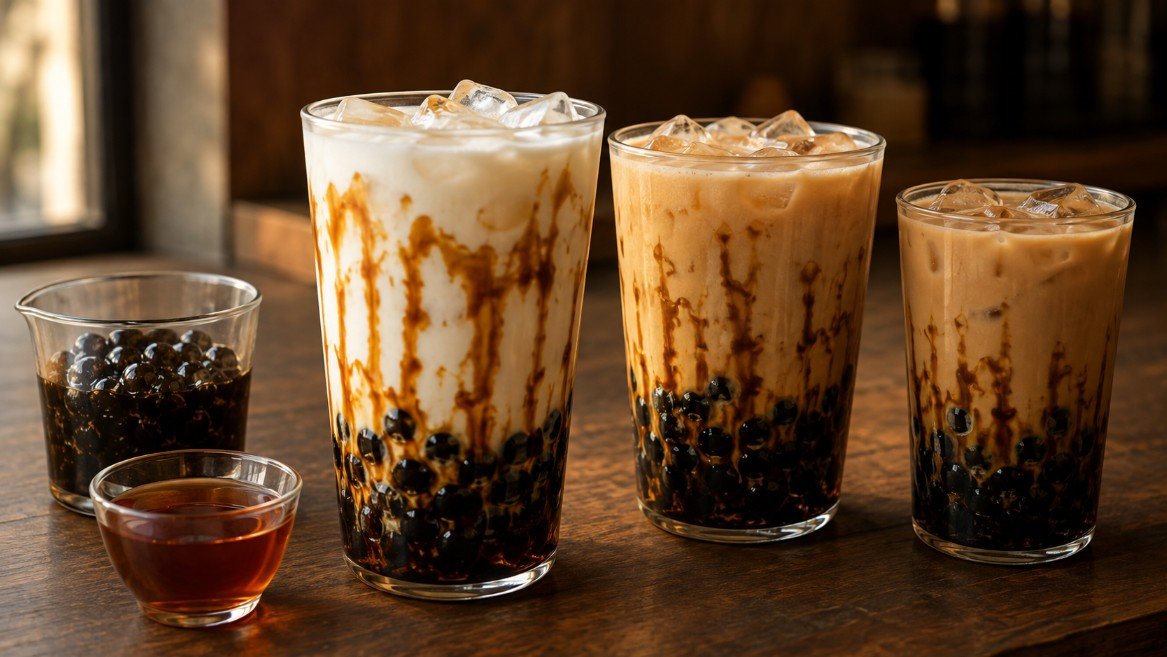
Brown sugar boba tea is a rich boba style built around chewy tapioca pearls coated or cooked with brown sugar syrup. But the name can be confusing: some brown sugar boba drinks contain brewed tea, while famous “brown sugar boba milk” versions are made mainly with fresh milk, syrup and pearls and may contain no tea at all.
The easiest way to understand the category is to look past the name on the menu. Brown sugar supplies the deep caramel-like sweetness, tapioca pearls create the chew, and the liquid base determines whether you are drinking creamy fresh milk or an actual milk tea with black tea, oolong or another brewed tea underneath.
What Is Brown Sugar Boba Tea?
Brown sugar boba tea is a boba drink centered on brown-sugar-sweetened tapioca pearls, usually combined with milk, milk tea or another creamy drink base. The defining flavor normally comes from the brown sugar syrup around the pearls and cup rather than from the tea itself.
That distinction matters because “brown sugar boba tea” is often used as a convenient umbrella phrase by customers, websites and menus, while individual shops may call their drinks brown sugar boba milk, brown sugar pearl milk, brown sugar milk tea, tiger milk, dirty milk or something similar.
Those names are not guaranteed recipes. A cup labeled brown sugar milk may have no brewed tea. Another shop may make its brown sugar drink with black milk tea. A third may offer both versions.
Xing Fu Tang, for example, currently lists its signature Brown Sugar Boba Milk with brown sugar boba and whole milk separately from its Boba Milk Tea and Oolong Milk Tea. Gong cha also offers tea-based brown sugar drinks such as Brown Sugar Black Milk Tea with Pearl and Brown Sugar Oolong Milk Tea. In other words, real shop menus demonstrate why the liquid base is more useful than the product name when deciding what you are actually ordering.
The useful definition
Brown sugar boba describes the brown-sugar-forward flavor and pearl style. Fresh milk or milk tea tells you what the pearls are sitting in.
If you want the wider picture of how tea, milk, toppings and customization fit together, start with our complete guide to boba tea.
Brown Sugar Boba Has Three Main Flavor Layers
The character of a brown sugar boba drink comes from three separate elements: the brown sugar mixture, the tapioca pearls and the liquid base. Thinking about those layers separately makes the menu much easier to understand.
Brown sugar syrup brings the dark sweetness
This is the element behind the drink’s caramel, toffee and lightly molasses-like impression. Depending on the recipe, brown sugar may be cooked into a syrup, used while sweetening freshly cooked pearls, applied to the inside of the cup, or combined through several of those steps.
Tapioca pearls bring chew and concentrated sweetness
The pearls are not merely decoration at the bottom. When freshly cooked tapioca pearls sit in brown sugar syrup, their surface carries a concentrated hit of sweetness into every sip. A mouthful with several pearls can therefore taste sweeter than the milk or tea around them.
Milk or tea determines the balance
Fresh milk makes the brown sugar seem rounder, creamier and more dessert-like. Brewed tea adds bitterness, tannin, roast, floral notes or maltiness that can keep the syrup from dominating the entire cup.
This is also why two brown sugar drinks can look similar but taste surprisingly different. The stripes may be nearly identical, yet one cup can be mostly sweet milk while another has a clear roasted oolong backbone.
Brown Sugar Boba Milk vs Brown Sugar Milk Tea
Brown sugar boba milk is generally built around milk, brown sugar syrup and tapioca pearls, while brown sugar milk tea adds brewed tea to the drink. Because naming varies by shop, always check the description rather than assuming that the word “tea” is present or absent based only on the headline.
If the milk-centered style sounds more appealing, our fresh milk boba guide explains how that broader category differs from conventional milk tea.
Why Does Brown Sugar Boba Have “Tiger Stripes”?
The dark streaks on the inside of a brown sugar boba cup are usually created by viscous brown sugar syrup clinging to the cup before or while milk is added. They are a visual consequence of the syrup rather than a separate ingredient.
The irregular pattern is part of what made the style instantly recognizable. Against white fresh milk, the contrast is dramatic: dark caramel-brown streaks run upward from glossy black pearls while milk fills the gaps between them.
The effect is strongest before the drink is fully mixed. Once shaken or stirred, the syrup begins to disperse through the milk or milk tea, turning the cup more uniformly beige or caramel-colored.
A good drink does not require perfectly symmetrical stripes. In fact, natural syrup movement should look uneven. The useful question is not whether the cup resembles a social-media photograph but whether the syrup tastes balanced and the pearls are fresh.
Very heavy syrup can look impressive while making the finished drink overwhelmingly sweet.
What Does Brown Sugar Boba Tea Taste Like?
Brown sugar boba usually tastes creamy, deeply sweet and caramel-like, with chewy tapioca providing concentrated bursts of syrupy flavor. A tea-based version adds another layer that can make the drink more balanced and less purely dessert-like.
Do not expect the flavor to taste exactly like a spoonful of ordinary white sugar. Brown sugar contains molasses components that give it darker aromatic notes. Once heated into syrup and paired with milk, those notes may remind you of caramel, toffee or lightly toasted sugar.
Cold creamy milk or milk tea arrives first, often with a pronounced brown sugar aroma.
Warm or room-temperature pearls add a much denser sweetness and chewy contrast.
The syrup spreads through the drink and the contrast between milk and brown sugar becomes softer.
Black tea can add malt and tannin; roasted oolong can contribute toastier, deeper aromatic notes.
The result should ideally feel richer than standard sweet milk but still drinkable. When the syrup overwhelms every other component, you lose much of the distinction between a thoughtfully built brown sugar drink and simply a very sweet one.
The Pearls Can Matter More Than the Stripes
Fresh brown-sugar-coated tapioca pearls are the textural center of the drink. They should normally be pleasantly chewy rather than hard in the middle, dry on the outside or so soft that they collapse immediately.
Classic tapioca pearls are made primarily for chew. Brown sugar preparation changes the experience because the cooked pearls can sit in a concentrated sweet syrup before they reach your cup.
That creates an important temperature contrast at shops that prepare pearls in batches throughout the day. The milk and ice may be cold while relatively fresh pearls can still be warmer. The difference is one reason a freshly assembled brown sugar drink can feel especially rich and aromatic.
Elastic chew
Pearls resist gently and then yield without a dry core.
Glossy surface
The pearls look hydrated and coated rather than dull or crusted.
Integrated sweetness
The syrup complements the drink instead of tasting like a separate sugary blob.
If the pearls are stiff, the drink can become frustrating even when the milk and tea are excellent. If they are excessively soft, much of the satisfying chewy contrast disappears.
Which Tea Bases Work Best With Brown Sugar Boba?
Black tea and roasted oolong are especially natural partners for brown sugar because they have enough flavor to remain noticeable beside milk, syrup and tapioca. Lighter teas can work too, but the balance becomes more delicate.
Black tea
A strong black tea gives the drink a familiar milk-tea foundation. Maltiness and light tannic dryness can cut through the syrup, making this a strong choice when you want brown sugar flavor without losing the identity of milk tea.
Best for: classic tea drinkersRoasted oolong
Roasted oolong works particularly well when you enjoy toastier aromas. The roasted profile can echo the cooked-sugar character while still adding enough complexity to prevent the drink from becoming one-dimensional.
Best for: deeper, less candy-like flavorJasmine or green tea
These can produce a lighter, more aromatic brown sugar drink, although heavy syrup may easily overpower their fresher or floral notes. If offered, a lower-sweetness configuration may make more sense than piling on extra syrup.
Best for: people who want a lighter tea impressionCommercial menus confirm that there is no single mandatory tea base: Gong cha currently lists both brown sugar black milk tea and brown sugar oolong milk tea, while other shops separate tea-based drinks from milk-only brown sugar drinks entirely. :contentReference[oaicite:3]{index=3}
Can You Make Brown Sugar Boba Less Sweet?
Sometimes, but brown sugar boba is harder to customize precisely than a plain tea sweetened only after brewing. Part of the sweetness may already be built into the pearls and syrup lining the cup.
This means a menu setting such as “50% sugar” does not necessarily reduce every source of sugar in the finished drink by half. The shop may be able to reduce added sweetener in the liquid while still using its standard portion of pre-sweetened pearls or brown sugar syrup.
Often adjustable when the shop mixes tea to order.
May be adjustable, fixed or only partially adjustable depending on the recipe.
Often prepared in advance, so their existing sweetness may remain.
If reducing sweetness is important to you, the most useful question is: “Can you reduce the brown sugar syrup too, or only the drink sweetness?”
Our guide to boba sweetness levels explains why percentages can mean different things from shop to shop.
How to Order Brown Sugar Boba Without Guessing
Start by deciding whether you want milk or tea to be the dominant liquid base, then adjust sweetness and ice only after that choice. These three order styles cover most first-time preferences.
Classic creamy
Choose brown sugar boba fresh milk or brown sugar pearl milk with the standard pearls. This gives you the strongest contrast between white milk, dark syrup and chewy boba.
You want a rich dessert-style drink and do not care whether it tastes like tea.
More tea-forward
Choose brown sugar black milk tea or brown sugar oolong milk tea. Keep the pearls, but let the brewed tea provide some bitterness or roasted structure beneath the syrup.
You already enjoy milk tea with boba and want brown sugar to be an accent rather than the whole personality of the cup.
Less dessert-like
Ask whether the shop can reduce both the drink sweetener and brown sugar syrup. A tea-based version is often the easier starting point because stronger tea can create contrast even when the pearls remain sweet.
You like caramel notes but usually find full-sweetness boba heavy.
“Is the brown sugar drink made with fresh milk or milk tea? I’d like the tea-based version if you have one.”
How to Tell If Brown Sugar Boba Is Good
A good brown sugar boba drink needs balance: fresh chewy pearls, syrup with real depth, a clean milk or tea base and enough contrast that the cup does not taste like undiluted sweetness from top to bottom.
The pearls still have life
They should feel chewy and hydrated. A hard core, dry exterior or mushy texture can dominate the entire experience because pearls make up such a substantial part of each sip.
The syrup tastes deeper than plain sweetness
The appealing part of brown sugar is its darker aroma. If all you perceive is generic sweetness, the drink loses much of the reason to choose this style.
The milk tastes clean
In milk-only versions there is nowhere for weak milk quality to hide. Milk provides most of the liquid body, so it should taste fresh rather than flat or stale.
The tea is still identifiable
In a tea-based version you should be able to notice that tea exists. If the brown sugar completely erases the black tea or oolong, the recipe may be sweeter than it needs to be.
The temperature contrast makes sense
Fresh pearls can be warmer than the cold drink around them, but the overall cup should still feel intentional rather than partly melted or diluted.
The last third is still drinkable
A visually dramatic cup can become exhausting if most syrup settles into the bottom. Good balance should survive more than the first few sips.
Brown Sugar Boba vs Classic Milk Tea
Choose brown sugar boba when you want caramelized sweetness and syrup-coated pearls to lead the experience; choose classic milk tea when you want brewed tea to remain the main flavor.
Rich, chewy, syrup-forward
Best when the attraction is the combination of warm brown sugar character, creamy milk and tapioca texture.
- More dessert-like
- More emphasis on pearls
- Stronger caramel/molasses impression
- Can be made without tea
Tea-first, creamy, customizable
Best when you care about black tea, oolong, jasmine or another brewed base and want sweetness to support that flavor.
- Usually clearer tea character
- Can be easier to order less sweet
- Works with or without tapioca
- Less dependent on syrup presentation
Who Usually Likes Brown Sugar Boba Tea?
Brown sugar boba is a strong choice for people who enjoy creamy drinks, chewy textures and caramel-style sweetness. It is less ideal when you want something crisp, lightly sweet or strongly tea-forward.
You may love it if you like…
Caramel, toffee, creamy desserts, chewy tapioca, fresh milk drinks, roasted flavors and boba that feels substantial rather than refreshing.
Consider another drink if you prefer…
Clear fruit tea, bright citrus, very low sweetness, delicate floral tea or drinks without chewy toppings.
If what interests you most is the brown sugar flavor itself rather than this specific drink format, continue with our guide to brown sugar boba flavor.
The Home Version Is a Separate Skill
At home, the challenge is not merely combining milk with brown sugar. The pearls need the right texture, the syrup needs enough concentration to cling to them and a tea-based version needs tea strong enough to survive milk and ice.
For the complete preparation rather than the menu explanation, use our brown sugar milk tea recipe.
Brown Sugar Boba Tea FAQ
What is brown sugar boba tea?
Brown sugar boba tea is a boba drink built around tapioca pearls and a rich brown sugar syrup, usually combined with fresh milk or milk tea. The exact recipe varies by shop.
Does brown sugar boba tea actually contain tea?
Not always. Brown sugar boba milk or brown sugar pearl milk may be made with milk, syrup and tapioca without brewed tea. Brown sugar milk tea, black milk tea or oolong milk tea versions normally do contain tea.
What is the difference between brown sugar milk and brown sugar milk tea?
Brown sugar milk generally uses milk as the liquid base. Brown sugar milk tea includes brewed tea as well, giving the drink more bitterness, aroma and tea character. Naming is not completely standardized, so check the shop’s ingredient description.
Is brown sugar boba the same as tiger milk tea?
The terms can overlap, especially when people use “tiger” to describe the dark syrup streaks inside the cup. However, shop names and recipes vary, and a tiger-style milk drink may not necessarily contain brewed tea.
What does brown sugar boba tea taste like?
Expect a creamy, deep sweetness with caramel, toffee or lightly molasses-like notes and chewy tapioca pearls. Tea-based versions can add malty, roasted, floral or lightly bitter notes depending on the tea used.
Why does brown sugar boba have dark stripes?
The stripes usually come from thick brown sugar syrup clinging to the inside of a transparent cup before milk or milk tea is added. The pattern becomes less distinct as the drink is mixed.
Does brown sugar boba tea have caffeine?
A tea-based brown sugar milk tea normally contains caffeine because tea naturally contains caffeine. A fresh-milk version without tea may contain none unless another caffeinated ingredient is included. Check the specific shop recipe when caffeine matters to you.
Can I order brown sugar boba less sweet?
Often, but customization can be limited because the tapioca pearls may already be sweetened and the brown sugar syrup may be part of the standard preparation. Ask whether the shop can reduce the syrup itself rather than only lowering sweetener in the liquid base.
What tea goes best with brown sugar boba?
Strong black tea and roasted oolong are especially good choices because they provide enough body and aroma to stand up to milk and brown sugar. Lighter green or jasmine teas can work when the syrup is used more carefully.
Are the tapioca pearls themselves flavored with brown sugar?
They often are sweetened or coated with brown sugar syrup after cooking, although recipes vary. This is why reducing the sweetness of the liquid does not always make the complete drink proportionally less sweet.
Editorial note: Boba shop terminology is not standardized. We compare menu descriptions and drink construction rather than assuming every shop uses the same recipe for the same name.