
Slush Boba: Frozen Texture, Flavors, Toppings and How to Order
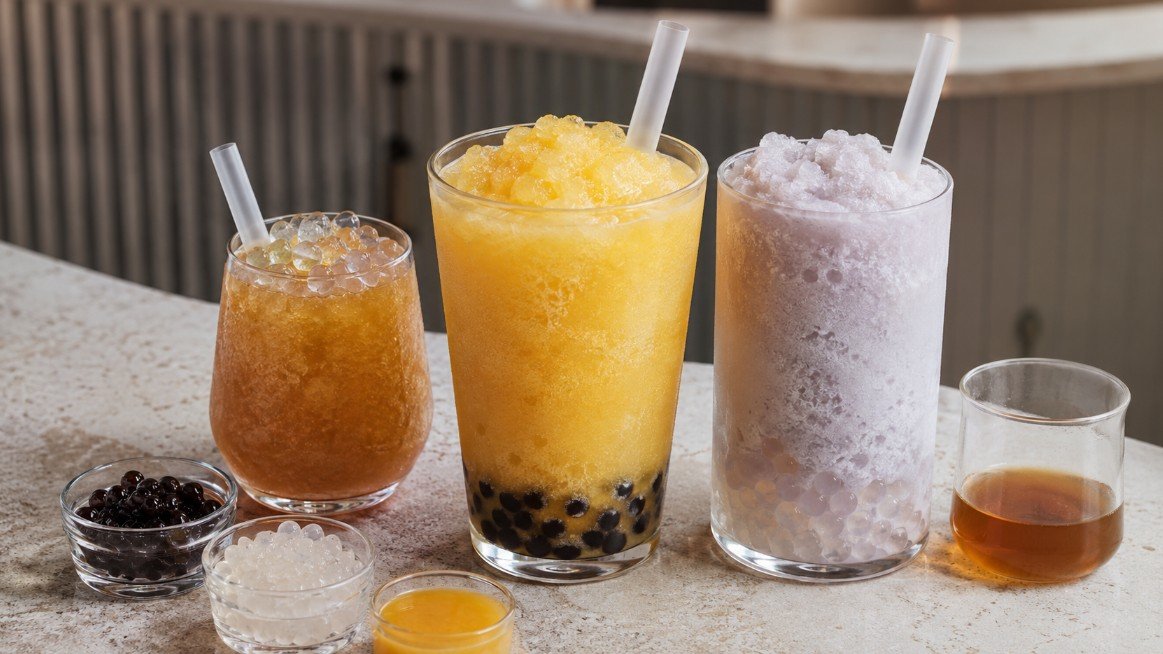
Slush boba is a bubble tea-style drink blended with ice until the liquid becomes thick, cold and semi-frozen, then served with boba or another topping. The defining feature is not one flavor. It is the frozen body: instead of drinking liquid around separate ice cubes, you drink the finely blended ice together with the flavor base.
A slush can be fruity, tea-based, creamy, taro-flavored, matcha-based, coffee-based or built from another shop flavor. It can contain milk or no milk, tea or no tea. What makes it a slush is the way ice is incorporated into the drink and changes its texture from ordinary liquid into something thicker, colder and more granular.
That also changes how toppings behave. Tapioca feels firmer against an icy drink, popping boba creates a juicy contrast, and jelly can feel lighter than pearls. As the slush melts, the flavor, sweetness and thickness continue to change, so a good version has to remain balanced beyond the first few sips.
A boba slush is defined by blended ice, not by fruit, milk or tea
The easiest way to understand slush boba is to separate the drink into two ideas. First, there is a flavor base: tea, fruit, milk, taro, matcha, coffee or another mixture. Second, ice is blended directly into that base until the drink becomes semi-frozen. The topping is then added to create the boba experience.
The base determines what the drink tastes like.
The ice becomes part of the drink rather than floating separately.
Tapioca, jelly, aloe or popping boba changes the mouthfeel again.
This is why slush boba should not be defined as “fruit smoothie with pearls.” Fruit is common, but it is only one direction. A tea slush with jelly and a taro slush with tapioca are both still slush boba because they share the frozen blended structure.
The texture should be frozen, fine and drinkable — not watery, chunky or ice-cream thick
A good slush has enough blended ice to feel clearly frozen but enough liquid to move through a wide straw. The texture may be slightly granular because tiny ice crystals remain throughout the drink, but it should not feel like chewing large pieces of crushed ice.
The drink quickly behaves like ordinary iced liquid.
Fine ice gives body while the straw still works easily.
The drink can become closer to spoonable frozen dessert than boba slush.
The ideal point depends on the recipe, but the basic experience should stay recognizable: cold, semi-frozen, refreshing and noticeably thicker than a normal iced tea. It is the texture of the liquid itself that makes the category distinctive.
The difference is where the body of the drink comes from
Tea, milk or another liquid stays pourable while ice cubes sit inside the cup.
The drink and ice are blended together into one semi-frozen texture.
Fruit purée, dairy, yogurt or other thicker ingredients can contribute substantial texture beyond ice alone.
This distinction matters because “blended” does not automatically mean “smoothie.” A mango drink made mostly from flavor base and finely blended ice may be a slush, while a mango smoothie can use purée, fruit solids or creamy ingredients to create a denser body.
For the separate smoothie category, see our smoothie boba guide.
In a slush, ice controls thickness, dilution and the way flavor reaches your palate
In regular iced boba, ice mainly cools the liquid and slowly dilutes it. In a slush, much more of the ice is distributed throughout the drink from the beginning. That means the flavor has to be strong enough to survive a large frozen component without becoming dull.
Provides tea, fruit, milk or another core taste.
Cold and dilution become part of the structure.
The drink becomes thick enough to feel frozen.
Chew, jelly or popping textures remain distinct from the slush.
A weak base can become almost flavorless once blended with enough ice. An excessively concentrated or syrupy base can swing in the opposite direction and taste candy-like. Good slush design begins with anticipating the ice instead of treating it as an afterthought.
Fruit, tea, milk and flavor slushes use the same frozen format in different ways
Bright, cold and refreshing
Mango, passion fruit, peach, strawberry and lychee-style flavors are natural fits because acidity and fruit aroma can stay vivid in a frozen drink. Popping boba, aloe and jelly often keep the texture lighter than black tapioca.
Frozen but still tea-driven
A tea slush depends on a base strong enough to remain recognizable after blending with ice. Jasmine, green tea, black tea or oolong can work, but delicate aroma is easier to lose than in a simple iced tea.
Smoother and more dessert-like
Milk softens the sharp sensation of ice and creates a rounder body. The result can feel creamy without necessarily becoming a smoothie or milkshake.
Taro, matcha, coffee and beyond
Boba shops can build frozen versions of familiar menu flavors. These drinks vary in dairy, tea content and thickness, so the flavor name alone does not tell you the full recipe.
Fruit flavors work especially well when the frozen texture stays refreshing rather than syrupy
Fruit slush is one of the most intuitive versions because fruit acidity, sweetness and ice naturally point toward refreshment. Mango can feel rounded and tropical, passion fruit can be sharper and more aromatic, while peach or lychee-style drinks can feel lighter and more perfumed.
Works with tapioca, crystal boba or popping boba depending on how heavy you want the cup.
A strong candidate for lighter toppings such as jelly or popping boba.
Best when sweetness does not flatten the fruit aroma.
Can move toward either refreshing fruit slush or a more dessert-like milk-based version.
A fruit slush is different from fruit tea with boba because the defining structure here is frozen. Fruit tea remains a liquid tea drink, even when served very cold.
Tea needs enough intensity to survive the ice, while milk changes the slush from sharp to creamy
Tea can disappear quickly when blended with a large amount of ice. A successful tea slush still tastes recognizably like tea rather than flavored frozen water.
Milk adds body and reduces the sharper icy impression. This can make taro, matcha and coffee-style slushes feel richer.
The two ideas can also overlap. A milk tea slush can use brewed tea plus milk and ice, creating a frozen version of milk tea. What matters is that the ice remains responsible for much of the drink’s frozen body.
Some familiar boba flavors become more dessert-like when they are frozen
Taro-style slush is often thick, sweet and dessert-like. Tapioca can make it even heavier, while crystal boba can provide a lighter contrast.
Matcha can remain intense enough to show through milk and ice, but sweetness needs control so the earthy tea character is not lost.
Coffee slush can range from black and icy to creamy and frappe-like. Coffee jelly or tapioca both fit, but they create different weight.
For a deeper coffee-specific breakdown, see our coffee boba guide.
Tapioca becomes a stronger temperature contrast, while jelly and popping boba keep the drink lighter
Classic pearls create the strongest contrast against the frozen drink and may feel firmer as they cool.
Especially natural with fruit slush because the burst of liquid echoes the fruity flavor rather than adding dense chew.
These toppings can keep a slush refreshing when black tapioca would make it too heavy.
A useful middle ground when you want more texture than jelly but less weight than traditional tapioca.
For a full comparison of topping types, see the boba toppings guide. For classic pearl texture and composition, see what boba pearls are.
The colder environment can make the pearls feel firmer and more separate from the drink
Fresh tapioca is soft, elastic and pleasantly chewy when served at the right temperature. In a very cold slush, the temperature difference is more dramatic than in warm or room-temperature liquid. As pearls cool, they can feel firmer and more noticeable against the fine ice.
That does not mean tapioca cannot work in a slush. It often works very well, especially with mango, taro, milk and coffee flavors. The key is freshness. Pearls that were already stale or firm before entering the cup will not improve when surrounded by a frozen drink.
Melting is part of the experience, so the recipe has to work at more than one texture
A slush does not stay frozen forever. The first sips may be thick and intensely cold, while the middle of the drink loosens and the final portion can become much more liquid. That means balance has to survive a moving target.
Ice crystals are most obvious and flavor may feel compact.
More liquid forms and toppings can move more freely.
A weak recipe can become watery; an over-syruped one can leave sweetness behind.
A good slush should still taste coherent in the middle of the cup. If the first few sips are excellent but the rest turns into flavorless meltwater, the drink was relying too heavily on its initial frozen concentration.
The recipe has to account for both cold perception and ongoing dilution
Very cold drinks can make flavor feel less immediate, while melting ice steadily adds water. Shops therefore need enough flavor and sweetness for the drink to remain recognizable without pushing it into syrup territory.
Ice dominates and the slush tastes mostly cold.
The drink remains clear enough to identify as mango, tea, taro, matcha or another chosen base.
Sweetness remains loud even as the frozen body melts away.
Sweet toppings complicate the picture further. Popping boba, syruped tapioca and some jellies add sweetness independently, so a lower liquid sweetness setting does not always create a lightly sweet finished cup.
The frozen format tells you almost nothing about those ingredients
A fruit or tea slush can be dairy-free, while taro, milk, matcha or coffee versions may use milk, creamer or dairy-containing powders.
A tea slush contains tea, but a fruit-only, milk-based or other flavored slush can be completely tea-free.
Tea, matcha and coffee slushes can contain caffeine; fruit-only versions may not.
If dairy or other ingredients matter for dietary reasons, check the actual flavor base rather than relying on the word “slush.” Our boba dietary guide covers the broader ingredient questions.
Likewise, frozen does not mean low-calorie or low-sugar. Syrups, milk, flavor bases, serving size and toppings determine the final nutrition. See our boba nutrition guide for that wider context.
All three can be cold and blended, but their texture is built differently
Fine blended ice creates most of the frozen body.
Fruit, purée, dairy or other thick ingredients provide more of the body.
Ice cream or a similar rich frozen dairy base typically creates the thickness.
Real menus can blur these boundaries, especially when shops use powders, creamers or fruit bases. The useful distinction is functional rather than absolute: ask what is making the drink thick. In a true slush, blended ice is doing most of that work.
Choose the base first, then control richness and topping weight
Choose the flavor base
Start with fruit, tea, milk, taro, matcha, coffee or another menu flavor. This determines the core taste before toppings are considered.
Check whether it contains dairy
Do not assume a fruit-looking slush is dairy-free or that every creamy-looking one uses fresh milk.
Adjust sweetness if available
Remember that flavor bases and prepared toppings may already contain sugar even when the liquid setting can be changed.
Choose one main topping
Tapioca makes the cup heavier; popping boba, aloe, jelly or crystal boba can keep fruit and tea slushes lighter.
Avoid stacking too many heavy textures
A thick slush plus tapioca plus pudding plus another dense topping can become difficult to drink through the straw.
Drink it before the texture disappears
Slushes are at their most distinctive while the ice remains finely frozen, so they are less forgiving of long delays than ordinary iced drinks.
Pick a familiar flavor and pair it with a topping that matches the texture you want
Bright fruit and a lighter burst texture.
A straightforward introduction to frozen drink plus chewy pearl contrast.
Rich, soft and dessert-like.
Strong tea flavor with a lighter topping texture.
Frozen coffee with a softer topping that reinforces the same flavor.
Keeps the topping restrained so tea has more room.
If you are choosing across all drink families rather than only frozen options, use Choose Your Boba.
Quality shows up in crystal size, drinkability, flavor strength and how the cup behaves as it melts
The slush should move through a wide straw without becoming watery or spoon-thick.
Large hard crystals make the drink feel poorly blended.
You should still know whether you are drinking mango, tea, taro, matcha or coffee.
The drink should not begin bland and end syrupy, or begin syrupy and end as flavored water.
Pearls should remain chewable rather than turning unpleasantly hard.
Some melting is inevitable, but the slush should not collapse into watery layers after a few moments.
A slush does not need to be perfectly smooth like a milkshake. Fine ice crystals are part of the point. The quality target is a controlled frozen texture that supports flavor and toppings instead of fighting them.
For a wider tasting and freshness framework, see our boba quality guide.
The transformation happens when flavor and ice become one frozen body
Questions about slush boba
What is slush boba?
Slush boba is a bubble tea-style drink in which a flavor base and ice are blended into a thick semi-frozen texture, then served with tapioca pearls, jelly, popping boba, aloe or another topping.
What does slush boba taste like?
The flavor depends on the base. A slush can taste fruity, creamy, tea-forward, earthy, roasted or dessert-like. The shared characteristic is the cold frozen texture rather than one specific flavor.
What is the texture of a boba slush?
A good boba slush is thick, cold and finely crystalline but still drinkable through a wide straw. It should be noticeably more frozen than iced tea without becoming as heavy as ice cream or a milkshake.
Is slush boba the same as a smoothie?
No. A slush gets much of its body from finely blended ice, while a smoothie often gets more thickness from fruit, purée, dairy, yogurt or other dense ingredients. Some shop recipes blur the boundary, but the texture logic is different.
Does slush boba contain tea?
Sometimes. Tea slushes contain tea, but fruit-only, milk-based, taro-style or other flavored slushes can be made without tea. The word “slush” describes the frozen format rather than the beverage base.
Does slush boba contain milk?
Not always. Fruit and tea slushes can be made without dairy, while taro, creamy fruit, matcha or coffee versions may contain milk, creamer or dairy-containing powders. Check the specific recipe when dairy matters.
What toppings are best for a slush?
Tapioca works when you want classic chew and a heavier cup. Popping boba is a natural match for fruit slush, while jelly, aloe and crystal boba can keep the drink lighter. The best choice depends on the base and texture you prefer.
Can tapioca pearls go in a slush?
Yes. Tapioca is commonly paired with frozen boba drinks. Because the slush is very cold, the pearls may feel firmer than they do in warmer drinks, so freshness matters especially here.
Does slush boba have caffeine?
It depends on the base. Tea, matcha and coffee slushes can contain caffeine, while many fruit-only slushes may not. There is no universal caffeine amount for the category.
What slush boba is best for beginners?
Mango slush with one topping is an easy starting point because the flavor is familiar and the frozen texture is easy to understand. Choose popping boba for a lighter fruity experience or tapioca for the classic chewy boba contrast.
SLUSH BOBA IN ONE IDEA
A slush is defined by what happens to the ice. When ice and flavor are blended into one frozen body, the drink becomes a slush; the topping then decides whether that frozen base feels chewy, juicy, slippery or light.