
OOLONG STYLES, BREWING & BOBA PAIRINGS
Best Oolong Tea for Boba
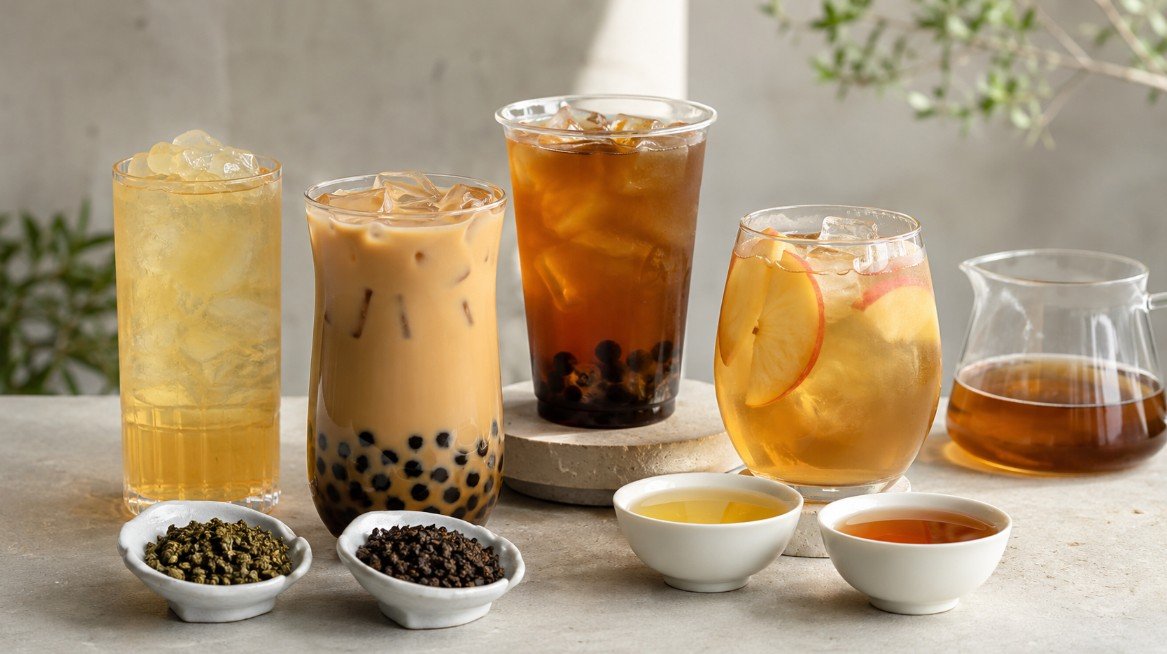
For milk tea and black tapioca, medium-roasted or darker roasted oolong is the easiest all-around starting point because its toasted, aromatic character can remain noticeable after milk and sweetness are added. For clear iced boba and fruit-forward drinks, a lighter floral oolong usually gives you a cleaner and more fragrant result.
Oolong is not one fixed flavor. Depending on oxidation, roasting, cultivar and processing, one oolong can feel pale, floral and almost creamy while another is deeper, baked, nutty and much more assertive. Choosing oolong for boba therefore starts with deciding what the finished drink needs from the tea, then matching the brewing strength, milk, fruit, sweetness and topping weight to that style.
Choose by the finished drink
What Is the Best Oolong Tea for Boba?
Use roasted or medium-roasted oolong when milk, tapioca and sweetness are important parts of the drink; use lighter floral oolong when you want a clearer, brighter or fruit-forward cup.
The advantage of oolong is range. You can choose a light tea with floral or fruit-like aroma that behaves elegantly with peach, lychee or crystal boba, or a more roasted tea that keeps a clear identity after milk and black pearls are added. That makes oolong one of the most flexible tea families for boba, but it also means the word “oolong” by itself is not enough information to build a good recipe.
For a first home test, a medium-roasted oolong is the safest middle ground. It usually has more structure than a very light floral tea, but it is not so dark or baked that every cup becomes heavy. It can work in milk tea, with tapioca, with milk foam or even in a lightly fruity drink if the fruit does not overpower the tea.
Toasted and deeper aromatic notes are easier to notice once dairy or another creamy component enters the drink.
Good first pairing: roasted oolong + milk + black tapioca.
This is a practical middle ground when you want enough structure for milk but still want fruit-like or floral dimensions in the tea.
Good first pairing: medium-roasted oolong + moderate sweetness + tapioca or milk foam.
A lighter aromatic oolong can feel cleaner and more perfumed, making it a better match for fruit and subtle toppings.
Good first pairing: floral oolong + peach or lychee + crystal boba.
If you are still deciding whether oolong is the right tea family at all, compare it with black, green and jasmine in the best tea for boba guide.
One category, very different cups
Oolong Can Range From Floral and Pale to Deep and Roasted
Oolong is partially oxidized tea, but that simple definition hides a wide sensory range. Processing, oxidation and roasting can push one tea toward floral, creamy and green notes while another develops toasted grain, nuts, baked fruit or deeper roast. Those differences matter in boba because milk, syrup and toppings do not affect every style equally.
A light high-mountain-style oolong can produce a pale yellow or light golden liquor with a soft floral aroma. It may taste wonderful on its own yet become muted if you add a large amount of milk, brown sugar syrup and black pearls. A darker baked oolong can produce a deeper golden-brown infusion and more obvious roasted aroma, giving it more room to remain distinctive in a creamy drink.
Do not choose by color alone. A dark-looking tea is not automatically stronger, and a pale tea is not automatically weak. Leaf quality, ratio, water temperature and steep time can all change the result. The better rule is to taste the brewed tea, identify whether the character is floral, fruit-like, creamy, toasted or baked, and then choose the boba build that lets that character survive.
Floral, smooth and more delicate
Keep milk, syrup and topping intensity restrained. These teas make more sense when aroma and refreshment are priorities.
Toasted, fuller and easier to pair with milk
Roast adds another layer of flavor that can remain obvious beside creaminess, black pearls and moderate sweetness.
Useful numbers, not a fake universal recipe
Oolong Brewing Can Range From 85–90°C to 100°C
The correct method depends on the exact tea. Published oolong instructions legitimately use different temperatures, ratios and steep times.
The table shows why “oolong should always be brewed at 85°C” and “oolong always needs boiling water” are both too simplistic. Ten Ren publishes 85–90°C with 3 g per 150 mL and 3–5 minutes for several oolong styles, while TeaVivre publishes 100°C methods for Tie Guan Yin. The leaf, roast and brewing style change the appropriate approach.
For boba, begin with the tea maker’s method. If the tea tastes good by itself but weak after milk or ice, increase concentration first. If it tastes rough, dry or aggressively roasted before other ingredients are added, increasing extraction time further is unlikely to improve the finished drink.
For the general extraction system across tea families, use the separate guide to brewing tea for boba.
Roast earns its place here
Roasted Oolong Is the Easier Choice for Milk Tea
Milk reduces the apparent intensity of tea, so roasted or medium-roasted oolong usually has an easier job than a very delicate floral oolong. The goal is not to make the tea dark enough to resemble coffee. It is to preserve recognizable oolong aroma and roast behind the creamy layer.
Start by tasting the oolong plain. Then add the milk you intend to use in the finished cup. If the tea character collapses immediately, the next test should change tea concentration or milk volume before sweetness. Adding syrup to a tea that is already hidden makes the problem harder to diagnose.
For a 16 oz / about 473 mL home test, changing milk by 15–30 mL at a time is enough to make a noticeable difference without turning the experiment into a completely new recipe. A cup that tastes mostly like sweet milk may need 15–30 mL less milk, a stronger tea concentrate, or a more roasted oolong. A cup that tastes too sharp may need a gentler extraction rather than more milk to hide the roughness.
Choose medium-roasted or roasted oolong
This gives the tea a stronger flavor structure before milk is introduced.
Brew a controlled concentrate
Increase leaf concentration before using an excessively long steep that turns the cup dry or harsh.
Add milk in measurable steps
For a 16 oz test, changing milk by 15–30 mL at a time is easier to evaluate than making large random adjustments.
Fruit needs a different oolong
Use Lighter or Medium Oolong for Fruit Boba
A lighter floral or medium oolong is usually easier to pair with fruit than a heavily roasted tea. You want enough tea structure to remain visible but not so much baked flavor that every fruit combination feels heavy.
Current bubble-tea menus also show that oolong can move beyond milk tea. Chatime currently lists an Oolong Passionfruit Frui-Tea, which is a useful real-world example of tea and fruit sharing the cup rather than treating oolong only as a creamy base.
Aromatic tea and peach can reinforce each other without requiring heavy sweetness.
The stronger fruit can handle more tea structure than a very delicate fruit combination.
Keep the drink clean so the tea’s fragrance and the fruit’s aroma remain distinct.
Use a cleaner roast profile unless you deliberately want toasted contrast.
For fruit drinks, adjust the fruit component before assuming the tea is wrong. In a 16 oz test, reducing a strong fruit base by 10–20 mL can reveal whether the oolong is actually present. If the tea is still invisible, move from a very light floral oolong toward a medium-roasted style or strengthen the tea concentrate.
Both can handle milk
Oolong vs Black Tea for Boba
Classic strength and familiarity
Choose black tea when you want a straightforward strong milk-tea base that handles milk, sugar and tapioca easily.
More roast and aromatic complexity
Choose oolong when you want the tea to contribute toasted, floral or fruit-like character rather than only strong tea structure.
Neither family automatically wins. Black tea is often easier when the recipe includes a lot of brown sugar, milk and traditional black pearls because a robust black-tea base is designed to remain obvious under heavy ingredients. Oolong becomes more interesting when tea character itself is part of the reason for ordering the drink.
For a rich brown-sugar milk tea, black tea may be simpler. For a tea-forward milk drink with toasted aroma, medium-roasted or dark oolong can give the cup a more distinctive finish. If you are comparing all major tea families rather than only these two, use the tea for boba guide.
Freshness vs aromatic depth
Oolong vs Green Tea for Boba
Fresh and light
Especially useful when citrus, tropical fruit, aloe or crystal boba should keep the drink bright and refreshing.
More layered
Useful when you still want refreshment but also want roast, floral aroma or deeper tea character in the finished cup.
Light floral oolong can overlap with some of the sensory territory people associate with green tea, but the category can move much further toward toasted, baked and nutty profiles. That extra range is why oolong often works across both fruit and milk applications.
If your priority is maximum freshness and a clean fruit base, green tea may be easier. If you want a clear fruit drink that still has a noticeably aromatic tea backbone, light or medium oolong can be a better fit. If you want milk, roasted oolong usually has a structural advantage over delicate green tea.
Do not confuse strength with harshness
How Strong Should Oolong Be for Boba?
The correct strength depends on what must compete with the tea. Clear oolong with crystal boba needs much less concentration than roasted oolong milk tea with syrup-coated pearls.
A useful way to think about strength is not “normal” versus “extra strong,” but how many competing ingredients the tea has to survive. Clear oolong has almost no masking ingredients. Fruit oolong has acidity, fruit aroma, sweetener and ice. Milk oolong has milk, sweetener, ice and often chewy toppings. The more competition, the more useful a concentrated tea base becomes.
Few ingredients mask the tea, so its normal drinking strength may already be enough.
Fruit and melting ice both change the balance. Use enough tea to remain identifiable after 5–10 minutes in the cup.
Milk, sweetener and pearls all compete with the tea, so a more concentrated roasted oolong is usually easier to keep recognizable.
For concentration as a topic rather than oolong specifically, see how strong tea should be for boba.
The drink changes after the first sip
Judge Oolong Again After 5–10 Minutes of Ice Dilution
An iced boba drink is not static. As ice melts, the tea concentration falls while sweetness, fruit and milk also become more diluted. A recipe that tastes perfect in the first minute can become flat halfway through the cup.
For testing, taste the assembled drink immediately and again after 5–10 minutes. If the later sample loses tea character but the sweetness still feels adequate, the next batch needs a stronger tea base or less initial ice, not more syrup. If both tea and sweetness become weak at the same rate, the drink may simply have too much ice for the concentration used.
This check matters especially for floral oolong because delicate aroma can disappear faster than roast. A roasted oolong may still leave a toasted finish after dilution, while a light floral oolong can feel almost like lightly flavored water if the original brew was too gentle.
Sweetness should match the tea style
Start Around 30–50% for Tea-Forward Oolong
If a shop uses percentage-based customization, roughly 30–50% sweetness is a useful starting direction when you want oolong flavor to remain prominent. Gong cha currently recommends 30–50% when you want tea flavors to shine and 50–70% for a more balanced milk-tea profile. Those percentages are ordering references, not universal syrup measurements, because every shop can formulate its syrup differently.
Roasted oolong usually tolerates more sweetness than very light floral oolong because it has more obvious toasted character. A floral tea can become difficult to recognize once sweet fruit syrup, sweet toppings and full drink sweetness are stacked together.
Useful for floral oolong or when a topping already adds sweetness.
A useful first range for roasted or floral oolong when the tea should remain central.
More appropriate when milk, tapioca and a sweeter overall profile are intentional.
For the wider ordering system, see boba sweetness levels.
Pair topping weight with tea weight
The Best Topping Depends on the Oolong Style
Toppings do more than change texture. They also change how much sweetness and flavor the tea has to compete with. A heavy brown-sugar tapioca topping asks for a different tea than aloe or crystal boba.
Black tapioca
Best with medium or roasted oolong. The deeper tea profile is better equipped for chewy pearls and syrup sweetness.
Milk foam
Excellent with roasted oolong. The creamy top layer can soften roast while still leaving a noticeable tea finish.
Crystal boba
Better with lighter floral oolong. It adds texture without imposing a strong brown-sugar flavor.
Aloe
Useful for clear or fruit oolong. The topping keeps the drink refreshing and relatively light.
Fruit jelly
Best when it supports the existing fruit direction. Avoid stacking several unrelated flavors on a delicate floral tea.
For a first tasting, use one topping only. Once you know how the tea behaves, add a second texture if the drink actually benefits from it. Compare the wider topping families in our boba toppings guide.
Concrete home tests
Three Practical 16 oz Oolong Boba Builds
These are Boba.guide starting formulations for comparison, not claims that every boba shop uses these exact ratios. A 16 fl oz cup is about 473 mL, and ice plus toppings occupy part of that volume.
Roasted oolong milk tea
190–210 mL
strong roasted oolong
70–90 mL
milk
15–25 mL
sweetener
1/4 cup
black tapioca
Add ice to finish the cup. If the roast disappears behind milk, strengthen the tea before adding more sweetness. If the tea becomes rough, reduce extraction intensity rather than increasing milk simply to cover the problem.
Floral clear oolong
240–260 mL
chilled floral oolong
10–20 mL
sweetener
1/4 cup
crystal boba or aloe
Ice
to finish
Keep this build restrained. The point is to preserve aroma rather than create a heavy dessert drink. Start at the lower sweetener level and increase only if the tea tastes too dry rather than simply less sweet than expected.
Peach or passion fruit oolong
200–220 mL
medium oolong
50–70 mL
fruit component
0–15 mL
extra sweetener
0–1/4 cup
light topping
If the fruit base is already sweet, begin with zero extra syrup and adjust only after tasting the assembled drink. If the tea disappears, reduce fruit by 10–20 mL or increase tea concentration before adding more sugar.
For the finished drink category rather than tea selection and brewing, continue to oolong tea boba.
Scale carefully
How to Scale Oolong for a Small Boba Batch
Scaling by multiplication is useful, but it does not guarantee the same extraction when vessel size, leaf movement and cooling change. For a small home batch, start with the same leaf-to-water ratio you already tested successfully, then keep the brewing vessel large enough for rolled oolong leaves to open.
If your tested reference is 3 g per 150 mL, the direct arithmetic scale is 12 g per 600 mL or 20 g per 1 liter. If you are making a stronger milk-tea concentrate at 4.5–6 g per 150 mL, the same arithmetic produces about 18–24 g for 600 mL or 30–40 g per liter. Those are scaling examples from the chosen ratio, not claims that every oolong should be brewed at those concentrations.
Cool the batch promptly after brewing if it is intended for iced drinks. Then taste the cooled tea before building the drinks. Tea can feel different after cooling, and a concentrate that seemed aggressive while hot may become appropriate once milk, ice or fruit is added.
Direct scale from 3 g / 150 mL.
Direct scale from 3 g / 150 mL.
Direct scale from the practical 4.5–6 g / 150 mL test range.
Use only after the smaller test has proven that this concentration works for your tea.
Fix one variable at a time
Six Common Oolong Boba Problems and the Next Adjustment
The oolong disappears after milk
Next test: raise leaf concentration or reduce milk by about 15–30 mL in a 16 oz test drink. Do not automatically add more syrup.
The tea tastes harsh instead of roasted
Next test: return toward the tea maker’s normal time and temperature, then increase leaf quantity rather than pushing extraction indefinitely.
Fruit completely covers the tea
Next test: reduce the fruit component by about 10–20 mL or use a medium oolong rather than a very delicate floral one.
The drink becomes watery halfway through
Next test: taste again after 5–10 minutes of ice contact. If the decline is mostly dilution, strengthen the starting tea rather than increasing sweetness.
The pearls overwhelm floral oolong
Next test: switch to crystal boba or aloe, reduce the tapioca quantity, or move to a more roasted oolong.
The drink tastes roasted but flat
Next test: reduce sweetness by one shop level, such as moving from 70% to 50%, and taste again before changing the tea. Excess sugar can flatten the contrast that makes roasted oolong interesting.
At the tea shelf
A Buying Checklist for Oolong Tea for Boba
Read the roast description
Words such as roasted, baked, charcoal, nutty or toasted point toward a stronger milk-tea direction. Floral, high-mountain, fresh or orchid-like descriptions point toward lighter applications.
Check the recommended brewing method
If the maker provides grams, water volume, temperature and time, use those values as your baseline instead of forcing every oolong into the same method.
Decide whether milk is central
If the recipe needs 70–90 mL of milk in a 16 oz cup, a medium or roasted tea is usually easier to keep recognizable than an especially delicate floral oolong.
Plan the topping before the tea test
Black tapioca asks more from the tea than crystal boba or aloe. The same oolong can feel balanced with one topping and hidden with another.
Buy enough for repeat testing
A single cup rarely tells you the best ratio. Plan at least three controlled tests so you can compare concentration, milk or sweetness without changing everything at once.
Judge value by finished cups
A premium floral oolong can be wasted in a heavily sweetened milk drink. A less expensive medium-roasted tea may deliver a clearer, more repeatable boba result.
The practical choice
Which Oolong Should You Start With?
Start with a medium-roasted oolong if you want the most flexible first choice. It can work with milk, tapioca and moderate sweetness without abandoning the aromatic character that makes oolong different from a standard black-tea base.
Move lighter when you want floral, clear or fruit-forward boba. Move darker and more roasted when milk and black tapioca are central. Then adjust measurable variables — leaf concentration, water temperature, steep time, milk volume, fruit volume, sweetness and ice dilution — instead of treating every weak cup as a reason to add more syrup.
Common reader questions
Oolong Tea for Boba FAQ
What oolong tea is best for boba?
Medium-roasted or roasted oolong is the easiest starting choice for milk tea and black tapioca because its toasted character can remain noticeable after milk and sweetness are added. Lighter floral oolong is better suited to clear, lightly sweetened and fruit-forward boba.
What temperature should I use for oolong tea for boba?
There is no single correct temperature for every oolong. Several traditional oolong references use about 85–90°C (185–195°F), while some Tie Guan Yin methods use 100°C (212°F). Follow the instructions for your specific tea before modifying concentration for boba.
How long should oolong steep for boba?
A 3–5 minute range appears in multiple western-style oolong brewing references, while some Tie Guan Yin cup methods run 5–8 minutes and gongfu methods use much shorter repeated infusions. The exact time depends on the tea, leaf amount, water temperature and brewing style.
Should oolong be brewed stronger for milk tea?
Usually it helps. Milk lowers perceived tea intensity, so oolong milk tea generally needs more concentration than clear oolong. Increase leaf concentration before assuming an excessively long steep is the best solution.
Is roasted oolong good for boba milk tea?
Yes. Roasted oolong is one of the easiest oolong styles to pair with milk and black tapioca because toasted and baked notes can remain distinct inside a creamy, sweet drink. A medium-roasted tea is a particularly flexible first test.
Is light floral oolong good for fruit boba?
Yes. Floral oolong works particularly well when the drink stays clear or lightly sweetened. Peach, lychee and selected citrus flavors can pair naturally with its aromatic profile, especially with lighter toppings such as crystal boba or aloe.
Is oolong or black tea better for boba?
Black tea is the simpler classic choice for strong milk tea, while oolong is useful when you want more roasted, floral or fruit-like tea complexity. Neither is automatically better for every drink.
What sweetness level works well with oolong boba?
If a shop uses percentage-based sweetness levels, roughly 30–50% is a useful tea-forward starting range, while 50–70% can suit a creamier milk-tea direction. Shop syrup formulas differ, and sweet toppings may justify choosing less additional sugar.
What toppings go best with oolong tea?
Black tapioca and milk foam are natural choices for roasted oolong. Crystal boba and aloe are easier matches for light floral or fruit oolong because they add texture without overwhelming the tea.
Does oolong tea for boba contain caffeine?
Yes, regular oolong tea naturally contains caffeine. The amount in a finished boba drink can vary substantially with the tea, leaf quantity, brewing method and how much brewed tea is actually present after milk, ice, fruit and toppings are added, so cup size alone is not a reliable caffeine estimate.