
Tea base field guide
White Tea Boba: Flavor, Brewing, Pairings and Best Builds
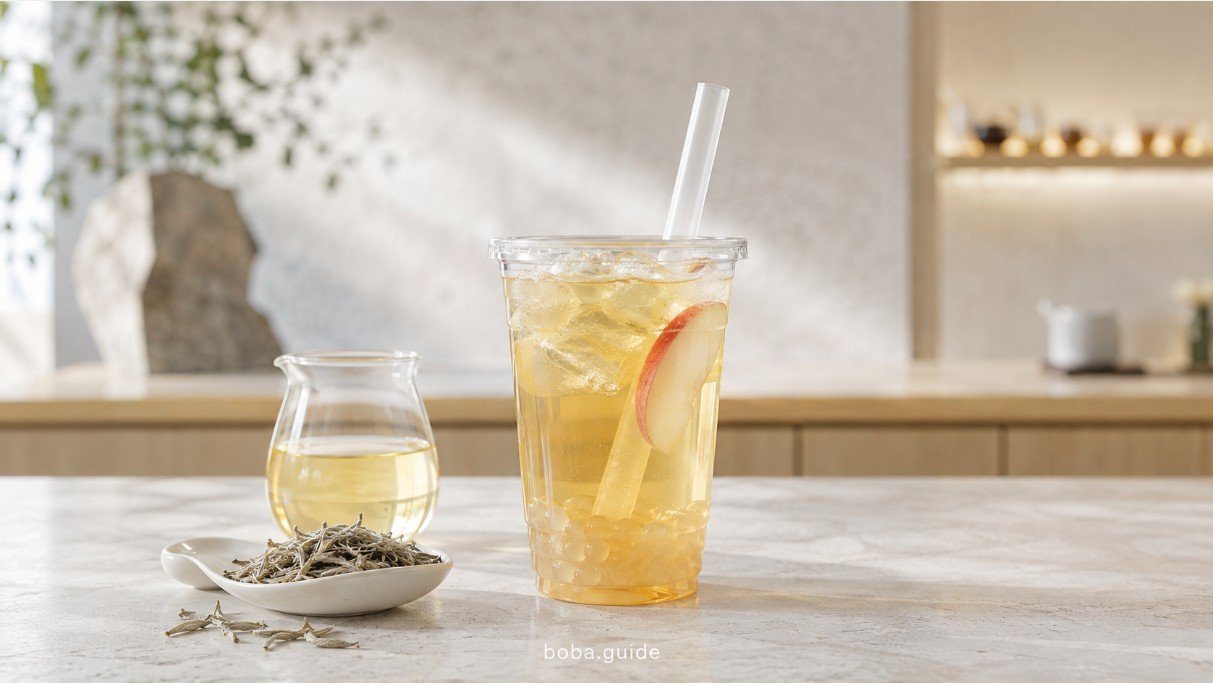
White tea can make excellent boba, but it works best when the drink is built to protect its delicate aroma instead of burying it. Compared with the assertive maltiness of black tea or the roasted depth of many oolongs, white tea is usually softer, lighter in color and easier to overwhelm with heavy milk, dark syrup or several sweet toppings.
That does not make it a weak choice. It makes it a precise one. A well-built white tea boba can taste floral, lightly fruity, honeyed, fresh or gently herbaceous, with enough structure to feel like tea rather than flavored water. The trick is choosing a white tea with sufficient character, brewing it deliberately, and pairing it with restrained ingredients.
What does white tea boba taste like?
Think less caramel, roast and tannic punch; more soft florals, light fruit, clean sweetness and a tea finish that can feel almost silky when brewed well. The exact profile depends heavily on the white tea itself. Some cups are airy and spring-like. Others are rounder, honeyed, woody or dried-fruit-like, especially when the leaf is more mature or has been stored.
In boba, that means white tea usually shines when the rest of the drink leaves room for the tea to speak. If a recipe uses an aggressive brown sugar coating, thick non-dairy creamer, a large scoop of pearls and a dessert syrup, the white tea may become functionally invisible. In that situation, a stronger black tea or roasted tea base is often the more logical choice.
If your main goal is to understand how tea bases behave across bubble tea rather than white tea specifically, start with our guide to tea for boba.
A useful mental picture
Not every white tea behaves the same way
The phrase white tea describes a tea category, not one single flavor. That distinction matters more in boba than it does in a plain tasting cup because milk, ice, syrup and toppings create competition for aroma.
Baihao Yinzhen / Silver Needle
- Cup character
- Very delicate, soft, fine aroma, light liquor
- In a boba build
- Beautiful but easy to overwhelm
- Best direction
- Clear tea, subtle fruit, crystal boba
Bai Mudan / White Peony
- Cup character
- More leaf material, fuller aroma and body
- In a boba build
- Often easier to keep recognizable after chilling
- Best direction
- Fruit tea, light milk tea, aloe or crystal boba
Gongmei
- Cup character
- Rounder, deeper and often less ethereal
- In a boba build
- Can tolerate stronger flavor partners
- Best direction
- Honeyed builds, pear, peach, light dairy
Shoumei
- Cup character
- Broader leaf, deeper infusion, sometimes woody or dried-fruit notes
- In a boba build
- Useful when you want white tea identity with more body
- Best direction
- Autumnal fruit, light milk, warm or low-ice builds
The most expensive or delicate tea is not automatically the best tea for a mixed drink. Silver Needle can be gorgeous when the finished cup is almost minimalist, but Bai Mudan or a fuller Gongmei/Shoumei style may be more practical if the drink includes milk or pronounced fruit. In other words, the best choice is the tea that remains identifiable after the complete drink is assembled.
This is also why white tea should not simply be treated as a substitute for green tea in boba. The two categories can both produce light-colored cups, but their processing, aroma and bitterness behavior are not interchangeable.
Brewing white tea for boba: stronger does not mean harsher
Bubble tea creates a brewing problem that plain hot tea does not: the finished drink may be diluted by ice and then softened by milk, fruit, syrup or toppings. You therefore need enough extraction to keep a clear tea identity, but simply pushing temperature and time upward can make the cup coarse without giving you the elegant aroma you wanted from white tea in the first place.
A practical starting point is to brew a little more concentrated than you would for casual sipping, then cool and taste the tea before adding anything else. Ask one question: can I still clearly recognize the tea when it is cool? If the answer is no, the finished boba will probably taste even less tea-forward.
Cool a sample before building the drink. If the tea disappears when cold, milk, fruit and ice will not rescue it.
There is no universal white-tea-for-boba temperature because leaf grade, age, brokenness, water chemistry, ratio and desired style all change the result. A useful broad test range for delicate white teas is roughly 75-90°C (167-194°F), with cooler water favoring gentler extraction and hotter water producing faster, stronger extraction. Fuller or more mature white teas can often tolerate the upper end better than very delicate buds. For production, the more important principle is repeatability: measure leaf, water, temperature and time instead of guessing.
For the full method – including concentration, chilling and batch logic – use our how to brew tea for boba guide. If the specific problem is that your tea disappears after adding other ingredients, the deeper explanation belongs in how strong tea should be for boba.
How to tell whether the white tea base is strong enough
A white tea base for boba should not be judged only while it is hot. Heat lifts aroma and can make a freshly brewed cup seem more expressive than it will be ten minutes later over ice. The more useful test is to cool a small sample and taste it at roughly the temperature of the finished drink. You are looking for a clear center: identifiable tea aroma, enough body to carry flavor across the tongue, and a finish that remains present after swallowing.
If the cooled tea feels fragrant but almost weightless, it may still work beautifully as a very simple iced white tea with crystal boba. It may not have enough structure for milk, puree or several toppings. If it tastes flat and watery, adding more syrup will not restore tea character. The next batch needs a more suitable leaf, a higher leaf-to-water ratio, a different steeping time, or a different temperature. Change one variable at a time so you know what actually improved the cup.
Use dilution as a deliberate test
One practical shop-style test is to brew the base, cool a measured portion, then add the amount of ice or chilled water that approximates the final dilution. Taste again. This tells you much more than evaluating an undiluted hot concentrate. If the tea collapses after dilution, it is underbuilt for that recipe. If it becomes coarse or sharply drying, you may have extracted too aggressively rather than simply making it stronger.
White tea can also fool the eye. A pale straw-colored infusion can have real aromatic depth, while a darker cup can still be dull. Color is useful as a consistency cue within the same tea and recipe, but it is not a universal strength meter across different white teas. Leaf grade, oxidation during withering, storage, age and brewing all influence appearance.
Build a repeatable house recipe
For home use, write down the leaf weight, water volume, water temperature, steep time and final yield that produced the cup you liked. For shop use, that discipline becomes even more important because the tea has to taste recognizably similar from the first order of the day to the last. A recipe such as “one scoop, hot water, a few minutes” is not a recipe; it is a source of drift.
Once the base is stable, adjust the finished drink around it. Start with tea plus ice. Then add sweetness. Then fruit or milk. Then topping. That order makes it easier to identify the exact ingredient that pushes the tea out of balance.
Hot brew, chilled brew and cold brew do not create the same white tea
White tea is unusually interesting for boba because it can be extracted in more than one useful way. A conventional hot infusion is fast and practical, and it can create the concentration needed for service. A gentler hot infusion can emphasize fine aromatics. Cold extraction takes longer and often produces a softer sensory profile, but it still has to be concentrated enough for the final drink.
The key is not to declare one method “best.” Choose the extraction that fits the build. A delicate clear white-tea-and-pear drink may benefit from a softer aromatic base. A milk build may need a fuller infusion with more body. A high-volume shop may also prioritize a method that can be reproduced safely and consistently during service rather than one that is theoretically elegant but difficult to execute.
Temperature also interacts with leaf style. Bud-heavy teas and leafier teas do not necessarily respond identically. The same is true of fresh versus aged white tea. Instead of relying on one internet temperature as a law, treat a reasonable range as a testing window. Brew two or three controlled samples, cool them, and compare aroma, sweetness, bitterness, astringency and body.
Cold brewing can be especially attractive when you want a clean, soft base with minimal harshness, but it requires planning and controlled refrigerated handling. If you are using the method regularly, keep extraction time, temperature and storage consistent rather than leaving a jar at room temperature for an undefined period.
White tea works differently in fruit tea and milk tea
White tea is especially convincing in clear or lightly flavored fruit-style boba because those drinks can preserve its fragrance and pale liquor. Peach, pear, lychee and gentle citrus accents can sit beside the tea rather than on top of it. The result feels refreshing and tea-led, not like juice with a ceremonial tea label attached.
Fruit-style white tea boba
Start with the tea as the main liquid, then use fruit as an accent. Puree, syrup and concentrate can all be much louder than expected, so add them incrementally. A drink that tastes balanced before ice may become noticeably softer after dilution. Crystal boba, aloe or a restrained jelly often suits this style because these toppings keep the visual and textural character light.
If fruit tea is your broader goal, compare white tea with the options in the best teas for fruit tea. White tea is not always the most efficient base; jasmine, green tea and lighter oolongs can provide more aroma at lower ingredient cost and may be easier for a shop to standardize.
White tea milk tea
Milk is possible, but proportion matters. Use enough dairy or non-dairy milk to round the tea rather than erase it. A very creamy formula may be delicious, yet if you cannot detect the white tea anymore, the expensive base is doing little work. Fresh milk tends to make the distinction easier to judge because you can add it gradually. Heavy creamer systems can dominate quickly.
The practical question is not “Can white tea take milk?” but “How much milk can this particular infusion take before its aroma disappears?” That relationship is explored more deeply in our tea-to-milk ratio guide.
Sweetness and ice can change the drink more than the tea itself
Start restrained; sweet toppings may already add sugar.
Less ice can reduce dilution, but does not guarantee more tea.
Syrup, pearls, jelly and fruit base can matter more than the percentage label.
White tea often tastes naturally gentle, so it is easy to assume that a sweet syrup will “bring it to life.” Too much sweetness usually does the opposite: it flattens the distinction between floral, fruity and honeyed notes and leaves you with a generic sweet cold drink.
For a first trial, begin lower than you would with a strong black milk tea, especially if the topping is already sweetened. Remember that a shop’s sweetness setting only controls the components tied to that setting. Pearls may be held in sugar syrup; fruit bases may be pre-sweetened; pudding and jelly may contain sugar; a brown-sugar coating may not respond to the same percentage control. So a “30%” or “0%” order is not a universal statement about total sugar.
Ice is similarly contextual. More ice can mute aroma through dilution as it melts, but no ice is not automatically better. Some shops build recipes around a specific chilled volume or shaking process, and reducing ice does not guarantee extra tea. For a delicate white tea, moderate ice or less ice can be useful when the shop allows it without changing the intended balance.
For the customization system itself, use our guides to boba sweetness levels and boba ice levels.
The best toppings for white tea boba are usually quiet on purpose
The topping should add texture without forcing the tea into the background. That does not mean black tapioca pearls are forbidden. It means you should think about the full sensory weight of the cup.
Pudding and cheese foam can work, but both change the center of gravity. Pudding turns the drink toward dessert; cheese foam adds salt, dairy richness and a thick surface layer. Those are valid styles, but they are no longer the clearest way to experience white tea.
If you are still learning topping behavior, use our beginner guide to boba toppings before stacking multiple textures into one cup.
Flavor pairings that let white tea stay recognizable
White tea is easiest to pair when you think in families rather than flavor names. Ask whether the added ingredient echoes the tea, contrasts gently with it, or completely dominates it.
| Pairing | Why it works | Watch out for |
|---|---|---|
| White peach | Soft stone-fruit aroma can reinforce floral and honeyed white-tea notes. | Thick peach puree can overwhelm a delicate infusion. |
| Pear | Clean sweetness and subtle fruit keep the tea profile open. | Candy-like pear syrup can make the drink taste artificial. |
| Lychee | Fragrant fruit can complement floral tea, especially in iced clear builds. | Use restraint; lychee aroma can become the only thing you smell. |
| Honey | A small amount can echo naturally sweet, rounded notes. | Strong honey varieties can cover fine aromas quickly. |
| Lemon or citrus | Acidity can sharpen a soft tea and make an iced drink feel brighter. | Too much acid makes subtle tea seem thin. |
| Fresh milk | Adds body and softness when the tea is brewed sufficiently strong. | High milk ratios can erase the reason to use white tea. |
For a more aromatic floral direction, compare the idea with jasmine tea for boba. For more body without jumping all the way to black tea, oolong tea for boba is often the more forgiving base.
What a good white tea boba should feel like in the cup
You can identify aroma and a gentle finish before the topping takes over.
Fruit or milk supports the base instead of replacing it.
The topping adds contrast without turning every sip into syrup.
A successful white tea boba should still make sense if you mentally remove the topping. The tea should not function merely as colorless background liquid. You should be able to identify a clean aroma, a distinct but gentle tea flavor and a finish that survives the sweetness. In a fruit build, the fruit and tea should feel connected rather than layered as “juice first, faint tea later.” In a milk build, the dairy should round the edges without turning the cup into sweet milk with an expensive tea name.
Texture matters too. Crystal boba or jelly should be fresh enough to add bounce or softness without becoming rubbery. Black pearls, if used, should not contribute so much dark syrup that every sip tastes like brown sugar. Ice should chill the drink without making the final third of the cup taste noticeably washed out.
A weak white tea boba is often easy to diagnose: there is plenty of aroma from fruit syrup, plenty of sweetness from toppings, but no clear reason the base needed to be white tea. A better version has hierarchy. You notice the tea, then the pairing, then the texture. None of those elements needs to shout.
This is also why white tea can be a useful quality test for a tea-focused shop. Delicate bases expose sloppy extraction and over-sweetening quickly. When the drink is balanced, the result feels intentional rather than merely pale.
How to order white tea boba when a shop actually offers it
White tea is not a universal menu base, so first confirm what the shop means by the name. “White tea” may identify the brewed tea itself, a flavored blend that contains white tea, or a seasonal drink whose dominant flavor is fruit rather than tea. If the menu is unclear, ask what the base tastes like and whether it is brewed in-house or supplied as part of a flavored mix.
A useful first order:
White tea + light peach or lychee + moderate sweetness + regular or less ice + crystal boba.
If you want milk:
Ask for a white tea milk tea with light sweetness and one topping, then avoid adding another heavy syrup until you know how strong the tea base is.
If you want the tea itself:
Order the least complicated version available, ideally with no more than one light topping.
When a shop offers a percentage sweetness system, treat percentages as that shop’s own recipe controls, not a global scale. The same nominal percentage can taste different across shops because the base tea, syrup concentration, fruit products and toppings differ.
If menus still feel confusing, our complete guide to ordering boba explains the normal sequence from base drink to toppings, sweetness, ice and size.
Five ways a good white tea gets lost in a boba cup
Using the most delicate tea with the heaviest recipe
A subtle Silver Needle can be wasted in a cup dominated by dark syrup, creamer and black pearls. Match leaf strength to the finished recipe.
Trying to fix weak tea with more syrup
Sweetness cannot replace extraction. If the cooled tea tastes watery before assembly, brew the next batch with a more appropriate leaf-to-water ratio or method.
Adding three toppings because the menu allows it
Texture is part of flavor perception. Pearls, pudding and jelly together create so much chewing and sweetness that delicate tea becomes background noise.
Assuming pale color means caffeine-free
White tea comes from Camellia sinensis and naturally contains caffeine. The amount in a finished boba depends on the tea, dose, extraction and serving size, so visual color is not a caffeine measure. If avoiding caffeine is the actual goal, use our caffeine-free boba guide.
Assuming every white tea should be brewed identically
Bud-heavy Silver Needle, leafier Bai Mudan and mature Shoumei are not identical raw materials. Standardization is useful, but the standard should be built around the tea you actually use.
Who is white tea boba actually for?
White tea boba makes the most sense for someone who wants a lighter, tea-aware drink rather than a maximal dessert cup. It can be especially appealing if you enjoy floral or clean fruit tea, find black milk tea too tannic, or want to explore tea flavor without the grassy profile that some green teas can show.
It is less likely to satisfy someone specifically looking for deep caramel, heavy cream, roasted intensity or a strongly sweet milkshake-like drink. In that case, brown sugar, black tea, hojicha or a dessert-oriented fresh-milk drink will usually meet the brief more directly.
And if you are choosing among tea bases rather than committed to white tea, compare the full landscape in best tea for boba. White tea is a specialist tool: not the default for every build, but extremely rewarding when the recipe is designed around what makes it different.
Seen a white tea boba worth remembering?
White tea is still uncommon enough on many boba menus that good examples are genuinely useful to document. If you find a shop serving a thoughtful white tea drink, notice an unusual pairing, or have a preparation detail we should investigate, send it through our contact page. Menu observations help us keep this guide grounded in what people are actually drinking, not just what sounds plausible on paper.
Is white tea good for boba?
Yes. White tea can make excellent boba when the recipe is light enough to preserve its aroma. Clear fruit-style drinks, modest sweetness and restrained toppings are usually easier matches than very heavy brown-sugar or creamer-based builds.
What does white tea boba taste like?
It can taste floral, lightly fruity, honeyed, fresh or gently herbaceous. The exact character depends on the white tea variety, age, brewing method and the other ingredients in the drink.
Is white tea the same as green tea in boba?
No. Both come from Camellia sinensis, but they are processed differently and can behave differently in flavor, aroma and extraction. A pale drink color does not make the two bases interchangeable.
What toppings go best with white tea boba?
Crystal boba, aloe and light fruit jellies are easy starting points because they add texture without dominating the tea. Black tapioca pearls can also work, especially with fuller white teas or milk-based recipes.
Can you make white tea milk tea?
Yes, but use the milk carefully. White tea can disappear under a very creamy formula, so a stronger infusion and a moderate milk ratio usually make more sense than treating it like an aggressively brewed black tea.
Does white tea boba have caffeine?
Usually yes if the drink is made from real white tea, because white tea comes from Camellia sinensis. The caffeine in the finished drink varies with the tea, amount of leaf, extraction and serving size.
What fruit goes well with white tea?
White peach, pear and lychee are especially natural directions because they can complement a delicate floral tea. Light citrus can also work when used carefully so acidity does not make the tea seem thin.
Should white tea for boba be brewed stronger than normal?
Often, yes, because ice and other ingredients can dilute or mask tea flavor. Stronger should mean more deliberate concentration, not automatically hotter water and a much longer steep. Taste the cooled tea before assembling the drink.
Is Silver Needle the best white tea for boba?
Not automatically. Silver Needle can be exceptionally delicate and may be wasted in a complex drink. Bai Mudan, Gongmei or Shoumei may provide more practical body depending on whether the recipe includes fruit, milk or heavier toppings.
Can I cold brew white tea for boba?
Yes. Cold brewing can produce a gentle aromatic base, but the extraction profile is different and the tea still needs enough concentration to remain recognizable after ice, fruit or milk are added. See our cold-brew tea guide for the full method.