
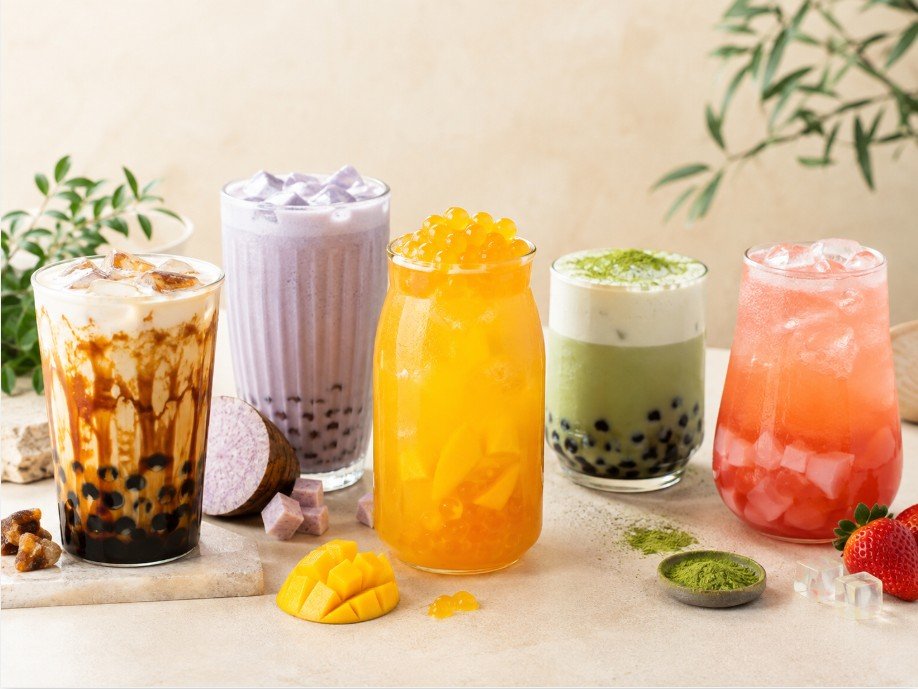
Boba: Drinks, Pearls, Tea, Flavors, Toppings and Where to Find It
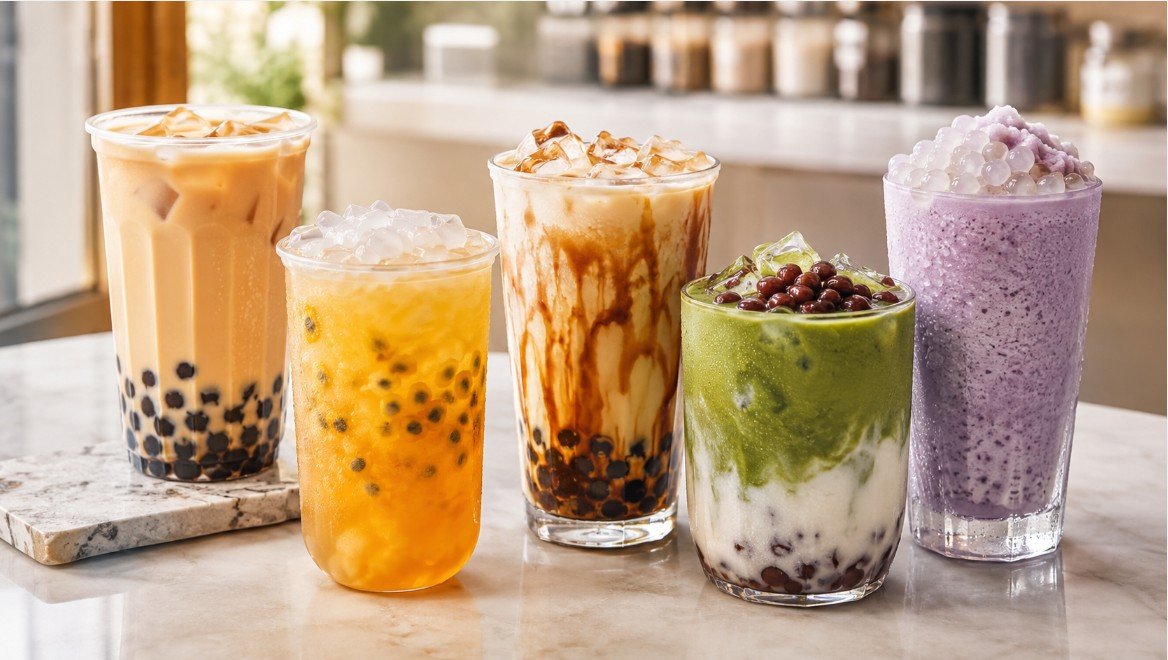
Boba can mean the Taiwanese-origin drink category often called bubble tea, or the chewy tapioca pearls added to a drink. Today the category includes classic pearl milk tea, fruit tea, fresh-milk drinks, straight tea, matcha, coffee, slushes, smoothies, foams, jellies and many drinks with no tapioca at all.
The fastest way to understand boba is to read a cup in five layers: base, flavor, sweetness, temperature and texture. The base tells you whether the drink is tea-forward, milk-forward, fruit-led or frozen. Flavor tells you what direction the cup takes. Sweetness and ice change intensity. Toppings change the way you drink it.
If you already know what you want, you do not need to read everything below. Go straight to nearby shops, beginner drinks, tea, toppings, ordering or home recipes.
Choose your direction
Start with the question that brought you here
Boba is broad enough that two people searching the same word may need completely different answers. These four routes cover the most common starting points without forcing you through the whole page.
What does boba actually mean?
Separate the drink category from the tapioca pearls and understand where bubble tea, milk tea and pearl milk tea overlap.
What should I drink first?
Match a cup to flavors and textures you already enjoy instead of copying the most viral drink on the menu.
How do I order without guessing?
Choose drink family, tea or base, sweetness, ice and toppings in a repeatable order that works at unfamiliar shops.
Where can I get good boba nearby?
Use location, current hours, tea quality, pearl freshness, menu fit and recent detailed reviews rather than distance alone.
The broad answer
What does “boba” mean?
In everyday English, boba can mean a bubble-tea drink or the tapioca pearls inside it. The two meanings are closely related, but they are not identical. A person can say “I want boba” and mean the drink; a menu can say “add boba” and mean tapioca pearls.
The modern drink category grew from Taiwanese tea-shop culture and became much broader than one recipe. A classic cup combines milk tea with chewy pearls, but modern menus may use fruit tea, straight tea, fresh milk, coffee, matcha or a blended base. Toppings are optional. Milk is optional. Even brewed tea is not present in every modern boba-shop drink.
- Boba / boba tea
- Common English usage for the broad drink category. Depending on context, “boba” can also mean the tapioca pearls themselves.
- Bubble tea
- A widely used international English name for the drink category. The “bubble” is historically associated with the foam formed by shaken tea rather than being a strict synonym for the pearls.
- Pearl milk tea
- The iconic tea + milk + tapioca combination. It is one of the most recognizable forms of boba, but it does not define every modern drink sold by a boba shop.
- Tapioca pearls
- Chewy starch-based spheres made primarily from tapioca/cassava starch, then cooked and commonly sweetened. They are a topping, not the entire drink category.
Read the cup
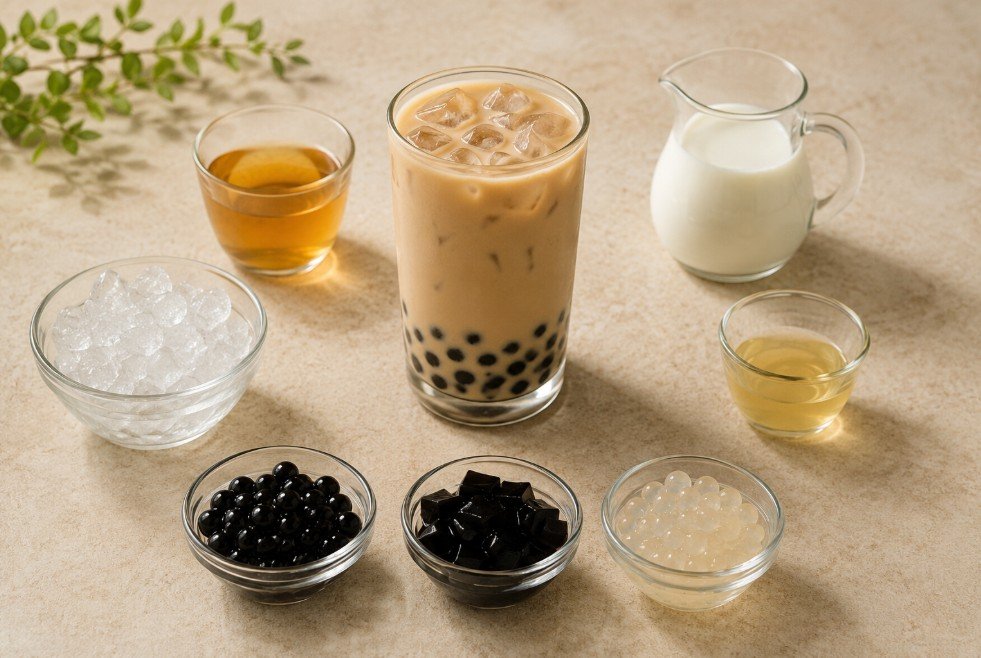
Almost any boba order can be decoded in five decisions
Current tea-shop menus make more sense when the parts of the cup are separated. A flavor name may sound important, but the base, sweetness, temperature and topping can change the experience just as much.
Choose the liquid base
Black tea, jasmine, green tea, oolong, matcha, fresh milk, coffee, fruit or a frozen blend establishes the body and aroma before anything else is added. Two drinks with the same flavor can feel completely different when one starts with tea and the other starts with milk.
Choose the flavor direction
Mango, taro, brown sugar, wintermelon, chocolate, sesame, strawberry and other flavors may come from fresh ingredients, puree, syrup, paste, powder or a combination. The name alone rarely tells you the entire recipe.
Set sweetness with the recipe in mind
A counter setting such as 0%, 30%, 50% or full sweetness usually refers to the adjustable sweetener. Pearls, brown-sugar coating, pudding, flavored powder, fruit concentrate or another prepared component can already contribute sugar before that setting is applied.
Choose ice or temperature
Ice changes more than temperature. As it melts, it lowers sweetness, tea strength and acidity. Less ice can keep a drink more concentrated, but it does not universally mean more liquid because shops fill and formulate cups differently.
Add the texture you actually want
Tapioca gives dense chew; crystal boba is lighter; jelly can be springy or slippery; popping boba bursts; pudding is soft; foam changes the first sip. A topping can change the pace and balance of a drink as much as the flavor itself.
A fast menu scan: first find the drink family headings, then identify the tea or liquid base, check whether sweetness and ice are adjustable, and only then look at toppings. This order prevents a common mistake: choosing a flavor you recognize without noticing that it sits inside a drink family you do not actually want. It also makes unfamiliar regional menus easier to read because the names may change while the underlying decisions remain similar.
Boba drink atlas
Choose the drink family before the flavor name
The biggest menu mistake is treating “mango,” “taro” or “brown sugar” as if each described one fixed drink. Drink family tells you more about weight, refreshment, tea intensity and texture than the headline flavor does.
Milk tea and fresh-milk drinks
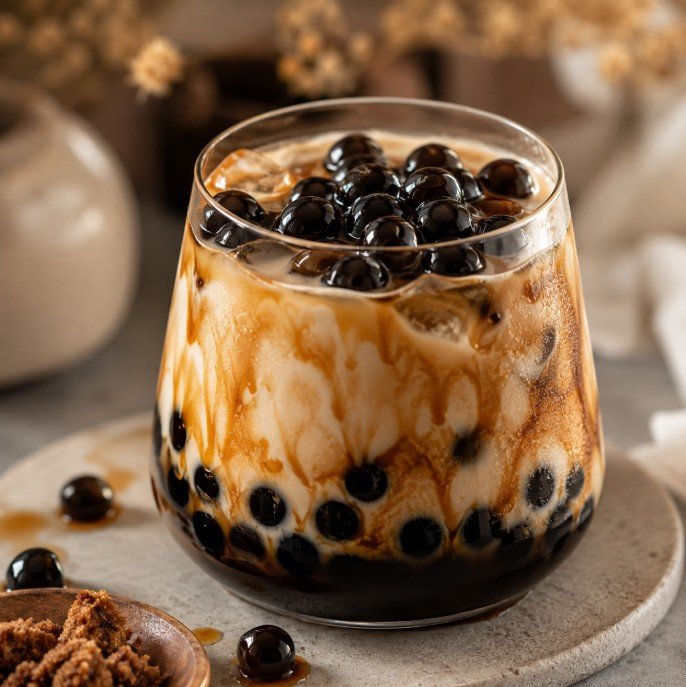
Milk tea combines brewed tea with dairy, creamer or plant milk. The best versions still let the tea leave a recognizable aroma or finish. Black tea brings structure, jasmine brings fragrance, and oolong can add floral or roasted character.
Fresh-milk drinks place milk closer to the center of the recipe. Some include tea; others use milk, syrup and toppings without a brewed tea base. Brown sugar is a good example: it can describe milk tea, fresh milk, a syrup coating or the way pearls are sweetened.
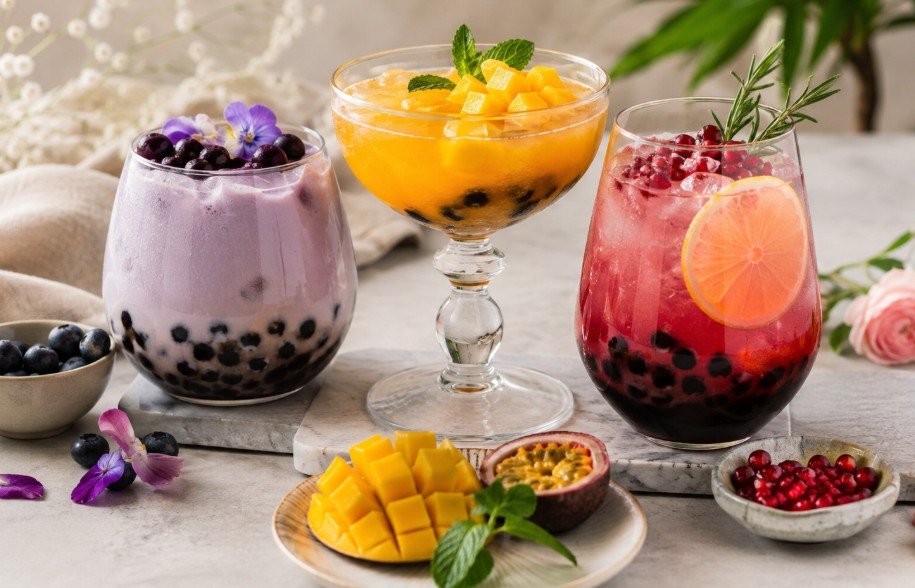
Fruit tea and fruit-led drinks
Fruit tea can combine jasmine, green, oolong or black tea with fresh fruit, juice, puree or syrup. It can be bright and tart, lightly sweet or highly flavored. Some fruit drinks contain no tea at all.
Lighter toppings often fit naturally here. Aloe, jelly and crystal boba keep a drink easy to sip, while classic tapioca creates a stronger contrast between refreshing liquid and dense chew.
Tea-forward
Straight or flavored black, jasmine, green and oolong tea with optional toppings.
Matcha
Powdered tea with earthy bitterness, stronger body and a different relationship with milk.
Coffee
Espresso or coffee-based drinks paired with milk, sweetness and boba-shop toppings.
Frozen
Slushes and smoothies where blended ice becomes part of the texture and flavor intensity.
Explore the full boba drinks guide when you want more examples from each family.
Tea literacy
Tea is not background flavor in good boba
Taiwanese and other Asian boba menus often name the tea instead of hiding it behind a generic “tea” label. That matters because black tea, jasmine, oolong, green tea and matcha change aroma, bitterness, body and how well the drink stands up to milk, fruit, sweetness and ice.
Black tea brings the body that richer milk drinks, brown sugar and dense toppings often need. Assam and Ceylon are familiar reference points, while house blends can push the cup toward malt, briskness, dried fruit or deeper tannin.
Oolong covers an unusually wide sensory range. Light styles can be fragrant and fresh; roasted styles can be nutty, toasted and deeper. Treating all oolong as one flavor hides one of the most interesting parts of tea-based boba.
Jasmine works when aroma matters more than weight. It can carry milk, but it also pairs naturally with peach, lychee, citrus and other fruit flavors that benefit from a fragrant tea base.
Green tea often supports fruit-led and refreshing drinks. Poor extraction can make it bitter or flat, so a lighter color does not automatically mean a more delicate or better cup.
Matcha is not brewed like ordinary loose-leaf tea. The powder is suspended in the drink, adding color, body and bitterness directly. Milk and sweetness therefore interact with matcha differently than with jasmine or oolong.
Go deeper through the Boba.guide tea atlas, tea for boba, or the best tea for boba.
Taiwan menu language
A few Taiwanese menu terms make the whole category easier to read
English tends to compress many ideas into “boba.” Taiwanese menu language keeps several distinctions visible: the drink, the pearls, fresh milk, foam, toppings, sweetness and ice can all be named separately.
Pearl milk tea. The iconic combination of milk tea and chewy pearls. It is an important reference cup, but it is not the definition of every drink in a modern boba shop.
Round starch pearls or balls. This traditional term is broader than treating every round topping as “boba.” Popping spheres are a different product and texture.
A larger pearl style in Taiwanese usage. Size labels still vary by shop, so the term is a menu clue rather than a universal millimeter measurement.
Fresh-milk tea. The wording helps distinguish brewed tea with fresh milk from creamer-based milk tea and from milk-only drinks that may contain no brewed tea.
Milk or cream cap. A foamy top layer changes the first sip, aroma, richness and sometimes saltiness without mixing milk throughout the entire drink.
Add extras or toppings. This is where texture becomes a deliberate choice rather than an automatic part of every cup.
Same name, different cup
The same flavor can become three completely different drinks
Flavor is only one layer of a boba order. Before deciding whether you like “mango,” “taro” or “brown sugar,” look at the liquid base and preparation style.
Bright, light and refreshing, especially with jasmine or green tea underneath.
Softer and creamier, with fruit sweetness interacting with milk rather than tea acidity.
Thicker, colder and more dessert-like because blended ice becomes part of the texture.
Tea, milk and caramel-like sweetness share the cup. A strong base keeps the drink from tasting only of syrup.
Milk-forward with brown-sugar streaks and often pearls, sometimes without brewed tea at all.
The phrase may describe how the tapioca itself is cooked or coated rather than the entire liquid recipe.
Earthier and starchier when real taro or textured mash remains visible in the drink.
Richer, denser and more body-forward, often with a soft nutty sweetness.
Usually more uniform and potentially sweeter or more confectionery depending on the product and recipe.
The same decoding habit works for strawberry, peach, chocolate, matcha, coffee and cheese foam. Identify drink family → liquid base → flavor source → preparation style before judging the ingredient from one cup.
Flavor and mouthfeel
Choose the experience you want before the menu name
A long list becomes much easier when you first decide whether you want creamy, floral, fruity, roasted, earthy or dessert-like — and whether you want a chewy, jiggly, bursting, creamy or topping-free texture.
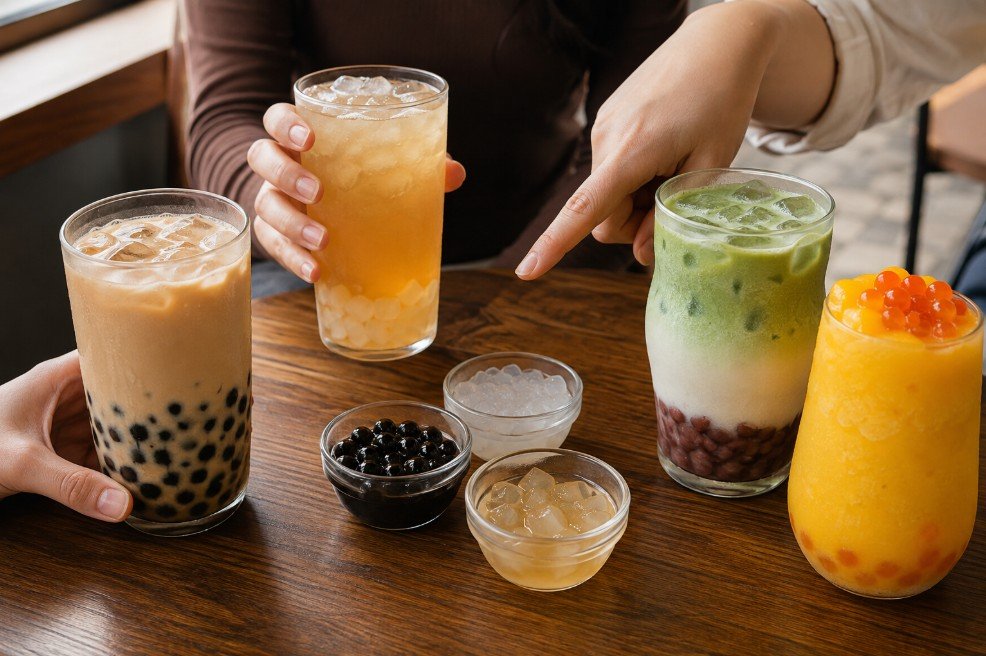
Classic milk tea, Thai tea, taro-style milk drinks and fresh-milk builds feel rounder and heavier. Pudding, tapioca and foam push them farther toward dessert.
Jasmine and lighter oolong emphasize aroma. Peach, lychee and citrus can extend that fragrance without adding much weight.
Passion fruit, mango, peach, strawberry and citrus can be bright in clear tea or thick and sweet in blended or milk formats.
Dark oolong, black tea, hojicha and coffee bring toast, malt or roast. Lower sweetness can make those notes easier to notice.
Matcha, black sesame, red bean and some taro builds lean toward grain, nut, vegetal or root-like flavors rather than bright fruit.
Brown sugar, cream foam, pudding, condensed milk and frozen formats can make the cup feel closer to dessert than refreshment.
Explore boba flavors, boba toppings and boba textures separately when one dimension matters most.
A smarter first order
Your first cup should teach you what to change next time
A good first order is simple enough that you can tell what you actually liked: the tea or other base, the sweetness level and the topping texture.
Milk tea + one portion of tapioca
Choose black, jasmine or oolong milk tea with moderate sweetness. You will learn quickly whether you enjoy the tea, the creaminess, the chew or mainly the sweetness.
Fruit tea + a lighter topping
Peach, lychee, citrus or passion fruit with aloe, jelly or crystal boba shows how different the category feels without creamy milk and dense tapioca.
Oolong or jasmine with less sweetness
This makes aroma and tea character easier to notice and helps you decide whether future orders should stay tea-led or move toward richer, more dessert-like drinks.
Sweetness percentages are shop-specific. They do not represent a universal amount of sugar, and 0% adjustable sweetness does not guarantee a sugar-free drink when pearls, fruit bases, powders or sauces are already sweetened. Ice settings are also shop-specific. Less ice can reduce dilution, but it does not guarantee more beverage volume.
For the details behind those two controls, compare boba sweetness levels and boba ice levels.
Local discovery
“Boba Near Me” should help you find a good cup, not only the closest pin
Once you are ready to buy, distance is only the first filter. A nearby shop is worth returning to when its hours are current, the menu fits what you like, tea tastes intentional, toppings are fresh and recent reviews describe specific drinks rather than vague praise.
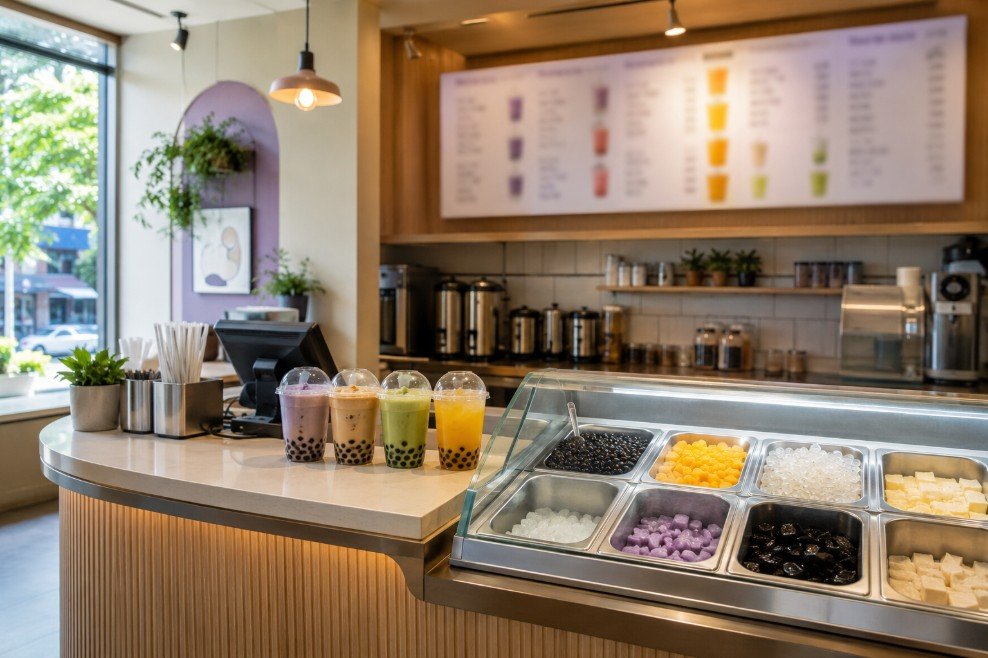
Can you tell which drinks are tea-based, milk-based, fruit-based or frozen? Clear categories make it easier to predict what you are ordering and whether a shop takes its tea program seriously.
In a tea-based drink, aroma should survive sweetness, milk and ice. If every cup tastes mostly of syrup or powder, the menu may be broad without being particularly strong.
Fresh tapioca should be springy and cooked through rather than hard-centered, chalky, mushy or stale. Texture is time-sensitive, so turnover matters.
Recent comments about a specific drink, pearl texture, tea strength, wait time or consistency tell you far more than a generic five-star “great boba” review.
Delivery can be excellent for some drinks and terrible for others. Tapioca cools, ice melts, foam collapses and slushes separate. Choose the drink for the travel time as well as the flavor.
Find a shop that fits the drink you want
Use the dedicated local guide for nearby shops, city and state routes, delivery, pickup, open-now searches and quality checks.
Pearl texture
Tapioca pearls are a time-sensitive food, not a permanent garnish
The black pearls in a classic cup are cooked starch. Their appeal comes from a springy, elastic chew, and that texture changes as the pearls cool, sit in syrup and spend time inside a cold drink. A cup can have excellent tea and still fail because the pearls were cooked badly or held too long.
Starch absorbs water and gelatinizes. Good pearls should be cooked through rather than leaving a dry, floury or chalky center.
Warm pearls are often rested in sugar or syrup. That adds flavor and means the topping can increase sweetness before the drink’s adjustable syrup is considered.
The ideal chew balances softness and resistance. A pearl should compress and spring rather than dissolve, crack or feel rubbery.
Cold liquid gradually changes the texture. The center can become firmer while ice melts into the drink and alters concentration.
Time matters. A delivery cup that spends a long time in transit is physically different from the same drink served immediately at the counter.
The cup changes with time
A boba drink is not the same drink twenty minutes later
Time, temperature and holding change the cup after it leaves the shaker. That matters more in boba than in many ordinary bottled drinks because the liquid and the toppings age at different speeds.
Temperature contrast is strongest
Tea aroma is concentrated, foam still has its intended structure, pearls may retain some warmth and ice has not yet contributed much dilution. This is usually the cleanest moment to judge the recipe.
Ice begins rewriting the balance
Melting water lowers sweetness, tea strength and acidity. A good iced recipe anticipates some dilution; a weak one can become flat well before the cup is empty.
Chew becomes less stable
Tapioca texture is not permanent. Pearls can firm as they cool or become less pleasant after extended holding. Pearl-batch management is therefore a real quality signal.
Components fail at different speeds
Foam can collapse, blended drinks separate, ice melts and tapioca continues changing. A tea-forward drink may travel gracefully while a perfect-at-the-counter slush or pearl-heavy drink may not.
Boba at home
Homemade boba gets easier when tea, pearls and assembly are treated separately
Home preparation is less about specialty gadgets than timing and balance. The tea needs enough concentration for the finished drink, cooked tapioca needs to be served while its texture is still enjoyable, and sweetness makes more sense after you know what the base and toppings already contribute.
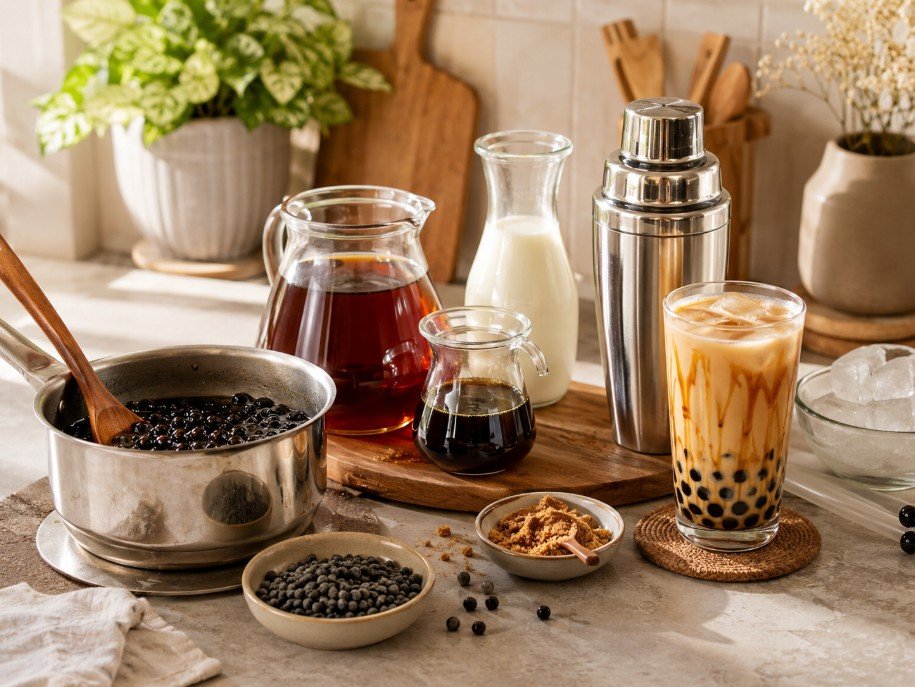
Brew for the finished cup
A tea that tastes elegant plain may disappear after milk and ice. Increase usable strength without extending steeping so far that the tea becomes harsh.
Cook only what you can serve fresh
Tapioca texture changes while it waits. Small, well-timed batches usually produce a better experience than making far more pearls than you can use promptly.
Change one variable at a time
If a drink is weak, solve tea strength. If it feels heavy, simplify milk, syrup or toppings. If the pearls are hard, fix the cooking and holding problem rather than changing the entire recipe.
Build a repeatable baseline
Write down one version you like: tea amount, water, milk, sweetener, ice and topping portion. Once the baseline is stable, flavor experiments become much easier to understand.
For technique, use how to brew tea for boba, boba ingredients and boba supplies when you need more detail.
Quality before hype
A beautiful cup can still be bad boba
Color, layers and glossy pearls can photograph well. Quality is harder: the base, texture, sweetness, temperature and consistency all have to work after the photo stops mattering.
A good boba drink should still have a recognizable idea after sweetness, ice and toppings are added.
The drink should taste like what it claims to be
Tea should remain identifiable in tea-based drinks; fruit should taste specific rather than generically perfumed; milk should support rather than erase delicate aroma.
Toppings should taste freshly handled
Tapioca should not be chalky, mushy or hard from poor holding. Jellies should feel clean and purposeful. Foam should not taste stale or separated.
Sugar should round the recipe, not replace it
A sweet drink can still be balanced, but sweetness should not be the only flavor left after the first few sips.
The recipe should survive the way it is served
An iced drink should not collapse into water after a few minutes. A delivery order should be chosen with travel time and topping behavior in mind.
A great shop should repeat a great cup
One lucky drink is different from a reliable shop. Repeatable tea strength, pearl texture and sweetness are part of quality for regular customers.
Use Boba Quality when you want the full checklist for judging a shop or drink.
Nutrition, caffeine and dietary needs
The word “boba” is too broad to predict calories, sugar or caffeine
A plain tea, a fruit tea and a large brown-sugar milk drink with pearls can all appear on the same menu while having very different nutrition profiles. The complete recipe matters more than the category name.
Nutrition
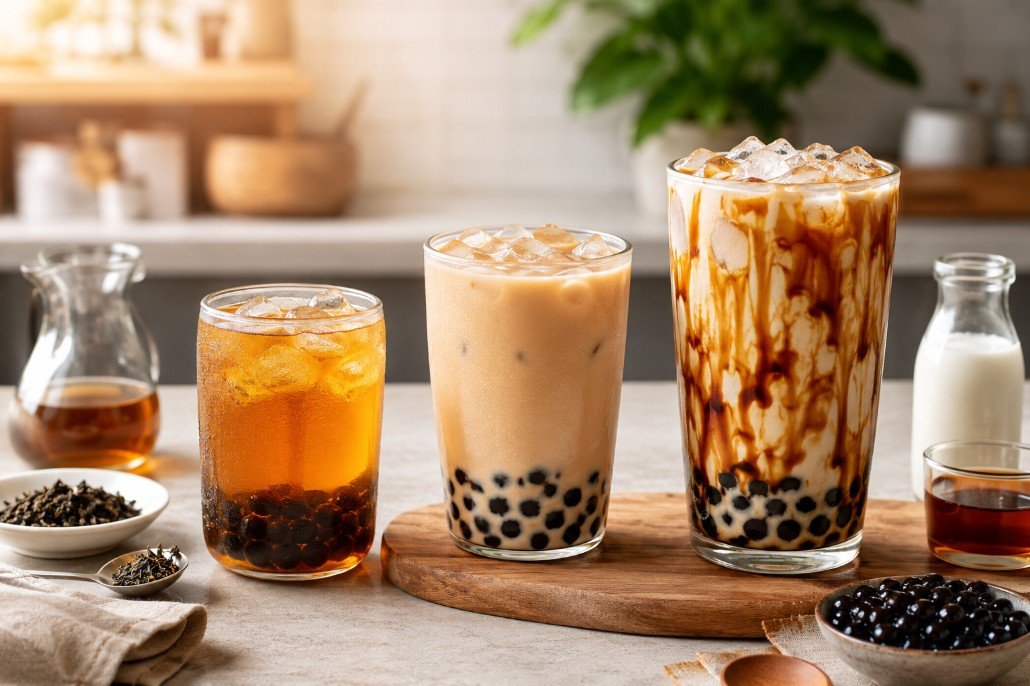
Serving size, milk or creamer, sweetened bases, syrup, pearls, pudding and foam can all change calories and sugar. Current Taiwanese nutrition records even separate prepared pearl milk tea at different sweetness levels, which illustrates why the recipe matters more than a universal “boba” number.
Caffeine
Black, jasmine, green, oolong, matcha and coffee-based drinks usually contain caffeine, but fresh-milk and some fruit or blended drinks may not. A fruit flavor does not automatically mean caffeine-free if the liquid underneath is tea.
Dietary and safety questions
Fruit-looking does not guarantee dairy-free, plant milk does not guarantee vegan, and round chewy toppings require age-appropriate judgment. When an allergy or swallowing concern matters, check the actual ingredients and preparation.
Taiwanese roots
Boba makes more sense when Taiwan stays visible in the story
Bubble tea did not begin as a generic flavored-drink trend. It grew from Taiwan’s tea-shop culture, experimentation with cold shaken tea and the pairing of beverages with chewy starch pearls. The precise “first inventor” story remains disputed, so the more responsible history is broader than assigning one universally proven origin shop.
Tea was already a serious sensory subject
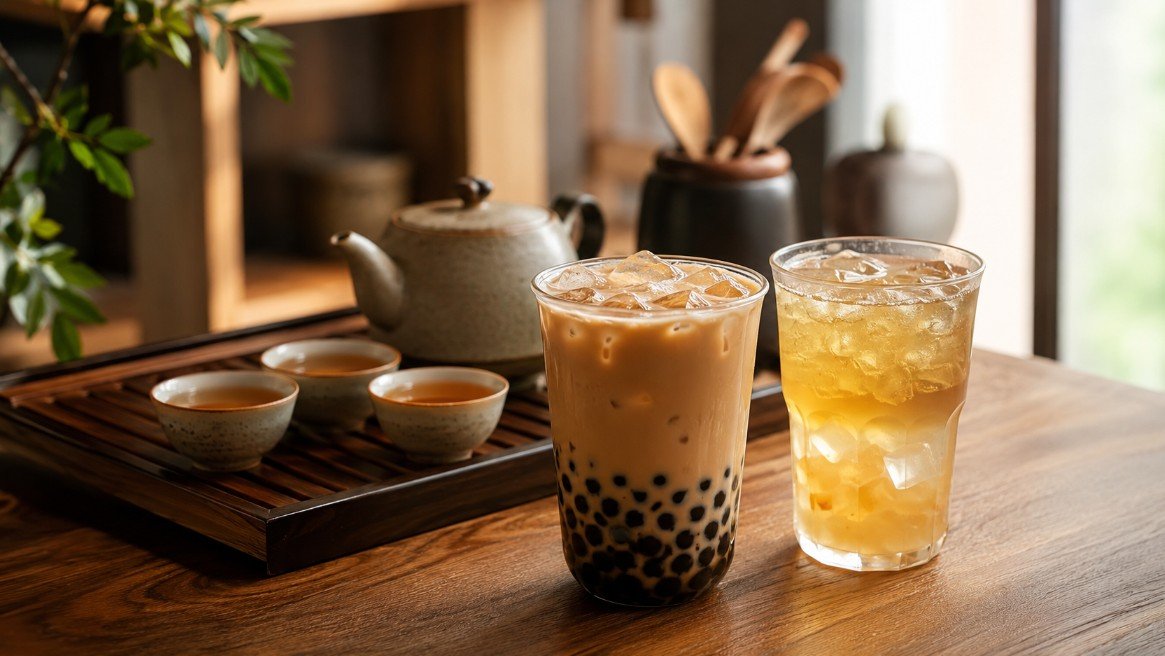
Tea variety, extraction, aroma and serving style mattered before pearl milk tea. Modern hand-shaken drinks inherited that vocabulary even as the format became faster, colder and more playful.
Cold tea service changed the drinking experience
Shaking tea with ice and sweetener cools and aerates the liquid. The resulting foam helps explain why the English name “bubble tea” should not be reduced to “tea with round balls.”
The 1980s created the global reference cup
Chewy pearls joined milk tea in Taiwan and produced the combination most people around the world still picture first when they hear boba or bubble tea.
The drink system traveled farther than the original recipe
Fruit tea, fresh milk, matcha, coffee, foams, jellies, frozen drinks and regional flavors expanded the menu, while customization and texture kept the category recognizable.
Continue with boba history and culture or where boba originated.
How the menu changes across Asia
The same boba tradition is organized differently from market to market
Across Taiwan, Japan, South Korea, Singapore and Malaysia, the same core ideas — tea, milk, fruit, sweetness and texture — appear in different menu structures. Those differences show how easily boba adapts without losing its Taiwanese roots.
Tea identity stays unusually visible
Current Taiwanese menus routinely name specific teas instead of reducing the base to “black” or “green.” Jasmine, Ceylon-style black tea, Four Seasons, roasted oolong, Pouchong, Tieguanyin, pu-erh and other tea identities can sit beside milk tea, fresh-milk tea, milk caps and fruit builds. That makes one lesson very clear: tea is not simply brown liquid underneath the syrup. The leaf style can be part of the drink’s identity.
Drink families are often separated very explicitly
Japanese menus often make category boundaries easy to see by grouping straight tea, milk tea, brown-sugar drinks, fruit tea, plant-milk tea and frozen drinks. The same reading habit works anywhere: identify the drink family first, then the flavor. A peach straight tea and a peach milk drink can share a fruit name while tasting completely different.
Customization is presented as part of the product
Korean ordering systems often make the sequence especially visible: choose the drink, adjust sweetness and ice, then add toppings. Classic tapioca, smaller pearls, crystal-style pearls, aloe, coconut, milk foam and cheese foam can all change the finished cup. Texture is part of the order, not decoration added at the end.
Regional flavors live comfortably beside classic tea
Menus in Singapore show classic black, green and oolong tea alongside fresh milk, macchiato-style foam, fruit drinks and region-specific flavors. Boba becomes local without losing its Taiwanese lineage. That ability to absorb familiar regional tastes is one reason the category travels so well: the drink structure stays recognizable even when the flavor memory changes.
Boba shops overlap with wider beverage culture
Malaysian menus can move from pearl milk tea and roasted milk tea into oolong, matcha, hojicha, coffee, fruit tea, juice and smoothies. Modern boba has become a broad customizable beverage culture with Taiwanese roots, not a single pearl milk tea recipe.
These patterns are not rules for entire countries, and menus change. They are examples of how the same core ideas — tea, flavor, sweetness, temperature and texture — can be organized differently without losing the identity of boba.
Common shortcuts that fail
Seven boba assumptions worth replacing with better questions
These are the shortcuts that cause the most confusion when people move between shops, countries and menu styles.
Milk tea is a major family, not the entire category. Fruit tea, straight tea, fresh-milk drinks, coffee, matcha and frozen drinks can all appear on a modern boba menu. Ask what the liquid base is before assuming the cup will be creamy.
Tapioca is the classic topping, but toppings are optional. Jelly, pudding, aloe, crystal boba, popping boba, foam and no topping at all are normal choices. If you dislike chewy tapioca, that does not mean you dislike boba as a drink category.
Not necessarily. Peach green tea, passion-fruit black tea and lychee jasmine tea are fruit-flavored but still use caffeinated tea. If caffeine matters, identify the base rather than judging by the fruit name or color.
A shop may remove the adjustable syrup while the recipe still contains sweetened pearls, fruit concentrate, powder, brown-sugar sauce, pudding or another prepared ingredient. A sweetness selector is not the same thing as a laboratory nutrition label.
Some shops compensate with more tea or another component; others keep the formula fixed; some cup designs leave a different headspace. Less ice reliably changes dilution and temperature, but extra beverage volume is not universal.
Color alone does not reveal the ingredient. Taro drinks can use root, paste, powder, flavoring or a combination. If texture and ingredient style matter to you, ask how the shop builds the drink rather than relying on the shade of purple.
A huge menu can be fun, but range does not prove execution. Tea strength, fresh toppings, clear ingredient answers, consistent recipes and a few specialties handled well are more meaningful quality signals than the raw number of drinks listed.
Explore Boba.guide
Explore the part of boba you care about next
Choose the next topic based on what you want to understand, order, make or find.
Compare textures before adding them
Tapioca, jelly, pudding, crystal boba, popping boba and more.
Beginner boba toppingsChoose and brew tea specifically for boba
Tea families, strength, brewing and milk compatibility.
Tea strength for bobaUnderstand the operation behind the cup
Equipment, ingredients, menu planning and shop economics.
Boba businessShare a boba find with us
Know a regional drink, unusual Taiwanese menu term, topping, local shop tradition or preparation detail we should see? Send it to the editorial team. We check the details before adding new information to the site.
Common questions
Boba FAQ
Quick answers to the questions people most often ask about boba, pearls, tea, sweetness, first orders and finding a good shop.
What is boba?
Boba can refer to the Taiwanese-origin bubble-tea drink category or, depending on context, to the chewy tapioca pearls used as a topping. Modern boba shops also serve fruit tea, fresh-milk drinks, matcha, coffee, slushes, smoothies, jellies, pudding and other combinations.
Is boba the same as bubble tea?
In everyday English, boba tea and bubble tea commonly refer to the same broad drink category. The word boba can additionally mean the tapioca pearls themselves, so context matters.
What are traditional boba pearls made from?
Traditional chewy boba pearls are made primarily from tapioca starch derived from cassava, then cooked and commonly sweetened with sugar or syrup. Their defining feature is their elastic chew rather than a strong flavor of their own.
Does boba always contain tea?
No. Tea is central to boba’s Taiwanese roots and remains the base of many classic drinks, but modern boba shops also sell fresh-milk, coffee, fruit and blended drinks that may contain no brewed tea.
Does boba always contain milk?
No. Fruit tea, straight tea and many tea-forward drinks can be completely milk-free. Milk tea and fresh-milk drinks are major branches of boba, not requirements for every cup.
What does boba taste like?
Boba does not have one flavor. The drink can be creamy, floral, fruity, roasted, earthy or dessert-like depending on the base and flavoring. Tapioca pearls themselves are relatively mild; much of their sweetness comes from the syrup used after cooking.
What is a good first boba order?
A simple first order is a black, jasmine or oolong milk tea with moderate sweetness and one topping. If you prefer lighter drinks, try fruit tea with jelly, aloe or crystal boba. Keeping the first cup simple makes it easier to learn what you want to change next time.
Does 0% sweetness mean zero sugar?
Not necessarily. A 0% setting usually means no additional adjustable sweetener, but pearls, fruit bases, flavored powders, brown-sugar sauces, pudding or other components may already contain sugar. The exact recipe matters.
How do I find good boba near me?
Compare nearby shops by current hours, menu fit, tea quality, pearl freshness, customization and recent detailed reviews rather than distance alone. The best reviews describe a specific drink, topping texture, consistency or wait time instead of only giving a star rating.
Can I make boba at home?
Yes. The key skills are brewing a base strong enough for the finished drink, cooking tapioca close to serving time, controlling sweetness and accounting for ice dilution. Start with one simple drink before adding multiple toppings or flavor systems.